• F4
  • F3
  • F1
  • F2

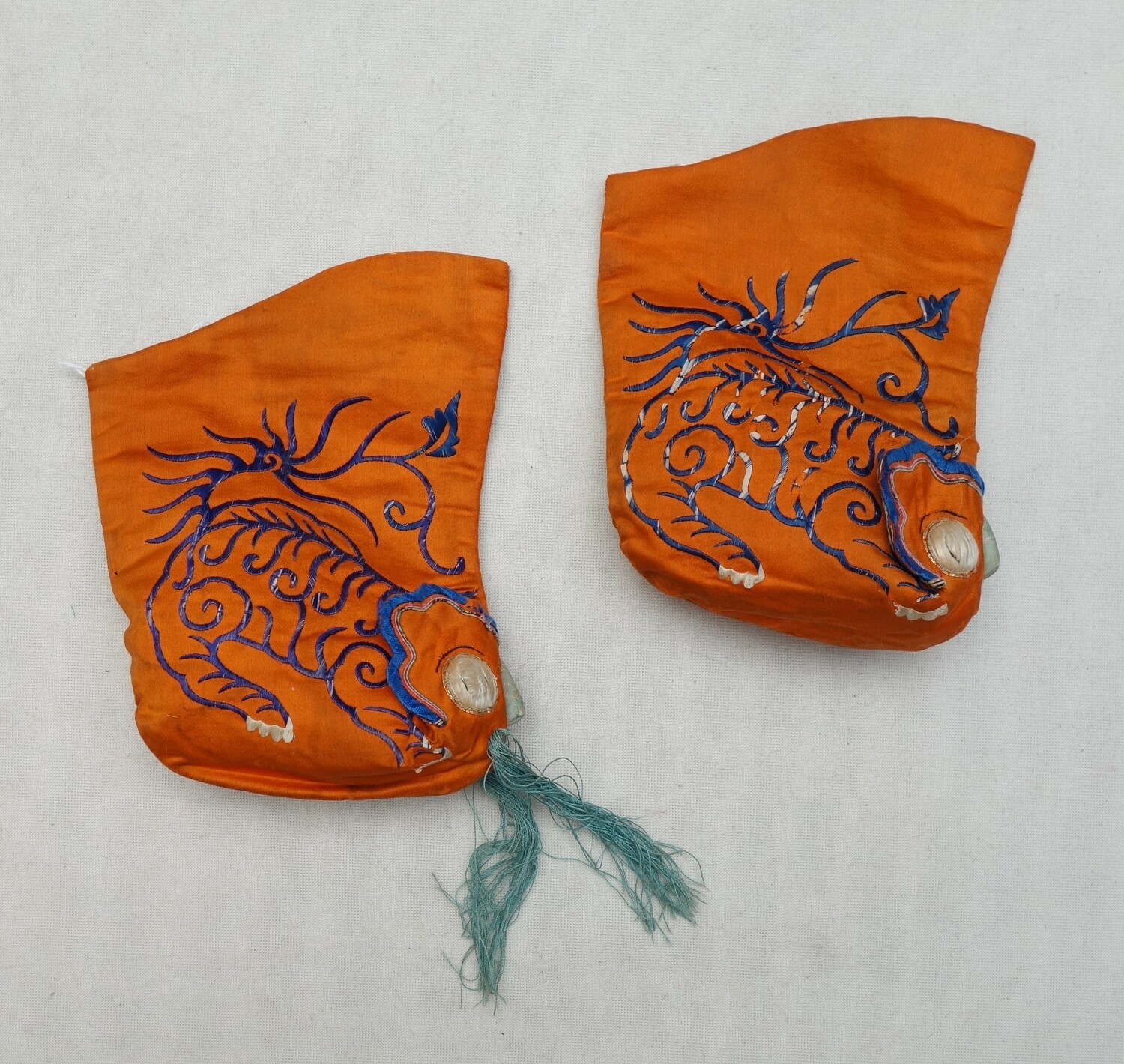
Pair of embroidered tiger boots for a boy, China, 20th century (TRC 2023.1248a-b).Pair of embroidered tiger boots for a boy, China, 20th century (TRC 2023.1248a-b).I have small feet (British size 3, Dutch 36), but I feel I have clodhoppers (slang for really large feet or shoes) when I look at some of the shoes that have recently been donated to the TRC by Quirina Vreeburg.

Quirina is slowly giving the TRC her collection of Han and Manchu Chinese textiles, garments and accessories. The first few boxes came in a few months ago and they contained skirts, panels, and gowns.

Just recently she came with another three boxes of items, mainly filled with embroidered pieces, including garments, panels, bags and 25 pairs of Chinese shoes, plus a single, tiny shoe – I will come back to this piece below.
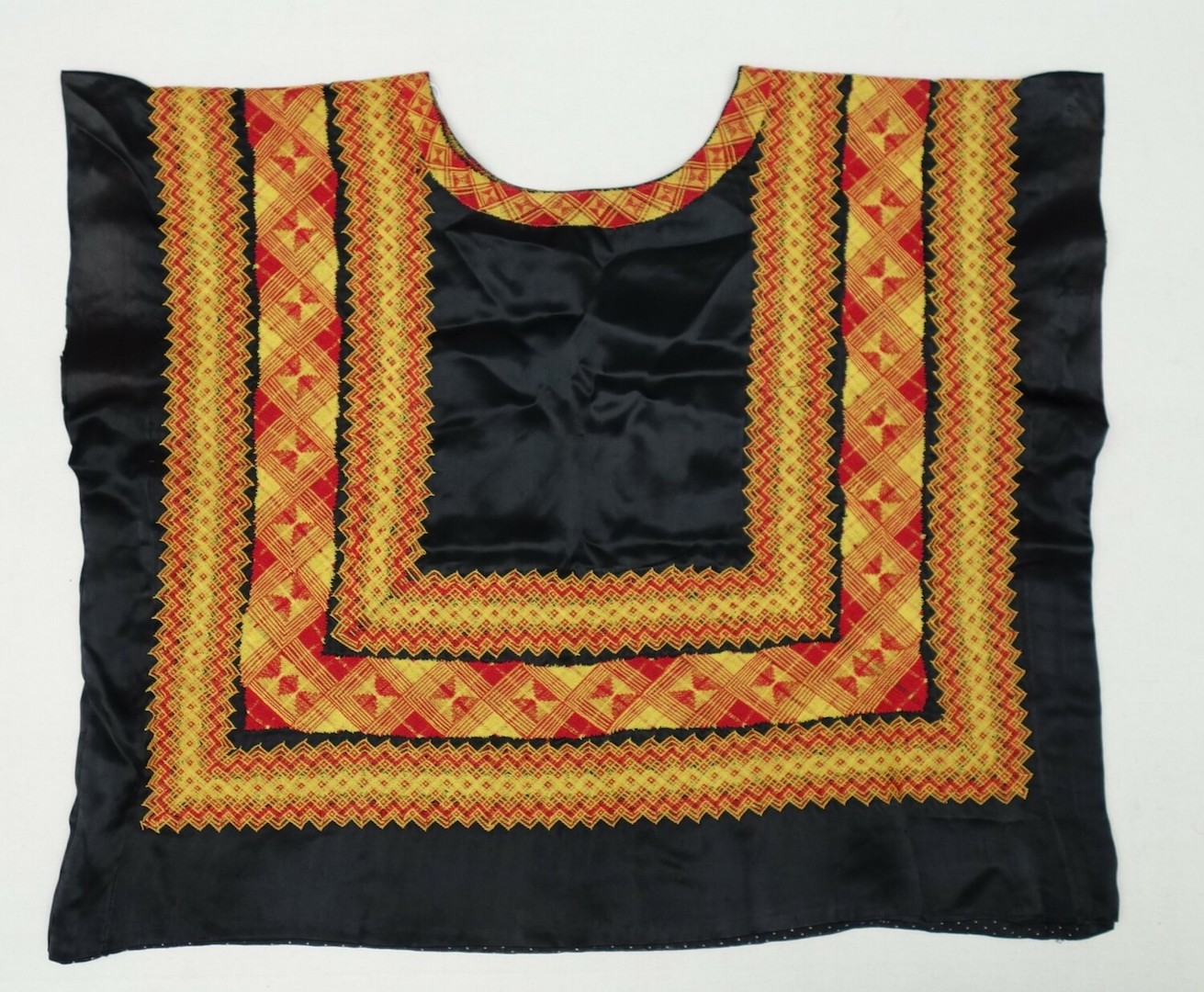
Black satin blouse decorated on the front and back with embroidered bands of repeating geometric and lacy shapes in red and yellow. The garment was known to the Dool family as one of Diane's 'Frida Kahlo' blouses. Antilles, 1950s/1960s (TRC 2023.1218a).Black satin blouse decorated on the front and back with embroidered bands of repeating geometric and lacy shapes in red and yellow. The garment was known to the Dool family as one of Diane's 'Frida Kahlo' blouses. Antilles, 1950s/1960s (TRC 2023.1218a).The TRC recently received a donation of clothing and other textiles from the Dool family here in the Netherlands. They had given other items in the past, including pieces from Central and South America, the Middle East and the Netherlands.

The latest Dool family donation includes a set of clothing, worn and for more than fifty years cherished and carefully preserved by Diane Joubert, in the style of the famous Mexican artist, Frida Kahlo (1907-1954).

The outfit consists of a blouse (TRC 2023.1218a) and matching skirt (TRC 2023.1218b), as well as a shawl (TRC 2023.1219) and was worn in the 1950s and 1960s by Diane Joubert (1939-2021), who originated from to a large and old merchant family living in Curaçao and Venezuela. The family were also involved with the artistic world of Central America.

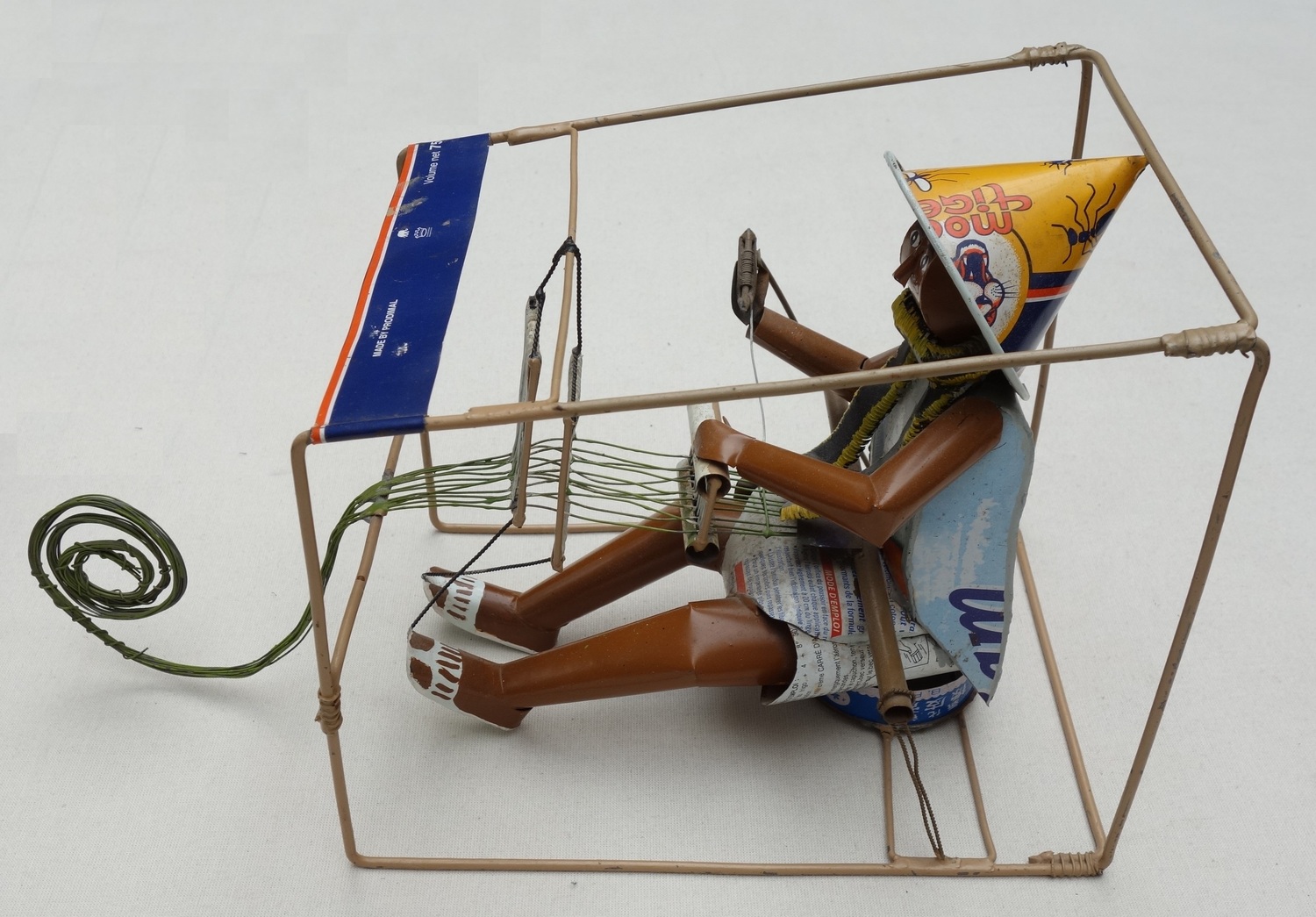
Tin model of a frame loom from Mali, used for the traditional narrow-width bands of cloth (TRC 2023.1212).Tin model of a frame loom from Mali, used for the traditional narrow-width bands of cloth (TRC 2023.1212).

(6th August 2023) We recently visited Prof Rogier Bedaux, a long time friend, supporter and indeed an original Board member of the TRC. The reason for the trip was simple, volume 3 of the Bloomsbury World Encyclopedia of Embroidery, which is about Sub-saharan African embroidery, is dedicated to him! This is a small way of thanking him for all his help over the years.

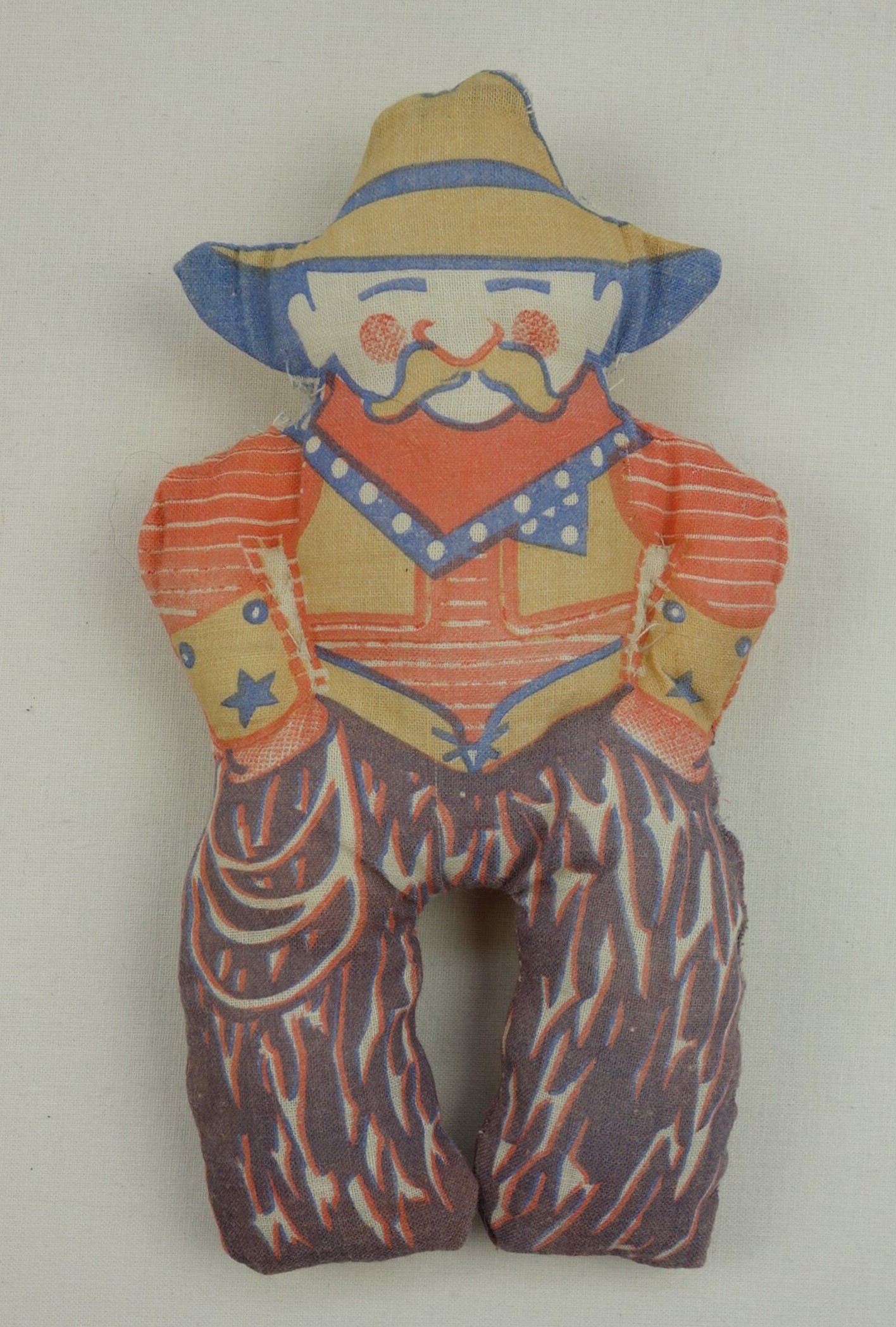
Cowboy cloth doll, USA, 1937. TRC 2017.3276Cowboy cloth doll, USA, 1937. TRC 2017.3276The TRC has some cotton dolls with real history in its collection. They are from the US, dated to the 1930s , and were preprinted on feed sacks. After the sugar or flour sack was emptied, thrifty housewives would sew the front and backs of the sacks together, stuff the doll, and have a new toy for their children.

You can see examples like Miss Supreme (TRC 2018.009) or Rodkey’s Rag Darling (TRC 2017.3232), or Dusty the cowboy (TRC 2017.3276) (who happens to be my favourite; now on loan to the Museum of Fashion & Textiles in London).

But the artist and citizen historian Rita Maasdamme (1944-2016) brought the art of making cloth dolls to a whole other level. Born in Aruba, Maasdamme started making dolls under her Surinamese mother’s tutelage when she was nine.

During our recent trip to London, Willem and I tried to pack in various textile and dress exhibitions that are currently presented in the British capital. We also wanted to see how these exhibitions present textiles and dress (getting ideas and inspiration for the TRC), and, admittedly, the venue of the exhibitions was also intriguing. Anyhow, we decided to pack three very different dress exhibitions in one day.

King Charles III in full attire at his coronation. By Foreign, Commonwealth & Development Office - From Twitter account of Foreign, Commonwealth & Development Office, CC BY-SA 4.0, https://commons.wikimedia.org/w/index.php?curid=131676676King Charles III in full attire at his coronation. By Foreign, Commonwealth & Development Office - From Twitter account of Foreign, Commonwealth & Development Office, CC BY-SA 4.0, https://commons.wikimedia.org/w/index.php?curid=131676676

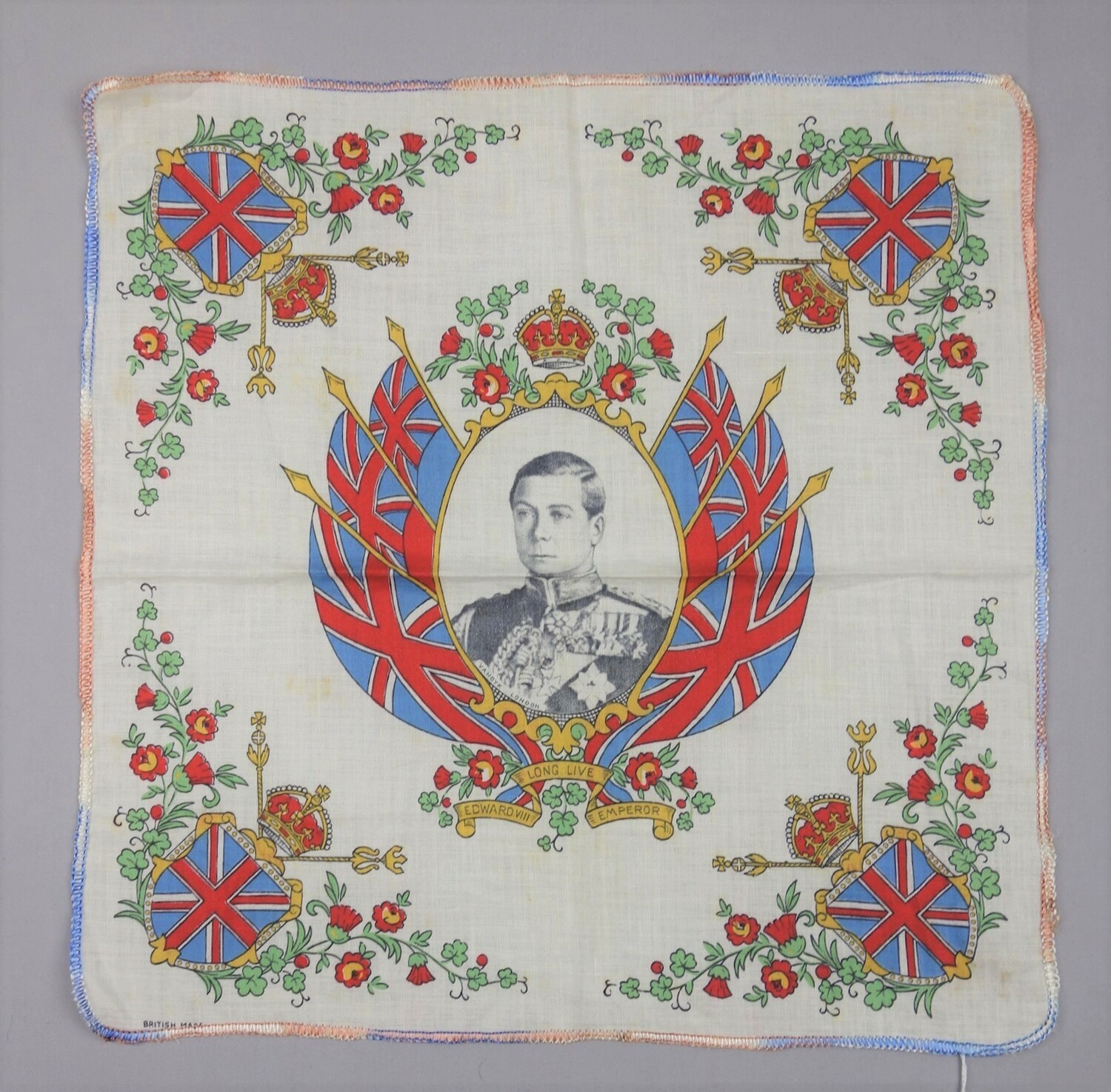
Kerchief produced to commemorate the coronation of Edward VIII in 1937. The coronation never took place. TRC 2015.0405).Kerchief produced to commemorate the coronation of Edward VIII in 1937. The coronation never took place. TRC 2015.0405).Willem and I were in London for several days in order to deliver some TRC Collection textiles that are on loan for an upcoming exhibition called 'The Fabric of Democracy: Propaganda Textiles from the French Revolution to Brexit', which will be held at the Fashion + Textile Museum, London. It opens on 29 September 2023 and runs until 3 March 2024.

The exhibition is curated by Amber Butchart, a fashion historian and long-term friend of the TRC. The exhibition looks at textiles as a means of spreading and propagating various forms of public and domestic propaganda.

We are used to the large posters of China and Russia, but what about the caps, t-shirts and household items that are about spreading specific ideas?

One of the most enjoyable days for me during the TRC’s Intensive Textile course has always been dye day. Dozens and dozens of glass jars are lined up on a long table, reflecting a rainbow of colours, which participants get to play –oh, sorry, I meant to write practice—dyeing different fabrics with.

The history of dyes and mordants is fascinating, as is the whole process of dyeing. The quality of the water used, the temperature it's boiled, the type of pan used (copper or iron or steel)—any variation in any of this can change the hue. I have to marvel at how our ancestors discovered the different dye qualities of so many plants, leaves, roots, barks, nuts, insects and molluscs.

“Guernica de la Ecologia” by Claudy Jongstra. Photograph by Shelley Anderson.“Guernica de la Ecologia” by Claudy Jongstra. Photograph by Shelley Anderson.

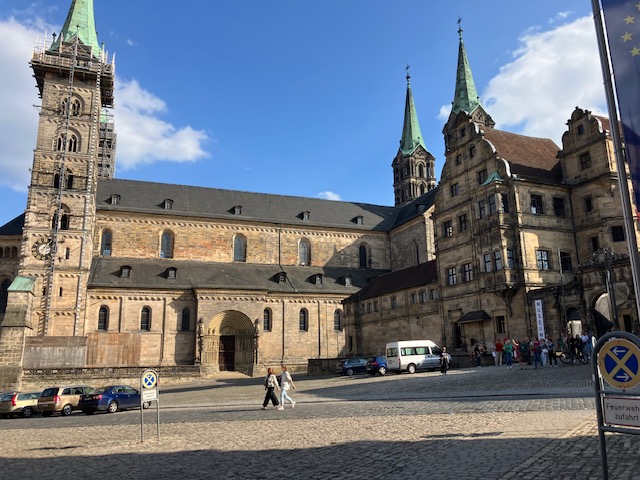
Bamberg Cathedral, 2 July 2023. Photograph by Willem Vogelsang.Bamberg Cathedral, 2 July 2023. Photograph by Willem Vogelsang.On our way to Czechia, last Sunday 2nd July, Willem and I passed the beautiful medieval city of Bamberg. We came to this place in June 2016 (see a blog of 11 June 2016), and we simply wanted to visit the Bamberg Diocesan Museum again and see its amazing collection of medieval garments, such as  the Star Mantle of Emperor Heinrich II and the Byzantine Gunthertuch.

We also needed some extra information for the fourth volume of the World Encyclopedia of Embroidery (covering Western Europe and Scandinavia), which we plan to send to the publishers in manuscript form later this summer. We decided to stay in Bamberg for a day and really take the time to have a close look at the textiles.

As we said in our 2016 blog, the museum is located next to the Bamberg Cathedral and is home to two significant collections of elite, medieval textiles and garments, both dating to the 11th century, as well as numerous other textiles and garments dating as late as the 19th century. Many of these garments and textiles are embroidered, and they present a marvellous picture of mid-medieval needlework.

Zoek in TRC website

Contact

Boerhaavelaan 6
2334 EN Leiden.
Tel. +31 (0)71 5134144 (kantooruren)  
office@trcleiden.org

Het TRC is elke dag geopend tussen 10.00 en 15.00 uur.

facebook 2015 logo detail


instagram vernieuwt uiterlijk en logo


Bankrekening

NL39 INGB 0002 9823 59, t.a.v. Stichting Textile Research Centre.

Financiële giften

Het TRC is afhankelijk van project-financiering en privé-donaties. Al ons werk wordt verricht door vrijwilligers. Ter ondersteuning van de vele activiteiten van het TRC vragen wij U daarom om financiële steun:

Giften kunt U overmaken op bankrekeningnummer (IBAN) NL39 INGB 000 298 2359, t.n.v. Stichting Textile Research Centre. BIC code is: INGBNL2A

U kunt ook, heel simpel, indien u een iDEAL app heeft, de iDEAL-knop hieronder gebruiken en door een bepaald bedrag in te vullen: 


Omdat het TRC officieel is erkend als een Algemeen Nut Beogende Instelling (ANBI), en daarbij ook nog als een Culturele Instelling, zijn particuliere giften voor 125% aftrekbaar van de belasting, en voor bedrijven zelfs voor 150%. Voor meer informatie, klik hier