• F1
  • F3
  • F4
  • F2

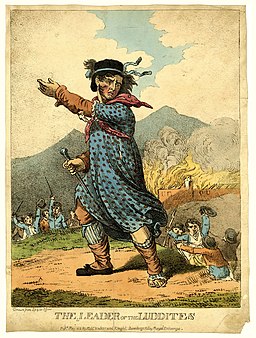
A fictitious image of Ned Ludd, leader of the Luddites. The anti-Luddite print is dated to 1812. It shows Ned Ludd in women's clothing, indicating his opposition to 'progress'.A fictitious image of Ned Ludd, leader of the Luddites. The anti-Luddite print is dated to 1812. It shows Ned Ludd in women's clothing, indicating his opposition to 'progress'.In a blog of a few days ago I talked about the Brave New World conference, with the theme 'Indifference,' which I attended last week here in Leiden and where I gave a short presentation on the issue of 'indfference to textiles.'Since then I have been thinking about one of the questions I was asked after my talk, namely about the role of textile machines and the future of textiles and what would I do.

Oh, oh, oh, I remember thinking, how do I answer this question without sounding too much like a Luddite! And then later on I wondered whether the audience realised who and what is a Luddite?

I first learnt about Luddites in a (British) school history class when I was a young teenager (just a few years ago), and those people had stuck in the back of my mind. Basically, they were small-scale weavers in England during the early 19th century, who went around destroying the newfangled spinning and weaving machines that by that time were quickly taking away their livelihoods. They were named after a fictional weaver called Ned Ludd.
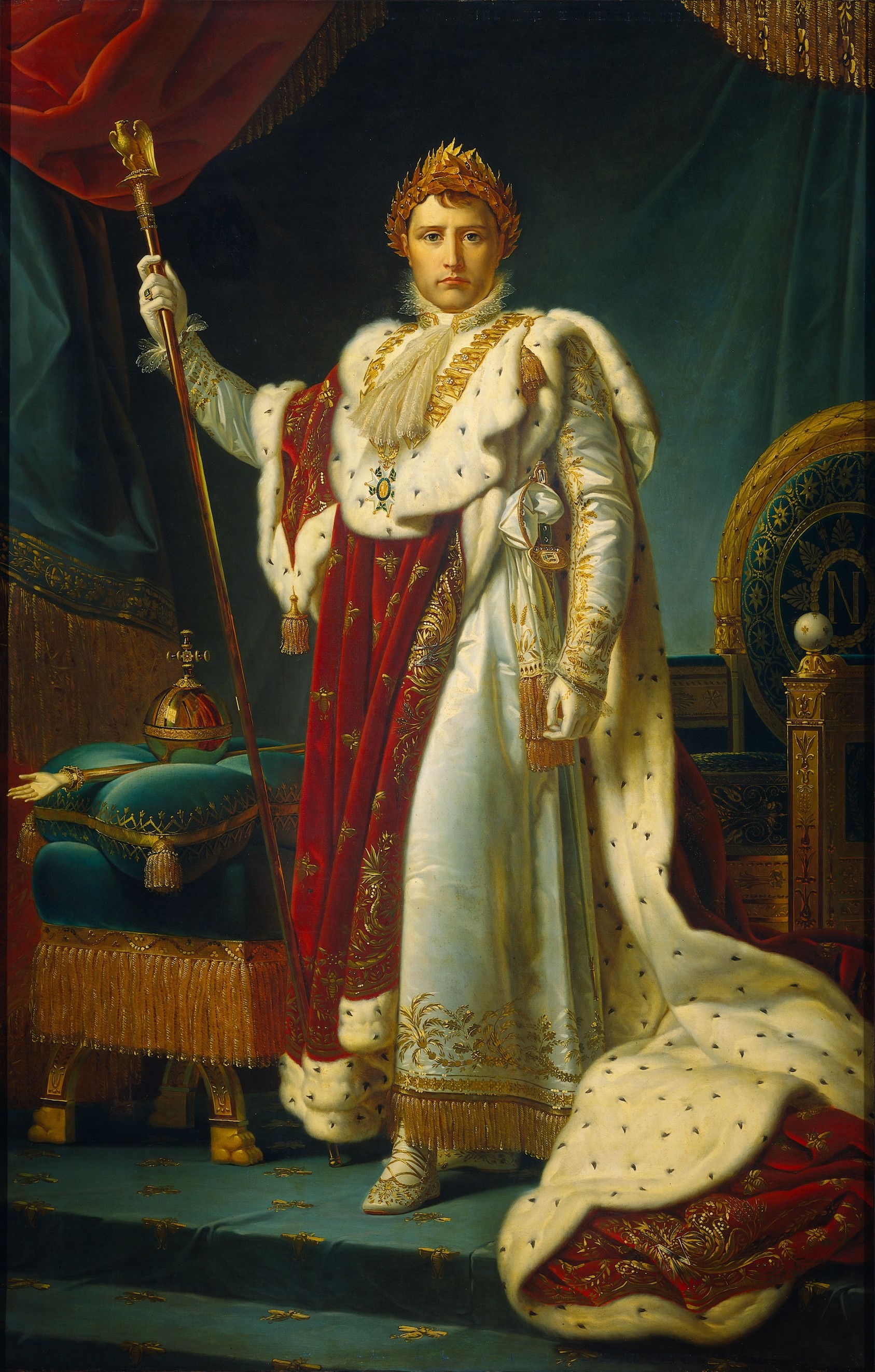
Napoleon in his imperial clothing, at his coronation in 1804. Who says that clothing and textiles do not matter?Napoleon in his imperial clothing, at his coronation in 1804. Who says that clothing and textiles do not matter?I have just attended part of a two-day conference at Naturalis (the massive, natural history museum) here in Leiden, on the theme of indifference. The conference is part of the Brave New World Art & Science series that has been running for nearly ten years.

Each year they concentrate on different themes, such as the ‘Future of Attention' (2023), in order so see how “the worlds of culture, philosophy, science, technology and storytelling will collide”.

As noted, this year’s theme was Indifferenceand it covered both theoretic, philosophical, artistic, and actual themes, from empathy, medical issues, 3-D printing of cultural artifacts, to disability and handicap accessibility (or not).

Every man's dream of domestic bliss: Man smoking his pipe (while dozing), woman darning (his?) socks. Painting by Wybrand Hendriks (d.1831), Frans Halsmuseum, Haarlem.Every man's dream of domestic bliss: Man smoking his pipe (while dozing), woman darning (his?) socks. Painting by Wybrand Hendriks (d.1831), Frans Halsmuseum, Haarlem.My talk of twenty minutes was about indifference to textiles, and concentrated on how textiles are an essential item to everyday life, yet often forgotten – in order to emphasise this point I asked the audience to remove their textiles, ie clothing, a request that got a mixed response! But I hope it brought home the simple fact that we all wear textiles and interact with textiles on a regular and daily basis. It's amazing to regard the number of people who ‘just’ wear clothing without thinking about the textiles what they have on and what it took to make those ‘simple’ pieces of cloth.

The themes in my talk ranged from Tutankhamun and textiles, Napoleon and his coronation textiles, the concept that textiles were ‘only’ a woman’s subject, and that many men are (or think they are) bored by the subject ( generations of farmers, spinners, dyers, weavers, printers and tailors, not to mention male embroiderers and knitters should give a collective sigh at this moment), and historic, international links on a commercial and trade level via textiles.

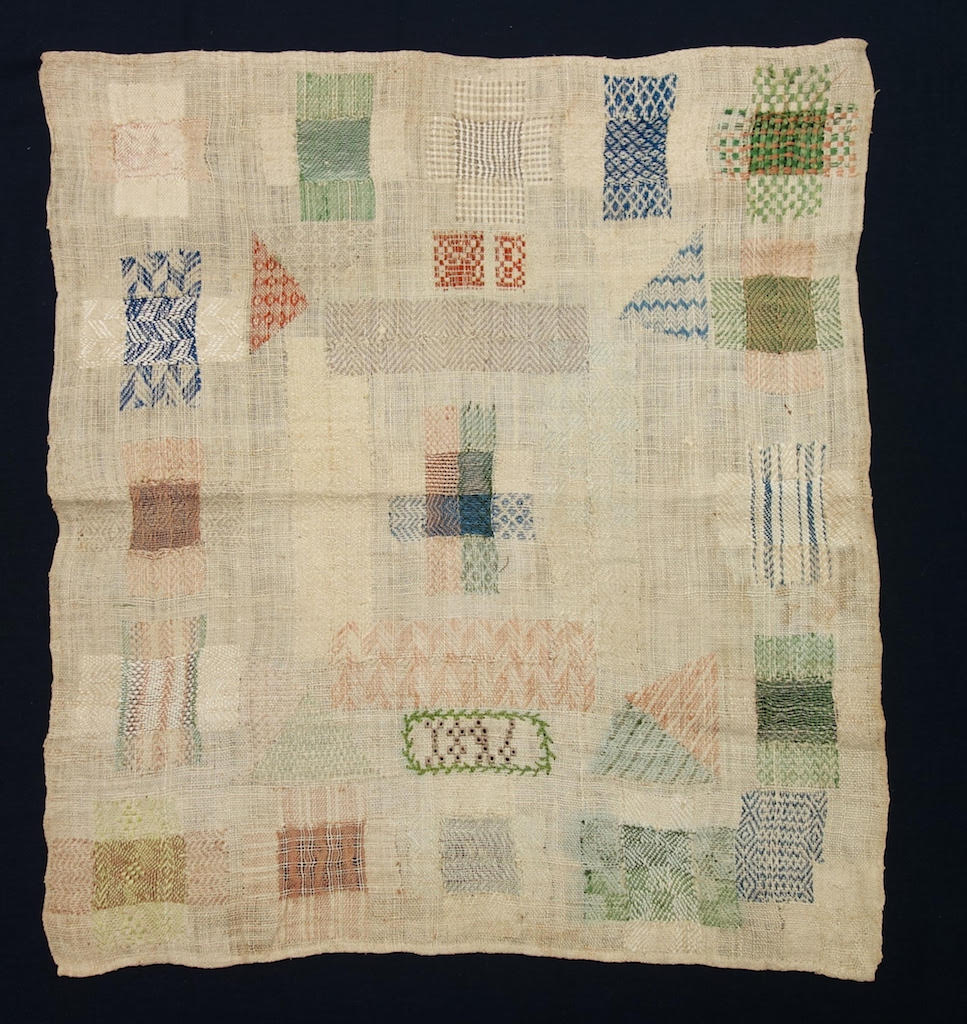
Through the post this morning (9 September) came an unexpected donation from Aagis van Haarst-Dierop (thank you very much for thinking of the TRC !), the mother of a former TRC volunteer, Joke Muller - van Haarst. It is a darning sampler that Aagis thought her grandmother had made in the early 20th century. She was a needlework teacher and may have made it during her teacher training course. But we suspect it may have a very different tale behind it!

Darning sampler with a wide variety of darned patterns. The initials MB are worked towards the top, while the date of 1826 is towards the lower edge. The Netherlands (?), 1826 (TRC 2024.2672).Darning sampler with a wide variety of darned patterns. The initials MB are worked towards the top, while the date of 1826 is towards the lower edge. The Netherlands (?), 1826 (TRC 2024.2672).

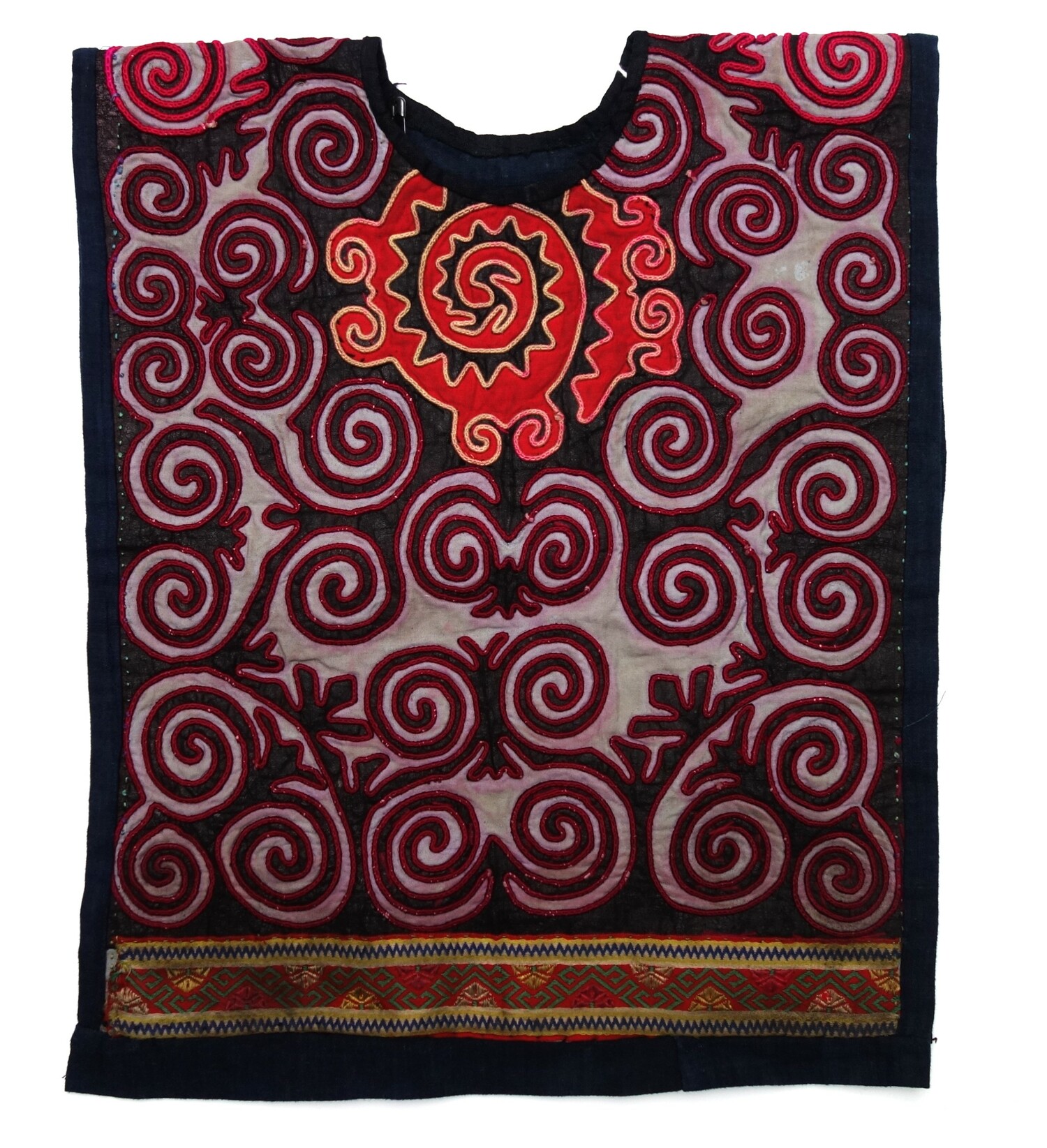
Tunic with appliqué decoration, Jianhe Miao, China, 20th century (TRC 2024.2604).Tunic with appliqué decoration, Jianhe Miao, China, 20th century (TRC 2024.2604).Willem and I went to Belgium the other day in order to pick up the second group of textiles and garments from Hélène van Spaendonck. Most of these garments were collected among the Maio minority ethnic group in southern China.

As noted in an earlier blog, she is downsizing and has slowly been giving part of her beloved collection of textiles and garments to various family members and museums.

The bulk of the textiles, however, she decided to give to the TRC because, as she told us, we understand the objects, we are active in preserving textile skills and knowledge and will use these objects to pass on the skills.

The fact that many people have access to the collection, directly and online, was another important reason for her to work with us.

Fig. 1. Ottoman Turkish apron, late nineteenth century (TRC 2003.0199).Fig. 1. Ottoman Turkish apron, late nineteenth century (TRC 2003.0199).My blog of 9 August about an Ottoman-period apron now in the TRC Collection (Fig. 1TRC 2003.0199), certainly ‘opened up a can of worms’, as the saying goes.

We received loads of questions: How was the bib held in place? The ties are too short! Strange shape! It is too flimsy to be useful! Even, what is an apron?

Let’s take the last question first. According to the Shorter Oxford English Dictionary an apron is: ….. (1) An article of dress, orig. of linen, worn in front of the body, to protect the clothes from dirt or injury, or simply as a covering; (2) A similar garment worn officially by bishops, deans, Freemasons, etc., 1704; (3) Anything like an apron in shape or function esp. the leather coverings for the legs in a gig etc., 1875.

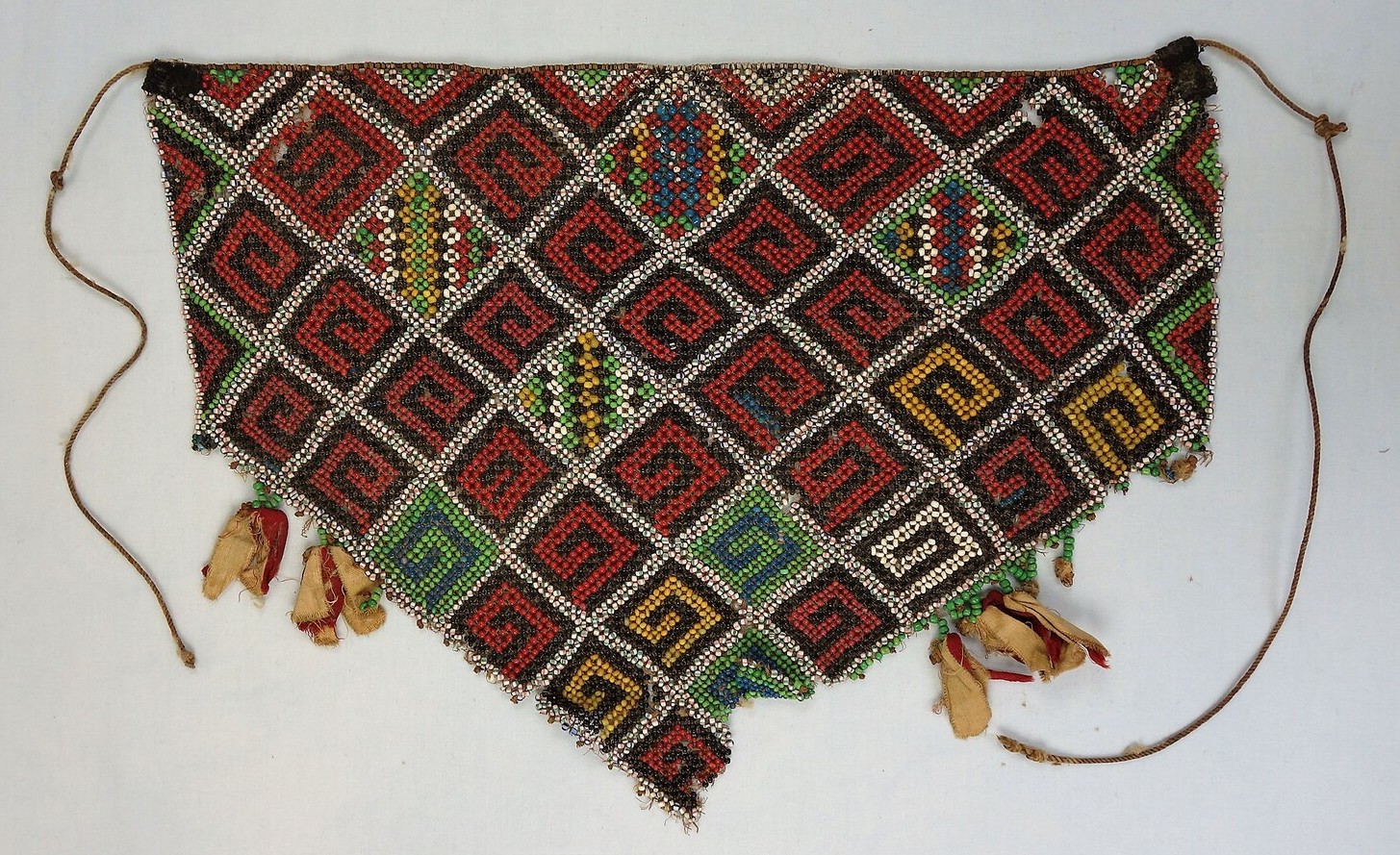
Fig. 2. A triangularly shaped apron made from glass beads in various colours, which are used to create simple, geometric patterns. New Guinea, Indonesia, 1930s (TRC 2016.0998).Fig. 2. A triangularly shaped apron made from glass beads in various colours, which are used to create simple, geometric patterns. New Guinea, Indonesia, 1930s (TRC 2016.0998).The modern English word apron derives from the medieval English napron, which comes from the old French word naperon, and eventually from the Latin nappa, meaning a napkin.

Aprons can be made out of any material, from thick leather (such as those worn by blacksmiths) and beading (Fig. 2; TRC 2016.0998), to fine and semi-transparent cloth, in fact they can be made of anything. They can also be decorated with embroidery or printing, or be ornamentally woven.

By Shelley Anderson, 1 September 2024

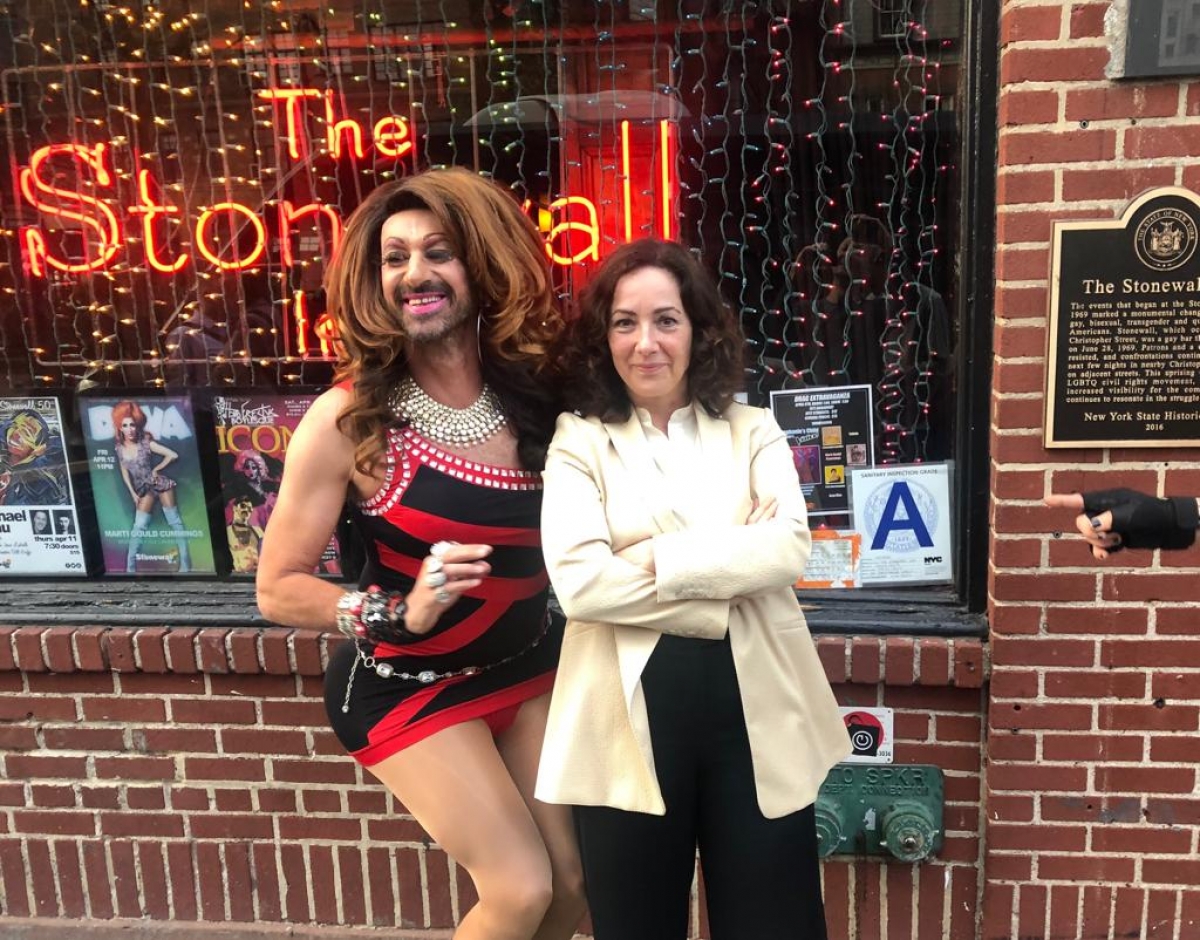
One of the biggest lessons I’ve learned volunteering at the TRC is how dress is a marker of identity. What we wear says so much about how we see ourselves and how we want others to see us, about our dreams and self-expression. One major identity we show by what we wear is gender.

Amsterdam drag queen Jennifer Hopelezz (l) poses with Amsterdam Mayor Femke Halsema (r) in front of the Stonewall Inn in New York City, in April 2019. Hopelezz’s dress reflects the red and black colours of the Amsterdam (NL) city flag.Amsterdam drag queen Jennifer Hopelezz (l) poses with Amsterdam Mayor Femke Halsema (r) in front of the Stonewall Inn in New York City, in April 2019. Hopelezz’s dress reflects the red and black colours of the Amsterdam (NL) city flag.

In 2019 the TRC put together its digital exhibition Rainbow People: 50 Years of Stonewall.  It was a celebration of the 50th anniversary of the Stonewall Uprising, which kickstarted the modern movement for LGBTQ+ rights. The exhibition includes about 30 objects, from badges and jewellery, to a pink shirt from an Irish LGBT+ choir (TRC 2019.1992) to a hand crocheted rainbow kippa (TRC 2019.1607).

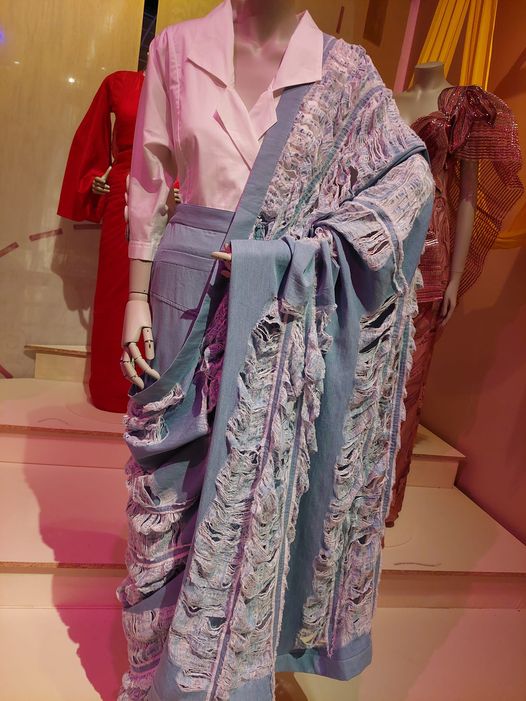
Distressed denim sari by Diksha Khanna. Made in 2018 from scrap denim, it consists of a long denim skirt with an attached lighter denim pallu, and cotton blouse. Photo: Shelley Anderson.Distressed denim sari by Diksha Khanna. Made in 2018 from scrap denim, it consists of a long denim skirt with an attached lighter denim pallu, and cotton blouse. Photo: Shelley Anderson.By Shelley Anderson, TRC volunteer, 20 August 2024

The sari is an iconic women’s garment from India. At its simplest, a sari is a rectangular, unstitched length of cloth anywhere from 4 to 9 yards long, draped around the body as clothing. Some researchers believe its origins lie 5,000 years in the past, in the Indus Valley civilization, where a statue of a bearded man was excavated, a fabric draped around his torso, leaving his right shoulder bare. There are references to draped garments in the sacred Rig Veda, dated circa 1,000 BCE, and in later Jain and Buddhist writings, from circa 450 BCE.

While there are over 30 different regional variations, a modern sari is usually worn wrapped or pleated around the waist (often tucked or pinned into a petticoat), with the end (called pallu)often heavily embellished, thrown over the left shoulder. A short-sleeved blouse, called a choli, is worn underneath. The TRC has almost 200 saris from the late 20th to the early 21st century in its collection. They are from all over the Indian subcontinent, including Assam, West Bengal, Tamil Nadu and Kerala, and are primarily from chiffon, cotton, or silk.

by Marije Boerma, TRC Volunteer and specialist in African textiles and garments, 13 August 2024

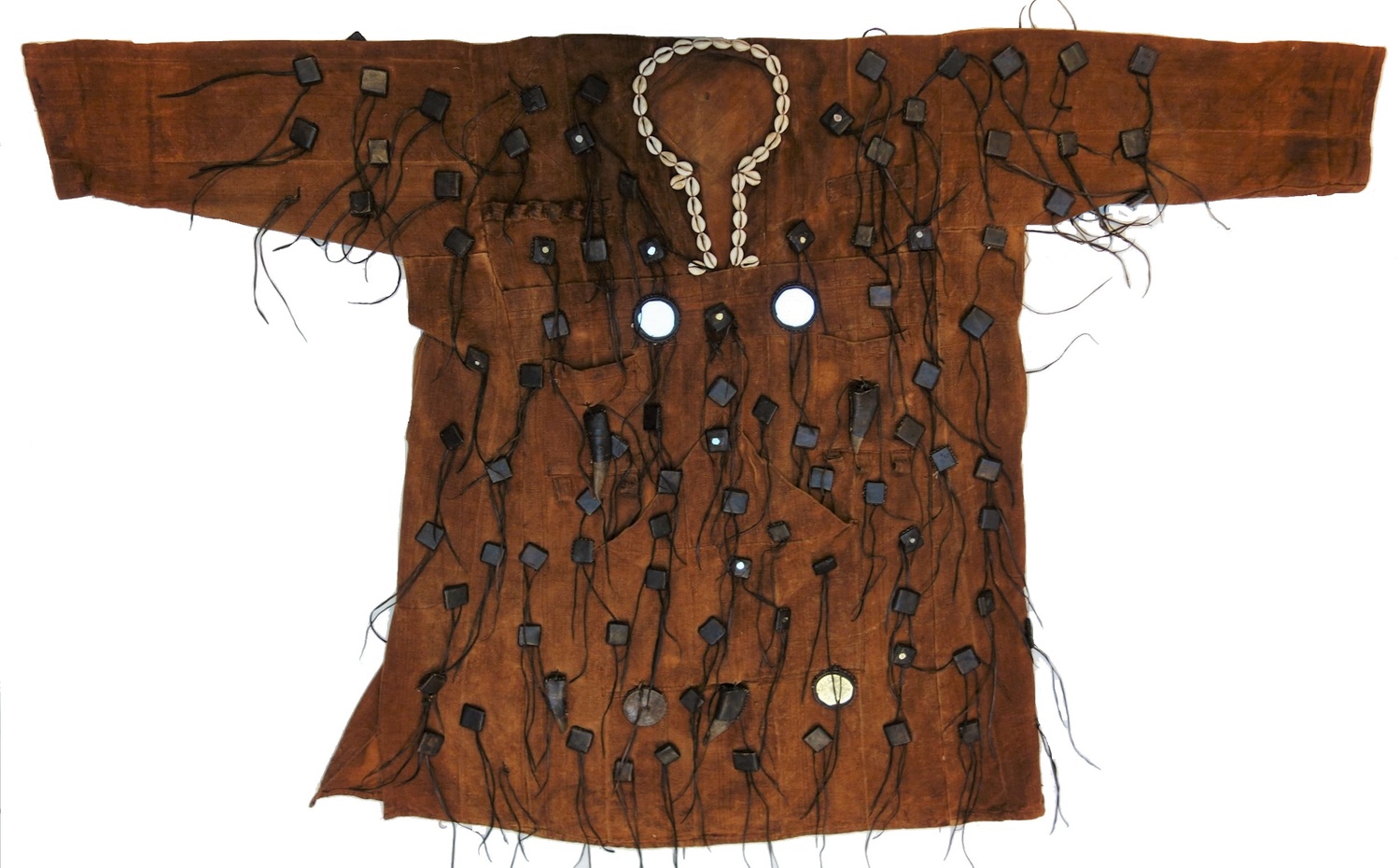
Every day at the TRC may lead to something remarkable. All textiles and garments have stories to tell, and at times some of them really demand your attention. This was the case for the Donso hunting tunic that I encountered while checking on the state of the collection boxes.

Bambara Donso's tunic (donsodloki), Mali, late 20th century (TRC 2018.3397).Bambara Donso's tunic (donsodloki), Mali, late 20th century (TRC 2018.3397).

Zoek in TRC website

Contact

Boerhaavelaan 6
2334 EN Leiden.
Tel. +31 (0)71 5134144 (kantooruren)  
office@trcleiden.org

Het TRC is elke dag geopend tussen 10.00 en 15.00 uur.

facebook 2015 logo detail


instagram vernieuwt uiterlijk en logo


Bankrekening

NL39 INGB 0002 9823 59, t.a.v. Stichting Textile Research Centre.

Financiële giften

Het TRC is afhankelijk van project-financiering en privé-donaties. Al ons werk wordt verricht door vrijwilligers. Ter ondersteuning van de vele activiteiten van het TRC vragen wij U daarom om financiële steun:

Giften kunt U overmaken op bankrekeningnummer (IBAN) NL39 INGB 000 298 2359, t.n.v. Stichting Textile Research Centre. BIC code is: INGBNL2A

U kunt ook, heel simpel, indien u een iDEAL app heeft, de iDEAL-knop hieronder gebruiken en door een bepaald bedrag in te vullen: 


Omdat het TRC officieel is erkend als een Algemeen Nut Beogende Instelling (ANBI), en daarbij ook nog als een Culturele Instelling, zijn particuliere giften voor 125% aftrekbaar van de belasting, en voor bedrijven zelfs voor 150%. Voor meer informatie, klik hier