• F1
  • F3
  • F2
  • F4

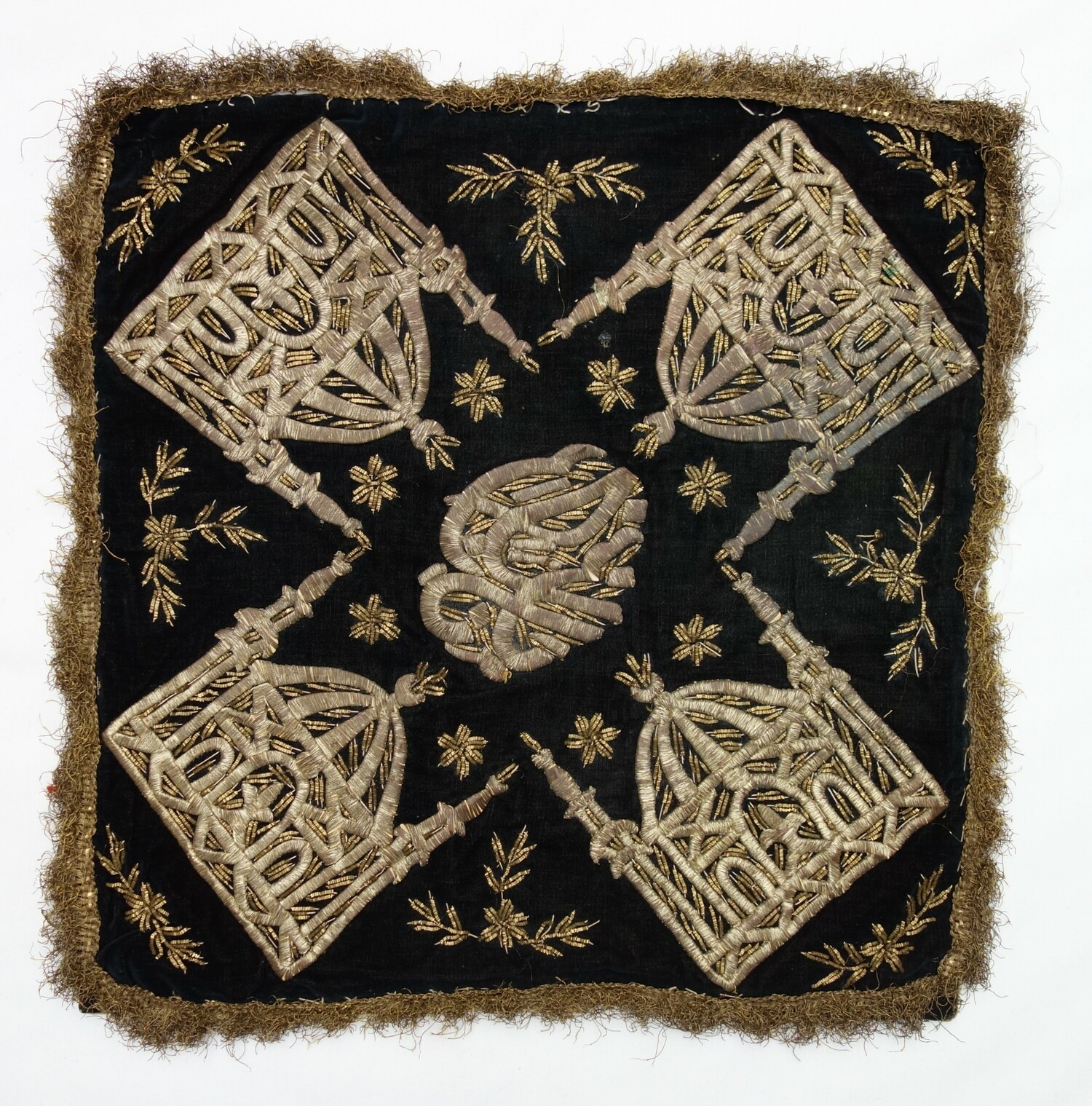
Embroidered panel from Ottoman Turkey, 19th century, probably for the tourist market (TRC 2024.2255).Embroidered panel from Ottoman Turkey, 19th century, probably for the tourist market (TRC 2024.2255).(11 August 2024) In a recent TRC blog about an Ottoman-period embroidered apron (TRC 2003.0199), I mentioned that the garment, which also has embroidered texts in Arabic script, may have been intended for the tourist market.

Recently, the TRC was given two metal-thread embroidered panels, also from Ottoman Turkey, which include images of mosques, crescent moons and stars, as well as some texts (TRC 2024.2255 and TRC 2024.2256).

What do the texts say, and were both of them, as we suspect, intended for the 19th century tourist market?

These questions were initiated by the apron discussed previously. Basically, the apron consists of a small bib, a skirt section and waist ties. They were made from a fine cloth, decorated with floral, geometric and paisley (buteh) motifs in white silk and gold-coloured metal thread. There are also texts around the outer edge of the skirt section.

The bib has a signature (tughra) based on the name of a sultan, worked in satin stitch, using white floss silk and silver metal thread (passing). In addition, the waist ties have texts in Arabic script (although one of these texts is worked upside down).
(9 August 2024) I am currently working on the fascinating, but complicated history of Ottoman Turkish embroidery, for the 5th volume of the Bloomsbury World Encyclopaedia of Embroidery. The volume is about central and eastern European embroidery, including Russia, the Balkans, Greece, Turkey, and the Caucasus.

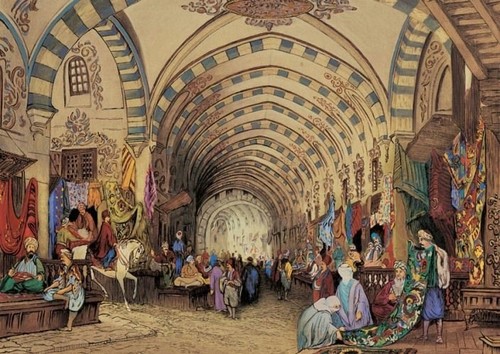
A drawing by an anonymous artist portraying the daily life in the Grand Bazaar in Ottoman times.A drawing by an anonymous artist portraying the daily life in the Grand Bazaar in Ottoman times.As part of the initial research I have been reading Turkish and European travelogues and reports about life in the Ottoman Empire, in order to glean further information about embroidery, its many forms, techniques and influences.

One of the books I have been delving into is by Charles White (1793-1861). White was a former colonel in the British army, who served under Wellington in the Peninsular War between 1807-1814. He later went on to live in Istanbul (which he called Constantinople) between 1841 and 1844. He wrote a three-volume book entitled Three Years in Constantinople: Domestic Manners of the Turks (London, 1845). He died in Brussels in 1861.

Dr Willem Vogelsang, Lt Col. (ret) and former Cultural Advisor to the Dutch armed forces in Afghanistan. 8 August 2024

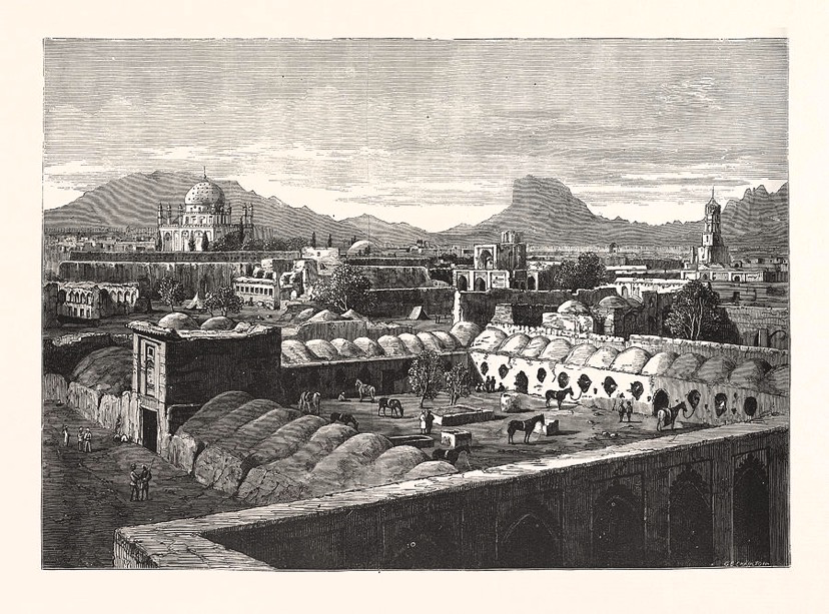
Wood engraving based on a photograph of the Kandahar citadel where Harry Lumsden and his team stayed in 1857-1858. The Illustrated London News, 14 August 1880, p. 157. Public domain. Inside the citadel was a filature for sericulture.Wood engraving based on a photograph of the Kandahar citadel where Harry Lumsden and his team stayed in 1857-1858. The Illustrated London News, 14 August 1880, p. 157. Public domain. Inside the citadel was a filature for sericulture.

While preparing a manuscript for a book about 19th century foreign perspectives on Afghanistan, I came across an intriguing passage in Major Harry Lumsden’s report of his mission to Kandahar (in southern Afghanistan) in 1857-1858. It reminded me of a series of articles about modern sericulture in Herat, in the west of the country, recently published in the Kabul Times (compare ‘Sericulture turning common in Herat’, 22 July 2019, and ‘Herat’s silk industry offers women opportunity to work outside home’, 16 August 2022).

De afgelopen dagen hadden we een Indiaas tintje op het TRC.

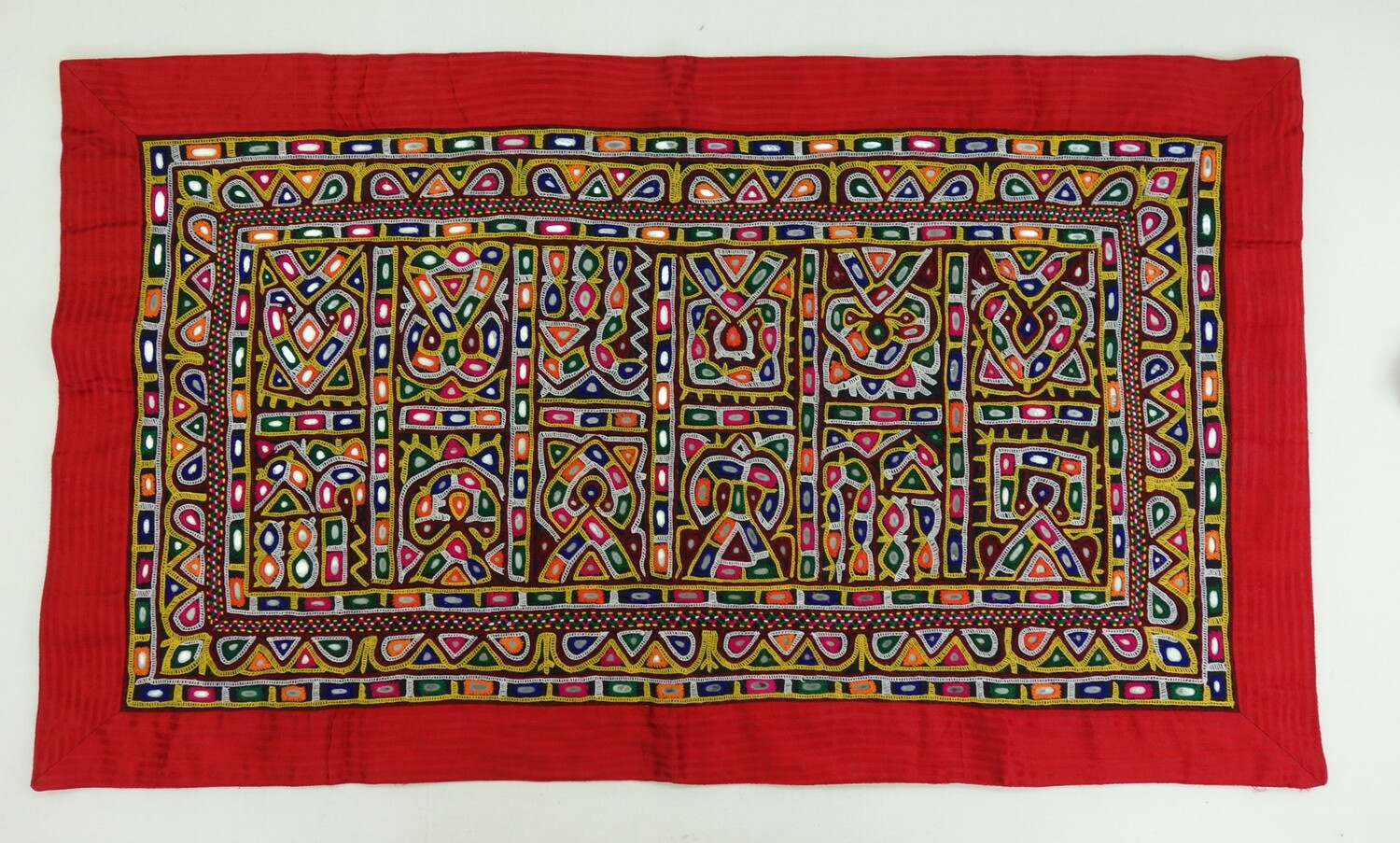
Rechthoekig stukje stof versierd met geometrische en zeer gestileerde mensfiguren in verschillende kleuren, en met kleine glazen spiegeltjes (shisha-werk). India, 2017 (TRC 2017.2653).Rechthoekig stukje stof versierd met geometrische en zeer gestileerde mensfiguren in verschillende kleuren, en met kleine glazen spiegeltjes (shisha-werk). India, 2017 (TRC 2017.2653).

Afgelopen week kregen we bezoek van Lipika Bansal (van de Textielfactorij in Amsterdam), die verschillende groepen Indiase ambachtslieden naar Nederland brengt om speciale workshops te geven. Vroeger omvatten deze lessen blokdrukvormen, maar Lipika breidt nu uit met verschillende Indiase borduurtechnieken.

Ze georganseerd momenteel de overkomst naar Nederland van een Kutch-borduurster, Geetaben Meriya, die in september komt om lessen te geven over shisha-werk, op verschillende locaties in het land. We hebben afgesproken om een ​​van deze masterclasses bij het TRC te houden. Meer specifiek zal de bijeenkomst gaan over Kutch-spiegelwerk (shisha), waarbij glazen spiegeltjes op een stoffen ondergrond worden bevestigd met behulp van verschillende borduurtechnieken.

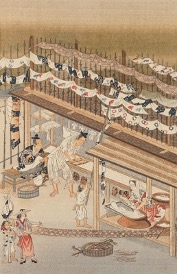
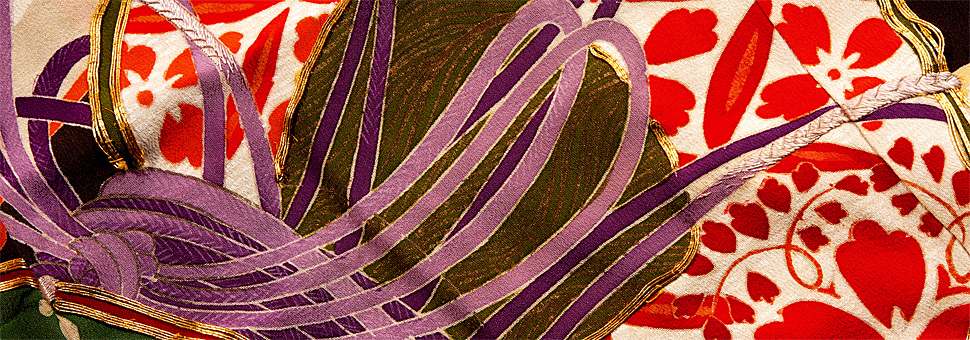
A Japanese woodcut by Kano Yoshinobu (1552-1640) depicting a stencil dyeing workshop with a range of textiles drying in the sun  Kita’in temple, (20th century reproduction, private collection).A Japanese woodcut by Kano Yoshinobu (1552-1640) depicting a stencil dyeing workshop with a range of textiles drying in the sun Kita’in temple, (20th century reproduction, private collection).Gillian Vogelsang-Eastwood, Director TRC, 28 July 2024

In 2023, Sytske Wijnsma donated a group of 28 Japanese textile stencils (katagami; TRC 2023.0197 - TRC 2023.0225) to the TRC. A few weeks ago she gave another 40 examples (TRC 2024.2008TRC 2024.2048). Most of the stencils have been used, but some are pristine. They represent various forms of stencils used for paste-resist dyeing (katazome), which was and still is used to create intricate patterns and motifs for a range of garments and soft furnishings.

A brief history

It is not clear when the use of paper stencils for paste-resist dyeing was first used in Japan, but it is likely that they were in use by the end of the Murimachi (period 1336-1573). More details are available from the Edo period (1603-1868), which is regarded as a golden age for stencil dyeing. It would appear that by that time the technique was applied in various Japanese towns and cities, as well as temples.

Gillian Vogelsang-Eastwood, 23 July 2024

Pockets – hmmmmm, even though I have pockets on many of the garments I wear on a daily basis, it is not a subject I have ever given much thought to, let alone realise how many different types there are! But over the last few weeks I have been seeing pockets all over the place.

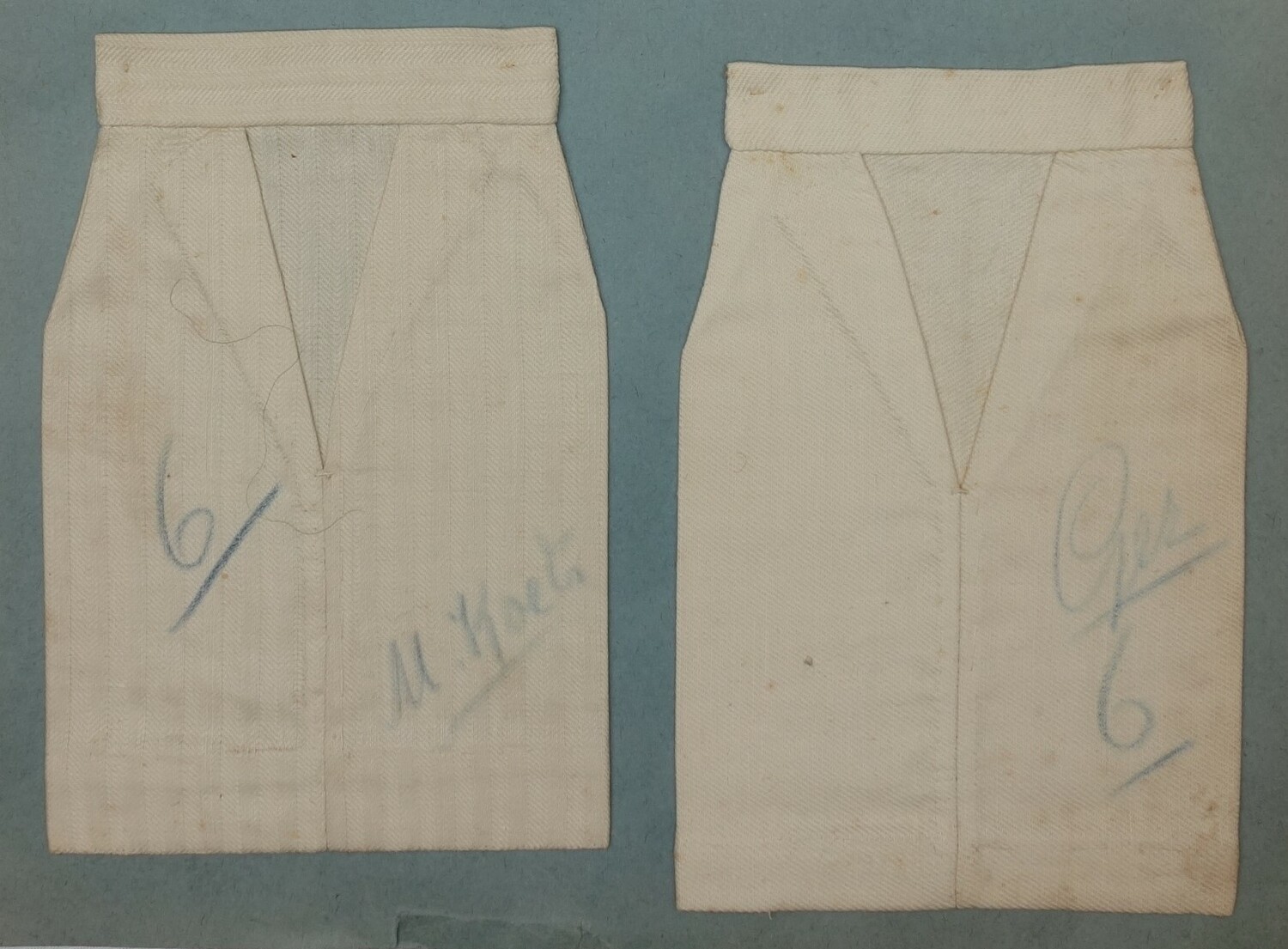
Two miniature school samples of pockets. The Netherlands, c. 1915 (TRC 2024.0873.27).Two miniature school samples of pockets. The Netherlands, c. 1915 (TRC 2024.0873.27).

It started with a box of school samples from the former Naaldkunst Museum (TRC 2024.0873.27), which include some ordinary pockets on garments, as well as some underskirt pockets, which are known in Dutch as a rokzak (literally ‘skirt bag’). They came in both miniature practice pieces and in full-scale examples and were probably made by girls ranging in age from about 10 to 14.

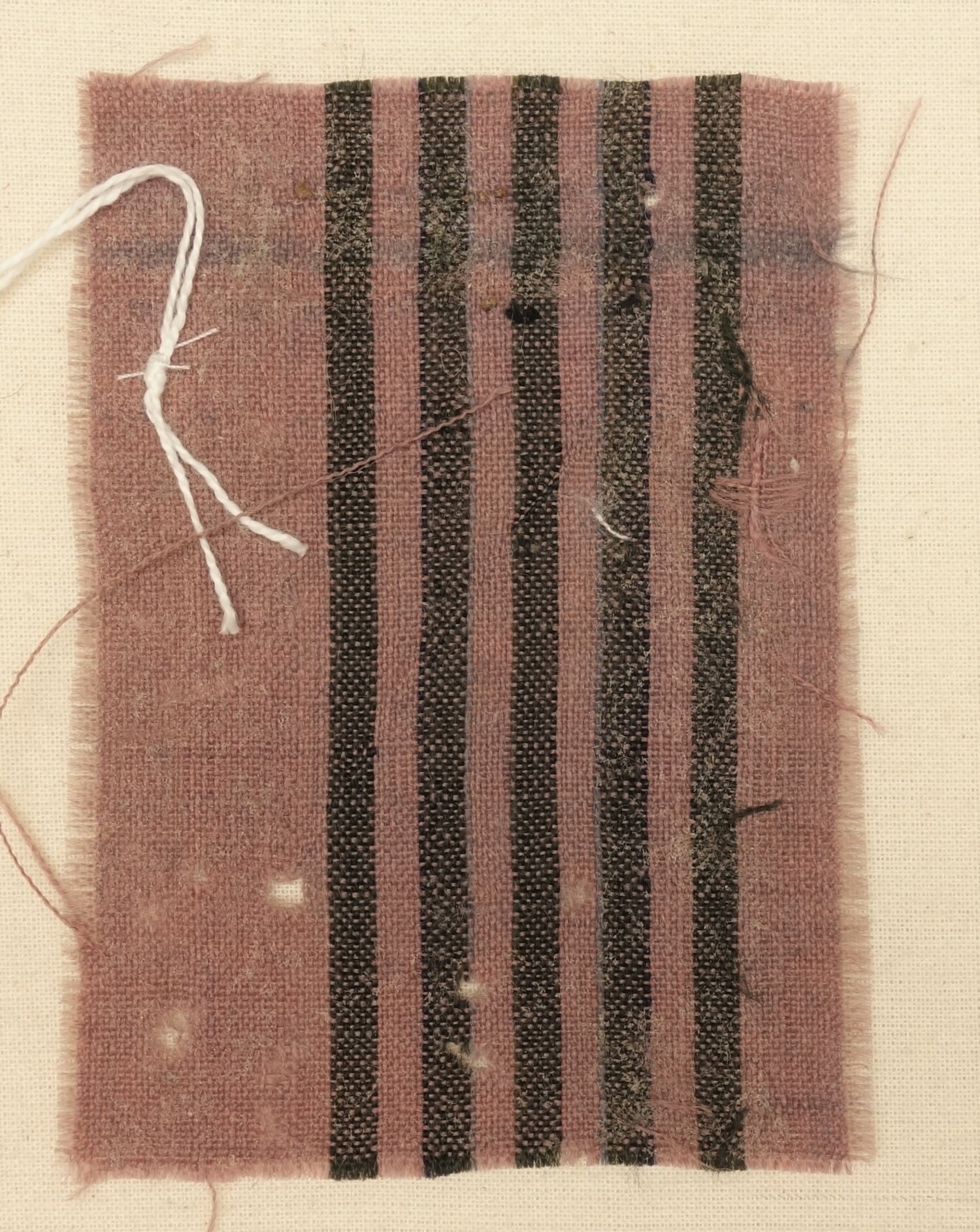
Sample of worsted cloth (stuff) with narrow black stripes on a purple ground. Norwich, 18th century (TRC 2023.0877).Sample of worsted cloth (stuff) with narrow black stripes on a purple ground. Norwich, 18th century (TRC 2023.0877).by Willem Vogelsang, 12 July 2024

Last year Dr Michael Nix from Norwich, England, gave a lecture at the TRC in Leiden about historical textiles from Norwich and their connections with the Netherlands, in particular with the historical town of Leiden.

My attention was drawn to the terminology he used for some Norwich textiles made from wool, in particular his use of the two words ‘stuff’ and ‘cloth’. I was intrigued. The English ‘stuff’ has various meanings (compare ‘I am stuffed’), but as a term for a specific type of textile, I was wondering whether there was a link with the common Dutch word for textile, namely stof.

According to Dr Nix, the English word stuff is an old word for a fabric made from combed wool fibres, never fulled. They produce a thin, fine and strong thread, for instance used for men’s suits. The textiles are generally known as worsted fabrics (named after the village of Worstead in East Anglia, not far from Norwich). The word cloth, on the other hand, is often specifically used for textiles made from carded wool, often fulled. This fabric is soft and fluffy and used for items such as blankets, jumpers, scarves, etc.

Yet, it is not that straightforward. Historical records indicate that the word stuff was also sometimes used for textiles that were made of other types of fibres, such as a mixture of combed and carded wool, or even of combed wool and silk.

Recently acquired 20th century Japanese kimono with ikat patterns (TRC 2024.1477).Recently acquired 20th century Japanese kimono with ikat patterns (TRC 2024.1477).Gillian Vogelsang-Eastwood, Director, 12 July 2024

The TRC Collection is an essential and important aspect of the work of the TRC – in managerial terms, it is our unique selling point. Details about the individual items in the collection can be found in the online catalogue, while an updated (per 11 July 2024) appraisal with information and highlights about different aspects of the collection can be downloaded here.

Many of the items in the collection have been donated by individuals, groups and museums, and represent Citizen Culture and Heritage actively at work. More details about such donations can be found by browsing through the TRC Blog pages.

Zoek in TRC website

Contact

Boerhaavelaan 6
2334 EN Leiden.
Tel. +31 (0)71 5134144 (kantooruren)  
office@trcleiden.org

Het TRC is elke dag geopend tussen 10.00 en 15.00 uur.

facebook 2015 logo detail


instagram vernieuwt uiterlijk en logo


Bankrekening

NL39 INGB 0002 9823 59, t.a.v. Stichting Textile Research Centre.

Financiële giften

Het TRC is afhankelijk van project-financiering en privé-donaties. Al ons werk wordt verricht door vrijwilligers. Ter ondersteuning van de vele activiteiten van het TRC vragen wij U daarom om financiële steun:

Giften kunt U overmaken op bankrekeningnummer (IBAN) NL39 INGB 000 298 2359, t.n.v. Stichting Textile Research Centre. BIC code is: INGBNL2A

U kunt ook, heel simpel, indien u een iDEAL app heeft, de iDEAL-knop hieronder gebruiken en door een bepaald bedrag in te vullen: 


Omdat het TRC officieel is erkend als een Algemeen Nut Beogende Instelling (ANBI), en daarbij ook nog als een Culturele Instelling, zijn particuliere giften voor 125% aftrekbaar van de belasting, en voor bedrijven zelfs voor 150%. Voor meer informatie, klik hier