
Velvet
1. Introduction
For thousands of years individual textiles, huge bales of cloth, not to mention people wearing clothes and carrying textiles moved around the world. They travelled in all directions, literally north, south, east and west and everywhere in-between!
Sometimes this movement was voluntary in the form of trade or pilgrimage, on other occasions it was forced, as in the deliberate exile and movement of specific ethnic and cultural groups and craftsmen and women. All of these travels have added to an enormous pool of techniques and skills that make a piece of cloth or a garment, and as a result every textile may entail a long story of travel and development.
The on-line exhibition Textile Travels looks at some textiles with stories of complicated travels . They are told more or less in chronological order and begin with medieval Indian textiles that were exported to the west as part of a much bigger trade in textiles, thousands of years old, that led from the Indian sub-continent to China, Indonesia, Central Asia, Iran, Africa, the Middle East, as well as the Mediterranean and Europe.
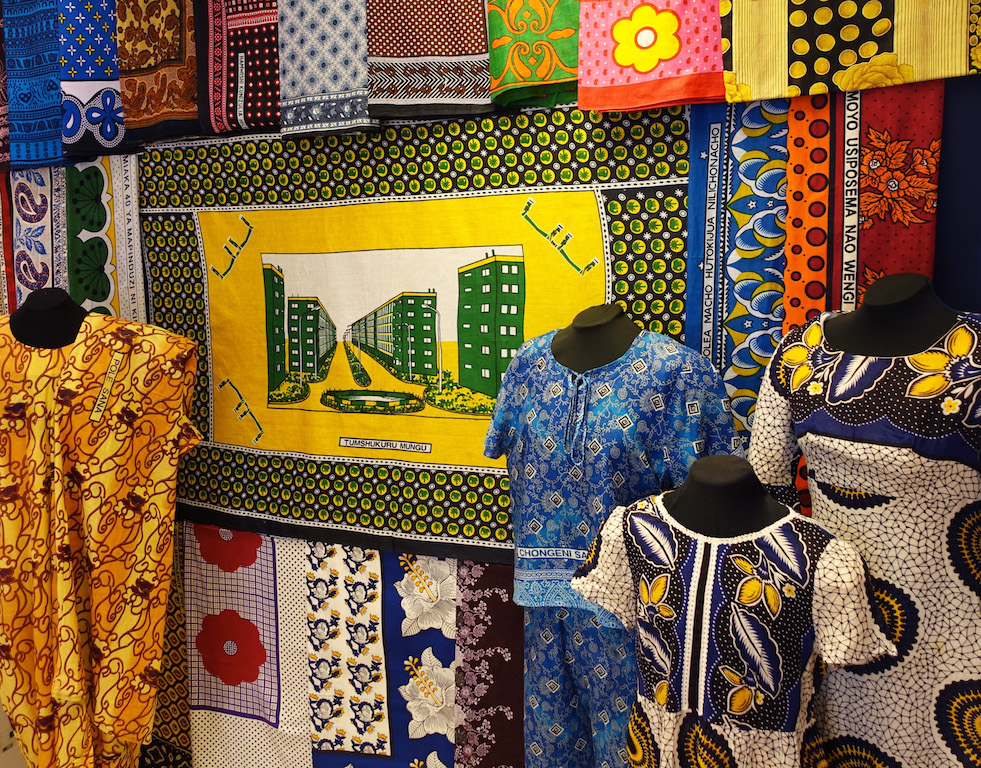 Impression of the TRC exhibition Textile Travels, Sept.-Dec. 2022
The seventeenth century saw many changes in the world, when European trade, and with it military and political power expanded rapidly. This story is reflected in the development of the Madras cotton industry in southeastern India and the British trade in so-called George textiles from Madras, that are also known in Holland as Madras-stof, still popular in West Africa and the West Indies.
Another significant development in the Indian-African textile trade took place in the late 19th century when wrap-around cloths for women were printed and exported from India. These became known as kangas and are now mainly locally produced in Kenya and Tanzania for the East African market. They are characterised by the presence of a saying in Swahili that reflects daily feelings and events.
 Kanga with the depiction of President Barack Obama (TRC 2015.0350).
Feelings and events are also reflected in another group of textiles, namely the so-called Wax Hollandais prints. These textiles are based on Indonesian resist-dyed batik techniques, and they were imitated from the mid-19th century by the Vlisco company in Helmond, the Netherlands and became (and still are) an important and prestigious type of printed textile found in West and Central Africa. They have since been copied by numerous printing companies in Africa, Asia, as well as Europe.
There is an imitation Wax Hollandais that was bought in the late 20th century in Nigeria. The cloth may have been printed in Nigeria itself or possibly in India for the export trade with West Africa. It shows a series of long cloth rolls that reflect the production process of tie-and-dye leheriya cloth from Rajasthan, India. The cloth has a selvedge text that states: VERITABLE REAL WAX 2181", in imitation of Vlisco labels.
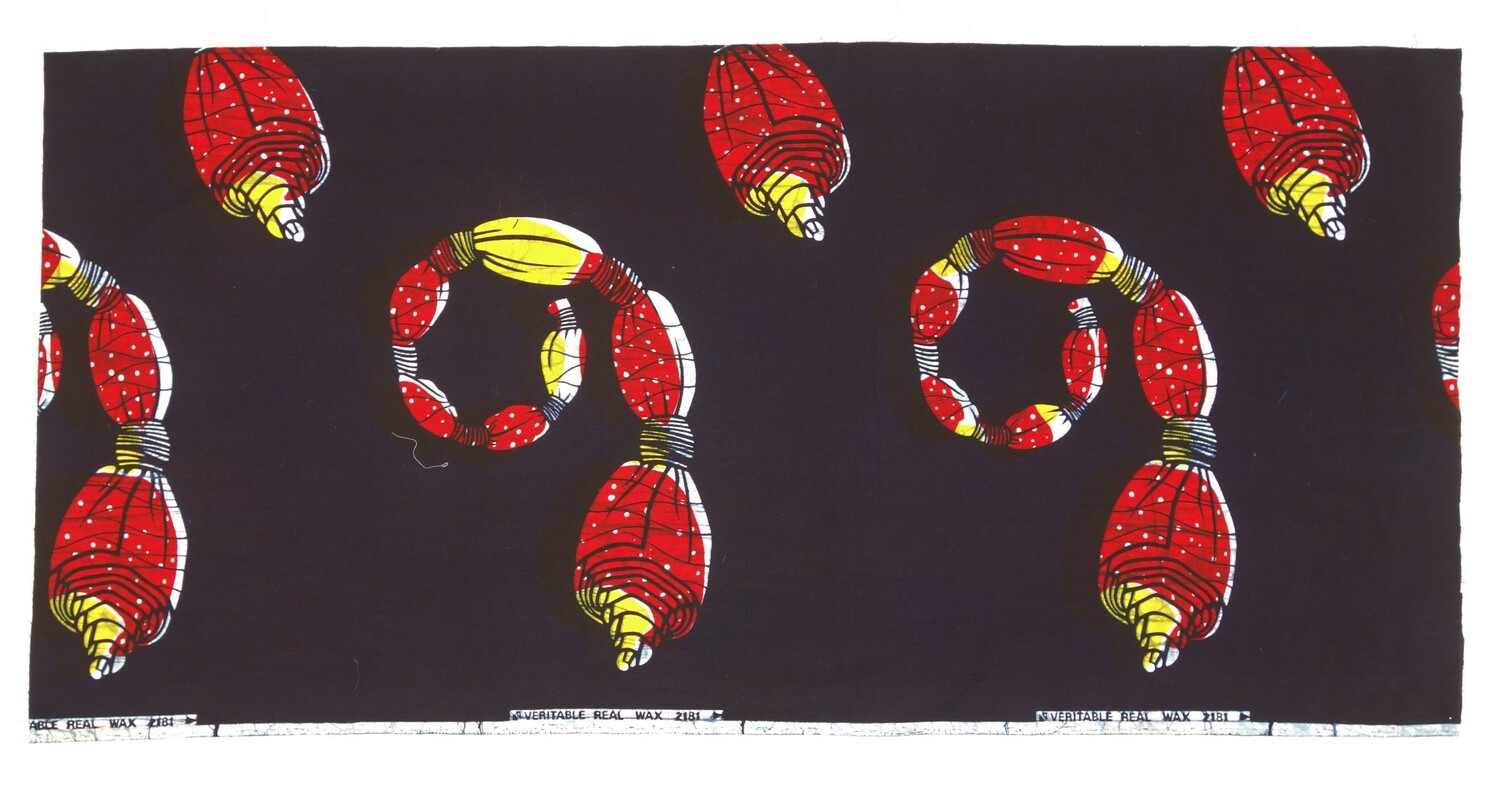 Wax print from Nigeria, showing the rolled up cloths of Rajasthani resist-dyed leheriya textiles (TRC 2022.2322).
Finally, a related story is that of bazin cloth very popular in West Africa, especially in countries such as Ghana, Mali and Sierra Leone. Bazin is a damask cotton cloth made in Europe (the best is said to come from Austria), which is sometimes dyed using West African resist techniques, while others are produced and printed elsewhere, including China.
1. Introduction to Berlin work
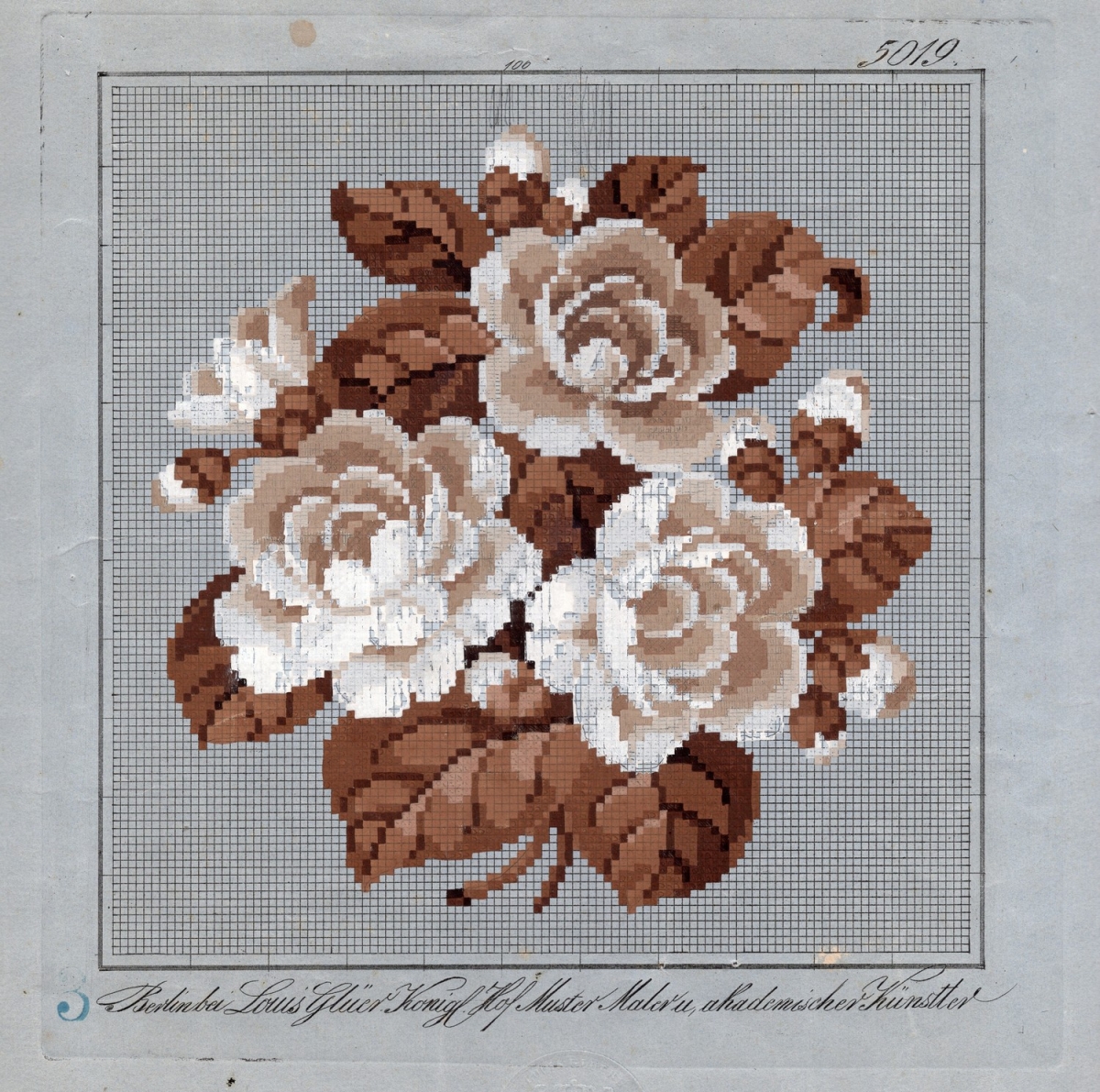
Berlin work is a style of embroidery that is normally associated with the use of woollen yarn (tapestry yarn) on canvas. It was made in the West (notably Northern Europe and North America). from the mid-nineteenth century. It was usually worked in a single stitch, notably cross stitch or tent stitch, but it was not restricted to wool work. The same pattern charts were used to create knitted, as well as beaded designs.
The advent of this style of embroidery and the charts that were made to help with the embroidery, also saw developments in a wide range of canvases, materials such as aida, and related techniques such as tramming. The influence of Berlin wool work and indeed many designs can still be found at the beginning of the twenty-first century in commercial canvas embroidery kits.
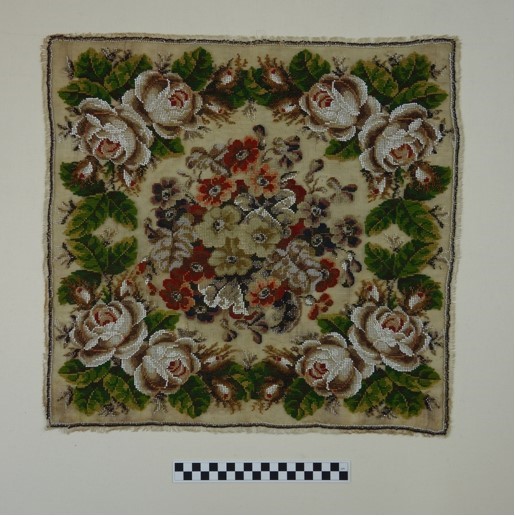 Berlin work panel using applied glass bead and hand embroidery with woollen threads (1860’s; TRC 2008.0433). For more information, c;lick on the illustration.
1. Introduction
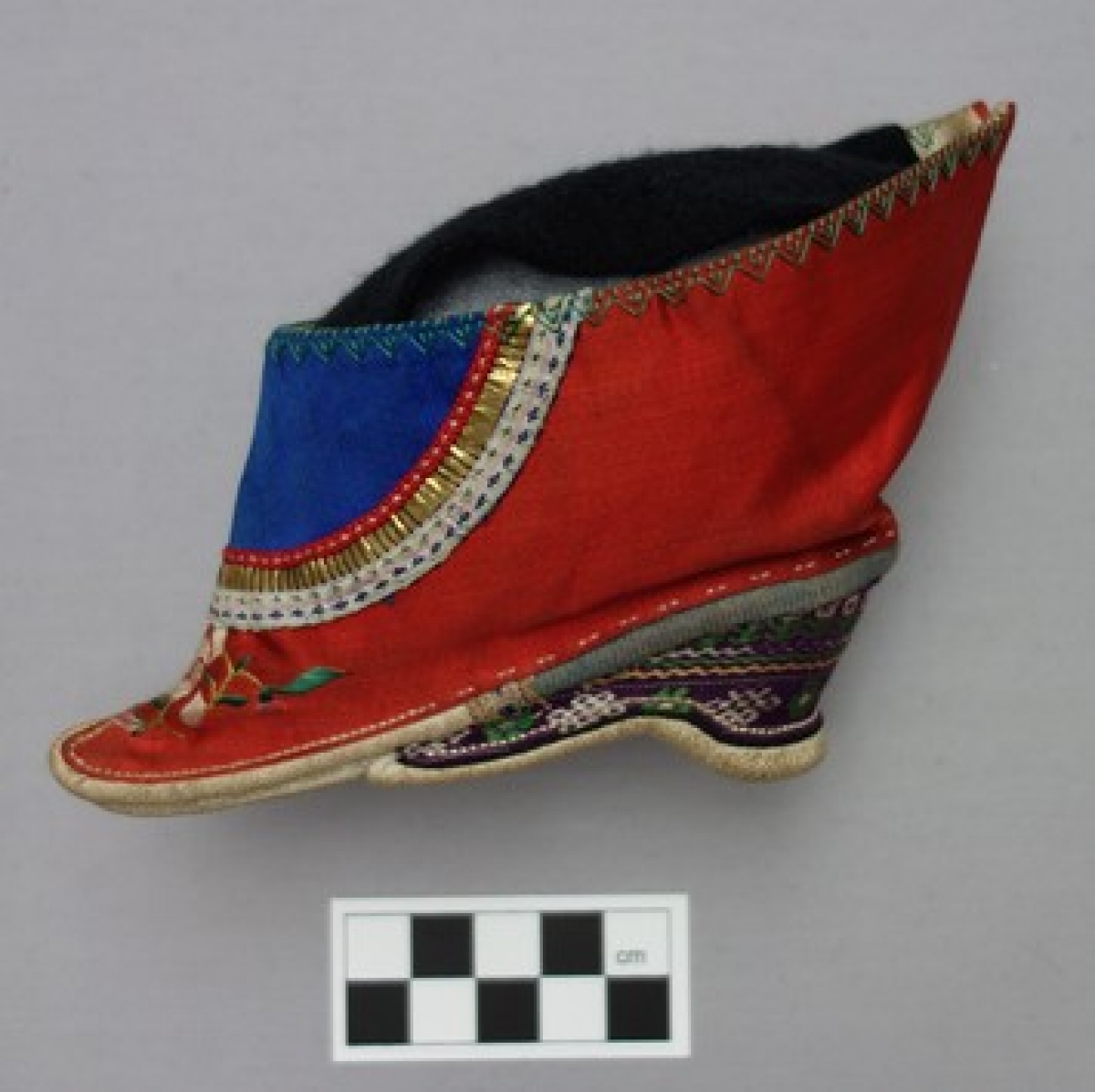
Chan zu (lit. “bound feet”) is the practice of binding young girls’ feet very tightly in order to prevent further growth and normal development. The tradition prevailed in China for about 1,000 years until the last reported case of binding in the mid-20th century. At first these tiny and re-modelled feet were merely fashionable for the elite, then they became socially acceptable. The next stage was when the concept of “lotus feet” (lian zu) became a custom and gained wider acceptance and eventually became an essential element in women’s life.
But there was never one type of lotus foot or shoe, instead there were many forms in which local and regional fashions and developments played an important role, namely in the size, shape and final appearance of the feet and their coverings. It was always the aim to create the appearance of a tiny foot. Only the shaped tip of the foot was placed in the shoe, the heel was normally supported by bandages and sometimes with strips of bamboo. The heel was hidden from public view by a series of wrappings, leggings and trousers.
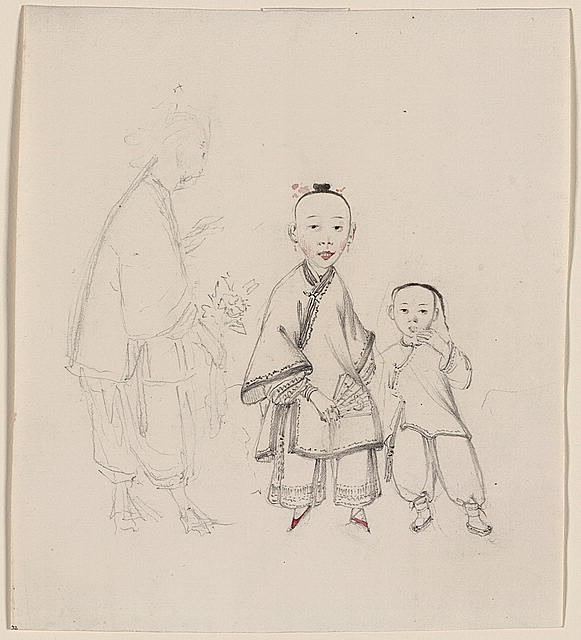 Boy with his elder sister who has bound feet (late 19th century; courtesy of the Library of Congress, LC-DIG-ppmsca-07450).Lotus feet were also a means of gender differentiation: boys did not have their feet bound, while girls did and in later life this had an effect on the different roles of men and women. Both men and women considered lotus feet aesthetically beautiful, with their own innate daintiness and symbolism. Such tiny feet also meant that a girl or woman would walk with a swaying movement called the lotus gait, which was regarded as sexually enticing to men. This gait was regarded as important for finding a suitable husband and by doing so increasing the position of the girl and her family. It also meant that, in many cases, it was difficult for a woman to walk, thus making her literally dependent upon her husband, family and servants.
 An early tinted photograph of a Chinese Han lady and her servant; both women have bound feet (c. 1870; courtesy of the Library of Congress, LC-USZC4-14684).
Throughout the centuries a marriageable girl was frequently chosen for the size of her feet and the quality of her needlework, especially for her footwear. A pair of shoes she had made and embroidered were sent to the home of a prospective husband to be judged by his family. Very small and elaborately decorated shoes were regarded as a sign of self-discipline, patience, fortitude and forbearance with extreme situations, as well as evidence of artistic creativity and household skills.
Many women, and their families, took great pride in their tiny feet, which were said to take the shape of a lotus bud with a wide and rounded base (the heel) going into a pointed tip (the toes). Hence their names of lily feet or lotus feet. The ideal foot length was about 7 cm, which was called the golden lily or the golden lotus. Between 7 and 9 cm was known as the “silver lotus.”
In some areas a woman’s unbound feet were called iron lotus, a term that was regarded as being insulting. Yet badly bound or shaped feet were seen by some as far worse than ‘long’ or unbound feet. Mis-formed bound feet were called names such as half-squeezed foot, half-blocked foot and little crooked bone
The pride and social necessity of ‘perfect’ lotus feet is reflected in the beautifully embroidered silk shoes and wrappings girls and women wore to cover and emphasise their feet.
1. Introduction
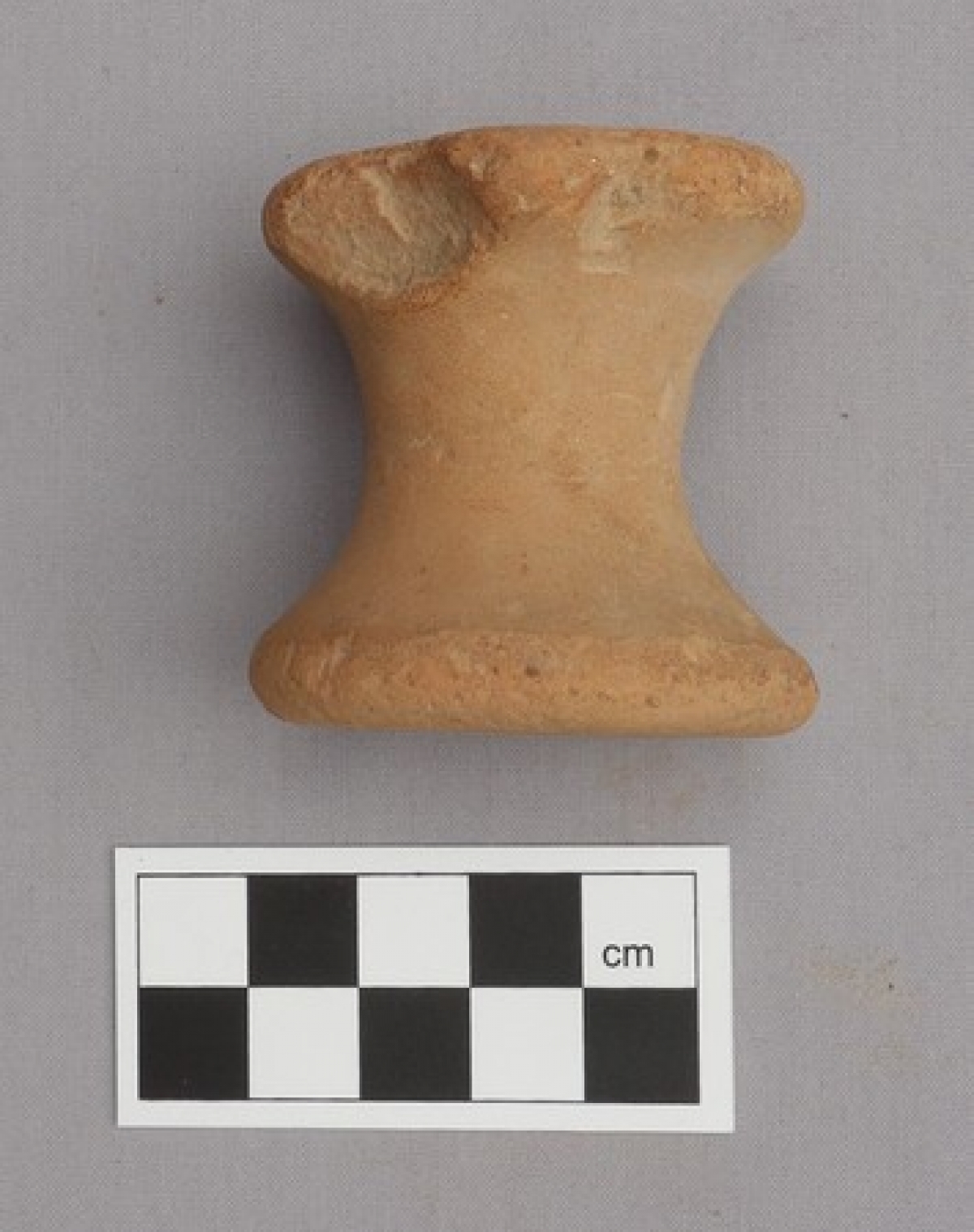
The best evidence for how ancient Greek textiles were produced would be the textiles themselves. Sadly such textiles are very rare. But we can also learn about ancient Greek extiles by examining the tools involved in their production, such as spindles, carders, looms, shuttles, weaving swords, bobbins, dye vats and beaters. While no ancient Greek looms have yet been discovered, some components of looms - such as loom weights - have been found.
Both looms and textiles were made of organic materials such as wood, wool and other animal or plant-based fibres. Only under very special circumstances do these materials survive over time. But loom weights made of stone, metal or baked clay can and do survive in the archeological record, as do spindle whorls and bobbins made of the same materials. While clay can dissolve, crumble or break apart, if the clay is exposed to fire (either deliberately or accidentally) it can harden enough to last thousands of years.
Fortunately, in the case of ancient Greece, there is also other evidence about textiles and textile technology. There are references to both textiles and textile production throughout Greek literature; and there is pictorial evidence, found on vases, wall paintings, and in one case on a marble stele (Athens, NM1914).

1. Introduction
When Marilyn Monroe donned a burlap potato sack in 1952, she was making various statements about herself, her wardrobe and her ability to wear anything glamorously. But she was following in a long tradition that is found in many countries around the world, namely the wearing of sacks when almost nothing else is available.
Clothing made from old sacks has been used for centuries to provide basic garments at very low cost. During the Depression in North America, in the 1930’s, clothing made from sacks was an important source of garments for many families. But instead of it vanishing as the economic situation improved by the 1940’s, the wearing of sack clothing was regarded by many as a patriotic duty and in the 1950’s the garments were seen as fashionable items that were worn by men, women and children throughout the American continent. But it has to be admitted: these were not any old sacks, but they were especially printed with a wide range of decorative designs in a variety of colours and sizes.
But what exactly is a feedsack? They have various other names, including flour sacks, flour bags, cotton bags, commodity bags, as well as more poetically, ‘chicken linen’, ‘hen house linen’ and ‘pretties’. Essentially they are cotton sacks that are used to store items such as flour, beans, maize, rice and sugar, as well as feed for calves, chickens and pigs.
Regional and national companies sold these sacks, with their contents, to a generally male clientele of farmers. Once the message got through that the sacks themselves were just as interesting, if not more so, than the contents, the established custom of choosing the sacks on the basis of quality, contents and price totally changed. There are many contemporary comments about a farmer or his sons being given a piece of cloth and told to match it at the feed store!
 Libelle, October 1948, No. 27, p. 20. TRC Library.
 Libelle, October 1948, No. 27, p. 21. TRC Library.
Libelle and feedsacks
Just after the Second World War, the Dutch magazine Libelle (October 1948, No. 27, pp. 20-21) included an article called Zaklopen op z’n Amerikaans (“Sackraces the American way’). It told the story of decorative American feedsacks and how they were used to dress fashionable young women. The article also suggested that something similar could happen in The Netherlands. At the time, thanks to the horrendous shortages caused by the Second World War, many Dutch men, women and children were wearing clothing made from feedsacks, but not the deliberately decorated forms.
Gradually memories of simple and undecorated feedsack garments have passed into Dutch family tales and traditions. In America, the memory of how a decorated feedsack helped feed and clothe the continent is also fading, but the use of feedsacks may again become appealing, as the concept of sustainability has become well established in the lives of many people throughout the world.
1. Introduction
For thousands of years, goods have been transported to and from Central Asia, connecting what is now China, India, Iran, the Middle East, Turkey and Europe. This is the story of the famous Silk Road. It connected people, cities and countries. Along this route, vast numbers of goods were moved, including textiles, clothing and jewellery. And it should be remembered that, some two thousand years ago, goods travelled in both directions. Greek textiles have been found in what is now China; Indian cottons were excavated in Roman period sites in Egypt, Chinese silks ended up in Austria and elsewhere, and Central Asian goods and people also moved in all directions.
 Alim Khan (1880-1944), Emir of Bukhara, 1911. He is wearing a blue, silk kaftan with floral decoration, and a heavy, gold belt. Library of Congress.The last remark is important, since Central Asia was for more than a transit area. Central Asia, the hub of this vast mercantile exchange network, developed and expanded upon the production of a variety of items, including textiles and garments, and gave them their own unique technical twists and appearances.
And the Silk Road is not something that is only about the past. The modern One Belt One Road programme of the Chinese government will soon drastically change the appearance of Central Asia and once again intensify its contacts with East and West.