• F2
  • F1
  • F3
  • F4

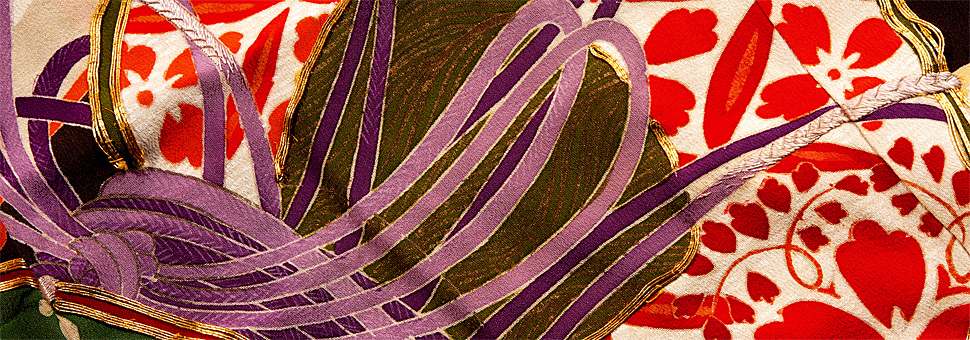
Moroccan kaftan made from a Japanese obi (sash), 1950s (TRC 2001.0074).Moroccan kaftan made from a Japanese obi (sash), 1950s (TRC 2001.0074).The TRC collection of textiles, clothing and accessories from around the world was started in 1997 with 43 pieces from Afghanistan, Egypt and Syria. Since then it has grown to over 56,000 items (26 September 2026), almost all of them have been catalogued and most of them photographed. All information is accessible on the TRC website (click here for the online catalogue).

The items come from diverse backgrounds with respect to time and place. Some of the items have been purchased, but the vast majority has been collected during fieldwork or very kindly donated by various institutions and private donors. The TRC  is a good example of Citizen Culture and Heritage at work!

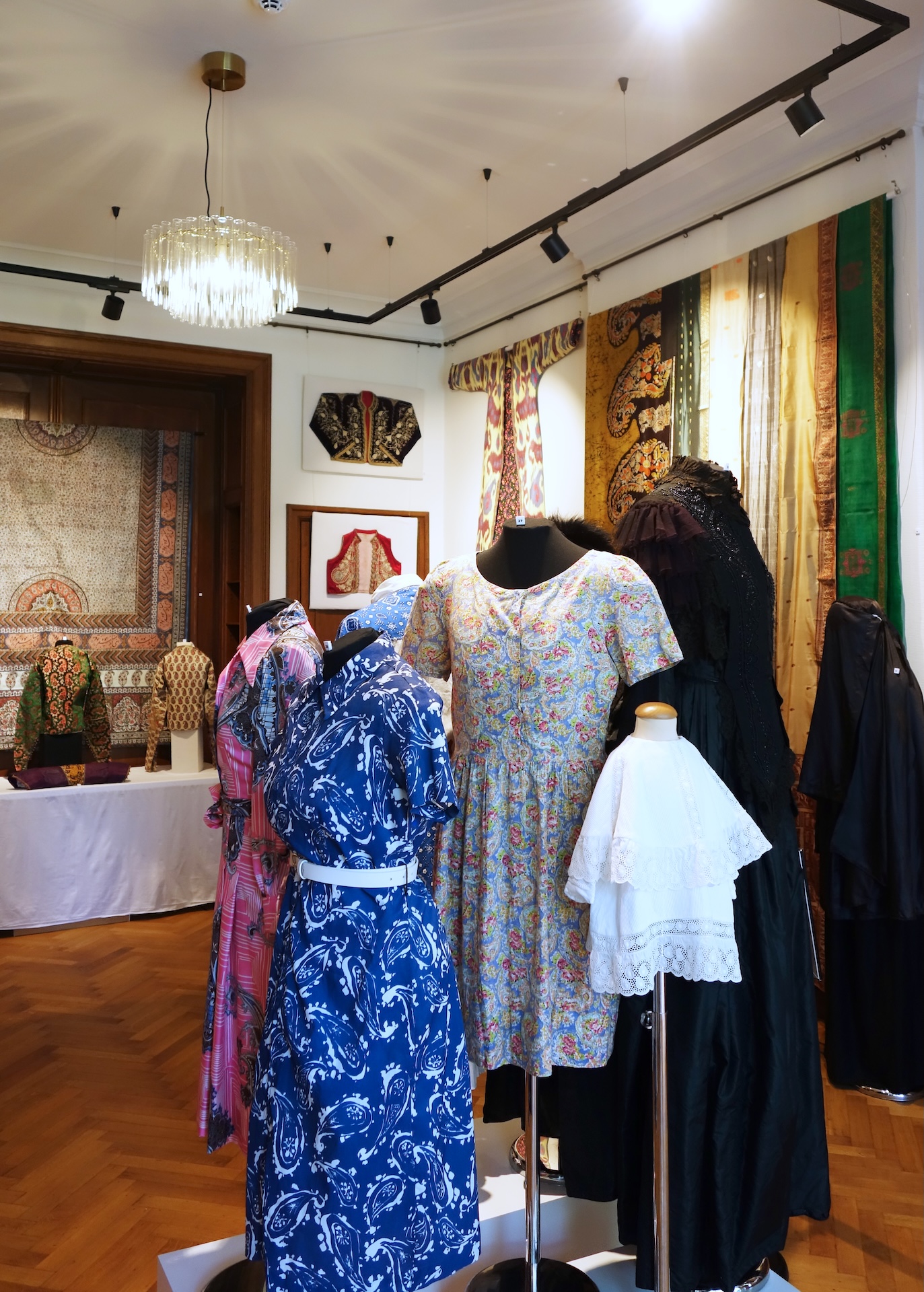
The collection has no boundaries with respect to geography or time. It ranges from Afghan embroidery, German Lederhosen, Indonesian batiks, historical textiles from Leiden, to delicate silks from Renaissance Italy and spinning and weaving equipment from the Andes.

Length of cloth made from strips (15 cm) of woven cotton, dyed brown and then painted with various motifs. The fringes are decorated with white cowrie shells. Mali? (TRC 2026.2254).Length of cloth made from strips (15 cm) of woven cotton, dyed brown and then painted with various motifs. The fringes are decorated with white cowrie shells. Mali? (TRC 2026.2254).(Gillian Vogelsang, 28 September 2026) It is noticeable, since we moved to our new home on the Boerhaavelaan, that we have been increasing our international links and connections. We are welcoming more and more visitors from all over the world – just the other day we had a guest from China wanting to know what we did, while upstairs a researcher from Indonesia was looking at part of our Indonesian batik collection. We have also recently had several visitors from Iran as well as the USA and Canada, not to mention home-grown visitors from The Netherlands. We also currently have interns and student volunteers from Belgium, Lithuania, and Korea (she is studying Indonesian textiles) all adding to the international mix at the TRC.

Textile fellowships

Thanks to the generous help of the Gieskes-Strijbis Foundation, Amsterdam, the TRC has a three-year fellowship programme for the study of textiles and dress, based on the TRC Collection. The first fellow, Flora Kovacs Wester, is Hungarian, lives in The Netherlands and carries out research on  kasuri, a Japanese resist-dyeing technique. Earlier this year we announced a second round of fellowships and there were 39 applicants from literally all over the world. We appointed two junior fellows and one senior fellow, who will be working on different aspects of the TRC Collection. We hope to welcome them within a few weeks. These fellowships are certainly causing ripples in the textile world. The third round of fellowships will be announced shortly and we expect even more interest in this fellowship programme.

(by Augusta de Gunzbourg, TRC curator and education manager, 25 September 2026). The TRC was invited recently to attend "Atlas Bayrami", the 7th International Traditional Textile Festival, held in Margilan in the Fergana Valley, in the east of Uzbekistan. I attended the festival as TRC's representative. The event celebrated the country's textile traditions, and in particular the traditional silk ikats of this region. This extraordinary invitation was a chance to represent the TRC at an international conference and to better understand a textile history that is still very much alive in the valley and across the country.

The author speaking during the conference.The author speaking during the conference.

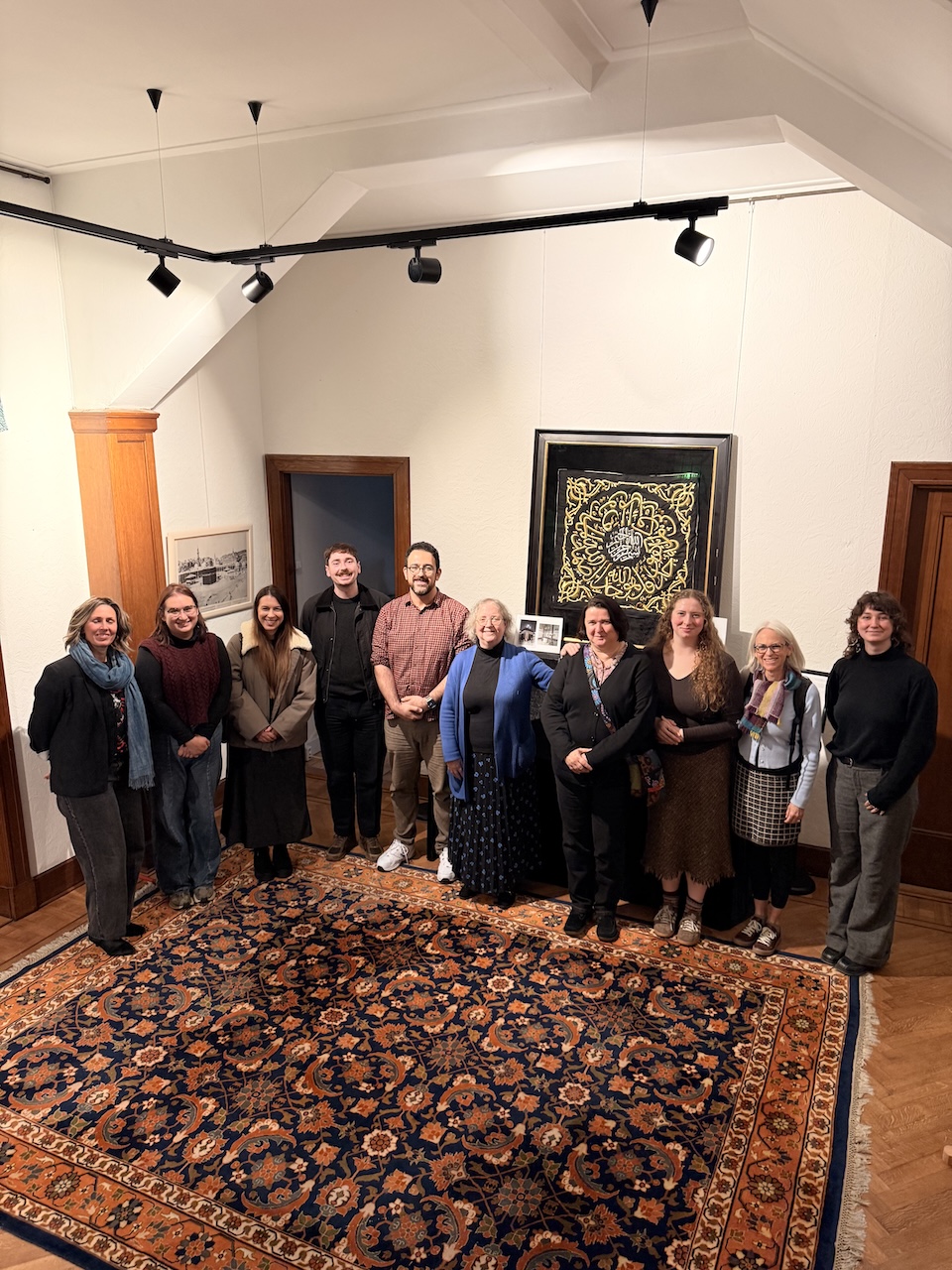
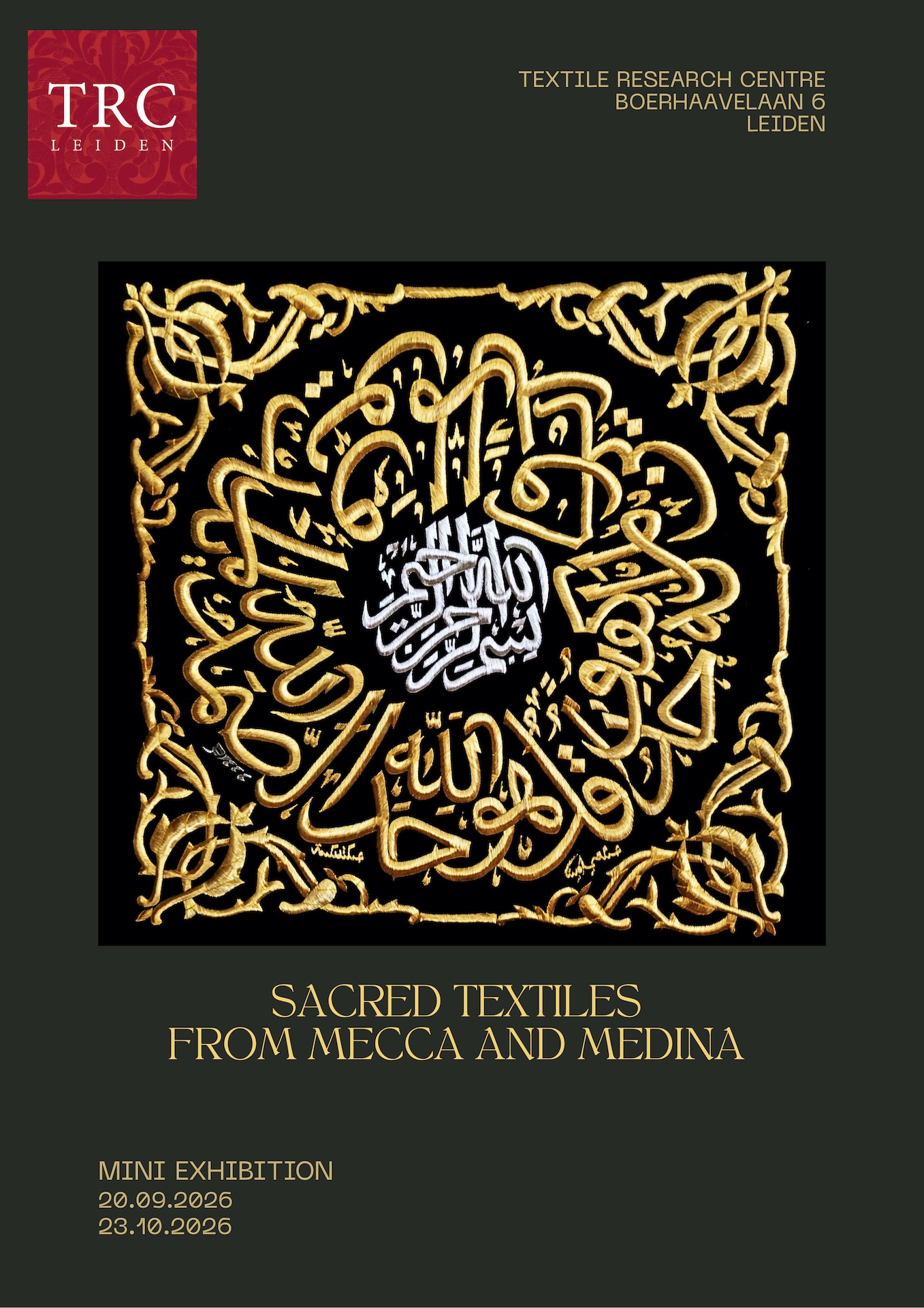
(Gillian Vogelsang, 21 September 2026) "The TRC and the Stichting Güney are proud to present …. " This may sound like a cliché but in this case it is totally true. We were and are proud of the 'Sacred Textiles from Mecca and Medina' mini-exhibition, which was opened last Sunday, 20th September, in the presence of the Turkish ambassador designate, Dr. Burak Akçapar.
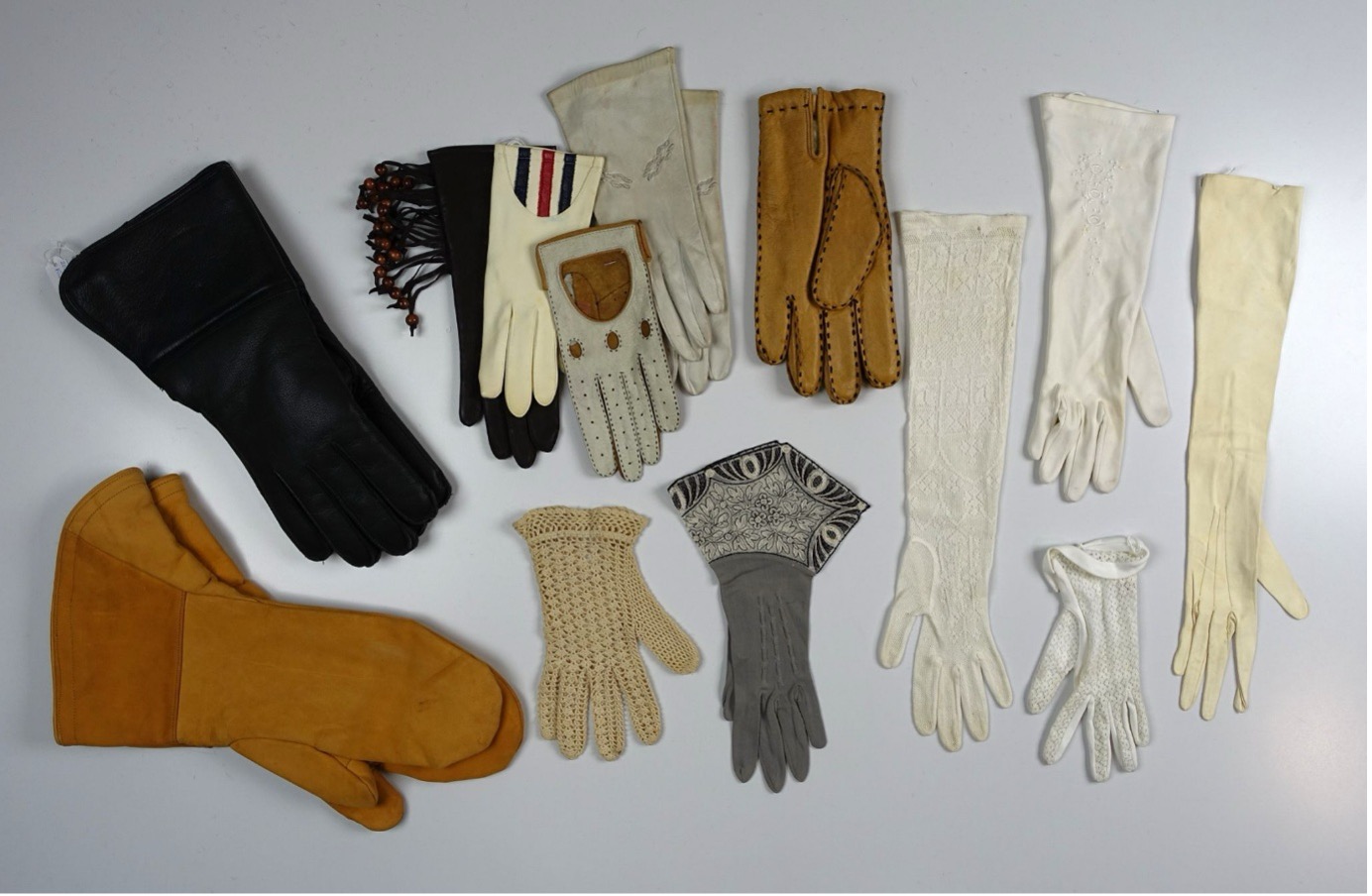
We have all been working hard for the last few weeks, writing text boards, organising lists of objects, translating texts into Dutch, and checking proposed programmes for this special event. Augusta de Gunzbourg, our curator, did the design layout before she went to a textile conference in Uzbekistan (a blog will shortly be published about her trip).

One of the reasons behind the mini-exhibition was to raise funds to process and store a very large Ottoman and regional Turkish collection that recently has been donated to the TRC (see previous blogs). The Turkish community here in Leiden are taking a very active part in the project and plans are being developed for exhibitions, workshops, lectures, perhaps even fashion shows!

Fig. 1. Quilt with an appliqué version of a ‘Flower and Berries’ design (1850’s – 1860’s; USA). TRC 2019.2402.Fig. 1. Quilt with an appliqué version of a ‘Flower and Berries’ design (1850’s – 1860’s; USA). TRC 2019.2402.(Gillian Vogelsang, 19 September 2026) Last weekend the TRC was open to the public as part of the national Open Monumenten Dagen (OMD). We welcomed over 300 visitors who were shown around the building and enjoyed the various exhibitions.

One of the questions that was asked by an American visitor was: did we have any quilts? What she meant was American-style (bed) quilts. Well, we have a range of quilts, plus a selection of quilt patterns, samples and unfinished blocks. More specifically, we have over 100 American quilts in our collection that date from the 1840s to the present day and represent many different forms.

Fig. 2. Dresden Plate quilt (1930s, USA). TRC 2018.2629.Fig. 2. Dresden Plate quilt (1930s, USA). TRC 2018.2629.The TRC houses one of the few public collections of American quilts in this part of Europe, and the blankets are included in the American Quilt Index. Some years ago, to mark this point, the TRC mounted an exhibition about American quilts. We opened the exhibition in February 2020, but alas, very few people could come and see it due to the Covid Crisis.

The TRC collection includes a wide range of forms of American quilts (Figs. 1-3), from practical, Amish items to more decorative, elaborate examples, but we are far from being able to offer a complete picture. We are still looking for early 19th century examples, and a few specific types, such as Baltimore Album quilts, Mormon (LDS) quilts, and modern Art quilts.

Subcategorieën

Zoek in TRC website

Contact

Boerhaavelaan 6
2334 EN Leiden.
Tel. +31 (0)71 5134144 (kantooruren)  
office@trcleiden.org

Het TRC is elke dag geopend tussen 10.00 en 15.00 uur.

facebook 2015 logo detail


instagram vernieuwt uiterlijk en logo


Bankrekening

NL39 INGB 0002 9823 59, t.a.v. Stichting Textile Research Centre.

Financiële giften

Het TRC is afhankelijk van project-financiering en privé-donaties. Al ons werk wordt verricht door vrijwilligers. Ter ondersteuning van de vele activiteiten van het TRC vragen wij U daarom om financiële steun:

Giften kunt U overmaken op bankrekeningnummer (IBAN) NL39 INGB 000 298 2359, t.n.v. Stichting Textile Research Centre. BIC code is: INGBNL2A

U kunt ook, heel simpel, indien u een iDEAL app heeft, de iDEAL-knop hieronder gebruiken en door een bepaald bedrag in te vullen: 


Omdat het TRC officieel is erkend als een Algemeen Nut Beogende Instelling (ANBI), en daarbij ook nog als een Culturele Instelling, zijn particuliere giften voor 125% aftrekbaar van de belasting, en voor bedrijven zelfs voor 150%. Voor meer informatie, klik hier.