• F1
  • F4
  • F2
  • F3

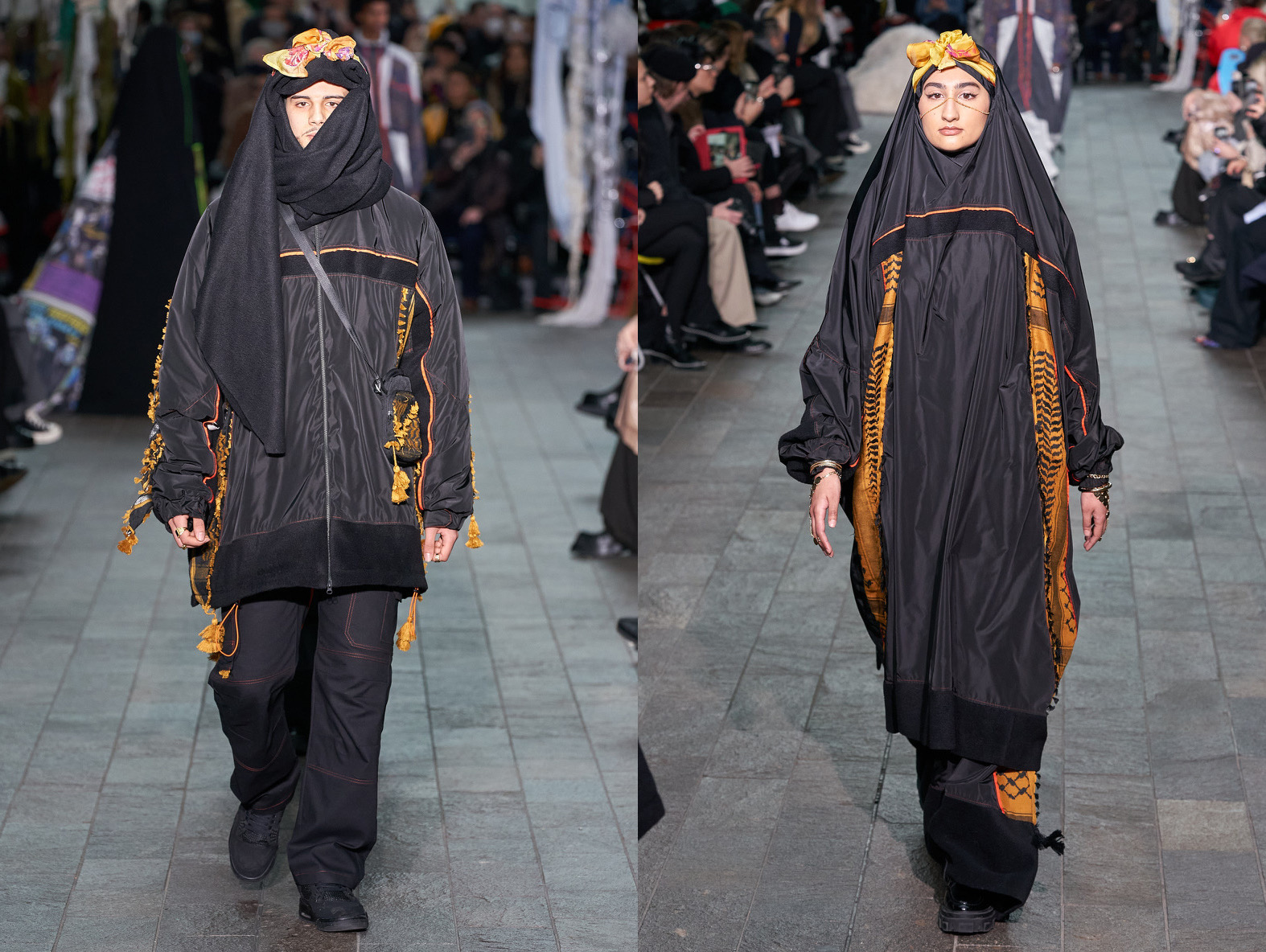
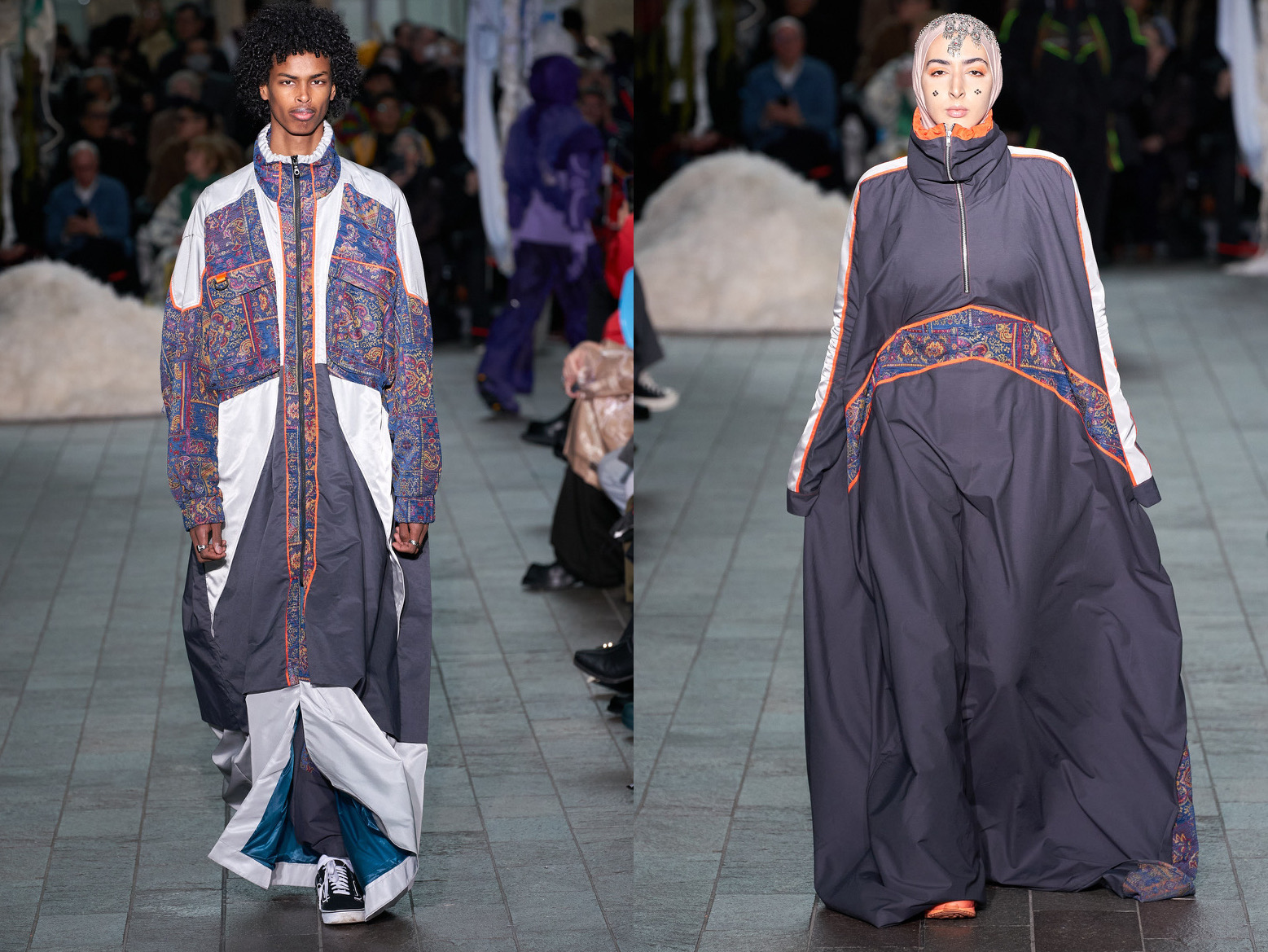
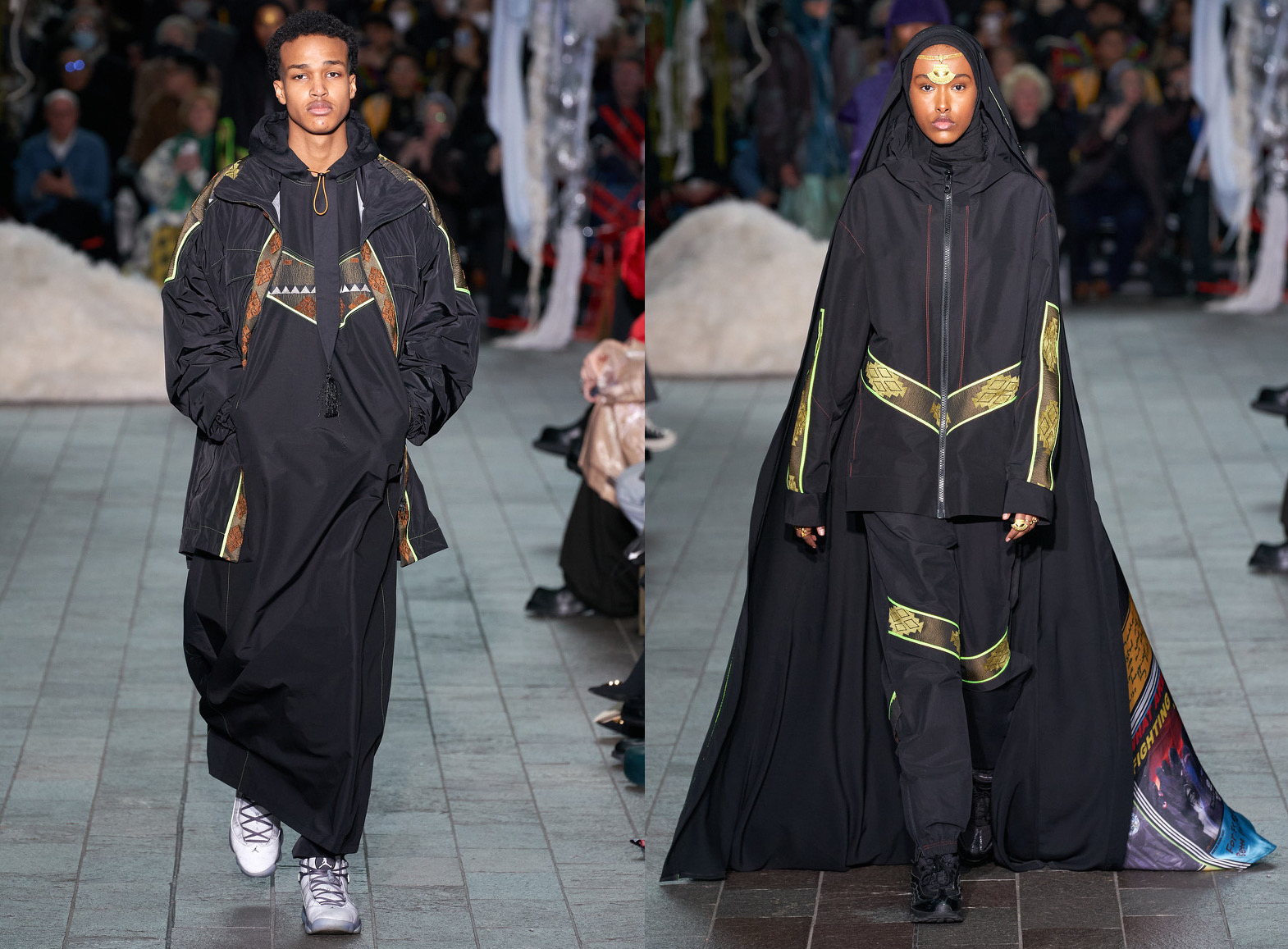
A few months ago we published a blog about Kazna Asker, a British-Yemeni fashion student from Sheffield, who some time ago did part of her training as an intern at the TRC in Leiden. One of her T-shirts is now in the TRC Collection (TRC 2021.2654). Kazna has sent an update about her final collection that has just been viewed during the London Fashion Week. She is doing well! …… Here is her report, with some exciting photographs:

Two models showing part of Kazna Asker's collection during London Fashion Week (18-22 February).Two models showing part of Kazna Asker's collection during London Fashion Week (18-22 February).

On Sunday, I presented my final collection to conclude my MA Fashion at Central Saint Martins, London, during the London Fashion Week. I presented the first hijabi collection they ever had! I used my experience to combine traditional woven textiles, in this case from Middle Eastern carpets and furniture such as a majlis, with technical outerwear fabrics and details such as nylons, fleece and sportswear tracksuits!

Two models showing part of Kazna Asker's collection during London Fashion Week (18-22 February).Two models showing part of Kazna Asker's collection during London Fashion Week (18-22 February).

My collection focuses on community and challenges the narrative and stereotypes associated with Muslim men and women – to show that we are actually cool people! I combined my British upbringing of tracksuits and outerwear with my Yemeni heritage and Islamic garments. I specifically designed in pairs, to create matching looks to show the brother and sisterhood of our community and that we are all watered by one water.

I got my friends and community to model and wear their own shoes to show the beauty of our sincerity, despite circumstances. The Sheffield community and charity work have always been important to me and bearing in mind that Yemen is facing the world’s largest humanitarian crisis, I have always felt responsible to showcase the beauty of my culture and the selflessness of my people.

Two models showing part of Kazna Asker's collection during London Fashion Week (18-22 February).Two models showing part of Kazna Asker's collection during London Fashion Week (18-22 February).

I also asked my local community in Sheffield three questions: what does community mean to you, who inspires you today and what are you fighting for? I printed their answers on the back of the garments throughout my collection, as I knew I wanted this collection to be as interactive as possible in order to showcase the voices of my community.

I have attached some fitting pictures and the final runway pictures!

Hope you like them, Kazna, 24 February 2022

We have been waiting for this moment for some time and yesterday afternoon it finally arrived, namely the Amsel Collection from Paris. The collection was made by Prof. George Amsel and his wife Monique during most of their married life.

Equally as remarkable as the items themselves are the detailed and fascinating stories that Monique is sharing with us about the people and crafts they had encountered collecting all of it.

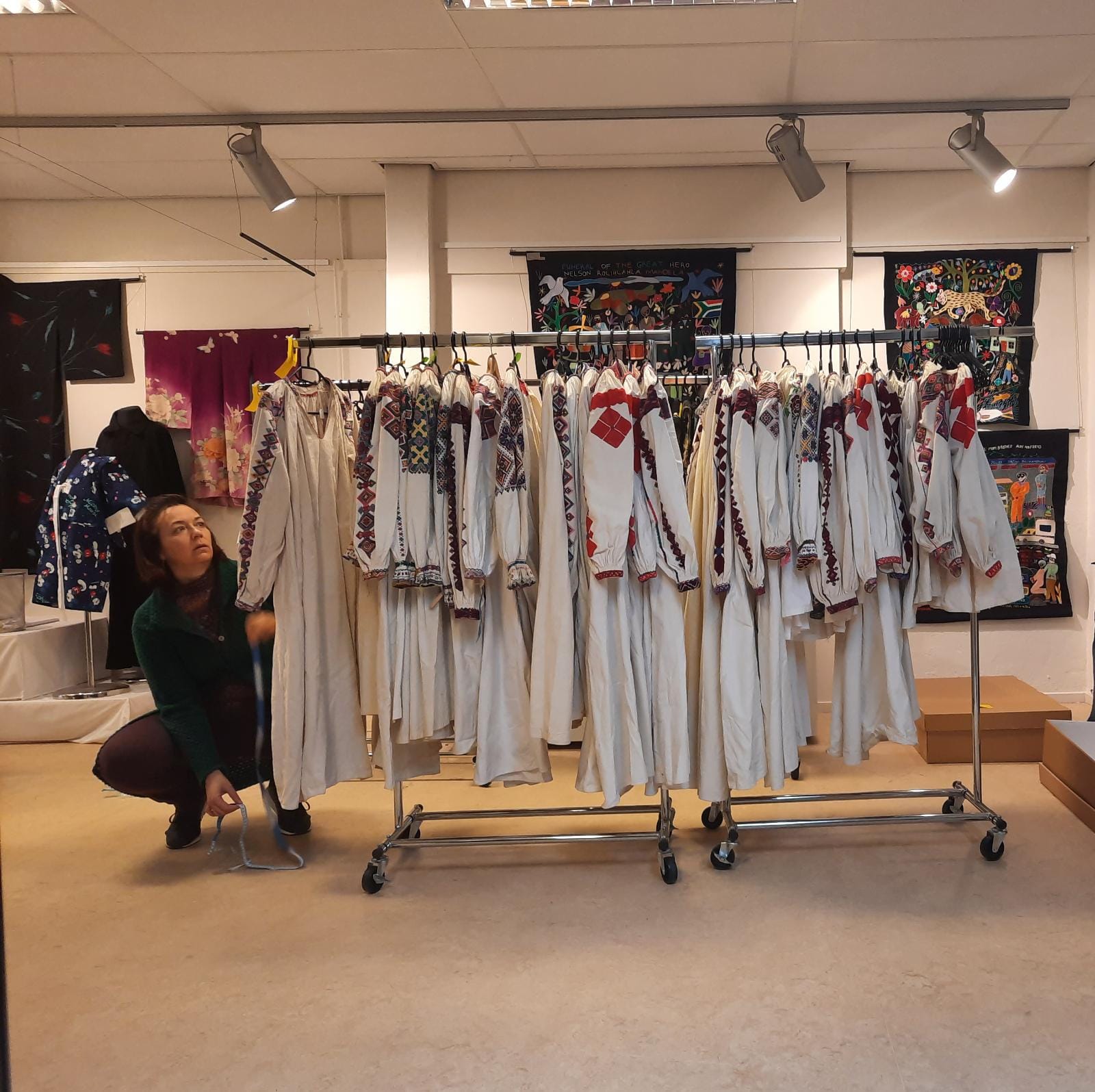
A small part of the Amsel collection, being prepared for cataloguing and photographing at the TRC, 21 February 2022. Photograph: Augusta de Gunzbourg.A small part of the Amsel collection, being prepared for cataloguing and photographing at the TRC, 21 February 2022. Photograph: Augusta de Gunzbourg.

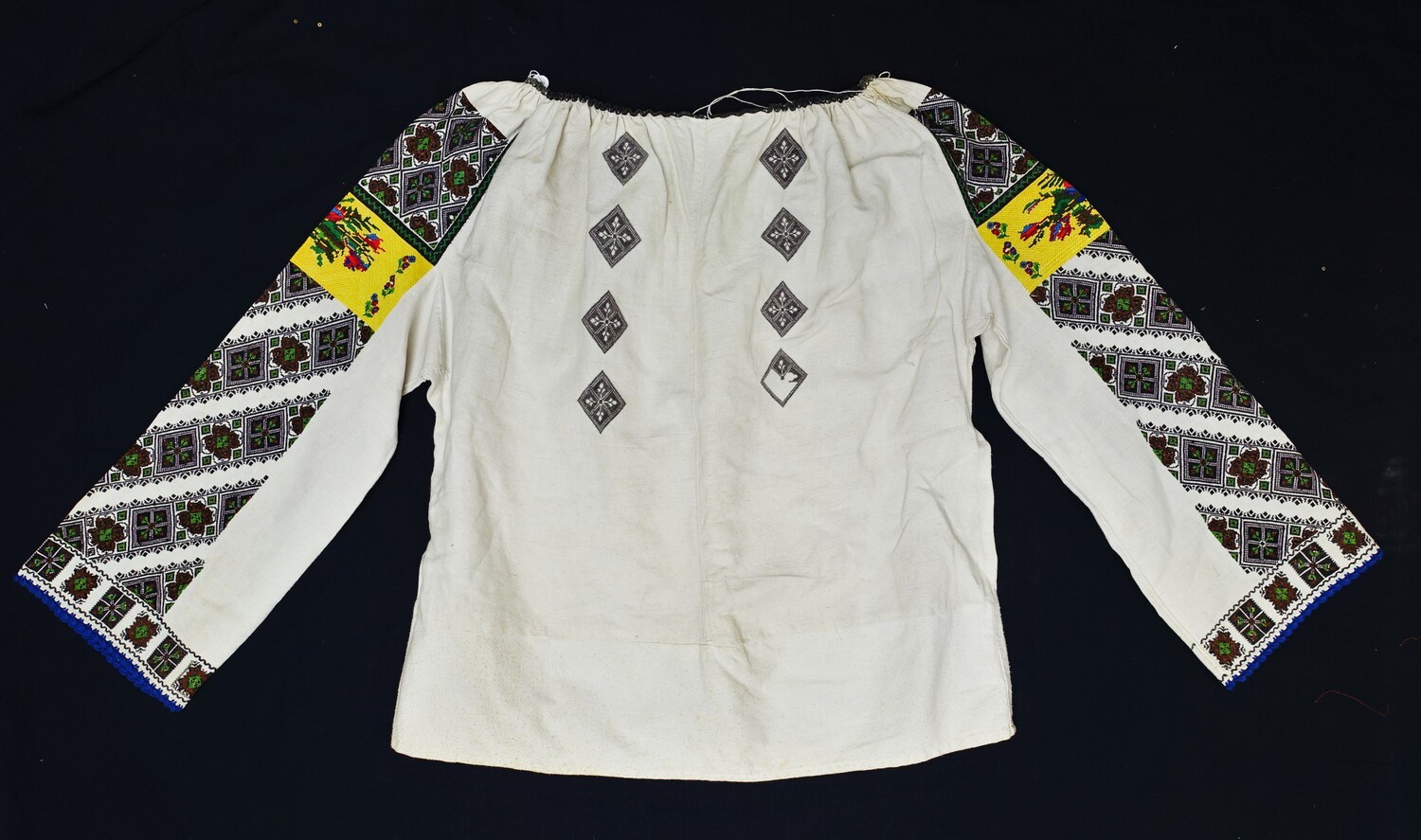
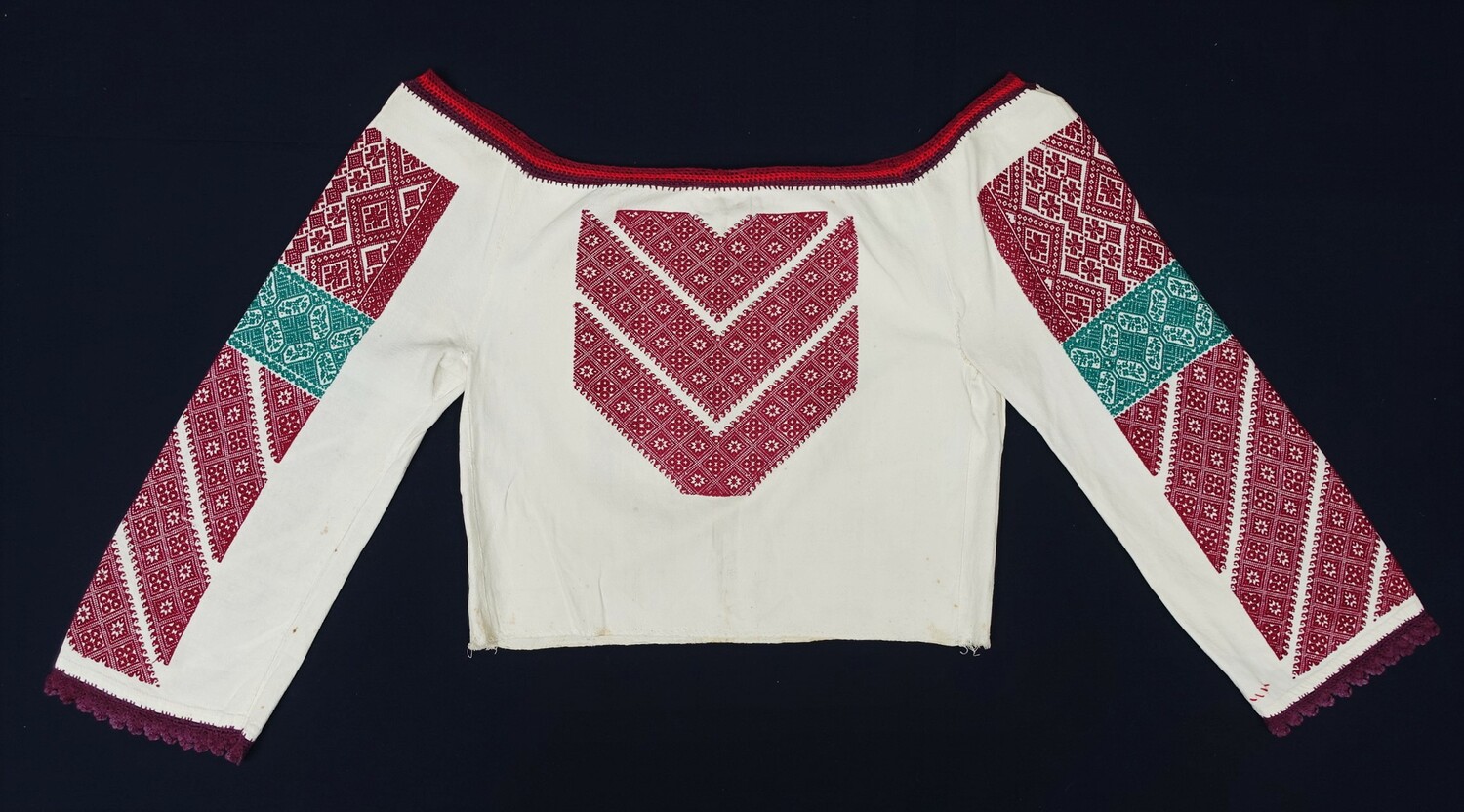
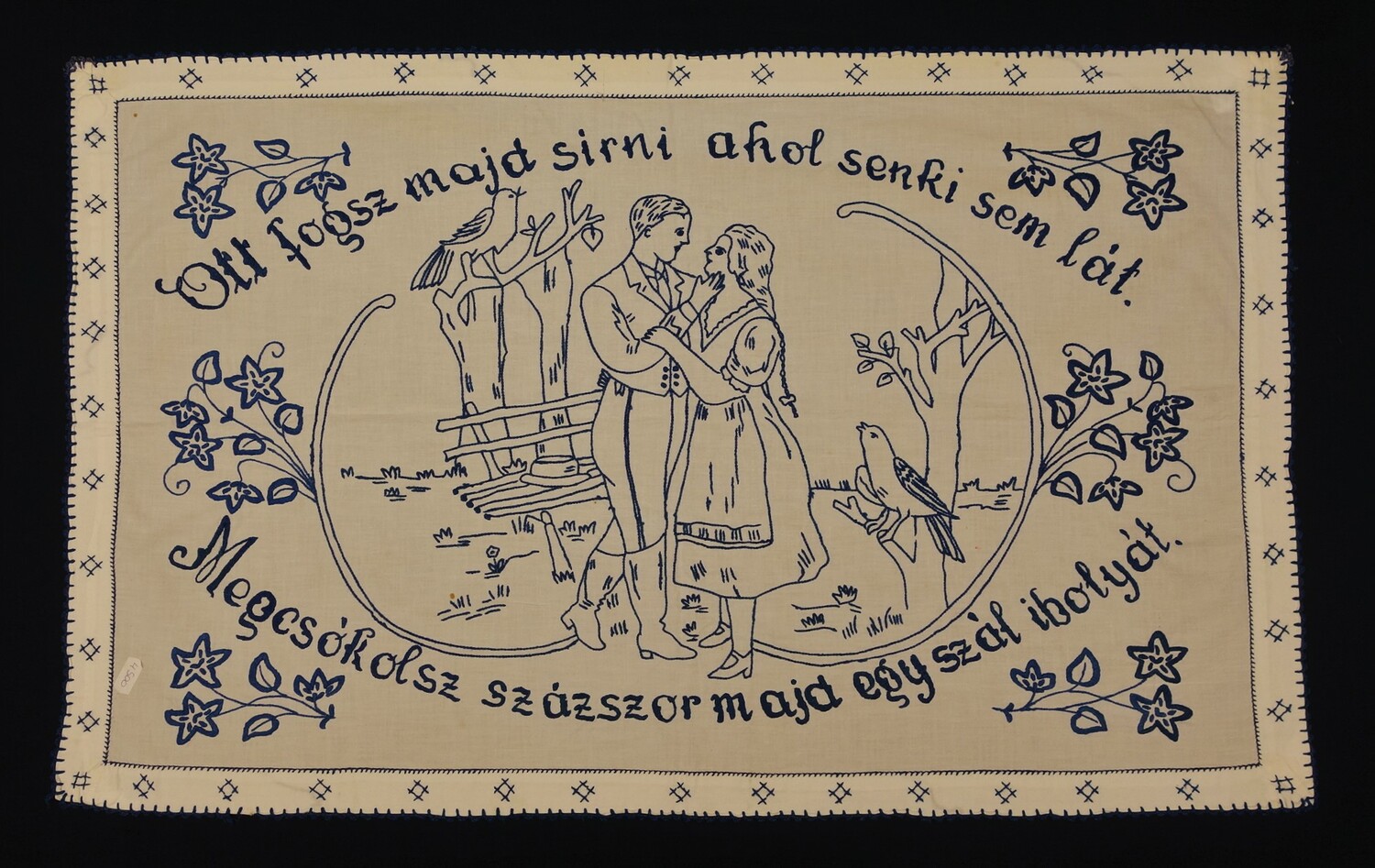
Packed and prepared by TRC volunteer Augusta de Gunzbourg and the owner Monique Amsel for the past few weeks, the items were then transported from Paris to Leiden over the weekend by two other TRC volunteers, Rebecca and David Hix. In it, there are over 700 textiles and garments, mainly from Hungary and Romania.

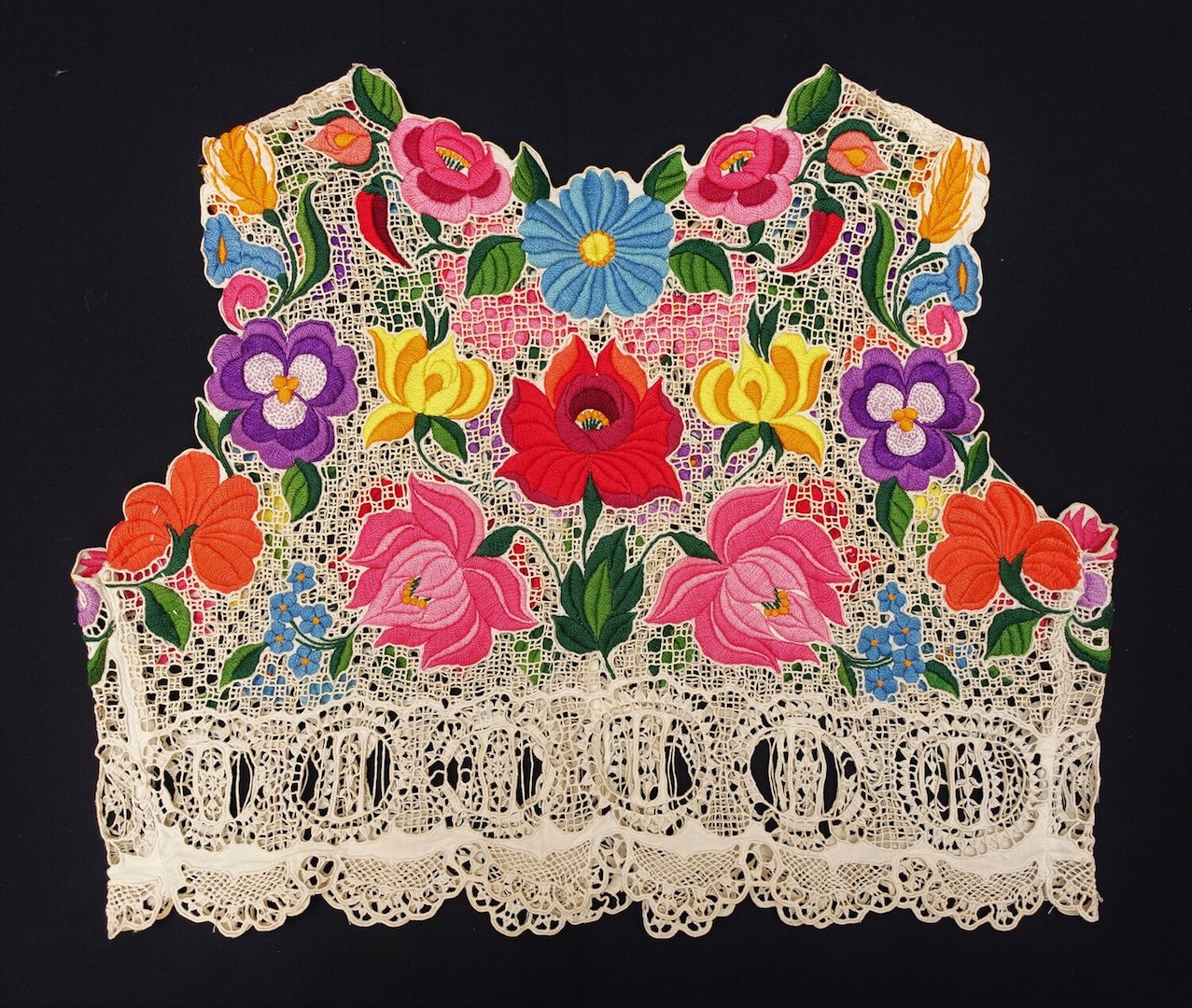
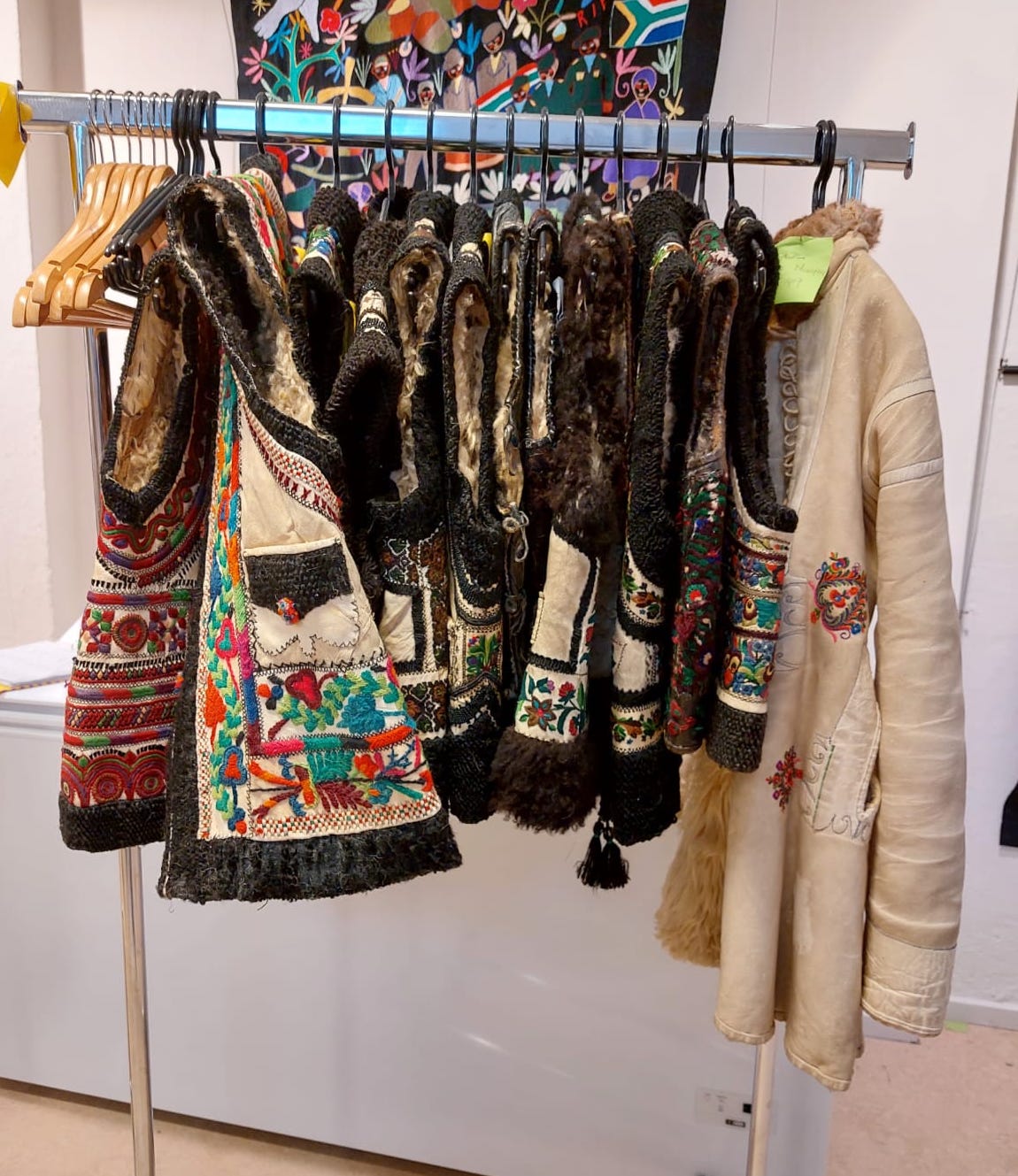
Waistcoats and coat from the Amsel collection, 21 February 2022. Photograph: Augusta de Gunzbourg.Waistcoats and coat from the Amsel collection, 21 February 2022. Photograph: Augusta de Gunzbourg.Among other miscellaneous items in this wonderful collection: pieces from China, Central Asia, India, Thailand, as well as a group of hitherto unprovenanced textiles.  So far, we have handled a lovely early 19th century hand embroidered Kashmir shawl with numerous buteh (paisley) motifs, and various examples of mola from Panama that complement the mini-exhibition on the same subject that we are currently preparing (they will be on display from March in the TRC Gallery). There are even some raffia embroideries from the Congo.

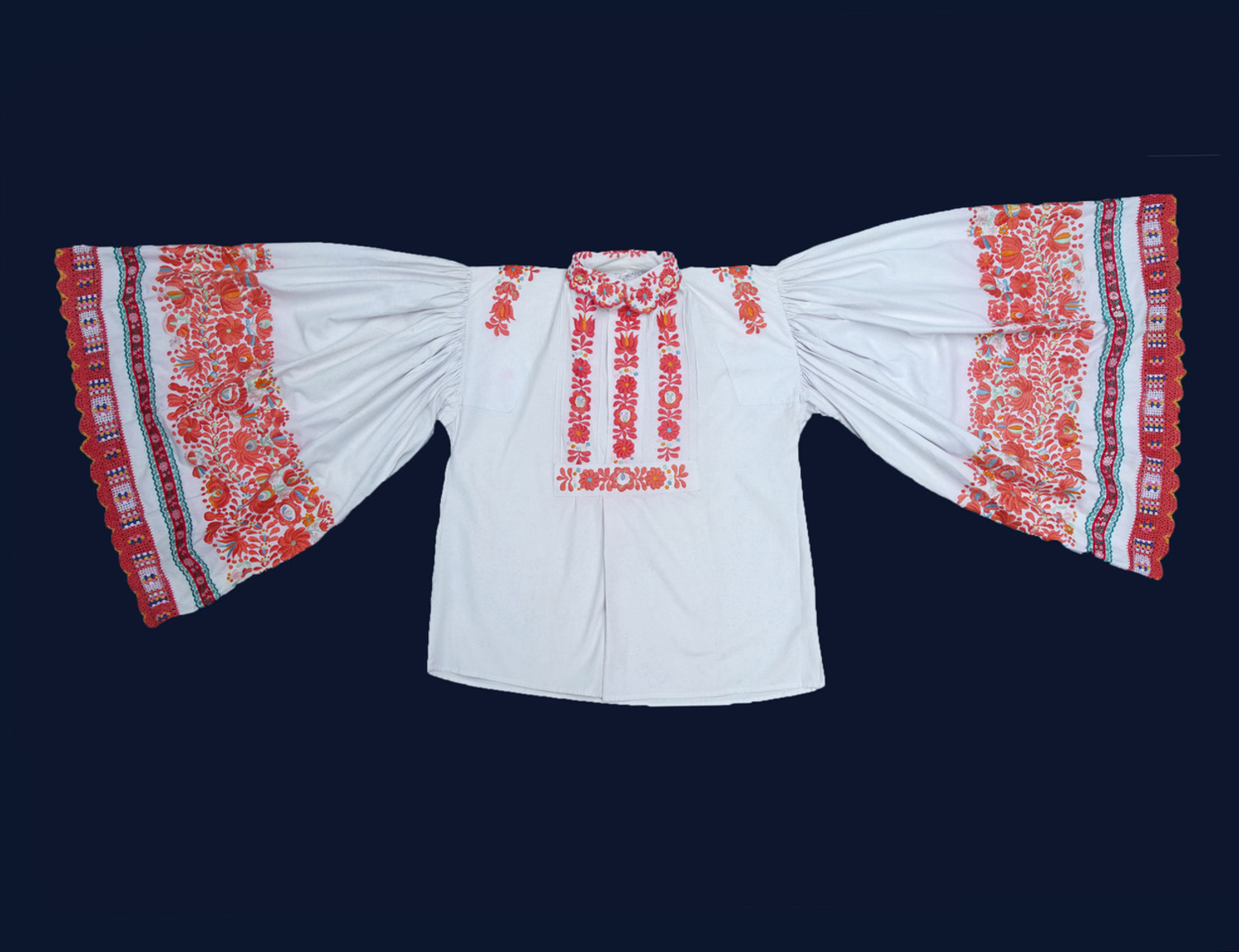
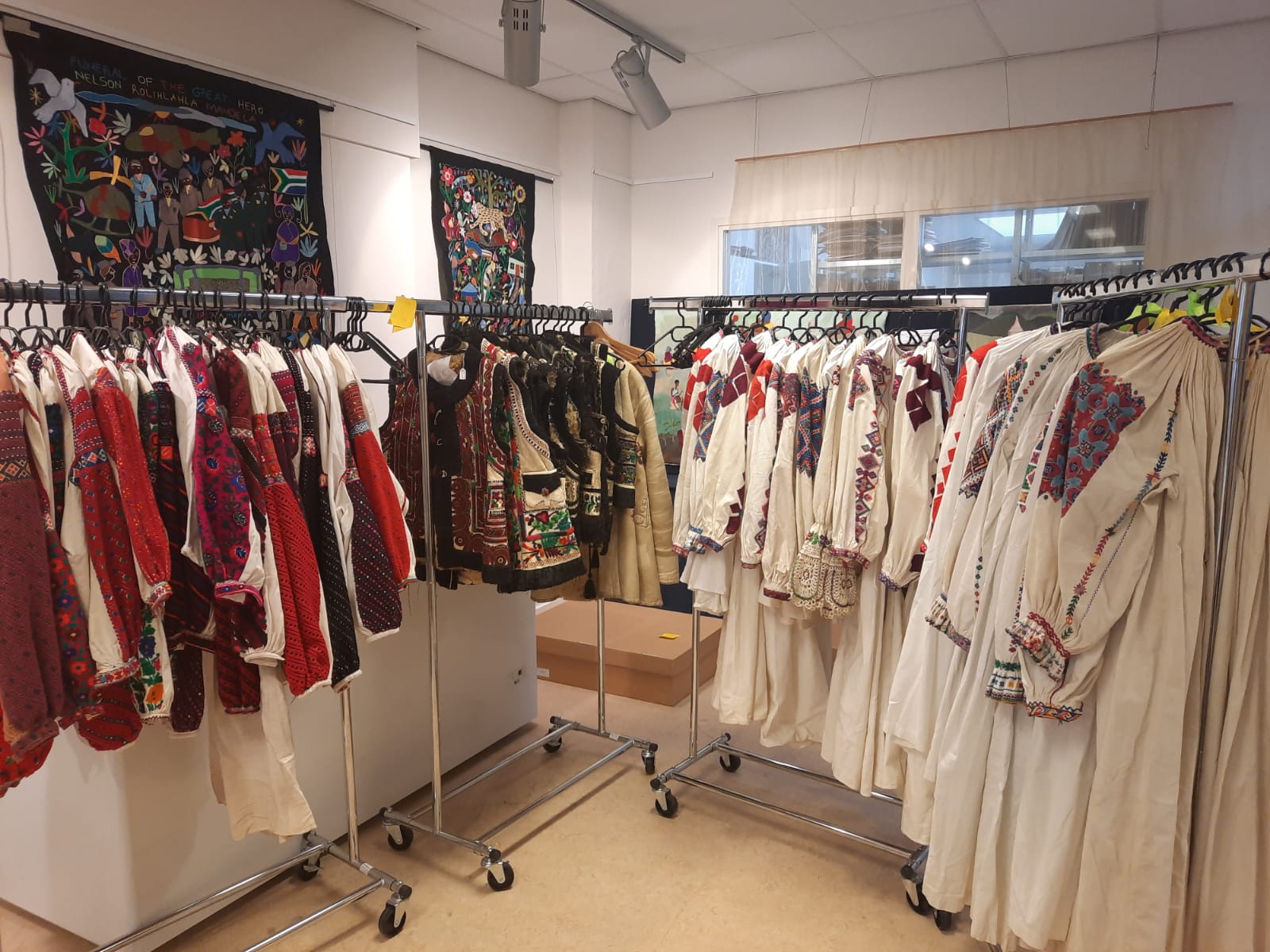
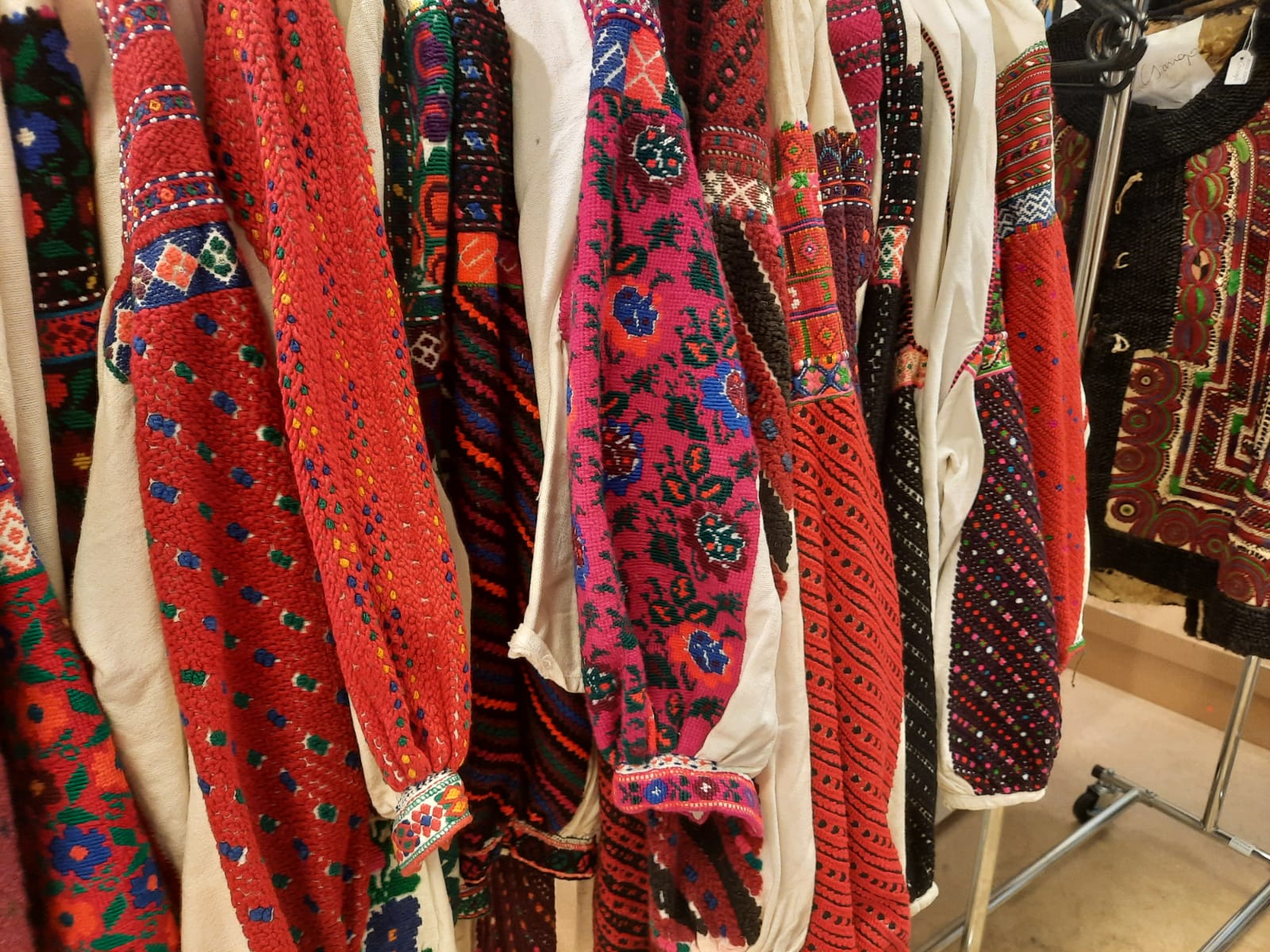
Blouses from the Amsel collection, 21 February 2022. Photograph: Augusta de Gunzbourg.Blouses from the Amsel collection, 21 February 2022. Photograph: Augusta de Gunzbourg.A group of volunteers led by Augusta spent today starting to sort out the various groups of textiles and clothing, by tagging, numbering and hanging related items on clothing racks prior to them being fully catalogued, photographed and eventually put in the new deep freezer to prevent insect damage. A job that will take weeks to complete.

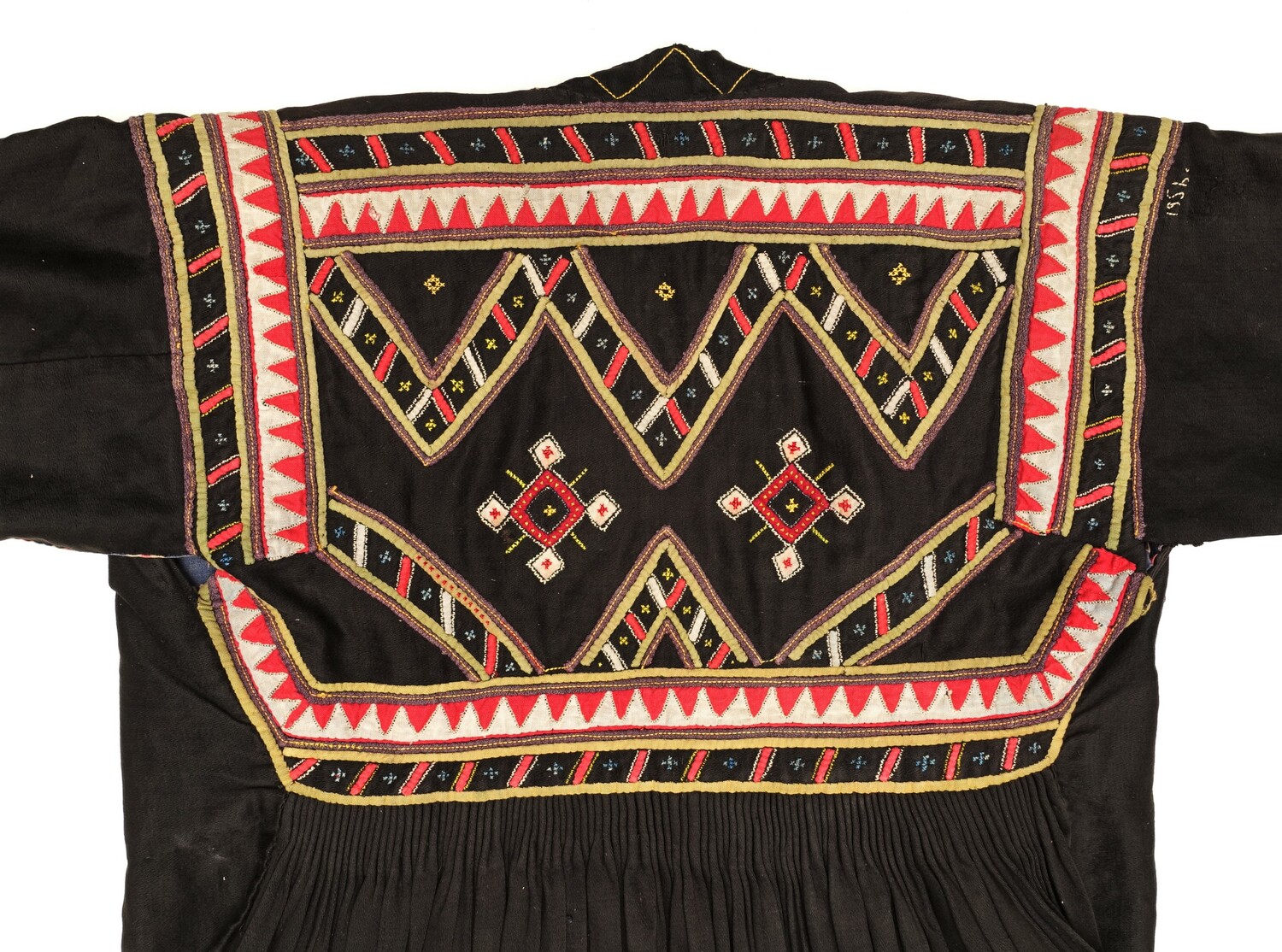
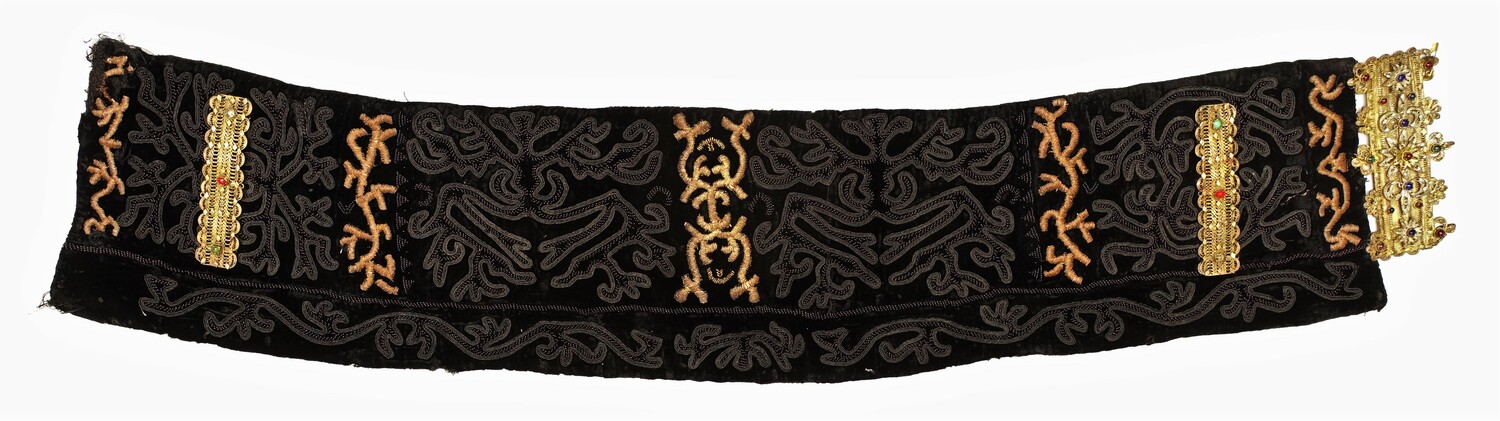
From the 1960s and '70s onwards, the Amsels regularly travelled to various regions of Hungary and Romania and deliberately collected regional costumes - from various groups such as the Csangos or Hutsuls - that reflect the diversity of Hungarian costume and its diaspora in neighbouring countries. Embroidery is certainly one of the main features of these items: numerous embroidered and beaded dresses, blouses, as well as fleece waistcoats or even belts both for men and women are all represented.

Dresses from the Amsel collection, 21 February 2022, together with one of the TRC volunteers. Photograph: Augusta de Gunzbourg.Dresses from the Amsel collection, 21 February 2022, together with one of the TRC volunteers. Photograph: Augusta de Gunzbourg.We are in contact with various groups in Hungary about this collection, such as Dr Maxim Mordovin from the Eötvös Loránd University and historian Orsolya Zay, in order to gain a deeper understanding of these items. There will be certainly be numerous embroidery charts being worked out in the following months,

One of the long-term plans is to make an online (and real-life eventually) exhibition about the Hungarian items, as well as a complete catalogue of the Hungarian pieces that will be written in conjunction with Monique Amsel. We would need about 6000 euros to make such a catalogue so if you know of a funding body that is interested in Hungarian culture, please let us know!

Over the next few months there will be a regular blog about this collection, reflecting a range of techniques, designs and functions, related to individual items or groups of objects.

Augusta de Gunzbourg and Gillian Vogelsang, 21 February 2022.

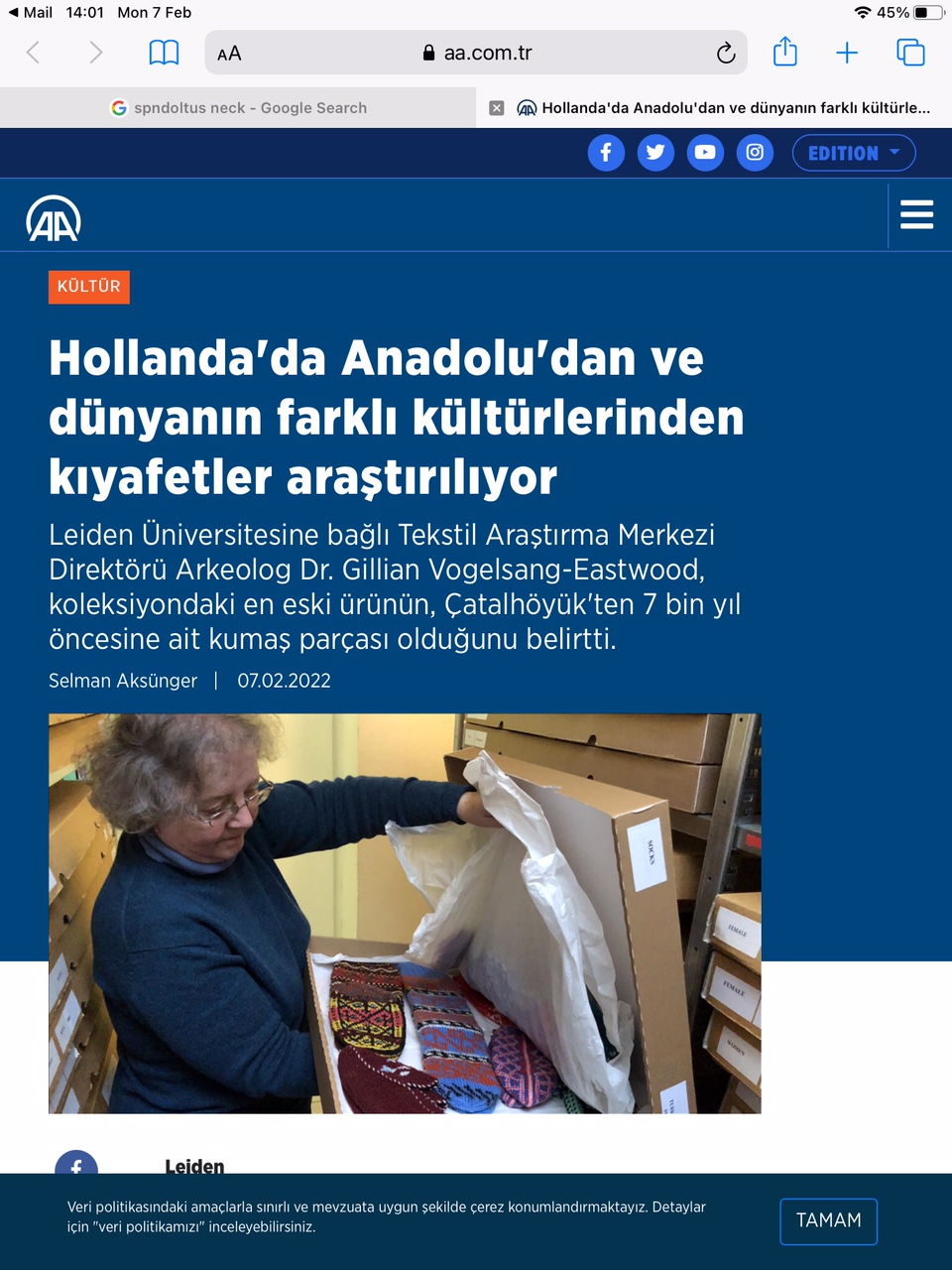
RC director interviewed for Turkish press agency, 7 February 2022RC director interviewed for Turkish press agency, 7 February 2022Knowledge about the TRC Leiden and its many textile activities is spreading! A week ago Inge Bosman of the Nederlandse Kostuumvereniging came to see what the TRC Leiden actually does (people often think they understand from the website, but when they actually see us it generally is a ‘Ahhh now I really understand’) and interviewed various members of the TRC.

Her article will appear in the next bulletin of the society. She will be stressing the role of the TRC as a ‘Textile Ark’ and a place where knowledge about textile technology and crafts, as well as dress and identity can be studied at various levels. The need for such an Ark (some might call it a textile museum) in the Netherlands is becoming very apparent as more and more people are discovering textiles and want to learn more.

We have also been talking with Polly Leonard from the international textile journal Selvedge (London) about bringing the TRC to the attention of a much wider and global public. Polly is very active in the world of textiles and has many (active) ideas.

In addition, in January Selman Aksünger, who is based in Amsterdam, but works for the Turkish Anadolu News Agency in Ankara, came to the TRC to see what we are doing. He was particularly interested in what the TRC has with respect to the various Turkish communities throughout the world, literally from Turkey itself, to Central Asia (Turkmenistan, Turkmen communities in Iran, etc) and of course, the diaspora in Europe, including Leiden.

I had to admit we are ‘short’ on Turkish regional dress and would love to find a patron willing to help build up this historic aspect of Middle Eastern and indeed Southeast European (think Ottoman Empire) textiles and dress, so that everyone here can share in this rich heritage. This is becoming even more important as we are about to receive two large collections of southeastern European textiles and dress, and understanding dress and textile traditions from this part of the world is becoming more significant.

So I am very pleased to announce that Selman Aksünger's article (in Turkish) and short film have been published and have already been translated into Arabic. It will also shortly appear in other languages.

Please click here for the link to the article and click here for the YouTube film.

Gillian Vogelsang, Director TRC, 7 February 2022

Vanaf 26 januari 2022 is het TRC op maandag t/m donderdag van 10.00 - 15.00 uur geopend voor het publiek. Momenteel zijn er geen tentoonstellingen te zien. De galerie wordt gebruikt voor de verwerking van twee grote collecties die binnenkort in Leiden aankomen. Langs de muren worden echter bijzondere stoffen en kledingstukken getoond. Tegen de het eind van de zomer zullen we een grote tentoonstelling over ikat opzetten.

De eerste workshop van het jaar, woensdag 19 januari, in de tentoonstellingsruimte van het TRC. Voor de komende maanden zal de TRC galerij worden gebruikt voor workshops en cursussen. Langs de wanden worden voorwerpen uit dde TRC collectie getoond.De eerste workshop van het jaar, woensdag 19 januari, in de tentoonstellingsruimte van het TRC. Voor de komende maanden zal de TRC galerij worden gebruikt voor workshops en cursussen. Langs de wanden worden voorwerpen uit dde TRC collectie getoond.

Voor alle bezoekers geldt het protocol dat hieronder is weergegeven:

Rond onderzettertje gemaakt van handgeklost guipure kant, in drie niveaux (TRC 2007.0582).Rond onderzettertje gemaakt van handgeklost guipure kant, in drie niveaux (TRC 2007.0582).Dit najaar organiseerde het TRC een cursus kantklossen, die werd gegeven door Gon Homburg. Zij leerde het kantklossen van haar moeder en vanaf 1983 is zij officieel geregistreerd als kantklosdocente. Zij geeft les aan liefhebbers en geeft workshops aan verschillende kunstopleidingen.

In 2022 geeft mevr Homburg wederom een serie workshops voor het TRC over kantklossen; in het voorjaar over guipure kant, en in het najaar over torchon kant.

Guipure kant is een vorm van kloskant waarbij de patronen zijn verbonden met aparte draden, en niet met een gaas of net. De patronen, dicht bij elkaar geplaatst, worden vaak omlijnd met een dikkere draad (gimp) en het uiteindelijke resultaat heeft soms een bijna driedimensionaal, verhoogd effect. Tegenwoordig wordt het ook wel Venetiaans kant genoemd.

De traditionele kant uit Genua (Genuese kant) was een guipurekant en werd vanuit Genua geïntroduceerd op Malta, wat leidde tot de ontwikkeling van Maltees kant. Vanuit Malta werd dit type kant naar Engeland gebracht, waar het de ontwikkeling van Bedfordshire (Maltees) kant beïnvloedde. Een ander type guipurekant is Cluny-kant, maar ook het zgn Hollands kant uit het begin van de 20e eeuw.

We are tidying up at the TRC Leiden in anticipation of various large donations that will shortly be coming to Leiden. As a result we came across some first-day covers and postage stamps in the collection, all with a textile theme, and this led to another look at these small, but sometimes very interesting objects. We already discussed the subject of stamps and textiles in an entry for TRC Needles, but we acquired new items since writing and, let's face it, there is nothing wrong with reminding people of yet another aspect of textile studies.

Sheet of six stamps depicting types of lace and tools (Spain, 1989). The lace dates from the XVth-XVIIIth century and come from the regions of Catalonia, Estremadura, Castilla la Mancha, Andalusia, Canary Islands and Galicia (TRC 2016.0284).Sheet of six stamps depicting types of lace and tools (Spain, 1989). The lace dates from the XVth-XVIIIth century and come from the regions of Catalonia, Estremadura, Castilla la Mancha, Andalusia, Canary Islands and Galicia (TRC 2016.0284).

Photograph of the astronomer, Henrietta Swan Leavitt (1868-1921), with a Brussels duchess lace collar.Photograph of the astronomer, Henrietta Swan Leavitt (1868-1921), with a Brussels duchess lace collar.Since writing about the meeting of lace makers at the TRC on the 23th October (read here) we have had several lace related ‘events’.

These include an email from America with a photographic portrait of a late 19th century woman who is wearing a large lace collar. According to the TRC lace specialist, Olga Iermomina, the collar was made from (Brussels) duchess bobbin lace. There are several, similar examples of lace in the TRC Collection, such as TRC 2007.0673, TRC 2007.0845TRC 2015.0287, and TRC 2015.0288.

In addition, there was the offer of three lace collections. One will be brought to the TRC in a few weeks time and consists of general samples, equipment and books, the others will be donated later and mainly consist of equipment, lace samples and examples of different types of Dutch lace caps. Lots of potentially interesting items!

Detail of a silk sash with Duchesse (bobbin) lace at the ends, Belgium (TRC 2007.0845).Detail of a silk sash with Duchesse (bobbin) lace at the ends, Belgium (TRC 2007.0845).

For the last few years the TRC has been slowly building up a collection of lace forms and equipment, such as lace bobbins and lace pillows, as well as items of clothing made out of lace. We currently have over 2000 lace related items, which includes many items in the general collection as well as the more specific, lace reference collections.

Sample of Duchess bobbin lace, 1920s (TRC 2015.0287).Sample of Duchess bobbin lace, 1920s (TRC 2015.0287).

So what does the TRC want to do in the long run with all this lace and related items? We have two ‘routes’. Firstly, various items are needed to support a series of lace classes as part of providing artisan lessons at the TRC and for this we need equipment, patterns and books. Secondly, we are also a knowledge centre for techniques and have an international-level collection with a wide variety of textile types from throughout the world.

Detail of a shawl with Brussels lace. It once belonged to Queen Anna Paulowna (1795-1865), wife of King Willem II of The Netherlands, and a daughter of the Russian Czar Paul I (TRC 2014.0831).Detail of a shawl with Brussels lace. It once belonged to Queen Anna Paulowna (1795-1865), wife of King Willem II of The Netherlands, and a daughter of the Russian Czar Paul I (TRC 2014.0831).

As part of the main collection we want to expand on the five basic lace reference collections that we have set up, namely:

  • Named samples of the basic types of lace, which will be used for identification purposes, including the many types of bobbin, needle and looped forms (the latter include tatted, crocheted, knitted and knotted forms).
  • Different types of pillows, bobbins, pins, hooks, shuttles, rings, etc, required for making various types of lace.
  • A range of lace patterns
  • A range of uses for lace, such as collars, cuffs, doilies, etc.
  • A collection of machine lace samples to show the difference between hand and machine forms, as well as the developments of the machine forms (this is helpful in dating items)

Board with a group of lace bobbins from various countries (TRC 2007.0494).Board with a group of lace bobbins from various countries (TRC 2007.0494).As part of this work we are also making a collection of lace types that were used for making the very diverse forms of lace caps worn in various parts of the Netherlands. This week, for example, will see the arrival of samples of all the main types of lace associated with Rijnland lace caps. These include various types of Rijsselse lace (point de Lille), ‘s Gravenmoer lace (a torchon lace) and Lier lace (tambour embroidered net).

There will also be various examples of typical lace patterns associated with the caps such as gebloemde kant (flower lace), bloempot kant (lit. Flower pot lace, i.e. flowers in ornate vases ) and lyre lace with motifs similar to the musical instrument. These samples will be on display in February 2022 as part of an exhibition of lace caps from the Leiden (Rijnland) region.

Lace pillow with bobbins and sample of torchon lace, Belgium (TRC 2012.0009).Lace pillow with bobbins and sample of torchon lace, Belgium (TRC 2012.0009).In addition to the Rijnland exhibition, we have plans for a series of workshops and courses on lace identification, looking at specific types of lace techniques, as well as one on the difference between hand and machine made laces (it is not not always easy to spot the difference!).

The latter subject has also already led to an online exhibition on the same theme. Another, relevant digital lace exhibition is about silk lace from Malta. More exhibitions are planned. We are also planning a course on the making of oya, also known as Turkish lace.

All in all, lots to think about and to organise - Lace in Leiden is becoming a reality!

Gillian Vogelsang, 2 November 2021

We are currently photographing and cataloguing a donation of stylish garments that were influenced by the fashion house of Chanel and especially by the garments that were worn by Princess Diana (1961-1997).

The pieces were donated by Ms van Dijk, a Leiden resident, and come from her personal wardrobe. They were worn at the end of the 1980s and until the mid-1990s. The donation consists of items mostly sewn by the donor's mother and a friend, supplemented with a few ready-to-wear pieces.

Princess Diana watching a polo match in Cirencester, in 1983. She is wearing a blouse with black spots, and a white skirt.Princess Diana watching a polo match in Cirencester, in 1983. She is wearing a blouse with black spots, and a white skirt.

White blouse with black spots (TRC 2021.2983b), made in imitation of Princess's Diana blouse that she wore at Cirencester, 1983.White blouse with black spots (TRC 2021.2983b), made in imitation of Princess's Diana blouse that she wore at Cirencester, 1983.

By the 1980s Ms van Dijk had just started a professional career and she felt she had to dress accordingly. At the time, suitable business clothing was difficult to find for women, especially as she was petite.

Ms van Dijk admired Diana’s style because it was traditional, but often with a dramatic twist, especially with respect to the choice of colour, colour combinations and cut. She felt that Princess Diana was never boring, so she decided that if the British princess could wear this type of clothing, so could she!

One of the outfits given to the TRC consists of a white blouse (TRC 2021.2983b) with black spots. This is based on an outfit worn by the princess in August 1983 to a polo match. The blouse was then worn by the princess on various occasions, sometimes with a white skirt, on other occasions with a black one.

The clothing donated to the TRC also includes both black and white pencil skirts that were suitable for wearing with the blouse.

Princess Diana wearing a red suit designed by Catherine Walker, mid-1990s.Princess Diana wearing a red suit designed by Catherine Walker, mid-1990s.Red jacket and skirt made in imitation of a jacket and skirt worn by Princess Diana in mid-1990s (TRC 2021.2970a-b).Red jacket and skirt made in imitation of a jacket and skirt worn by Princess Diana in mid-1990s (TRC 2021.2970a-b).A second outfit is more formal and consists of a tailored jacket (TRC 2021.2970a) with a flat collar, three large buttons down the front and short splits at the hem. The jacket was worn with a pencil skirt (TRC 2021.2970b) in the same material.

The original suit was designed by Catherine Walker (who remains a popular designer with the British royal family) and was worn in the mid-1990s for various events, including an Aids charity meeting. The outfit was worn with black tights and plain court shoes.

The entire donation will be photographed and added to the TRC Collection over the next few weeks. The collection can then be accessed online through our website

Is there someone who inspired you in the way you dress?

Joshua Verkerk and Augusta de Gunzbourg, TRC volunteers, 30 October 2021

Subcategorieën

Zoek in TRC website

Contact

Boerhaavelaan 6
2334 EN Leiden.
Tel. +31 (0)71 5134144 (kantooruren)  
office@trcleiden.org

Het TRC is elke dag geopend tussen 10.00 en 15.00 uur.

facebook 2015 logo detail


instagram vernieuwt uiterlijk en logo


Bankrekening

NL39 INGB 0002 9823 59, t.a.v. Stichting Textile Research Centre.

Financiële giften

Het TRC is afhankelijk van project-financiering en privé-donaties. Al ons werk wordt verricht door vrijwilligers. Ter ondersteuning van de vele activiteiten van het TRC vragen wij U daarom om financiële steun:

Giften kunt U overmaken op bankrekeningnummer (IBAN) NL39 INGB 000 298 2359, t.n.v. Stichting Textile Research Centre. BIC code is: INGBNL2A

U kunt ook, heel simpel, indien u een iDEAL app heeft, de iDEAL-knop hieronder gebruiken en door een bepaald bedrag in te vullen: 


Omdat het TRC officieel is erkend als een Algemeen Nut Beogende Instelling (ANBI), en daarbij ook nog als een Culturele Instelling, zijn particuliere giften voor 125% aftrekbaar van de belasting, en voor bedrijven zelfs voor 150%. Voor meer informatie, klik hier