

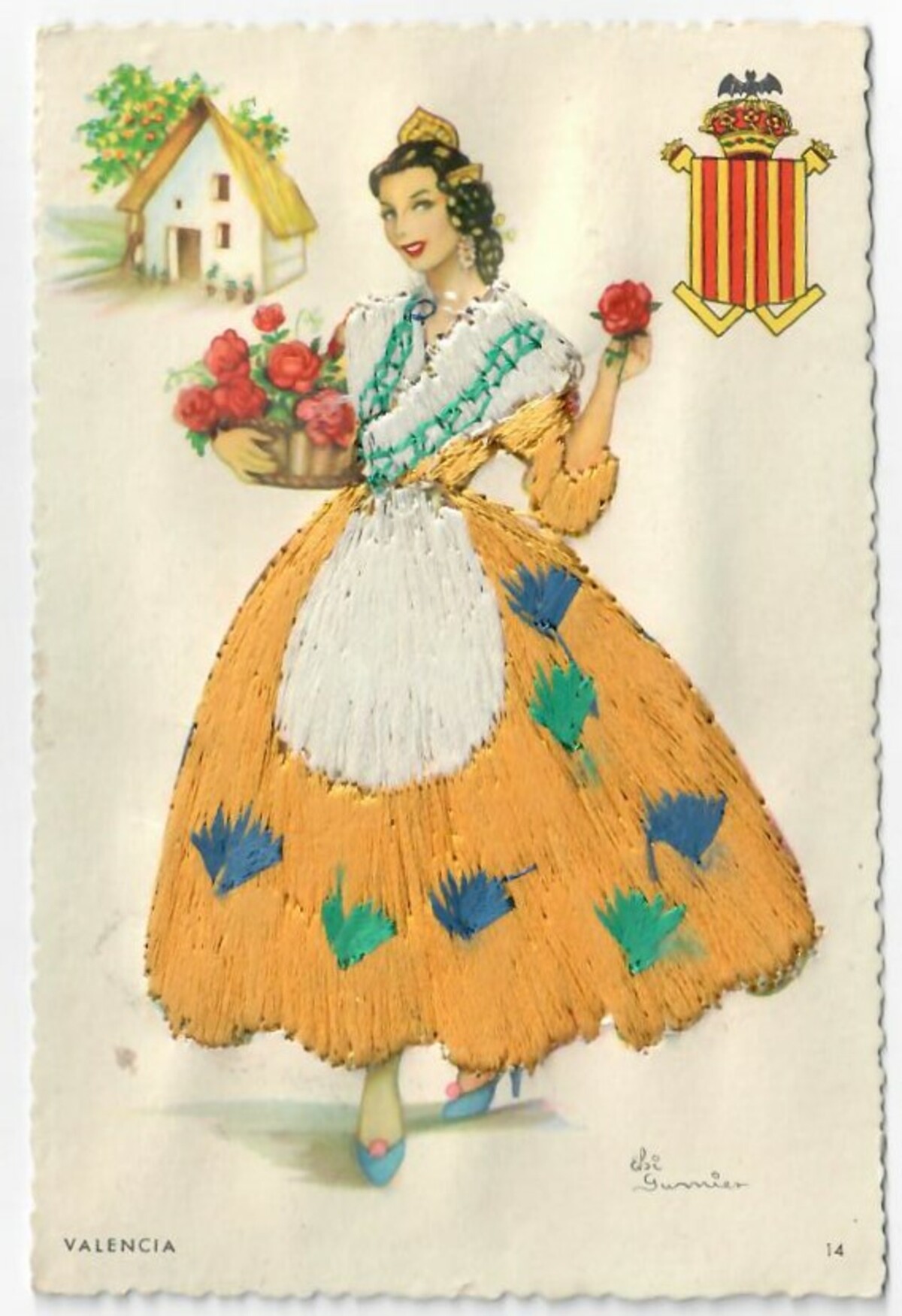
 Hand embroidered postcard from Spain, with a scene from Valencia, mid-20th century (TRC 2019.2141).During the twentieth century, various forms of embroidered postcards were popular, notably the so-called hand embroidered postcards associated with the First World War (1914-1918). These are in fact machine embroidered (see the TRC online exhibition Silk embroidered postcards from the First World War).
But there were also postcards that were partially or entirely worked in hand embroidery. These come in two main forms, namely those relating to different countries which often have various specific forms of national dress, or general scenes of men and women, such as flamenco dancers.
Secondly, but not as common, are hand embroidered postcards depicting the Virgin Mary or a saint, artistic scenes with items such as fans and flowers, or fantasy images, such as children skating or sledging in winter scenes.
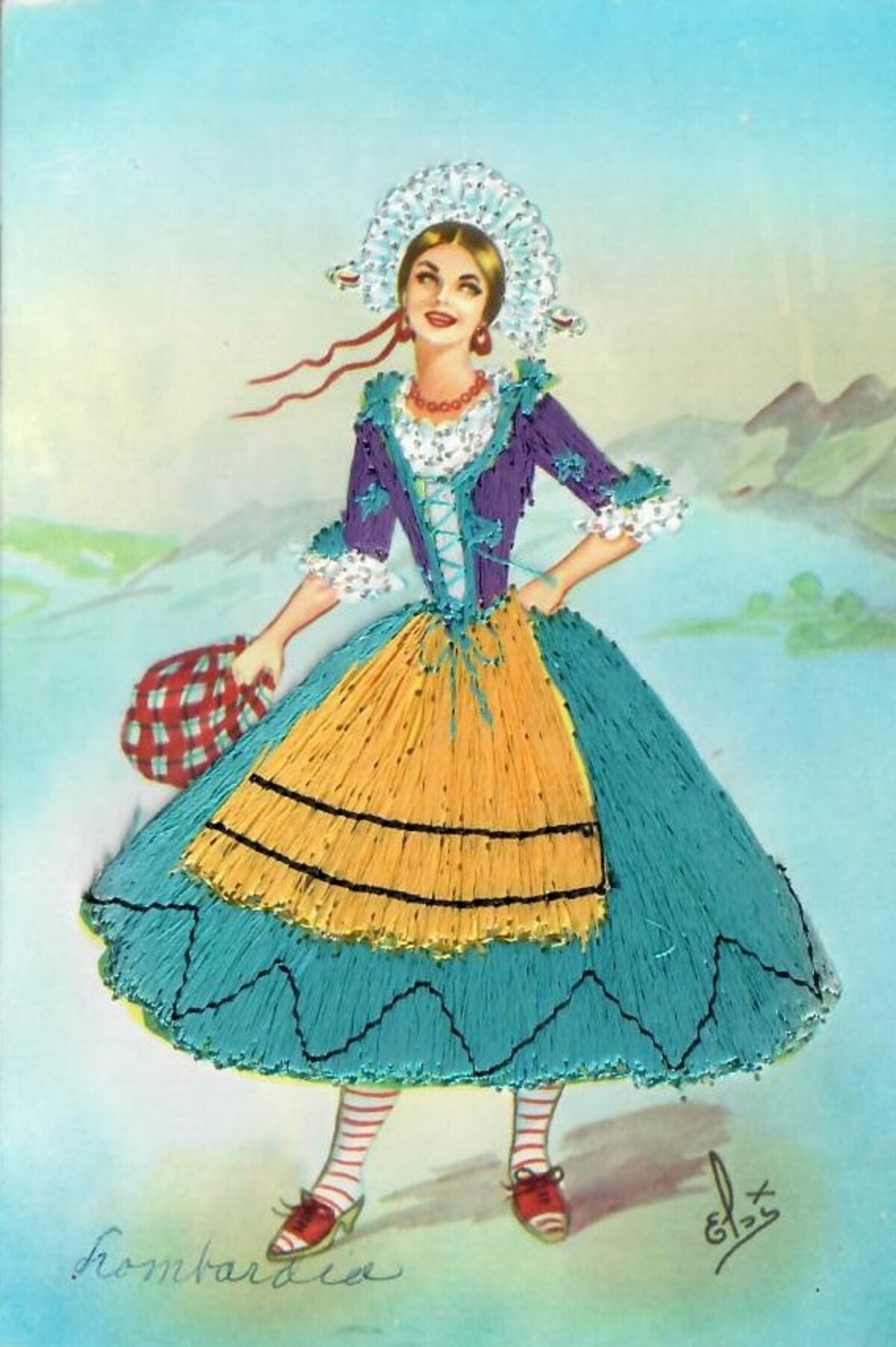 Hand-embroidered postcard from Spain, with Lombardian (Italy) scene, mid-20th century (TRC 2019.2142).
These various forms of hand embroidered cards are normally worked in long, satin stitches using a cotton, rayon or silk thread in bright colours. Sometimes the embroidery is combined with actual cloth to create 3-dimensional effects.
The cards would have been very quick to produce, which raises the question, who physically carried out the embroidery? It would appear that the cards were embroidered at home by women working on a piece rate. How this domestic industry was organised and by whom are subjects that need further research.
This type of card first made its appearance in the early twentieth century and remained popular until the 1970s. The peak demand for this type of postcard coincided with the start of package holidays abroad. It should be noted that they were still being produced, albeit on a much smaller scale, at the end of the twentieth century.
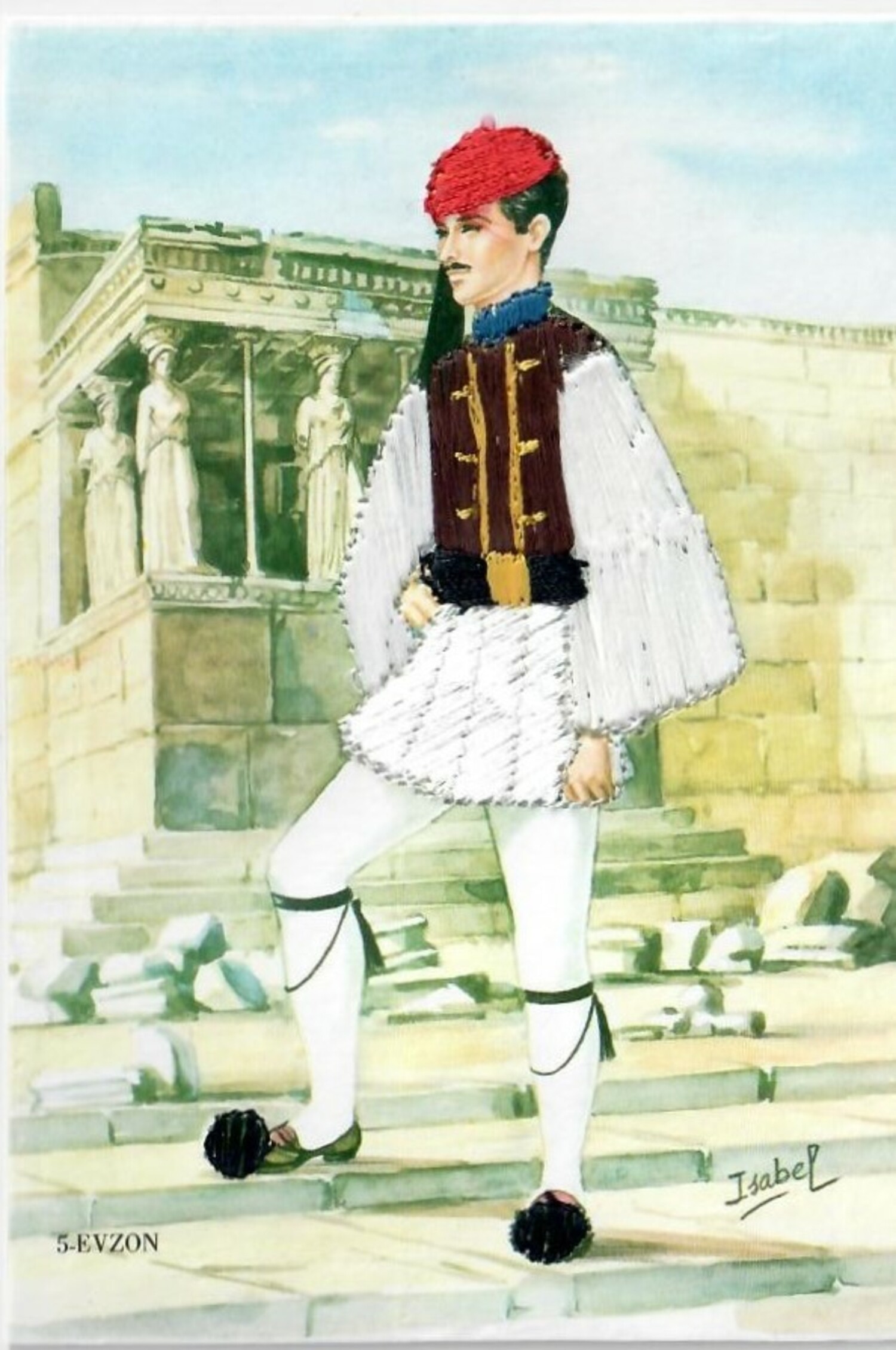 Hand embroidered postcard from Greece (presidential guard in Athens), mid-20th century (TRC 2019.2145).These postcards are especially associated with Spain and come in various types, notably series that include famous people, such as named male matadors (bull fighters), but the majority of postcards depict Spanish regional women's dress.
Many of the original scenes of women in regional dress were produced by an artist called Elis Gumier (sometimes simply written as Elis, who worked for both Postales Alcala and Postales CEME). Other artists associated with these and similar cards are ‘Isabel’ and ‘Iraola’.
Although there are also examples depicting people in regional dress from France, Greece, Italy and Switzerland, many of these cards were actually made in Spain by companies such as Arte Hispanico, Postales Alcala (Madrid), Postales CEME (also of Madrid) and Vincente Martinez (Madrid). In addition, the idea of embroidered cards depicting regional dress was exported to Columbia, Peru, and elsewhere.
Gillian Vogelsang-Eastwood, 22 February 2023