• F2
  • F4
  • F3
  • F1

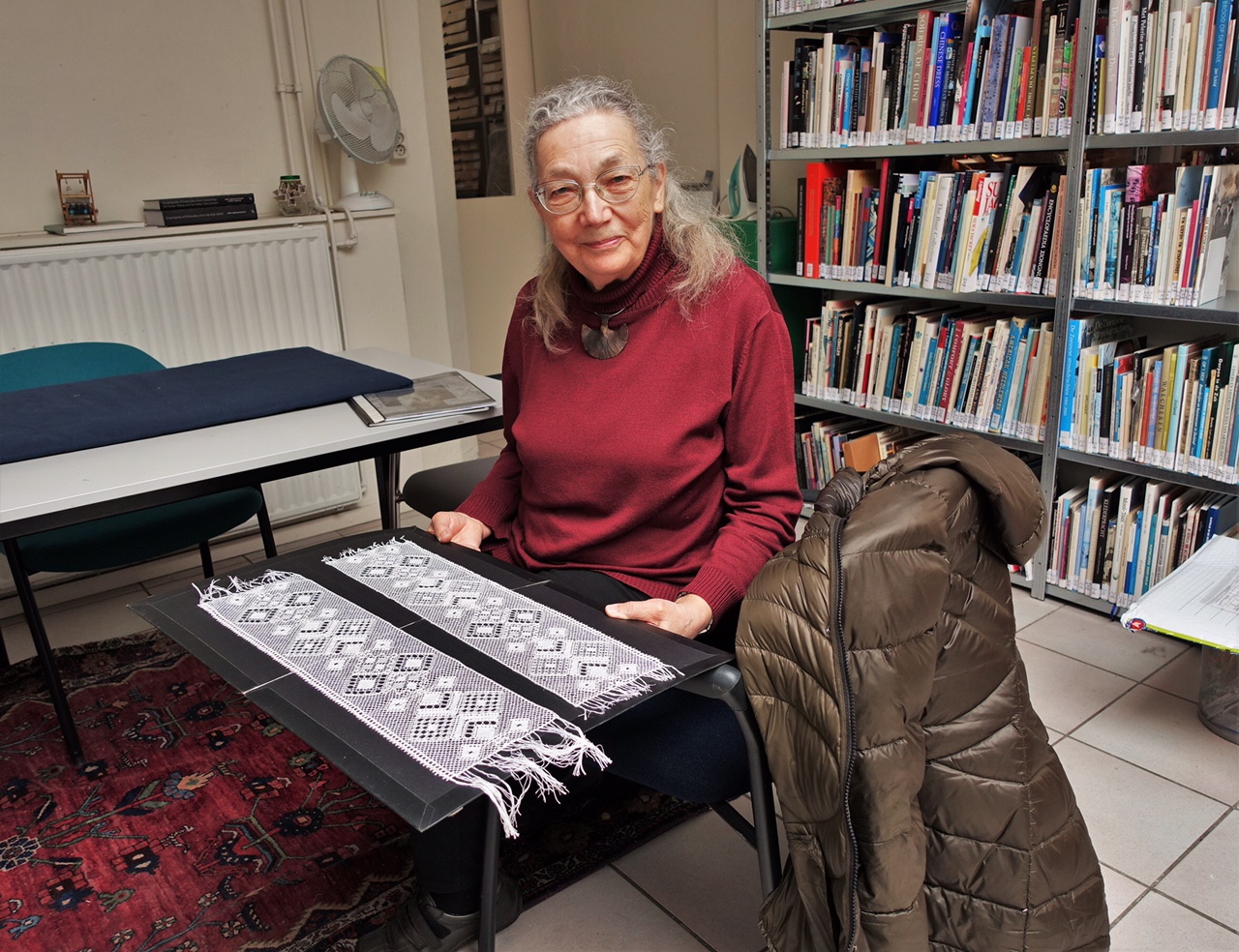
Mrs Bettie Stijnman showing the two reconstructions that she made of the 's Gravenmoer lace flounce on the Rijnland cap (TRC 2021.2446).Mrs Bettie Stijnman showing the two reconstructions that she made of the 's Gravenmoer lace flounce on the Rijnland cap (TRC 2021.2446).A little while ago we published a TRC blog about a small, Dutch lace cap (TRC 2021.2446) from the Rijnland region of the Netherlands. More specifically, the cap was decorated with a flounce made from handmade bobbin lace that is now in a bad condition.

As noted in the blog, this type of lace is the only form of bobbin lace traditionally made in the Netherlands. It was worked in the village of 's-Gravenmoer in the province of Noord-Brabant, north of the Belgian port of Antwerp.
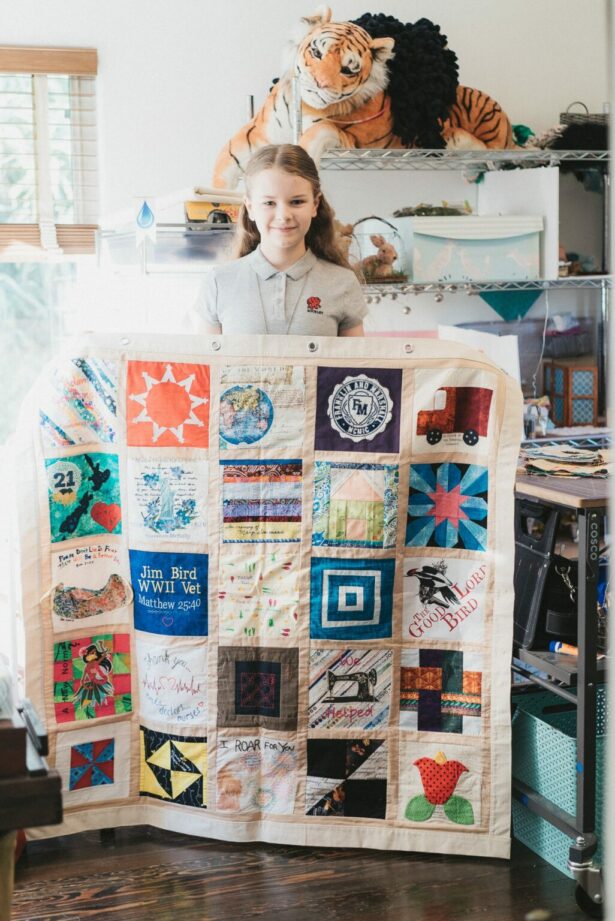
Madeleine Fugate holds up a panel of the Covid Memorial Quilt, which will be displayed in museums, hospitals, churches, schools and traveling exhibitions (WNV/Lisa Smith)Madeleine Fugate holds up a panel of the Covid Memorial Quilt, which will be displayed in museums, hospitals, churches, schools and traveling exhibitions (WNV/Lisa Smith)The TRC has a fascinating collection of American quilts. Among the many different kinds there is one category called commemorative quilts, which are made to commemorate a particular event or person.

A schoolgirl from California (US) is creating one such quilt, to remember those who have died of COVID-19. “I was watching the news and they kept saying ‘the numbers’ are going up and I said, ‘They aren’t numbers, they’re people.’ My mom worked on the AIDS Memorial Quilt in the 1980s, so I said, ‘Let’s make a Covid Memorial Quilt to honour the people who died and help our country heal’,” Madeleine Fugate explained. She began the quilt in April 2020, when she was 13 years old. It was part of a school community action project called “Young Change-Makers in a COVID-19 World.

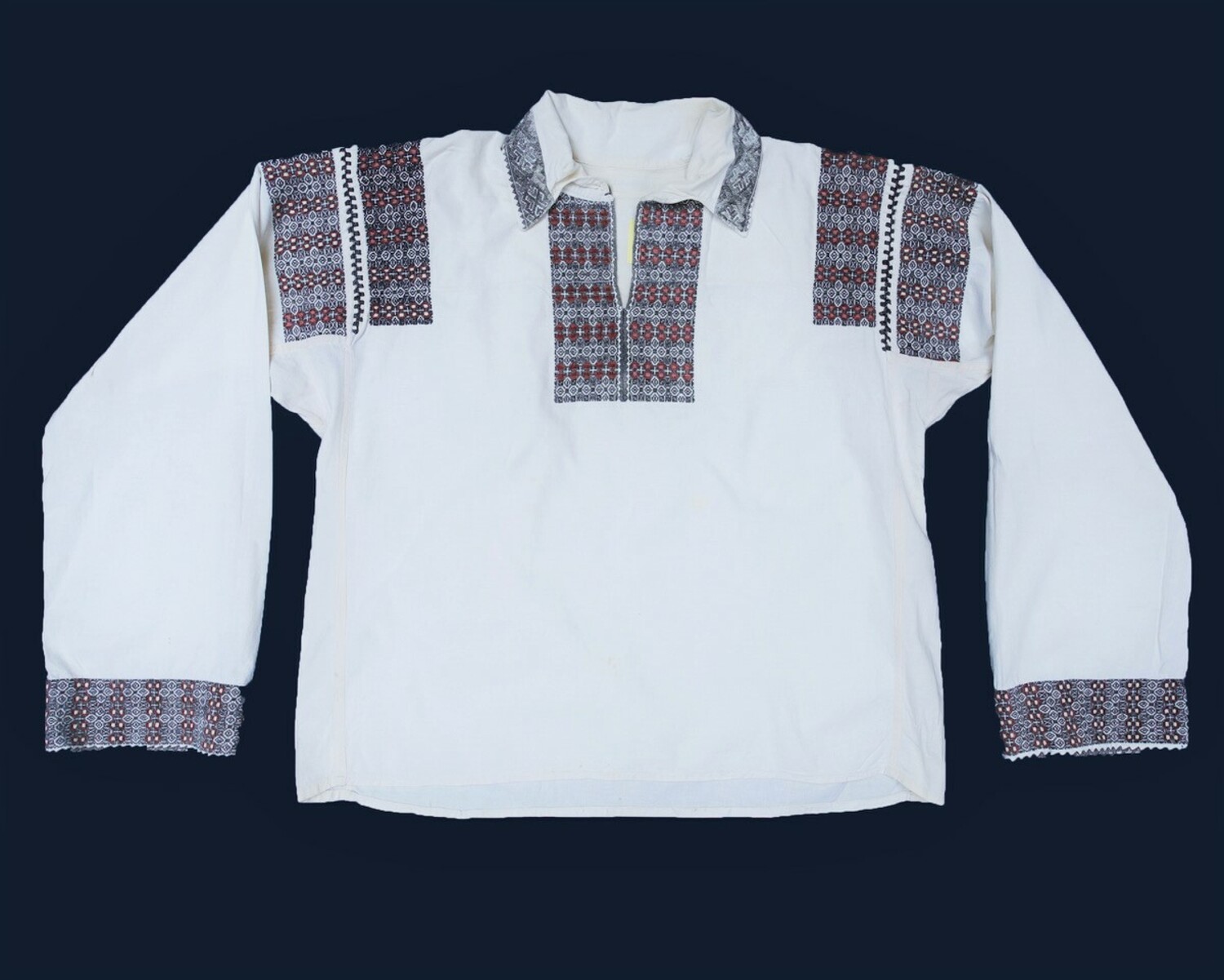
Romanian man's shirt with hand embroidered decoration, late 20th century (TRC 2022.0197).Romanian man's shirt with hand embroidered decoration, late 20th century (TRC 2022.0197).

As many readers will know we have been given a large collection of mainly Hungarian textiles and garments that is currently in Paris. The transport of the collection was delayed slightly, but it is now scheduled for the 20th February. In the meantime, Augusta de Gunzbourg, who is looking after the organization, transportation and cataloguing of the collection, has recently been to Paris to discuss the collection, its background, and indeed its future. See also a previous TRC blog of 25 November 2021: Citizen culture at work: The textiles are coming to Leiden.

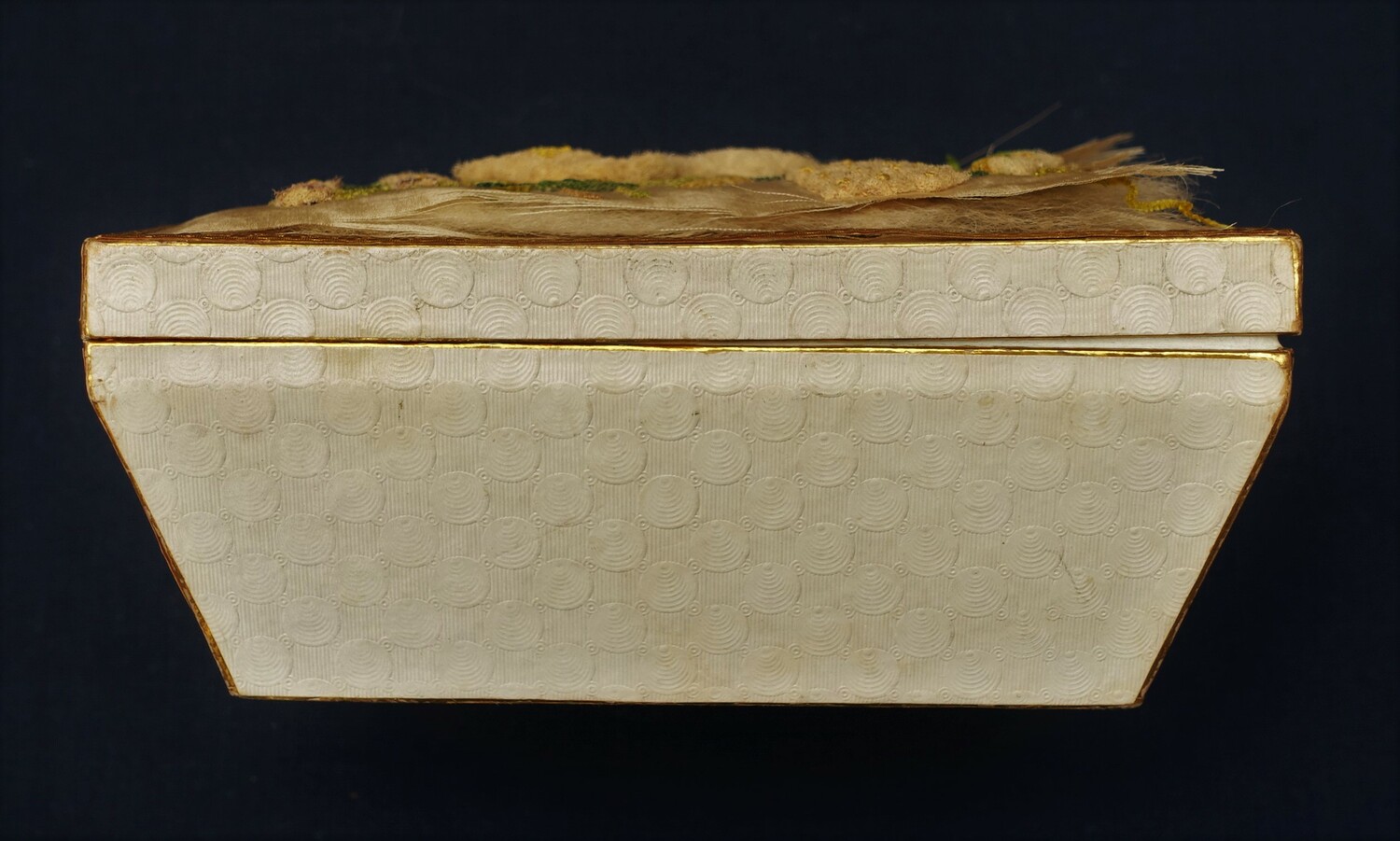
Cardboard box that contained the early 19th century bridal treasure (TRC 2014.1060e).Cardboard box that contained the early 19th century bridal treasure (TRC 2014.1060e).The TRC Collection houses many fascinating and historic objects with a real human interest, and some of these items become even more intriguing when they are linked to specific people.

Recently we had another look at a small cardboard box (TRC 2014.1060e), 16 x 11 x 7.5 cm in size, and made in the shape of a Classical sarcophagus (typical for the late 18th - early 19th century).

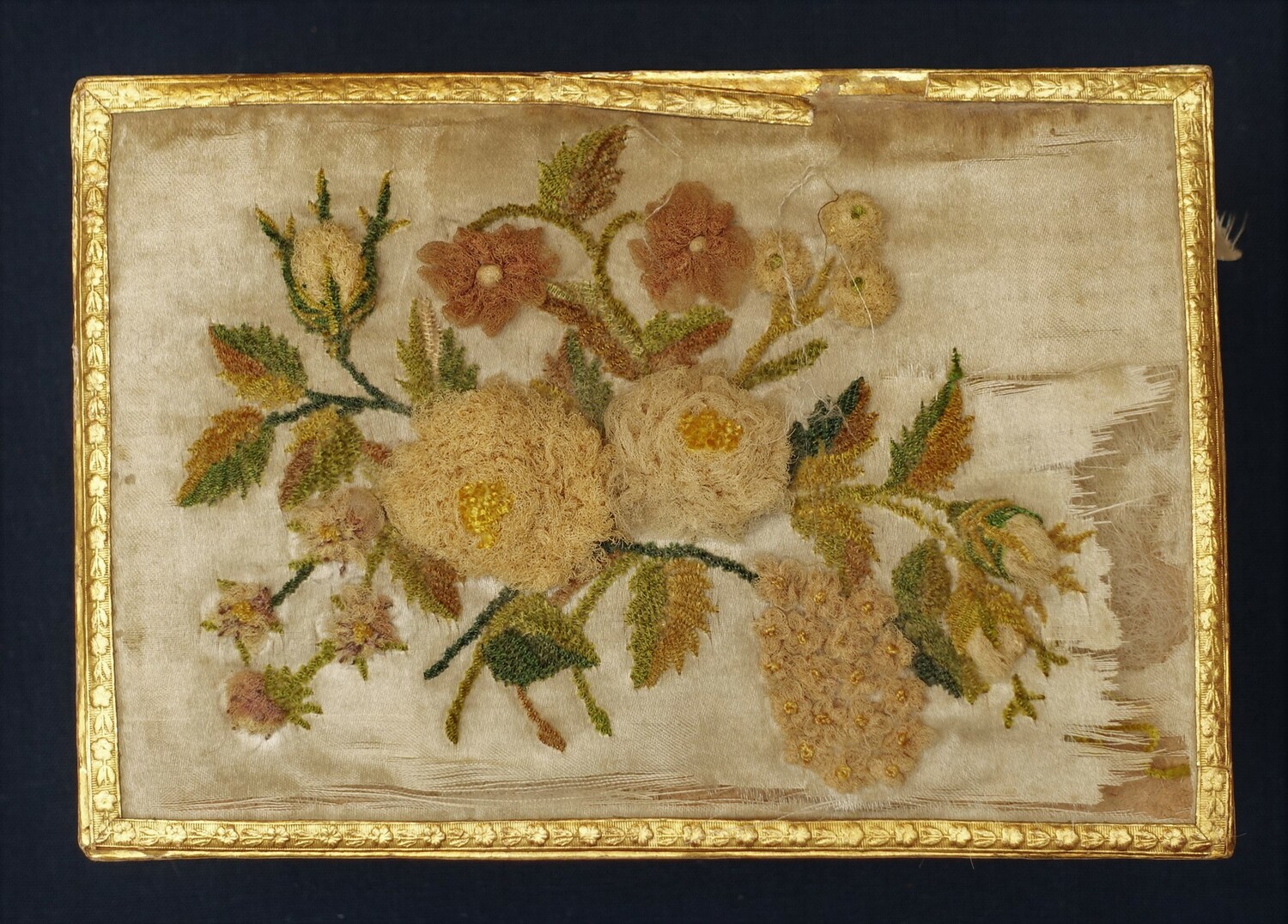
Its lid is covered with ivory-coloured satin cloth that is decorated with fine, chiffon flowers and seeds, and with embroidered leaves and stems in chenille thread and floss silk. The box and its contents were briefly described in a TRC blog of 11 November 2014, ‘Little treasure box’.

Lid of cardboard box that contained the bridal treasure, photographed from above (TRC 2014.1060e).Lid of cardboard box that contained the bridal treasure, photographed from above (TRC 2014.1060e).

A little while ago I saw an Indian photograph of some Sikh soldiers wearing what appeared, at first glance, to be face masks on their chins. Then came the thought, of course, they are not face masks but beard bags.

After trying, on several occasions, to leave the idea of beard bags to one side it soon became apparent that the concept was stubbornly going to refuse to go away and over the last few days I searched on the internet and in the TRC Library for beard bags.

I must confess: A new world opened up to me! And here I apologise to our (male) readers who have beards and know about beard care, but I had no idea that the maintenance of a beard was so complex. I strongly suspect that a significant number of the TRC Blog and Facebook readers will have also be similarly ignorant. There are many comments by men about the time spent by women on their hair, but it is very clear that some men are equally attentive to their beards! Their beard bags are an essential part of their dress and identity, and as such of great interest to the TRC. We realised that examples should be included in the TRC Collection!

Cotton, combined face mask (corona) and beard bag with elasticated ear loops and a design of skulls. Spain (TRC 2022.0208).Cotton, combined face mask (corona) and beard bag with elasticated ear loops and a design of skulls. Spain (TRC 2022.0208).

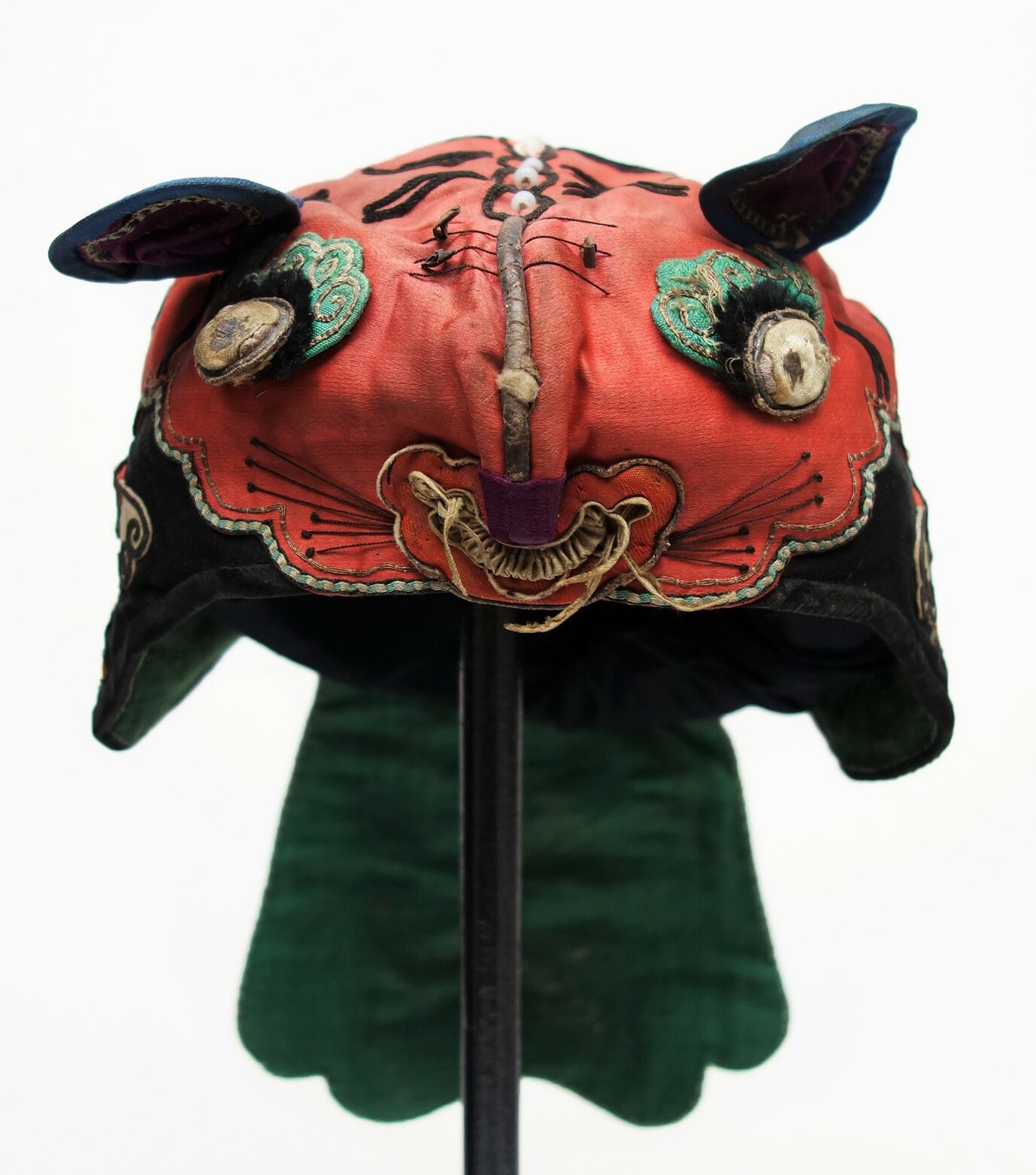
Chinese tiger hat (TRC 2021.2029).Chinese tiger hat (TRC 2021.2029).February 1st 2022 marks the Chinese New Year under the Zodiac sign of the Tiger. On this occasion, we thought we would share with you our collection of Chinese tiger hats (虎头帽 - Hu Tou Mao), as they are both representative of this year’s lucky animal, the tiger, and are commonly worn for New Year festivities.

These Chinese tiger hats are traditionally worn by young children (especially boys) for important celebrations and festivals, such as birthdays or New Year festivities.They can also be worn along with tiger-shaped, embroidered shoes.

Popular in both northern and southern parts of the country. they are worn by several ethnic groups (Han, Miao, Dong among others).

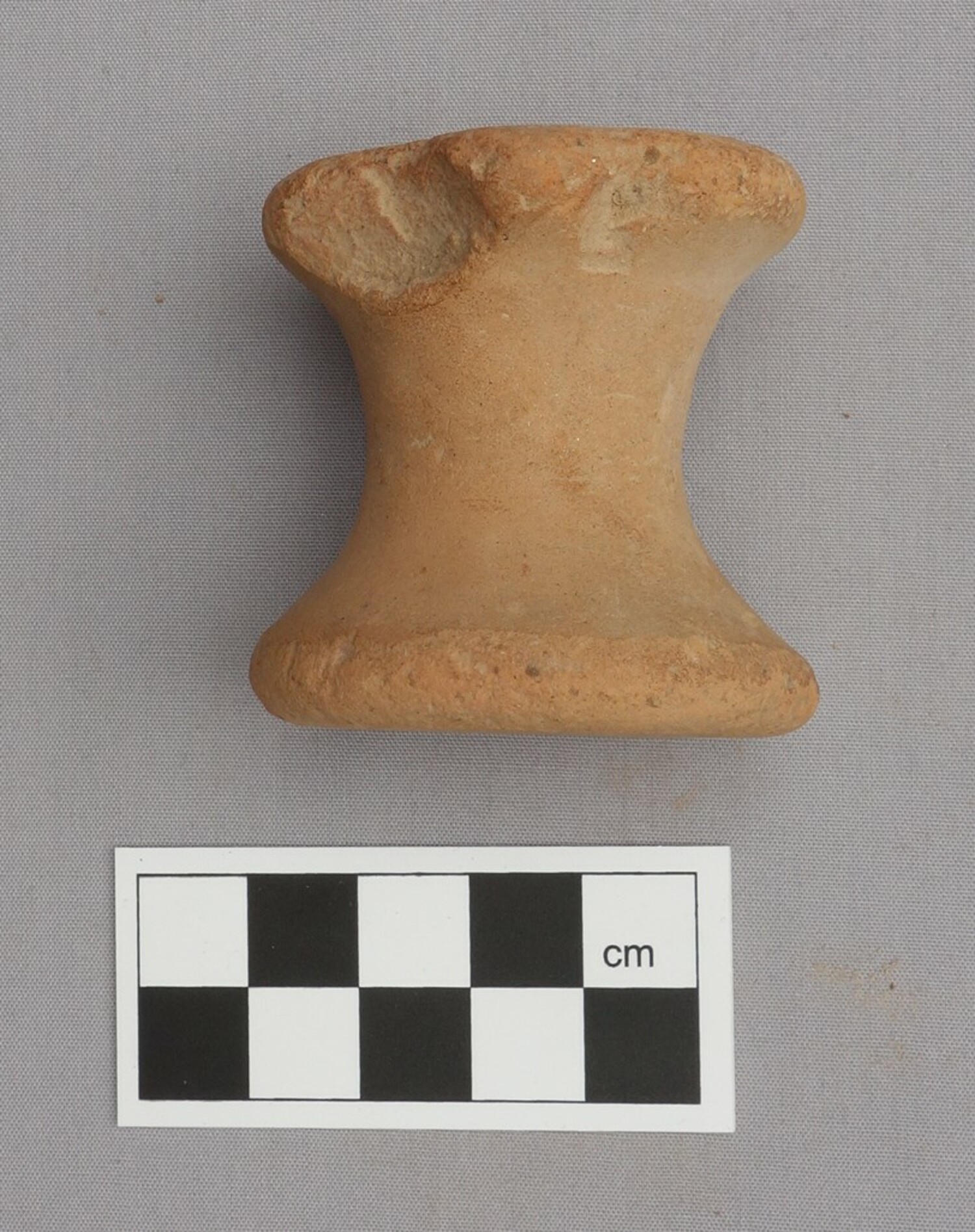
Ancient Greek baked-clay spool (TRC 2014.0797).Ancient Greek baked-clay spool (TRC 2014.0797).In 2014 a small collection of 15 ancient Greek textile tools was donated to the TRC. The gift included 11 baked-clay loom weights; two spindle whorls (TRC 2014.0802 and TRC 2014.0803); and a spool (TRC 2014.0797) and a fragment of a spool (TRC 2014.0798). They came from different archaeological sites in Greece and ranged in date, from the Archaic (circa 750-480 BCE) to the Classical (479-323 BCE), and perhaps Roman Period (30 BCE-180 CE).

Baked clay or stone loom weights (they can also be found made of bone or metal) were used on a specific type of loom: the warp-weighted loom. They helped ensure an even tension in weaving. Loom weights are common finds at many archaeological sites, all over the world. They might even be considered the common cold of archaeological objects. But I cannot describe the thrill that went through me when I got to examine these pyramid-shaped artefacts, when putting together a digital and online exhibition for the TRC. To hold in my hands something that had been used 2,500 years ago, no matter how ubiquitous it might have been, was tremendously exciting

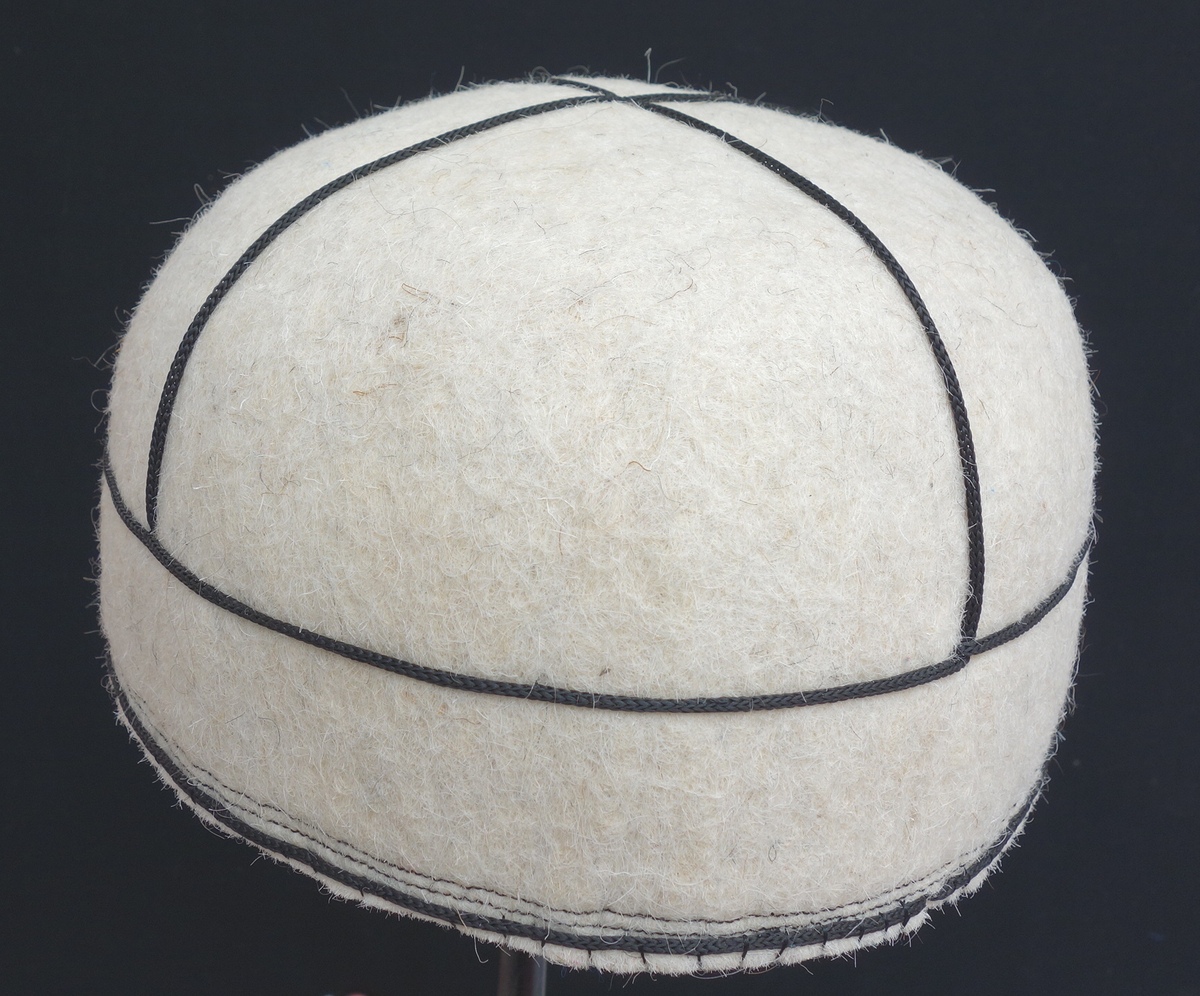
A white felt hat from the Svan in northwestern Georgia, early 21st century (TRC 2015.0344).A white felt hat from the Svan in northwestern Georgia, early 21st century (TRC 2015.0344).The three traditional hats from Georgia in the Caucasus, now in the TRC collection, namely TRC 1998.0027, TRC 1998.0028 and TRC 2015.0344, come in three colours; white, black, and brown. Each of these hats has clear features associated with the styles of the ethnic group of the Svans, or Svani.

The hats from the Svaneti region, in the northwest of Georgia, are made by felting. Felting is the technique of fusing protein fibres, typically sheep’s wool, to create a non-woven fabric. The Svan people tend to press their felted wool into a curved wooden block in order to shape their unique headwear.

The hats are typically hard and rigid: a product of the vast amount of wool compressed firmly into shape. They are fused into a near solid, curved form which is then further supported by cords, which extend from the pinnacle down its sides. Svan hats can feel scratchy to those that don’t wear them every day, however people are known to keep their own specific hats for years or more! So we can imagine that the hats, like shoes, mould to the wearer's individual head.

Zoek in TRC website

Contact

Boerhaavelaan 6
2334 EN Leiden.
Tel. +31 (0)71 5134144 (kantooruren)  
office@trcleiden.org

Het TRC is elke dag geopend tussen 10.00 en 15.00 uur.

facebook 2015 logo detail


instagram vernieuwt uiterlijk en logo


Bankrekening

NL39 INGB 0002 9823 59, t.a.v. Stichting Textile Research Centre.

Financiële giften

Het TRC is afhankelijk van project-financiering en privé-donaties. Al ons werk wordt verricht door vrijwilligers. Ter ondersteuning van de vele activiteiten van het TRC vragen wij U daarom om financiële steun:

Giften kunt U overmaken op bankrekeningnummer (IBAN) NL39 INGB 000 298 2359, t.n.v. Stichting Textile Research Centre. BIC code is: INGBNL2A

U kunt ook, heel simpel, indien u een iDEAL app heeft, de iDEAL-knop hieronder gebruiken en door een bepaald bedrag in te vullen: 


Omdat het TRC officieel is erkend als een Algemeen Nut Beogende Instelling (ANBI), en daarbij ook nog als een Culturele Instelling, zijn particuliere giften voor 125% aftrekbaar van de belasting, en voor bedrijven zelfs voor 150%. Voor meer informatie, klik hier