• F1
  • F4
  • F3
  • F2

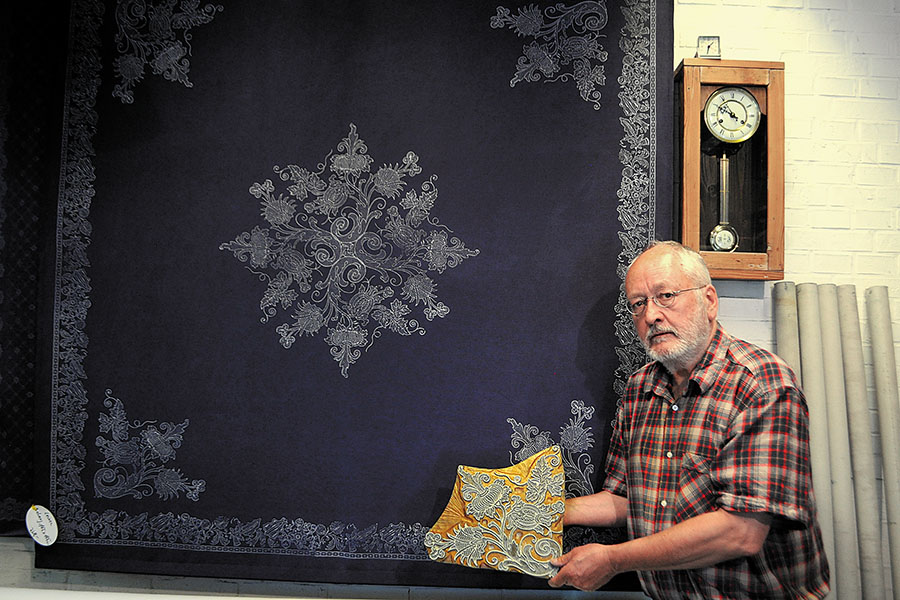
Georg Stark is a German, UNESCO-recognised block printer and indigo dyer who promoted the historic craft of textile indigo dyeing in Germany and beyond. Georg Stark is a German, UNESCO-recognised block printer and indigo dyer who promoted the historic craft of textile indigo dyeing in Germany and beyond. The TRC has recently started exploring another subject within the large field of textiles studies. We want to focus on the craftsmen and craftswomen who actually do or did the work and made a difference. We are looking for people who are willing to contribute with a blog. Please let us know whether you can help.

Most textile studies tend to focus on specific techniques, local characteristics, materials that are being used, the tools, the dyes, the uses of the textiles, the garments that are being made, the ornamentation, the household goods and ornamental cloths, and their trade and movement all across the world.

Far less attention is being paid to the people who actually did the work, the men, women and sometimes the children who spun the fibres, dyed the threads, wove the textiles, embroidered and painted them, and sewed them into garments and other objects. Who were these people, who often spent many years learning their craft? Many worked in dusty workshops, in relative anonymity and with very little compensation. Others gained enormous prestige and were employed in royal households. Many of them made a difference. Who were they?
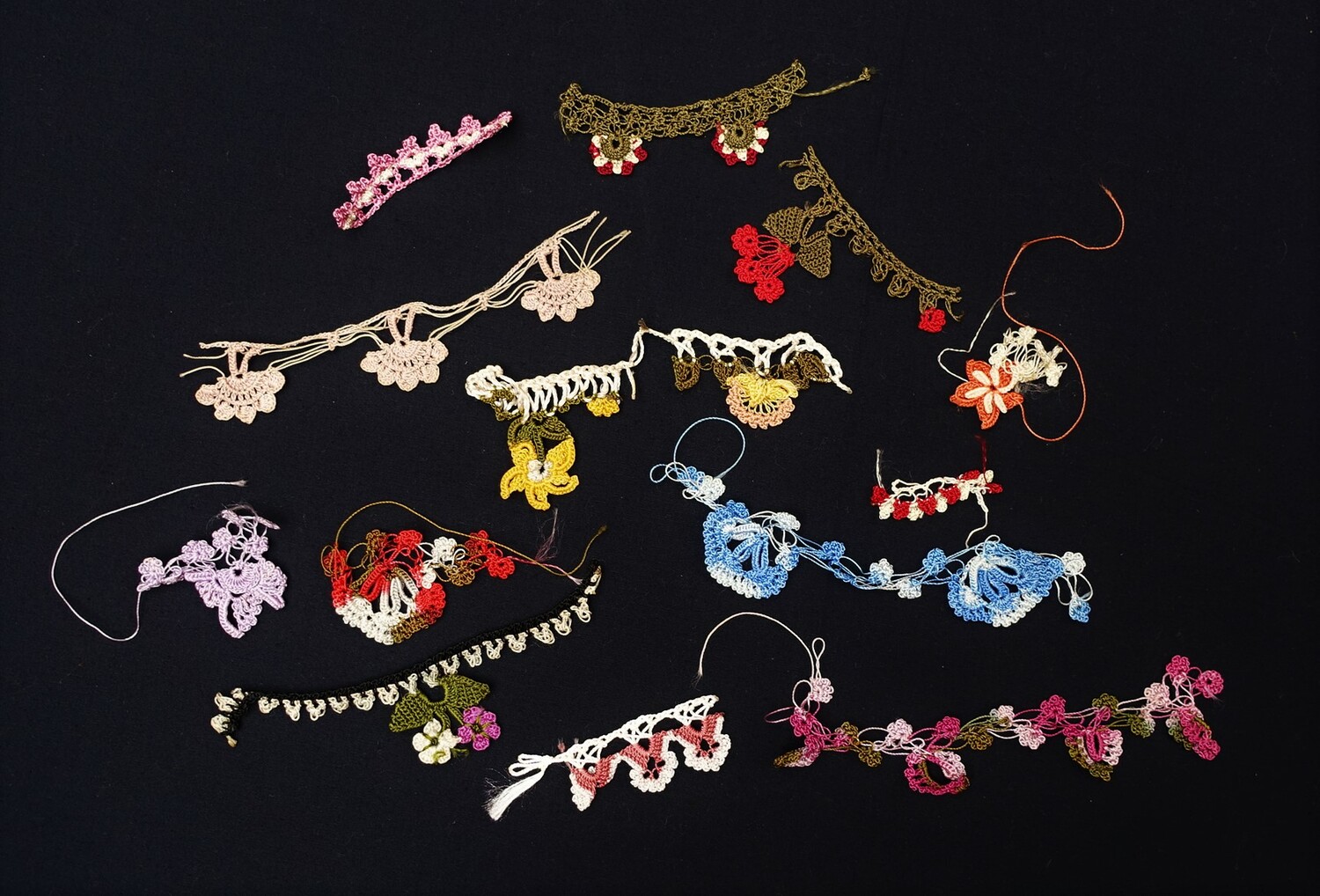
Turkey is famous for the production of oya, which is a form of lace that is often found on the edges of women’s headscarves. Oya has been produced in Turkey for at least 400 years and is probably much older. Its production and use (with a variety of different names) can be found throughout the eastern Mediterranean and indeed all over the former Ottoman Empire.

An oya-maker's library, showing a selection of oya edgings that she could make, for customers to choose from. Turkey, 2008/2009 (TRC 2009.0291).An oya-maker's library, showing a selection of oya edgings that she could make, for customers to choose from. Turkey, 2008/2009 (TRC 2009.0291).

The TRC depot in Leiden houses many treasures. The treasures I am most in awe of are the archaeological textiles. Sometimes they do not look like much, being scraps rather than a complete garment, but they can have an incredible history and often point to milestones in human technology. And stories of lost cities and cultures.

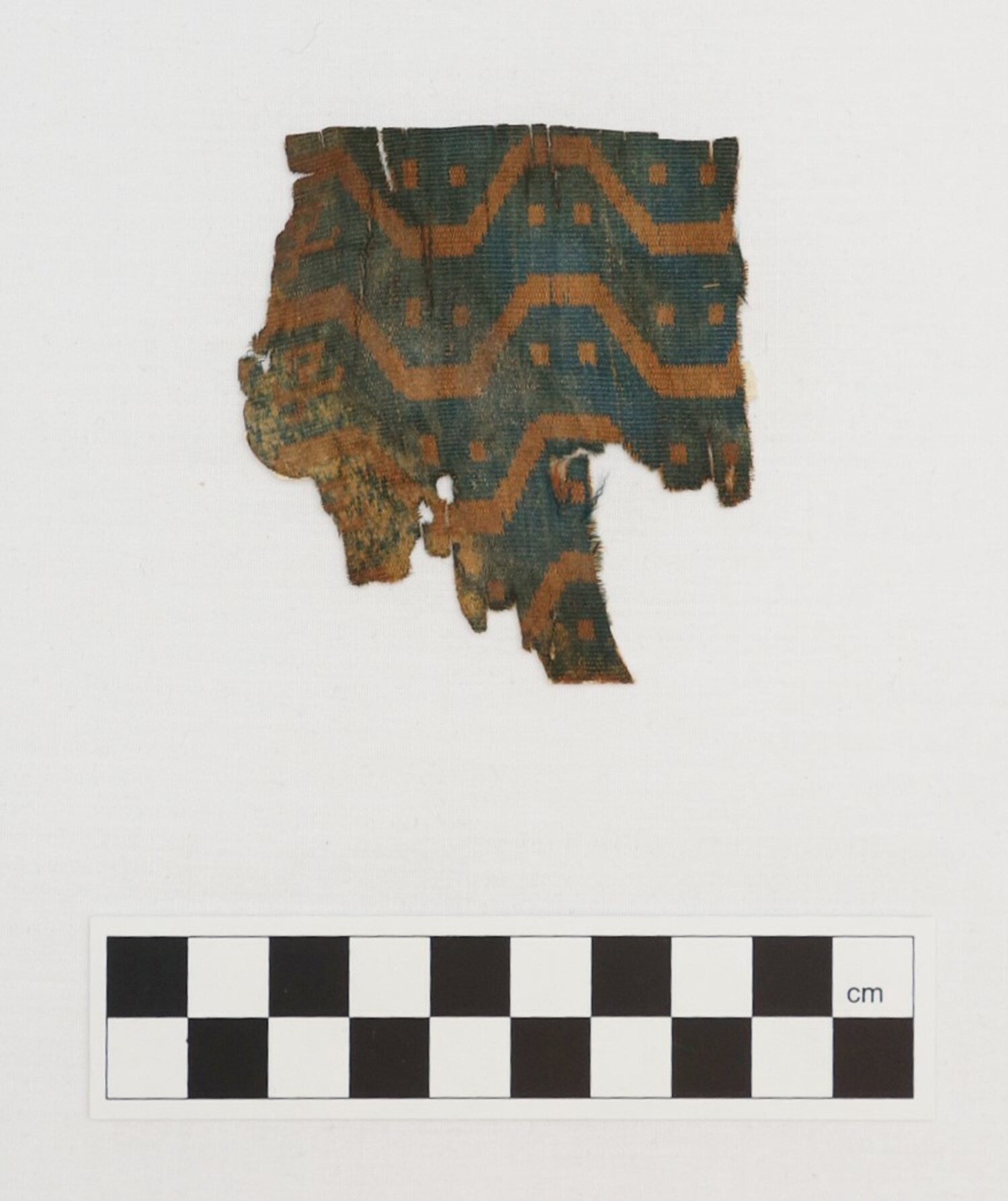
Silk cloth fragment from Xinjiang, probably Niya, dug up by Aurel Stein. The sample may date to the 2nd century AD (TRC 2000.0009).Silk cloth fragment from Xinjiang, probably Niya, dug up by Aurel Stein. The sample may date to the 2nd century AD (TRC 2000.0009).

I am thinking especially of a cluster of small silk fragments excavated in the early 20th century by the famous archaeologist and geographer Sir Marc Aurel Stein (1862-1943), and around 1945 given by Sir Mortimer Wheeler, the then director of the Indian Archaeological Service, to Robert Charleston, who was an officer in the British army in India, but in later life the curator of glass in the Victoria & Albert Museum in London. Charleston gave them to Gillian Vogelsang, now director of the TRC, in 1985.  

The fragments (TRC 2000.0009, 2000.00102000.0011 and 2000.0012) are all warp-faced compound weaves, with designs that include zig-zags, paired dots and what may be dragons; TRC 2000.0009 also includes some traces of woven Chinese characters. The fragments are all dated to the second century CE, and are believed to have been excavated from the lost city of Loulan.

Loulan was an oasis settlement along the southern desert route of the Silk Road. It was part of the Kroraina Kingdom, which flourished from circa 200 CE to 400 CE. In 1897, when Stein asked the British Government of India for funding for his first expedition, the area was called Chinese Turkestan. Today it’s known as Xinjiang ("New Frontier'), the westernmost part of China.

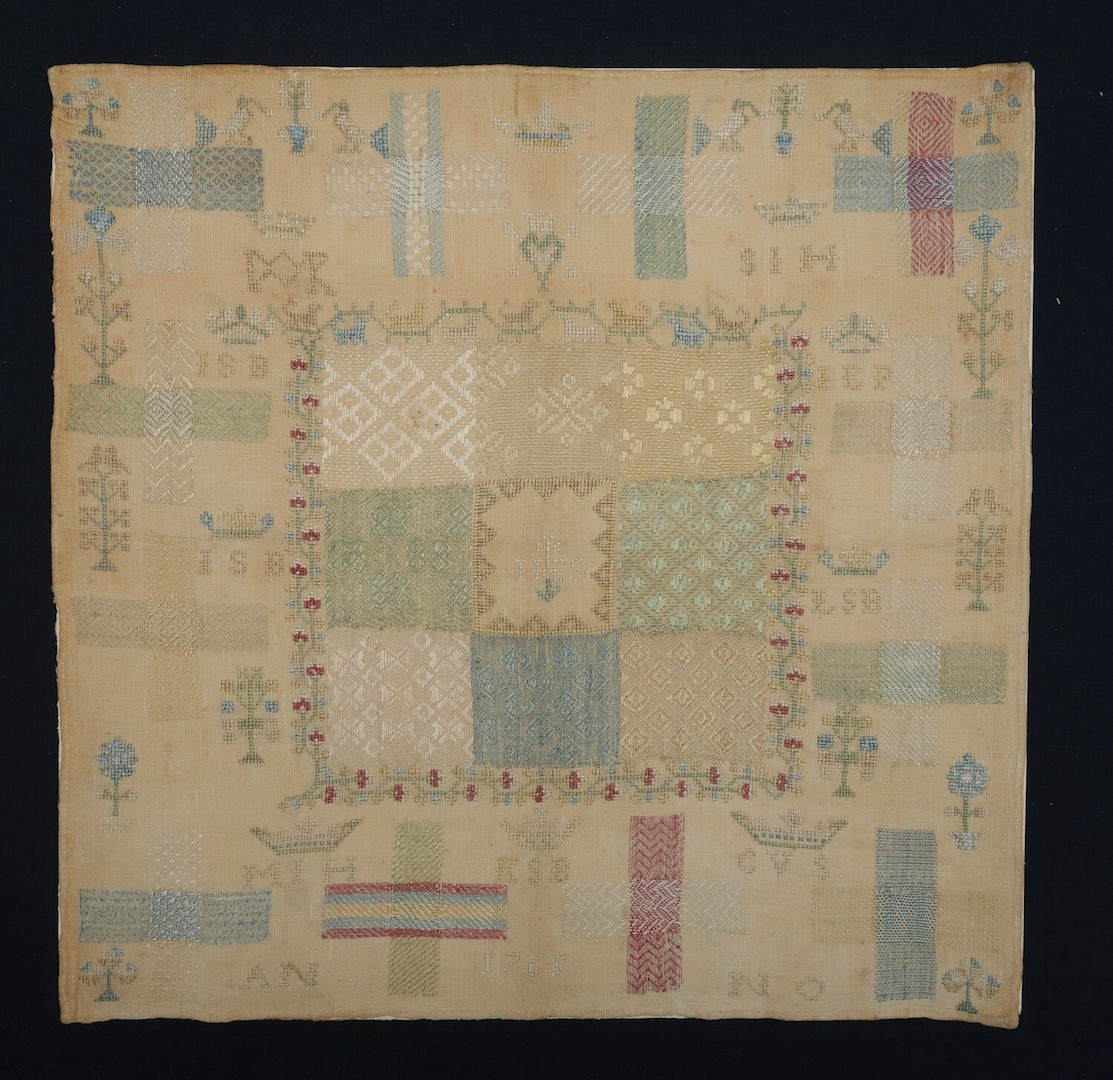
In 2020 the TRC received six samplers from Mrs. Trees Verberne-Van Hamersveld, The Hague (for more information, click here). One of them was an interesting darning sampler, TRC 2020.3687, dated to 1765, making it more than 250 years old. The large ‘nine patch’ in the centre and the many cross stitch motifs between the darning blocks make it rather unusual for a Dutch darning sampler. So what is it, and who made it?

Sampler dated 1765, Leiden?, worked in a Roman Catholic context (TRC 2020.3687).Sampler dated 1765, Leiden?, worked in a Roman Catholic context (TRC 2020.3687). 

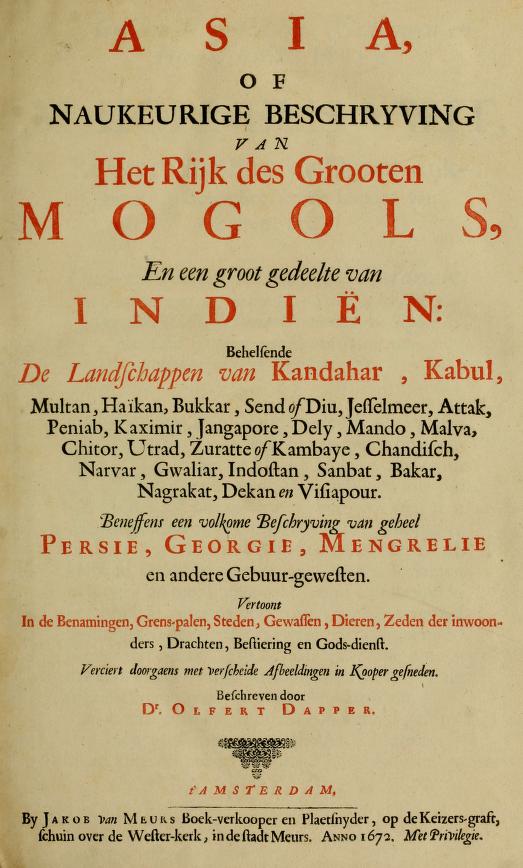
Title page of Olfert Dapper's Naukeurige beschrijving ... (Amsterdam 1672).Title page of Olfert Dapper's Naukeurige beschrijving ... (Amsterdam 1672).Last weekend I was browsing through a 17th century Dutch encyclopedia about Mughal India (as one does in the weekends), and to my surprise I came across a rather detailed account of the production and use of Kashmir shawls. Having a closer look at the text  and doing some Googling I found out that the Dutch text was almost a verbatim translation of information contained in the work of a French physician and traveller, François Bernier (1620-1688).

I had known about the French record, and ploughed through it a long time ago, but the passage about Kashmir shawls had obviously escaped me. It often amazes me how much information and knowledge about Asia was available in Europe, and in particular in the Netherlands in the 17th century. In this case, his information about the Kashmir shawls I had missed completely; I am sure others writing about Indian textiles or Kashmir shawls in particular, will know about it, but still, many seem to have missed it as well. It remains fascinating, for me, to read these early details in a Dutch publication of the 17th century.

Bernier visited Kashmir in 1664-1665, and his report, Histoire de la dernière Revolution des États du Grand Mogol .... appeared in 1670 and 1671, while a more complete version, in 2 volumes, called Voyages dans les États du Grand Mogol was published in 1699, in Amsterdam, and abain in 1724. Other editions in various languages were published for many years.

We are sometimes asked how a particular object found its way to the TRC Collection in Leiden? Who are the donors? How do people hear about the TRC? Sometimes it is very simple and there is direct contact, or a parcel arrives in the post. On other occasions it can be a little more convoluted and involves the help of various people in different parts of the world.

Let me give you an example. A few weeks ago, 28 December, we published a blog by Shelley Anderson about the French designer, Elsa Schiaparelli (1890-1973) and her fashion house.

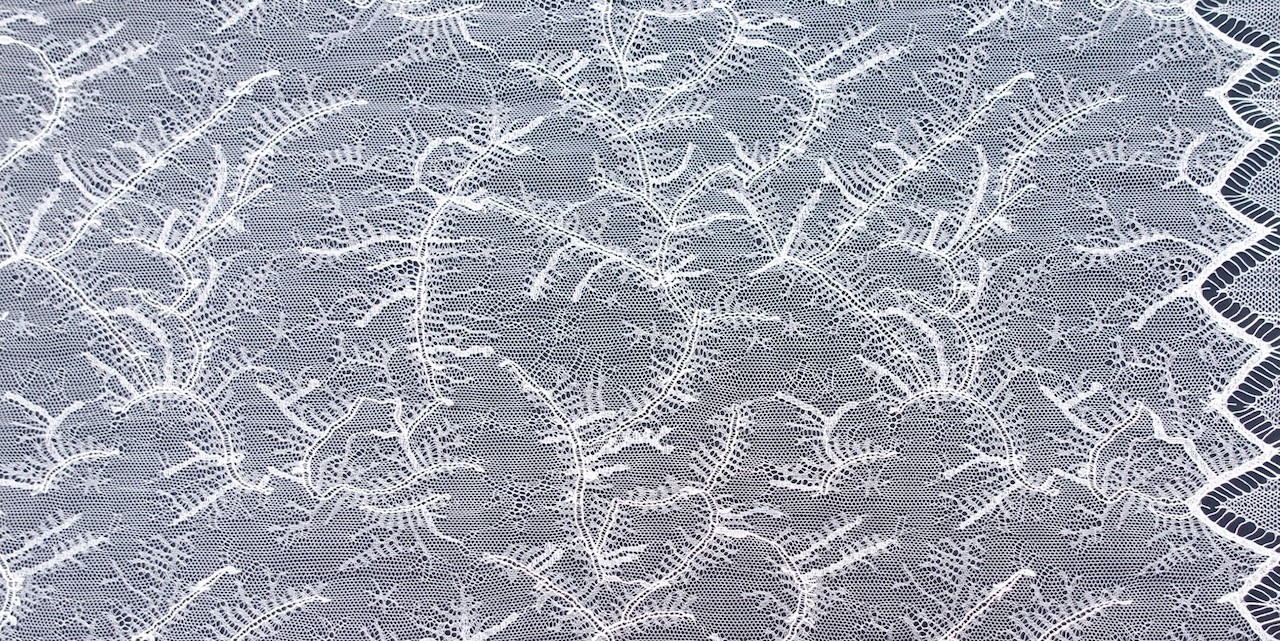
Sample of the 'Tears & Lace' design, Darquer & Méry, Calais, France  (TRC 2022.0003a).Sample of the 'Tears & Lace' design, Darquer & Méry, Calais, France (TRC 2022.0003a).

For the last year the TRC Leiden has been cooperating with the indomitable Yasmine El Dorghamy, who is the editor of RAWI: Egypt’s Heritage Review series, based in Cairo, Egypt. More specifically, we have been working together on vol. 11 of the series, with the title: Egypt’s Costume History (2021). The project was supported by the Drosos Foundation and a grant from the Dutch Embassy in Cairo. 

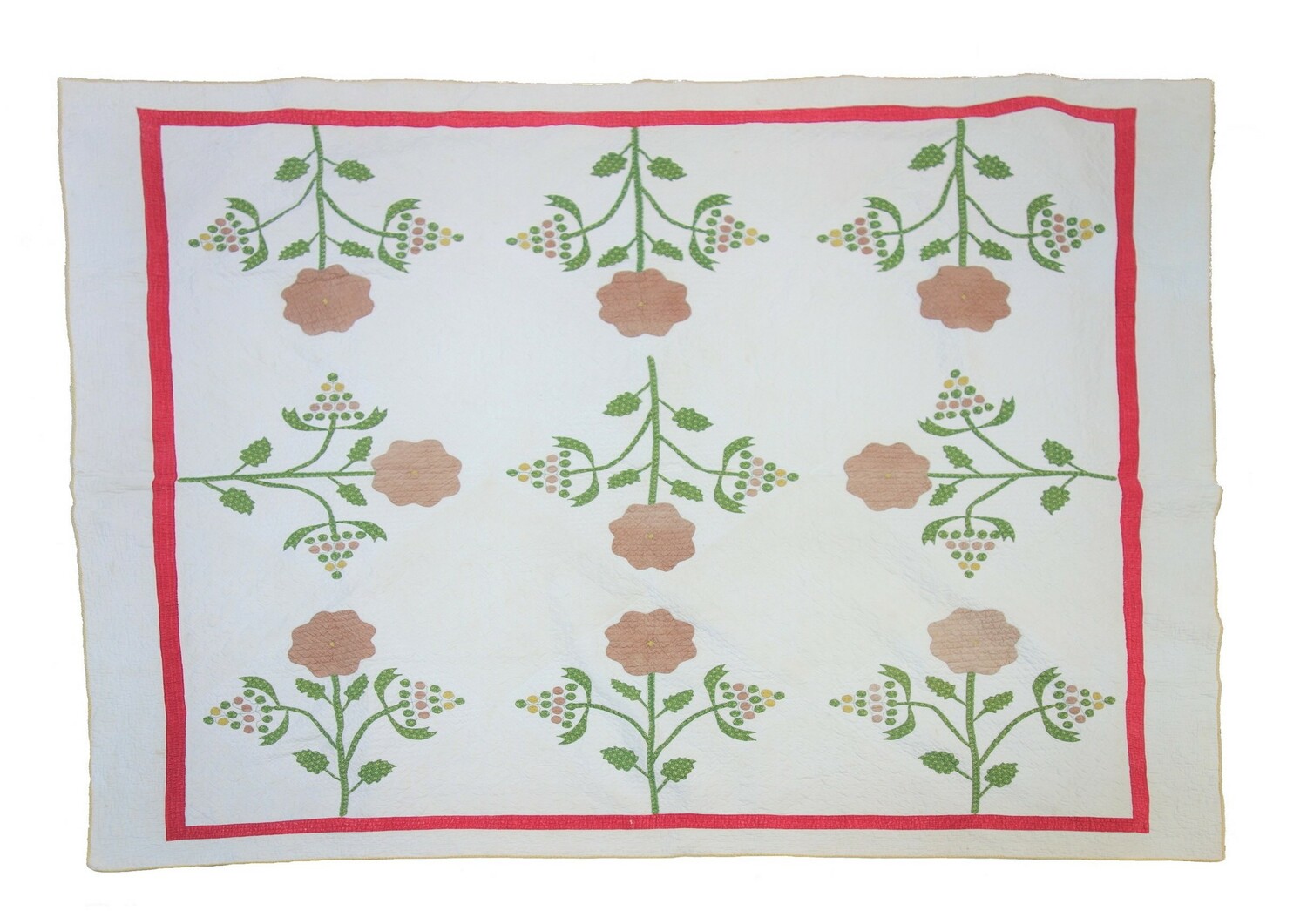
Cotton quilt with a  Flower and Berries motif, USA, 1850s (TRC 2019.2402).Cotton quilt with a Flower and Berries motif, USA, 1850s (TRC 2019.2402).One of the oldest quilts (TRC 2019.2402) in the TRC collection dates to before the American Civil War (1861-1865). It’s a beautiful quilt in a Flowers and Berries motif, with nine large hand-appliquéd blocks, and is dated to c. 1850. In a blog article from 7 April 2020, TRC quilt specialists Susan Cave and Beverley Bennett argue that the quilt was very likely made by an enslaved woman, not for herself, but for the white family who owned her.

I have often wondered about this unknown woman. Was she proud of the beauty she created, of her obvious skill as a needle woman? Or did she hate this work as just one more task she was forced to do for a family not her own?

Zoek in TRC website

Contact

Boerhaavelaan 6
2334 EN Leiden.
Tel. +31 (0)71 5134144 (kantooruren)  
office@trcleiden.org

Het TRC is elke dag geopend tussen 10.00 en 15.00 uur.

facebook 2015 logo detail


instagram vernieuwt uiterlijk en logo


Bankrekening

NL39 INGB 0002 9823 59, t.a.v. Stichting Textile Research Centre.

Financiële giften

Het TRC is afhankelijk van project-financiering en privé-donaties. Al ons werk wordt verricht door vrijwilligers. Ter ondersteuning van de vele activiteiten van het TRC vragen wij U daarom om financiële steun:

Giften kunt U overmaken op bankrekeningnummer (IBAN) NL39 INGB 000 298 2359, t.n.v. Stichting Textile Research Centre. BIC code is: INGBNL2A

U kunt ook, heel simpel, indien u een iDEAL app heeft, de iDEAL-knop hieronder gebruiken en door een bepaald bedrag in te vullen: 


Omdat het TRC officieel is erkend als een Algemeen Nut Beogende Instelling (ANBI), en daarbij ook nog als een Culturele Instelling, zijn particuliere giften voor 125% aftrekbaar van de belasting, en voor bedrijven zelfs voor 150%. Voor meer informatie, klik hier