• F4
  • F3
  • F1
  • F2

Schiaparelli’s famous 1927 sweater, now on display in the Mode Museum, Paris.Schiaparelli’s famous 1927 sweater, now on display in the Mode Museum, Paris.Intrigued by some recent TRC blogs about clothes and Princess Diana, I’ve been reading more about designers of haute couture. The V&A (London) has done everyone a service by reprinting the autobiographies of influential fashion designers such as Paul Poiret, Christian Dior, Ernestine Carter and Norman Hartnell, among others.

The list includes my personal favourite, the wildly inventive Elsa Schiaparelli (1890-1973). Her zest for life and quirky sense of humour shine throughout her autobiography, appropriately titled Shocking Life (and perhaps a nod to her invention of the term “shocking pink”). This was a woman who experimented with unusual fabrics and materials, such as plastics, glass and ceramics; who created buttons in the shape of large bugs or stars; and who collaborated with creative geniuses like Jean Cocteau, Man Ray and Salvador Dali.

She was also a late bloomer, who started her career at the age of 35, from a cramped atelier on Paris’s Left Bank (she slept in a room above the atelier, where the rats kept her awake at night). Her first hit was in 1927. It was a sweater, with a modernist bow, hand knitted by Armenian emigrants in the downstairs atelier. Five years later she had eight ateliers and was turning out almost 8,000 garments.

Chest panel for a woman's outfit from the island of Marken, the Netherlands, hand painted in the style of Indian chintz, mid-20th century (TRC 2010.0493). Chintz cloth (called sits in Holland) was imported, and then exported, in large quantities from India from the 17th century, influencing local Dutch clothing, such as that from the Frisian town of Hindelopen and the island of Marken. Chest panel for a woman's outfit from the island of Marken, the Netherlands, hand painted in the style of Indian chintz, mid-20th century (TRC 2010.0493). Chintz cloth (called sits in Holland) was imported, and then exported, in large quantities from India from the 17th century, influencing local Dutch clothing, such as that from the Frisian town of Hindelopen and the island of Marken. Although we are in lockdown it does not mean the TRC is silent! Far from it. We are working on numerous plans and ideas to make 2022 a memorable year for all textile lovers and friends of the TRC. Our plans include many more workshops, courses, events such as book fairs, open weekends, Q&A days, and of course various large exhibitions in the TRC Gallery. Many of these events are organised against the backdrop of the Leiden: Euopean City of Science 2022 programme.

In addition, one of our long-term projects is to create and display a series of mini-exhibitions. We have a suitable showcase in the workroom (deliberately placed there and not in the main Gallery, so that the story is separated from the main exhibitions), in which individual objects or groups of small items can be displayed for one to two months. The mini-exhibition is not limited to showing some objects with text boards, but will also entail a series of online blogs that present the objects and provide extra information.

The mini-exhibitions reflect one of the basic philosophies of the TRC, namely framing objects within their social and cultural context. In other words, the aim is to tell the stories behind the objects. Some stories will be about individual people, others about the objects themselves, sometimes they will be technical stories, on other occasions they will be more personal accounts.

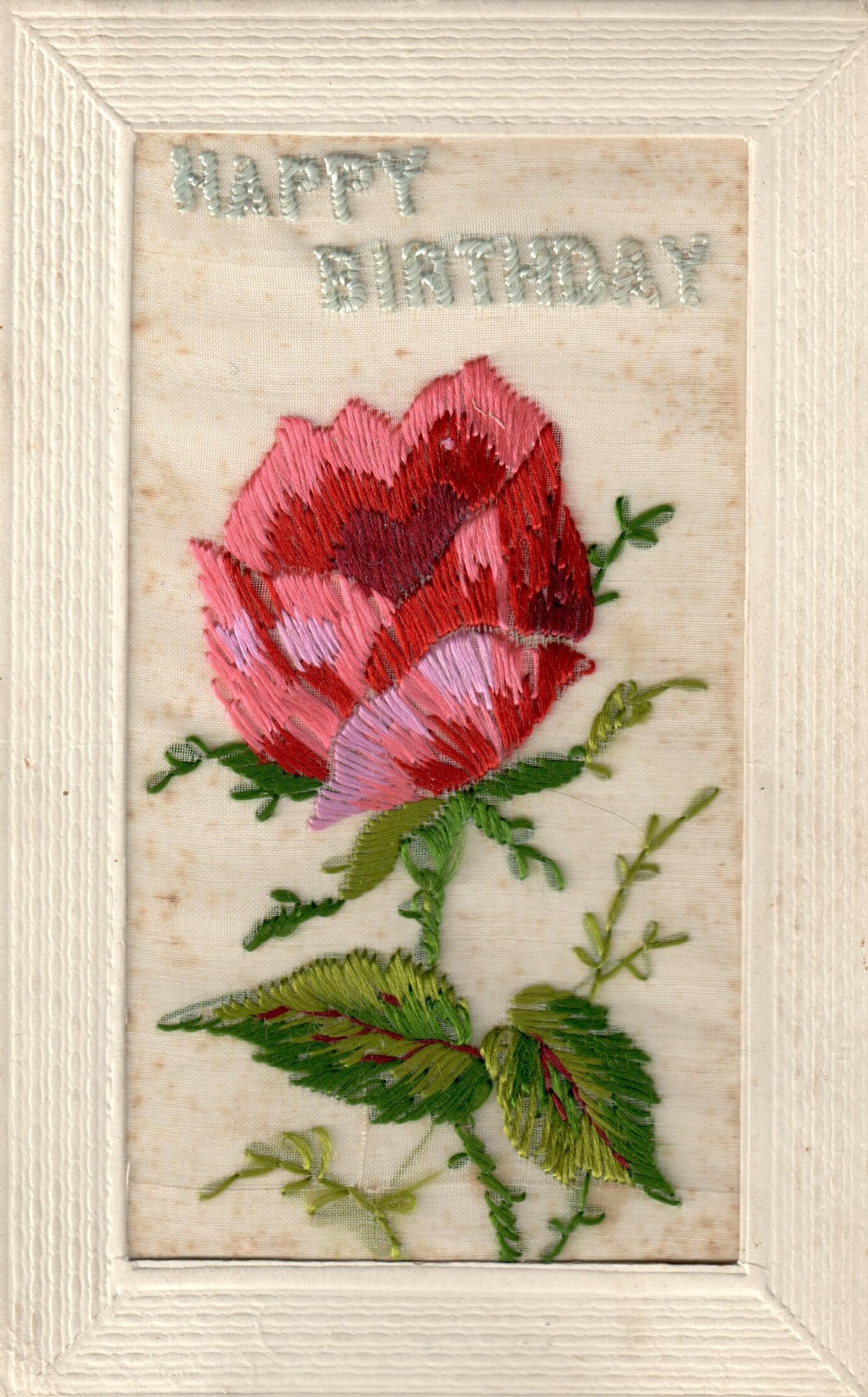
Embroidered postcard from France, early 20th century (TRC 2015.0435).Embroidered postcard from France, early 20th century (TRC 2015.0435).Exactly thirty years ago, on 19th December 1991, the Textile Research Centre (TRC), Leiden, was officially established as a Stichting (Foundation) under Dutch law.

We had planned to have a party since we felt that this significant milestone should be noted and celebrated, but due to the corona crisis, this has had to be postponed.

From the beginning the TRC has been an educational centre with an emphasis on the passing on of knowledge about textile techniques and the concept of dress identity. Throughout the years we have stressed the importance of textile crafts and artisanship. We have also been involved with many different cultures and groups. Our extensive collection (now some 37,000 objects, most of which are accessible online) from around the world and from all ages is continually used in the many workshops and courses that the TRC is organising. Textiles should not only be seen, but also be touched, smelled and even listened to!

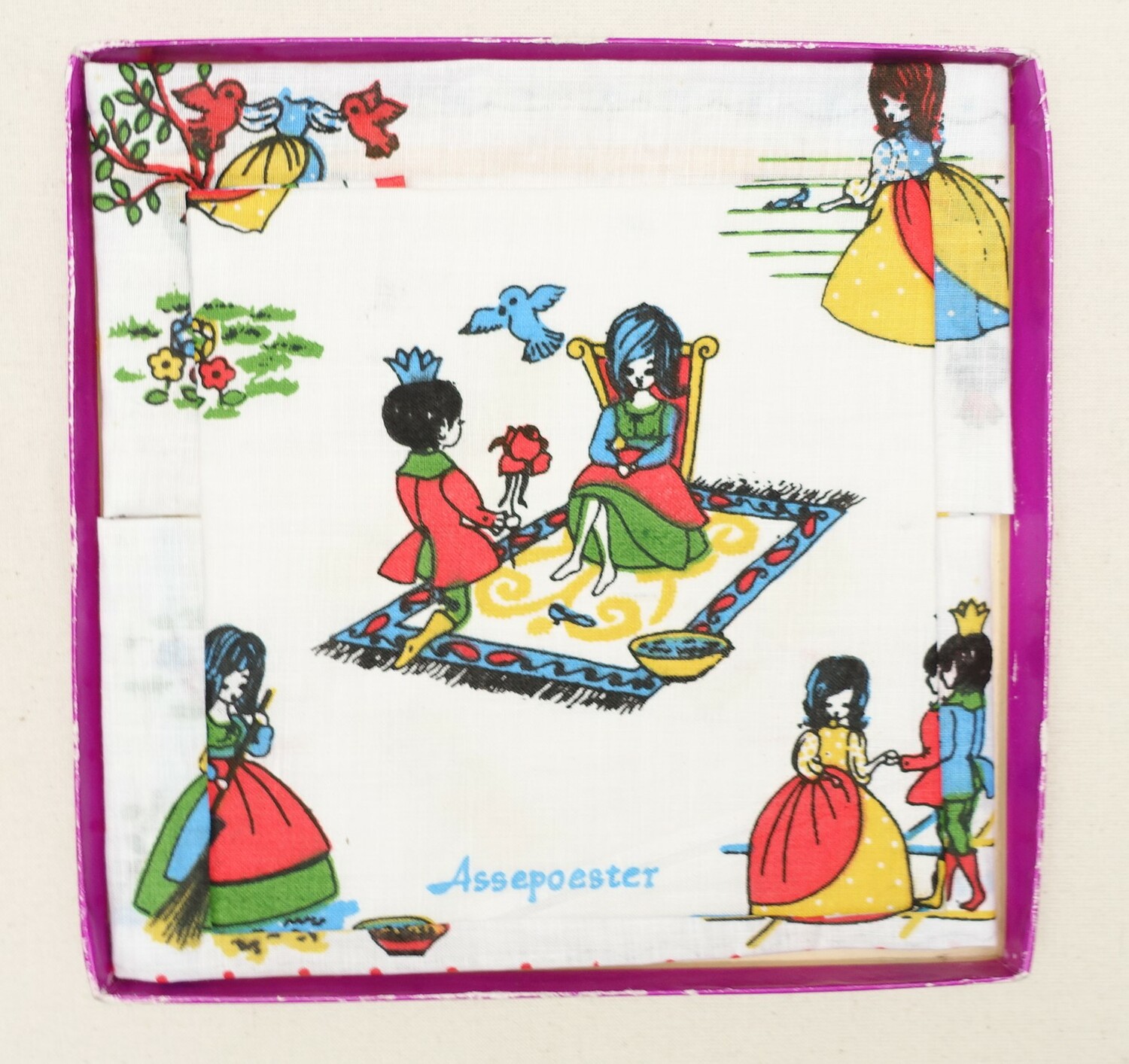
Box of (badly printed) handkerchiefs, folded in a decorative manner. The Netherlands, 20th century. One of the handkerchiefs has the text 'Assepoester' (Cinderella) (TRC 2021.3393).Box of (badly printed) handkerchiefs, folded in a decorative manner. The Netherlands, 20th century. One of the handkerchiefs has the text 'Assepoester' (Cinderella) (TRC 2021.3393).On Wednesday 10th November I gave an online talk about European ‘Handkerchiefs as tokens’ for Selvedge, the London based textile magazine. It’s a subject I am interested in, but never had the time to go into in any depth. While preparing the talk I remember thinking that we only had a relatively small collection of late 19th and 20th century handkerchiefs at the TRC and I really wanted to know more about their full history, variations and indeed, even how many different ways are there to fold handkerchiefs?

I should not have expressed such thoughts! We have just been given a large shopping bag full of handkerchiefs, more than 150, many of them in their original boxes (for example, TRC 2021.3394), and yes, folded in a variety of different ways, for both display purposes and practical use.

The handkerchiefs range in date from about 1900 to the 1960s. The donation includes handkerchiefs that had been used, as well as others that seem to be purchasing models (with numbers for re-ordering), as well as general shop stock including several of the same type. Not to mention, of course, a range of identically decorated handkerchiefs, but in different colour ways.

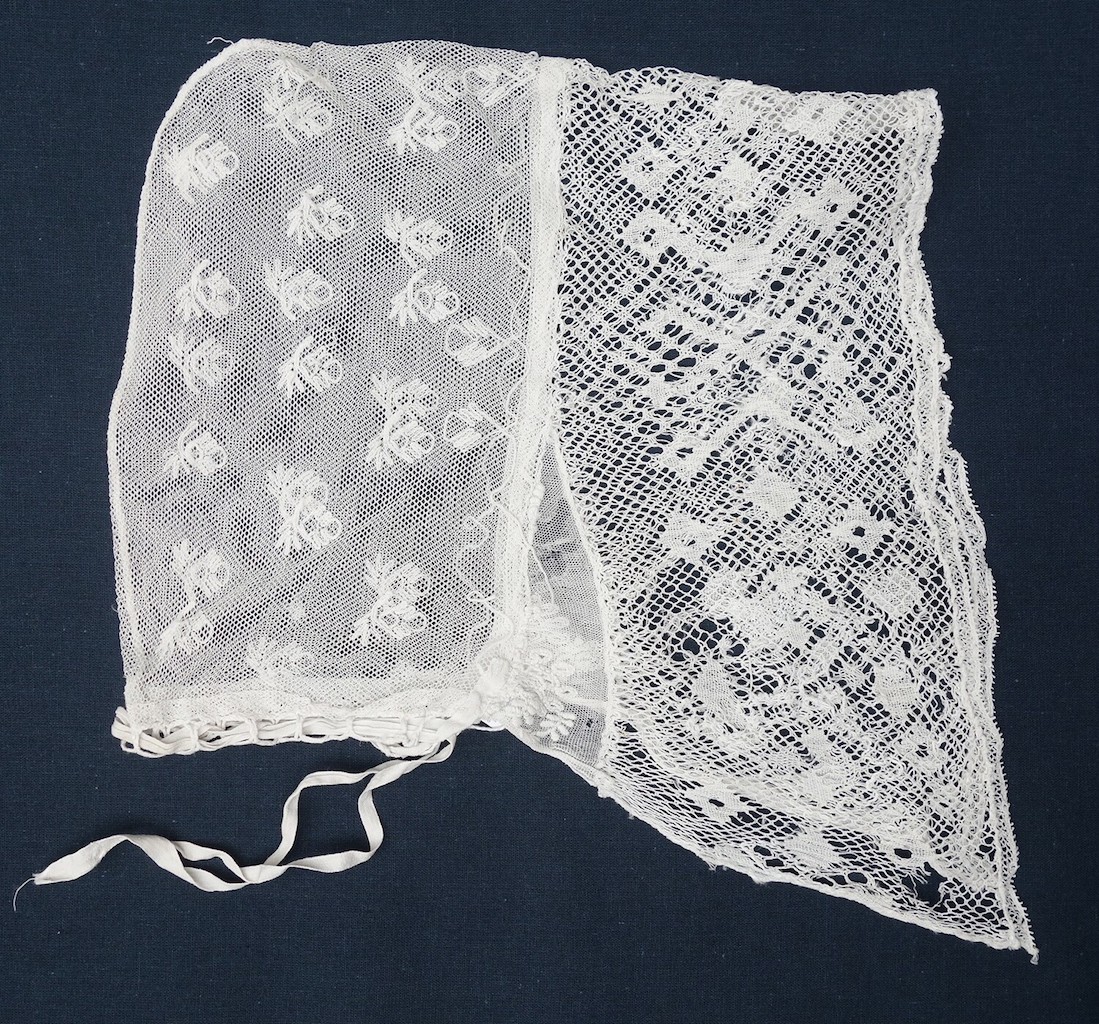
The Rijnland lace cap TRC 2021.2446 is a small cap with a handmade bobbin lace flounce in a bad condition. This type of lace is the only type of bobbin lace traditionally made in the Netherlands. It was worked in the village of 's-Gravenmoer in the province of Noord-Brabant, north of the Belgian port of Antwerp.

Woman's cap from the Rijnland with 's-Gravenmoer bobbin lace, 1920s-1940s (TRC 2021.2446).Woman's cap from the Rijnland with 's-Gravenmoer bobbin lace, 1920s-1940s (TRC 2021.2446).

Embroidered Palestinian dress which is made up of at least four different garments, probably for the tourist market, second half 20th century (TRC 2021.3351).Embroidered Palestinian dress which is made up of at least four different garments, probably for the tourist market, second half 20th century (TRC 2021.3351).The TRC has just been given various pieces of Palestinian embroidery. They were donated by Ms Truus Oranje, Weesp, the Netherlands, who lived in Jerusalem between 1975 and 1985. She regularly went to various markets in the region and bought, among other items, embroidered pieces and several garments. Mw Oranje’s donation consists of  two embroidered dresses (TRC 2021.3350 and TRC 2021.3351), parts of another dress (TRC 2021.3349a-d) and a black velvet jacket (TRC 2021.3352).

One of the dresses (TRC 2021.3351) is a bit of a mixture and has an interesting history concerning the re-use of garments. One closer examination it turns out to have been made from at least four other dresses. The sleeves are from one garment, the bodice panel from a second, while the lower front panel from a third dress and finally, the side panels and back panel come from yet another dress!

I was introduced to the TRC about a month ago when one of my professors at Leiden University sent out an email about an internship opportunity at a local textile centre. I am 22 years old, born and raised in British Columbia, Canada, and prior to August 2020 I had never set foot in Europe. I have always been interested in historical fashion and textiles, so you can imagine when I saw an opportunity to work with a large collection of textiles from all around the world, I scrambled to reach out and get in contact!

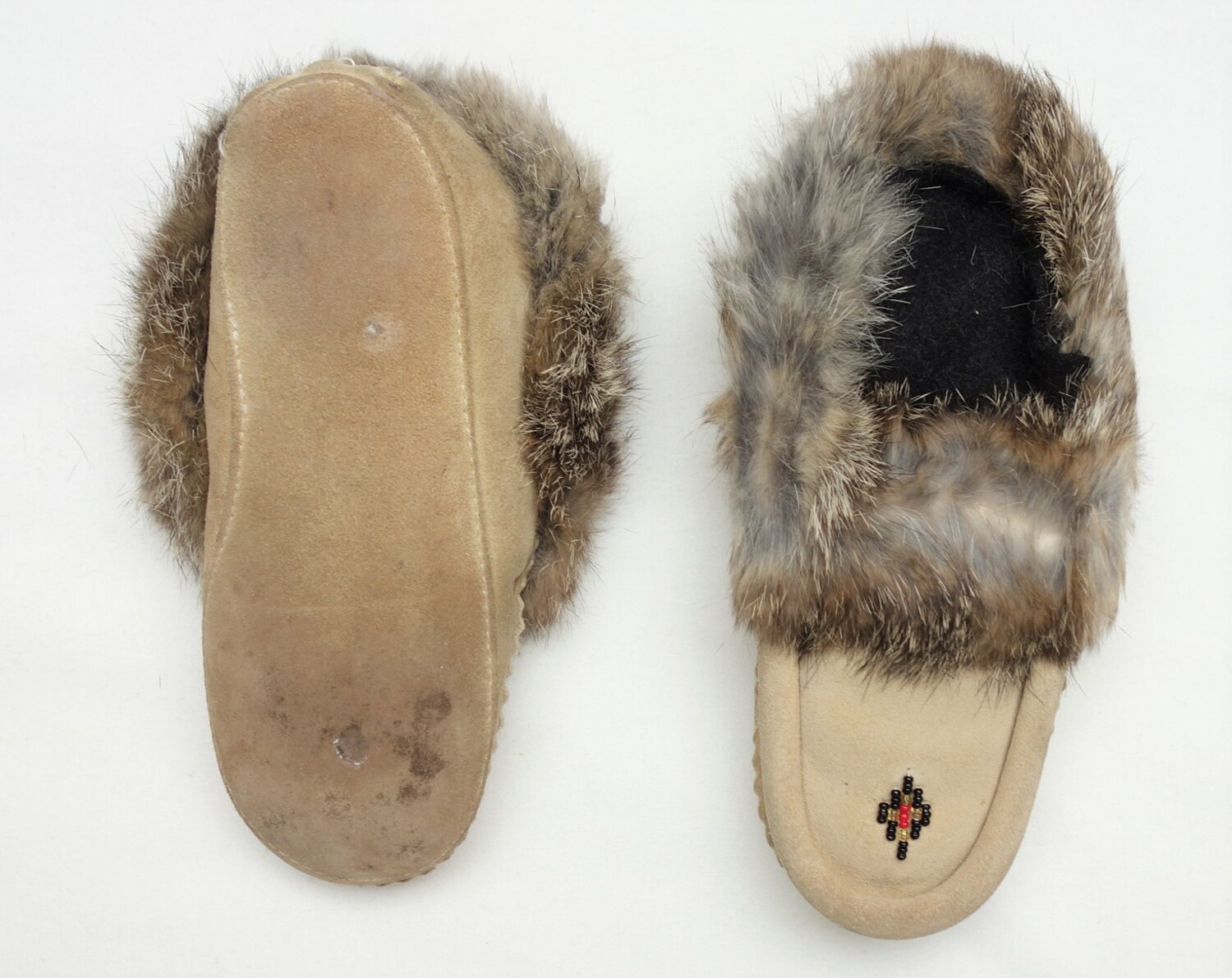
Embroidered mocassins produced and worn by Canadian Inuit, late 20th century (TRC 2009.0261a-b).Embroidered mocassins produced and worn by Canadian Inuit, late 20th century (TRC 2009.0261a-b).

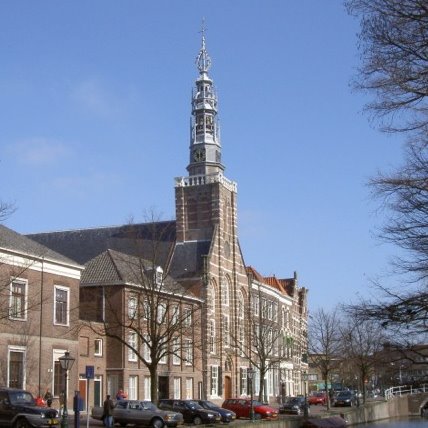
The Lodewijkskerk in Leiden used to be the centre ('saai-hal') for the trade in saai cloth.The Lodewijkskerk in Leiden used to be the centre ('saai-hal') for the trade in saai cloth.The historic city of Leiden has long been known for the production of various types of woollen and worsted textiles, including laken (broadcloth), baai (baize), saai (combed wool), satin, grein (goat or sheep's hair/wool worsted cloth) and serge (twill), as well as soft fluffy blankets (deken).

Not so surprising therefore that the TRC in Leiden is actively working with Dutch textile and costume historian Jankees Goud (Atelier Dracht), Frank Gardiner (Amsterdam) and others to expand its reference collection of textiles that reflects these technical types and forms (always of interest to the TRC) and the textile history of Leiden in general.

This reference collection will eventually cover the wide range of textile types (woven, printed, embroidered, laces, etc) associated with Dutch regional dress. It will also 'underpin' a TRC research project into the Leiden textile production throughout the centuries, with a special emphasis on technical aspects, such as the fibres, their spin, the weaving, the dyes, further processing, etc.

Zoek in TRC website

Contact

Boerhaavelaan 6
2334 EN Leiden.
Tel. +31 (0)71 5134144 (kantooruren)  
office@trcleiden.org

Het TRC is elke dag geopend tussen 10.00 en 15.00 uur.

facebook 2015 logo detail


instagram vernieuwt uiterlijk en logo


Bankrekening

NL39 INGB 0002 9823 59, t.a.v. Stichting Textile Research Centre.

Financiële giften

Het TRC is afhankelijk van project-financiering en privé-donaties. Al ons werk wordt verricht door vrijwilligers. Ter ondersteuning van de vele activiteiten van het TRC vragen wij U daarom om financiële steun:

Giften kunt U overmaken op bankrekeningnummer (IBAN) NL39 INGB 000 298 2359, t.n.v. Stichting Textile Research Centre. BIC code is: INGBNL2A

U kunt ook, heel simpel, indien u een iDEAL app heeft, de iDEAL-knop hieronder gebruiken en door een bepaald bedrag in te vullen: 


Omdat het TRC officieel is erkend als een Algemeen Nut Beogende Instelling (ANBI), en daarbij ook nog als een Culturele Instelling, zijn particuliere giften voor 125% aftrekbaar van de belasting, en voor bedrijven zelfs voor 150%. Voor meer informatie, klik hier