• F2
  • F3
  • F4
  • F1

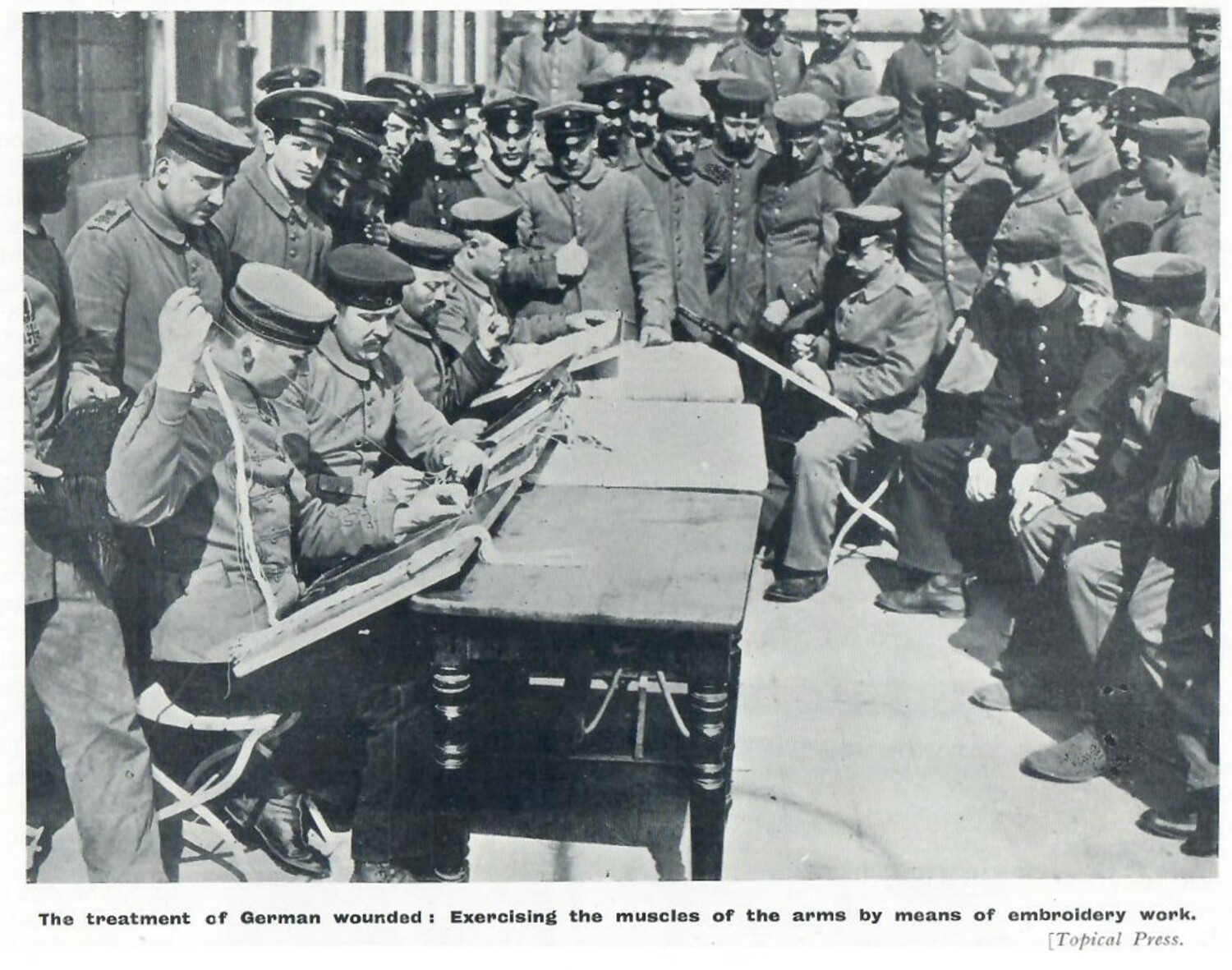
I came across a curious piece of press photography when exploring the TRC’s online archive. The image shows five German prisoners of war from the First World War participating in a spot of needlework whilst a crowd of spectators, also POWs, gather around in fascination, peering over each other’s shoulders to watch the exercise.

'The treatment of German wounded: Exercising the muscles of the arms by means of embroidery.' The Manchester Guardian 1915. (TRC 2021.1342).'The treatment of German wounded: Exercising the muscles of the arms by means of embroidery.' The Manchester Guardian 1915. (TRC 2021.1342).

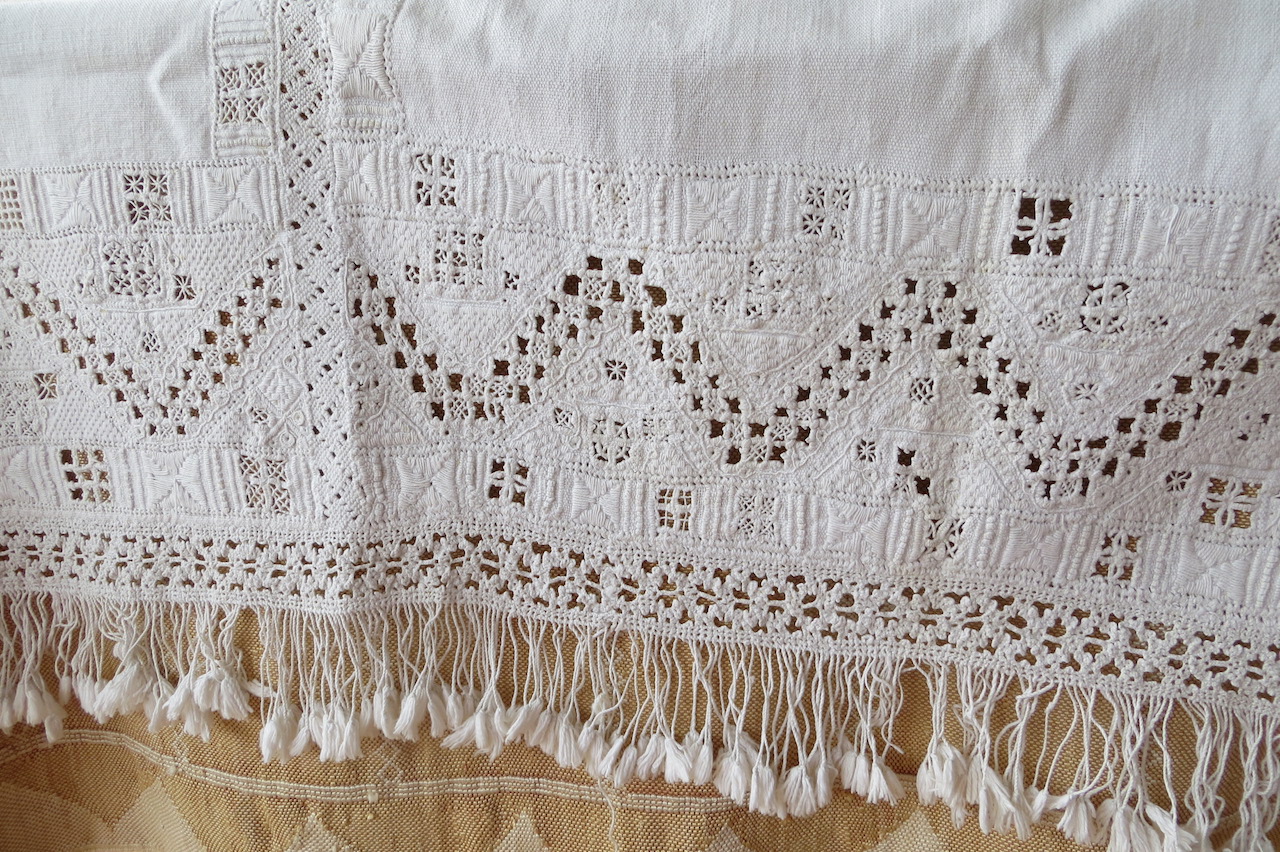
This lovely cloth, TRC 2021.2068, was recently acquired by the TRC in Leiden. It came with a label: ‘19th- Cyprus – Italian influence’. Research in books and on the internet helped me to find more background information.

Ill. 1. Tasseled short edge of Lefkara lace cloth from Cyprus, 19th century (TRC 2021.2068). In the centre is the insert between the two lengths that make up the complete clothIll. 1. Tasseled short edge of Lefkara lace cloth from Cyprus, 19th century (TRC 2021.2068). In the centre is the insert between the two lengths that make up the complete cloth

Recently, the TRC Library received a special gift from Sytske Wijnsma in the small town of Wormer, in the northwest of the Netherlands, who on previous occasions has given other items to the TRC (click here).

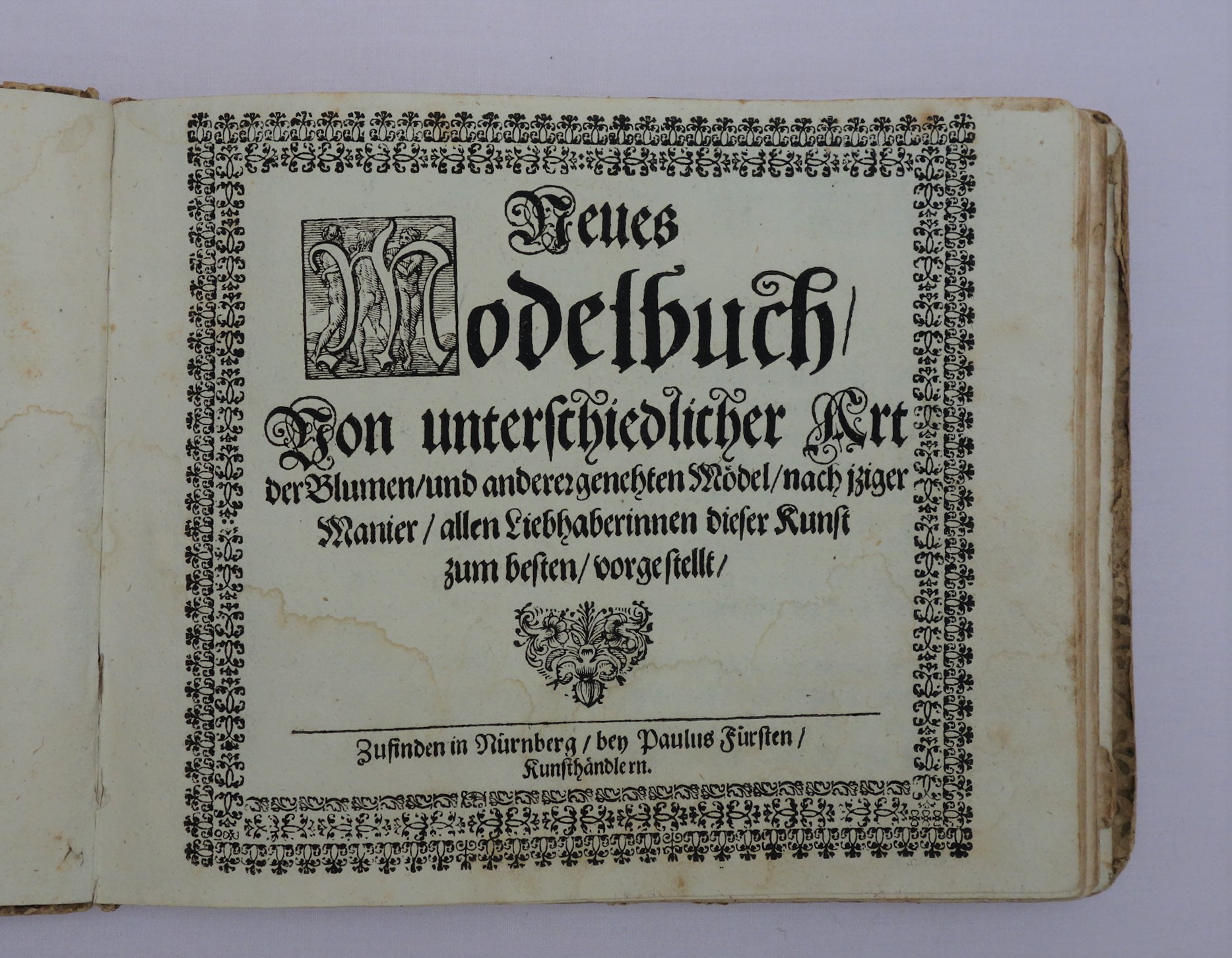
Title page of Paulus Fürst's embroidery model book (Nuremberg 1666).Title page of Paulus Fürst's embroidery model book (Nuremberg 1666).

The donation is that of an original, seventeenth century pattern book that was specifically published for embroideresses, and it contains embroidery charts that were designed by a woman who is named in the text. The frontispiece of the booklet (see illustration below) also has a distinctly ‘feminine touch’, showing a domestic scene with five women doing their needlework, and who are being spied upon by two men, one of them half hiding behind the curtains.

I am pleased to announce that a Memorandum of Understanding (MoU) is being signed between the Textile Department, Osnabrück University, Germany, and the TRC Leiden. Over the next few years we are going to work together on a variety of projects, and the first one changed today from being ‘a plan’ to an actual happening!

 For sometime now, Prof. Bärbel Schmidt (Osnabrück University) and myself have been talking about some of her BA textile students working together on a collection of Dutch and German regional dress from the TRC Collection. The aim is for the students to help with the identification of the garments, using them as a source of inspiration and then making a booklet and online exhibition about their experience, research and creations. This work is being supported by a grant from the Lower Saxony Ministry for Science and Culture for the development of Dutch-German cultural relationships..

Delegation from Osnabrück borrows garments from the TRC for further study by students of Osnabrück University.Delegation from Osnabrück borrows garments from the TRC for further study by students of Osnabrück University.The main problem, however, was the corona crisis, which meant that the students could not come to Leiden to work on a selection of garments. So Prof. Schmidt and her colleagues, Lucia Schwalenberg, came to Leiden last week to discuss the project and to pick out a range of objects that could be borrowed and taken back to Germany for a couple of months. Around the same time, I had an online meeting with some of the Osnabrück students to discuss the work of the TRC and to explain the project and what was being expected.

Eventually, eight garments of regional dress from Germany and eight pieces from the Netherlands were selected, including caps (for men and women), shawls, bodices, aprons, skirts, etc. These items will be examined at the University under the supervision of various staff members. This is an experiment for both institutes as normally objects do not leave museums’ collections, or in this case the TRC building, unless it is for a loan to another research institute, but given the current crisis, flexible solutions have to be found.

Chota (tea cosy) from 1950s India, sold locally by the London Missionary Society (TRC 2020.3740a).Chota (tea cosy) from 1950s India, sold locally by the London Missionary Society (TRC 2020.3740a).When I was clearing out my mother’s house some time ago, I found several items which I subsequently donated to the TRC. Many of these came from India where we lived in the late 1950s, as my father was a senior British diplomat. A couple of these items got me reminiscing about certain meals there.

The first are items TRC 2020.3740a and 3740b, labelled as a chota set. What is a chota set? It comprises a tea cosy cover and a tray cloth and was used for chota hazri which literally translates as ‘little presence’ but was always known as little breakfast. In the heat of India, the best time to exercise was in the early morning, so just after dawn my father and I would receive little breakfast on a tray in bed. It consisted of tea with imported powdered milk (an acquired taste) and toast, with possibly some mango or papaya.

by Erica Prus, Central St Martins, University of the Arts, London

After studying a fashion BA for three years (I’m now in my final year), I would have expected to have a firm understanding of textiles by now: how they’re made, the infinite technologies behind their creation and the complex histories behind each woven and non-woven cloth. I decided to take the Intensive Textile Course (November 2021) taught by Gillian Vogelsang-Eastwood at the Textile Research Centre (TRC) in Leiden and found out that my assumptions were completely wrong.

A medieval cotton textile produced in India for the Egyptian market. Qusair al-Qadim, Red Sea coast, Egypt, 14th century (TRC 2020.0239).A medieval cotton textile produced in India for the Egyptian market. Qusair al-Qadim, Red Sea coast, Egypt, 14th century (TRC 2020.0239).I’ve been interested in archaeology and material culture for as long as I can remember. As a child, I would spend weekends in my father’s archive in London, where he collected and stored vernacular objects from different times and places. It was like magic to my child self and that feeling of awe when I’m in an archive environment and able to connect quietly with tangible historical objects has never left me. I’m not sure when, but sometime during my degree in fashion I decided I wanted to turn this curiosity into something more defining, somehow combining it with my degree and my interest in textiles, which led me to the TRC.

The Intensive Textiles Course was five days long and each day we focused on the compositional technologies that make up textiles. The concept of the course was to learn a skill each day in order to not actually make but conceptually create a full garment to wear on the Saturday after the course had finished, which was a clever way of deconstructing the complex processes that it takes to create any textile. We were not actually producing garments but rather intimately studying what makes them, whilst constantly testing and questioning the function of textiles, and seeing them not only as parts of garments, but rather as a whole universe of woven anthropologies.

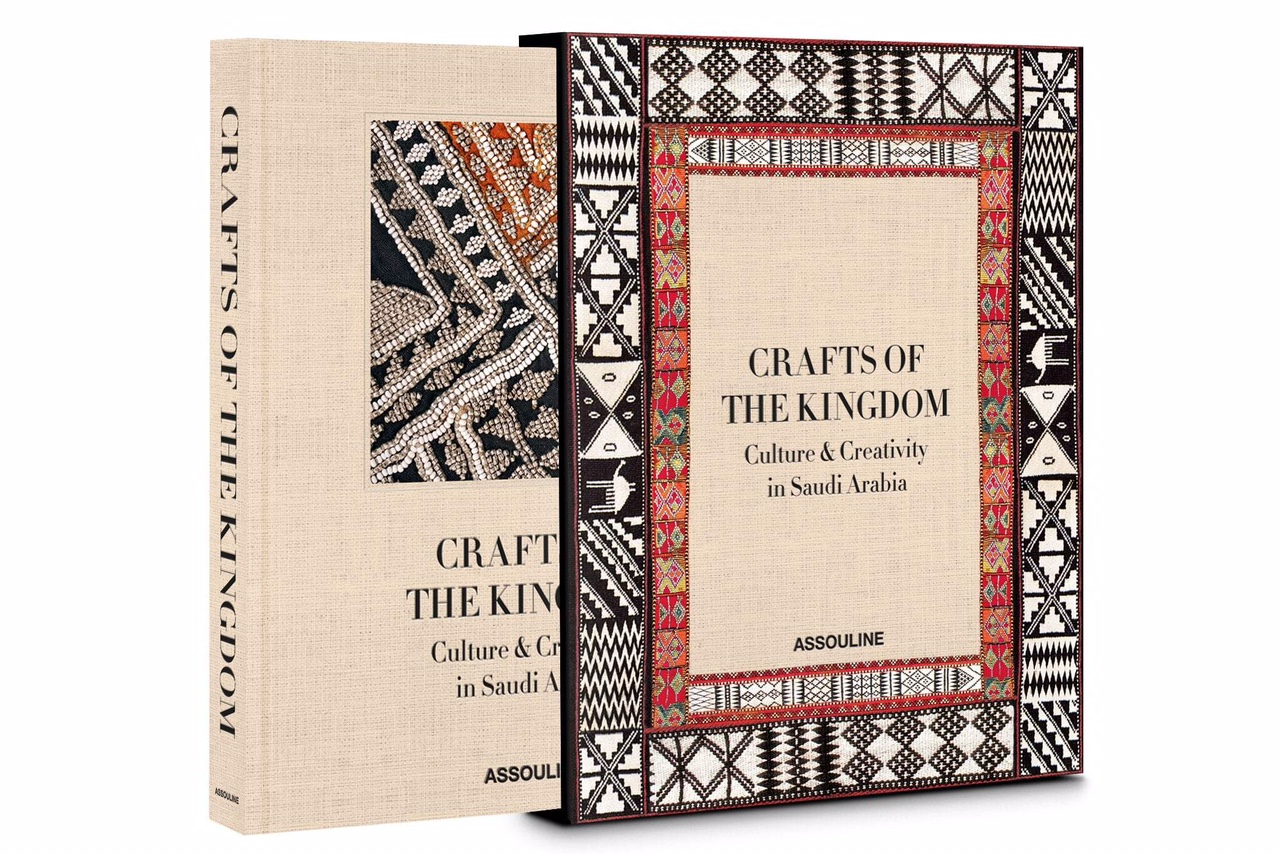
In May 2020 the TRC Leiden was contacted by the well-known New York publishing firm of Assouline, about a planned book on the various crafts of Saudi Arabia.

The book was being organised by the Ministry of Culture of Saudi Arabia and was intended as a present for visiting heads-of-state to the 15th meeting of the Group of Twenty (G20), 21-22 November 2020 (that was only one year ago, but it seems so much longer).

“Crafts of the Kingdom: Culture & Creativity in Saudi Arabia”, published by Assouline in New York (2020) on the occasion of the (online) G20-meeting in Saudi Arabia, in November 2020. The textile on the front of the cover is from the TRC Collection (TRC 2005.0127).“Crafts of the Kingdom: Culture & Creativity in Saudi Arabia”, published by Assouline in New York (2020) on the occasion of the (online) G20-meeting in Saudi Arabia, in November 2020. The textile on the front of the cover is from the TRC Collection (TRC 2005.0127).

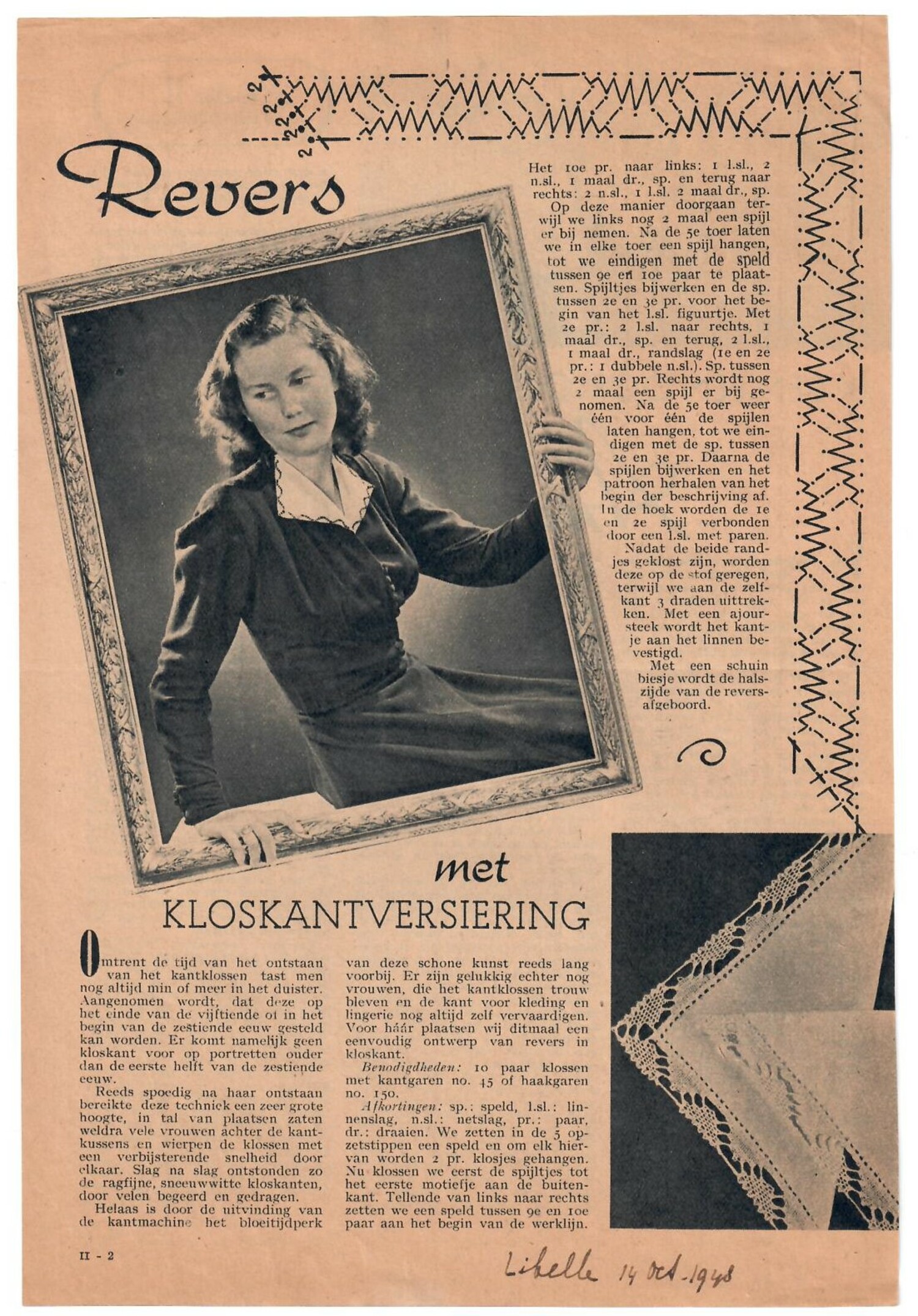
Article in the Dutch women's magazine Libelle of 14 October 1948, with instructions for bobbin lace making (TRC 2021.0780).Article in the Dutch women's magazine Libelle of 14 October 1948, with instructions for bobbin lace making (TRC 2021.0780).A month ago we published a blog about 'Lace in Leiden'. I would now like to give an update.

At the end of October, the TRC welcomed a group of lace makers from the OIDFA (Organisation Internationale de la Dentelle au Fuseau et à l'Aiguille) at the TRC for a group visit, study day and introduction to the TRC, to what we are doing and how we can work together (see blog).

During the group discussion at the end of the day, the idea was floated of making a lace centre here in Leiden as part of the TRC's plans to build up a teaching collection for a wide variety of textile skills. This led to the concept of ‘Lace in Leiden’ – with the term lace being used in the widest sense of the word, namely various forms of embroidered laces on cloth, net and tulle, of bobbin lace, knitted and knotted lace, crochet, tatted and hairpin lace.

Thanks to Gon Hamburg, a lace teacher and member of OIDFA, bobbin lace lessons are currently being given at the TRC and many more lessons are scheduled for next year.

Zoek in TRC website

Contact

Boerhaavelaan 6
2334 EN Leiden.
Tel. +31 (0)71 5134144 (kantooruren)  
office@trcleiden.org

Het TRC is elke dag geopend tussen 10.00 en 15.00 uur.

facebook 2015 logo detail


instagram vernieuwt uiterlijk en logo


Bankrekening

NL39 INGB 0002 9823 59, t.a.v. Stichting Textile Research Centre.

Financiële giften

Het TRC is afhankelijk van project-financiering en privé-donaties. Al ons werk wordt verricht door vrijwilligers. Ter ondersteuning van de vele activiteiten van het TRC vragen wij U daarom om financiële steun:

Giften kunt U overmaken op bankrekeningnummer (IBAN) NL39 INGB 000 298 2359, t.n.v. Stichting Textile Research Centre. BIC code is: INGBNL2A

U kunt ook, heel simpel, indien u een iDEAL app heeft, de iDEAL-knop hieronder gebruiken en door een bepaald bedrag in te vullen: 


Omdat het TRC officieel is erkend als een Algemeen Nut Beogende Instelling (ANBI), en daarbij ook nog als een Culturele Instelling, zijn particuliere giften voor 125% aftrekbaar van de belasting, en voor bedrijven zelfs voor 150%. Voor meer informatie, klik hier