• F2
  • F4
  • F1
  • F3

The last few days there have been reports in the international press about the Taliban encouraging women in Afghanistan to wear, when in public, an abaya and a niqab, rather than the all-covering burqa which they imposed upon women when they were in power before, between 1994 and 2001. Well, that has certainly got some interesting implications!

Group of Afghan women wearing their 'blue burqa.' Photograph by A. Majeed, AFP.Group of Afghan women wearing their 'blue burqa.' Photograph by A. Majeed, AFP.

Participants of the August TRC Intensive Textile Course. Gillian Vogelsang stands to the left. Photograph: Evelyn ValenciaParticipants of the August TRC Intensive Textile Course. Gillian Vogelsang stands to the left. Photograph: Evelyn ValenciaEvery piece of garment holds a wealth of stories. What is the story behind what you are wearing? After attending the Intensive Textile Course at the TRC, I see my wardrobe, accessories, spools of threads, and visits to museums in a completely different way. I definitely appreciate the clothes I have a lot more.

Education and research aside, if anyone is serious about downsizing their wardrobe or to stop buying unnecessary garments, this workshop is also a great bootcamp for you. Side effect warning: you may get a compulsion to spin anything that looks like they can be spun into yarn. Keep away from your neighbours’ furry friends.

Former President Hamid Karzai of Afghanistan with Foreign Minister Wang Yi of China, December 2019. Karzai is wearing the Uzbek-style chapan. He is holding a karakuli cap in his hands. Courtesy Ministry of Foreign Affairs, PRC.Former President Hamid Karzai of Afghanistan with Foreign Minister Wang Yi of China, December 2019. Karzai is wearing the Uzbek-style chapan. He is holding a karakuli cap in his hands. Courtesy Ministry of Foreign Affairs, PRC.Some of you may remember Hamid Karzai, President of Afghanistan from late 2001 until 2014, who used to wear a beautiful striped chapan hanging down from his shoulders, There are some good examples in the TRC Collection (for instance TRC 2004.0268).  The garment symbolised his being the president of all Afghans, not only of his own ethnic group, the Pashtuns.

Karzai’s chapan is characteristic for the Uzbeks from northern Afghanistan. A Pashtun from the south, where Karzai hails from, would not be seen dead in it, but Karzai donned this northern garment as soon as he was proclaimed as the first president of post-Taliban Afghanistan. He did so after he had taken off the very different, typically Pashtun dress of southern Afghanistan which he had adopted after being dropped in Uruzgan, southern Afghanistan, by the CIA, in late 2001.

Group of Taliban leaders in Doha, Qatar, August 2020.Group of Taliban leaders in Doha, Qatar, August 2020.

Looking at recent photographs of Taliban leaders who are now in charge in Afghanistan, there is one specific garment that is conspicuous by its dullness. I am not referring to the voluminous turbans, but to their dark coloured, undecorated waistcoats. Waistcoats have been worn in Afghanistan for quite some time, but many of them are far from dull and often decorated with colourful embroidery and metallic braids.

A Kandahar waistcoat recently given to the TRC by Marjan Brandsma (1970s, TRC 2021.2551). A Kandahar waistcoat recently given to the TRC by Marjan Brandsma (1970s, TRC 2021.2551).

Back of Afghan waistcoat TRC 2021.2551.Back of Afghan waistcoat TRC 2021.2551.


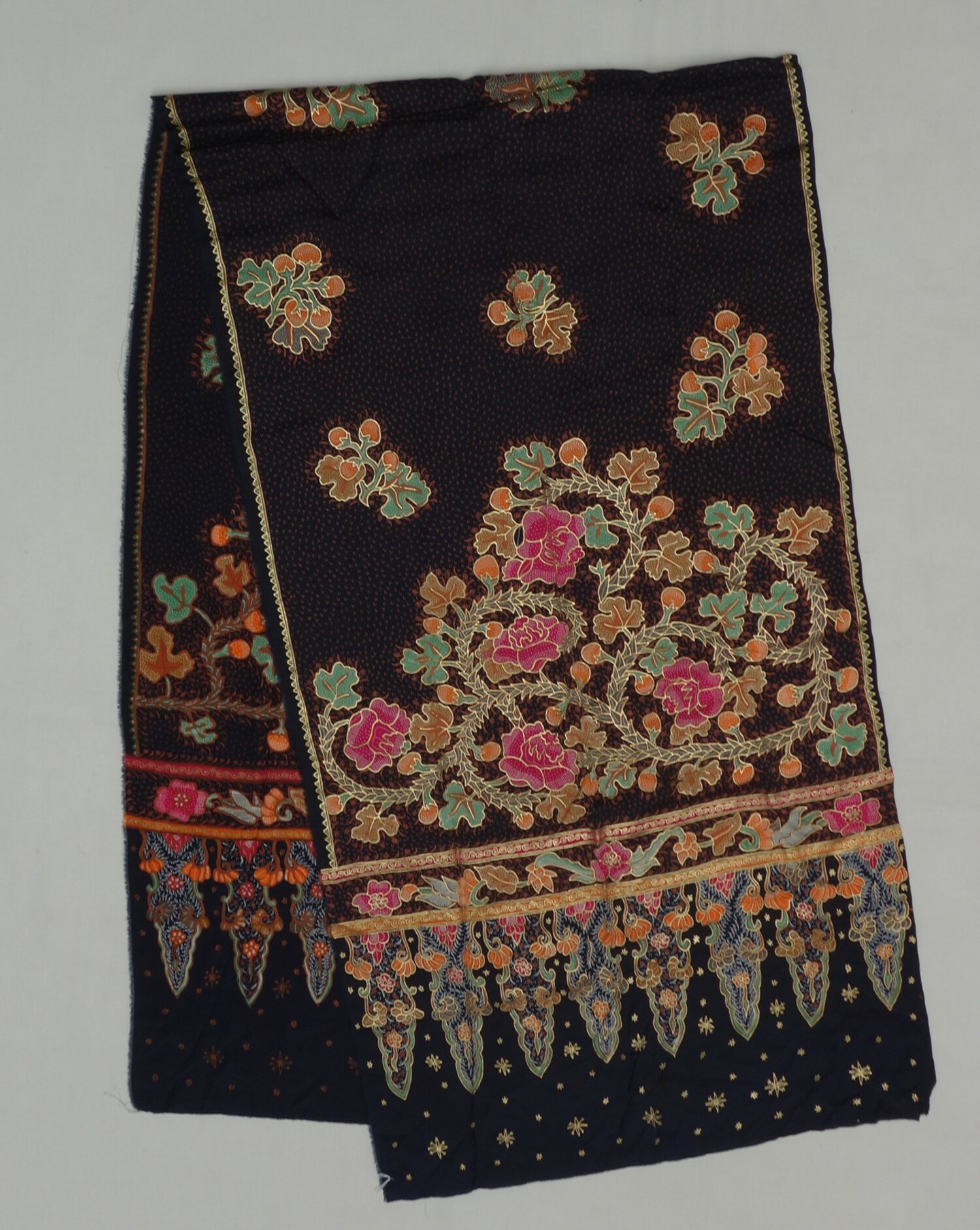
Batik shawl from Bali, Indonesia, early 21st century, recently donated by Hedi Hinzler in Leiden (TRC 2021.2501).Batik shawl from Bali, Indonesia, early 21st century, recently donated by Hedi Hinzler in Leiden (TRC 2021.2501).It is clear people are coming back from their holidays as more and more things are happening at the TRC! The telephone is constantly ringing, emails are pinging, parcels and letters arriving, as well as a steady stream of people are popping in to discuss potential projects, to see the exhibition or to attend workshops and courses.

We are adding, for example, a range of workshops and courses to the Agenda, including, for the first time, bobbin lace making! This will take the form of 3x beginners and 3x more advanced techniques. More details can be found here.

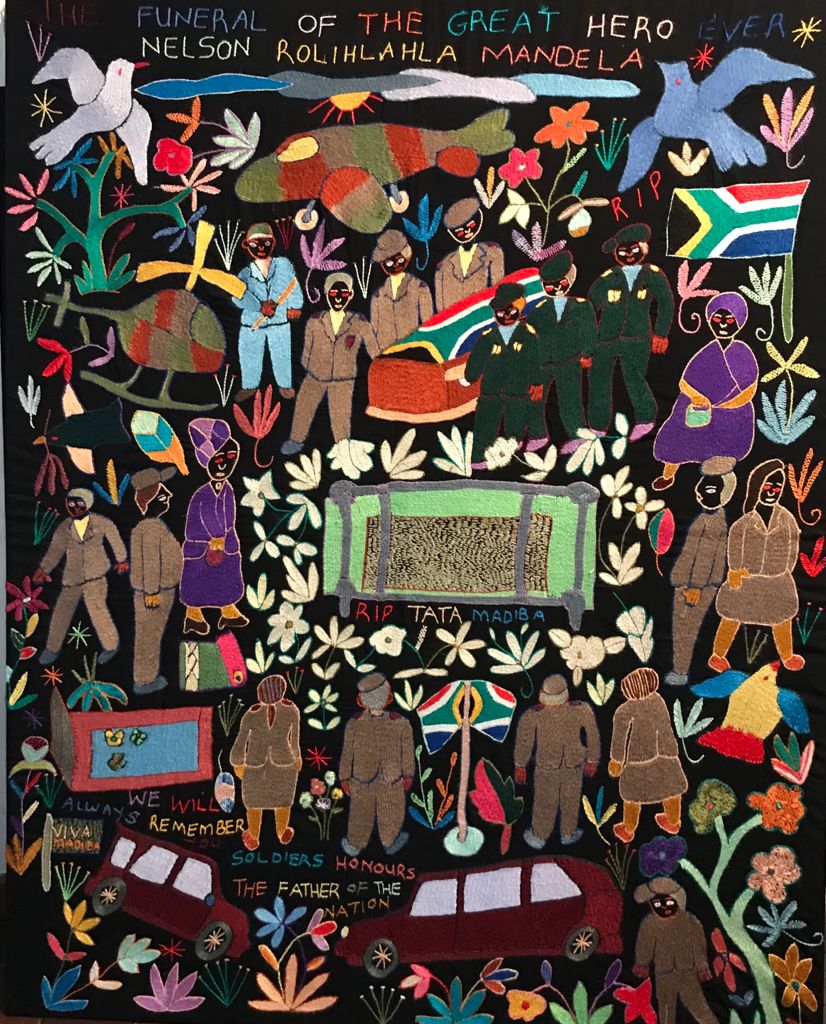
We have recently been offered various garments and outfits, including items from as far apart as Macedonia and Indonesia. In addition we have just acquired some Mapula embroideries from South Africa (these will be online later in the week and there will be a special blog about them) and this evening we were sent details about some embroidered and beaded garments (minceka), also from South Africa – the latter items are being seriously considered as part of our deliberate building up of the TRC’s African holdings, but we will need 750 euros to acquire them. Can you help? If yes please make a donation via the IDEAL button to the right.

A little while ago I wrote a blog about zijdjes, cigarette silks produced by the Dutch company of Turmac, between about 1920 and 1934. It was noted in the blog that the embroidered examples now in the TRC Collection were machine, rather than hand stitched. I have had several questions since then about how to tell the difference?

First of all a difference has to be made between a free-motion embroidery machine with a single needle that can be moved all over a piece of cloth, and an industrial embroidery machine which might have hundreds of needles all working in synchronisation. The former tends to be more irregular in shape and a lot closer to free-style hand embroidery. The latter tends to include the repetition of one or more motifs.

Below I want to focus on multiple-needle machine embroidery, which is produced by a variety of machines, namely Cornely (chain stitch), Schiffli (basically satin stitch, zig-zag stitch, running stitch) and Leaver (basically satin stitch, zig-zag stitch, running stitch) machines, and the multiple-needle hand embroidery machine (a wide variety of stitches).

We have just had the August 2021 TRC Intensive Textile Course, and as usual it was intense, inspiring, filled with lots of information and practical elements, but fun at the same time with the chance for the participants, and me, to exchange a wide range of experiences.

Mapula embroidery from South Africa, depicting the funeral of Nelson Mandela.Mapula embroidery from South Africa, depicting the funeral of Nelson Mandela.

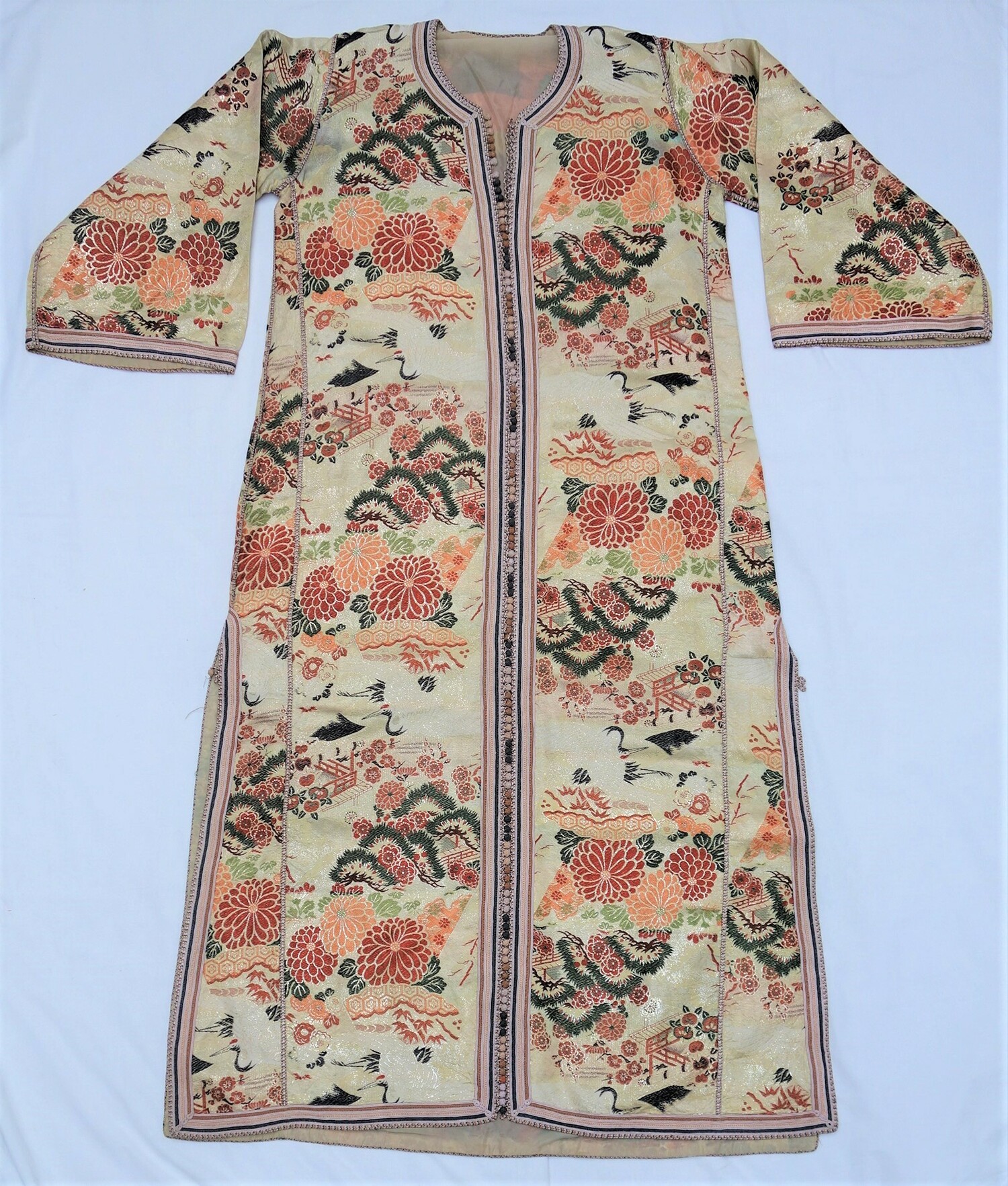
Traditional Moroccan woman’s kaftan made from Japanese  material intended for a kimono sash (second half 20th century). Courtesy Textile Research Centre, Leiden (TRC 2001.0074).Traditional Moroccan woman’s kaftan made from Japanese material intended for a kimono sash (second half 20th century). Courtesy Textile Research Centre, Leiden (TRC 2001.0074).The International Institute for Asian Studies (IIAS), Leiden, has just published its Newsletter (summer 2021). It has a special focus section that contains a number of articles based on an international online conference in 2020 about textile and dress traditions that developed through time and space, and thereby often changed their role and meaning.

The conference was organised by the IIAS with the support of Sandra Sardjono of the Tracing Patterns Foundation in Los Angeles, Gillian Vogelsang-Eastwood of the Textile Research Centre in Leiden, and Chris Buckley in Oxford.

Zoek in TRC website

Contact

Boerhaavelaan 6
2334 EN Leiden.
Tel. +31 (0)71 5134144 (kantooruren)  
office@trcleiden.org

Het TRC is elke dag geopend tussen 10.00 en 15.00 uur.

facebook 2015 logo detail


instagram vernieuwt uiterlijk en logo


Bankrekening

NL39 INGB 0002 9823 59, t.a.v. Stichting Textile Research Centre.

Financiële giften

Het TRC is afhankelijk van project-financiering en privé-donaties. Al ons werk wordt verricht door vrijwilligers. Ter ondersteuning van de vele activiteiten van het TRC vragen wij U daarom om financiële steun:

Giften kunt U overmaken op bankrekeningnummer (IBAN) NL39 INGB 000 298 2359, t.n.v. Stichting Textile Research Centre. BIC code is: INGBNL2A

U kunt ook, heel simpel, indien u een iDEAL app heeft, de iDEAL-knop hieronder gebruiken en door een bepaald bedrag in te vullen: 


Omdat het TRC officieel is erkend als een Algemeen Nut Beogende Instelling (ANBI), en daarbij ook nog als een Culturele Instelling, zijn particuliere giften voor 125% aftrekbaar van de belasting, en voor bedrijven zelfs voor 150%. Voor meer informatie, klik hier