• F3
  • F2
  • F4
  • F1

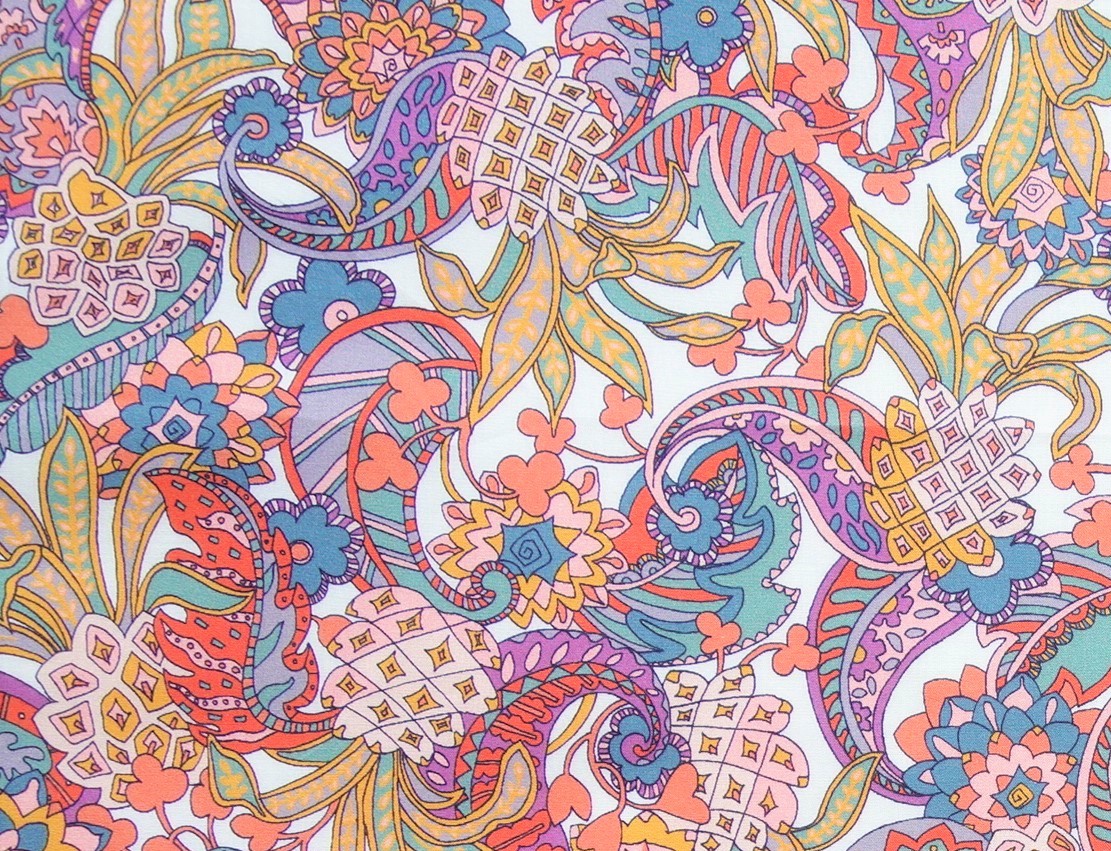
Liberty is a well-known emporium located on Great Marlborough Street, in the centre of London. Established in the late nineteenth century, it focusses on the design, production and sale of luxury textiles, clothing and household accessories. They are especially known for their Arts and Crafts, Art Nouveau and Oriental-style products.

Detail of a sample of the Pineapple Paisley design, Liberty of London, c. 2020 (TRC 2021.0638).Detail of a sample of the Pineapple Paisley design, Liberty of London, c. 2020 (TRC 2021.0638).

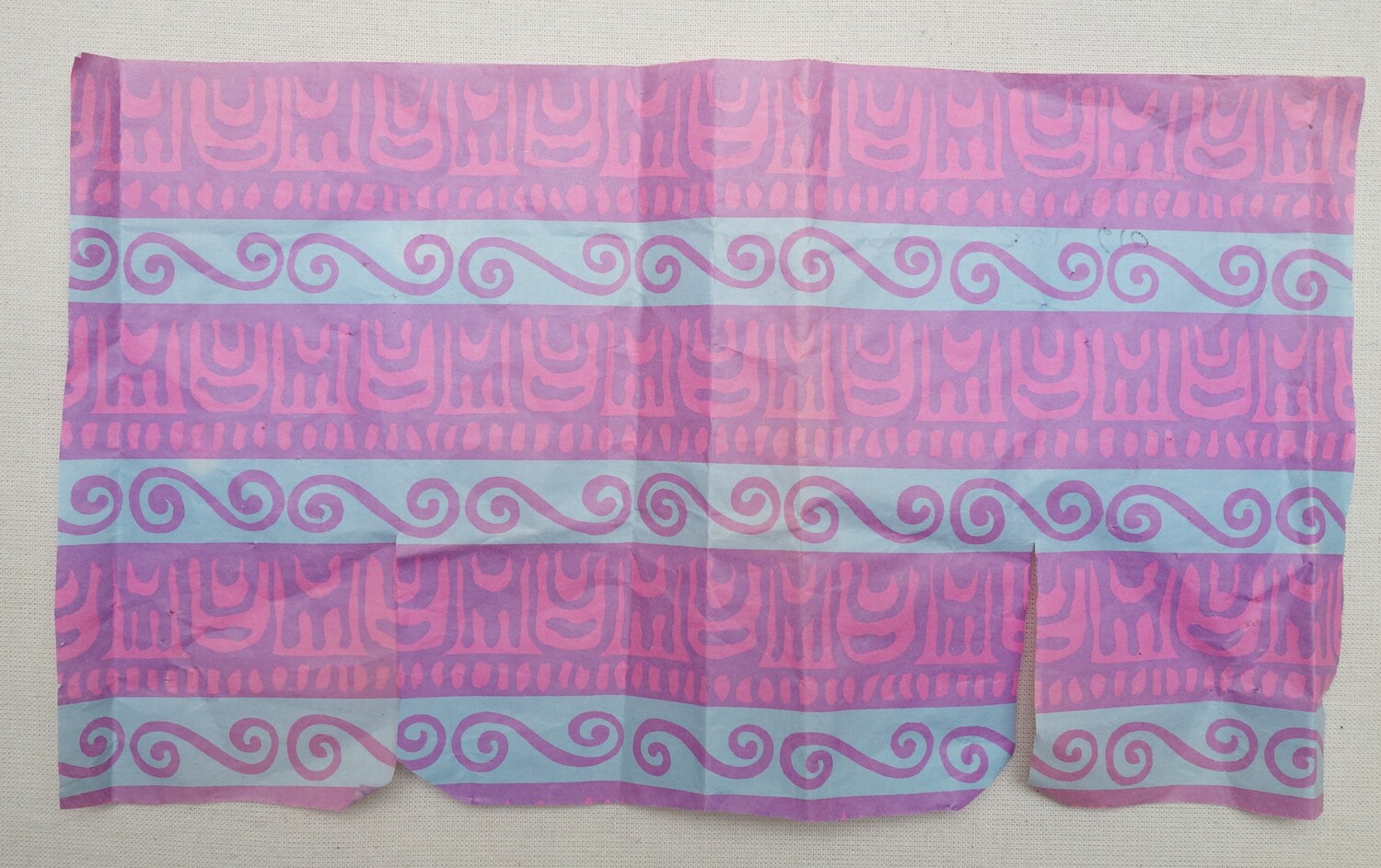
Slip of paper used for the 'sublistatic' textile transfer technique, Europe, 1970's (TRC 2021.0610).Slip of paper used for the 'sublistatic' textile transfer technique, Europe, 1970's (TRC 2021.0610).It’s amazing how a simple object can raise so many memories and at the same time highlight a forgotten textile story.

A few days ago I was cataloguing a group of items for the TRC Collection, including some paper patterns. Among the pieces there was a small rectangle made from paper with a faded 1970’s design on one side (TRC 2021.0610).

Nothing special, and yet. As a student of design history in the late 1970's I studied different textile printing methods under the guidance of Joyce Storey. One of the methods she talked about was the paper transfer technique, often referred to as ‘sublistatic’. This method was originally developed in Milan in 1953 by the company of Stampa Tessuti Artistici.

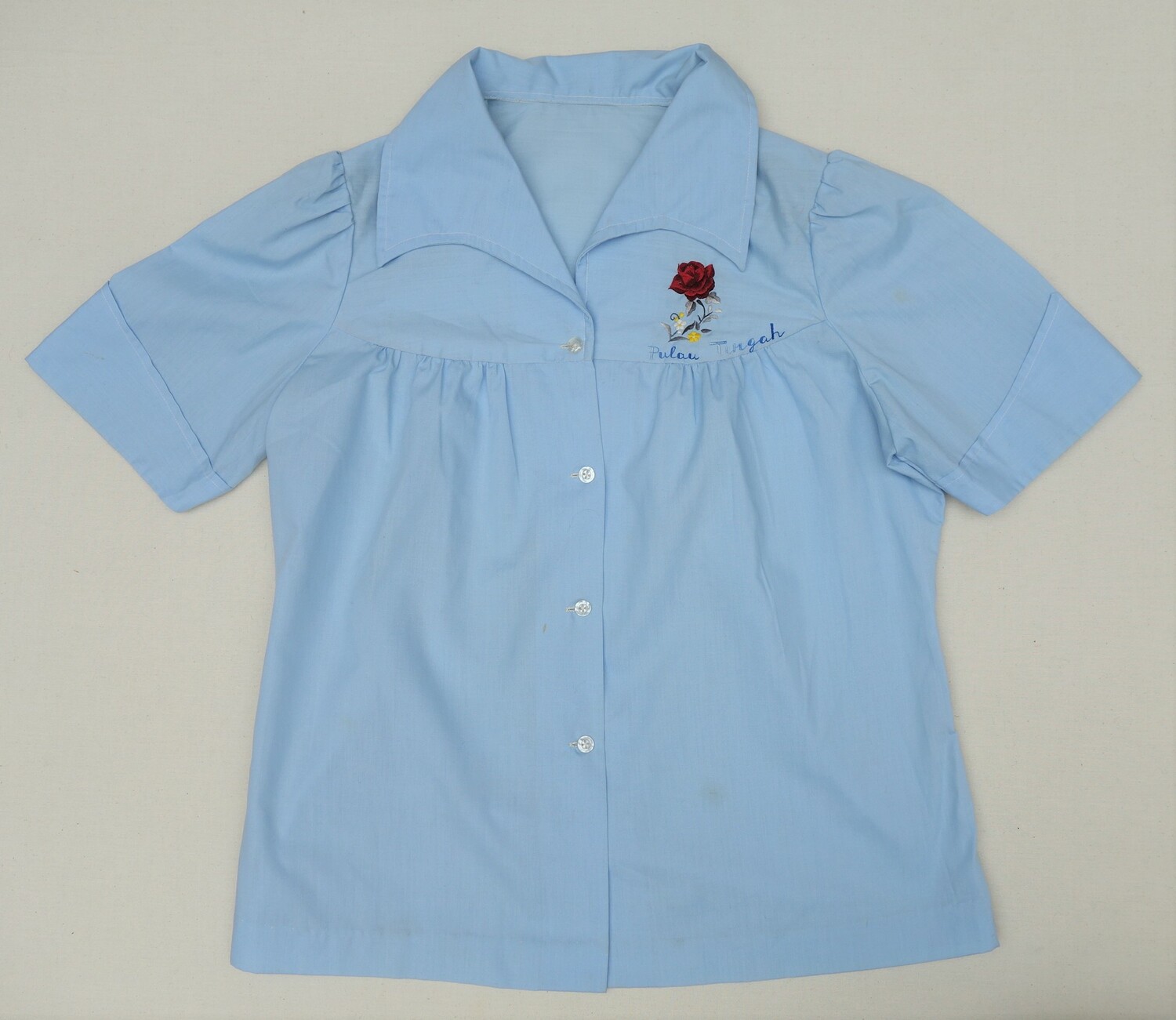
Child's blouse with embroidered bunch of flowers and the name of the island and camp of Pulau Tengah, Malaysia, specially set up for Vietnamese boat people in 1975 (TRC 2021.0417).Child's blouse with embroidered bunch of flowers and the name of the island and camp of Pulau Tengah, Malaysia, specially set up for Vietnamese boat people in 1975 (TRC 2021.0417).A few days ago we published a gentle blog about a group of garments (well, actually some bandeaus and bras) donated to TRC Leiden by Sonja Meijer-Beckman (Leiderdorp). In this blog we want to highlight some other garments from the collection, namely a child’s blouse (TRC 2021.0417) and a baby’s tunic and trousers (TRC 2021.0147a and 0147b). As with most of the clothes from the donation, these garments have a story behind them that is, sadly, still relevant to the present day.

In 1941 Mr Hans Beckman, Sonja’s father, who was a Dutch engineer, fled occupied Holland in an attempt to try and get to England. Unfortunately, he was picked up by the Germans on the French/Swiss border and was sent to the notorious concentration camp, Auschwitz/Birkenau, in Poland. He survived the camp and upon his return to Holland he immediately joined the Dutch army to fight the Japanese in Southeast Asia. Following his retirement from the Dutch armed forces in the late 1960's, among other jobs, he assisted the Red Cross and the UNHCR in Malaysia with finding facilities for another group hit by war and its consequences, namely the Vietnamese boat people, or simply, the boat people.

As part of TRC Leiden’s preparations for the Encyclopedia of Embroidery from Sub-Saharan Africa (Bloomsbury, London, 2022), we have been in contact with several embroidery groups in various African countries, notably the Queen Amina Embroiderers in Nigeria.

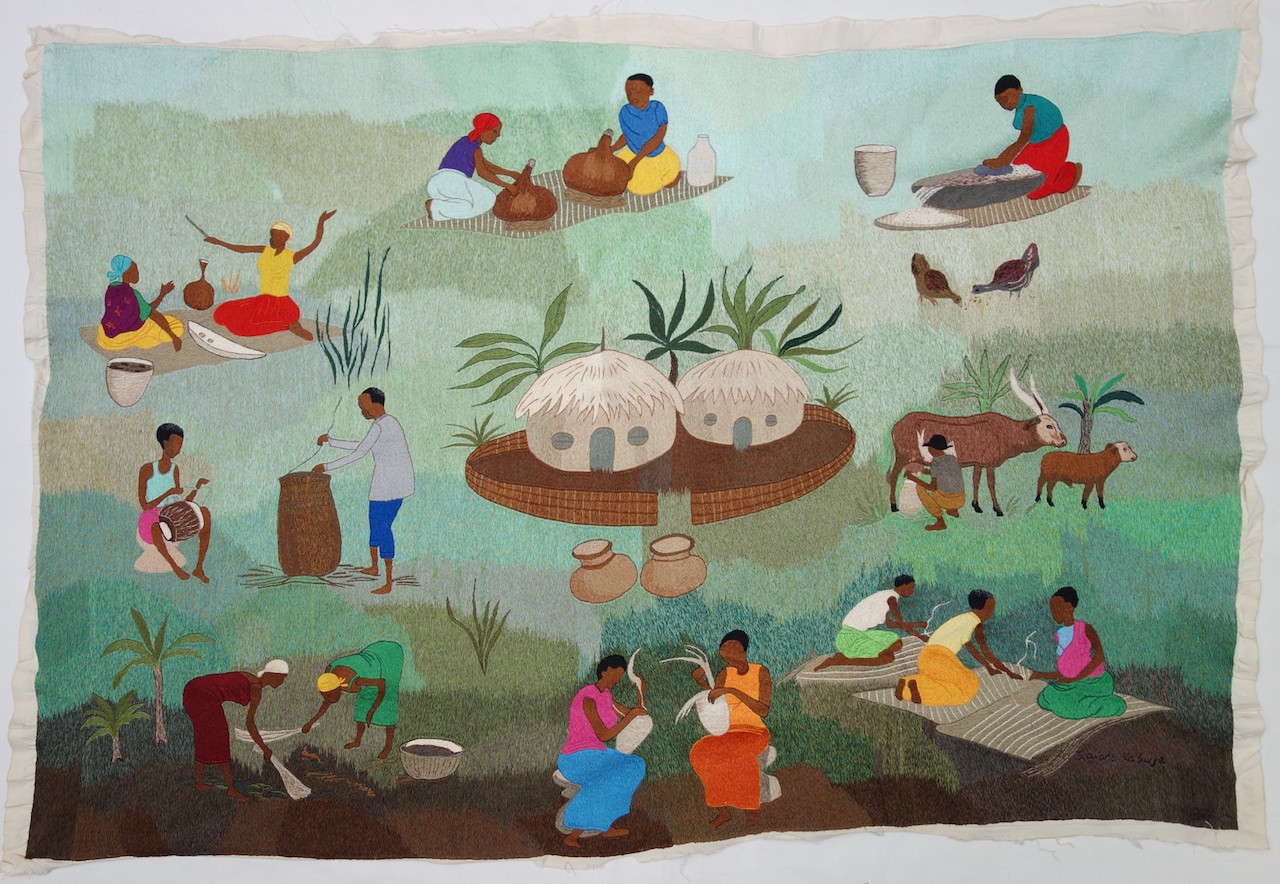
Savane Kabuye embroidery, Rwanda, 2020 (TRC 2021.0500a).Savane Kabuye embroidery, Rwanda, 2020 (TRC 2021.0500a).

Just recently we also contacted the Savane Kabuye group in Rwanda. We have also been talking with Juliana Meehan, an American who has been promoting the Rwandan group's work in the US with a travelling exhibition called PAX Rwanda: Embroideries of the Women of Savane Kabuye.

Over the last few months the TRC Leiden has been given various garments by Sonja Meijer-Beckman in Leiderdorp. The garments belonged to her grandmother, her mother and her aunt, who had a long and complex history in Slovenia, northern Italy, the Netherlands, a Nazi concentration camp in Poland and refugee centres in Southeast Asia.

Some of the stories behind the donated garments are intriguing, others are thought provoking, while various items are indicative of their times. Over the next few weeks we hope to publish a series of blogs based on the Meijer-Beckman donation.

In this blog we want to touch upon a subject I have some experience of, but it is not a topic I thought I would ever write about, namely 20th century bras.

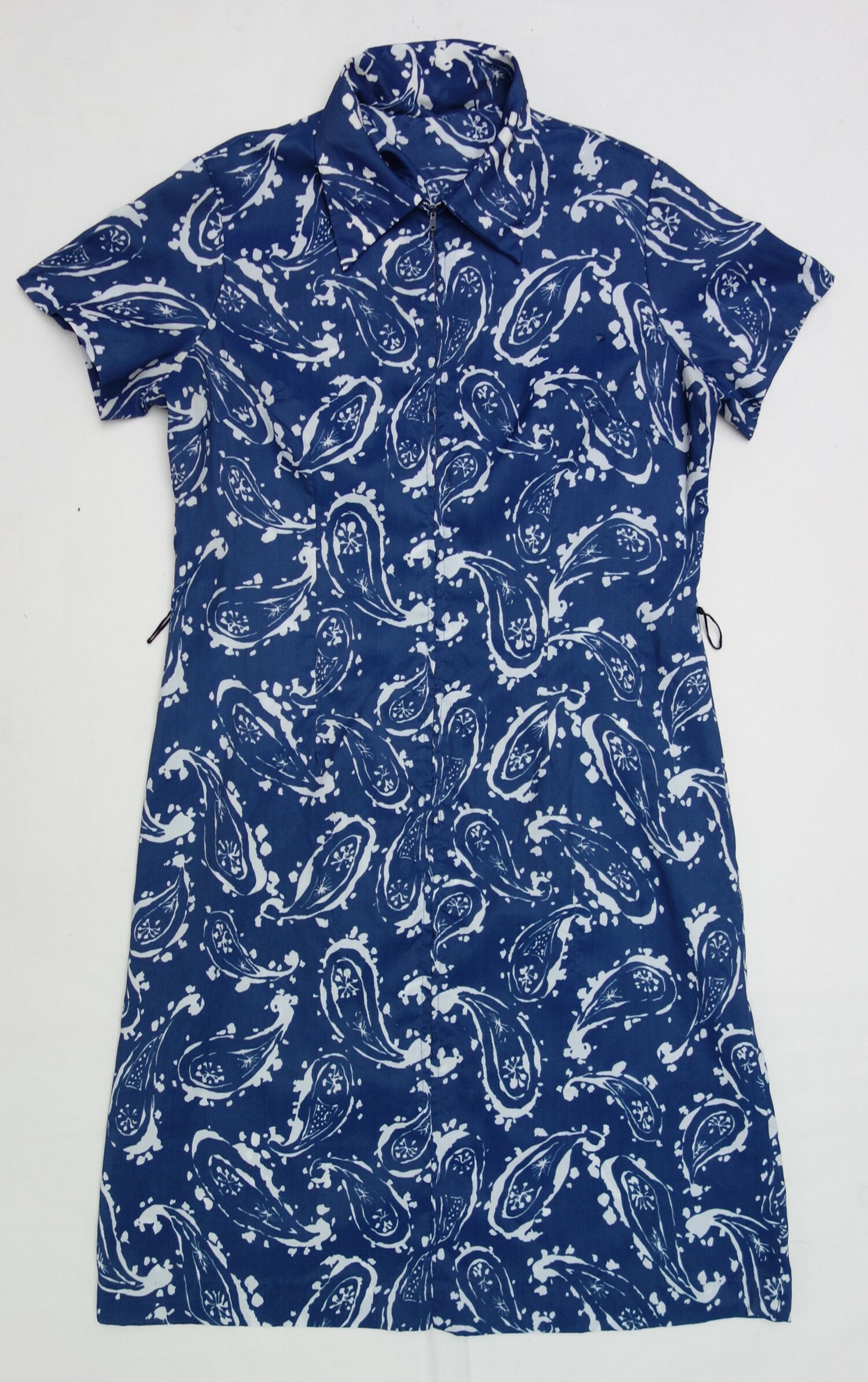
Dress with paisley motifs that enclose an 'atomic' design. USA, 1960's (TRC 2021.0355). See detail below.Dress with paisley motifs that enclose an 'atomic' design. USA, 1960's (TRC 2021.0355). See detail below.In a previous TRC Blog we mentioned a dress from the 1960’s that is decorated with ‘atomic’ paisley. We have had several enquiries concerning what exactly is atomic paisley?

During the 1950’s and 1960’s many people were excited about the concept of atomic power and space travel. Artists and designers started to produce designs representing the new age of atomic power that was both exciting (the space age) and frightening (the atomic bomb).

In many of their works the connecting theme was exploding atomic particles. Numerous ‘atomic’ designs appeared, for example, in the 1951 Festival of Britain that was held in London. But perhaps one of the most iconic representations of the atomic art is the Brussels Atomium that was constructed to symbolise the Brussels World Fair in 1958. This movement helped to bring science into the lives of many ‘ordinary’ people.

Scientific designs included crystalline structures (such as that of mica), x-ray crystallography, as well as schematic drawings showing the appearance of organic substances, including hemoglobin and insulin.

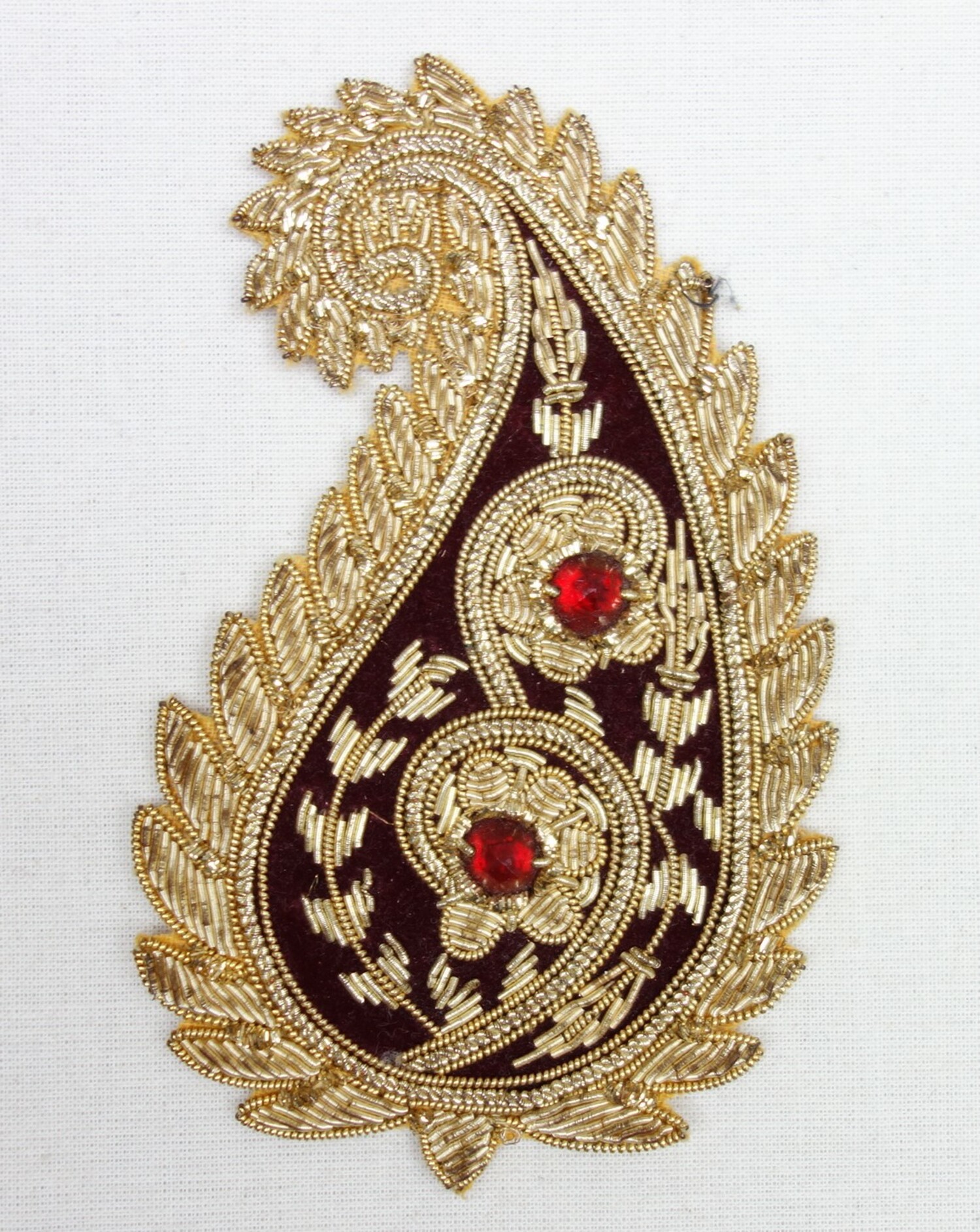
Indian appliqué in the shape of an ornate paisley/buteh motif, hand embroidered in gold thread on a dark red velvet ground. Mid-20th century (TRC 2020.5154).Indian appliqué in the shape of an ornate paisley/buteh motif, hand embroidered in gold thread on a dark red velvet ground. Mid-20th century (TRC 2020.5154).It's raining paisley! Or so it felt the other day when six packages arrived at the TRC in Leiden, all at the same time. The parcels were from a variety of sources, and each one included one or more items covered with the paisley motif.

Paisley is that iconic Iranian/Indian motif (generally known as buteh) that was reproduced in the Scottish town of Paisley from the early nineteetnh century onwards. Hence the name. It is traditionally associated with Kashmir shawls, but the same motif can now be found everywhere.

The six parcels included a coat, a bikini, a line dancing outfit, a cocktail dress, a length of West African cloth and an Iraqi-style embroidery from near Rotterdam, all decorated with variations of the paisley motif.  In addition, a frequent visitor to the TRC has just donated an outfit that comes from the Estonian island of Kihnu, which, from the late 19th century, has developed a form of regional, daily dress dominated by paisley motifs!

All of these items were needed for and will be included in the TRC’s upcoming exhibition called From Buteh to Paisley: The history of a global motif.

It’s hard to feel glamorous stuck at home during lockdown. Wearing my usual sweatpants, I look longingly at some of the gowns in the TRC’s on-line collection, like the pale blue silk chiffon full-length evening dress (TRC 2021.0134) or the lacey, cream coloured, long sleeved wedding dress (TRC 2020.3882a).

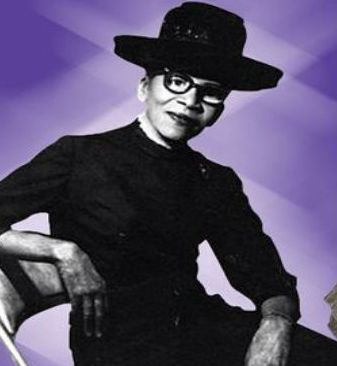
Ann Cole Lowe (1898-1981)Ann Cole Lowe (1898-1981)I also look at some of the gowns of dress designer Ann Cole Lowe (1898-1981). Lowe made a name for herself by dressing high society debutants and wives. Her clients included some of America’s wealthiest families—the Roosevelts, the duPonts and the Rockefellers. Her perfectionism and attention to detail were legendary. She had begun sewing as a child, using the scraps her seamstress mother gave her. At 16, when her mother died unexpectedly, Ann finished all of her commissions—including a dress for the Alabama governor’s wife.

In 1917 she moved to New York City to take sewing classes. The only African-American in the segregated school, she was forced to work in a room alone. Upon graduation she began designing one-of-a-kind dresses for wealthy women, eventually creating her own label and opening a store on New York’s Fifth Avenue. One famous commission was for Jacqueline Bouvier’s wedding to then senator John F. Kennedy, in 1953.

Zoek in TRC website

Contact

Boerhaavelaan 6
2334 EN Leiden.
Tel. +31 (0)71 5134144 (kantooruren)  
office@trcleiden.org

Het TRC is elke dag geopend tussen 10.00 en 15.00 uur.

facebook 2015 logo detail


instagram vernieuwt uiterlijk en logo


Bankrekening

NL39 INGB 0002 9823 59, t.a.v. Stichting Textile Research Centre.

Financiële giften

Het TRC is afhankelijk van project-financiering en privé-donaties. Al ons werk wordt verricht door vrijwilligers. Ter ondersteuning van de vele activiteiten van het TRC vragen wij U daarom om financiële steun:

Giften kunt U overmaken op bankrekeningnummer (IBAN) NL39 INGB 000 298 2359, t.n.v. Stichting Textile Research Centre. BIC code is: INGBNL2A

U kunt ook, heel simpel, indien u een iDEAL app heeft, de iDEAL-knop hieronder gebruiken en door een bepaald bedrag in te vullen: 


Omdat het TRC officieel is erkend als een Algemeen Nut Beogende Instelling (ANBI), en daarbij ook nog als een Culturele Instelling, zijn particuliere giften voor 125% aftrekbaar van de belasting, en voor bedrijven zelfs voor 150%. Voor meer informatie, klik hier