• F2
  • F1
  • F3
  • F4

Kanga from Tanzania, bought in January 2021, in support of John Magufuli who won the presidential elections in Tanzania on 28 October 2020 (TRC 2021.0289).Kanga from Tanzania, bought in January 2021, in support of John Magufuli who won the presidential elections in Tanzania on 28 October 2020 (TRC 2021.0289).The first exhibition at the TRC in its premises along the Hogewoerd in Leiden was about an iconic garment from Kenya and Tanzania: Kangas: An East African garment for women (November 2009 - February 2010). Below is an account of the kanga, written by Caroline Stone, a distinguished textile historian based in Cambridge, UK, and currently in Tanzania.

Kangas are lengths of cloth, 100% cotton and generally brightly patterned, worn by women in East Africa, especially Tanzania and Kenya, since the mid-19th century, and are a very typical element in Swahili culture. Sold as a pair of identical panels c.160 x 110 cm, kangas were traditionally worn with one half knotted above the breasts or over one shoulder, while the other half served as a shawl or head covering, or to carry a child slung on the back. More recently, probably because of religious influence, Muslim and Christian, it has become normal to wear the kangas over a blouse or other garment, to avoid leaving arms and shoulders bare. In the past, when kangas were less highly decorated, they were also worn by men, tied round the waist.
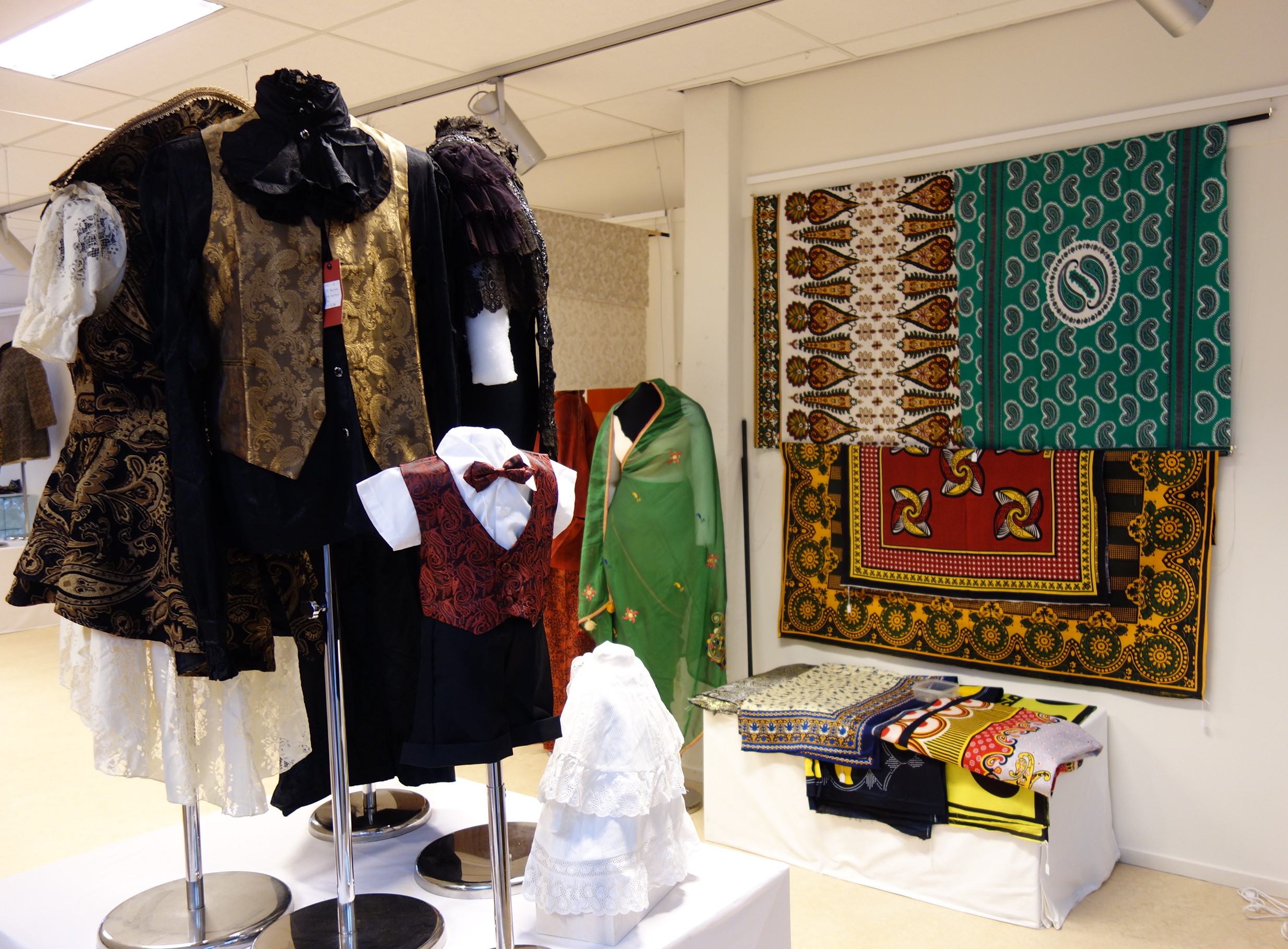
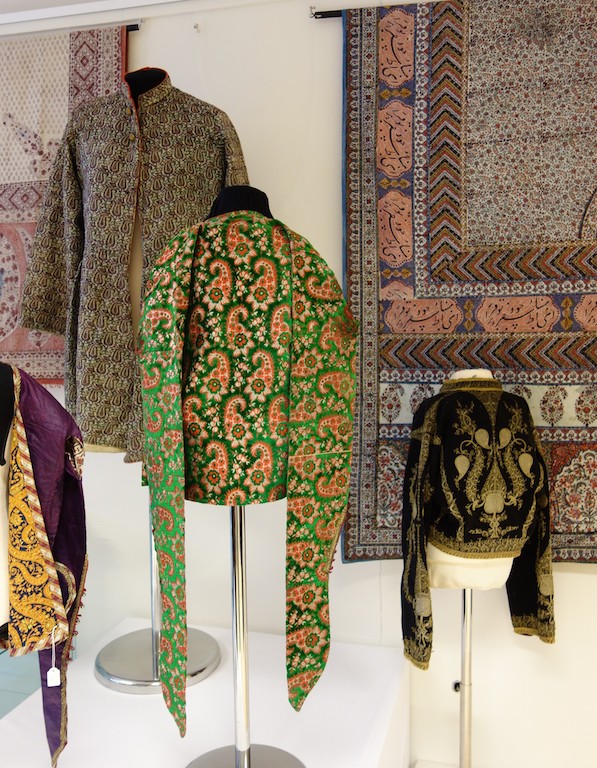
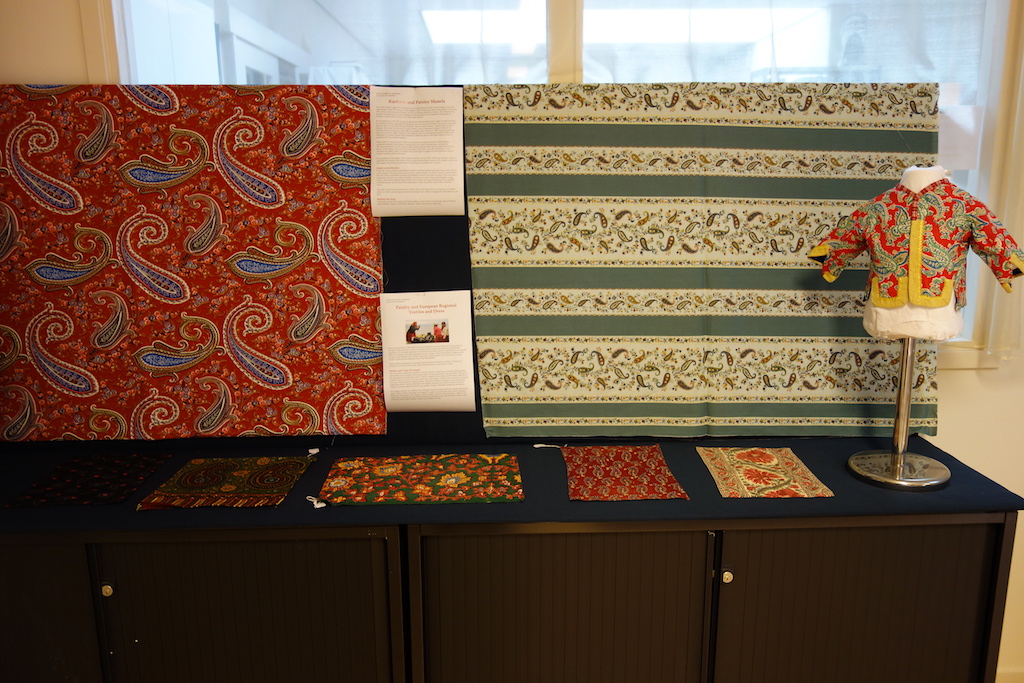
From Buteh to Paisley: The story of a global icon. TRC exhibition in the makingFrom Buteh to Paisley: The story of a global icon. TRC exhibition in the makingYesterday, Tuesday 2nd, we all heard the announcement by the Dutch government that the corona virus lockdown in the Netherlands will continue until the 2nd March (big sigh). So we have decided that (all being well) the TRC's next exhibition will open on the 3rd March! And we are working hard to get everything in order.

The exhibition is about the history of the paisley motif and called From Buteh to Paisley: The story of a global icon. It is not the story of the Paisley Shawl, but something much, much bigger. The paisley motif is actually one of the few non-geometric design forms that can be found throughout the world. It is worn by men, women, children of all ages, literally from the cradle to the grave.

From Buteh to Paisley: The story of a global icon. TRC exhibition in the makingFrom Buteh to Paisley: The story of a global icon. TRC exhibition in the makingMoreover, it is worn by people of many different ethnic and cultural backgrounds. It is also one of the very few motifs that are used to decorate garments ranging from underwear (male and female), through stockings, ties and blouses, to skirts, trousers, bikinis and beach hats. It can also be found on the attire worn by a Hell’s Angel biker, a Los Angeles gang member, a Steampunk Goth, to a respectable London banker and a granny who is knitting socks for the grandchildren, all without any comments being made.

The exhibition will include a wide range of textiles and garments from Iran, India, Japan, Indonesia, Africa as well as Europe, literally from Estonia to Italy, via Britain and Russia. There are also many printed textiles on display that reflect how the paisley has developed in the West during the 20th century.

From Buteh to Pisley: The story of a global icon. TRC exhibition in the makingFrom Buteh to Pisley: The story of a global icon. TRC exhibition in the makingThere will also be a digital version of the exhibition that will come online at the same time as the actual one. So, for whatever reason, if you cannot actually come and see this colourful and fun exhibition, you can at least get a glimpse and a feel of this amazing story. Be aware, however, once you become atuned to paisley you will see it everywhere. It is taking over the world.....

Gillian Vogelsang, director TRC, 3 February 2021

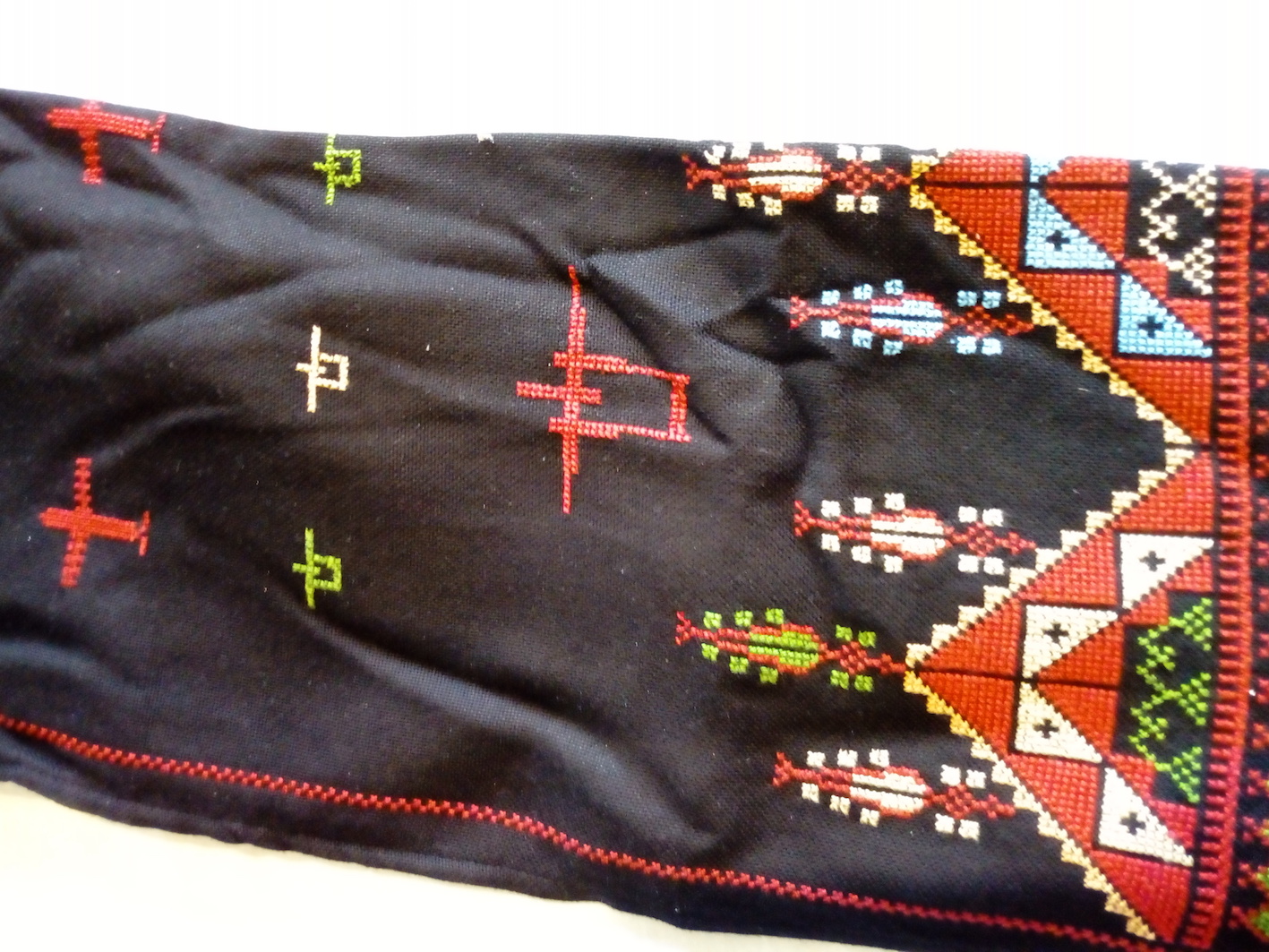
Scarf with a depiction of drones, Gaza, Palestine (TRC 2021.0282).Scarf with a depiction of drones, Gaza, Palestine (TRC 2021.0282).A recent donation to the TRC reflects the changing nature of tradition. The donation is a lovely black cotton scarf, 150 x 40 cm, from Palestine (TRC 2021.0282). The ends are embroidered in a traditional pattern from Gaza with stylized flowers, worked in cross stitch in red, light blue, yellow and green colours. Hovering above the flowers however, are the silhouettes of something new—surveillance drones.

The scarves are stitched as an income generating project by women who are hard of hearing, working in the Open Studio of the Red Crescent Hospital in Khan Younis. The scarf was designed by an innovative Palestinian group called Disarming Design, which also makes gowns out of keffiyehs and other ingenious designs.

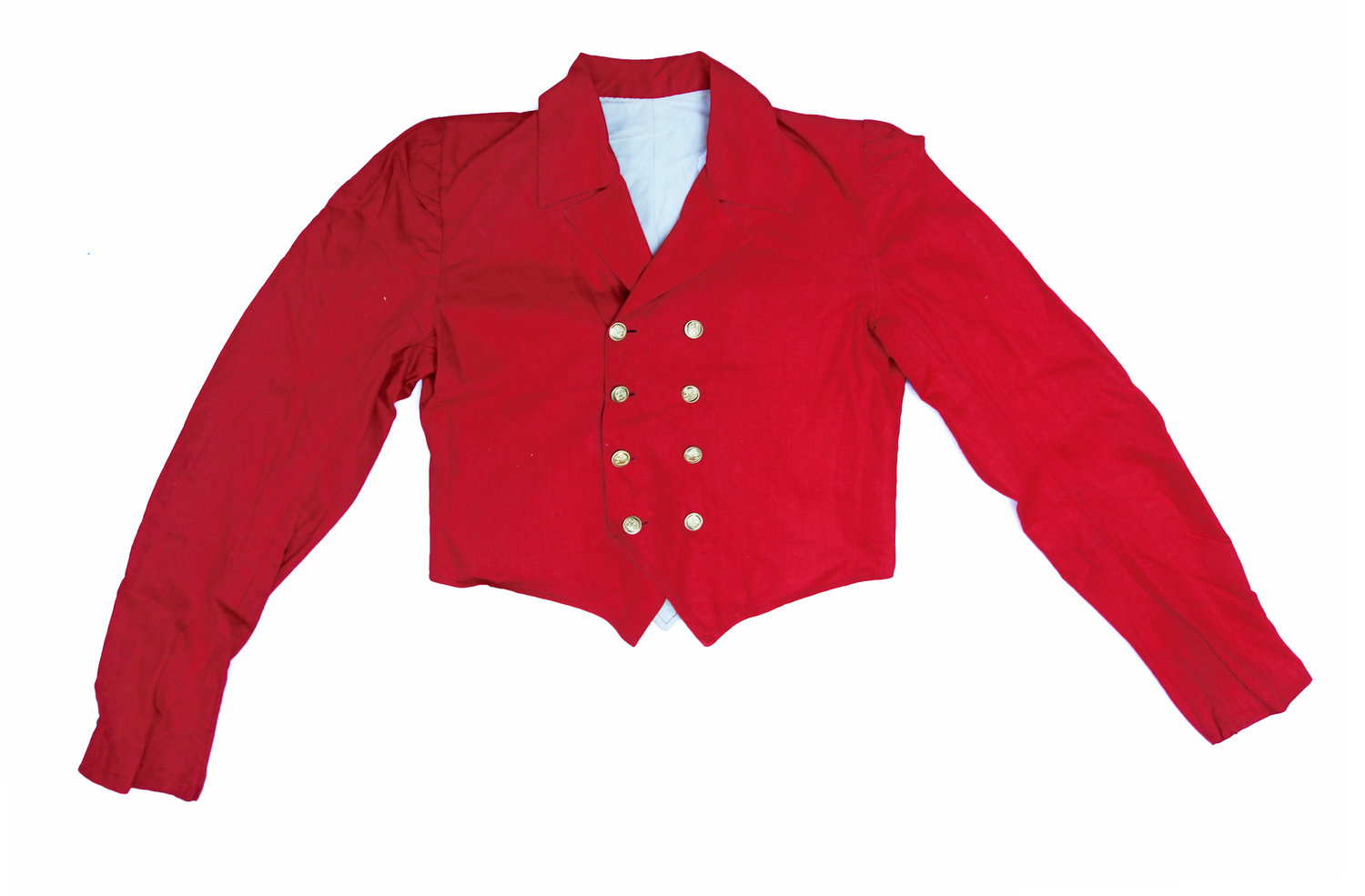
Late 19th century military style jacket for a young woman, the Netherlands (TRC 2021.0191).Late 19th century military style jacket for a young woman, the Netherlands (TRC 2021.0191).The TRC in Leiden recently received from the Van Lonkhuijzen family in Haarlem, the Netherlands, a lovely late-19th century red cotton jacket (TRC 2021.0191). It is lined with white cotton and is fastened with buttons that sport a crown and anchor motif. The jacket has a military cut to it. Along with the naval inspired buttons, the jacket might have been worn by a Dutch woman or girl to show their patriotism.

Military-style clothing worn by civilians has a long, and lasting history. The TRC’s Dutch jacket might have been influenced by the British spencer, a short-waisted jacket worn by men and women in the late 18th and early 19th century. The name comes from George, the 2nd Earl Spencer (1758-1834), who reportedly started the style after the long tails on his jacket were burnt when he stood in front of his fireplace, so he cut them off. The style was adopted as a mess jacket for semi-formal occasions by the British military, and soon spread to other countries. It is still part of the uniform in many militaries today.

Erfgoed Alkmaar ('Heritage Alkmaar') publishes an excellent newsletter about the archaeology and history of this town in the north of the Netherlands. In its most recent issue (No. 59, winter 2020/2021) there was an interesting article on 17th century fans.

'De Modese Waayer' ('The fashionable fan'). Mid-18th century advertisement from Utrecht, the Netherlands, showing a fan and instruments to make and repair fans. Underneath the print is the text: FRANS BENEVELT Woont op het oude kerkhof Te Utrecht Childert, Maakt, Verstelt, en Verkoopt, alle soort van Waijers Soo Wel Engelse, Fransse als Heel Ivoore, bij het stuk en Doesijn Alles tot een Civiele Prijs. Utrecht: Centraal Museum, acc. no. 2127.'De Modese Waayer' ('The fashionable fan'). Mid-18th century advertisement from Utrecht, the Netherlands, showing a fan and instruments to make and repair fans. Underneath the print is the text: FRANS BENEVELT Woont op het oude kerkhof Te Utrecht Childert, Maakt, Verstelt, en Verkoopt, alle soort van Waijers Soo Wel Engelse, Fransse als Heel Ivoore, bij het stuk en Doesijn Alles tot een Civiele Prijs. Utrecht: Centraal Museum, acc. no. 2127.

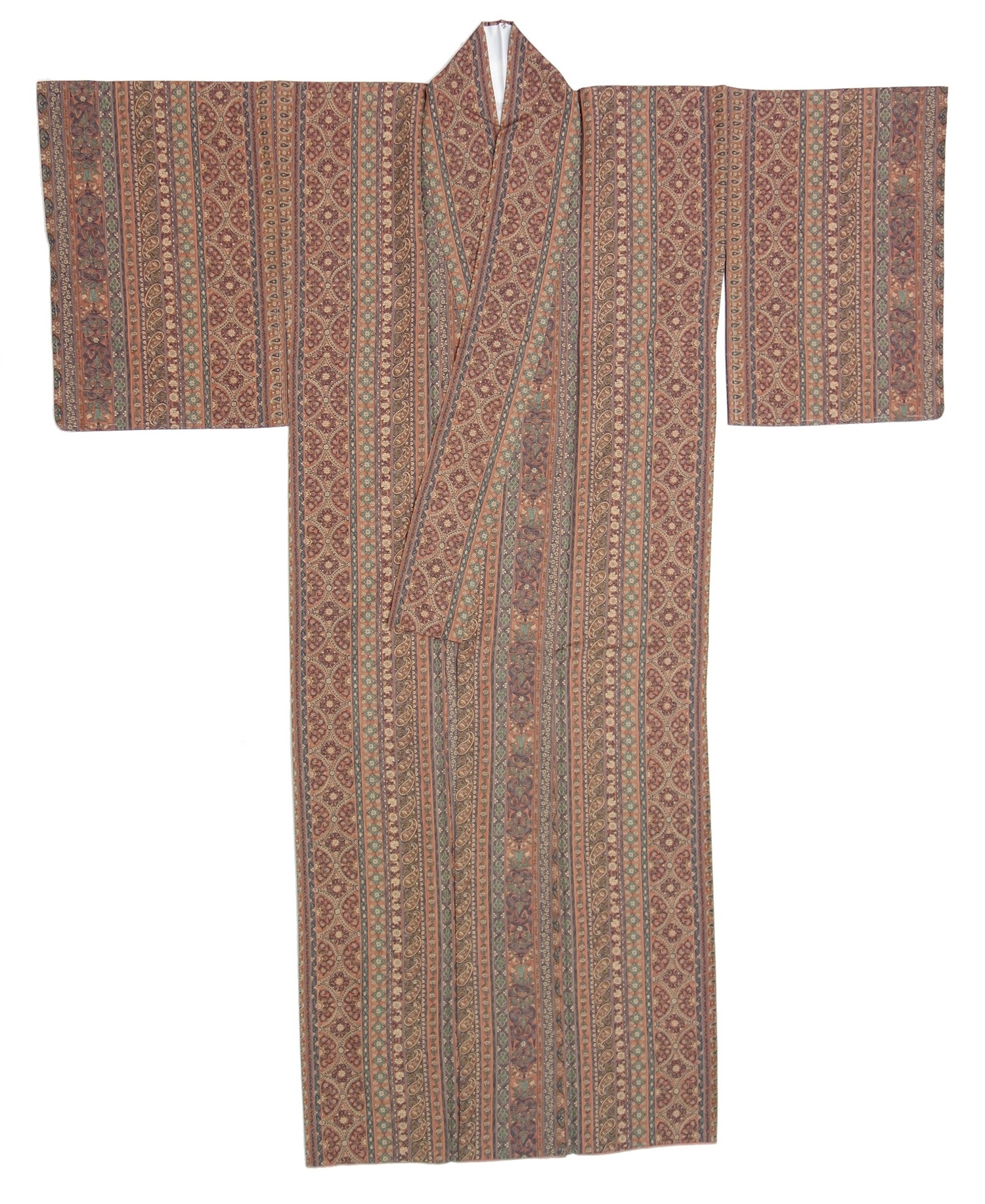
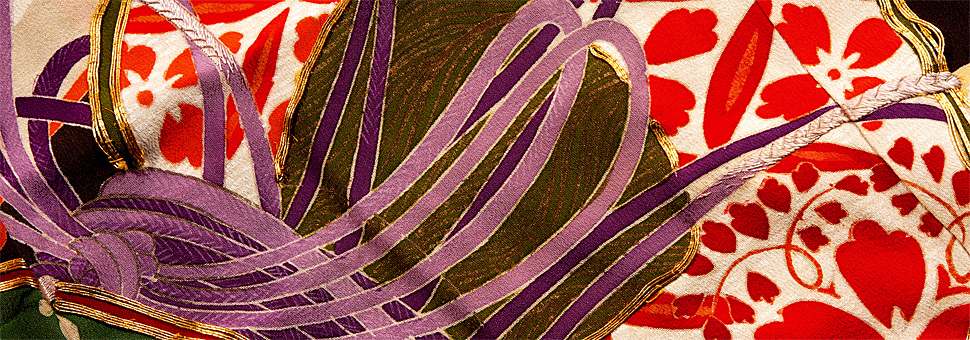
Kimono decorated with the paisley motif (TRC 2021.0062).Kimono decorated with the paisley motif (TRC 2021.0062).For the last year or so the TRC Leiden has been very busy researching and collecting items for an exhibition on the history and world-wide popularity of the paisley (buteh) motif. One of the people who is helping with the work is Naoko Kikuchi, who is a former TRC volunteer who returned to Japan some seven years ago, but who has never really ‘left’.

Naoko has just written a short blog about a kimono (TRC 2021.0062) that she donated to the TRC Collection and which has a printed design that includes the paisley motif. Here is her report about the kimono and the background to the paisley motif used in Japan:

This is a casual kimono of the type that could be worn by a woman on a daily basis while at home or going out for shopping. It has a printed design that includes a mixture of Western patterns, including the paisley motif, which have been modified to fit modern Japanese taste.

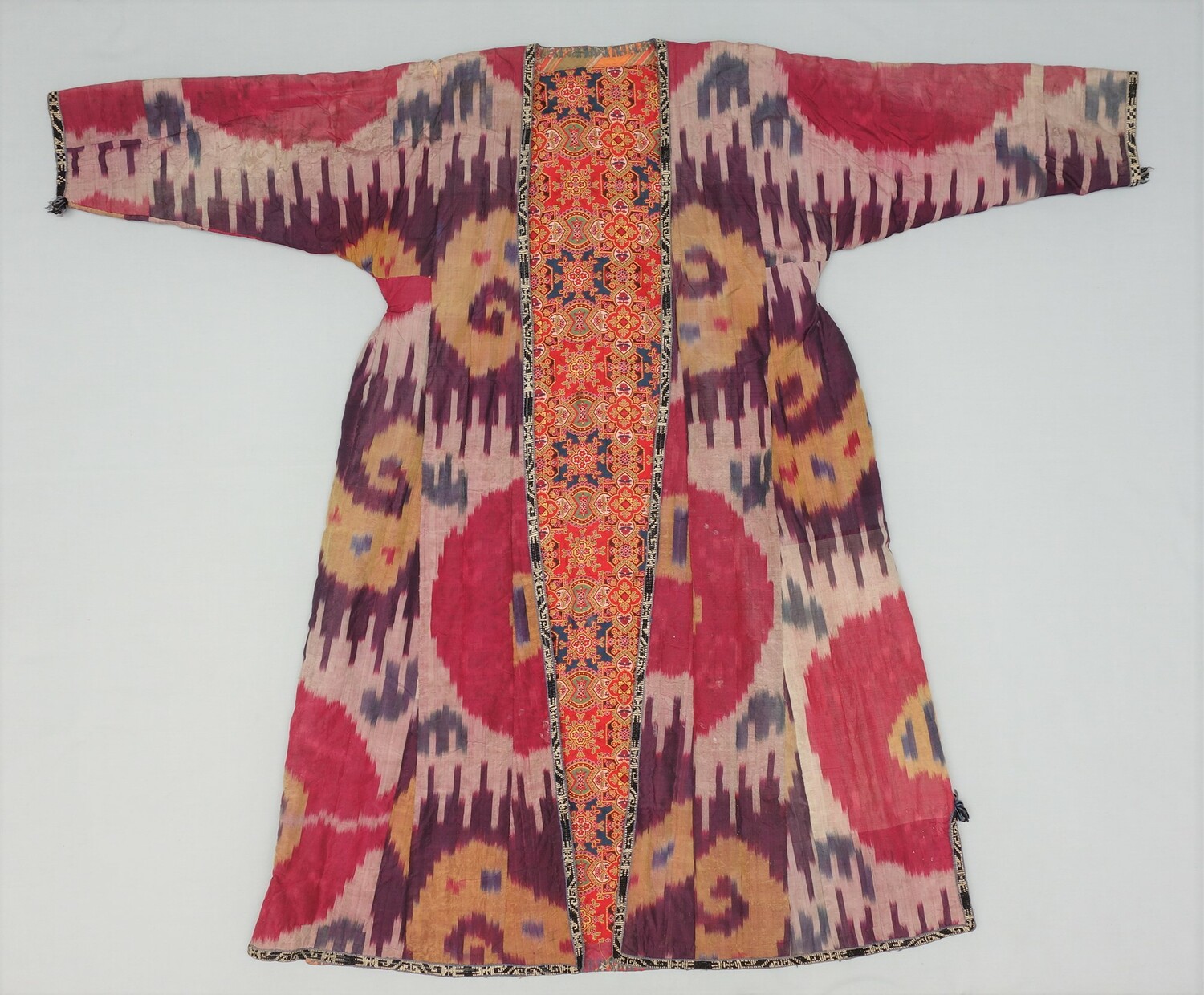
Woman's ikat coat from Uzbekistan, early 20th century (TRC 2017.0932).Woman's ikat coat from Uzbekistan, early 20th century (TRC 2017.0932).The only travel I can enjoy lately is via books, thanks to the lockdown. I’ve been enjoying Christopher Aslan Alexander’s A Carpet Ride to Khiva: Seven Years on the Silk Road (2010). In it, Alexander writes about falling in love with the city and crafts of Khiva, once a trading stop on the ancient Silk Road, in modern-day Uzbekistan. There are many wonderful details as he describes setting up a carpet weaving workshop, then another workshop for suzani embroiderers.

Wanting to learn more about Uzbek textiles, I started exploring the TRC’s on-line collection. The TRC collection includes some stunning silk Uzbek ikat garments, such as TRC 2007.1125 and TRC 2017.0932. Even better is a whole on-line exhibition called “Dressing the 'Stans': Textiles, dress and jewellery from Central Asia”, with more beautiful textiles.

Zoek in TRC website

Contact

Boerhaavelaan 6
2334 EN Leiden.
Tel. +31 (0)71 5134144 (kantooruren)  
office@trcleiden.org

Het TRC is elke dag geopend tussen 10.00 en 15.00 uur.

facebook 2015 logo detail


instagram vernieuwt uiterlijk en logo


Bankrekening

NL39 INGB 0002 9823 59, t.a.v. Stichting Textile Research Centre.

Financiële giften

Het TRC is afhankelijk van project-financiering en privé-donaties. Al ons werk wordt verricht door vrijwilligers. Ter ondersteuning van de vele activiteiten van het TRC vragen wij U daarom om financiële steun:

Giften kunt U overmaken op bankrekeningnummer (IBAN) NL39 INGB 000 298 2359, t.n.v. Stichting Textile Research Centre. BIC code is: INGBNL2A

U kunt ook, heel simpel, indien u een iDEAL app heeft, de iDEAL-knop hieronder gebruiken en door een bepaald bedrag in te vullen: 


Omdat het TRC officieel is erkend als een Algemeen Nut Beogende Instelling (ANBI), en daarbij ook nog als een Culturele Instelling, zijn particuliere giften voor 125% aftrekbaar van de belasting, en voor bedrijven zelfs voor 150%. Voor meer informatie, klik hier