• F1
  • F2
  • F4
  • F3

On Wednesday, 25th March, 2020, Beverley Bennett wrote:

As we are unable to give our guided tours at the moment, I thought I would feature some of the quilts I find most interesting in the current American Quilts exhibition. The particular textile I want to discuss (TRC 2018.2629) dates from c. 1935. It was made by Margaret Smart, The Dalles, in Oregon, USA (1914-2006), and was donated to the TRC by Sherry Cook.
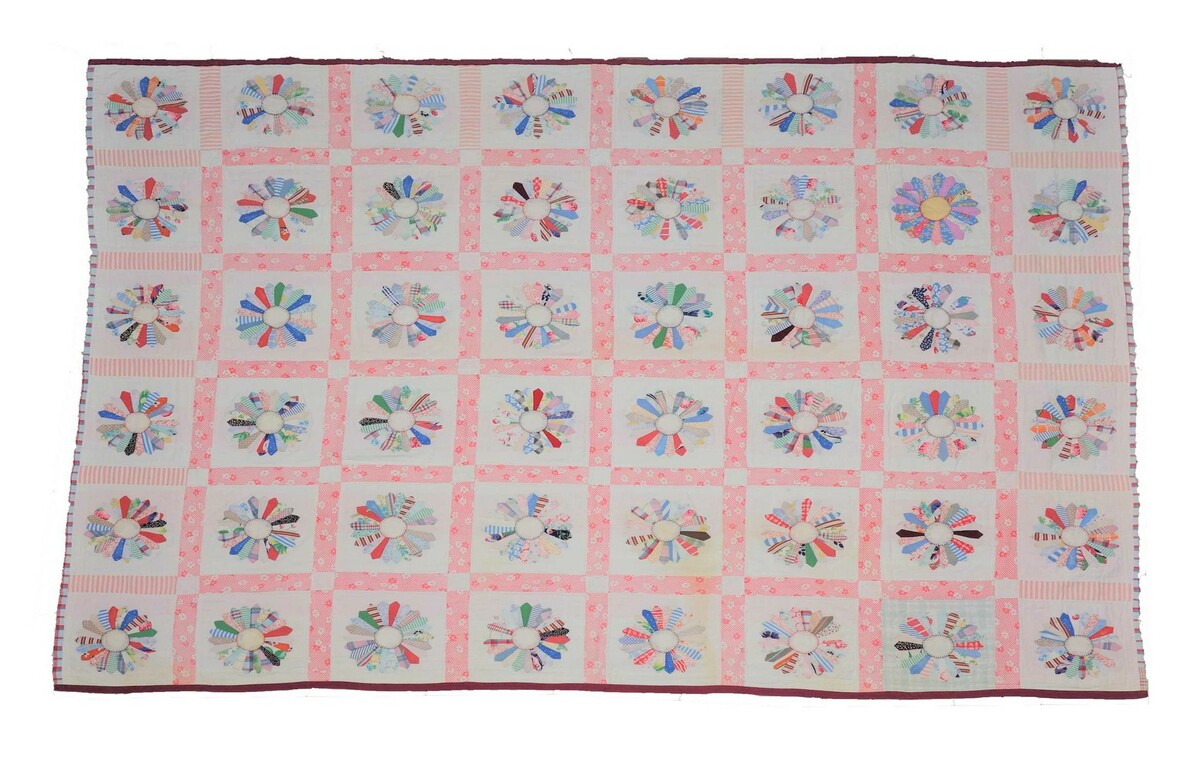
A Dresden Plate quilt from the mid-1930s, USA (TRC 2018.2629).A Dresden Plate quilt from the mid-1930s, USA (TRC 2018.2629).It comprises a simple Dresden Plate block, made from feedsack prints and possibly clothing offcuts. The blocks are set side by side with a pink sashing and white cornerstones.
On Tuesday, 24 March 2020, Gillian Vogelsang wrote:

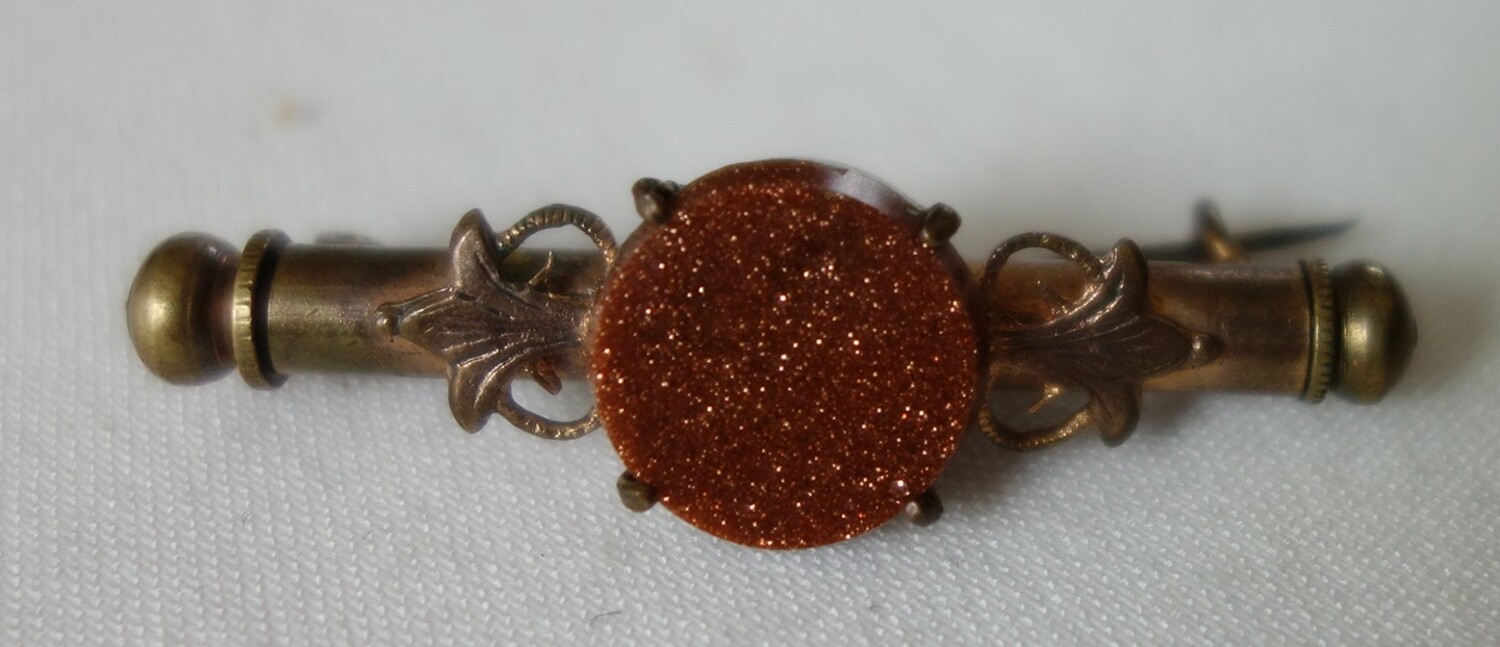
An aspect of the TRC Collection that has been sadly neglected over the last few years has been the sewing equipment and related items. So the present situation caused by the corona virus whereby the TRC Leiden is shut for a longer period of time has given me the chance to work on some of these pieces (at home I should add).

Nanny brooch, The Netherlands, early 20th century (TRC 2020.0945).Nanny brooch, The Netherlands, early 20th century (TRC 2020.0945).

The various objects are currently being catalogued have divided into three main groups, namely:


On Sunday, 22 March 2020, Gillian Vogelsang wrote:

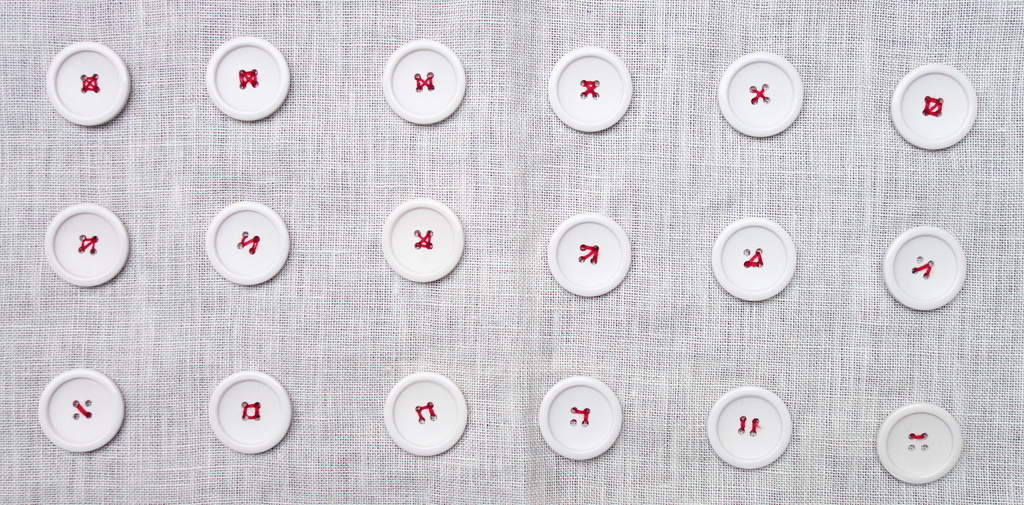
A recent addition to the TRC Collection is a modern button sample (TRC 2020.0485), a simple object, but one with an interesting story behind it. It was actually made by me as part of the research carried out some years ago for a chapter about Egyptian regional embroidery that was published in the Encyclopedia of Embroidery from the Arab World (Bloomsbury 2016).

A button sample based on a Siwa tradition (TRC 2020.0485).A button sample based on a Siwa tradition (TRC 2020.0485).

The sample is based on the way four-holed buttons are sewn onto dresses worn by women in the Egyptian oasis of Siwa, in the far west of country. The dresses come in white (ashera nauak) and black (ashera hawak azdhaf) and are first worn by a young women at her wedding. The dresses are then worn on special occasions, such as family and religious events. More details about these dresses can be found here.

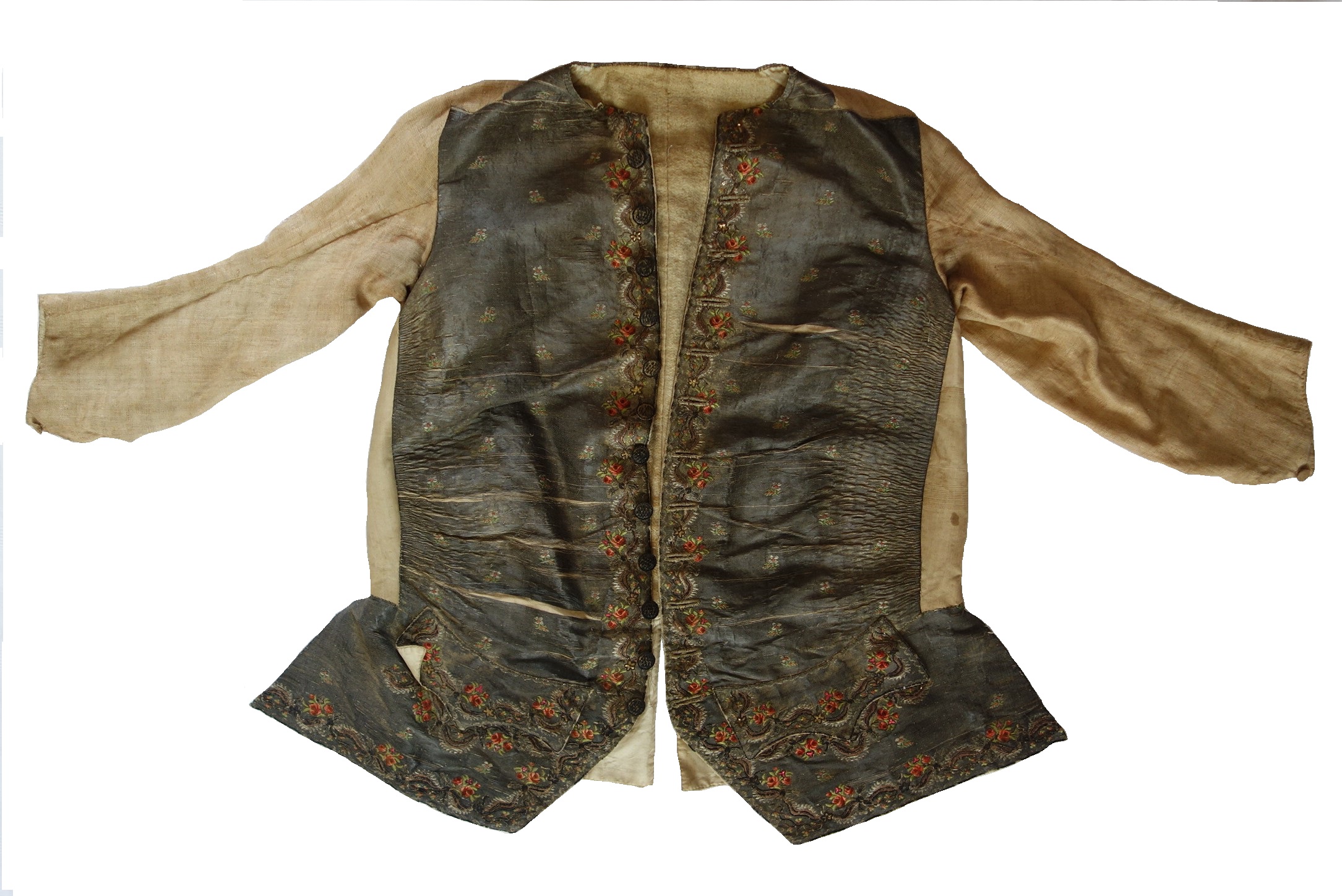
Front of mid 18th century man's waistcoat (TRC 2020.0879).Front of mid 18th century man's waistcoat (TRC 2020.0879).The TRC Leiden has just been given an intriguing 18th century waistcoat for a man (TRC 2020.0879). As with so many pieces, this garment found its way to the TRC in Leiden via a friend of a friend.

The waistcoat is of interest for various reasons, structurally, decoration-wise, as well as for the indications it gives about the original owner’s economic means!

The waistcoat is made from a twill silk and silver metal thread cloth with small flowers, which was woven using a supplementary wefts technique with floss silk of various colours. The flowers were set on a silver thread ground (now nearly black due to oxidisation). In addition, the garment has been decorated with applied, very small silver spangles, metal thread (passing and purl forms), as well as small shapes in red coloured metal foil. When it was first made and worn the waistcoat was must have been a piece of male bling!

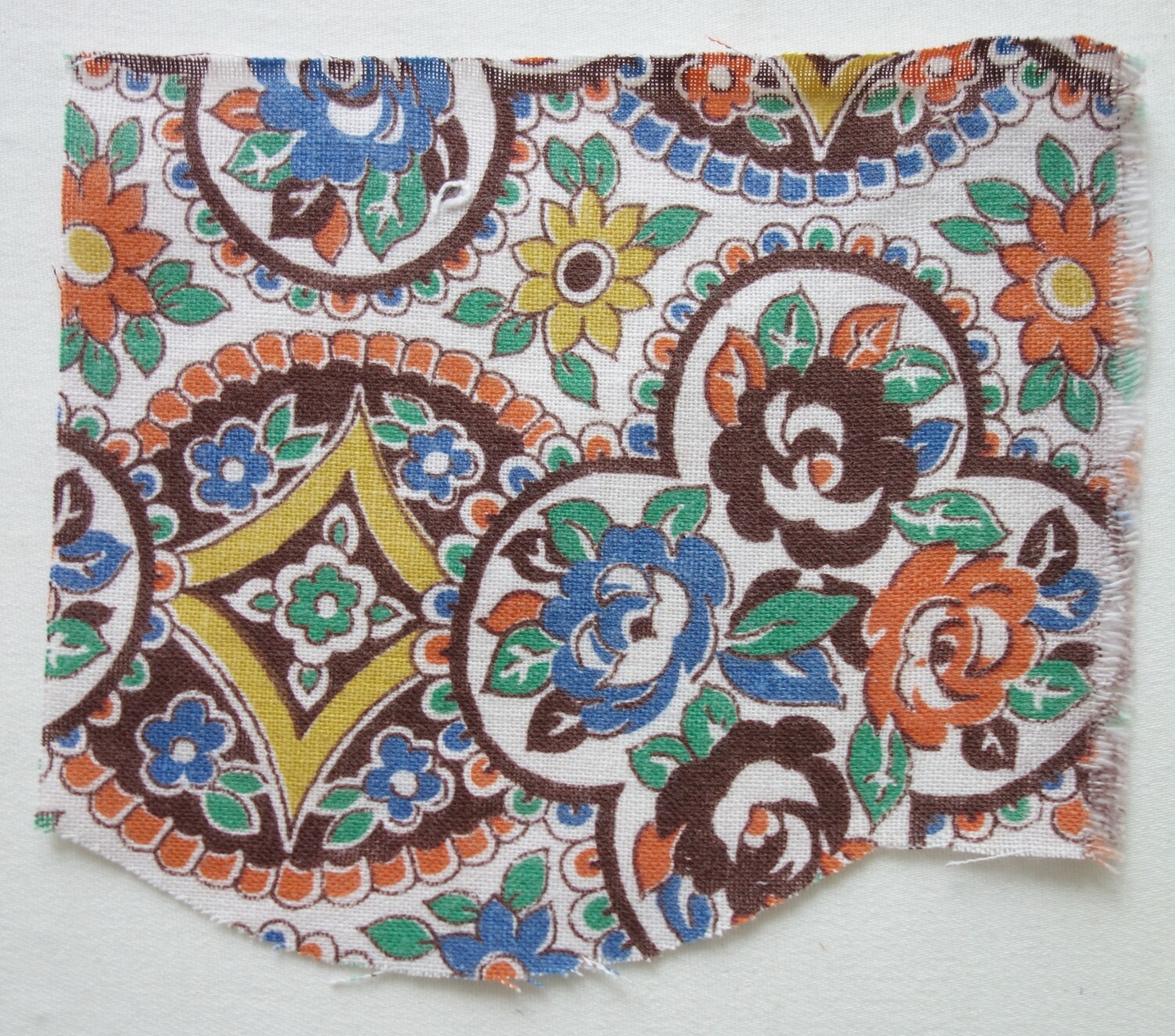
One of the over 200 feedsack samples from America currently being added to the TRC Catalogue online database, donated by Sherry Cook (TRC 2020.0815).One of the over 200 feedsack samples from America currently being added to the TRC Catalogue online database, donated by Sherry Cook (TRC 2020.0815).As with so many cultural institutes and other groups around the world, the TRC Leiden is shut until the end of March, or possibly longer. Sadly we have had to cancel or postpone various events, workshops and courses.

But at the same time we are looking ahead and busily planning lots of activities for when things settle down, including a summer school, a quilting week, a two-day embroidery identification course, basic embroidery and knitting lessons, a 'making' weekend and so much more!

We are also working on several digital exhibitions, so that you can still enjoy the TRC Collection without actually physically having to come to Leiden (although it is always best to see the real things).

Example of bog oak jewellery from Ireland, with the Irish harp and shamrock (private collection).Example of bog oak jewellery from Ireland, with the Irish harp and shamrock (private collection).On Tuesday, 17 March 2020, TRC volunteer Shelley Anderson wrote:

Like jet, bog oak involves fossilized trees. Trees such as oak, pine, yew or fir fell into rivers and were covered in silt and mud. In Ireland, such wood was trapped in peat bogs. The wood became stained a dark brown or black, as minerals seeped in, and became semi-fossilized.

This semi-fossilized wood is called bog oak, no matter what tree species is being used. Bog oak can range in age from a few centuries to over 5,000 years or older. The Victorians loved bog oak, not only in furniture, but also in jewellery. Its dark black colour made it popular for mourning jewellery.

By the 1850s new techniques had been developed that made working with bog oak less difficult and it was used in a wide variety of jewellery, from necklaces and bracelets to rings and brooches. It was sometimes passed off as, or mistaken for, jet, although bog oak is lighter and warmer to the touch, and the wood grain is sometimes noticeable.

A patchwork quilt housed in the Victoria & Albert Museum, London (T1-1996). It was made in 1993 to celebrate 75 years of women’s suffrage in Britain.A patchwork quilt housed in the Victoria & Albert Museum, London (T1-1996). It was made in 1993 to celebrate 75 years of women’s suffrage in Britain.In the last decade many countries have celebrated women winning the right to vote. I’ve been doing some research for a TRC mini-exhibition on suffrage movements and fashion and have come across some fascinating celebratory needlework.

Sometimes such needlework causes controversy. In 1994 two tapestries were hung in South Australia’s Parliament House, to commemorate the centenary of South Australian women winning the vote. The tapestries had been woven the year before, in public, on a loom set up inside the busy National Bank in Adelaide. Passersby were encouraged to both watch and to help weave themselves.

Hand knitted socks from the Shahsavan in northwestern Iran. Late 20th century (TRC 1998.0260a-b).Hand knitted socks from the Shahsavan in northwestern Iran. Late 20th century (TRC 1998.0260a-b).The last few weeks we have been working hard on clearly understanding and projecting the future of the TRC, the approaches we want to take and which people we want to attract, and all of this should be based on the TRC principle that we want to be an inclusive centre, rather than exclusive!

The TRC is a textiles and dress institute. As for dress, we have already developed the idea of the language of dress: what do people wear in order to show who they are and want to be, and how others see them and interpret their clothing. This concept was broadly outlined in an article published in the July 2019 Newsletter of the International Institute for Asian Studies.

The other branch of the TRC, namely the textiles themselves, still needs to be further discussed. What does the TRC want to do with the study and presentation of textiles, which groups of people do we want to attract and support?

Not long ago I was talking with some visitors to the TRC. They suggested that we should focus on museum colleagues, academics doing research and students. They also wanted a few "hobbyists", but not too many. 

Zoek in TRC website

Contact

Boerhaavelaan 6
2334 EN Leiden.
Tel. +31 (0)71 5134144 (kantooruren)  
office@trcleiden.org

Het TRC is elke dag geopend tussen 10.00 en 15.00 uur.

facebook 2015 logo detail


instagram vernieuwt uiterlijk en logo


Bankrekening

NL39 INGB 0002 9823 59, t.a.v. Stichting Textile Research Centre.

Financiële giften

Het TRC is afhankelijk van project-financiering en privé-donaties. Al ons werk wordt verricht door vrijwilligers. Ter ondersteuning van de vele activiteiten van het TRC vragen wij U daarom om financiële steun:

Giften kunt U overmaken op bankrekeningnummer (IBAN) NL39 INGB 000 298 2359, t.n.v. Stichting Textile Research Centre. BIC code is: INGBNL2A

U kunt ook, heel simpel, indien u een iDEAL app heeft, de iDEAL-knop hieronder gebruiken en door een bepaald bedrag in te vullen: 


Omdat het TRC officieel is erkend als een Algemeen Nut Beogende Instelling (ANBI), en daarbij ook nog als een Culturele Instelling, zijn particuliere giften voor 125% aftrekbaar van de belasting, en voor bedrijven zelfs voor 150%. Voor meer informatie, klik hier