• F2
  • F1
  • F4
  • F3

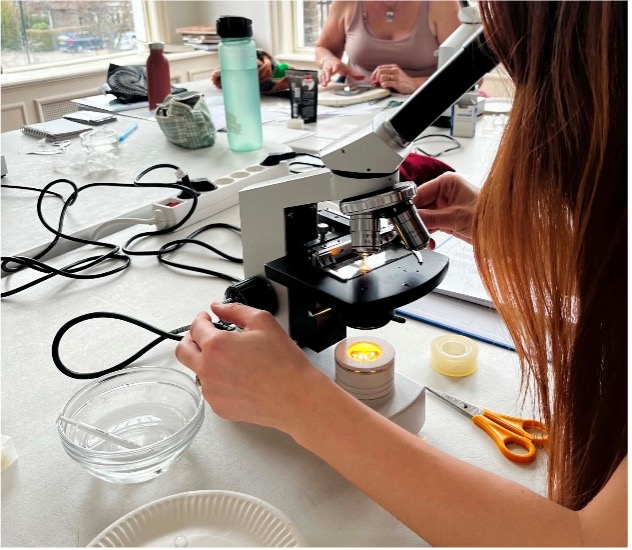
Fig. 1. Observing the micro-structure of different textile fibers during a TRC course. Photograph by author.Fig. 1. Observing the micro-structure of different textile fibers during a TRC course. Photograph by author.(Frieda Chen, 11 July 2026) This February, I started my internship at the Textile Research Centre (TRC), Leiden. I am a Master’s student in Asian Studies at Leiden University. Coming from a background in anthropology and heritage studies, I was excited to gain hands-on experience in museum practice and to learn how textile collections are researched, documented, and presented to the public.

Learning through courses and workshops

During my internship, I participated in a variety of workshops and courses organised by the TRC. These activities introduced me to different aspects of textile studies, from textile production techniques to museum collections. Unlike university lectures, these sessions emphasise hands-on learning and allow participants to experience different textile techniques firsthand.

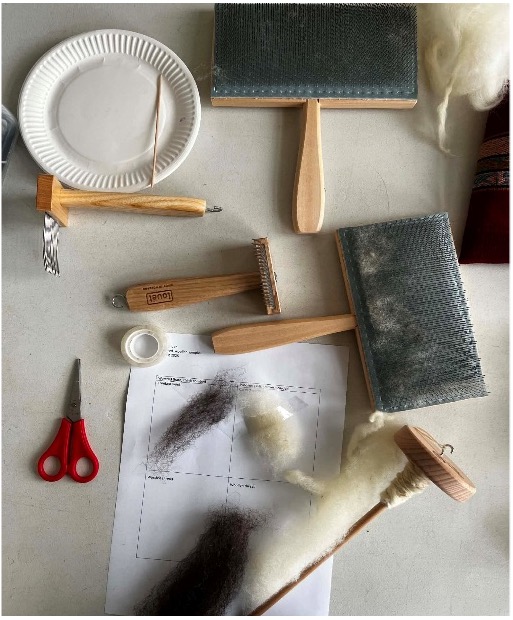
Fig. 2. Learning how to card raw wool before spinning it into yarn. Photograph by author.Fig. 2. Learning how to card raw wool before spinning it into yarn. Photograph by author.For example, during one of the courses, I had the chance to observe the microstructure of different textile fibres (Fig. 1). By observing cotton, wool, and other fibres under a microscope, I learned how their physical characteristics differ and how these differences influence the appearance, texture, and properties of textiles. This experience also helped me better understand how fibre identification is carried out in textile research.

Another memorable experience was wool processing. I learned how raw wool is prepared to align the fibres before being spined into yarn (Fig.  2). Although the process required patience and practice, it gave me a much deeper understanding of how wool textiles are made, from raw fibre to finished yarn.

I also had the opportunity to learn basic weaving techniques using a small tabletop loom (Fig.  3). Through the weaving process, I came to understand how factors such as the tension of the threads, the density of the weave, and even the smallest adjustments can affect the appearance and texture of the final textile.

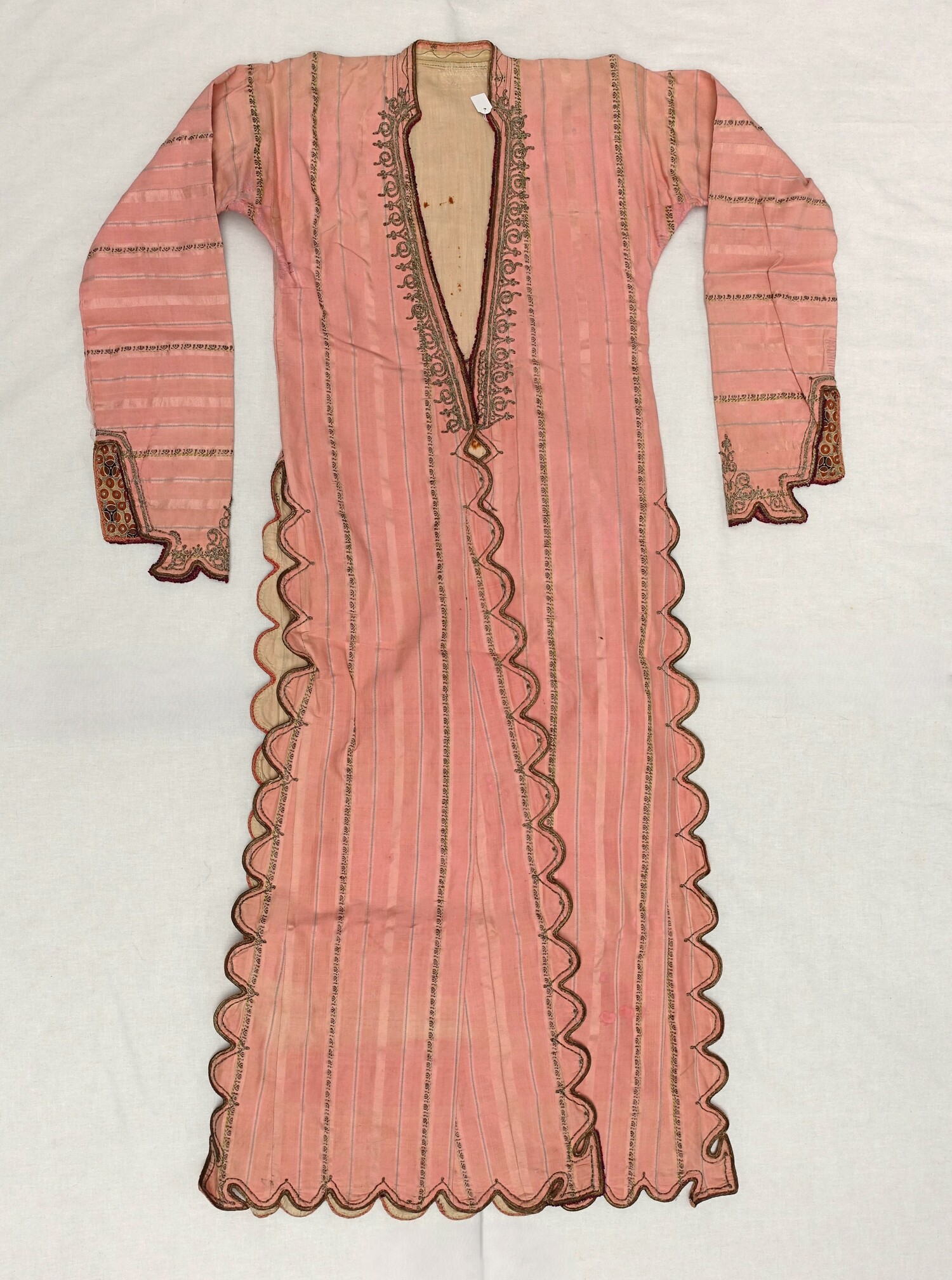
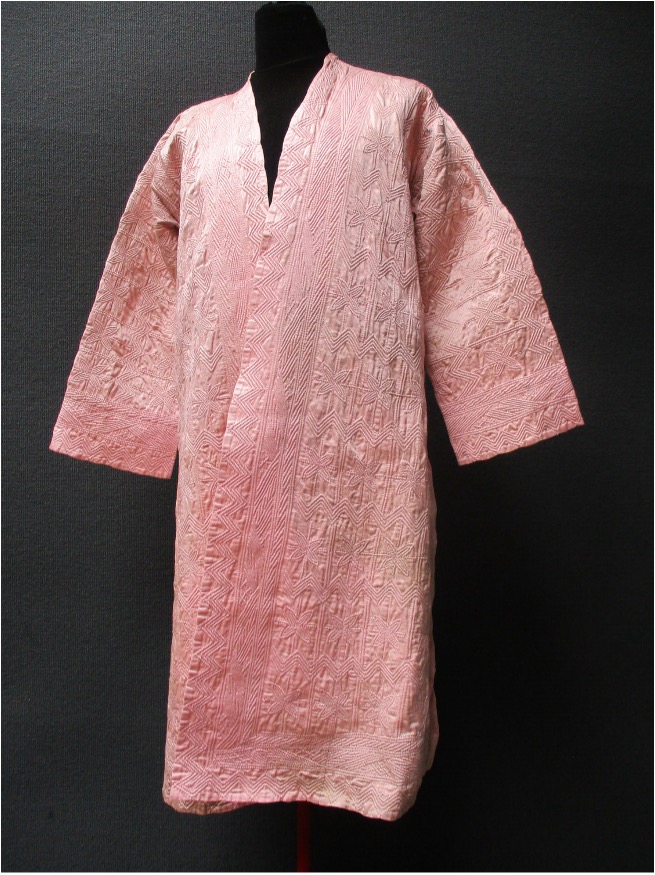
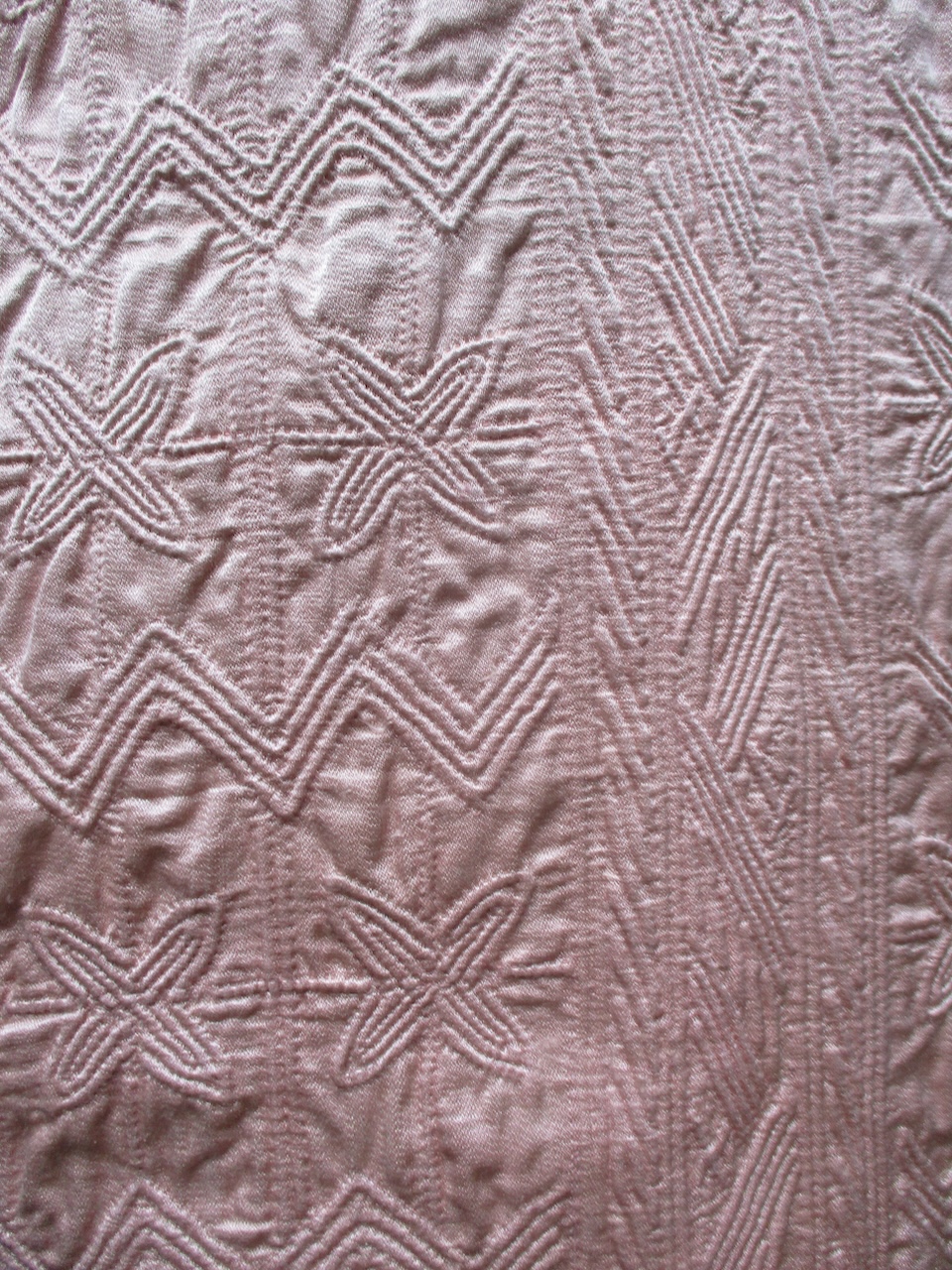
Quilted kaftan from Turkey, first half 20th century, TRC 2026.0841.Quilted kaftan from Turkey, first half 20th century, TRC 2026.0841.(Gillian Vogelsang-Eastwood, 24 June 2026) A year ago we were given a large group of Ottoman and later Turkish textiles and dress from the Kavak Folklore Team & Costume Collection (Antwerp), which was founded by Jean-Marie Criel (for more information, click here and here).

Then came TRC's move to Boerhaavelaan 6 and we had to put the Kavak collection to one side. We are pleased to tell that we are now working together again on this amazing collection, and over the next 12 months, more items wil be given to the TRC. In fact, twelve boxes and bags have just been picked up from Antwerp, which include  a beautiful, hand-quilted kaftan (TRC 2026.0841).

I knew about the Yorgan or quilted bedspreads, which are an important feature of many Turkish homes, but I had not heard about quilted garments.

Detail of quilted kaftan from Turkey, TRC 2026.0841.Detail of quilted kaftan from Turkey, TRC 2026.0841.Historically, quilted bedspreads were made by men. Towns and cities used to have special quilt quarters. But cheaper modern products have meant that many quilters have stopped working and it is now more and more difficult to find apprentices to carry on the trade. Such quilts can be made from silk, cotton or sometimes woollen cloth and were traditionally filled with raw wool or sometimes cotton. Nowadays, synthetic fillings are used, as these can be more easily cleaned.

The overall design for a quilt was usually decided by the quilter and the person wanting the quilt. Floral motifs were popular for dowry quilts, others had repeating geometric designs.

The required pattern was worked on card, cut out and then the templates were used as stencils to draw the desired motifs on the ground material. A professionally made quilted bedspread took between two and three days to make, depending on the complexity of the design.

(Gillian Vogelsang, 16 June 2026) The TRC recently received a substantial subsidy from the Overvoorde – Gordon Stichting / het Pauwhof Fonds, for a series of gatherings that are aimed at strengthening relationships and stimulating collaboration with a broad group of stakeholders in the (inter)national museum, science, art, and heritage fields of textiles and dress.

First round-table of textile studies stakeholders, TRC, 1 June 2026.First round-table of textile studies stakeholders, TRC, 1 June 2026.

We have just shut the TRC doors on a very successful book sale at B6, our new home!

We have been working hard for the last few weeks to get hundreds of books, magazines, leaflets, etc., sorted according to subject matter – embroidery, woven, printed, knitted, quilts, general history, etc., not to mention prices. These were then put into boxes and organised on a variety of themes in the main gallery. We had hoped to hold the book sale in the garden, but the weather was not very helpful – rain clouds and strong winds all day long.

The sale officially started at 10.00 but people were arriving from 09.30 onwards, and the first purchases took place at 09.45. From 10.00 until 14.00, there was a constant flow of visitors to search for interesting books and items, as well as for inspiration. Then it gradually slowed down and the last sales were made just after 15.00.

Not just about books

But the day was not just about selling books, it was also intended as an opportunity for people to come and see the new home of the TRC and to talk with colleagues about what we are doing and plan to do, as well as to see the TRC’s current exhibition about appliqué textiles (khayamiya) from Egypt.

Fig. 1. Boerhaavelaan 6 as seen from the garden. TRC plans to use part of the garden to grow textile-related plants, in cooperation with the Leiden University Botanical Gardens. Photograph Willem Vogelsang, 2025.Fig. 1. Boerhaavelaan 6 as seen from the garden. TRC plans to use part of the garden to grow textile-related plants, in cooperation with the Leiden University Botanical Gardens. Photograph Willem Vogelsang, 2025.by Willem Vogelsang, 3 June 2026.

In April 2026, the Textile Research Centre (TRC) moved from its former address along the Hogewoerd in the centre of Leiden, into a new 'home'. It is an early-twentieth century urban villa just behind the main Leiden railway station (Fig. 1). The house, at  Boerhaavelaan 6, was occupied by the same family for more than one hundred years.

The last resident, Mrs Hélène Nauta-Barge, lived there for her entire life, almost uninterruptedly, until she died in 2023, aged 99. Since then it has become the property of the Stichting Monumentenbezit, which now rents it out to the TRC upon the recommendation of Leiden City Council,

The house has a fascinating background and reflects the rich, and sometimes turbulent history of Leiden.

By Frieda Chen, TRC Intern, 30 May 2026.

Frieda is a Master’s student in Asian Studies at Leiden University and an intern at the Textile Research Centre (TRC). With a background in archaeology in Taiwan, she is interested in how materials connect to human behaviour. Through working with textiles and indigo dyeing, she is still exploring whether she is a weaver, a dyer, or simply a researcher.

In 2019, the TRC received several tie-and-dye cotton samples from Zhuo Ye Cottage (Taiwan) (TRC 2019.2177, 2178, 2179, 2180, 21812182). The textiles are dyed with indigo, a natural dye extracted from plants such as Strobilanthes cusia (known as “Malan” in Taiwan). Other plant sources also referred to as indigo include species from the legume family (Indigofera tinctoria L.) and the knotweed family (Polygonaceae), such as Polygonum tinctorium Aiton, also known as Persicaria tinctoria (Aiton) H. Gross.

Indigo is a widely used dye because it produces a deep blue colour that lasts well over time. Among natural plant dyes, indigo is one of the few that needs a special fermentation and chemical process to make the dye work. It cannot be produced in the way that is applied to most of the other dye plants, such as madder, by simply boiling or soaking the plant (Lai, 2016).

Fig. 1. Process of indigo dye production. Source: Zhuo Ye Cottage Indigo Dyeing Workshop. Retrieved from https://www.joye.com.tw/activity/about.php?PKey=11Fig. 1. Process of indigo dye production. Source: Zhuo Ye Cottage Indigo Dyeing Workshop. Retrieved from https://www.joye.com.tw/activity/about.php?PKey=11

Fig. 1. Kasuri cloth sample (TRC 2017.1478-23). Japan, 20th century.Fig. 1. Kasuri cloth sample (TRC 2017.1478-23). Japan, 20th century.This April, I began my research fellowship at the TRC Leiden as the first junior fellow in the TRC Fellowship Programme, sponsored by the Gieskes-Strijbis Foundation, Amsterdam. My project, Thread, Dye, and Pattern: A Historical Study of Japanese Kasuri Techniques in the TRC Leiden Ikat Cloth Sample Collection (Pepin Collection), focuses on the extraordinary technical and artistic complexity of Japanese kasuri textiles preserved in the TRC collection.

Japanese kasuri — a form of ikat in which yarns are resist-dyed before weaving — is one of those textile traditions that becomes more fascinating the closer one looks. At first glance, the fabrics may appear deceptively simple: indigo blues, geometric forms, softened edges (compare TRC 2017.1478-23; Fig. 1). Yet under magnification, entire worlds of technical decision-making emerge. Tiny variations in binding, dye penetration, thread tension, and weave alignment all contribute to the final pattern.

During these first months, much of my work has focused on developing methods for closely analysing the kasuri samples in the TRC collection. Through this research, I aim to better understand which dyeing and weaving techniques are represented in the samples, how yarn structure and resist methods interact to create patterns, and whether particular textiles can be linked to regional Japanese kasuri traditions such as Kurume kasuri from Fukuoka, Iyo kasuri from Ehime, or Ryukyu kasuri from Okinawa.

Charly Sajjad Baumann and Dr. Gillian Vogelsang-Eastwood, 15 May 2026Charly Sajjad Baumann and Dr. Gillian Vogelsang-Eastwood, 15 May 2026This year I am completing my Bachelor’s degree in Fashion Design at the University of Applied Sciences HTW Berlin. For my bachelor’s thesis, I am focusing on Afghan embroidery, with a special emphasis on traditional Hazara embroidery. As this topic is personally very important to me, I wanted to approach my work not only creatively but also in a well-founded academic way. Therefore, I began searching online for information, sources, and research institutions that deal with traditional textiles.

During my research, I discovered the Textile Research Centre (TRC), Leiden, in the Netherlands. This centre is dedicated to the study of traditional textiles, crafts, and embroidery from various cultures around the world. I found it particularly fascinating that it also holds information and textile collections from Afghanistan.

After a short time, I knew that I absolutely wanted to visit this place to learn more about Afghan embroidery and its cultural significance. So I traveled from Berlin to Leiden. The journey was very exciting for me because I knew it would be highly important for my bachelor’s thesis.

Search in the TRC website

Contact

Boerhaavelaan 6
2334 EN Leiden.
Tel. +31 (0)71 5134144 (office hours)  
office@trcleiden.org 

The TRC is open every day from 10.00 to 15.00

facebook 2015 logo detail 

instagram vernieuwt uiterlijk en logo


Bank account number

NL39 INGB 0002 9823 59, in the name of the Stichting Textile Research Centre.

Donations

The TRC is dependent on project support and individual donations. All of our work is being carried out by volunteers. To support the TRC activities, we therefore welcome your financial assistance: donations can be transferred to bank account number (IBAN) NL39 INGB 000 298 2359, in the name of the Stichting Textile Research Centre. BIC code is: INGBNL2A.

 You can also, very simply, if you have an iDEAL app, use the iDEAL button and fill in the amount of support you want to donate: 


Since the TRC is officially recognised as a non-profit making cultural institution (ANBI), donations are tax deductible for 125% for individuals, and 150% for commercial companies. For more information, click here