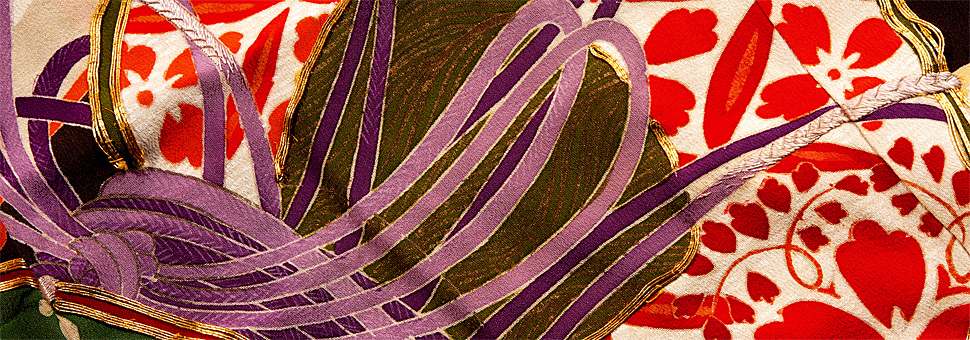

 Moroccan kaftan made from a Japanese obi (sash), 1950s (TRC 2001.0074).The TRC collection of textiles, clothing and accessories from around the world was started in 1997 with 43 pieces from Afghanistan, Egypt and Syria. Since then it has grown to over 56,000 items (26 September 2026), almost all of them have been catalogued and most of them photographed. All information is accessible on the TRC website (click here for the online catalogue).
The items come from diverse backgrounds with respect to time and place. Some of the items have been purchased, but the vast majority has been collected during fieldwork or very kindly donated by various institutions and private donors. The TRC is a good example of Citizen Culture and Heritage at work!
The collection has no boundaries with respect to geography or time. It ranges from Afghan embroidery, German Lederhosen, Indonesian batiks, historical textiles from Leiden, to delicate silks from Renaissance Italy and spinning and weaving equipment from the Andes.
 French 18th century print illustrating the production of sewing needles (TRC 2023.2348).
Diverse? Yes, but there is one common denominator: The TRC focusses on the production techniques of textiles and dress, and hence the common factor is that all items have a story to tell as to how they were made. It is deliberately a ‘broad-based encyclopaedic collection’ that is also a handling collection. This means that people who are seriously interested in particular objects can actually touch, photograph and learn from the object, rather than them being stored forever in a box and seldom seen.
At the. TRC we ask how the object was made, what type of fibres were used, did the makers use a spindle wheel or a spinning wheel, what type of loom was used? Why are medieval European pins regarded as rare and how were they made? When did pins stop being handmade and become industrial commodities that people easily throw away?
Another group of questions frequently asked at the TRC concerns the concept of Dress and Identity: Why do people wear a particular item of clothing? Why do people wear silk or cotton garments? What do they want to tell the world with their appearance, and how do people interpret and understand such a statement? The TRC therefore also collects garments, not only for their historical and technical relevance, but also for the meaning they have for the wearer and the people around him or her.
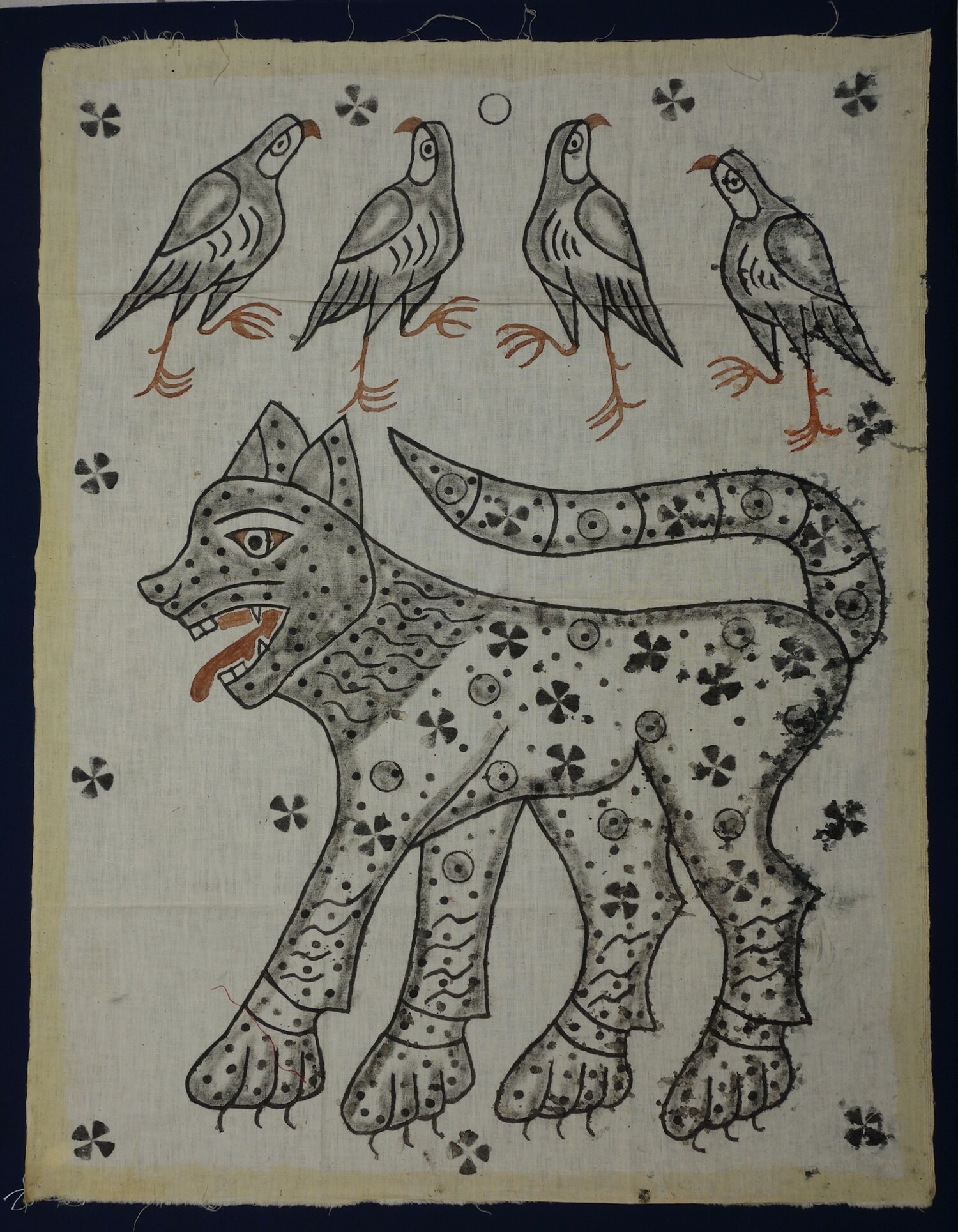 Hunting cloth from eastern Afghanistan, 1960s (TRC 2016.1773).As said, almost all the pieces in the TRC collection have been catalogued and incorporated into the TRC Digital Collection Database. By September 2026 well over two thirds of the objects in the collection have been photographed and all information and the photographs can be used free of charge by anyone who is interested, but please add the reference: 'Courtesy Textile Research Centre, Leiden', and the registration number, e.g. TRC 2017.1765.
To give an idea of the range and depth of the TRC collection, below we present a broad outline of some of its most important and intriguing elements. Currently these are the Embroidery Collection, the Iranian Regional Dress Collection, the Lace collection, the Reference collection, and the Turkish collection.
*****
MAIN AREAS OF INTEREST
 Ring pad, early 19th century silk embroidery, the Netherlands (TRC 2014.1060a).EMBROIDERY
Over the years the TRC embroidery collection has been deliberately built up with the intention of showing the different techniques, forms and decorative styles used to create both simple and elaborate textiles from around the world. The collection currently has nearly 10,000 embroidered items that range in date from the fourth century AD to the present day. It deliberately includes both hand and machine forms. All the pieces come from different countries and cultures from and represent the main forms of embroidery, with respect to technique and stylistic form.
Many of the examples of embroidery in the TRC Collection have been published in the Encyclopedia of Embroidery from the Arab World (Gillian Vogelsang-Eastwood, London: Bloomsbury, 2016), the Encyclopedia of Embroidery from Central Asia, the Iranian Plateau and the Indian sub-continent (Gillian Vogelsang-Eastwood and Willem Vogelsang, Bloomsbury 2021), and the Encyclopedia of Embroidery from Sub-Saharan Africa (Gillian Vogelsang-Eastwood and Willem Vogelsang, Bloomsbury 2023).
The fourth volume, Encyclopedia of Embroidery from Scandinavian and West European embroidery, was published in November 2024. Four more volumes are currently being prepared, which will include embroidery from Central and Eastern Europe and Russia, Southeast Asia, Southwest Asia, as well as the Americas.
Many examples from the TRC collection are also included in the Atlas of World Embroidery (Princeton University Press, 2026), which was also published in Dutch.
***
 Man's coat from early 20th century Iran (TRC 1998.0120).IRANIAN REGIONAL DRESS
Thanks to the generosity of Shell Iran, the TRC was able to built up a collection of traditional textiles and dress from Iran (over 1200 items). For three years (1998-2001), members of the TRC were able to go to this vast country to collect forms of traditional outfits for men, women and children that were still being worn in Iran at the turn of the millennium.
The resulting collection is regarded as one of the largest collections of regional dress outside of Iran and just recently we have had visitors and enquires from various researchers, scholars and makers from countries about using the collection and making it more accessible. For a recent blog on the subject, click here.
Examples from this part of the TRC collection have been on display in various exhibitions, including Beyond the Chador: Dress from the Mountains and Deserts of Iran, which was mounted in 2013 at the TRC. This exhibition included 80 fully dressed mannequins that represent the costumes associated with almost all the main ethnic groups in Iran.
***
LACE
As part of building up a general reference collection for the identification of textiles (materials and techniques), the TRC is also focussing on its collection of lace (bobbin, machine, needle, etc; c. 3,000 items). In addition to actual pieces of lace, this reference collection also includes tools such as bobbins, cushions, pattern parchments, as well as crochet hooks, hairpins, tatting shuttles, and so forth. The TRC has also developed two online exhibitions, one on lace identification, and another on Maltese lace.
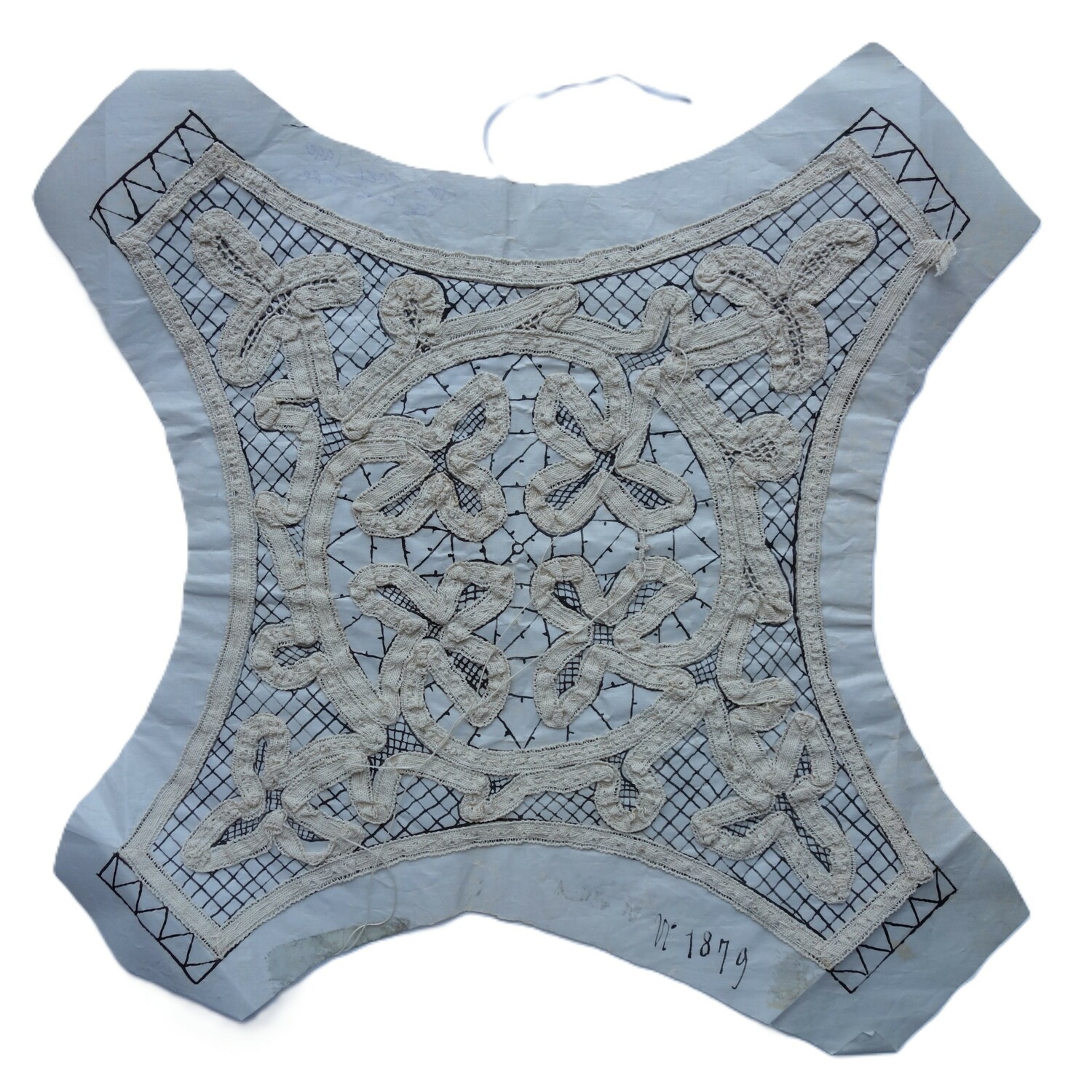 Sample of tape lace (TRC 2026.1990).
***
REFERENCE COLLECTION
The TRC is also building up a general reference collection for the identification of textiles (materials and techniques) and related tools. The Reference collection currently (September 2026) stands at over 18,000 items.
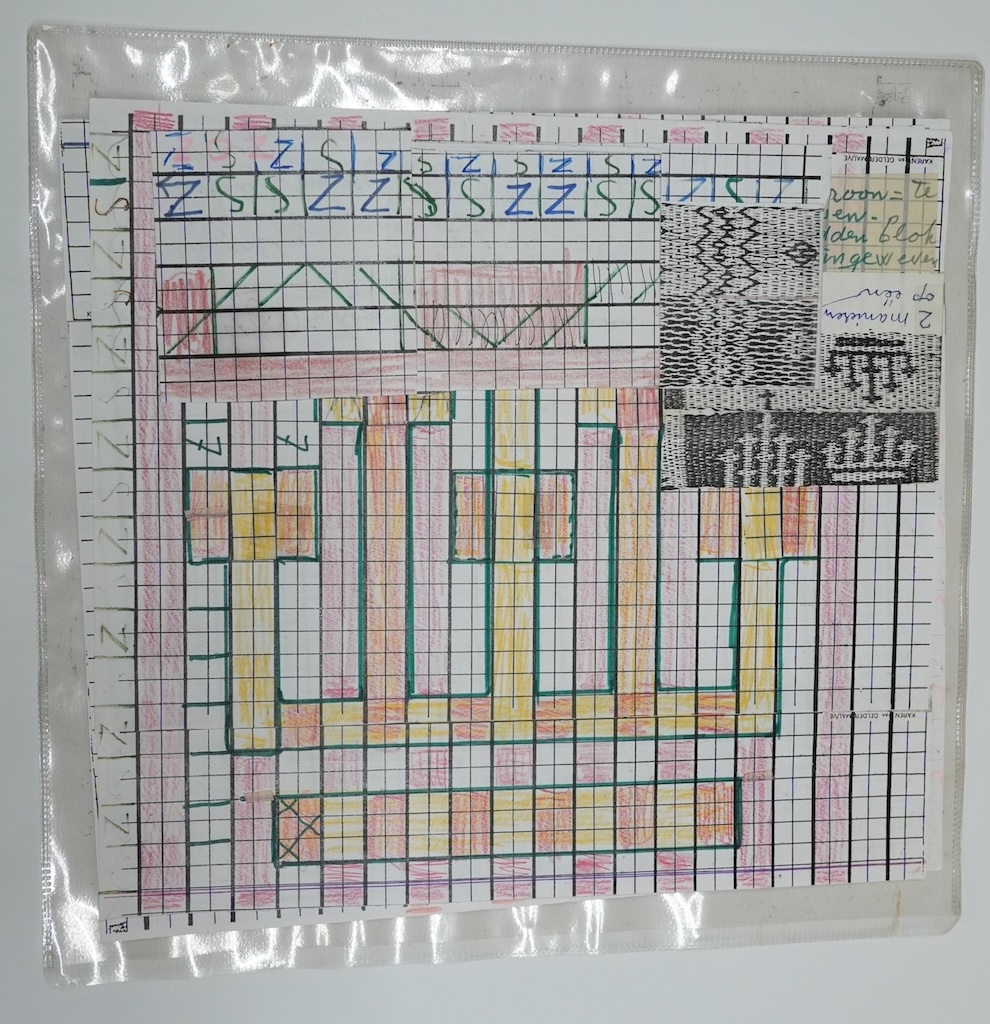 Woven band documentation from The Netherlands, with pattern diagrams and weaving instructions, 20th century (TRC 2020.5316.02).The Reference collection initially only included embroidered (machine and hand), lace (machine and hand), printed and woven samples. But over the years other items were added, such as raw fibres, threads, woven and non-woven forms, knitted forms, natural dyes, as well as printing and painting equipment, lace and embroidery forms and tools, and even written or drawn instructions.
There are also items such as sewing tools (needles, pins, scissors) and notions such as fastenings (buttons, hooks and eyes, zips, and so forth). Some recent blogs highlight this collection, such as on press studs, buttons, and pins and pin cushions.
The samples in the Reference collection are intended to help the identification of textiles and related items from a wide range of sources, including anthropological, archaeological, and historical items. In addition, they are an important part of the educational aspect of the TRC as these pieces form an essential element in the concept of a ‘handling collection’. Various elements of the reference collection will be made into online exhibitions, such as on sewing needles, and scissors and shears.
***
TURKISH COLLECTION
The TRC has a large and still growing Turkish textile and dress collection, which it is building up with the help of the Turkish community here in Leiden. The TRC’s collection is unique in that it holds some rare items, as well as a wide range of regional forms.
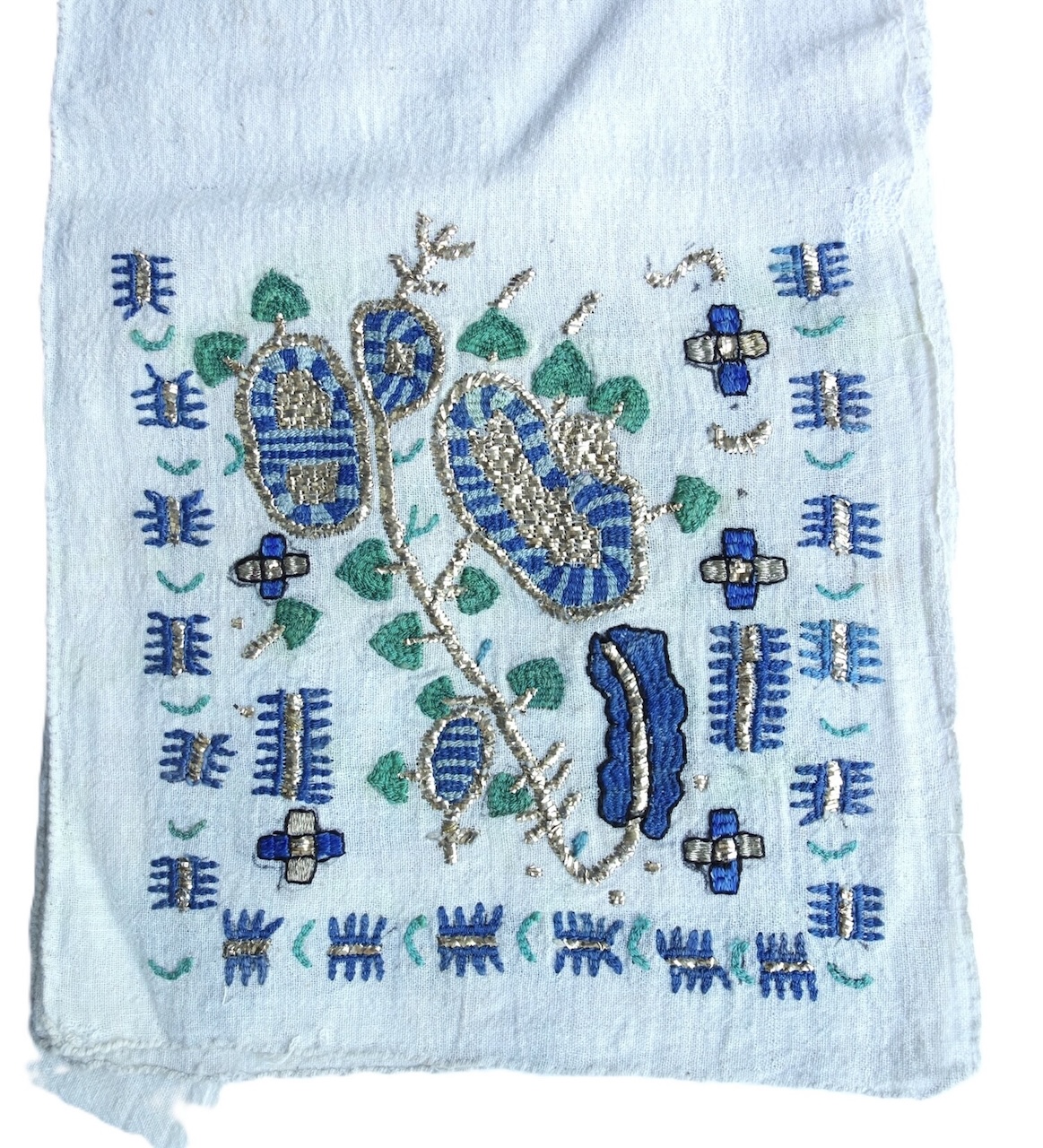 Detail of an embroidered sash for a Turkish woman, 20th century (TRC 2026.1434).In the 1970s, for example, Dr. Gillian Vogelsang-Eastwood was given a small box with even smaller fragments of semi-carbonised textiles from Çatal Huyuk, Anatolia. These were excavated during the 1963 excavations at the site. These tiny fragments of oak bast cloth are about 7500 years old and represent some of the oldest textiles in the world
In contrast, in 2025 the TRC was contacted by Jean-Marie Criel and Jos De Vrindt (Antwerp, Belgium) about a donation of about 2,500 Ottoman Turkish and regional Turkish textiles and garments. So far we have added over 1200 items to the TRC database and more items are being continually added.
For historical and indeed modern reasons, Türkiye (Turkey) is an important country, both within the European and Middle Eastern cultural worlds, and these items represent the main styles of men and women’s clothing, as well as regional variations. In addition, there is a large selection of embroidered pieces that fit in with the TRC’s work in building up an international embroidery study centre.
*****
OTHER AREAS OF INTEREST
AFGHAN TRADITIONAL DRESS AND JEWELLERY
Afghanistan has a diverse dress tradition for both men and women, which is based on ethnic and social status criteria. The TRC has a substantial collection of Afghan garments and accessories for men, women and children. A large portion of the TRC Afghan collection was assembled by Willem Vogelsang between 2002 and 2011. Most of these items date to the latter half of the 20th century and represent the main groups living in the country, including Baluch, Hazara, Nuristani, Pashtun, Tajik, Turkmen and Uzbek groups.
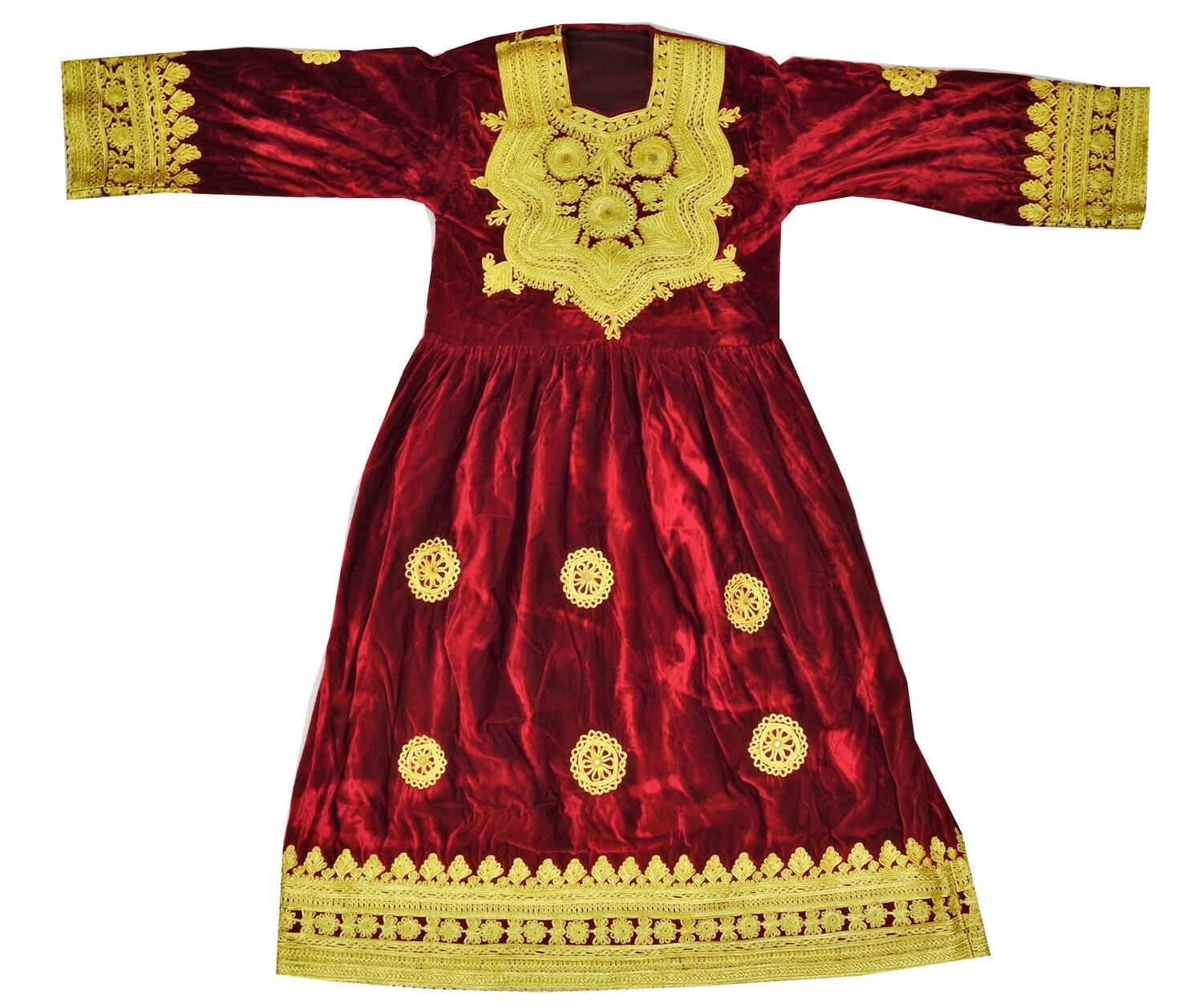 Pashtun woman's dress from Afghanistan, velvet with metal thread braid, 2007 (TRC 2007.0273b).In addition, the Afghan collection includes a range of embroidered cloths, some of which were used as covers, while others functioned as prayer cloths. Many of the TRC’s Afghan items were on display in an exhibition entitled 'Well-Dressed Afghanistan,' which was held at the TRC in 2010/2011. Furthermore, the TRC has published an online exhibition highlighting the TRC Afghan collection, which can be viewed here.
Thanks to a generous donation by May and Rolando Schinasi, the TRC is now home to an extensive collection of Afghan jewellery as well as items from surrounding countries. This unique collection was made by May Schinasi in the 1960s and 1970s before the development of the Hippie Trail and the tourist markets.
***
AMERICAN QUILTS
Thanks to the generosity of the American Embassy (The Hague) and Mrs. Sherry Cook (USA), the TRC is building up a representative collection of American quilts that date back from the 1830's to the present day. These items include quilts, quilt tops, as well as a wide range of materials (notably feed sacks) used for making quilts and other items. All of the TRC’s quilts can be found on the Quilt Index hosted by the Michigan State University.
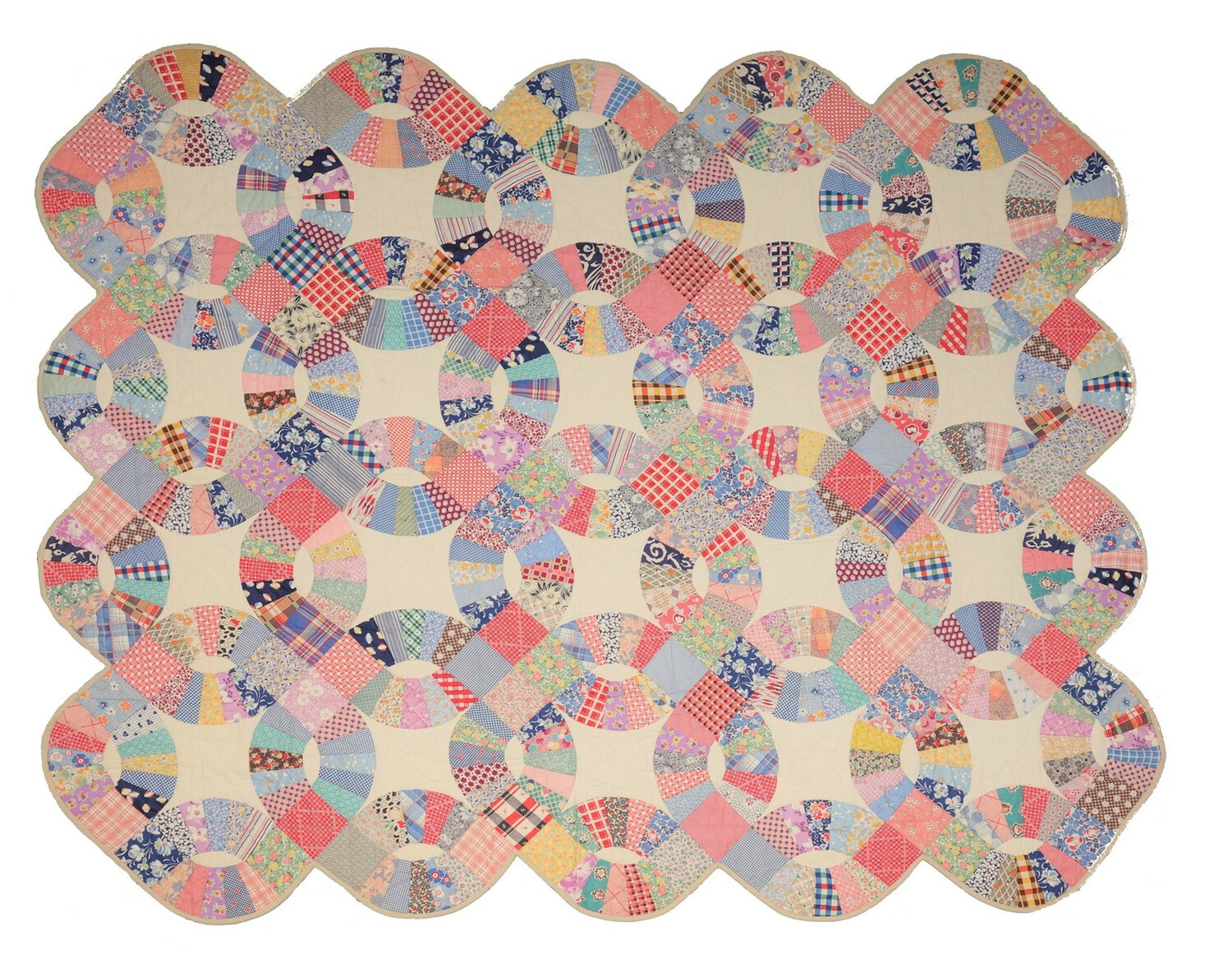 Double Wedding Ring quilt; the top was made in the 1930s, and it was finished in the early 21st century. USA (TRC 2021.1621).
***
ARAB WORLD
The TRC Collection includes a wide range of textiles from the Arab World, including Morocco, Tunisia, Egypt, Oman, Palestine, Saudi Arabia, Syria, and Yemen. These sub-collections include:
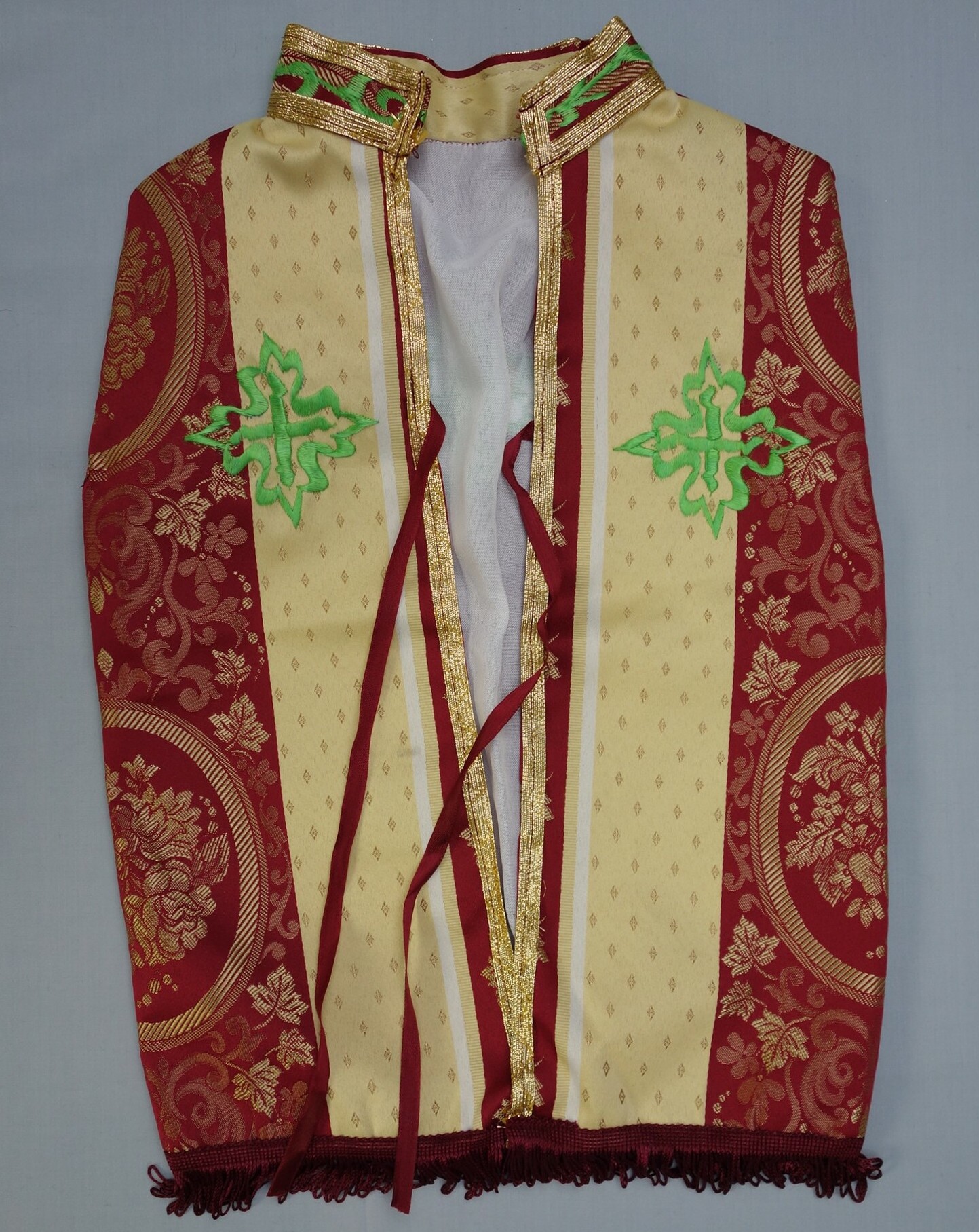 Coptic cape for the Christening of a boy, 2001 (TRC 2001.0248).COPTIC MONASTIC OUTFITS: Since the 1990s the TRC has been actively collecting male and female ecclesiastical, monastic and secular dress and accessories of the Coptic community in Egypt.
This work has been primarily carried out by Dr. Karel Innemée and Dr. Tineke Rooijakkers. The garments include all the levels from novice to bishop, for both male and female monastic professionals. Many of these items wiere on display in an exhibition about Middle Eastern dress and identity held at the TRC in early 2017.
This exhibition was partly based upon a PhD thesis on the same theme that was s written by Tineke Rooijakkers (defended at University of Amsterdam in 2016). An TRC online exhibition on Middle Eastern minority clothing, called 'From Kaftan to Kippa,' can be viewed here.
EGYPTIAN APPLIQUES: The TRC collection of Egyptian appliqués from the Street of the Tentmakers in Cairo has been built up since the 1980s.
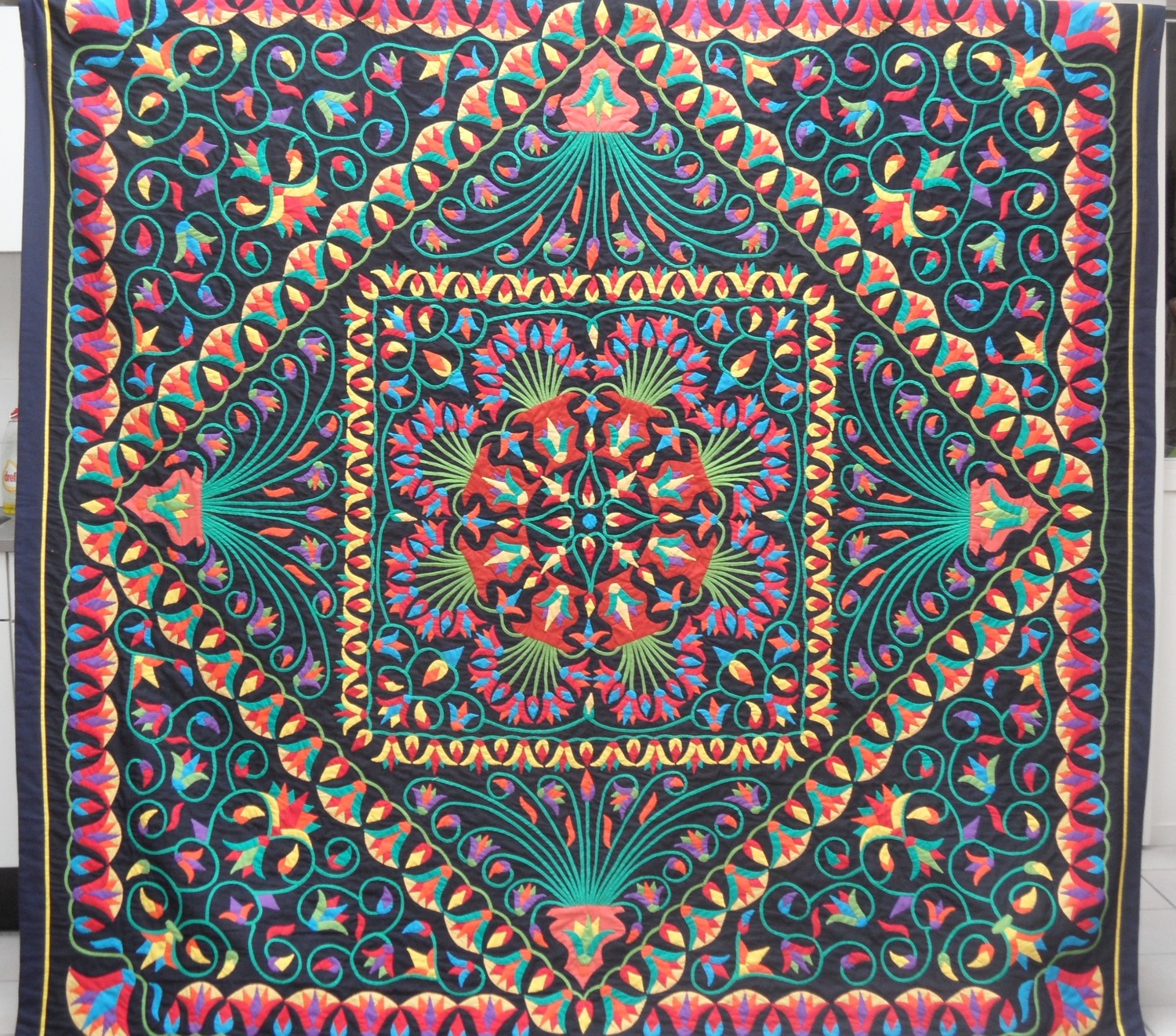 Appliqué panel from the Street of the Tentmakers, Cairo, Egypt (TRC 2013.0443).A large number of appliqués were purchased in 2013-4 in order to have a series that represent the main types of appliqués produced in the Street and for an exhibition held at the TRC in 2015 celebrating the history of the Street, the men who work there and their products. A second exhibition on the theme of khayamiya was held in 2026 that included the research of Christine de Korte, a TRC intern, who worked on the Street and bought new insights and objects.
The TRC has 116 related examples in the Collection that range from simple squares, to wall hangings that are over 2 m square in size. In addition, the TRC has a small collection of the equipment used to make the appliqués, including paper patterns, cloth, needles, and even the type of thimble preferred by the appliqué makers. The TRC has also published an online exhibition on the appliqués, which can be viewed here.
EGYPTIAN REGIONAL DRESS:Since the 1990s the TRC has been deliberately acquiring Egyptian regional dress with the aim of creating a collection that represents many of the ethnic and cultural groups living in this vast country. Currently the Egyptian regional dress collection includes a range of urban, village and Bedouin garments, including items from various oases, notably Siwa, and the Sinai.JOSEPHINE KANE COLLECTION OF ARAB DRESS: Thanks to the help of the Prins Bernard Cultuur Fonds, the TRC was able to acquire the Josephine Kane collection in 2005. The majority of items in the collection were from Saudi Arabia, where Mr. and Mrs. Kane worked in the early 1980s. In addition, there were items from Afghanistan, Oman, Palestine and Yemen. Most of the garments were for women and included elaborately embroidered dresses.
Many of the embroidered items from the Kane collection have been illustrated in the Encyclopedia of Embroidery from the Arab World (Gillian Vogelsang-Eastwood, London: Bloomsbury, 2016).
OMANI REGIONAL DRESS: Since the 1990s the TRC has been deliberately building up its collection of Omani regional dress. Thanks to the very kind donation of garments by the Oman Embassy, The Hague, the TRC collection has most of the main types of garments worn in the country. Many of these items were displayed in the Nieuwe Kerk (Amsterdam) exhibition, simply called Oman, that took place in 2009-2010. In addition, various embroidered items from the Omani collection are used in the Encyclopedia of Embroidery from the Arab World (2016).
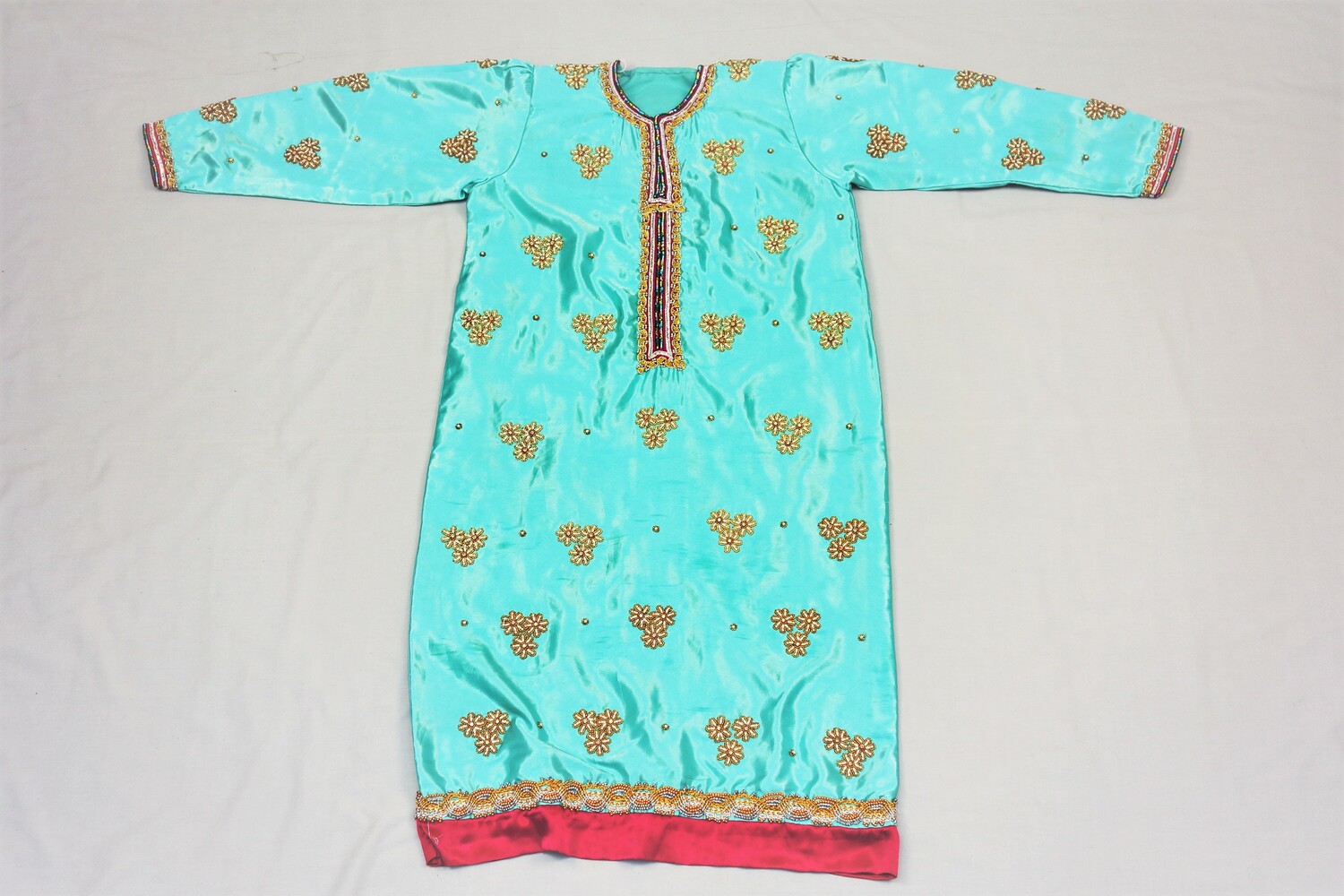 Long dress (tunic) in turquoise satin decorated with metallic thread bands and embellished with fake pearls and diamonds, surrounded by small gold and silver coloured beads. Gift of the Omani Embassy in he Netherlands, 1999 (TRC 1999.0296).
PALESTINIAN DRESS: The TRC includes Palestine 150 textiles and garments, which range in date from the late 19thcentury to the present day. These include iconic garments such as Bethlehem, Beit Dajan, Majdal and Ramallah embroidered dresses, as well as so-called Flag Dresses made by ANAT in Syria for Arab women who wanted to show their support for the Palestinians.
 Saudi Arabian bride's cloak (bisht), 1980s (TRC 2006.0041).SAUDI ARABIAN REGIONAL DRESS: Thanks to the help of the Prins Bernard Cultuur Fonds, the TRC was able to acquire the Josephine Kane collection of Arabian Peninsula dress in 2005. As a result of this purchase the TRC now has a diverse collection of Saudi Arabian regional dress. The garments are primarily for women, but men’s outfits are also represented. They include items for both urban, village and Bedouin groups. The latter include the Beni Malik, Beni Tamin, and Beni Said garments.
Among the urban garments is a dress woven with gold and silver that was worn by a Saudi princess to a wedding in early 1980s. Around the hem of the dress is a woven text in Arabic saying that the cloth was made for the Saudi royal family.
Many of the TRC Saudi Arabian garments were on display in an exhibition called Flowing Robes: Clothing and Jewellery from Saudi Arabia, which was held at the National Museum of Ethnology, Leiden, in 2006-2007. In addition, various embroidered items from the TRC Saudi Arabian collection are used in the Encyclopedia of Embroidery from the Arab World (Gillian Vogelsang-Eastwood, London: Bloomsbury, 2016).
 Woman's head covering from Yemen, decorated with coral beads, metal chains and embroidery, late 20th century (TRC 1997.0203).YEMENI REGIONAL DRESS: Among the items in the Josephine Kane collection that was acquired by the TRC in 2005, there were a number of dresses from Yemen. This part of the TRC collection has been increased since then thanks to the help of Paul Spijker (Toguna, Amersfoort) and Alison Elliot, with the help of the Al Buraai family in 2013. The Elliot/Al Buraai collection included twelve dresses from different parts of Yemen.
Many items from the TRC Yemen collection went on display at the TRC in an exhibition called Dressing Sheba: Glittering Garments and Jewellery from Yemen. This exhibition took place in 2015 and resulted in various people bringing Yemeni items for the Yemen collection, including an intriguing dress with long train from the island of Socotra.
In addition, various embroidered items from the Yemeni collection are used in the Encyclopedia of Embroidery from the Arab World (Gillian Vogelsang-Eastwood, London: Bloomsbury, 2016).
***
ASIA COLLECTION:
The TRC is gradually building up an Asian textile collection that will include items from India to the Philippines. This aspect of the TRC Collection is being actively supported by people such as notably Ruurdje Laarhoven (Philippines) and various relevant embassies here in the Netherlands. Thanks to various recent (2025-2026) donations the TRC collection includes a diverse range of textiles and garments from Laos, Myanmar, Thailand, as well as Vietnam (North and South).
In particular, the Chinese and Japanese collections are acquiring depth and diversity thanks to the help of people such as Quirina Vreeburg, Naoko Kikuchi, Steve Wood and Marianne Kooimans, Hélène van Spaendonck, and the Amsel Family.
CHINESE COLLECTION: The China collection includes nearly 2,500 items of Chinese origin, including Han and other ethnic groups such as the Dong, Huang, Miao, Yao, and Yi.
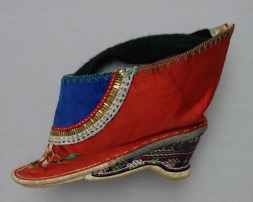 Lotus shoe from China, c. 1900. 12 x 10 cm (TRC 2013.0060).Since 2007, for example, the TRC has been building up a collection of lotus shoes, the minute shoes worn by mainly Han Chinese women up to the early 20th century. Thanks to the help of Th. Kuik and Q. Vreeburg the TRC collection includes over 60 examples of lotus shoes that not only includes a range of shoes from different parts of the country, but they also represent different moments, such as weddings, funerals, burials, and so forth.
In addition, items relating to the production of lotus shoes including a range of tools, are included in the collection. Many of these shoes were on display in the TRC exhibition (2012/2013) about decorative and protective footwear. The TRC has also developed an online exhibition on the same subject.
JAPANESE COLLECTION: In the spring of 2024 the TRC had a crowd funding event and thanks to the generous support of many people and groups, including Leiden Council, the TRC was able to obtain a collection of 230 Japanese jackets (haori) and kimono for both men and women. These were used in two exhibitions, one on the subject of jackets (for men and women), and the second on shibori (resist-dyeing) and shibori jackets. Since then the Japanese collection has been increased to nearly 1800 items thanks to various generous donations.
***
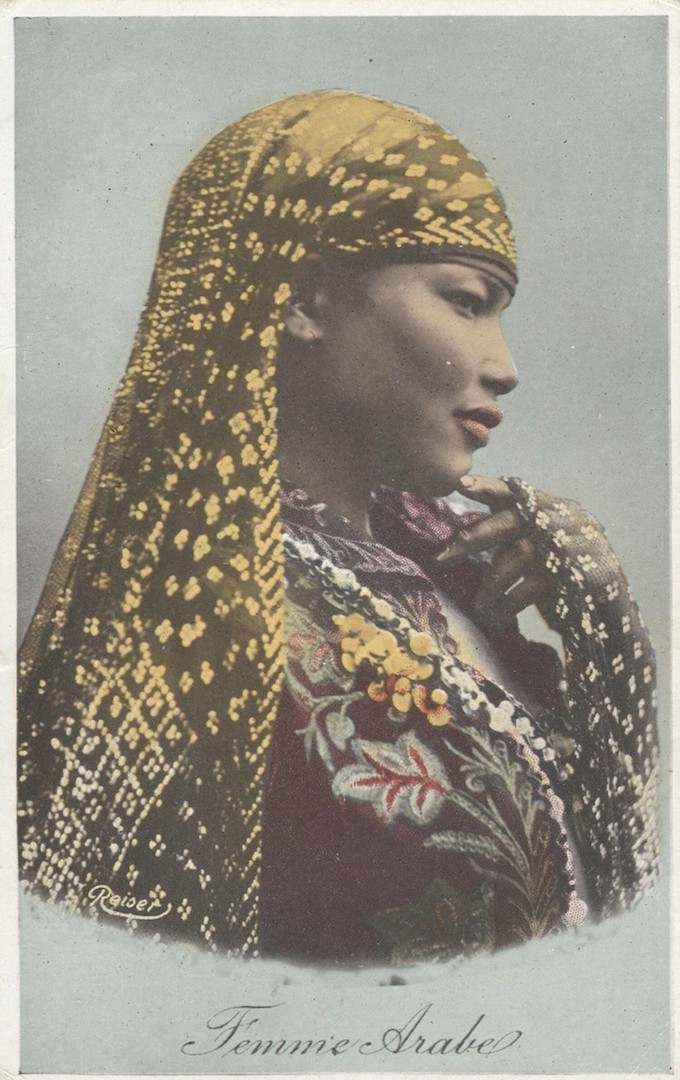 Early 20th century postcard from Egypt with a woman wearing an embroidered dress with necklaces, and a large black mantle decorated with metallic knots ('tulle-el-telle', 'badla') (TRC 2017.1844).BADLA COLLECTION
The use of a narrow, flat metal thread (plate, lamella) to create various knotted effects can be found in India, southern Iran and Egypt. Its production used to be more widespread, but the skills needed to create these works are quickly vanishing.
Since 1990s the TRC has been building up a collection of badla from India and the Middle East, including headcoverings and shawls from Egypt, Iran, Lebanon and Turkey. This technique is known as telli in Lebanon and Syria, tulle el-telli in Egypt and khus-duzi in Iran.
The Indian pieces in the TRC collection include items made for the home market (notably saris) and for export, such as a badla overdress for an Omani Bedouin woman. In the TRC badla collection there is also a special item, namely a 1920s European flapper dress made from two Egyptian shawls decorated in the badla manner.
***
CHARLESTON LETTERS
The TRC has a collection of letters written in the 1940s by Robert J. Charleston (1916-1994) to various leading textile authorities of the period. Mr. Charleston was the Keeper of Ceramics and Glass at the Victoria and Albert Museum in London. He helped to build up the collection that is considered to be one of the most comprehensive in Europe.
Charleston also had another, less well-known passion, namely textiles. The Charleston collection includes letters to and from pioneering archaeologists such as Sir Mortimer Wheeler, Grace M. Crowfoot, and R. Pfister, among others. The letters, written during and shortly after the Second World War, reveal a remarkable pan-European scholarly cooperation among British, German, French, Italian and Hungarian researchers. Mr. Charleston gave the letters to Dr. Gillian Vogelsang-Eastwood, director of the TRC, in May 1985 and they were given to the TRC some years ago.
***
DUTCH REGIONAL DRESS
The TRC has deliberately been collecting examples of Dutch regional dress, and thanks to the help of the Cultuur Fonds (national and Zuid-Holland branches), the TRC holdings are becoming substantial and represent the main regional forms and many of the more ‘obscure’ types.
The basic collection was purchased from the Dutch collector, Herman Roza, but it has been enriched by many donations of individual or small groups of regional dress.
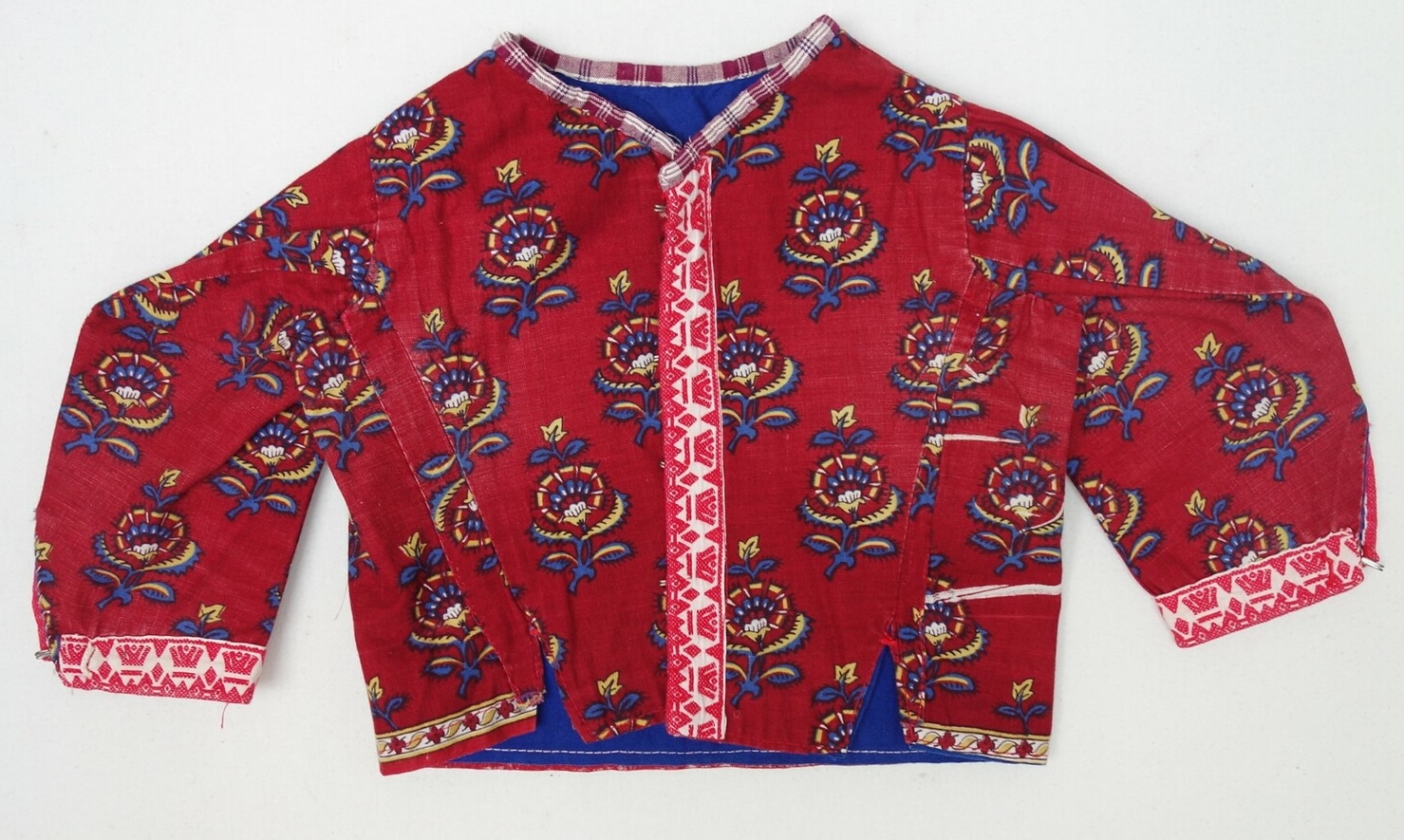 Child's jacket from the island of Marken, The Netherlands, late 20th century (TRC 2006.0106).
A collection of Dutch lace caps from the collection went on display in Jordan in 2011. They were exhibited at the National Gallery of Art, Amman, with a wide variety of Jordanian and Palestinian forms of headgear for women. This exhibition was created with the help of Mrs. Widad Kawar (Amman) and the Dutch Embassy in Amman. Lace caps from the Rijnland region was the focus of a TRC exhibition in February 2022.
***
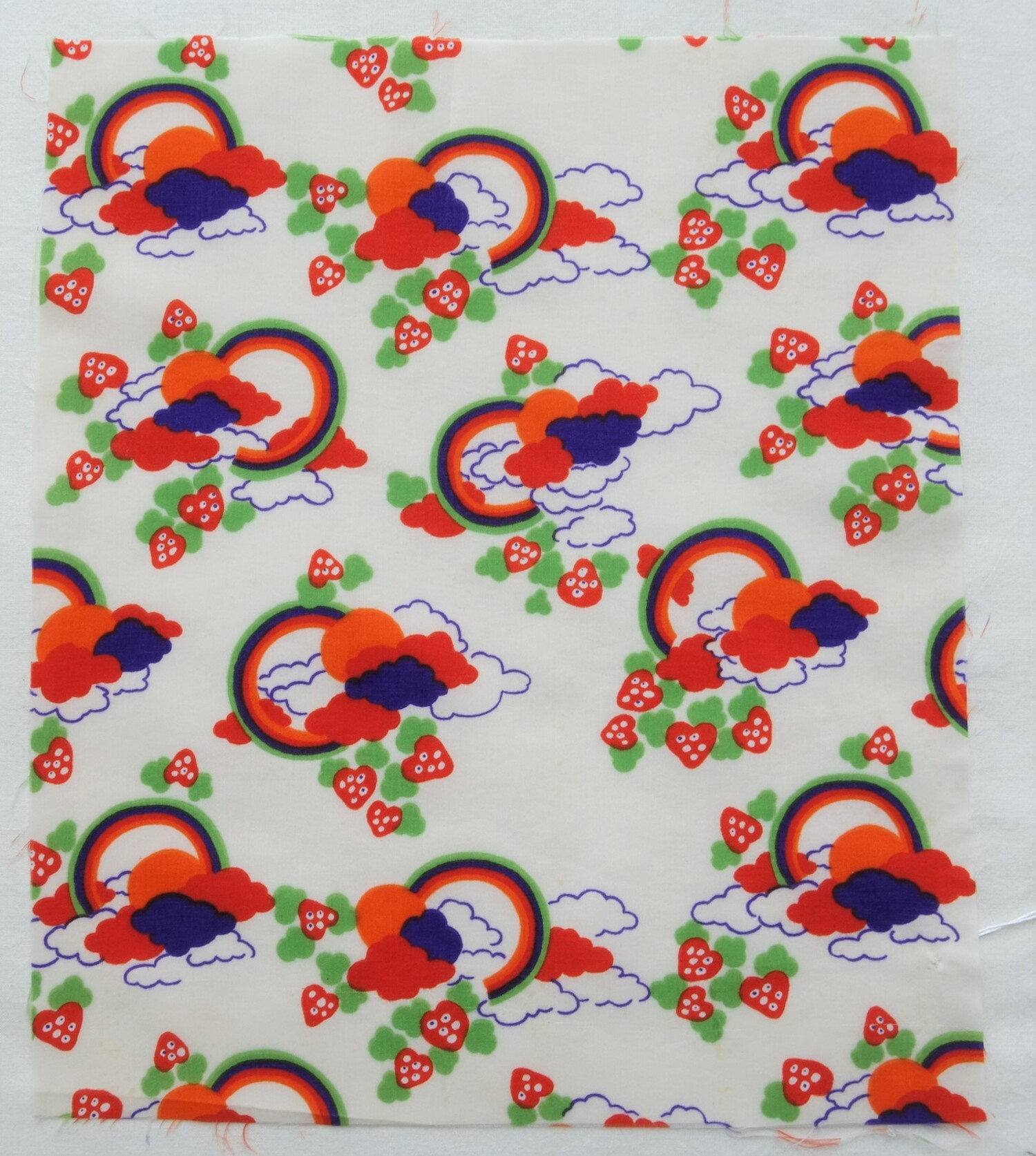 Printed sample from the 1930s, Europe (TRC 2021.1621).EUROPEAN PRINTED TEXTILE DESIGNS
In 2017 a publisher and friend of the TRC, Pepin Roojen from Amsterdam, decided to stop publishing books about textiles and clothing and move over to other printed forms. As part of his ‘tidying up’ he gave the TRC a number of ethnic garments, and thirty boxes of Western printed, woven and embroidered textiles. These were originally the property of Professor Cuvelier from Paris, an expert on art and design, Professor of Art/Design, and were used as a source of inspiration.
So over 8,000 of these textiles (under the key words: Cuvelier-Pepin Collection) have been photographed and put online with basic information. Most of these objects are printed samples with a wide variety of designs and colourways. They represent the history of European printing from about 1900 to 1980.
Examples of 20th century printed textiles with the paisley motif featured in the TRC exhibition Paisley: The History of a Global Icon. A new TRC exhibition
***
EUROPEAN REGIONAL DRESS COLLECTION
Thanks to the donation of a unique collection of European regional dress by Mrs. M. Kircher (Germany), the TRC now has A wide range of garments for men and women from Scandinavia to Greece. Most of the items date from the late nineteenth to the mid-twentieth centuries, or slightly later. In particular this sub-collection is strong in German regional dress.
The TRC already had a collection of Dutch regional dress, but the Kircher donation means that this part of the TRC Collection is now much stronger and varied. In addition, the range of bonnets and lace caps from The Netherlands and neighbouring countries has been added to and now represents a substantial part of the TRC holdings. Many of these items are displayed in the TRC’s exhibition: From Sweden to Sardinia: Embroidered garments from Europe (August 2016-February 2017).
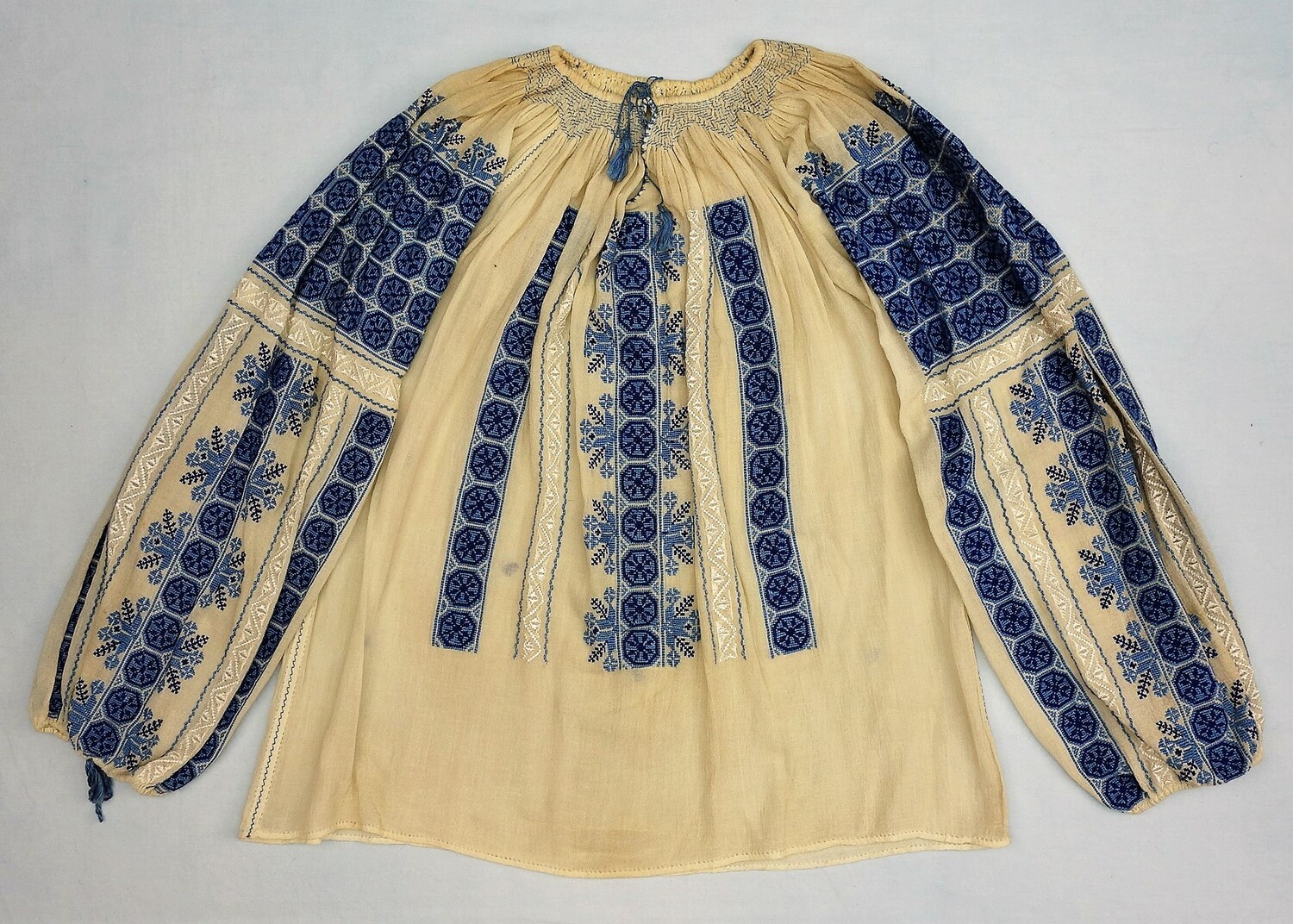 Hand embroidered woman's blouse from Germany, 1930s (TRC 2011.0106).
Then in 2022 the TRC was given three collections that included many items of central and Eastern European regional textiles and dress, namely the David and Bonnie Naifeh Smith donation, the Monique Amsel donation and the May Suykerbuick collection. These donations mean that the TRC has one of the largest and most diverse collections of European dress in Europe. Another donations of relevant garments was given in 2026 by Monique Amsel.
***
 Grace Crowfoot, 1879-1957GRACE CROWFOOT COLLECTION:
Over the last few years the TRC has been building up a collection of items and photographs associated with one of the founding figures of archaeological textile studies, Grace Crowfoot.
Thanks to the generosity of her grandson, John Crowfoot, the TRC now has her collection of spinning and weaving equipment acquired in Egypt, Palestine and Sudan in the 1920s. It also includes her trial pieces for copies of woven textiles from the tombs of Tutankhamun and St. Cuthbert.
***
GUATEMALAN AND MEXICAN COLLECION
Thanks to the generosity of Charles and Carolyn Knobler, Los Angeles, the TRC Leiden has a diverse collection of over 200 Guatemalan and Mexican textiles and garments. These pieces are special because the two collectors were careful to note where many of the garments came from and this acts as a reference collection for other items from Central America.
In addition to the various villages and towns, the garments represent woven and embroidered forms associated with both men and women’s clothing.
 Boy's garment with woven decoration from Guatemala, 1955 (TRC 2020.4573).
***
HAND SPINNING EQUIPMENT
An important theme within the TRC is pre-industrial textile technology, with an emphasis on hand spinning. Over the years the TRC has built up a collection of traditional and modern hand spindles and distaffs from around the world. These include items that take on many different forms, but all of which are intended to spin raw fibres of various forms. In 2014 this collection was enriched by the addition of the hand spindles and distaffs acquired by the famous textile archaeologist, Grace Crowfoot, between 1920-1930, while she lived in Egypt, Palestine and Sudan.
***
KANGAS
The first exhibition staged at the TRC in 2009, after it had moved to its new premises along the Hogewoerd in Leiden, was about a special type of cloth worn by women in East Africa and Oman called a kanga. These wrap around garments always have a saying in Swahili printed on them. These sayings can be both apt and pithy at times.
 Kanga from Tanzania with the image of President Barack Obama, 2015 (TRC 2015.0350).
The TRC collection of kangas has steadily grown since then and now includes over 140 items, including kangas and related garments collected by Marloes van der Bijl in Zanzibar (2005), some examples purchased in Oman in 2006 and a more recent donation of kangas by Kate Kingsford (2015). In December 2020 a small collection of kangas depicting the buteh/paisley motif were acquired in Tanzania and later displayed in the TRC exhibition “Paisley: The History of a Global Icon” (2026).
***
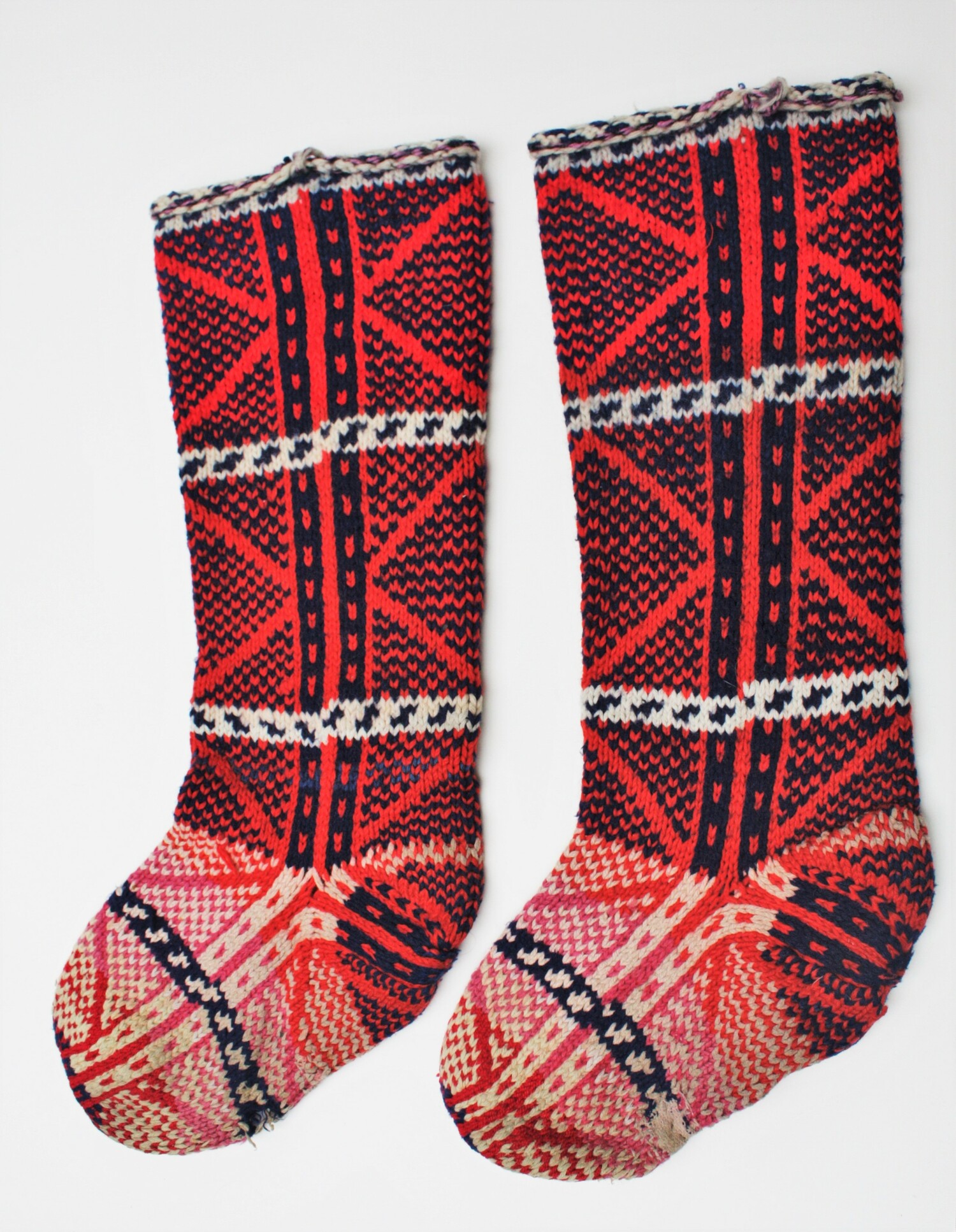 Hand-knitted Hazara socks from Central Afghanistan, late 20th century (TRC 1997.0042a b).Hand knitting
Several of the TRC volunteers are fanatic hand knitters and are building up this part of the TRC Collection, both with respect to the main object collection and the reference collection.
So far there are nearly 1200 hand-knitted items in the TRC collection They range from complete garments, headwear, gloves, shawls, to stockings and socks. There is also a range of samples illustrating different techniques and stitches. One of the samples is a rare, knitted sampler dating to 1791 (TRC 2106.2261). There are also examples of knitting needles and gauges.
***
THE LEIDEN CONNECTION
The TRC is building up a collection of items that relate to Leiden history. These items range from 17th century lead seals placed on woollen textiles (perhaps the famous Leiden laken, 'broad cloth') to modern flour sacks from the De Valkwindmill. The collection also includes garments and accessories worn by people who have lived in Leiden, as well as items that reflect Leiden's long history. Also interesting are a coachman's outfit from about 1900, as well as outfits worn by members of the Drie October Vereniging.
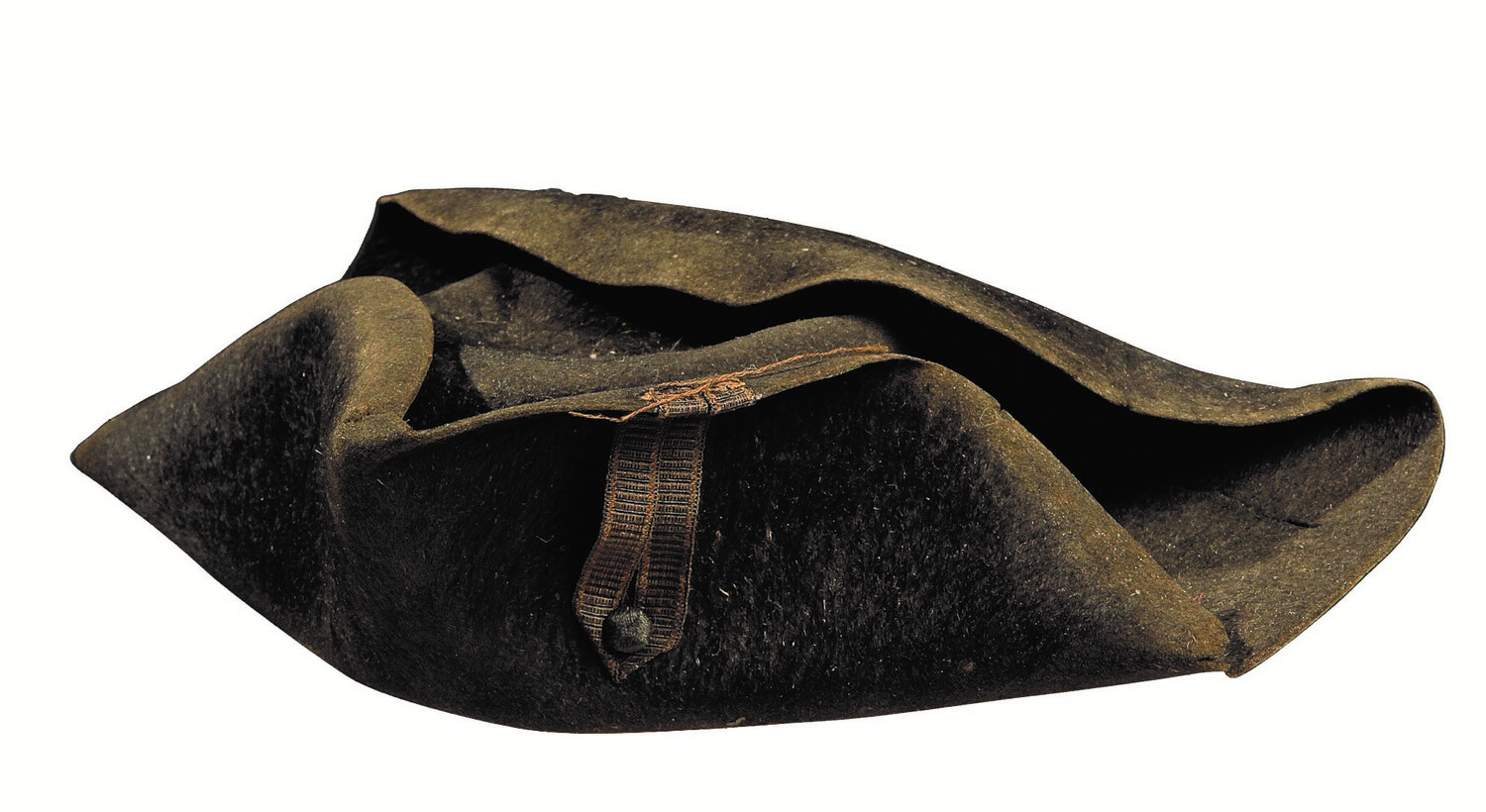 Miniature bicorn hat, made for a journey man's examination, Leiden 1796 (TRC 2010.0056).
One of the most intriguing items, however, must be the Leiden Hat, which is a miniature hat made by Hendrik Visser from Leiden, in 1796, as part of his journeyman examination. The hat comes with a hand written certificate. The Leiden Hat Maker's Guild, that ordered the hat to be made, was abolished by Napoleon in about 1810 and this is the only extant direct evidence of the guild's activities.
***
SILK POSTCARDS
The TRC has a small holding of silk embroidered postcards dating from the First World War (1914-1918). These are often said to be hand embroidered, but they are made on a machine called, somewhat confusingly, a hand-embroidery machine, which deliberately copied the appearance of hand embroidery.
 Embroidered postcard from the First World War, with the Belgian, British, French and Italian flags (TRC 2015.0419).
A mini-exhibition about these cards and how they were made was held at the TRC in November 2015 in order to commemorate the ending of the war in November 1918. This collection has been made possible thanks to the help of Dr. Ian Collins. The TRC has also published an online exhibition on this theme, showing the TRC collection of postcards, which can be viewed here.
***
SUB-SAHARAN AFRICAN TEXTILE TECHNIQUES
In 2014 the TRC held an exhibition called 'The Silhouette of Africa: Colours and patterns of textiles and garments from Sub-Saharan Africa.' It focussed on many of the traditional textile techniques to be found on the African continent.
 Mapula embroidery, South Africa 2021 (TRC 2021.2542).This exhibition included many items from the TRC collection in order to describe and discuss different fibre types (notably bark cloth, cotton textiles, human hair), dyed, embroidered, printed and woven forms from various groups currently living in sub-Saharan Africa.
Items from the TRC collection include garments and textiles from West Africa (Ghana, Mali, Senegal, Sierra Leone), Central Africa (The Democratic Republic of Congo), and East Africa (Ethiopia, Kenya, Tanzania, Zanzibar), including items used by the Massai.
Since the exhibition more items from the DR of Congo have been added to the TRC Collection, such as samples of the bark cloth (9 pieces) and a range of raffia textiles(c. 50 items) from the DR of Congo. The latter are often called Kuba ‘velvet’, which is a specific form of embroidery that is often worked in a combination of loops and flat stitches worked in black, red, and white raffia. In addition, there are also examples of raffia appliqué work. In addition, the Sub-Saharan African collection has also been enriched by several Fante Asafo and Fon appliqué flags from West Africa.
Various items from this collection appeared in the Encyclopedia of Embroidery from Sub-Saharan Africa (Gillian Vogelsang-Eastwood and Willem Vogelsang, Bloomsbury 2022).
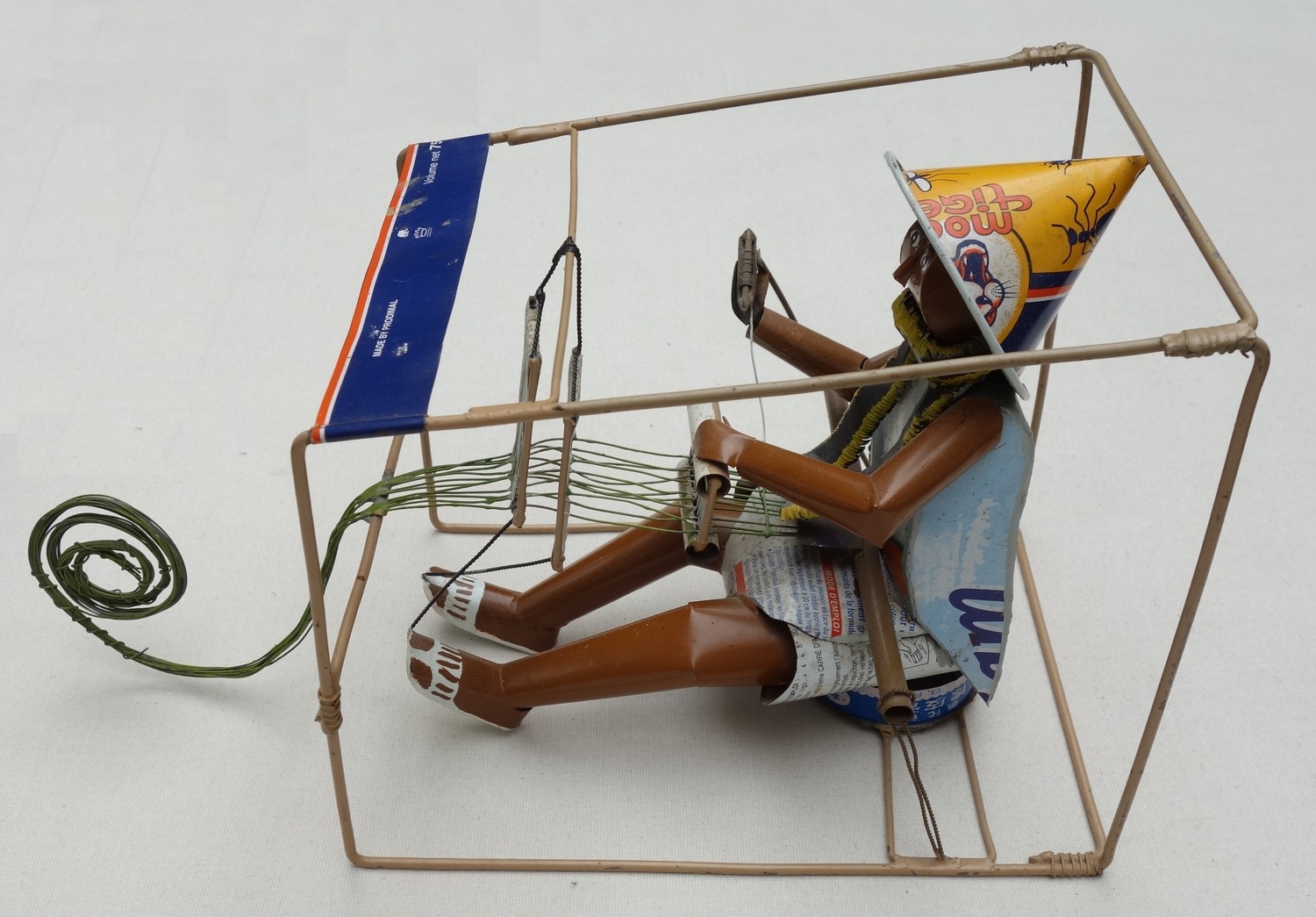 Model of a man working at a frame loom made from old pieces of tin cans and metal strips. Mali, late 20th century (TRC 2023.1212).
***
VAN GERWEN COLLECTION
The TRC Collection includes over 1,000 items of velvet, garments or related items. The oldest pieces date to between 1400s and 1700s. More modern examples are mainly 20th century in date. There are various forms of velvet of included in the collection, including plain, crushed, embossed, cut and uncut forms (cisele), voided, and examples that include metal threads in the ground (plate, wire, passing). In addition, there several examples of ikat velvet from Uzbekistan, one of the more intriguing forms of velvet.
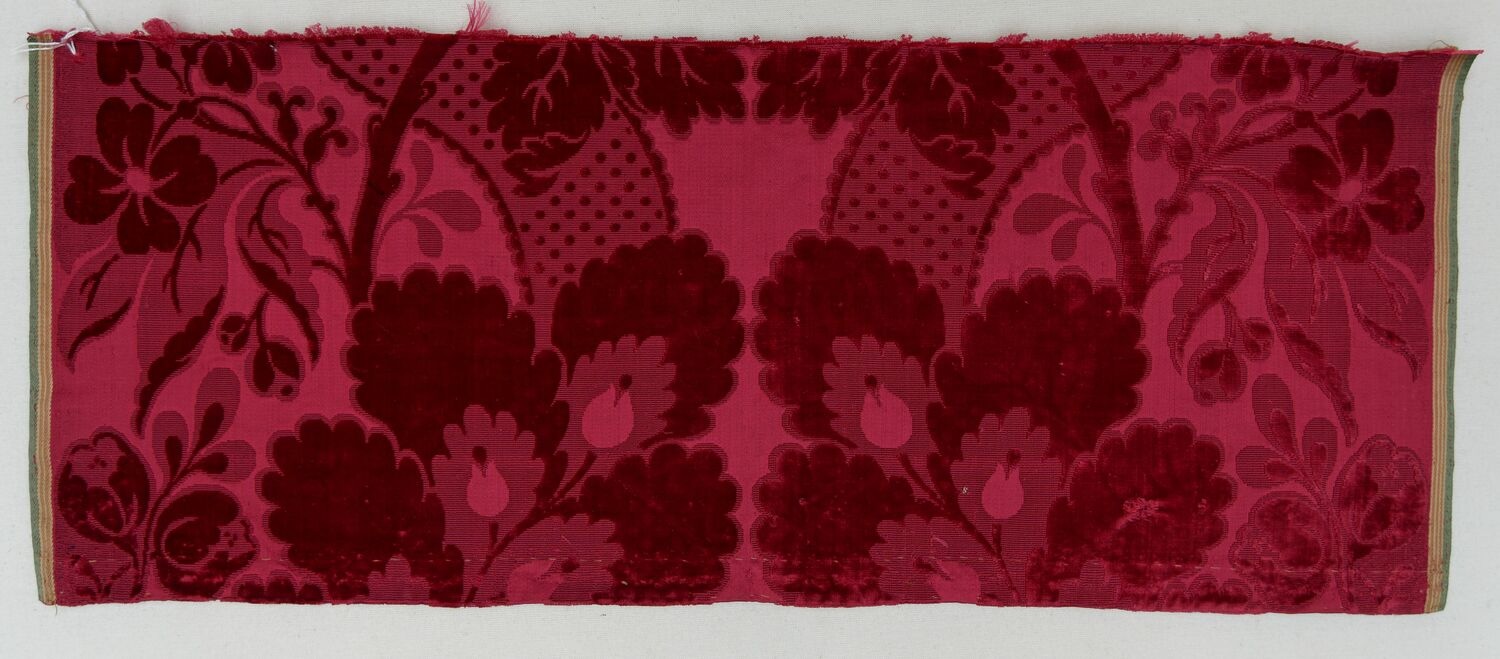 Sample from the TRC/Van Gerwen collection of 18th century silk cut and uncut velvet with a voided ground, Europe (TRC 2011.0389).
An important addition to TRC's velvet collection was the donation in 2011 of a group of European silks and velvets by the Van Gerwen family. There are thirty examples of early velvets that probably date back to at least the fourteenth century with most of the pieces dating to the seventeenth and the eighteenth centuries (with a few nineteenth century copies of earlier forms). These items were part of the Museum Van Gerwen-Lammens (Valkenswaard, The Netherlands) collection, a private museum dedicated to medieval and later ecclesiastical art. Sadly, the museum closed its doors in 2008.
The textiles in question come from various countries, including France, Italy, Spain and possibly The Netherlands. They give a fascinating picture of the range of designs and colours used over a 300-year period for (expensive) textiles. These textiles are currently being studied with the aim of creating a digital catalogue dedicated to these items and comparative examples in other collections.
Some of these textiles are included in the digital TRC exhibition: Velvet (see below).
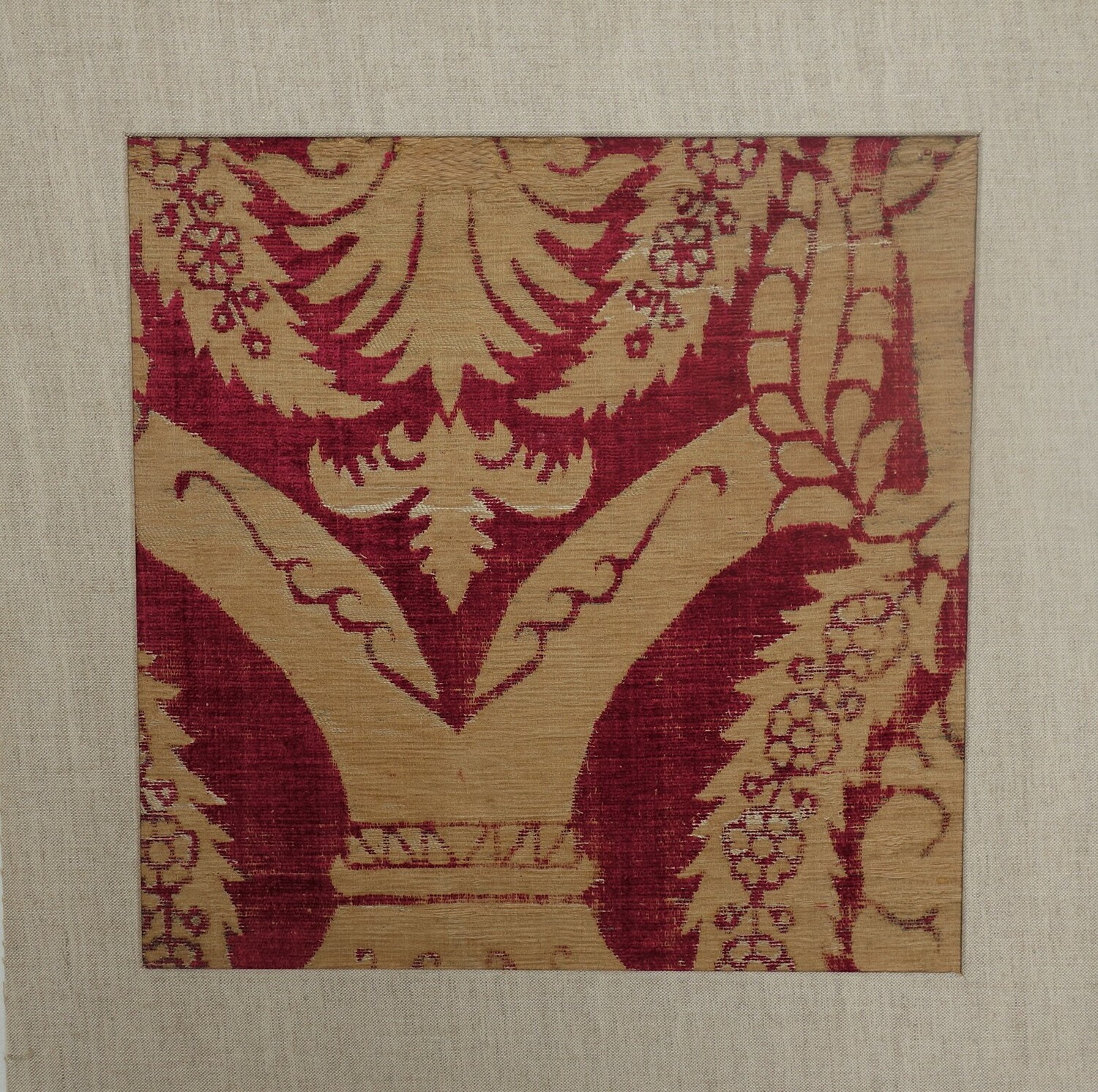 Velvet sample from the (late) 15th century, TRC/Van Gerwen collection (TRC 2011.0362).
***
VEILS AND VEILING
For many years the TRC has been building up a collection of face veils from the Islamic world. These include both modern and traditional forms, which are made in a wide range of shapes, sizes and materials. These items represent the very diverse nature of face veiling that can be found from North Africa to Central Asia and show how culture plays such an important part in the form of face veil worn. Many of these items were published in the book, Covering the Moon: An Introduction to Middle Eastern Face Veils (Gillian Vogelsang-Eastwood and Willem Vogelsang, Leuven: Peeters, 2008).
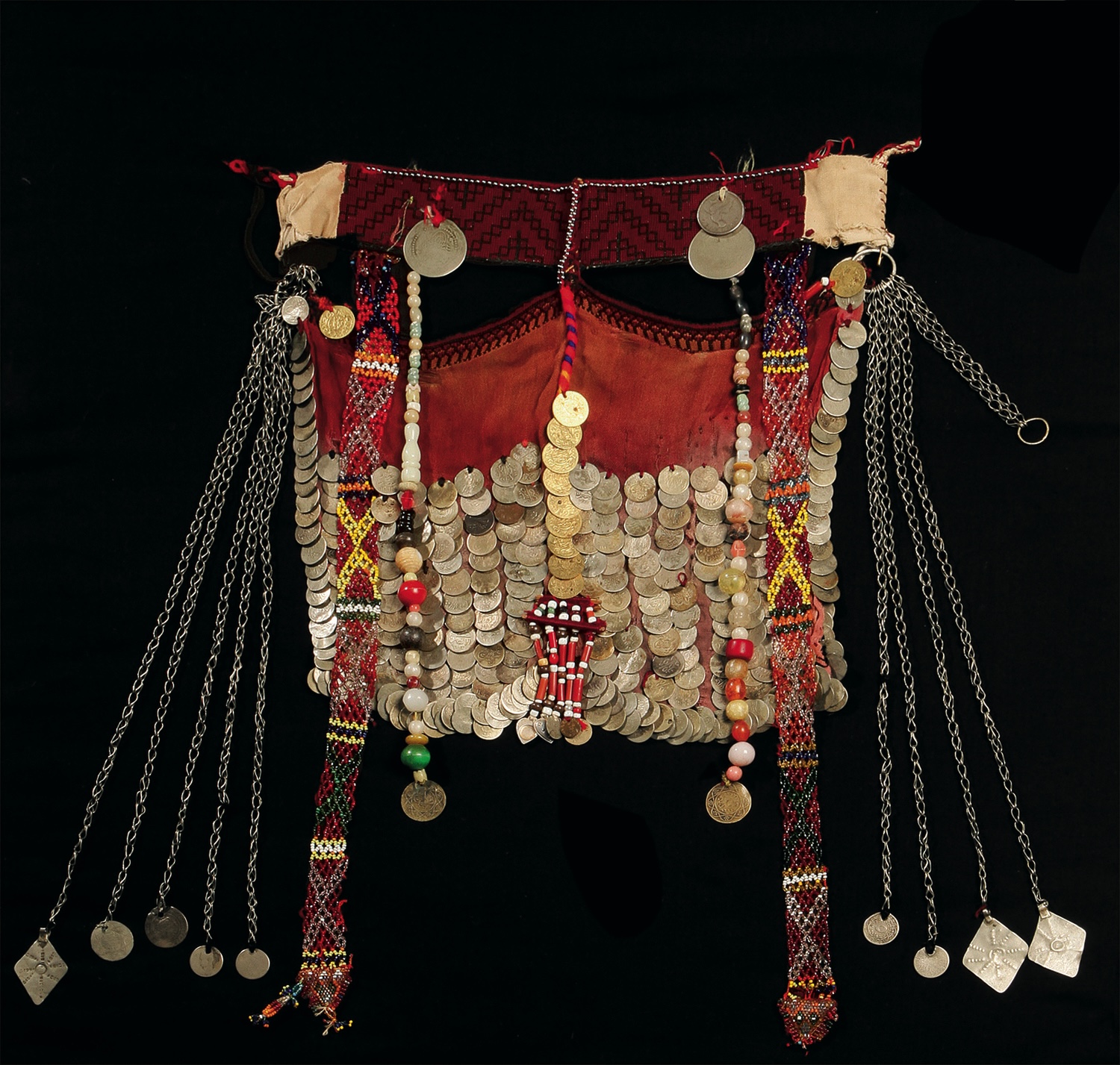 Beduin woman's face veil from the northern Sinai, Egypt, probably mid-20th century (TRC 2002.0018).
*****
SUPPORTING MATERIAL
In addition to the actual objects, such as textiles, garments and jewellery, the TRC also has a growing collection of books, prints, photographs, embroidery charts, etc. These have been divided into:
 French print from 1840 depicting three fashionable men in daily, riding and evening wear (TRC 2023.1497).PATTERN LIBRARY
Thanks to various donations, including that of the former Naaldkunst Museum, Winschoten (Hennie Stevan-Bathoorn and Sjoerd Stevan donation), the TRC now has a growing collection of over 300 charts and patterns for garments, embroidery, crochet, knitting, etc. These are being scanned and added to a special Pattern and Chart Library, which will be available to consult both online and in the TRC Library.
***
PRINT COLLECTION
This includes 18th to 20th century prints that include technical details such as looms, needle making and button making, as well as prints from a variety of fashion magazines, which are used to illustrate articles, blogs, books, theses, as well as exhibitions.
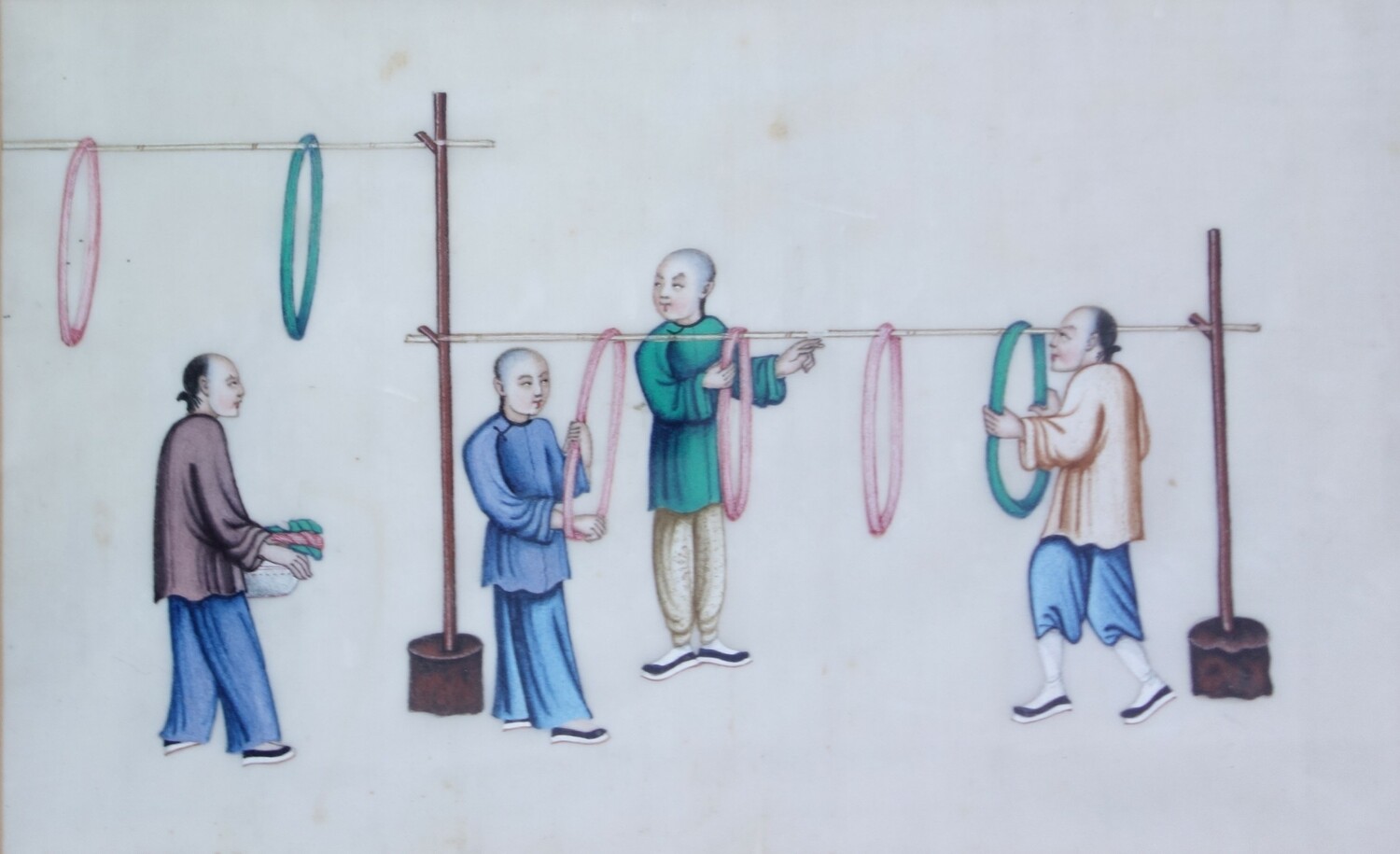 Chinese, 19th century print showing the drying of dyed silk skeins (TRC 2023.2547d).