





In an earlier TRC blog I discussed various medieval, embroidered bags in the Sens Museum, France. I also noted that one of the bags (B320) was decorated with geometric patterns and that I would provide charts for the various designs. This blog is specifically about the bag and the promised charts.
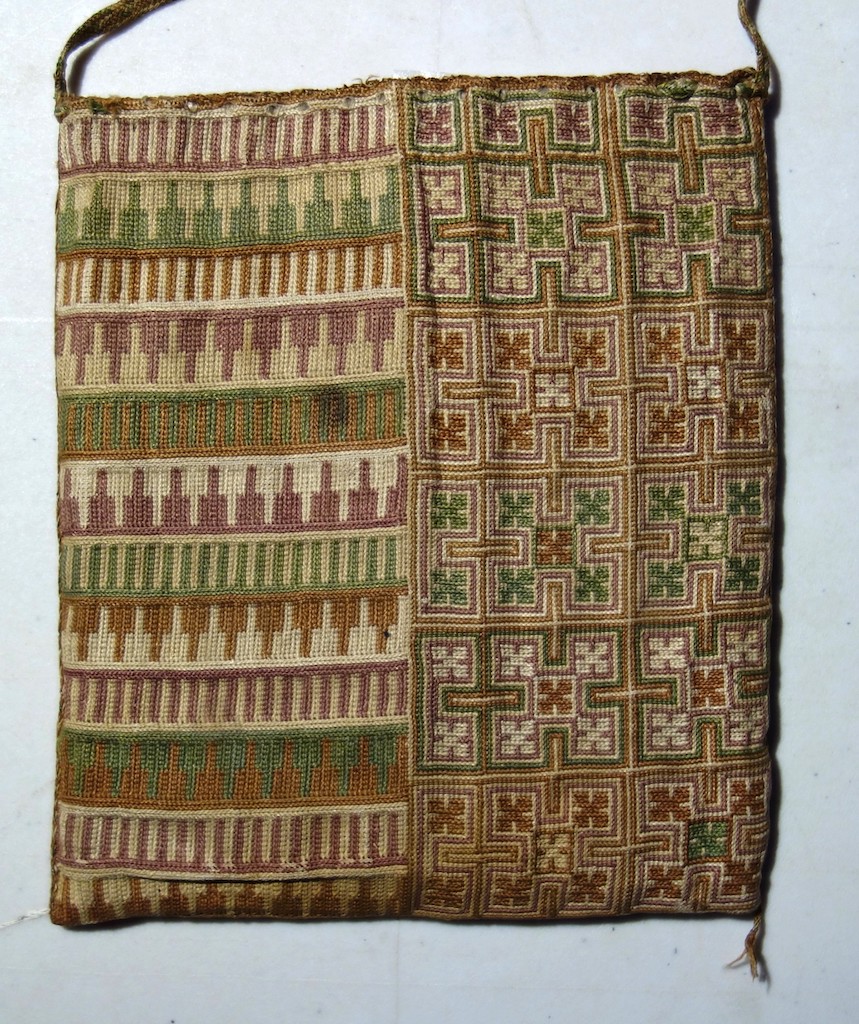 Front of an embroidered bag (B320) dating to the 13th century now in the Sens Museum, France. Photograph by author.
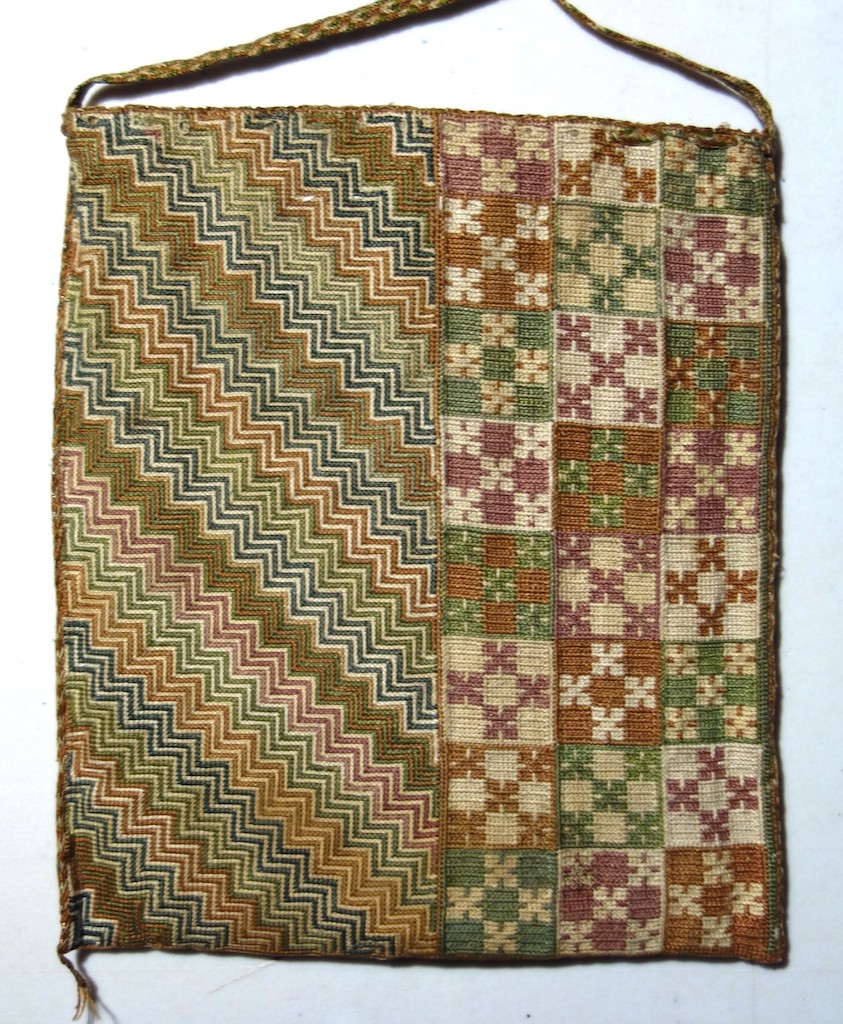 Back of an embroidered bag (B320) dating to the 13th century now in the Sens Museum, France. Photograph by author.
The bag is 14 x 12 cm in size and made from a linen ground covered with four different patterns (see below). These were worked mainly in rows of long and short cross stitch and the occasional cross stitch to finish a line or detail, which were worked in various combinations of white, red, green, purple, bronze, dark blue, light blue and yellow silk floss.
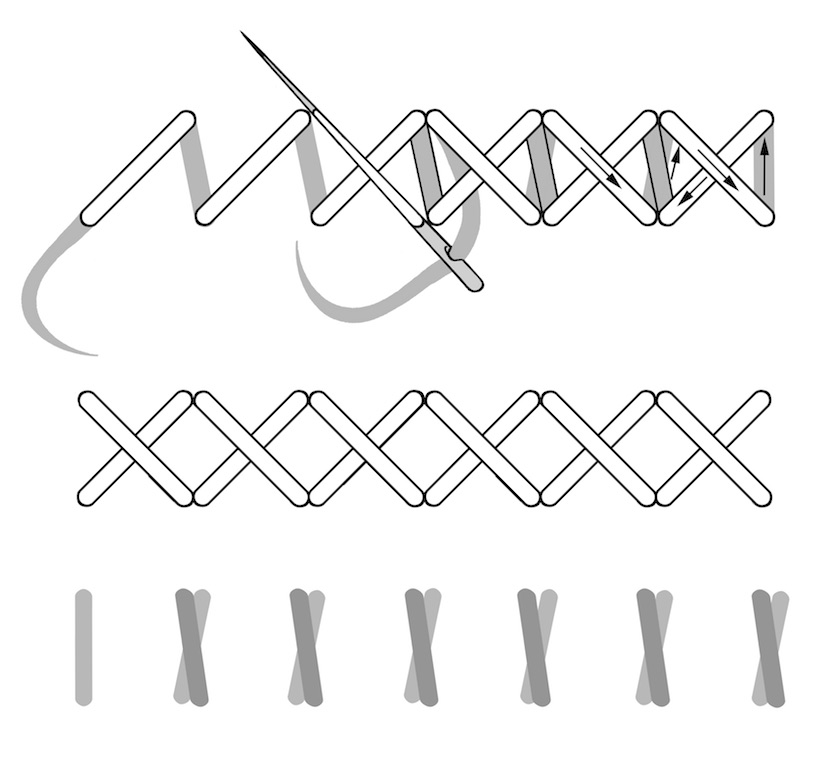 Cross stitch (drawing by Martin Hense).
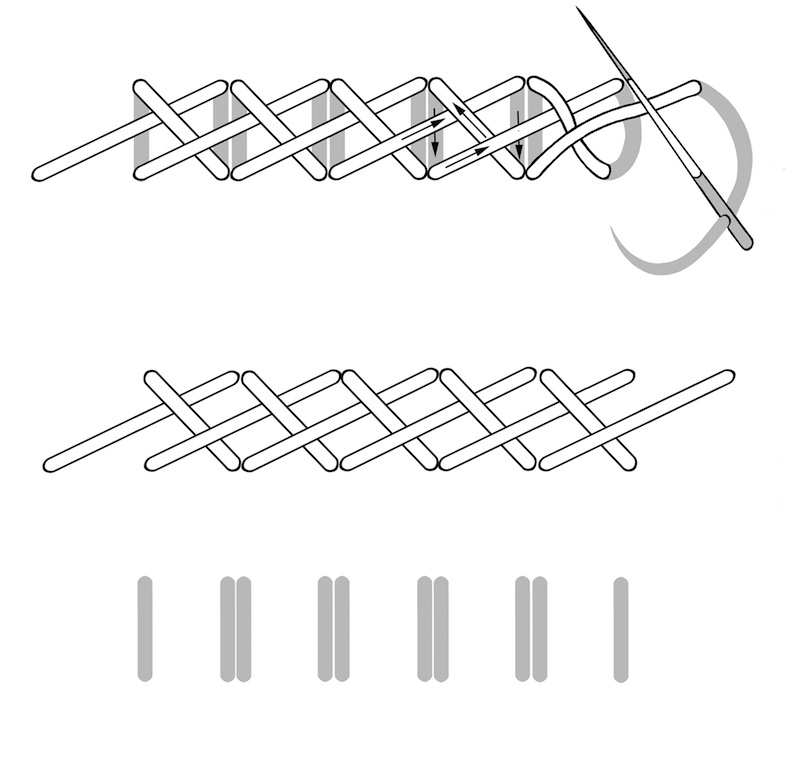 Long and short armed cross stitch (drawing by Martin Hense).
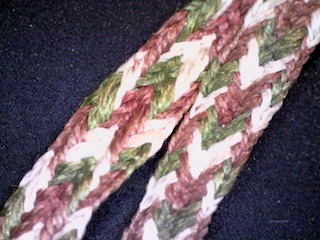 Dino-lite image of the silk band used as a bag strap.
In addition, the bag has a single tassel attached to one lower corner and presumably there had been a corresponding tassel on the other corner. It also has a narrow strap made from silk threads in red, green and white.
The four different, geometric patterns associated with the bag made me initially think they were relatively simple and tile-like in construction. However, two of them proved to be more complicated in construction than I had thought due to various colour changes and combinations (see charts and descriptions below).
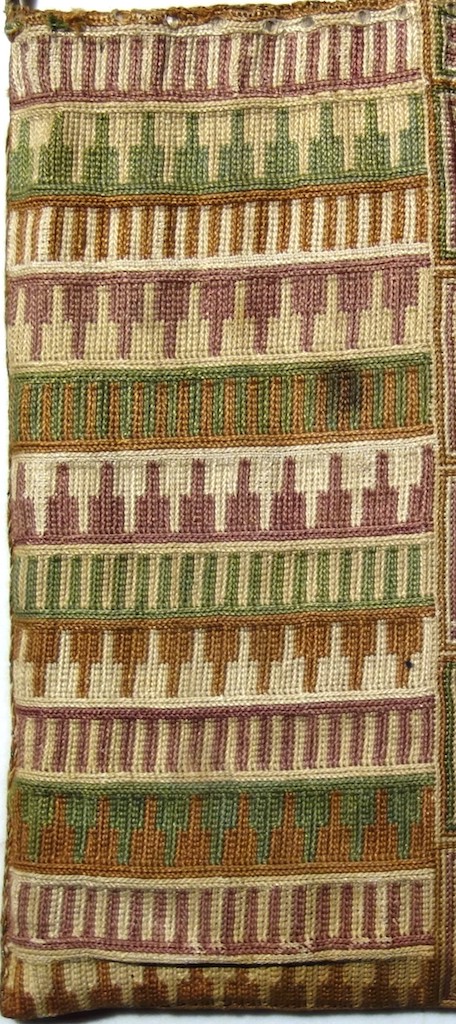 Pattern 1: Rows of stripes, bars and ‘hammers.' Photograph by author.
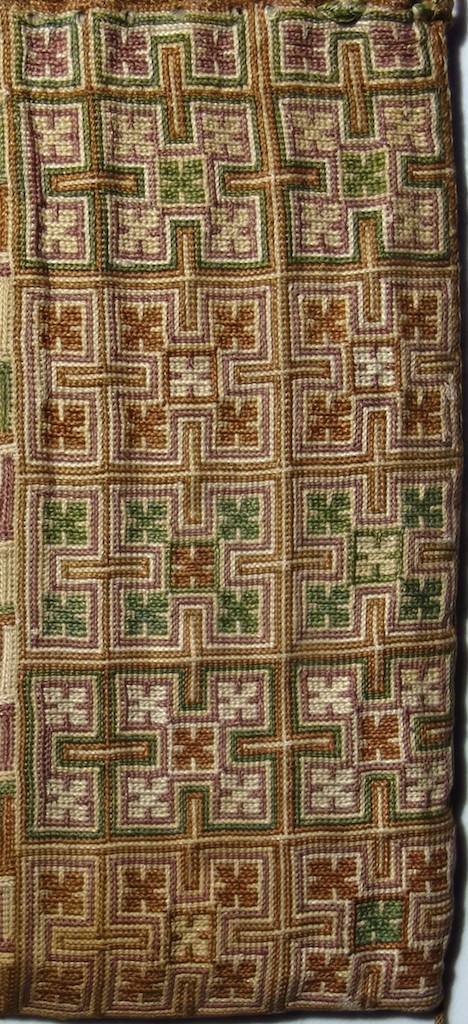 Pattern 2: Rows of squares enclosing ornate X shapes in various colour combinations. Photograph by author.
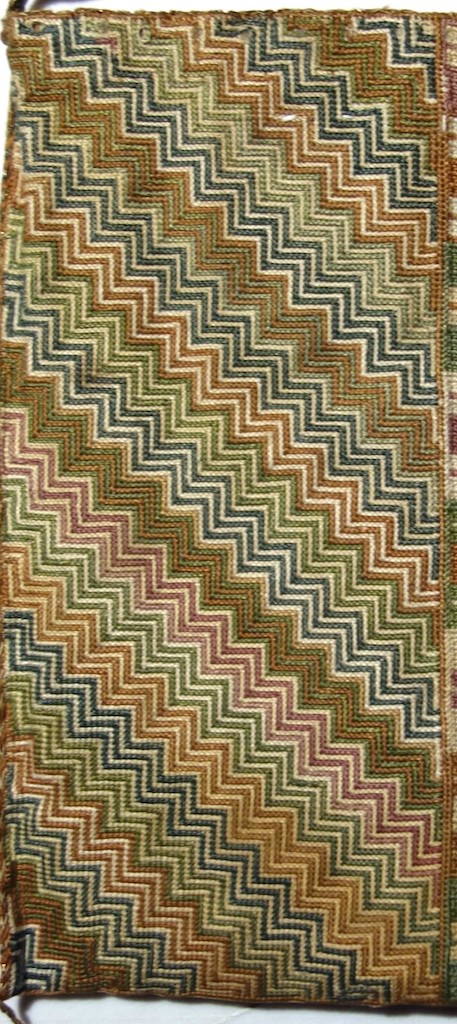 Pattern 3: Diagonal rows of zig-zags. Photograph by author.
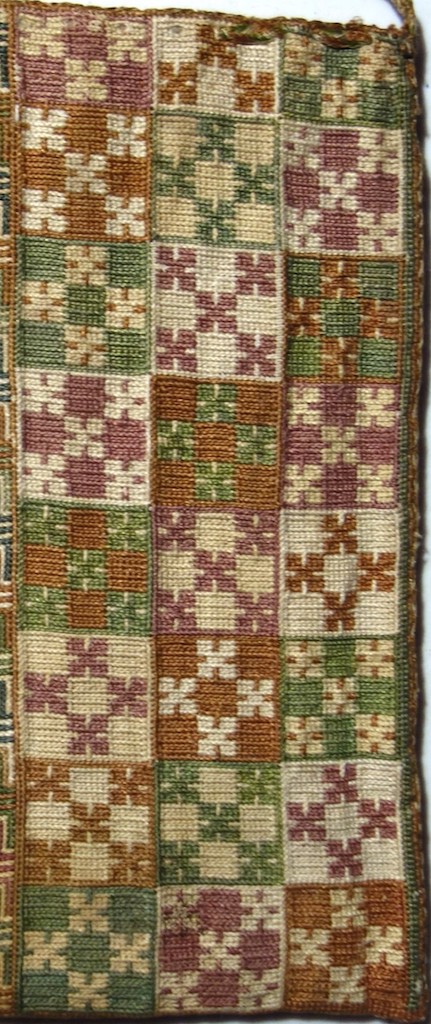 Pattern 4: Rows of squares with X-shapes in various colour combinations. Photograph by author.
The geometric patterns worked on the bags are the following:
Pattern 1: Rows of stripes and bars in red/white and green/yellow, alternating with hammer shapes in green/white, brown/white, brown/green and purple/white.
Pattern 2: Square quatrefoils enclosing smaller quatrefoils with crosses in the interstices, worked in various combinations of red, white, and green, with crosses in mainly yellow.
Pattern 3: Series of zig-zags worked in dark blue, light blue (or green), red and white, in a bargello-style pattern (we will shortly publish another blog, on this particular pattern).
Pattern 4: Rows of squares enclosing indented squares set in an X pattern. Each square is made using two or three colours, such as a red X on a white ground, or a red and pale yellow X on a green ground. There are very few repeats of the various colour combinations.
The charts below can be used (and enlarged) by anyone wishing to do so. If you click on the illustration, you will get a PdF version. Please acknowledge this TRC blog and its author when copying the charts.
Gillian Vogelsang-Eastwood, 24 July 2022
 Chart of Pattern 1: Rows of stripes, bars and ‘hammers’ in green, bronze, purple and white (chart by Gillian Vogelsang-Eastwood).
***
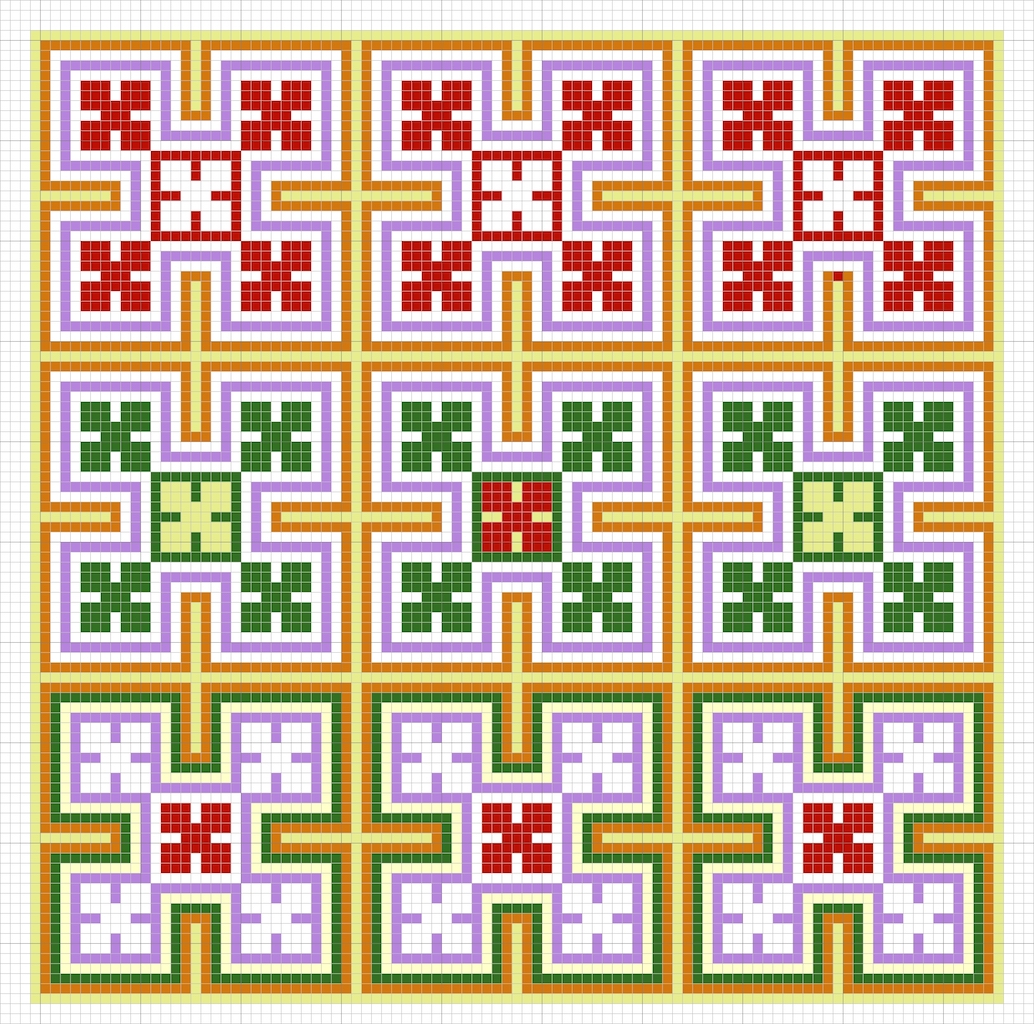 Chart of Pattern 2: Three rows of squares with ornate X-shapes worked in bronze, purple, red, white, green and yellow (chart by Gillian Vogelsang-Eastwood).
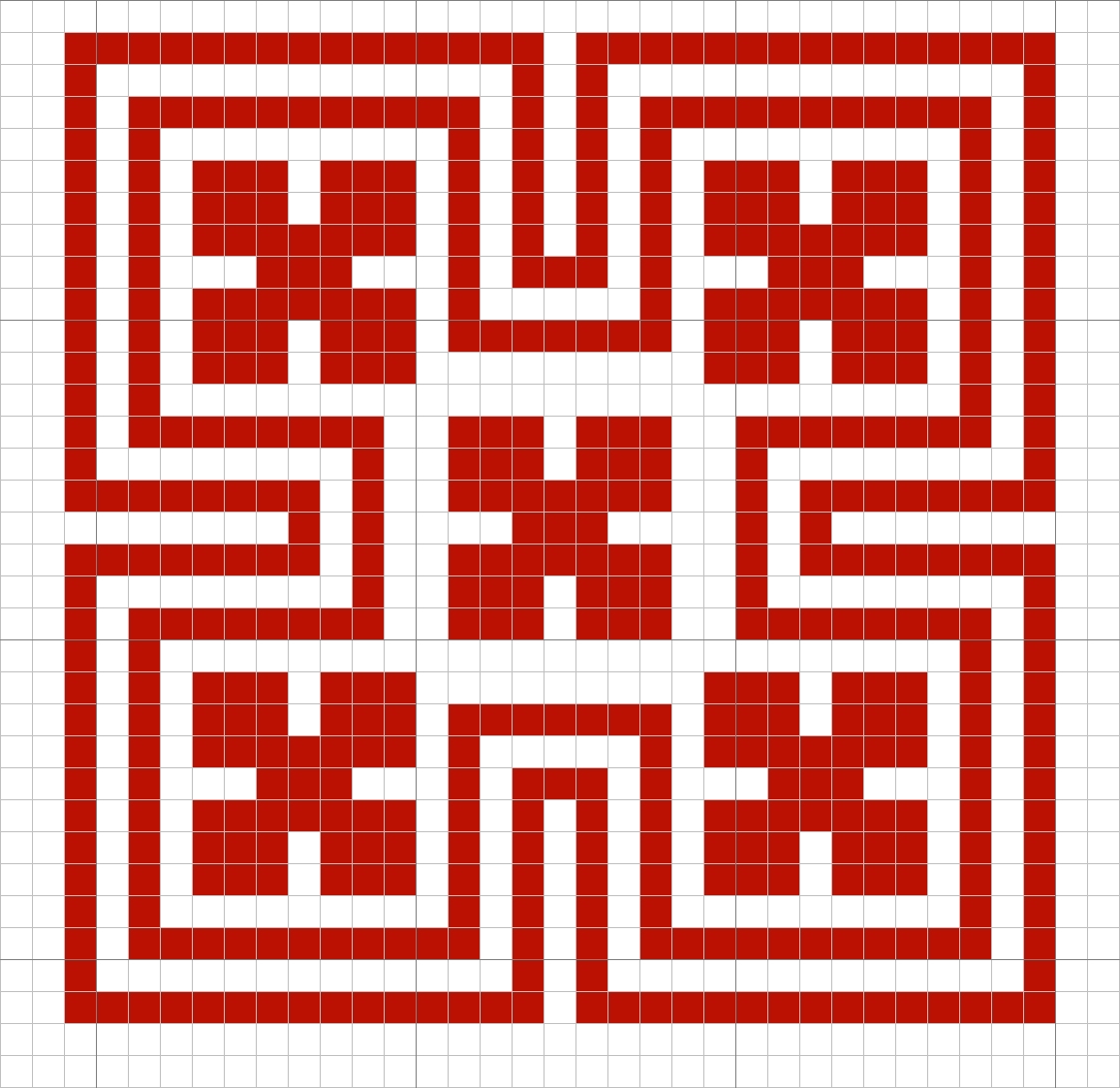 Chart of basic pattern unit of Pattern 2 (chart by Gillian Vogelsang-Eastwood).
***
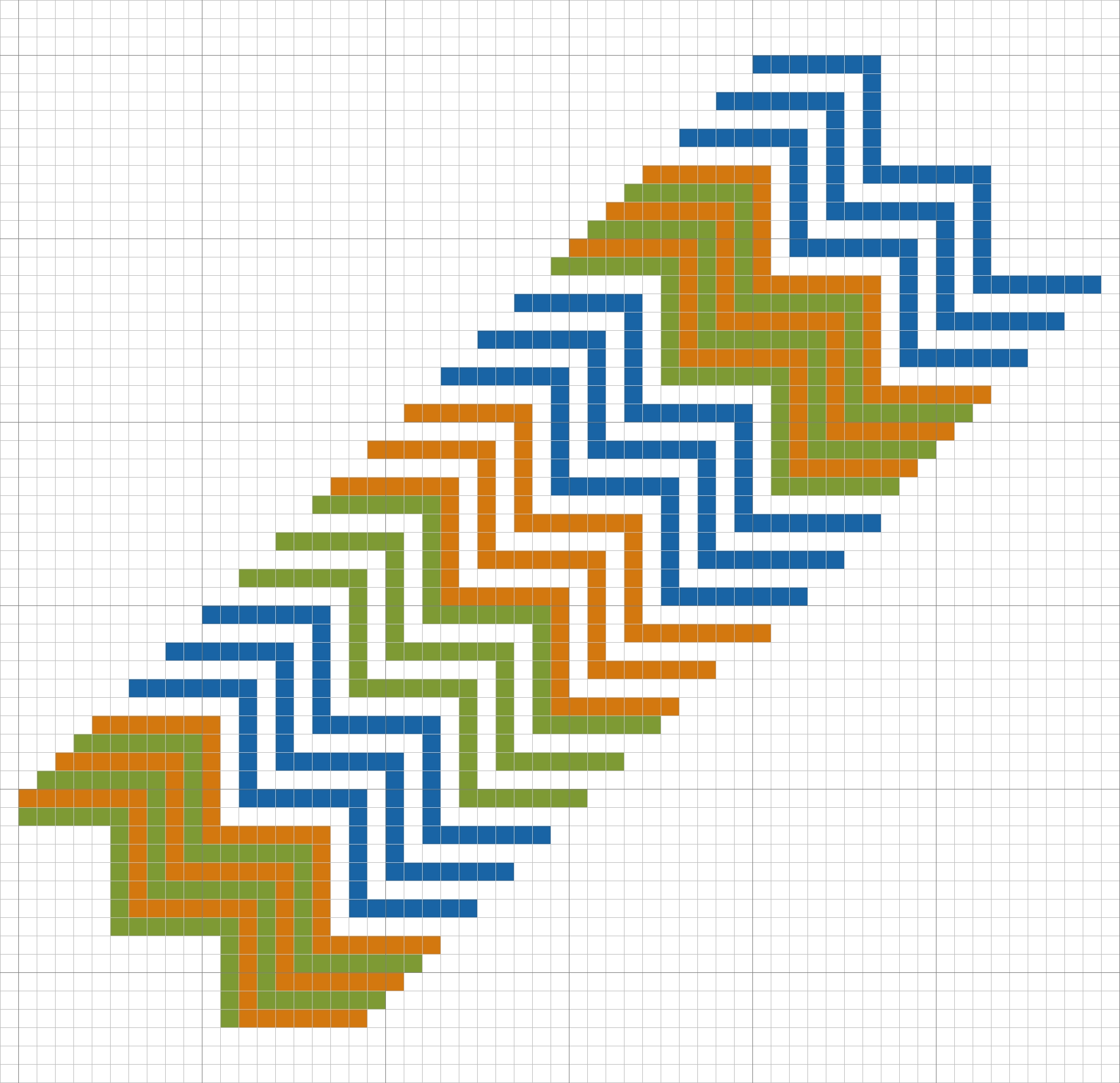 Chart of Pattern 3: A diagonal zig-zag pattern in green, bronze, dark blue, and white (chart by Gillian Vogelsang-Eastwood).
***
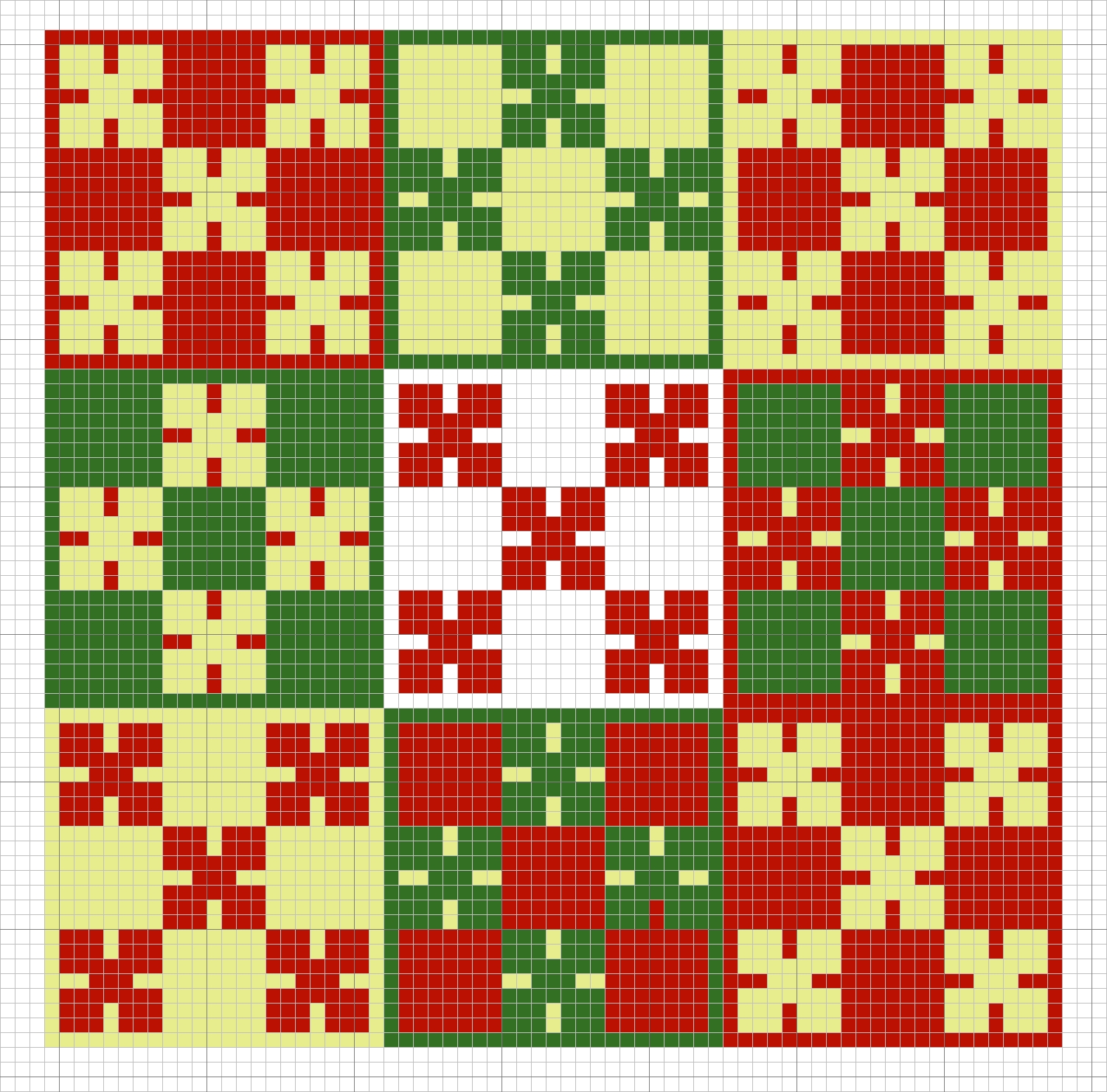 Chart of Pattern 4: Three rows of the completed squares worked in various combinations of red, white, green and pale yellow (chart by Gillian Vogelsang-Eastwood).
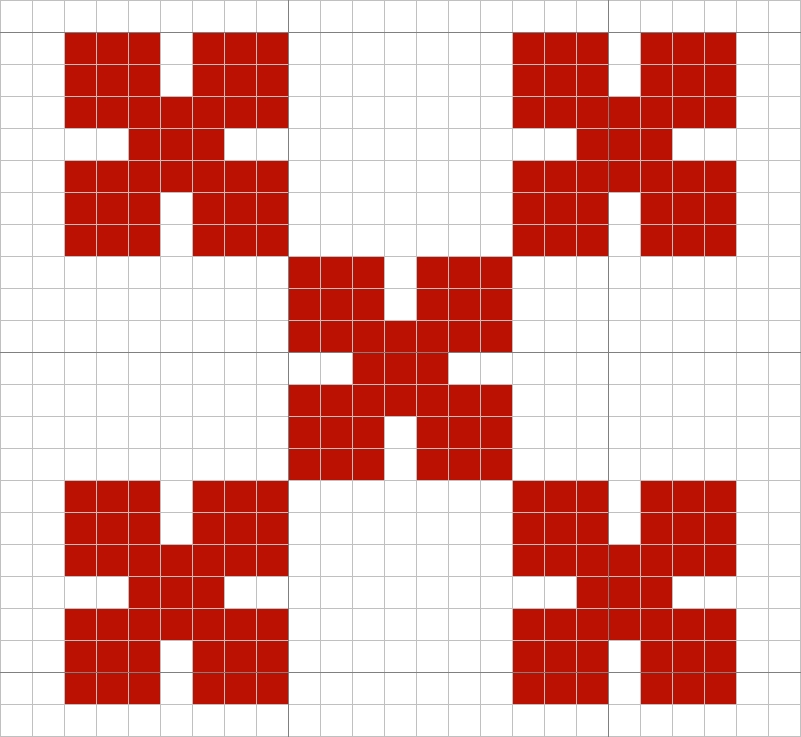 Chart of basic unit of Pattern 4 (chart by Gillian Vogelsang-Eastwood).


