
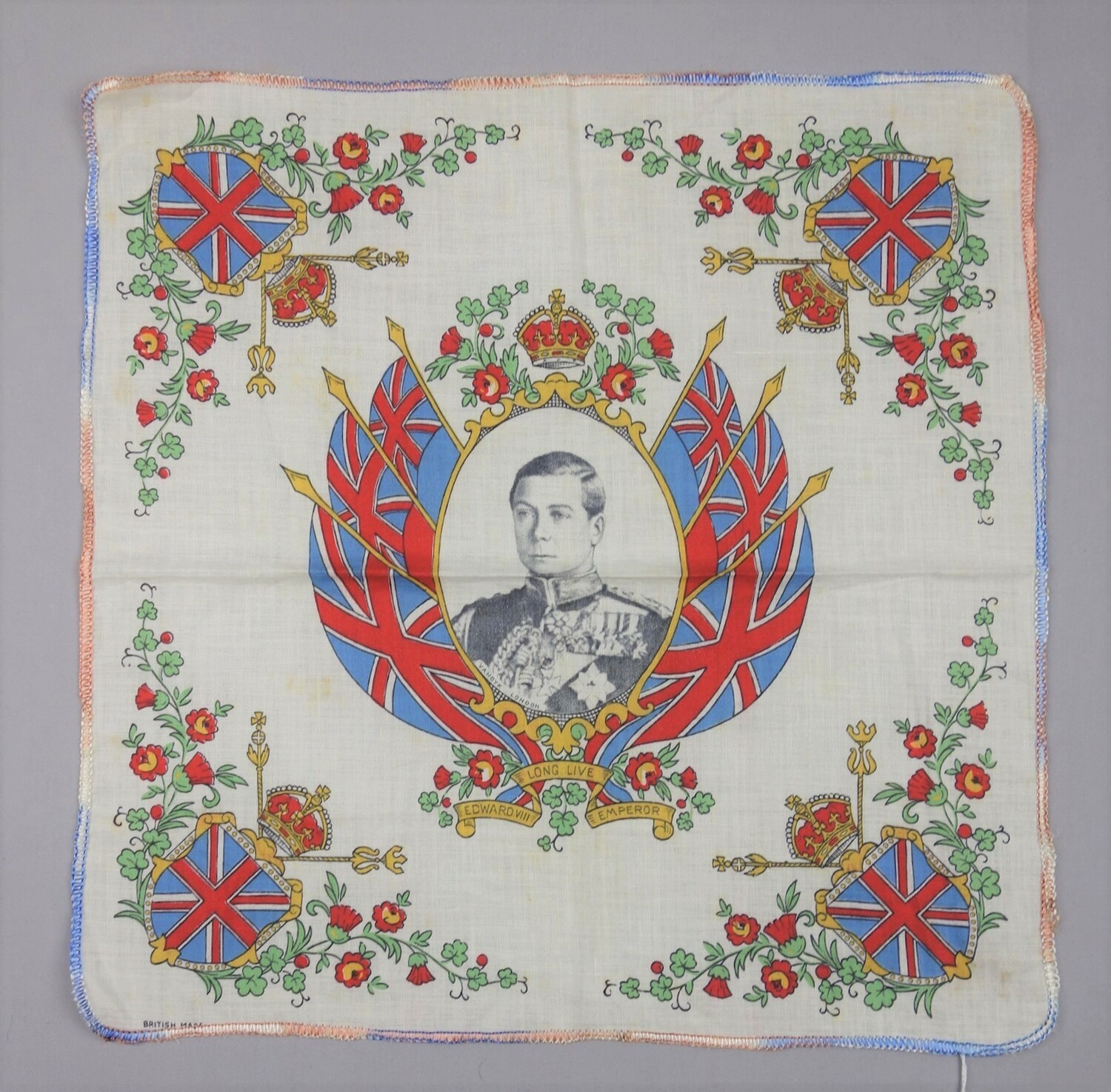
 Kerchief produced to commemorate the coronation of Edward VIII in 1937. The coronation never took place. TRC 2015.0405).Willem and I were in London for several days in order to deliver some TRC Collection textiles that are on loan for an upcoming exhibition called 'The Fabric of Democracy: Propaganda Textiles from the French Revolution to Brexit', which will be held at the Fashion + Textile Museum, London. It opens on 29 September 2023 and runs until 3 March 2024.
The exhibition is curated by Amber Butchart, a fashion historian and long-term friend of the TRC. The exhibition looks at textiles as a means of spreading and propagating various forms of public and domestic propaganda.
We are used to the large posters of China and Russia, but what about the caps, t-shirts and household items that are about spreading specific ideas?
The TRC is lending various items including an 1937 handkerchief for the coronation of Edward XIII (TRC 2015.0405), which never took place because he abdicated the throne, a kanga from East Africa celebrating Barak Obama becoming the President of the USA (TRC 2015.0350) and various items of feed sack cloth (sustainability, but also stressing American identity) from the US and dating to the 1930s and 1940s.
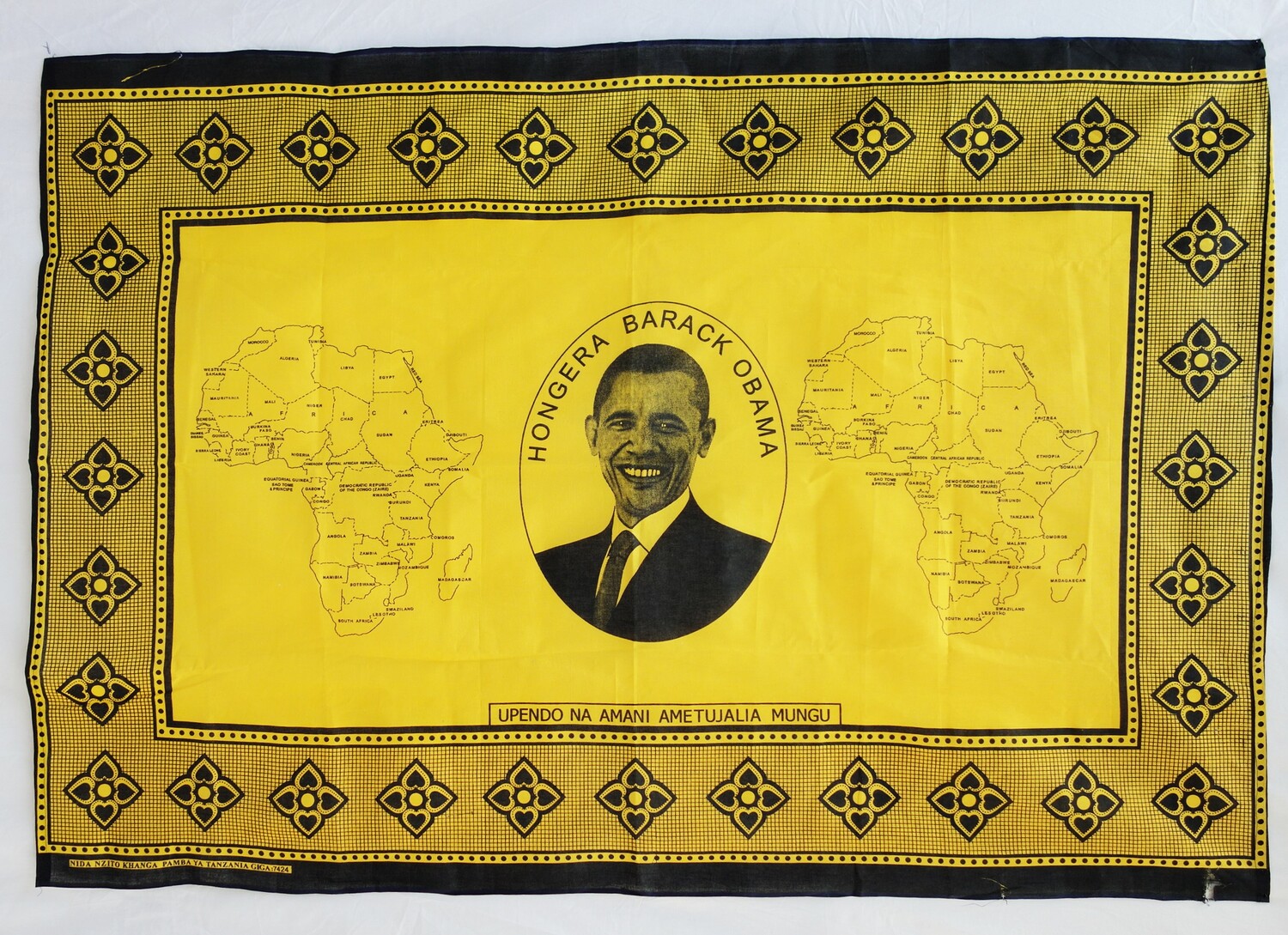 Kanga cloth from Tanzania, 2009, celebrating the US presidency of Barak Obama (TRC 2015.0350). The saying states: UPENDO NA AMANI AMETUJALIA MUNGU. "God has given us love and peace."
More about this exhibition in due course. Indeed we were talking with Amber yesterday (Friday 21st July) and she has promised a special blog about this subject once the exhibition has opened.
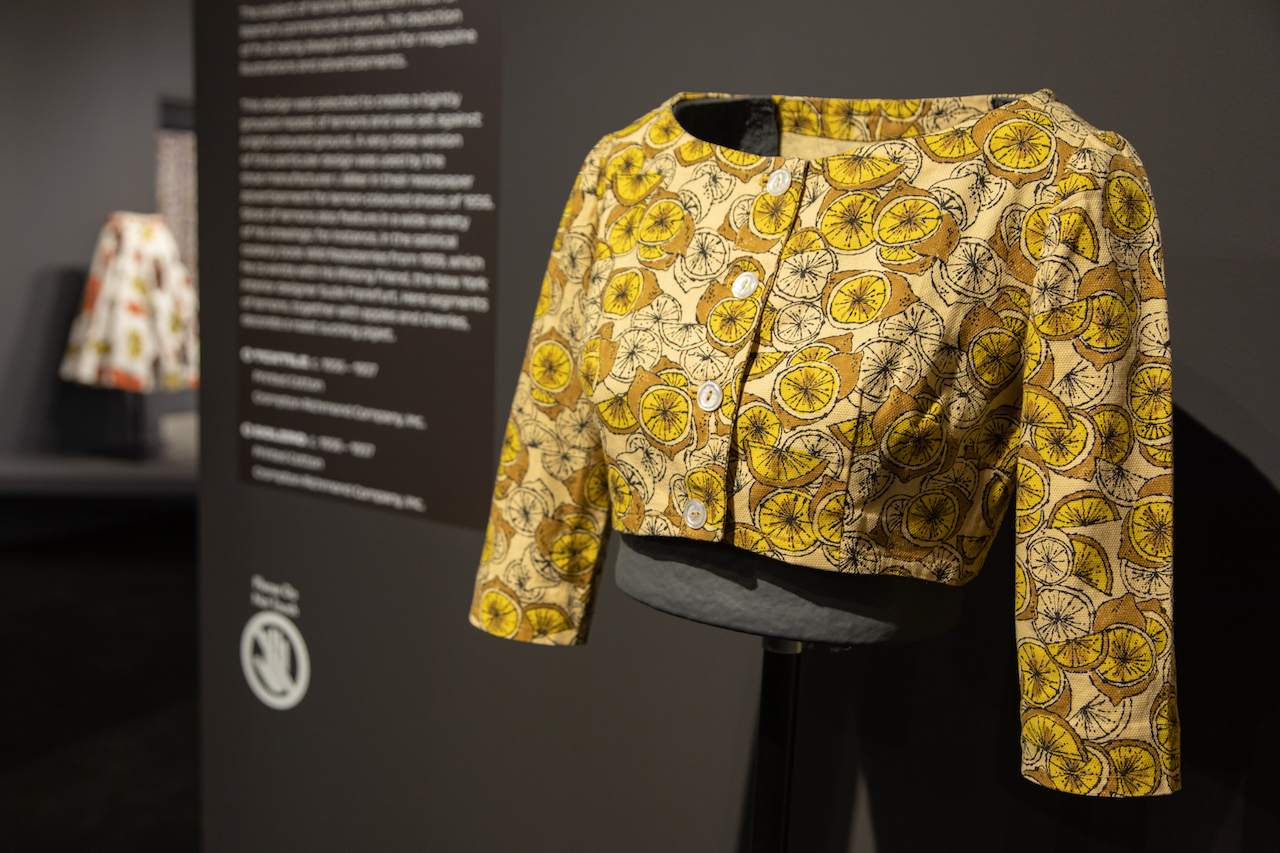 Blouse with Andy Warhol design, based on slices of lemon. Courtesy Fashion + Textile Museum, London.We also took the opportunity to learn more about the museum from very helpful Betty Swaffield, the assistant exhibition officer. It was founded in 2003 by the famous and quirky fashion designer, Dame Zandra Rhodes. We were also interested how the museum operates – actually we quickly came to the conclusion it works in a very similar manner to the TRC!
We really need to talk further about how the two institutes can work together to promote the study of textiles and dress from around the world and from prehistory to yesterday, and indeed the future!
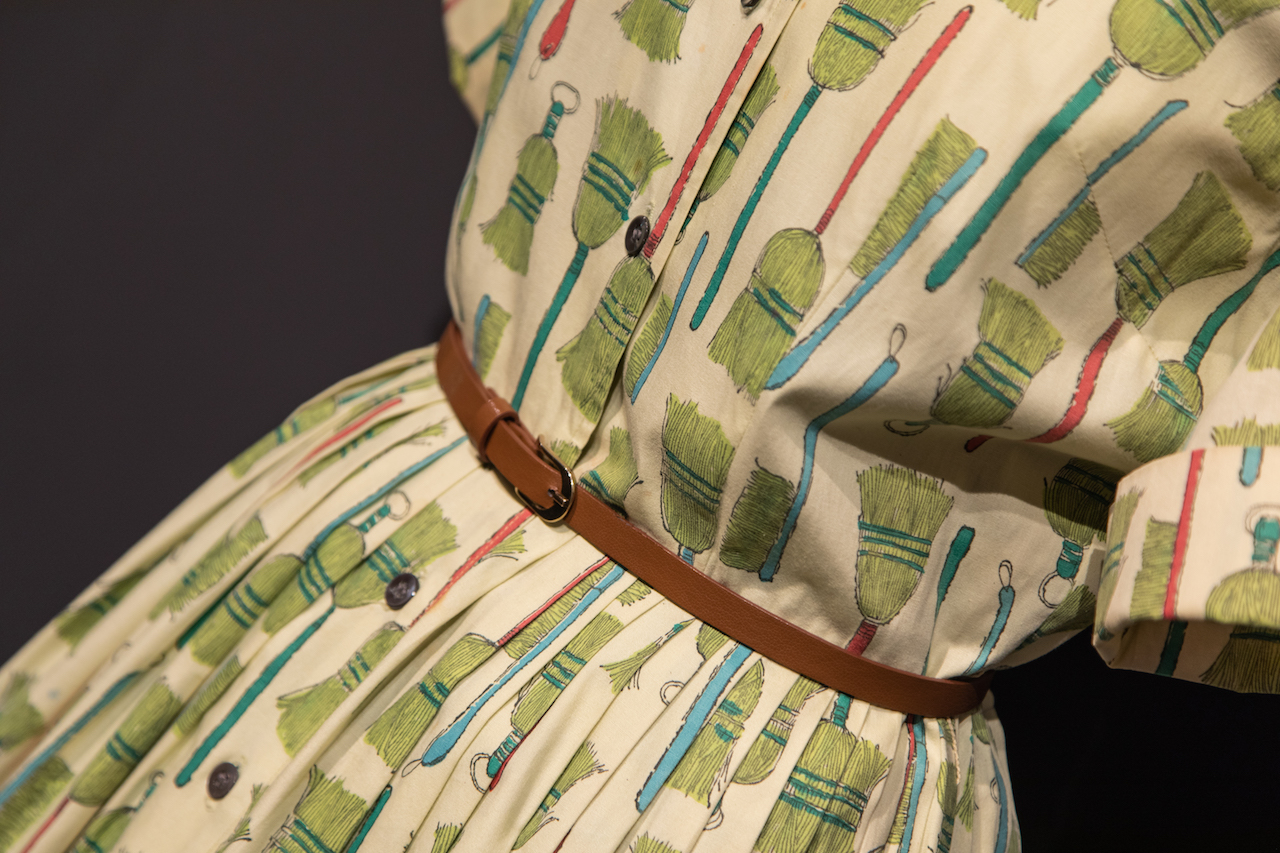 Dress with an Andy Warhol design of broomsticks. Courtesy Fashion + Textile Museum, London.But back to the museum, we also had the opportunity to see an exhibition about the famous American artist, Andy Warhol (1928-1987) and his printed textile designs. The exhibition is called 'Warhol: The Textiles' and runs from the 31st March – 10th September 2023. It is based on a private collection owned by Geoffrey Rayner and Richard Chamberlain. Warhol took inspiration for some of his textile designs from a wide range of ordinary items, such as buttons, brushes, broomsticks, toffee apples, ice creams, slices of lemon, as well as flowers, leaves, potted plants, starfish, etc. Warhol's designs were used for a range of printed textiles, dating mainly to the 1950s and 1960s.
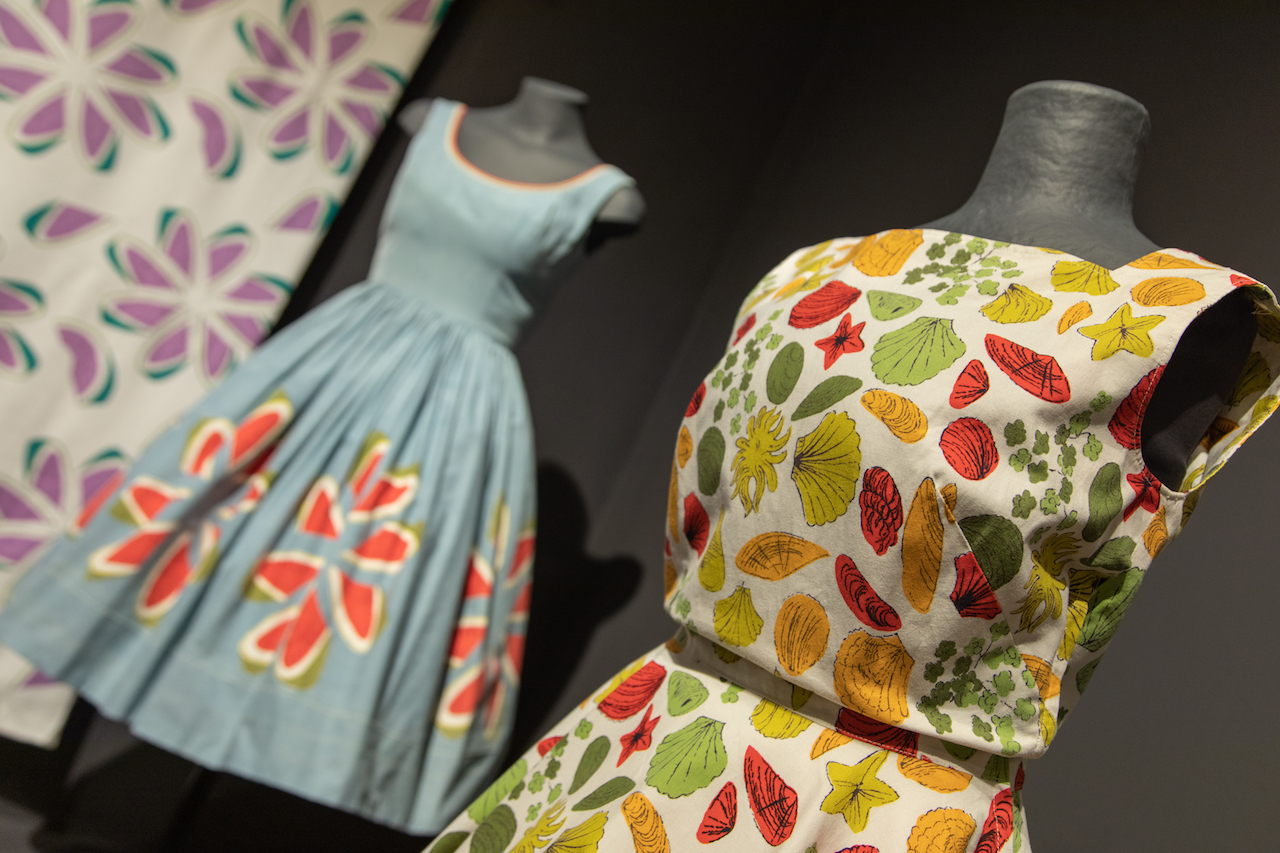 Printed dresses with designs by Andy Warhol, based on shells, starfish and plants. Courtesy of the Fashion + Textile Museum London.
The exhibition uses a minimum of glass showcases and has many of the garments on mannequins to make it very clear how the print designs and the 3-dimensional garments go together. The exhibition designer clearly understood the objects and ideas behind both the objects and the exhibition, to present various rooms that were dramatic (black walls and carpeting on the floor, use of suitable lighting), yet simple. It was one of those exhibitions whereby the objects were able to speak for themselves, while the text boards helped to put everything into context.
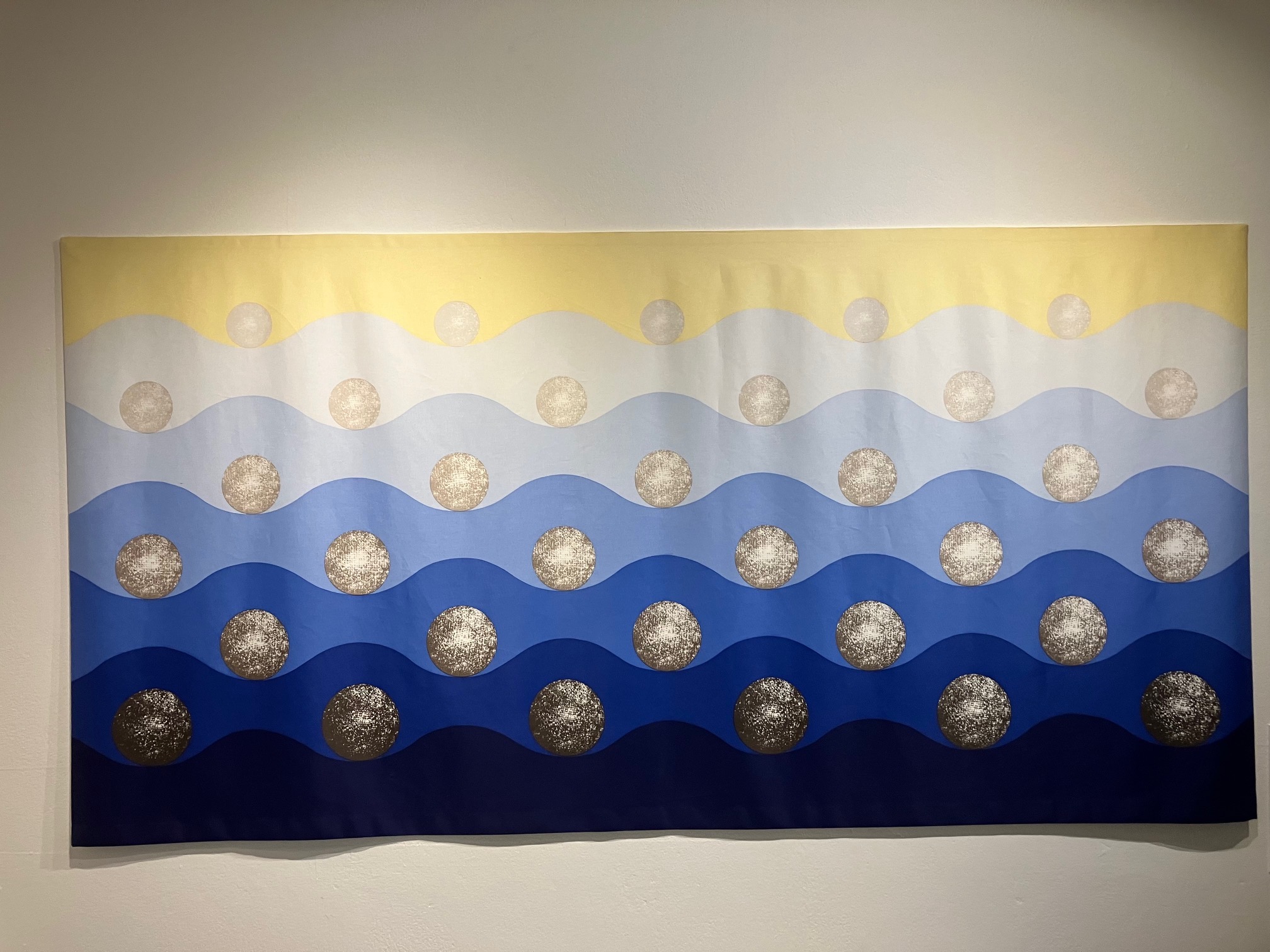 Altar frontal for 'Our Lady of Hal' church in Camden, London, by Pauline Caulfield. At the same time there is also a much smaller exhibition about printed textiles and related objects produced by the British textile designer, Pauline Caulfield. The title of the exhibition is: 'Pauline Caulfield: Textile Works, 1968-2023' (31 March - 10 September 2023).
It includes 15 items such as a fan, textile panels, as well as an altar frontal with cannonballs for the Our Lady of Hal church in Camden, London (the subject matters does make sense as the Virgin Mary is credited with saving the Belgium city of Hal from being destroyed by cannon fire by Protestants from the north during a battle in AD 1580). There are also fun items such as a giant airmail envelope, a card from a pack of cards, and a simple, but lovely cope.
If you have the chance to pop into the museum and see one or both of these exhibitions, it is certainly worth while.
Gillian Vogelsang-Eastwood, 22 July 2023