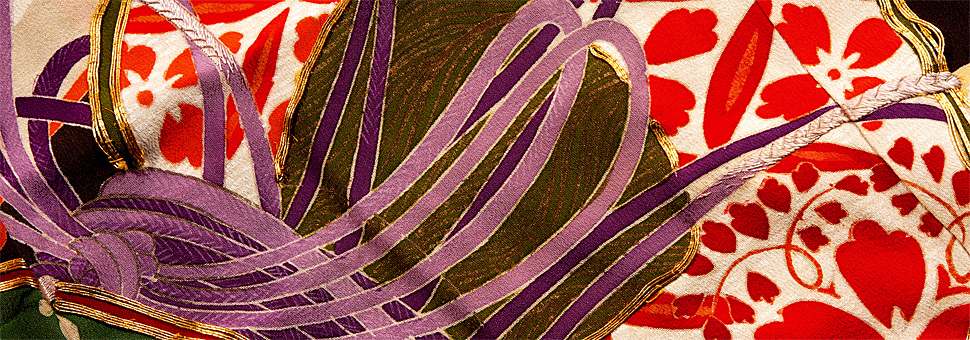

LUTZ, Hazel and Anna CARLSON (2011), Beyond Peacocks & Paisleys: Handcrafted Textiles of India and its Neighbors, Minneapolis: University of Minnesota, no ISNB number, soft back, full colour, 80 pp., short bibliography, no glossary or index. Price: c. US$30.
Exhibition catalogue for a display of Indian textiles, which was presented at the Goldstein Museum of Design from June 10th to September 18th 2011. There were eighty items in the exhibition, including a small number of complete outfits. The exhibition looked at various techniques used for handmade textiles in India, including embroidered, printed, tie-and-dye and woven forms. The items on display come from the collection of Dr. Donald Clay Johnson. He began collecting Indian textiles and garments in the 1960s and has created a comprehensive textile collection with respect to techniques and regional designs. The items on display include curtains, cushions, saris, shawls, as well as wall-hangings. They include historical and traditional items, as well as pieces from modern Indian textile designers.
Recommendation: a useful, general book to have for anyone interested in Indian textiles. It provides a wide variety of details concerning different regional types. There are details about tie-and-dye and block printing techniques, but little about the embroidered and woven forms.
GVE
***
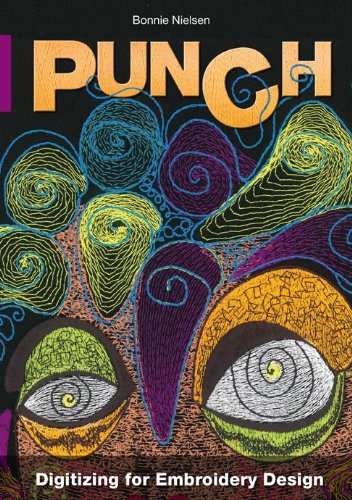 NIELSEN, Bonnie (2010), Punch: Digitizing for Embroidery Design, Eppertshausen: Verlagshaus Gruber. ISBN 978-3-00-03007-4. Hardback, pp. 296, full colour, numerous photographs, line drawings and diagrams, no bibliography, glossary or index. Price: €52.
Bonnie Nielsen is an embroiderer and designer with more than 25 years of experience of machine embroidery. This handbook is based on her wide ranging knowledge and experience working with the needs and possibilities of industrial machines and conditions. Many of the tips she gives can be used at home or by small-scale producers. The book takes the reader through techniques and tricks that need to be acquired and understood in order to produce high quality machine embroidery. Little is taken for granted by the author and the reader is taken from which needles to choose, how various machines work through colour combinations to the finished product. The suggestions are illustrated using very clear diagrams to produce flat, dimensional (padded), corded and looped forms, and very much more. A German edition of this book appeared in 2012.
Recommendation: This book is not for everyone. It is designed for practical people who are working on a regular basis with machine embroidery, especially within the industrial world. The book, however, is a must, for anyone who is seriously interested in improving their machine embroidery skills and techniques.
Available from: http://shop.verlagshaus-gruber.de/int_de/featured/punch-digitizing-for-embroidery-design.html
GVE
***
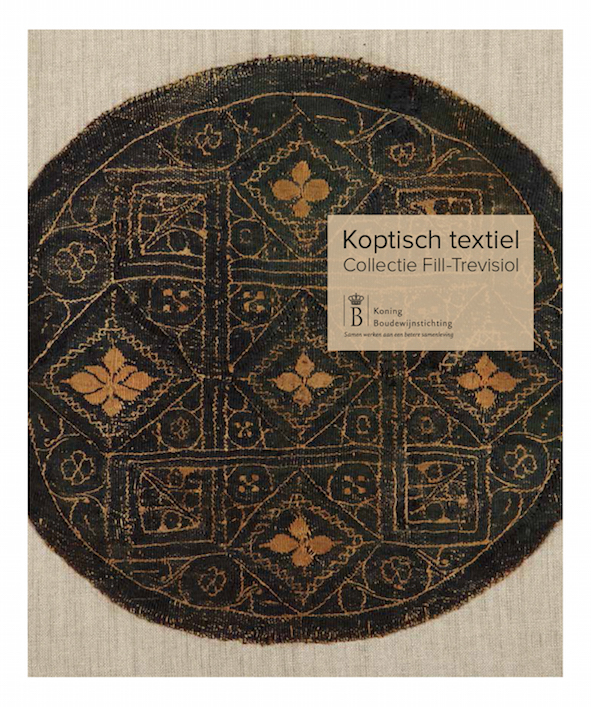 TREVISIOL, Robert (ed., 2015). Koptisch textiel: Collectie Fill-Trevisiol, Brussels: Koning Boudewijnstichting (Dutch and French versions available). ISBN 978-9-08237-720-0. Card cover, pp. 104, full colour with many colour images, short bibliography, no glossary or index. Price: €7.
In 2014/5 Maria Luise and Robert Fill-Trevisiol gave their collection of the over 200 Coptic garments and textiles to the Koning Boudewijnstichting (Belgium) who presented them to the Musee Royal de Mariemont, Belgium. The present publication is a catalogue of the Fill-Trevisiol collection, which was also made possible by the help of the Koning Boudewijnstichting. All of the ‘Coptic’ textiles (which includes early Islamic and Mamluk pieces) are briefly described and illustrated in the book. The book is divided into two sections, firstly there are four introductory chapters, the first by Robert Tevisiol entitled “….my playful Klees, my Picassos” (pp. 9-14), which describes the history of the collection and why these pieces were brought together. This is followed by background information to Coptic Egypt by Marie-Cécile Bruwier (pp. 25-32), a chapter about Coptic iconography by Florence Calament (pp. 33-50), and finally a chapter about the technical analysis of the textiles by Chris Verhecken-Lammens. The second section is a complete visual catalogue of the textiles with a colour photograph and short description (more of a caption). The textiles include a wide range of tapestry woven items, as well as a few more unusual items notably, a fragment of taqueté, a painted textile, a sprang item, as well as some later woven tiraz and a few embroideries.
Recommendation: This book should be in the library of anyone working on Greco-Roman to early Islamic textiles. Many of the pieces are of well-known types, but there are a significant number that may not be so familiar. It is noteworthy that all of the items have been published in colour.
Available from: http://www.erfgoed-kbs.be/nieuws/publicatie-koptisch-textiel-de-collectie-fill-trevisiol
GVE
***
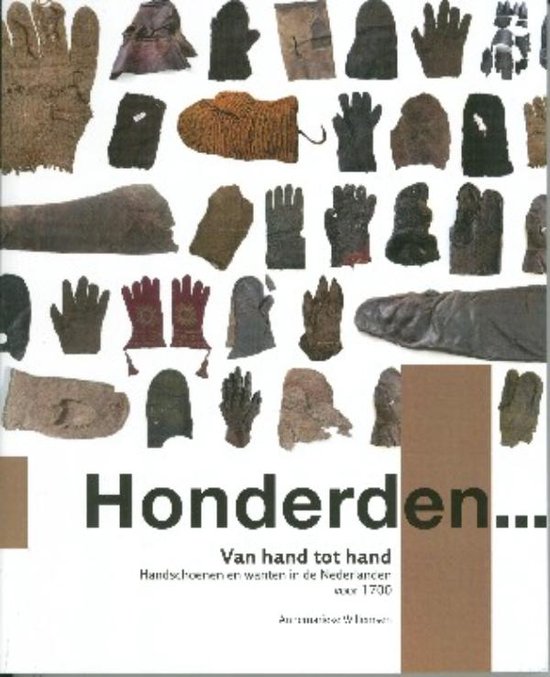 WILLEMSEN, Annemarieke (2015). Honderden… Van Hand tot Hand: Handschoenen en Wanten in de Nederlanden voor 1700, Zwolle: SPA uitgevers, with Stichting Promotie Archeologie. ISBN 978-90-8932-127-5. Card cover, pp. 198, full colour, bibliography, index. Price: €19.50.
A detailed study of the history of gloves, gauntlets, mittens and related items from pre-history to 1700 in the Netherlands. The first chapter discusses the types, archaeology and history of handwear in general. It includes cloth, felt, knitted, as well as leather and metal forms. The following chapters look at specific forms, such as winter mittens, leather mittens (for work), luxury gloves, military gloves, handwear for sport and playing, and so forth. There are also chapters on the international nature of handwear and the symbolic use of gloves, especially as presents. Each chapter is copiously illustrated with historical examples from various collections, as well as etchings, manuscript illustrations, paintings, sculptures, etc, which illustrate the use of the various forms of handwear. The various chapters are followed by a catalogue of handwear found in various excavations from the Netherlands and Flanders (northern Belgium). These finds date from 1300 until 1700.
Recommendation: This book can be used as a source book for specific types of handwear, a straight through read, or as a dipping in book. There is a wealth of information and the wide range and sheer number of the illustrations make it a valuable addition to the history of handwear – a subject that has been sadly neglected by many archaeologist and dress historians. A small, but intriguing volume.
Available from: http://www.spa-uitgevers.nl/Webwinkel-Product-130118067/Van-hand-tot-hand.-Handschoenen-en-wanten-in-de-Nederlanden-v%C3%B3%C3%B3r-1700.html
GVE
***
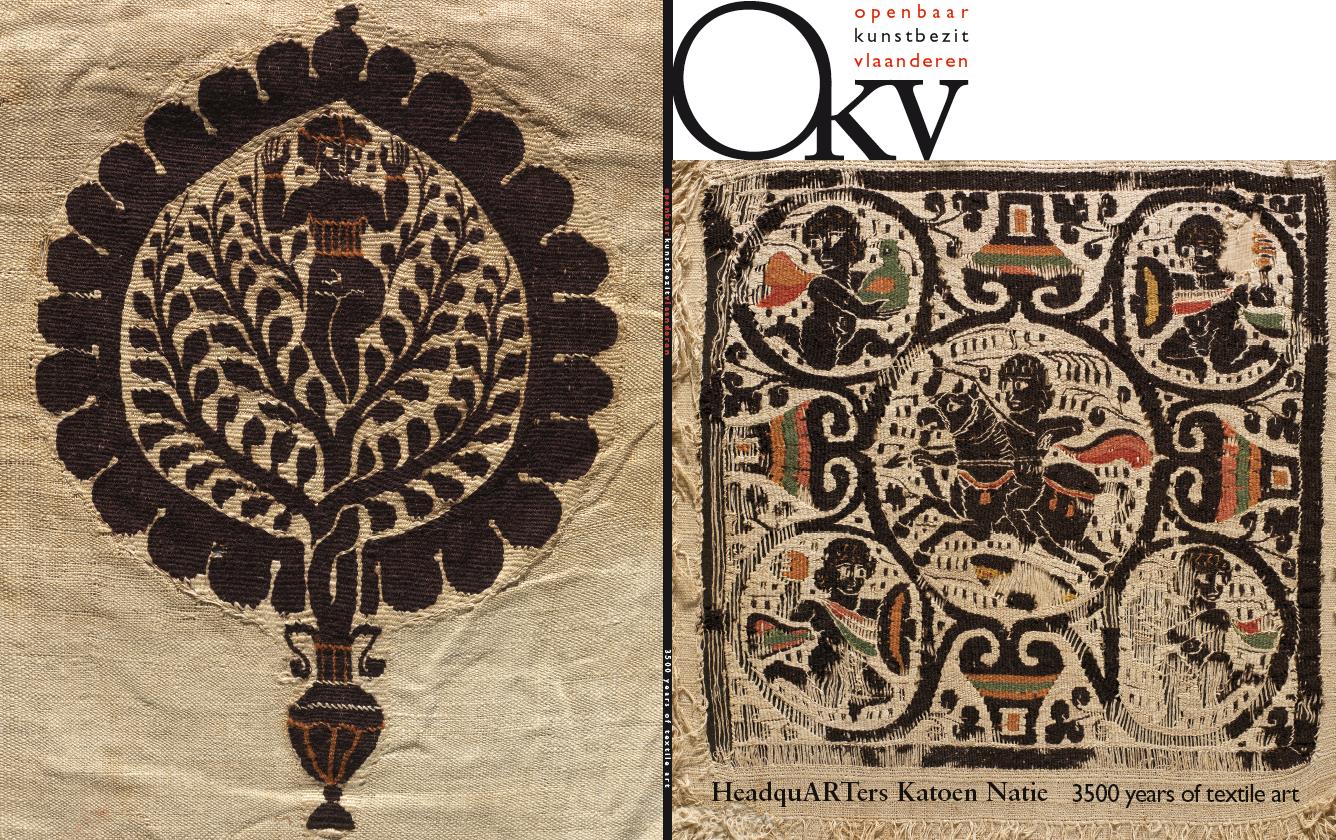 WOUTERS, Peter and Mark VANVAECK (2012). 3500 jaar Textielkunst, Gent: Openbaar Kunstbezit Vlaanderen. Paperback, pp. 48, full colour. Price: €10.
An introduction to the permanent exhibition held at the Katoen Natie Museum, Antwerp. The items on display represent 3500 years of textile history, based upon Egyptian garments and textiles, with some items from other parts of the Middle East, the Persian Empire and Mongolia. A range of highlights from the collection are illustrated in the booklet, including mummified cats, linen trousers, a range of Coptic tunics, as well as the remains of a Mongolian coat made from a fine silk, decorative cloth.
Recommendation: An interesting booklet depicting highlights of the collection. For those who want more information about the Katoen Natie Collection and/or who are seriously interested in specific objects then it would be better to have Antoine De Moor et al, 3500 Years of Textile Art (2008; see below).
Available from: http://www.headquarters-katoennatie.com/nl/shop/
GVE
***
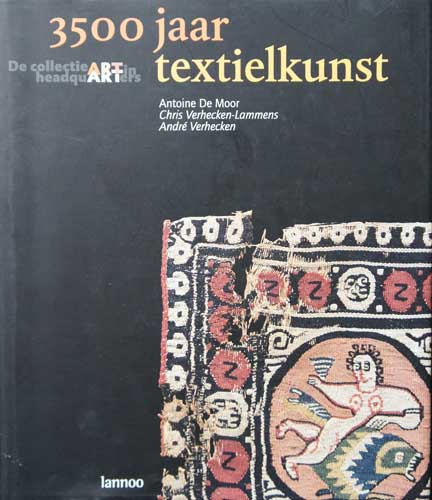 DE MOOR, Antoine, Chris Verhecken-Lammens and André Verhecken (2008). 3500 Years of Textile Art: The Collection in HeadquARTers, Tielt: Lannoo Publishers (available in Dutch and English). ISBN 978-90-209-8103-2. Hardback, pp. 255, full colour, select bibliography. Price: €40.
The title of this book is a little misleading, as the vast majority of the items discussed in the book are woven textiles from Egypt, rather than representing the textile arts in the widest sense of the word throughout the world for the last 3500 years. The items illustrated come from the collection of Katoen Natie Museum, Antwerp (Belgium) and include a wide range of mainly woven textiles. The museum houses one of the best collections of Greco-Roman garments in the world. Many of these garments are illustrated in the book. The book is divided into three main sections. Firstly there is a series of chapters about historical textiles and garments. Each chapter starts with an introduction with timelines, etc, and then a detailed description and colour photograph of each of the items.
There are four chapters dedicated to Egyptian textiles (Pharaonic, Roman, Coptic, and early Islamic forms). These are followed by a chapter on textiles from the Silk Road (8th century BC to the 14th century AD). The subject theme then changes to a technical analysis, including a chapter on the structural forms (mainly weaves), one on the analysis and identification of natural dyes; another on the dating of ancient textiles (radiocarbon dating, etc) and finally a short, but intriguing chapter entitled “Real or not?” This looks at fake, Middle Eastern textiles (mainly Coptic) that have been available on the market during the 20th century. The final section of the book is a detailed catalogue of the textiles and related objects from the Katoen Natie Museum collection. All of the items are illustrated with large scale, colour images.
Recommendation: At first glance this is a large scale book with beautiful, colour illustrations, with the implication that it is a coffee table book, but it is more than that. The quality of the text, catalogue descriptions and images mean that this is a very useful book for anyone interested in the general history of Egypt, and by extension Near Eastern textiles and garments.
Available from: http://www.headquarters-katoennatie.com/nl/shop/
GVE
***
Textiles from the Nile Valley Conference Papers
Since 1991 there has been a biennial meeting of specialists held at the Katoen Natie Museum, Antwerp (Belgium). The first three conference papers were published by Brill, Leiden. Since then they have been published by Katoen Natie and Lannoo, Belgium.
The majority of articles in these books are about woven textiles, especially tapestry weave forms. There are some papers about weft-faced compound weave forms (taqueté) and plain weave items. It would be worthwhile in the future to increase the number of articles about non-woven forms, notably felt, sprang, painted and printed forms, as well as applied and embroidered examples. In addition more background details about the contexts, the social and economic history of the textiles, the relevant techniques and uses, as well as the local and international trade would be appreciated. Some details are given in Clothing the House: Furnishing Textiles of the 1st Millennium AD from Egypt and Neighbouring Countries (see below).
Recommendation: All of the Katoen Natie books are to be recommended for public and private libraries, with respect to their contents, illustrations and for the sheer pleasure of holding such ‘proper and real’ books. A feeling that is becoming rarer in this digital age. These books cost €40 each if you order them from Katoen Natie (http://www.headquarters-katoennatie.com/nl/shop/) and considerably more if you go to the publishers or elsewhere.
***
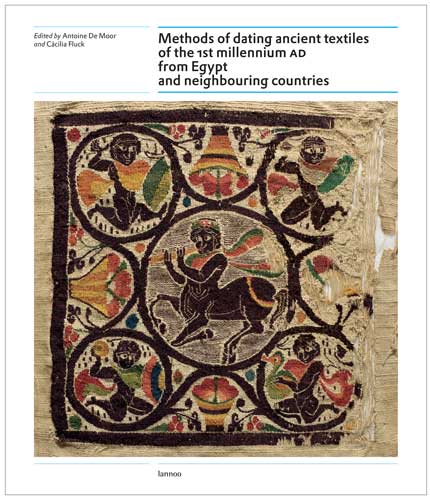 DE MOOR, Antoine and Cäcilia FLUCK (eds., 2007). Methods of Dating Ancient Textiles of the 1st Millennium AD from Egypt and Neighbouring Countries, Tielt: Lannoo Publishers. ISBN 978-90-209-70982. Hardback, pp. 255, fully illustrated with numerous colour images, diagrams, tables, line drawings, etc., bibliography and index. Price: €40.
A series of conference papers from the 4th meeting of the study group, in April 2005 at Katoen Natie Museum, Antwerp. The papers are divided into five main sections, namely (i) On methods, (ii) Textiles dated by the archaeological context, (iii) Radiocarbon dated textiles, (iv) Dating of textiles by techniques and dyes, (v) Dating of textiles by historical sources.
Comments: This book will be of great interest for anyone interested in the range of analyses, dating techniques, and so forth, which can be used in order to date Egyptian textiles and those from neighbouring countries, notably Turkey. This is a book that takes time to read properly, but with all the illustrations, it is also a pleasure.
***
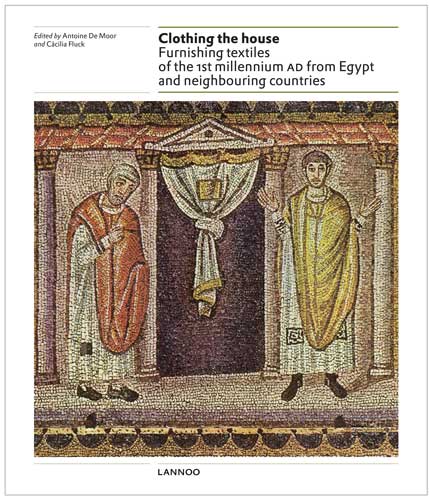
DE MOOR, Antoine and Cäcilia FLUCK (eds., 2009). Clothing the House: Furnishing Textiles of the 1st Millennium AD from Egypt and Neighbouring Countries, Tielt: Lannoo Publishers. ISBN 978-90-209-8590-0. Hardback, pp. 205, fully illustrated with numerous colour images, maps, line drawings, etc. Bibliography and index. Price: €40.
A series of conference papers from the 5th meeting of the study group, on 6-7 October 2007 at the Katoen Natie Museum, Antwerp. The papers have been divided into six groups, namely, (i) Late Antique architecture in Egypt, (ii) Furnishing textiles in written sources, (iii) Furnishing textiles from excavations, (iv) Furnishing textiles in museums and collections, (v) Depictions of furnishing textiles and architecture on works of art, and (vi) Individual research beyond the main theme.
Comments: This book should be in any library dealing with the archaeology and architecture of buildings (public and private) in Egypt and the Near East, as well as those working with such textiles in modern collections.
***
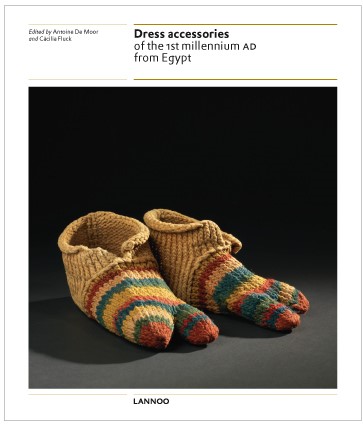
DE MOOR, Antoine and Cäcilia FLUCK (eds., 2012). Dress Accessories of the 1st Millennium AD from Egypt, Tielt: Lannoo Publishers. ISBN 978-90-209-9936-5. Hardback, pp. 317, fully illustrated with numerous colour images, maps, line drawings, etc. Bibliography and index. Price: €40.
A series of conference papers from the 6th meeting of the study group, in October 2009 at the Katoen Natie Museum, Antwerp. The subjects covered in this conference included a wide range of subjects, including headgear (especially sprang items), footwear (both sandals and socks), complete garments (especially tunics), as well as items of jewellery, bags and pouches, as well as fringed aprons.
Comments: As with some of the other volumes in this series there are numerous articles that are related to the so-called Coptic textiles, and far fewer about accessories. But this is a starting point and gives an indication of potential work in the future. The nålbinding socks in particular are a fascinating area of research.
***
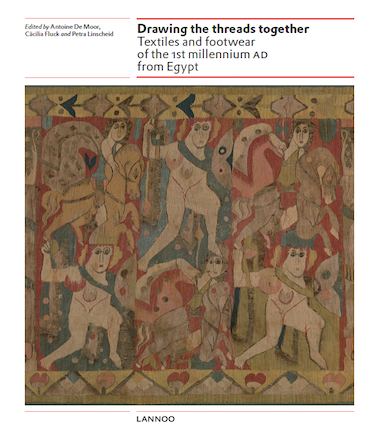
DE MOOR, Antoine and Cäcilia FLUCK (eds., 2014). Drawing the Threads Together. Textiles and Footwear of the 1st Millennium AD from Egypt, Tielt: Lannoo Publishers. ISBN 978-94-014-1083-0. Hardback, pp. 304, fully illustrated with numerous colour images, maps, line drawings, etc. Bibliography and index. Price: €40.
A series of conference papers from the 7th meeting of the study group, in October 2011, at the Katoen Natie Museum, Antwerp. The papers cover a wide range of subjects, from carpet fragments, embroideries, to various forms of garments including tunics and trousers, as well as footwear in various collections and written sources describing footwear (“a man must not go out with nail-studded sandals”) in Jewish sources. As with other conference papers in this series, there are also papers about iconography and the technical analysis of first millennium AD textiles from Egypt and neighbouring countries.
Comments: The range of subjects covered is wide and presented by various well-known specialists in the field. Again perhaps the range of subjects is too wide and to have a volume on footwear (a vast subject in itself) in the 1st millennium AD would perhaps have been more appropriate. Nevertheless this is an essential book to have in any library that concentrates on textiles and dress in the ancient world.
***
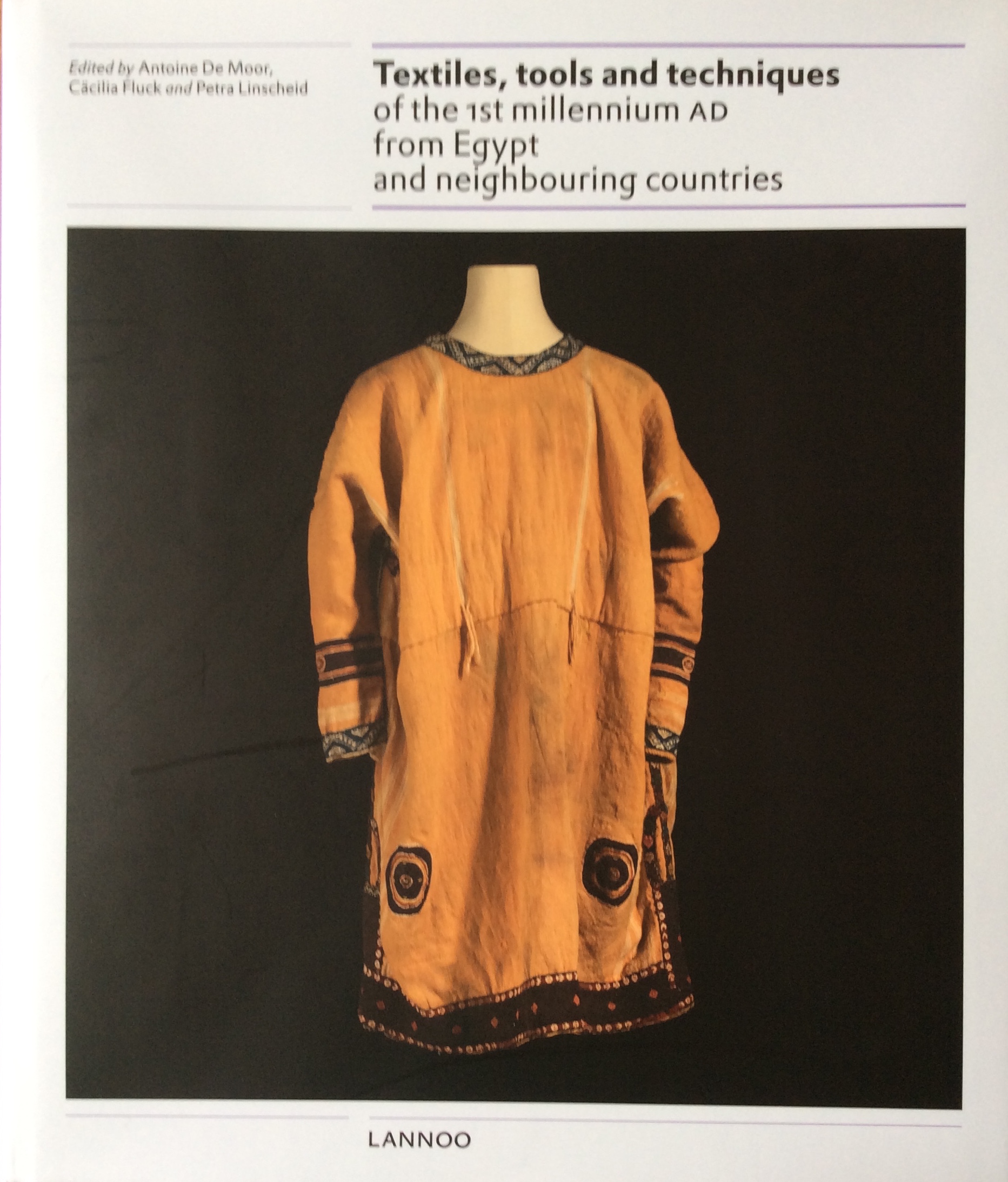
DE MOOR, Antoine, Cäcilia FLUCK and Petra LINSCHEID (eds., 2015). Textiles, Tools and Techniques of the 1st Millennium AD from Egypt and Neighbouring Countries, Tielt: Lannoo Publishers. ISBN 978-94-014-3240-5. Hardback, pp. 197, fully illustrated with numerous colour images, maps, line drawings, etc. Bibliography and index. Price: €40.
A series of conference papers from the 8th meeting of the study group in October 2013 at Katoen Natie Museum, Antwerp. The contents of the book are divided into five main sections, namely, (i) Textiles from excavations, (ii) Textiles in public collections, (iii) Textile techniques and radiocarbon dating, (iv) Textile tools, and finally (v) Items of clothing.
Comments: The range of subjects covered in this book is more extensive than indicated by its title. Most of the articles fall into the first section (the analysis of textiles from various excavations), and many aspects have already been covered in other books in this series. It would have been worthwhile to have included more about the raw materials and tools used to make the textiles, as this would help in identifying relevant items within various archaeological contexts and at the same time increasing our knowledge of equipment and how these relate to the techniques used and, of course, the final products.