

Exploring the faunal imagery of Qing dynasty woven and embroidered textiles in the TRC collection, by Mayte Van den Broeck, TRC volunteer
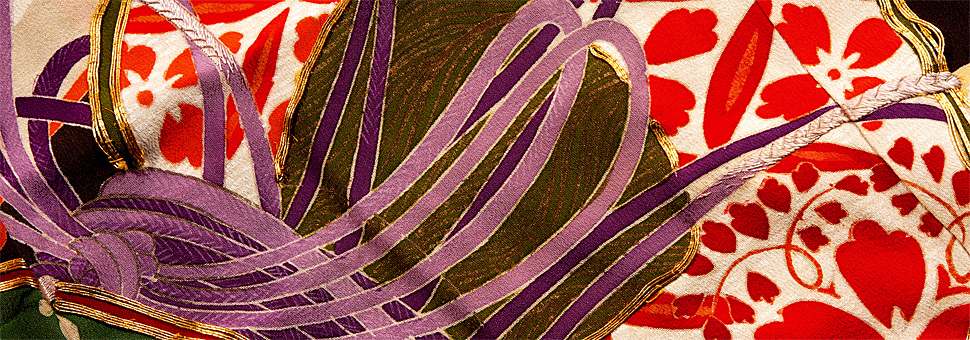
In Qing society, garment decoration, such as embroidered and woven motifs, were often embedded with meaning, signalling the wearer’s values, identity, and their social and political status. The upper classes were familiar with and able to both convey and read the iconography of embroidery and woven decoration that adorned their garments and accessories.
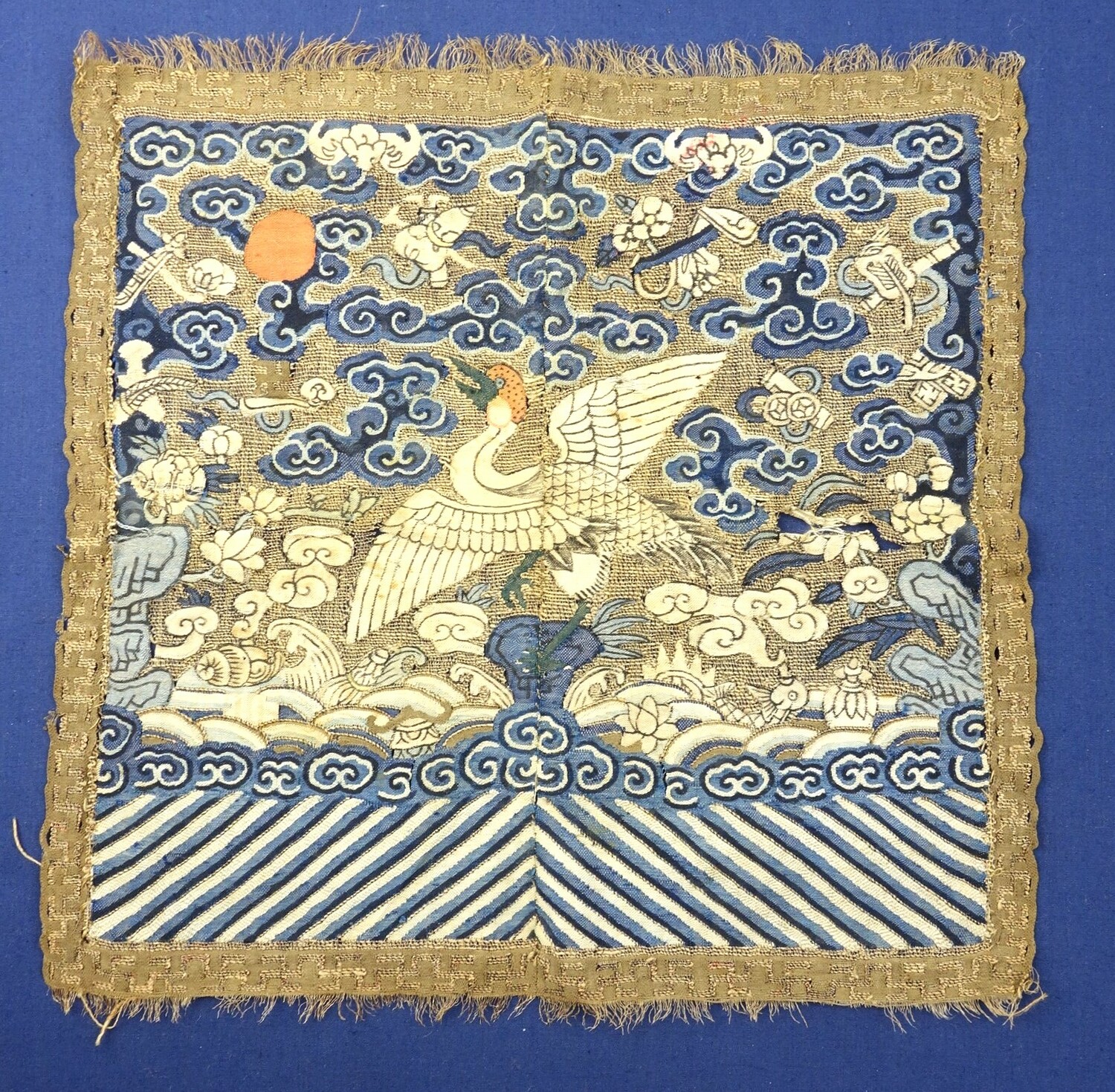 Fig. 1. A woven rank panel with the design of a bird (crane) facing towards a red sun. China, 19th century (TRC 2016.2363).
The meaning of the decoration was determined by the subject matter or motifs depicted, and the layout or framework in which the motifs were placed. The placement of the imagery on the garment, together with its content, signify how the motifs are to be interpreted. Compositions in the Qing dynasty can be categorised into four styles: bordered, dispersed, consolidated, and integrated.
 Princeton University Press