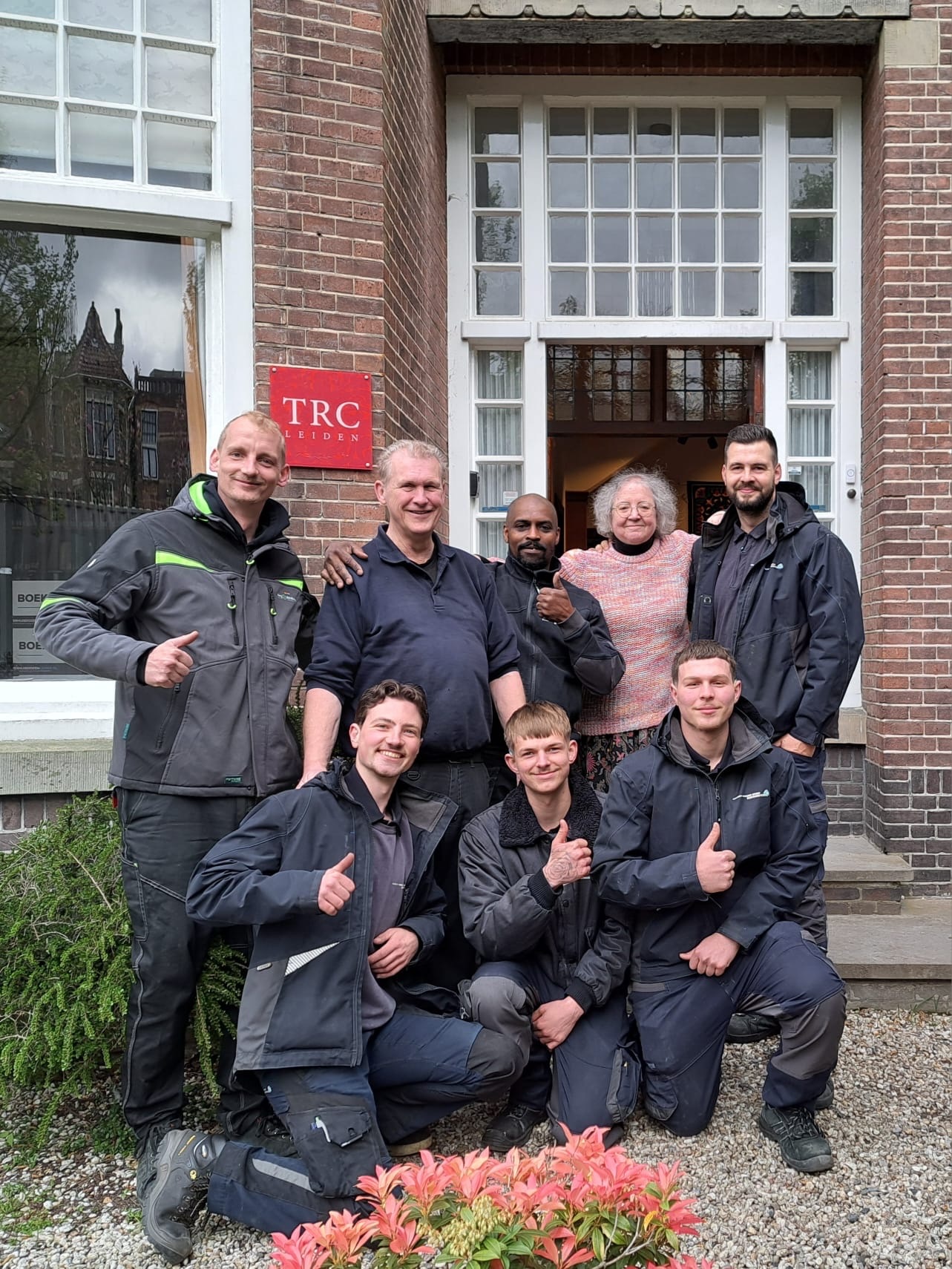
 Fig. 1. Finishing the move: Group photograph with the lads (and Gillian), 10 April. Photograph by Emilie Lambert.Another busy week at the TRC! The painters, electricians, curtain and security people have finished their work. The builders are doing the last few jobs and making plans for what needs to be done later in the year, especially on the outside.
The last deliveries for now by the removal company have just taken place (Fig. 1) and then, hopefully, there will be a period of a little peace and quiet, so we have time to get used to the building and see and discuss what needs to be done.
We are talking with Stichting Monumentenbezit (the new owners of B6) and others, for example, about having an annex in the garden for the permanent storage of the TRC Collection. Leiden Council and Monumentenbezit have already given their permission for the annex to be built, and now we have to find the funding. As you can imagine, there is much to think about and do on this subject matter.
We have also been discussing what should be done with the 150-200 year old Amsterdam waffle-house (or was it for pancakes?), which since the 1920s has been a feature of what is now the TRC garden, but originates from a bridge in Amsterdam (close to the current Koningsplein). It is a lovely wooden building, but in a poor condition. The romantic in me can see summer events, including lectures, buffet dinners, workshops on fibre plants and natural dyeing, etc. In addition, I know someone close to me who wants to write his memoirs there. But again this is a subject for later thoughts and discussions!
 Fig. 2. The garden pavilion in the garden of the new TRC home.Workshops, study days and courses
Over the last few weeks we have had an edition of the TRC Five-Day Intensive Textile Course, workshops about Irish crochet and band weaving, as well as several workshops on bobbin lace making. We have also had a study day about a type of Egyptian appliqué known as khayamiya. This meeting was led by a former TRC intern, Christina de Korte (Utrecht University), who recently spent several months in the Street of the Tent Makers in Cairo, learning the related techniques and history of khayamiya. The new TRC exhibition that opens in May is based on Christina’s work.
We are busily working on increasing the TRC’s activities list (see the current list of upcoming events). We are pleased to announce a very special event, namely two workshops about Lefkara lace, a form of whitework embroidery from Cyprus that was recently added to the UNESCO Representative List of the Intangible Cultural Heritage of Humanity. This is the initiative of Kaat van Orshoven and the Cyprus Handicraft Service. Eleni Anemomilou, a specialist in this type of embroidery, is especially coming from Cyprus to give several Lefkara workshops in the Netherlands, including two workshops at the TRC. The workshops will take place on Thursday, 21st May and Friday, 22nd May, between 13.00 to 16.00 and will be given in English. For more details, click here.
In a few weeks time there will also be another 5-day Intensive Textile Course, following up on the one we 'did' in February last. Currently there are two places left should you be interested in attending. More details can be found here.
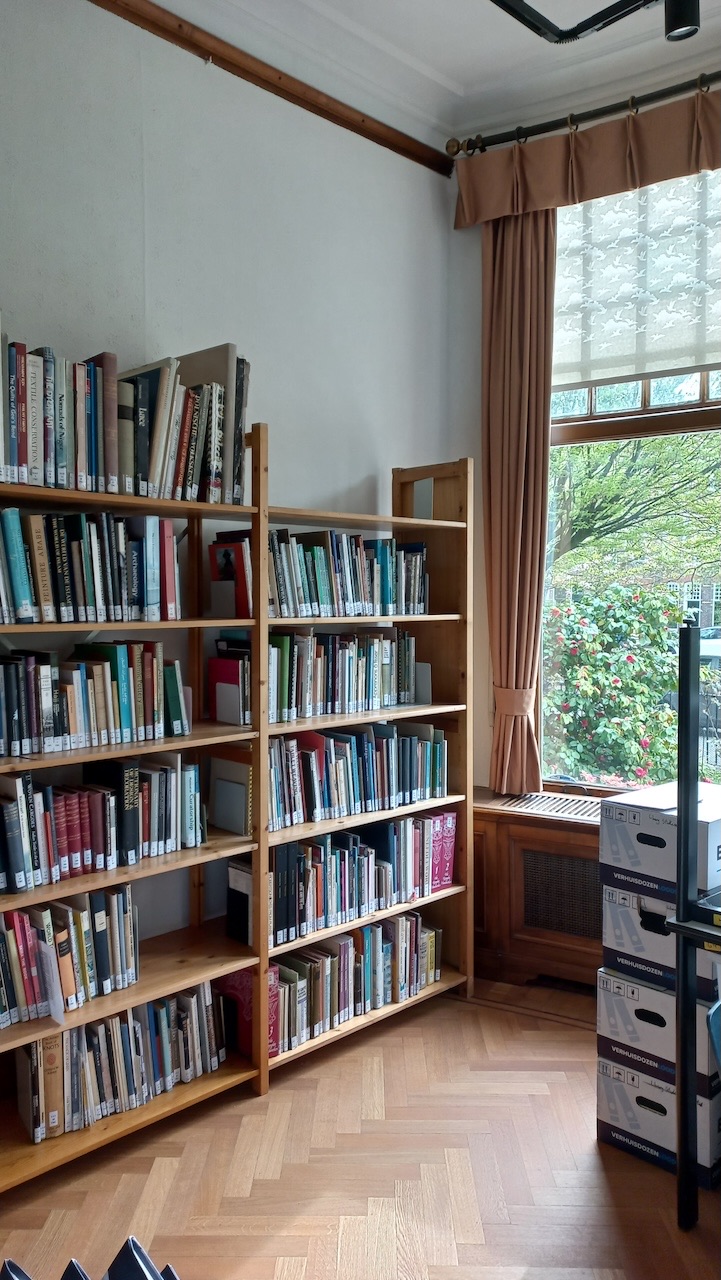 The library takes shape.The press and the TRC
Not long ago the TRC was mentioned in various diverse publications, such as the Wall Street Journal, the Dutch national newspaper, Trouw, and the women’s magazine, Margriet. There will also be a 6-page article about the Atlas of World Embroidery and the TRC in the international carpet and textile journal, HALI, which will appear at the end of April. In the meantime, last week (1st April) I was interviewed by Yvonne Philippa from Handwerk zonder Grenzen (HzG) about the Atlas of World Embroidery, and what we are doing at the TRC. The article will appear in both the Dutch and German editions of HzG.
On the same day, Claudia Marcu from Radio Romania Cultural came and we did a recorded interview about the work of the TRC, embroidery and support for Eastern European and Balkan embroidery practices and study. Claudia has said she will come back with a group of international journalists based in the Netherlands to help spread the word about what we are doing at the TRC. So as you can see there is more and more attention being paid to the TRC as an international knowledge centre for textile and dress studies. If you are interested in writing about the TRC and what we are doing, please do not hesitate to get in contact with me at Dit e-mailadres wordt beveiligd tegen spambots. JavaScript dient ingeschakeld te zijn om het te bekijken.
Some recent additions to the TRC Collection
Recent donations include a group of garments, given by the international fashion designer, Clare Waight Keller, who is a member of the TRC Board. She has very kindly given antique textiles and garments, as well as specially designed textiles from when she worked at various fashion houses in Paris. More about these pieces will follow shortly when they have been added to the TRC Collection database.
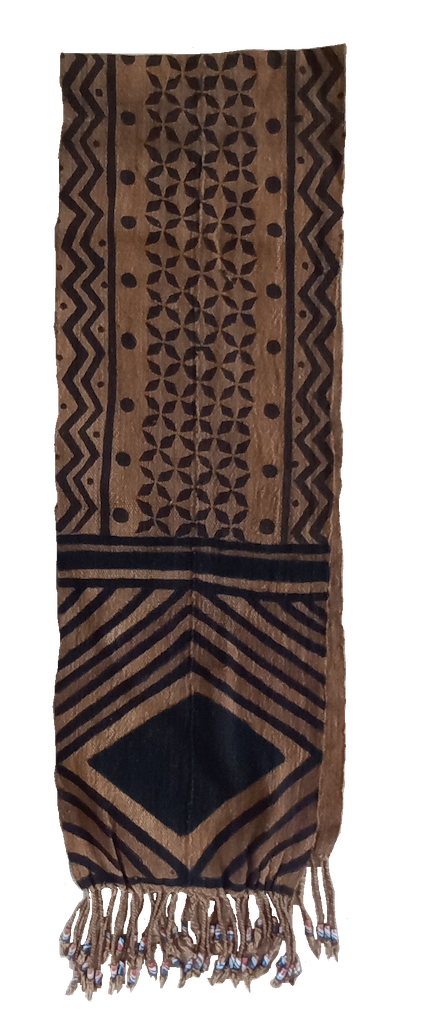 Fig. 3. Length of cloth made up of narrow strips of woven material, sewn together and printed with a geometric pattern. Late 20th century, Sahel, Africa. TRC 2026.0337.Prof. Rogier Bedaux has given five handspun and woven items, including three children’s tunics from the Sahel, Africa, which date to the late 20th century (Figs. 3-4). Rogier was a founding member of the TRC Board and curator at the National Museum of Ethnology, Leiden, and thanks to him we were given space and facilities at the Museum from 1991 to 2009. With Rogier and other people’s help we have gently been building up the sub-Saharan African section of the TRC Collection.
We have also been approached about a collection of Romanian and Balkan textiles and garments, including embroidered pieces, which date from the 1920s to 1940s, as well as various other items. We will be discussing these pieces with the owner shortly. As they include dated and provenanced dowry pieces associated with specific people (there is even a portrait of the happy couple on a 1920’s dowry box).
We have also had a group from Taiwan who visited the TRC and we agreed that they are going to help us in setting up a Taiwanese indigenous embroidery collection as part of the TRC specialising in the techniques, uses and history of embroidery from around the globe. The aim is to have relevant details about these and other pieces published in volume 5 (East Asia) of the Bloomsbury Encyclopaedia of World Embroidery (for Vol. 4, click here).
The future
We are working hard with various people, including Susan Gloudemans, the new TRC’s development advisor, to set up and put into practice short, medium and long term plans for the TRC. This work includes a diverse list of meetings with representatives from the academic, commercial, cultural, diplomatic, educational, and funding worlds, to direct people's attention to the TRC and its many possibilities with respect to textile and dress studies. At the same time, as noted above, we are increasing the number of workshops, courses, lectures, etc., and planning textile study courses for different levels and groups of people, from the academic, commercial as well as practical worlds.
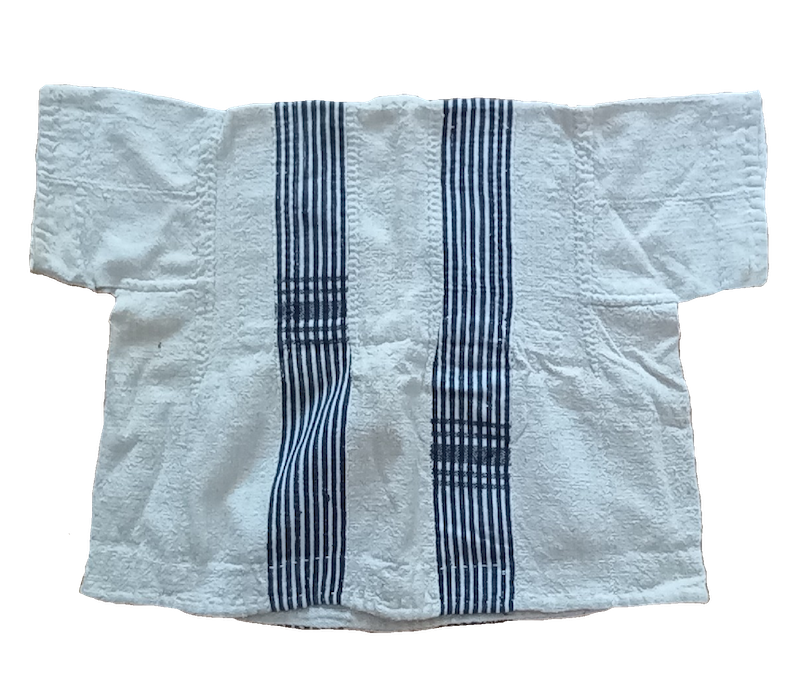 Fig. 4. Child's cotton tunic made up of numerous narrow strips of hand woven cloth. Late 20th century, Sahel, Africa. TRC 2026.0335.
Helping the TRC
If you are interested in helping the TRC, perhaps as a volunteer, an intern or a financial supporter, please do not hesitate to get in contact with the TRC at Dit e-mailadres wordt beveiligd tegen spambots. JavaScript dient ingeschakeld te zijn om het te bekijken.. In particular, we are looking for an experienced person who would like to take charge of the TRC Library. This is a volunteer position and, for instance, would suit someone who wants to gain experience running a medium-sized specialist library, or someone who has just retired as a librarian but would like to continue his/ her work at a truly exciting place with a dedicated group of colleagues. We currently have over 7,000 registered books, but we want to expand the collection to include a wider range books, prints, photographs, charts and patterns, all relating to textile, clothing and accessories.
Gillian Vogelsang-Eastwood, Director TRC, 11 April 2026