• F2
  • F3
  • F1
  • F4

Fig. 1. Masaru Matsui (right) and the author.Fig. 1. Masaru Matsui (right) and the author.(Kikuchi Naoko, 10 July 2026) In late May of this year, I visited the atelier of the hikihaku craftsman, Masaru Matsui, who lives and works in Kyoto (Fig. 1). I wanted to know why my friend Natasha, with a broad knowledge of textiles, was so much fascinated by the so-called hikihaku textiles and even moved to Kyoto to learn the technique.

Hikihaku in Japanese means 'woven foil'. Also known as hikibaku, it is an ancient, intricate technique, carried out by a ‘hakuya’ (a hikihaku-design craftsman), a ‘kiriya’ (cutting craftsman) and a ‘hataya’ (weaver).

Fig. 2. Gold foil for hikihaku.Fig. 2. Gold foil for hikihaku.Masaru Matsui from Kyoto is a hakuya. The technique of hikihaku is based on the use of sheets of paper that are covered with (coloured) lacquer and (metallic) foils (Fig. 2), applied in decorative patterns against the colour of the lacquer, then cut into extremely thin and narrow thread-like strips that are subsequently woven into the warp structure of a piece of cloth. The strips are added to the cloth in such a way that the decorative patterns that were cut up in strips re-emerge on one side of the woven cloth.

The lacquer

A standard sheet of washi used for hikihaku is 45 cm wide and 60 cm long. A hikihaku designer covers the paper with urushi lacquer or another substance, which works as both an adhesive and a paint. The basic colour of urushi is honey-brown, but can be altered by adding pigments or other substances to achieve different colours. To create a black colour, for instance, iron powder is added to the lacquer.

Fig. 3. Hikihaku obi created by Masaru Matsui.Fig. 3. Hikihaku obi created by Masaru Matsui.The use of urushi for hikihaku, however, is now losing its popularity, because it is difficult to handle. It changes colour, not only by adding pigments, but also with temperature, humidity and time. It may also cause a rash on the skin when wet. But Matsui still loves urushi because of its durability, glossy coat and colour.

Creating and cutting the pattern

After covering the paper with the coloured lacquer, the craftsman adheres foils and slivers of gold, silver, platinum, mother-of-pearl or lapis lazuli to complete the decorative pattern. He then marks the paper on the back and cuts it into thin strips of c. 0.3 mm. A precise and perfect cut is crucial, otherwise the decorative pattern cannot be correctly woven into the cloth. A highly skilled craftsman will cut the sheets into strips, nowadays with a slitter or guillotine cutter, sandwiching the sheets between layers of paper to keep them flat and stable. 

Fig. 4. Obi with a hikihaku design of drum and flutes in bags.Fig. 4. Obi with a hikihaku design of drum and flutes in bags.To create an obi with hikihaku decoration (Fig. 3), the strips are woven as a weft thread, namely over and under the warp threads of the cloth. During the weaving, the marks of the pattern on the back of the strips are constantly checked with a mirror on the back of the loom. The weaving itself used to be carried out by hand, with a ‘hera’ (shuttle), but nowadays a powered loom is often used. 

The finished obi is 30-32 cm wide and 4.3-4.5 m long. For one obi, five to six hikihaku sheets are required. The hikihaku covers the full length of the obi, but not the full width. The finished textile has a smooth surface and subtle shine. No hikibaku obi is identical. The colours and shine of the garment, if urushi is used, become more intense over time.

Fig. 5. Fragment of an obi with hikihaku garden pattern.Fig. 5. Fragment of an obi with hikihaku garden pattern.To see how the foil pattern is created, cut, woven, selvedged, and sewn, please watch this film, produced by Okamoto Orimono.

Attached are photoghraphs of two hikihaku obi which I found at the flea market of the Kitano-Tenmangu, Kyoto, after learning how to distinguish hikihaku obi (Figs. 4-5).  

History

Foil weaving was introduced in Japan from China. In the late Heian period (10th – 12th century), Chinese priests introduced brocade robes and other precious textiles to Japan. They included textiles that were decorated using foil strips. During the Muromachi period (in the late 16th century), textiles that were delicately decorated with  foil paper were woven in Nishijin (a Kyoto district). Local craftsmen had learnt the technique from Ming craftsmen in China who had migrated to Sakai in Japan. These textiles were used for the decoration of temples, for the robes of monks and for Noh costumes, but eventually also for luxurious obi.

Fig. 6. The guitar of Riku, the son of Masaru Matsui, decorated with hikihaku.Fig. 6. The guitar of Riku, the son of Masaru Matsui, decorated with hikihaku.In the late 19th century, chemical lacquer and the mechanical slitter were introduced. Until then washi was folded and cut with a knife. In the post-war period (1950s – 1970s), the kimono industry flourished, and the slitter or guillotine cutter was much improved for mass production. In the 1980 -1990’s, a large variety of metallic foils were used to cater to people’s taste.

Masaru Matsui

Masaru Matsui started working as a salesman for his uncle's hikihaku company in 1983.  Observing hikihaku craftsmen working for their clients, he learned how to make hikihaku. As the demand was high, Matsui started to make hikihaku himself and officially became a traditional hakuya and hikihaku craftsman. With his skill and artistic talent, he accepted commissions from prestigious weaving companies, such as Kawashima Selkon Textiles. Even the then Empress Michiko purchased one of his hikihaku obi, which she wore on her birthday and other important occasions.

Fig. 7. Kawashima chair, with hikihaku decoration, by Masaru Matsui.Fig. 7. Kawashima chair, with hikihaku decoration, by Masaru Matsui.However, the kimono industry gradually declined, and so did that of hikihaku. Especially the number of craftsmen cutting the paper went down. Right now, only two are left, and both of them are over 70 years old.

When some years ago Masaru Matsui's ten-year old son Riku told his father that he wanted to become a hikihaku craftsman, Matsui suggested that Riku should pursue his own, different path. In later life, Riku became a guitarist (Fig. 6).

In recent years there has been a revival. The textile companies of Kawashima Selcon and Kusuka Fabric have since started to use hikihaku for interior decoration, such as for a high-end chair (Fig. 7) and luxurious car upholstery. Please read more about the chair of Kawashima Selcon and the BMW interior decoration from the links below; 

Fig. 8. Billiard cues decorated with hikihaku.Fig. 8. Billiard cues decorated with hikihaku.With a growing market and the use of hikihaku for a broader range of interior decoration, the cutting of hikibaku strips remains a problem. The maximum width of the guillotine blade is 120 cm, while many interior textiles require a width of 150 cm. Matsui now considers using the cutting machine traditionally applied to produce the so-called Saga – Nishiki brocades, whereby strips of metal coated paper are used for warp threads over 4 metres long.

The machine has many wafer-thin circle blades to cut the threads from the paper. By setting the machine and paper horizontally, the width problem can be solved. The problem is the introduction cost, finding cutting craftsmen, and the difficulties in weaving.

In the meantime, Matsui started to use his design skills for other items; smartphone cases, instrument decoration, billiard cues (Fig. 8) and small art-panels. He feels fortunate that he can keep working, if not only for obi. As perhaps the last craftsman to use urushi for hikihaku, he hopes this technique is being well-recorded for the future. Although still taking commissions for the finest obi, he also wants to decorate large objects such as interior panels and plaster walls. There is no limit for the application of gold leaf, says Matsui.

References:

  • Kirihata, K. and Matsuo, H. (1986), IWANAMI GRAPHICS 34 Nishijin - ori, Traditional technique, [IWANAMI GRAPHICS Denshō no waza], Iwanami Shoten, Publishers
  • Ogasawara, S. (1998), The basic knowledge of viewing dye and weaving [Some to ori no kanshō kiso chisiki], Shibundo

(Gillian Vogelsang, 1 July 2026) Two years ago, I wrote a blog called The Three A’s and Afghanistan, which was about how ideas, patterns and objects, move across the world and always have done so. In that context I mentioned the importance of the three A’s for the TRC’s approach to textiles, namely Adoption, Adaptation, and Acknowledgement.

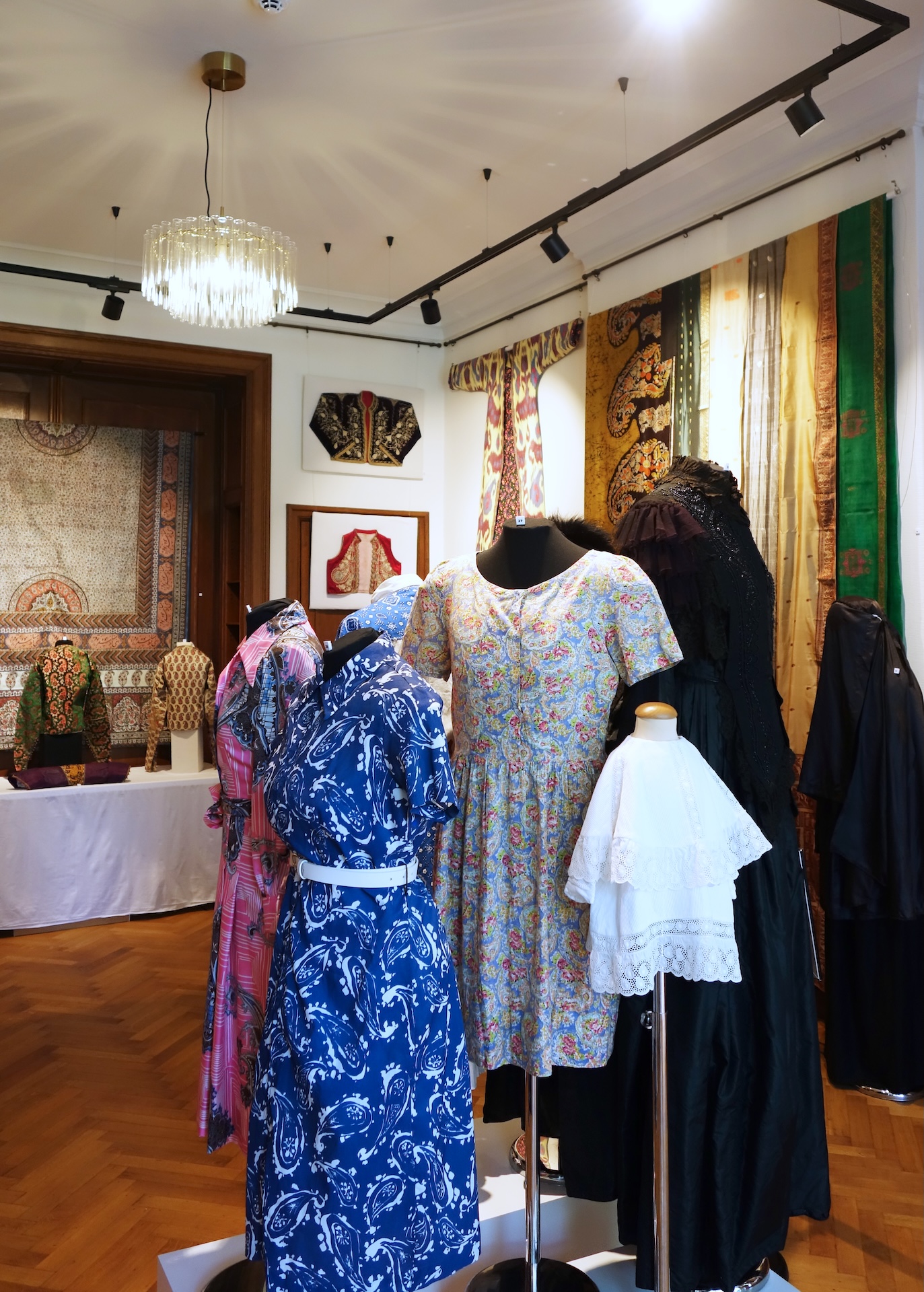
A jacket made from a red cotton cloth decorated with a multi-coloured floral and paisley pattern. From the island of Marken, The Netherlands, 1937 (TRC 2007.0525c).A jacket made from a red cotton cloth decorated with a multi-coloured floral and paisley pattern. From the island of Marken, The Netherlands, 1937 (TRC 2007.0525c).

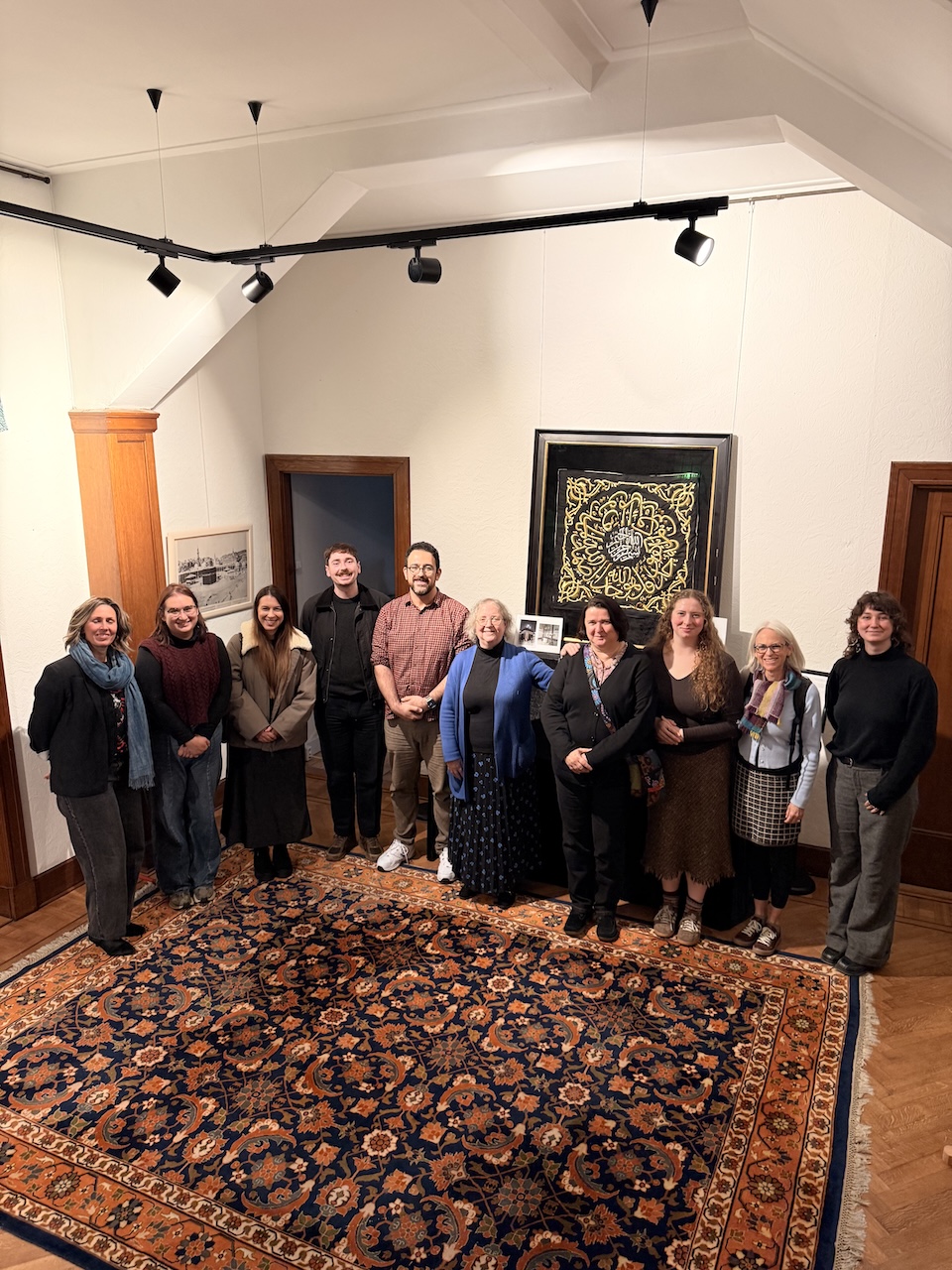
The Textile Research Centre, Boerhaavelaan 6, Leiden.The Textile Research Centre, Boerhaavelaan 6, Leiden.The TRC has recently moved to new premises, an early 20th century urban villa just behind the Leiden railway station. There is a lot of work to be done and we are looking for several new volunteers!

In particular we need:

- An experienced librarian who can take over the running and development of the TRC textile and dress library (currently standing at 7000 registered books), as well as help build up an image library that will include prints, photographs, postcards, charts and patterns. One to two days per week.

- A general assistant to help on a regular basis with the TRC Collection of textiles, clothing and accessories from around the world. Experience in object photography would be an advantage.

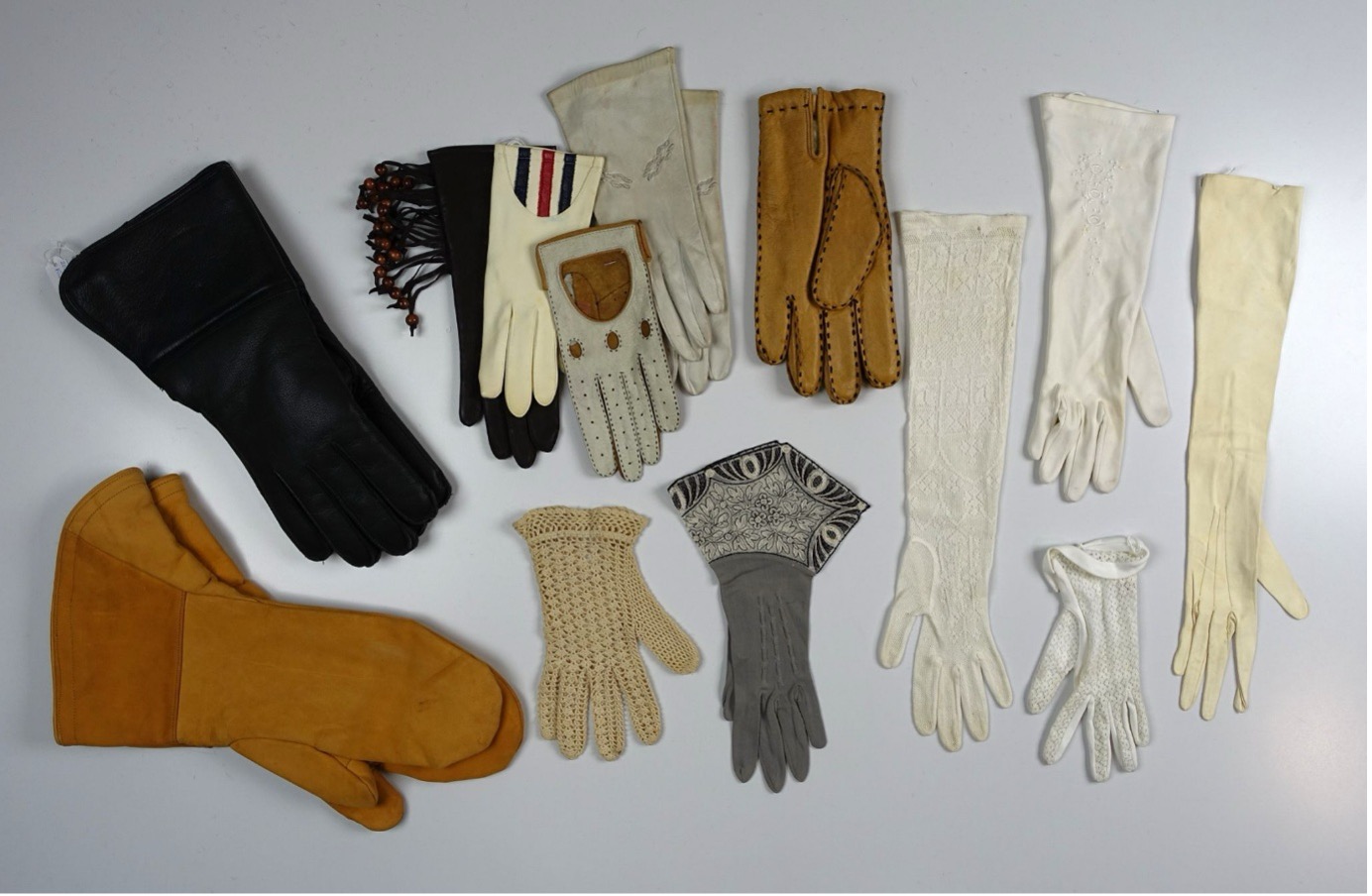
 - A volunteer is also needed to help catalogue the TRC's extensive and growing collection of hand (bobbin, needle, crochet, knitted, etc.) and machine-made lace. These items take the form of individual samples, as well as items (caps, lappets, gloves, garments, etc) made from or decorated with lace.

If you are interested, please contact Gillian Vogelsang-Eastwood, Dit e-mailadres wordt beveiligd tegen spambots. JavaScript dient ingeschakeld te zijn om het te bekijken., or 06-28830428

I could not resist putting this on the TRC webpages: an interview with Gillian Vogelsang-E`astwood, director TRC, published by an online news service about the Netherlands. I am very proud of her! Click on the photograph to read the item. Willem Vogelsang.

Gillian Vogelsang-Eastwood, photographed for DutchNews, June 2026.Gillian Vogelsang-Eastwood, photographed for DutchNews, June 2026.

Het Leidsch Dagblad publiceerde vandaag, woensdag 10 juni, een artikel van twee pagina's over de TRC, de verhuizing naar de Boerhaavelaan en de ambities voor de toekomst. Het vestigt ook de aandacht op de textielboekenmarkt aanstaande zaterdag, vanaf 10.00 uur.

Find the books you have long been looking for, and help support the TRC by buying some of them! 

We are going to have our annual book sale on Saturday 13th June, from 10.00 until 15.00. Hundreds of second-hand textile, clothing and accessory books will be on sale, at very reduced prices! 

The TRC regularly receives donations of books. We select them en see whether we can use them and whether the titles may already be included in the extensive TRC textile library. If we cannot use the books, we very much want to pass them on to other textiles friends against a low price.

Why don't you pop in and have a look? You may find the book that you have long been looking for. You will also have the chance to see the TRC’s current exhibition about appliqué textiles called khayamiya which come from Egypt, as well as seeing the TRC’s new building and garden, and of course meeting TRC staff and others.

Our address is: Boerhaavelaan 6, 2334 EN Leiden, just behind the Leiden Central Railway Station.

The Textile Research Centre, Leiden.The Textile Research Centre, Leiden.For three years starting mid-2026, the Textile Research Centre, Leiden, the Netherlands, is offering a total of seven junior and four senior fellowships for up to six months each. The fellowships are being sponsored by the Gieskes-Strijbis Foundation, Amsterdam. Fellows are invited to carry out research based on the TRC’s extensive textiles and dress collection. The junior fellows will be supervised and assisted by TRC staff; senior fellows will carry out independent research.

The TRC will regularly advertise for the fellowships. Fellows are selected by a special committee of TRC staff and/or Board members after, if appropriate, the advice of external specialists.

The first fellow, appointed per 1 April, is Flora Kovacs-Wester, who on 23 May 2026 wrote an interim report.

We are now opening the second round of the fellowships that covers:

  • Two junior positions
  • One senior position

These will be starting in October 2026 (with a degree of flexibility), for a duration of up to 6 months. Applications for these positions should be submitted by email to the TRC by 20 June 2026 (Dit e-mailadres wordt beveiligd tegen spambots. JavaScript dient ingeschakeld te zijn om het te bekijken.)  with the reference: ‘Fellowship programme Junior/ Senior' (depending on the position applied for).

In diverse recente blogs hebben we verwezen naar de behoefte van het TRC aan extra opslagruimte voor de TRC-collectie. We hebben meer informatie beloofd en die volgt nu!

Voorzijde van pand Boerhaavelaan 6, het nieuwe onderkomen van het TRC. De Annex wordt links van het huis geplaatst.Voorzijde van pand Boerhaavelaan 6, het nieuwe onderkomen van het TRC. De Annex wordt links van het huis geplaatst.

Zoals u wellicht weet, is het TRC Leiden een internationaal kenniscentrum voor textiel dat onlangs is verhuisd naar een nieuw pand (Boerhaavelaan 6, Leiden) dankzij de hulp van de Leidse gemeente, de semi-overheidsorganisatie Monumentenbezit en vele anonieme weldoeners.

Het gebouw (B6) is een stadsvilla uit circa 1909, die in de jaren twintig werd uitgebreid. Het was bijna honderd jaar lang de woning van één familie, de Barge-Nauta's (zie een recent TRC-blogbericht).

Het TRC beheert momenteel een collectie van meer dan 54.000 geregistreerde textiel-, kleding- en accessoirestukken. De collectie omvat objecten van over de hele wereld (cultuur en textiel kennen geen kunstmatige grenzen), daterend van de prehistorie tot heden. We hebben bijvoorbeeld enkele van de oudste textielfragmenten ter wereld, maar ook moderne objecten die actuele gebeurtenissen en trends weerspiegelen.

De collectie is een van de grootste in dit deel van Europa, en we zijn ons er terdege van bewust dat deze in de toekomst verder zal groeien. Het is een collectie die mensen kunnen bekijken, aanraken en voelen, en waar ze inspiratie uit kunnen putten.

Subcategorieën

Zoek in TRC website

Contact

Boerhaavelaan 6
2334 EN Leiden.
Tel. +31 (0)71 5134144 (kantooruren)  
office@trcleiden.org

Het TRC is elke dag geopend tussen 10.00 en 15.00 uur.

facebook 2015 logo detail


instagram vernieuwt uiterlijk en logo


Bankrekening

NL39 INGB 0002 9823 59, t.a.v. Stichting Textile Research Centre.

Financiële giften

Het TRC is afhankelijk van project-financiering en privé-donaties. Al ons werk wordt verricht door vrijwilligers. Ter ondersteuning van de vele activiteiten van het TRC vragen wij U daarom om financiële steun:

Giften kunt U overmaken op bankrekeningnummer (IBAN) NL39 INGB 000 298 2359, t.n.v. Stichting Textile Research Centre. BIC code is: INGBNL2A

U kunt ook, heel simpel, indien u een iDEAL app heeft, de iDEAL-knop hieronder gebruiken en door een bepaald bedrag in te vullen: 


Omdat het TRC officieel is erkend als een Algemeen Nut Beogende Instelling (ANBI), en daarbij ook nog als een Culturele Instelling, zijn particuliere giften voor 125% aftrekbaar van de belasting, en voor bedrijven zelfs voor 150%. Voor meer informatie, klik hier