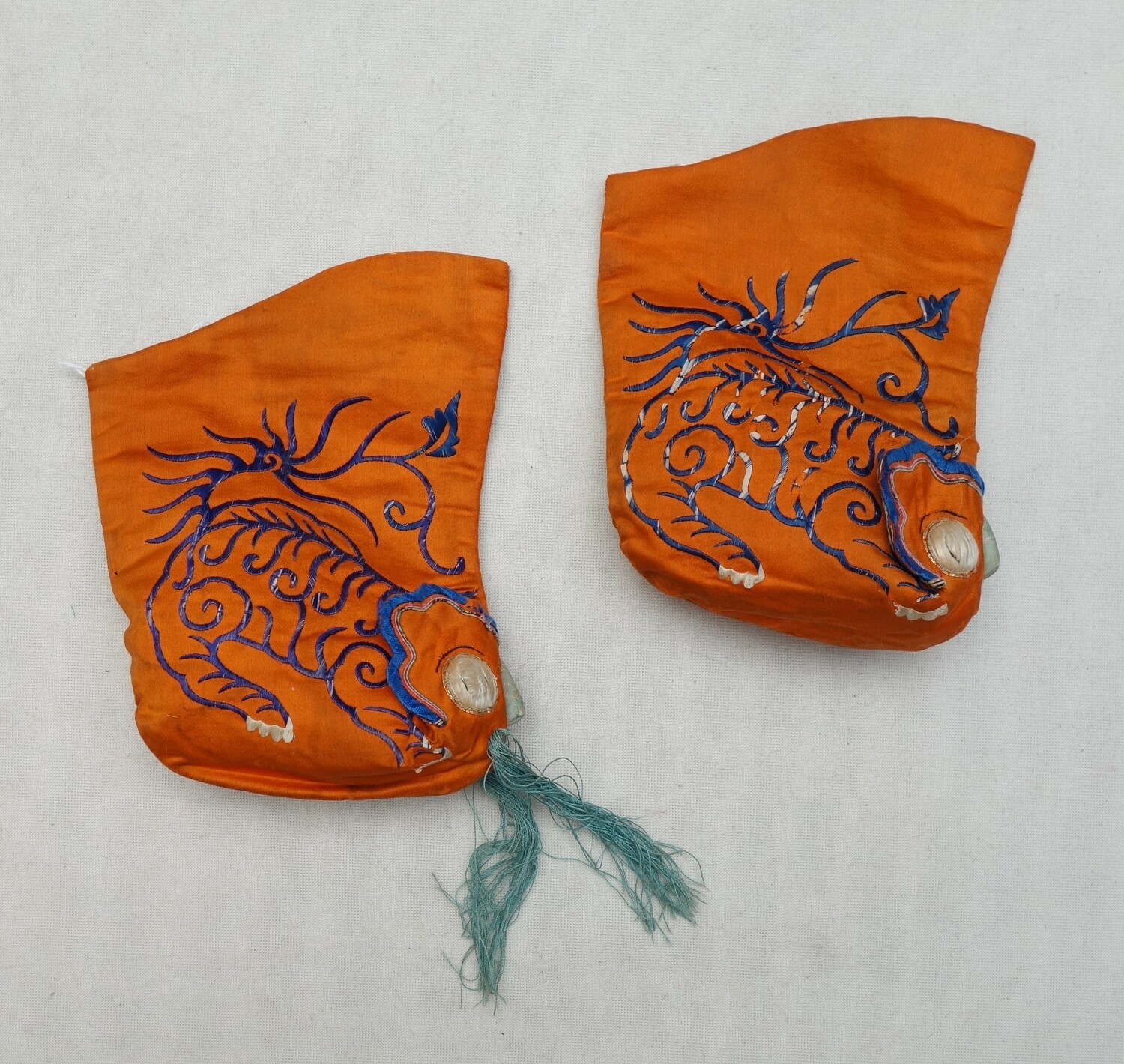
 Pair of embroidered tiger boots for a boy, China, 20th century (TRC 2023.1248a-b).I have small feet (British size 3, Dutch 36), but I feel I have clodhoppers (slang for really large feet or shoes) when I look at some of the shoes that have recently been donated to the TRC by Quirina Vreeburg.
Quirina is slowly giving the TRC her collection of Han and Manchu Chinese textiles, garments and accessories. The first few boxes came in a few months ago and they contained skirts, panels, and gowns.
Just recently she came with another three boxes of items, mainly filled with embroidered pieces, including garments, panels, bags and 25 pairs of Chinese shoes, plus a single, tiny shoe – I will come back to this piece below.
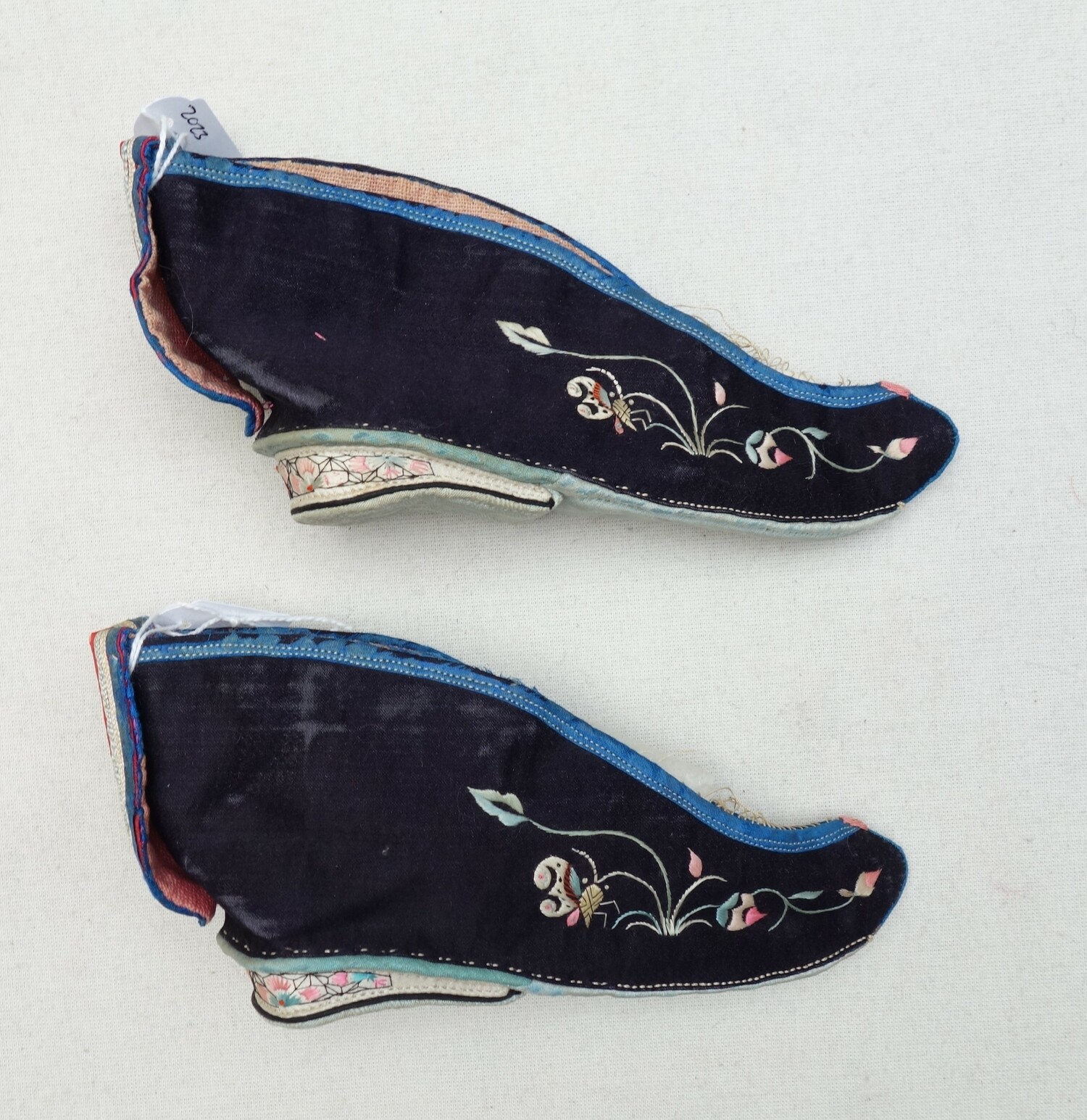 Pair of lotus shoes, early 20th century (TRC 2023.1254a-b).Among the shoes are modern baby examples (TRC 2023.1249a-b), tiger shoes for a boy (TRC 2023.1248a-b), a pair of Manchu shoes with high horse-shoe shaped heels (TRC 2023.1265a-b). There is also a pair of Mao-period shoes (TRC 2023.1256a-b), made out of very sober, black leather.
But most fascinating are the eleven, brightly coloured pairs of lotus shoes for women who had bound feet. We have written blogs earlier on this subject (such as a blog written by Monica Chen from Heidelberg University, on 25 May 2022), and also published an onine exhibition, but the Vreeburg family donation means we now have an even more varied collection of this genre of shoes and boots. They include forms from the Jiangsu and Zheijang region (TRC 2023.1254a-b), as well Shandong style (TRC 2023.1245a-b).
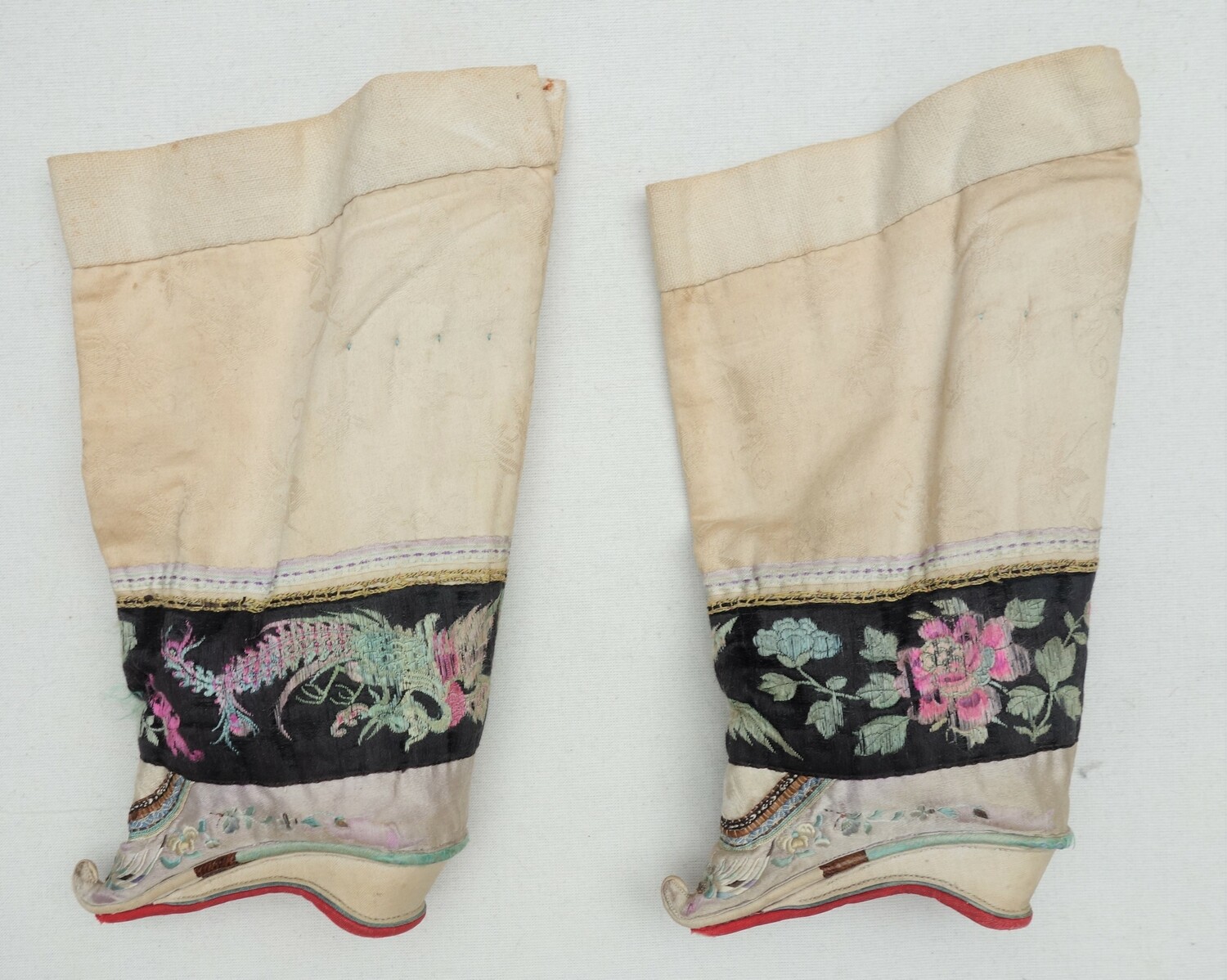 Pair of miniature lotus boots, early 20th century (TRC 2023.1245a-b).A feature of these shoes and other lotus shoes are the beautifully quilted soles that are sometimes decorated with lines, but on other occasions with complex geometric shapes. These soles were meant to be seen when the wearer was sitting or laying on a bed or bench of some kind.
Some of the shoes are clearly made for the tourist market: these tend to have round heels (TRC 2023.1258a-b) or being glued or badly stitched together with mis-matching patterns made from a variety of different materials (TRC 2023.1264a-b).
The soles of tourist/lotus shoes are not normally quilted, so these forms are easy to spot. But there were some other pairs I really had to think about (such as TRC 2023.1250a-b). So why keep these tourist pieces in the TRC Collection?
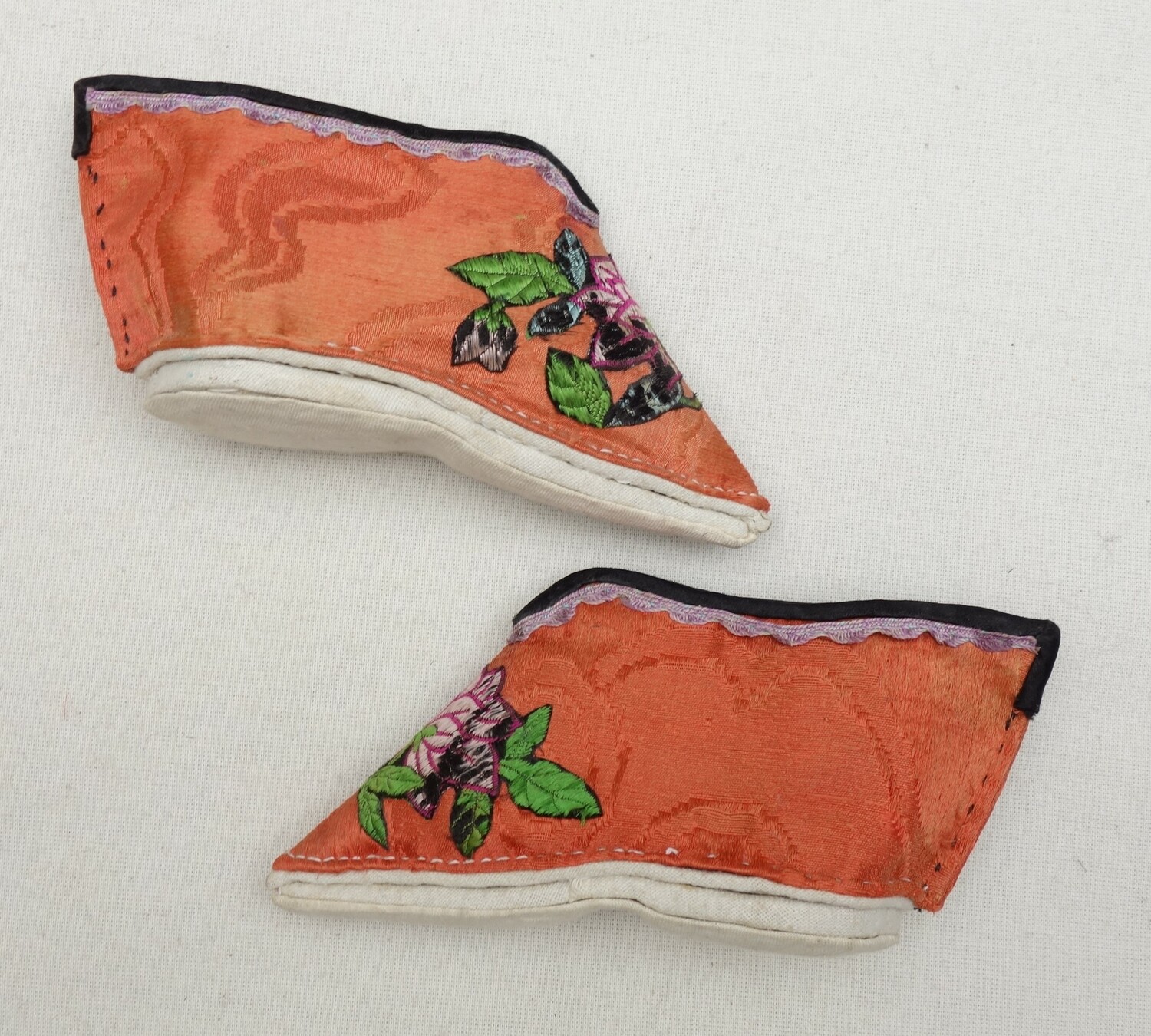 Pair of lotus shoes for the tourist market, early 21st century (TRC 2023.1264a-b).Well, as I keep muttering, if you don’t have the bad, how can you recognise the good? We need to have these objects to give depth to our handling and teaching collection. These tourist pieces are, after all, also part of the continuing history of dress and identity, a core activity of the TRC!
For many, these shoes are also a symbol of the practise that lasted for over 1000 years of deliberately crippling girls in search of ‘beauty’ and ‘refinement’ , as well as a ’good marriage’, not to mention what is perceived by most as a particularly painful means of dominating girls and women, which was banned decades ago in China and elsewhere.
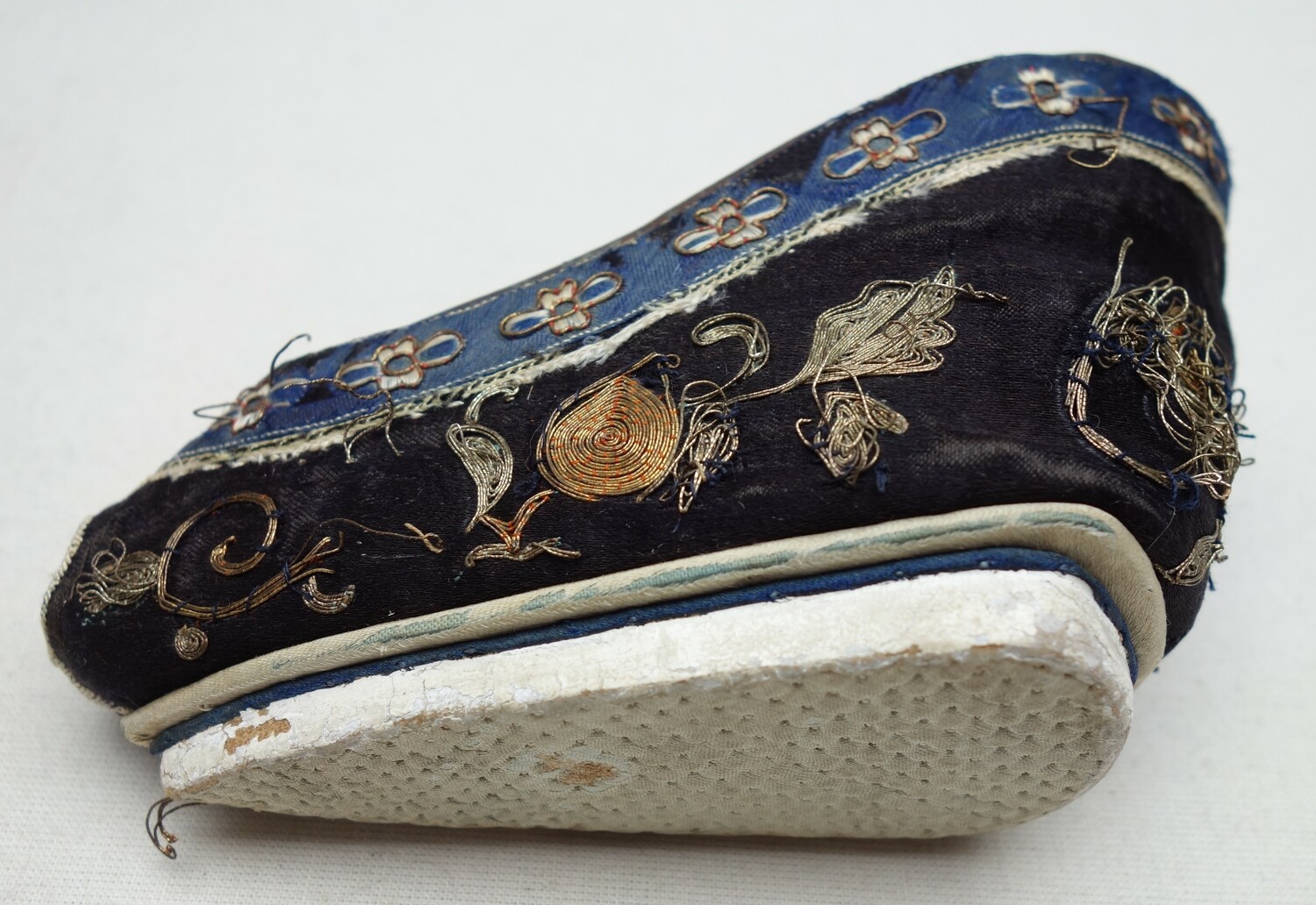 'Ashtray' lotus shoe, early 20th century (TRC 2023.1267a).There is one item, however, that I find personally perplexing. It is the single shoe I mentioned above. Namely a lotus shoe (TRC 2023.1267a and 1267b) decorated with couched gold thread motifs.
The shoe has an inner element made out of metal that was clearly made to fit the shoe, but at the same time it can easily be removed. It puzzled me and then I remembered reading some years ago about lotus shoes being made into ashtrays and here before me was one such example!
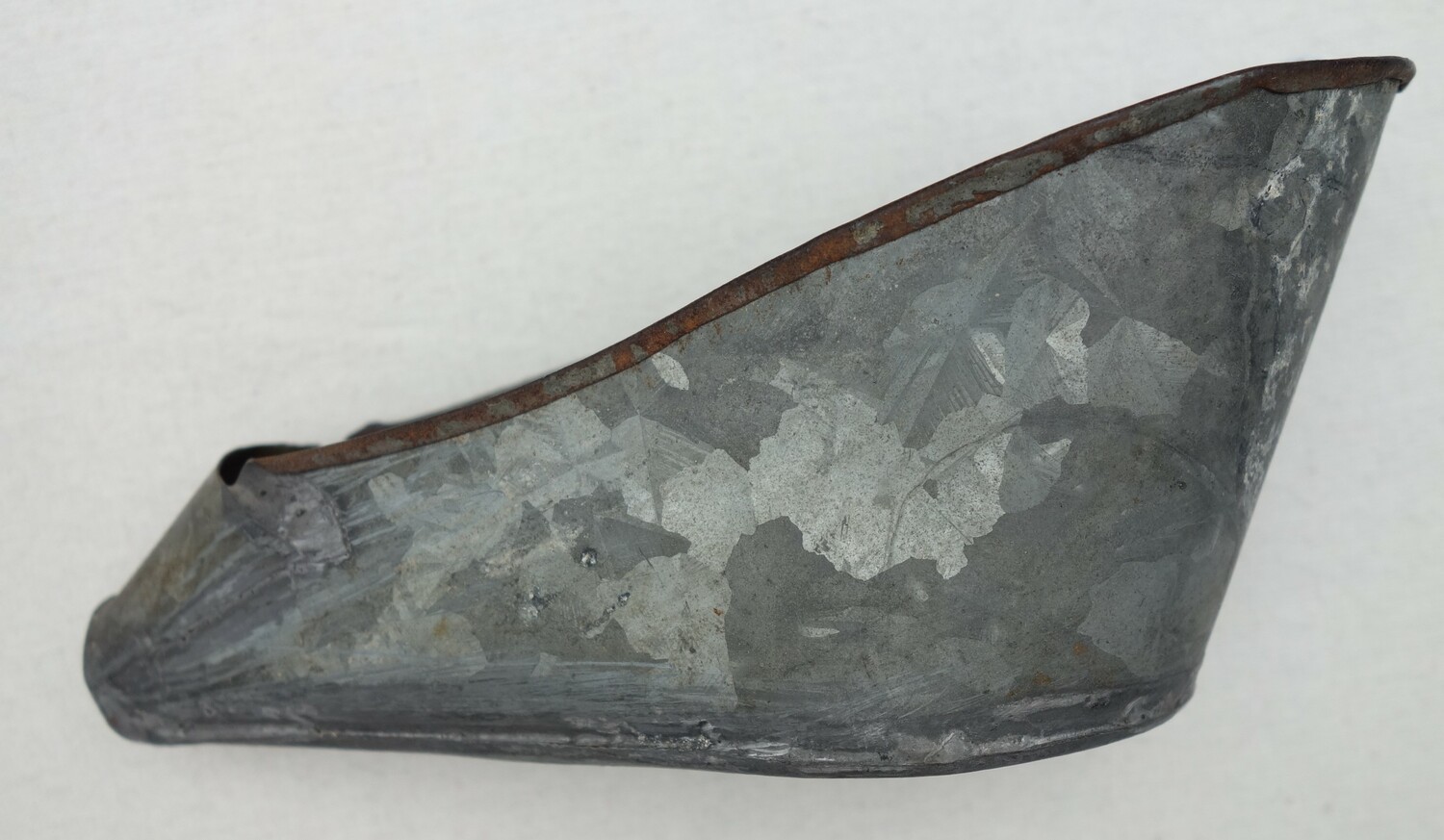 Metal ashtray to go into lotus shoe, TRC 2023.1267a (TRC 2023.1267b).Ashtray shoes were made for both the Chinese market and the international tourist trade. This particular example probably dates to the early part of the 20th century.
And yes perhaps times have changed, but I still have to ask myself what sort of person enjoys stubbing out a cigarette in a lotus shoe given its historical and social context? Or am I asking a silly question?
An exhibition about lotus shoes, including these and other examples from the TRC Collection, is available for loan to a suitable museum or similar institute. Please contact me for further details.
Gillian Vogelsang-Eastwood, 21 August 2023