


In a TRC blog last year, Shelley Anderson mentioned a form of needle lace that is now called Tenerife (or Teneriffe) lace, also known as roseta canario or calado canario in Spanish. Because of the round (medallion) shape of many of its end products, this form of lace is also sometimes called ‘sol lace’.
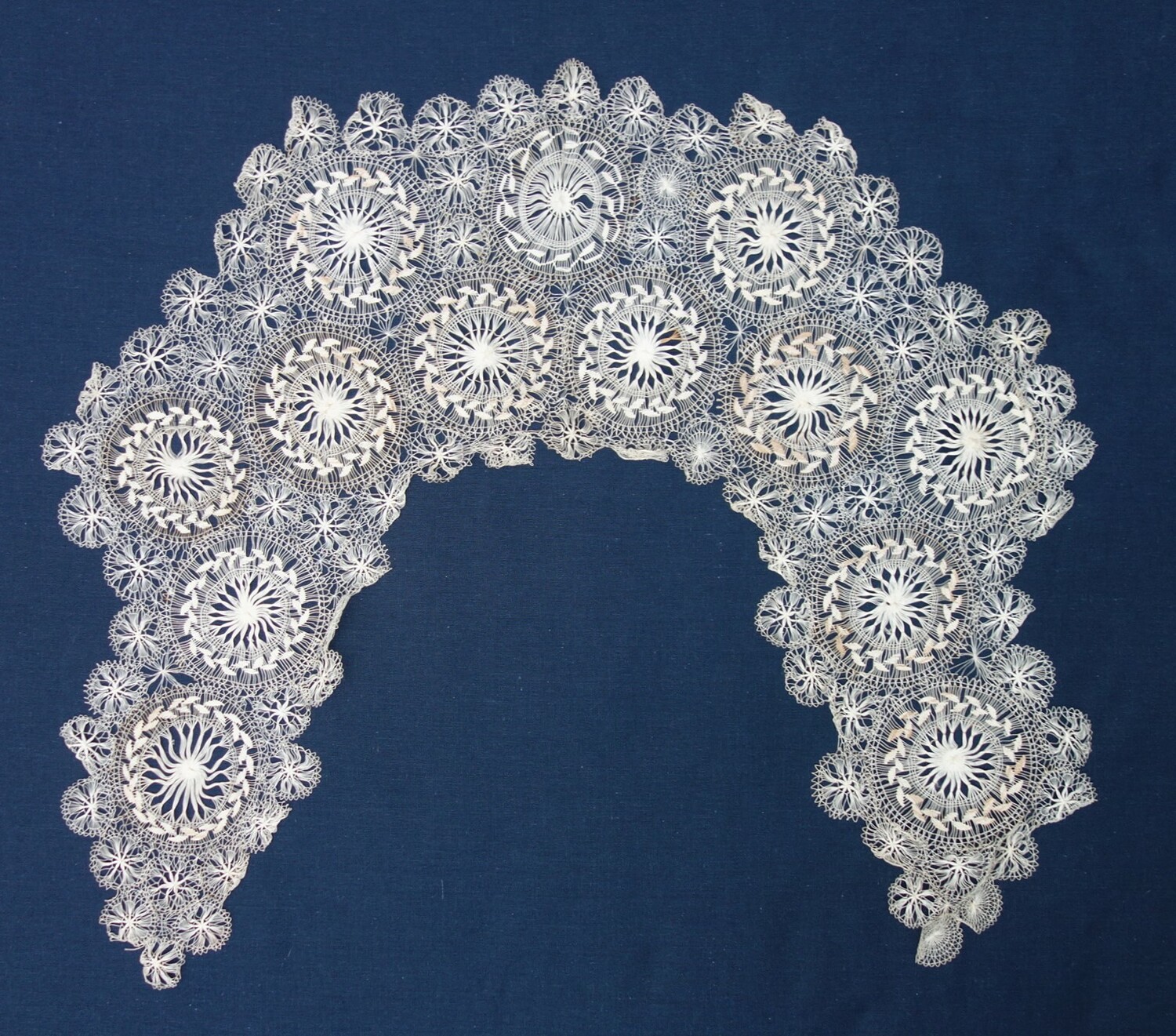 Tenerife lace collar, late 19th century (TRC 2020.0462)
Tenerife lace is distinctive for its radial threads that are usually wrapped around the pins or ‘teeth’ that are placed along the edge of a small round wheel, and for the medallion pattern that is woven with a needle. The wheels are usually made of a rigid substance, such as thick card, wood or metal (see TRC 2023.2316a-c). The resulting medallion is removed from the wheel and then stitched to other examples to make a much larger piece.
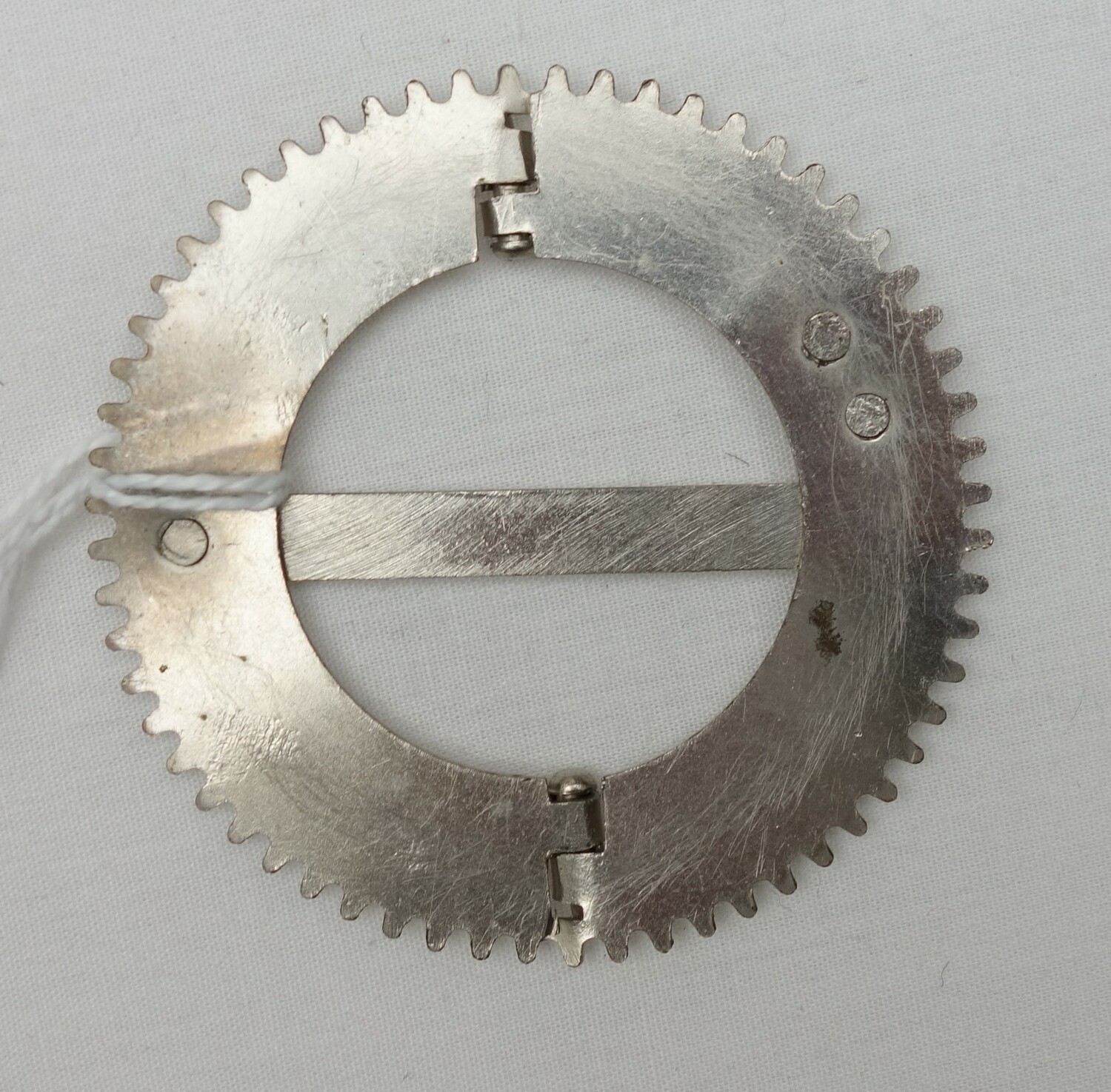 Tenerife lace metal wheel, early 20th century (TRC 2023.2316a).
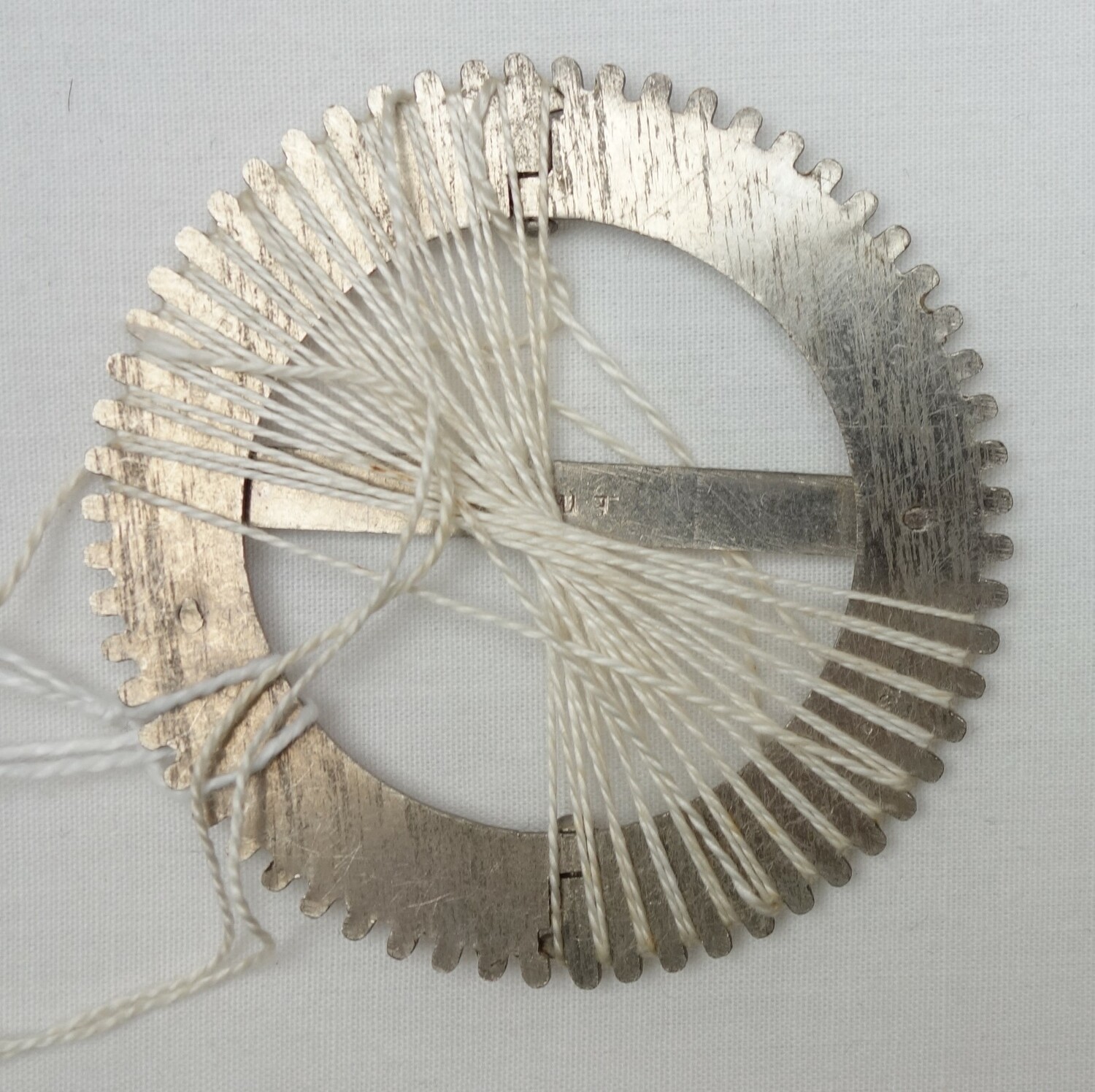 Tenerife lace metal wheel, with radial threads, early 20th century (TRC 2023.2316b).
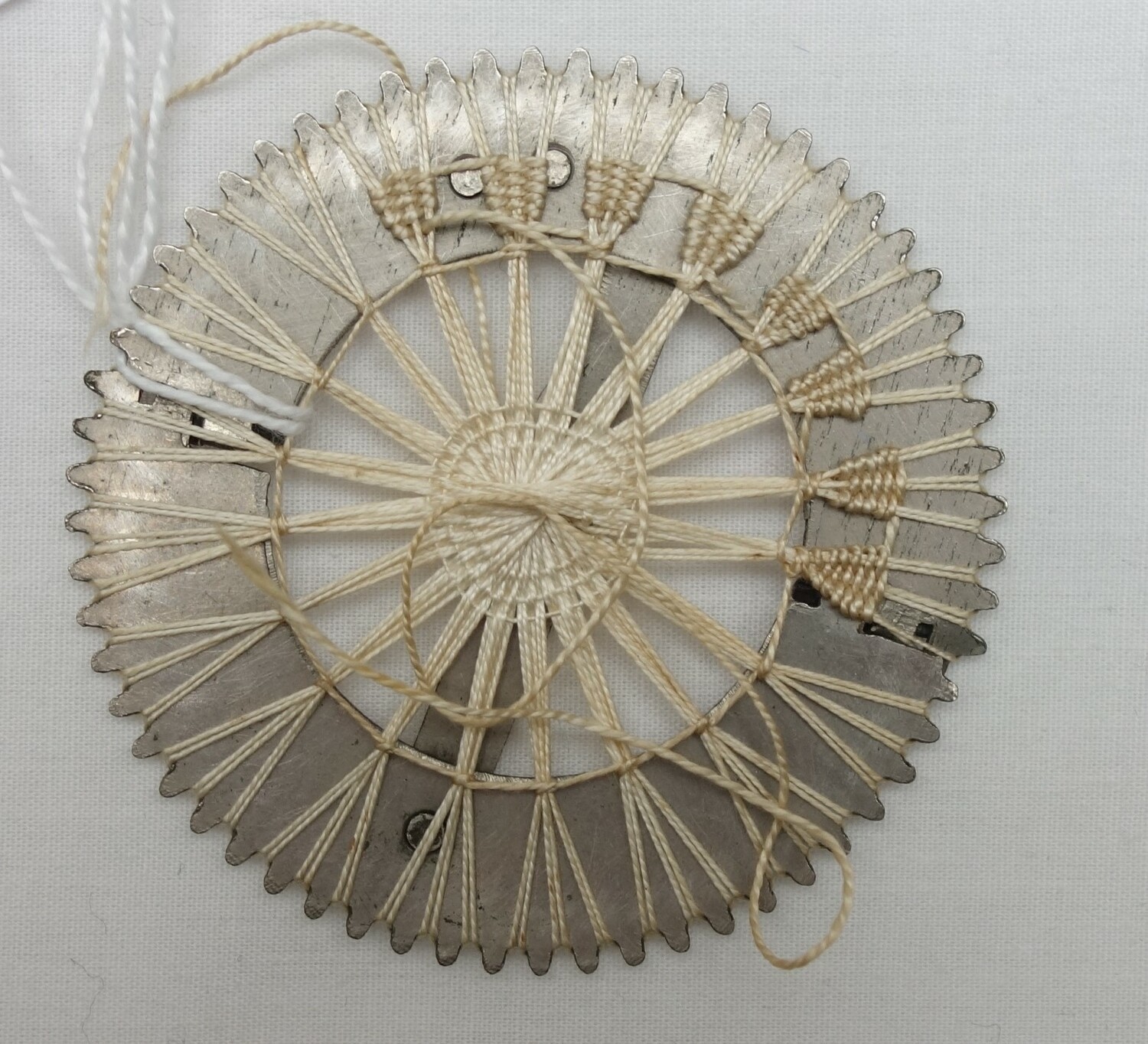 Tenerife lace metal wheel, with the beginning of a needle woven pattern, early 20th century (TRC 2023.2316c).
This type of lace became popular in the late 19th and early 20th century, both in Europe, the Americas, and elsewhere. Shelley referred to various items in the TRC Collection made from Tenerife lace, including a collar with circles in various sizes (TRC 2020.0462), a lace doily also made from medallions in two different sizes (TRC 2021.0995), and an early 20th century DMC pattern book with Tenerife lace patterns (TRC 2020.0393). The style of lace was also copied using machine made techniques (see for example, TRC 2020.0474).
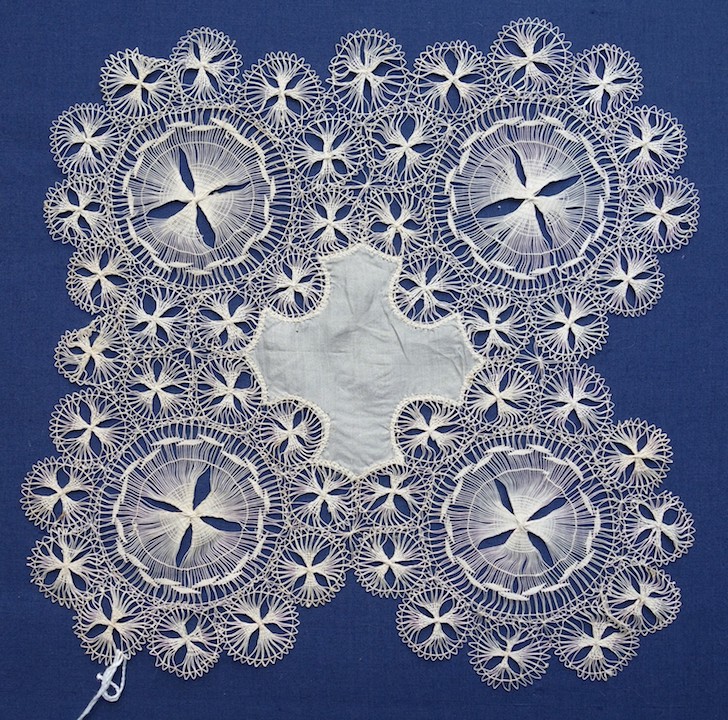 Tenerife lace doily with medallions of various sizes, early 20th century (TRC 2021.0995).
Next to publications by DMC and others, the early 20th century also saw various types of wheels being made, and in some cases patented, to help make the medallions. An early card version with pins along the outer edge was called the ‘Vicars' Lace Tablet’ (TRC 2015.0632). The British needlework company of William Briggs & Co (Manchester; TRC 2015.0280) patented a version with a paired series of holes near the outer edge of the wheel. The American company of Proctor produced both round and square rigid wheels, as well as at least one leaflet.
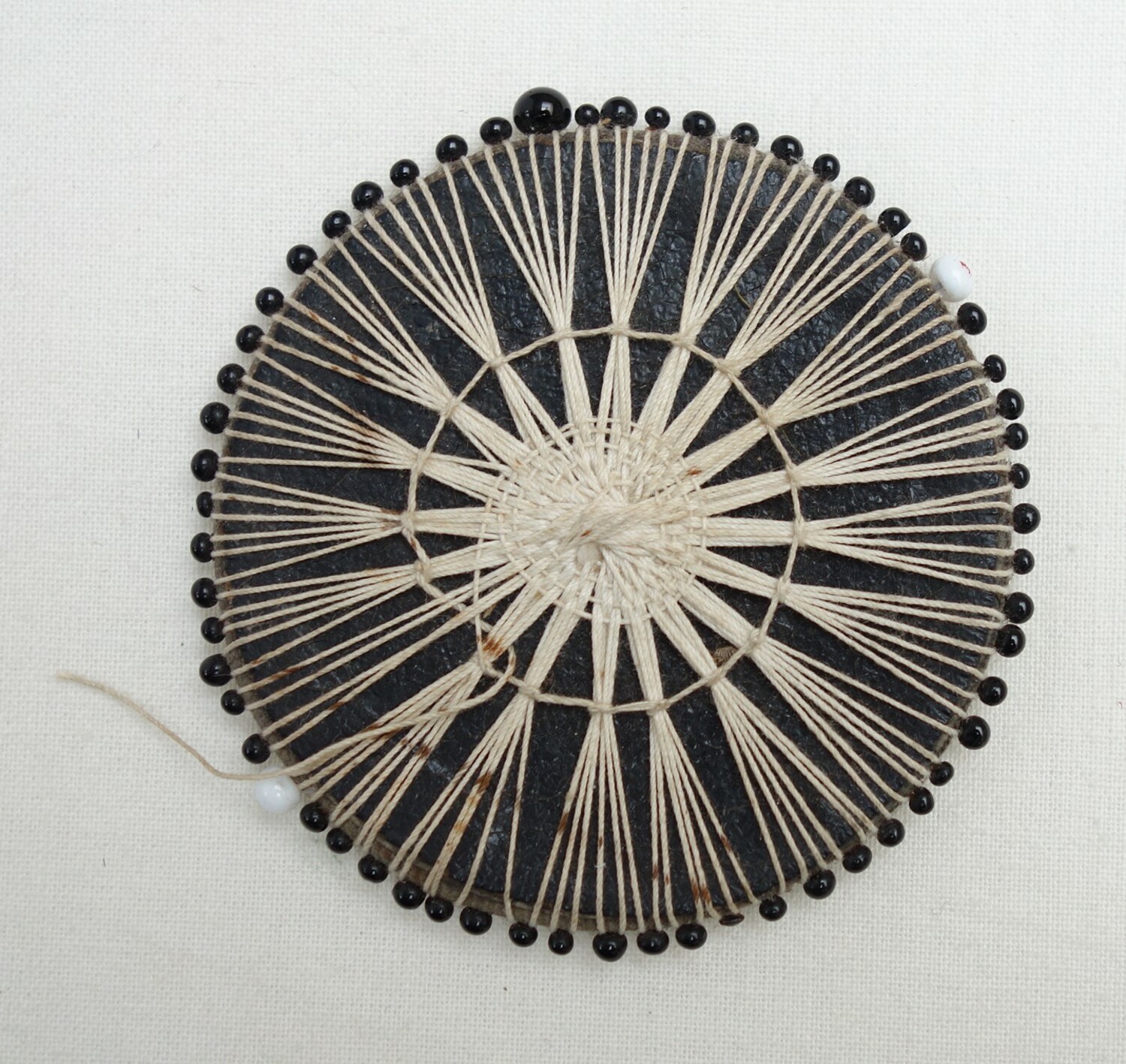 A 'Vicars' Lace Tablet', with pins around the outer edges, UK, late 19th century (TRC 2015.0632).
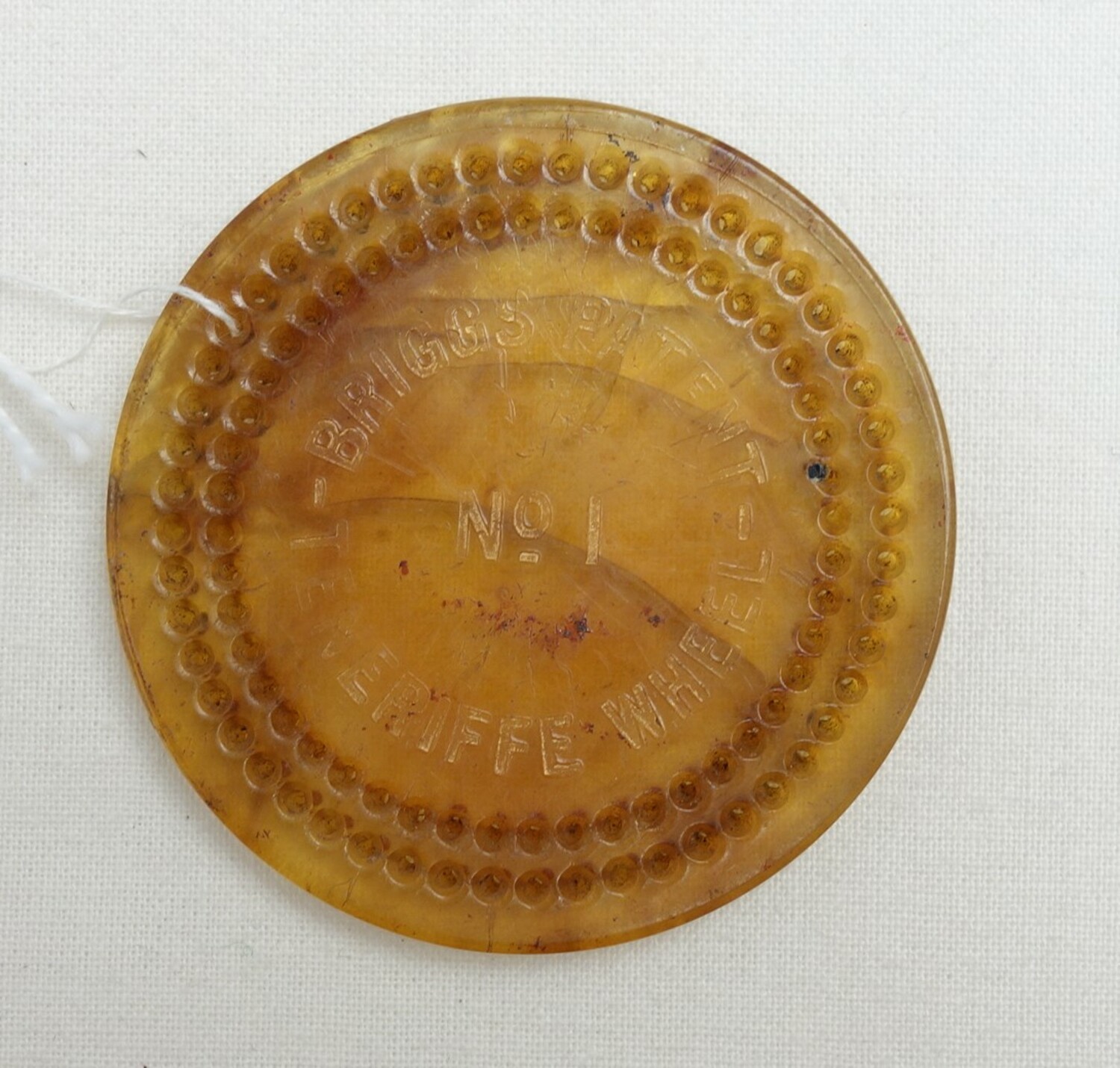 'Briggs Patent Tenerife Wheel No. 1', UK, c. 1900 (TRC 2015.0280).
Since Shelley’s blog we have added various examples of this type of lace to the TRC (Reference) Collection. In early October we were given a donation of objects, including small tools and equipment that came from the former Naaldkunst Museum in Winschoten.
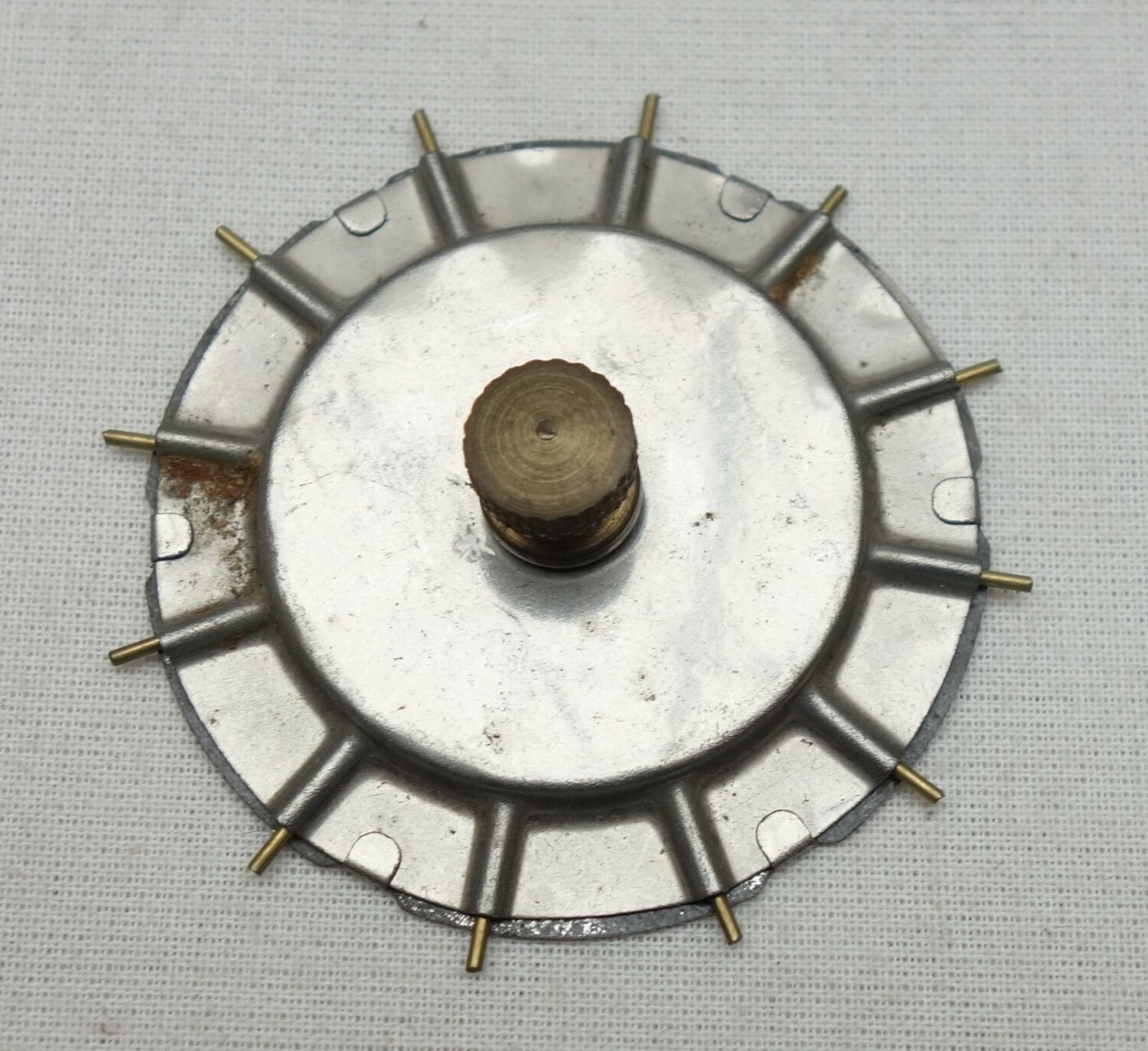 Rex Tenerife lace wheel with retractable spikes, Europe, early 20th century (TRC 2023.2322).During the initial sorting of the items we came across a small box with examples of Tenerife lace, as well as the wheels and other forms needed to make it, together with instruction leaflets.
What surprised me was that the size of the frame can vary considerably. Among the examples just given to the TRC there are wheels that are 8.4 cm (TRC 2023.2315), 6.0 cm (TRC 2023.2316a), 4.0 cm (TRC 2023.2317a) and a tiny one of only 2.5 cm (TRC 2023.2318) in diameter.
In addition, there are several REX Tenerife frames (TRC 2023.2322 and TRC 2023.2323), as well as a REX TENNERIF APPARAAT leaflet (TRC 2023.2324; in Dutch) which appears to date from the first half of the 20th century and which explains how Tenerife lace is made using this type of frame.
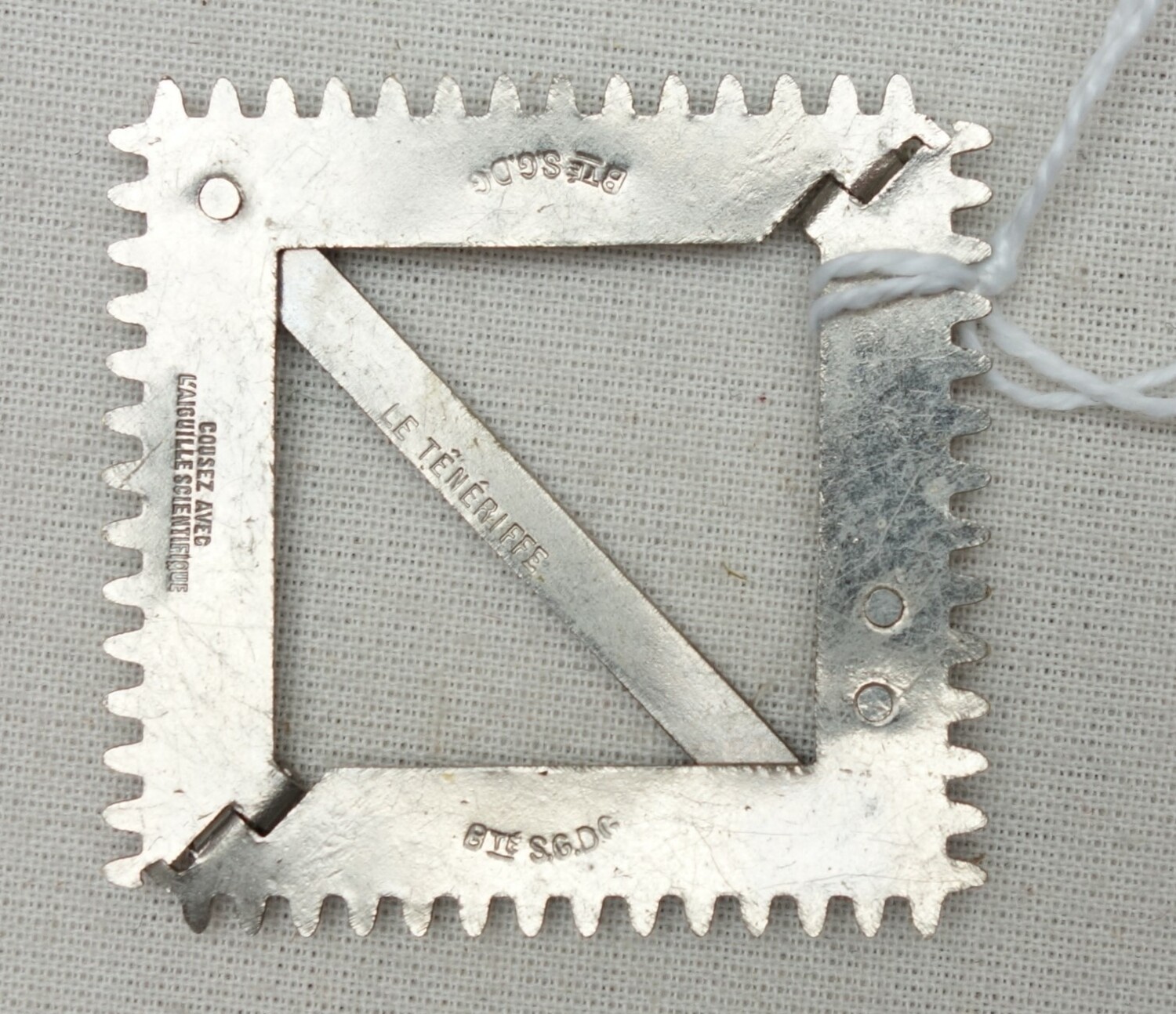 A square Tenerife lace frame, Europe, early 20th century (TRC 2023.2319).But it should not be thought that all Tenerife lace frames and resulting laces are round! Among the items from Winschoten there are the round frames mentioned above, as well as oval ones (TRC 2023.2320a-c) and two square versions (TRC 2023.0039 and TRC 2023.2319; see also TRC 2023.0118 for square lace samples). There is also a piece of lace that is triangular (TRC 2023.2601) in shape, but alas we do not have a triangular frame.
There was also a leaflet from the 1920’s – 1930’s that was written in French and Dutch (probably from Belgium, TRC 2023.2325), which includes patterns for making shawls and baby items in this technique.
The making of Tenerife lace declined in the 1940s and 1950s. But it is worth noting that in the 1960s there was a revival of Tenerife lace production in the USA, which included a form of wheel that had retractable pins.
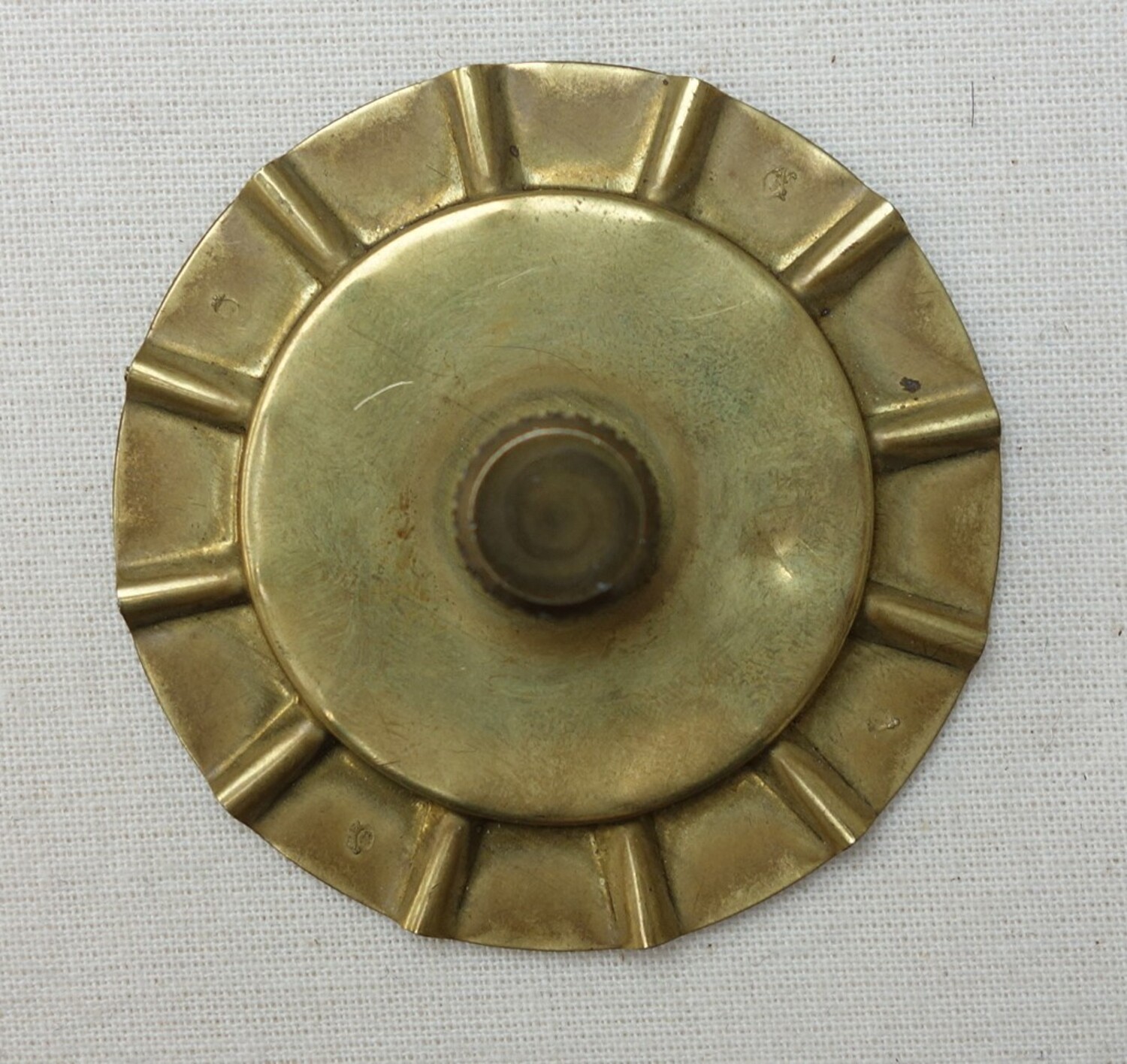 An American crazy daisy winder, USA, 1960s (TRC 2020.4400a).
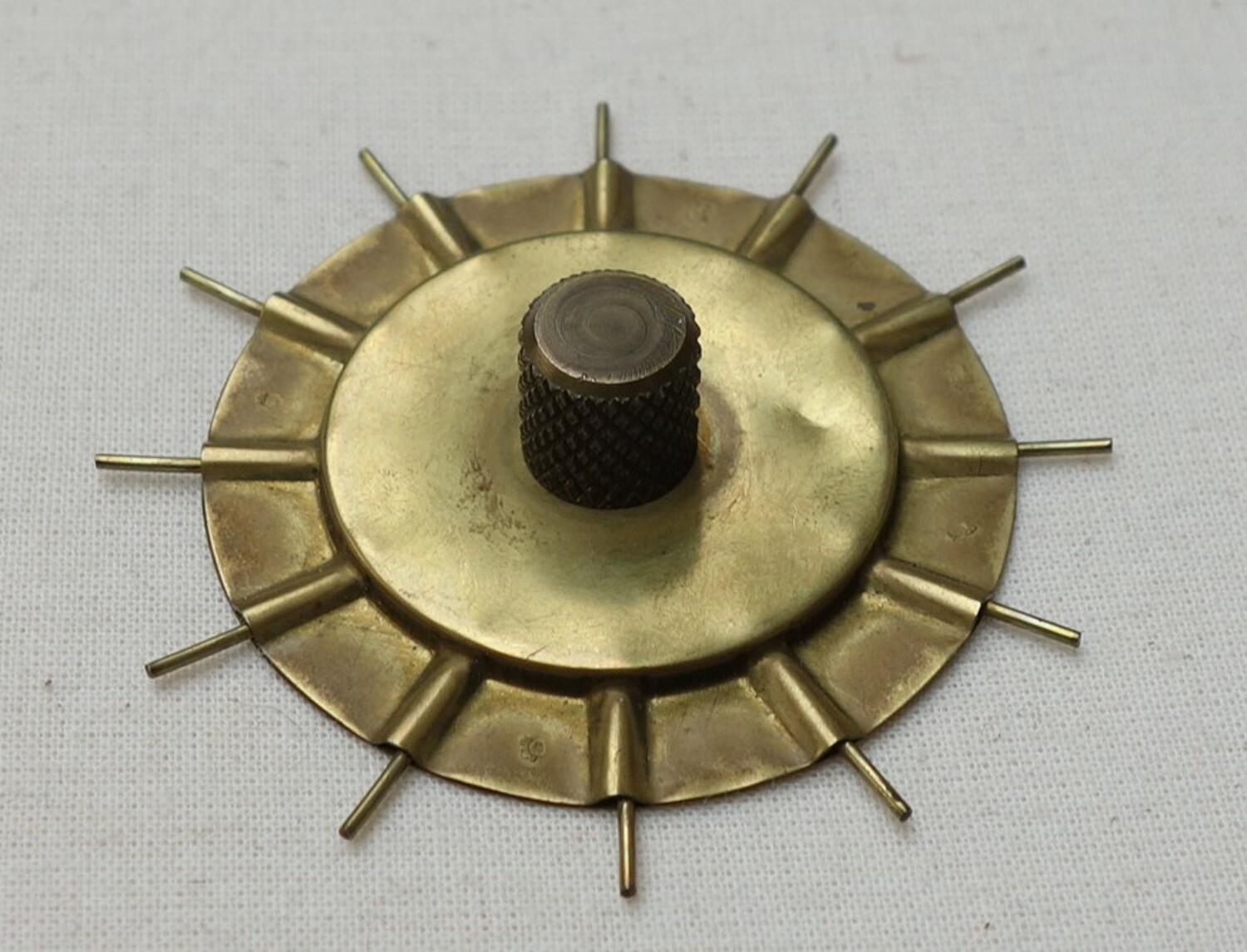 An American crazy daisy winder, showing the spikes, 1960s (TRC 2020.4400a).
 American magazine with designs for the crazy daisy winder, early 1960s (TRC 2020.4401).
This frame was manufactured under the name of the ‘Crazy-Daisy Winder’ (TRC 2020.4400a), which came with a handy instruction leaflet (TRC 2023.4400b). It may be coincidental, but this 'invention' looks remarkably similar to the REX wheel produced in Europe in the early 20th century.
Booklets with patterns were also produced (such as TRC 2020.4401 and TRC 2020.4402), and the name of Crazy Daisy (for Tenerife lace) is still known in America under this name.
Gillian Vogelsang-Eastwood, 16 December 2023