



 Wissa Wassef tapestry panel woven by a young boy, Imam, aged 12 (TRC 2020.0214).A major influence on Egyptian decorative textiles in the 20th century was the work of Habib Gorgi and his son-in-law, the architect Ramses Wissa Wassef (1911-1974). Both believed that children were (and are) endowed with creative powers and potential that should be encouraged.
In 1951, Wissa Wassef established the Ramses Wissa Wassef Art Centre, near the Giza pyramids. The aim of the Centre was to teach Egyptian village children to create art, and tapestries in particular. Ramses Wissa Wassef encouraged the children to weave images based on things they saw around them in their villages, such as women talking, making bread, washing, men working in the fields or fishing, weddings, birds, fish and so forth.
The ideas of Wissa Wassef became very popular and the range of products was expanded to include embroidered designs. Initially all of the weavers and embroiderers were women and girls, but later boys and men also started to produce items at the Art Centre.
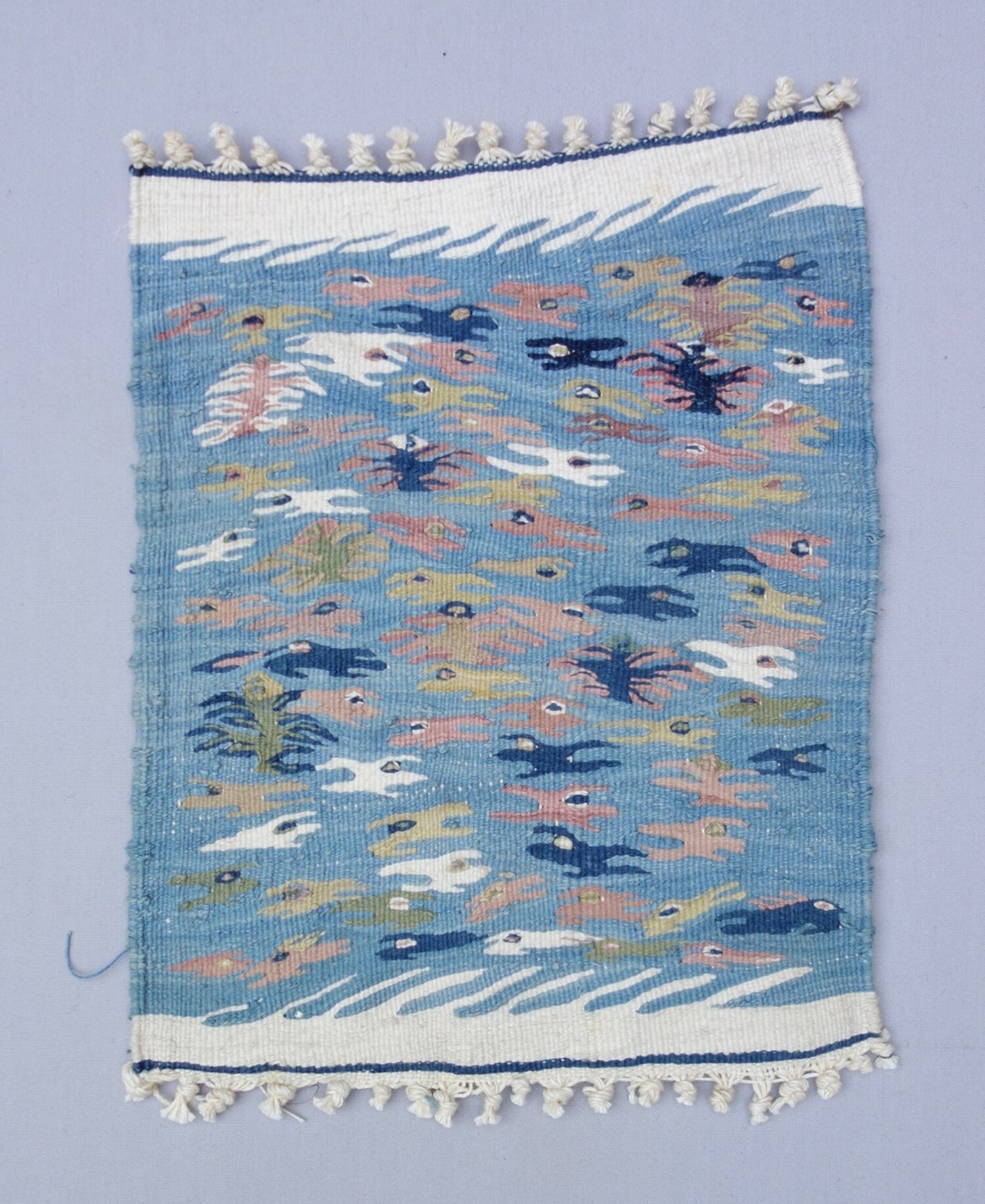 Wissa Wassef panel worked by 13-year old boy, called Imam (TRC 2020.0212).The Wissa Wassef movement was quickly followed by other groups who set up workshops (both philanthropic and commercial) producing embroideries, rugs, tapestries and so forth, based on the Wissa Wassef format.
From Cairo, the idea spread throughout the Eastern Mediterranean and by the 1970's examples of tapestries and embroideries with daily life scenes from Syria and Palestine started to become widely available on a range of items, such as book markers, bags and cards, as well as large cushions and wall hangings. These forms are still being produced throughout the Middle East at the beginning of the twenty-first century. For further information, see the relevant entry in TRC Needles (click here)
The four examples of Wissa Wassef tapestries currently on display in the TRC workroom were purchased in Cairo in 1996 by Dutch artist and designer, Pier Steensma (1939-2019). They were donated by his family to the TRC in January 2020. The panels are all made from cotton yarns in both the warp and weft. They include the following:
- Hanah, aged 17: "Fishing" (TRC 2020.0211).
- Iman , aged 13: "Fishes" (TRC 2020.0212).
- Ossama, aged 18, "Plants" (TRC 2020.0213).
- Iman, aged 12, "Squares (TRC 2020.0214).


