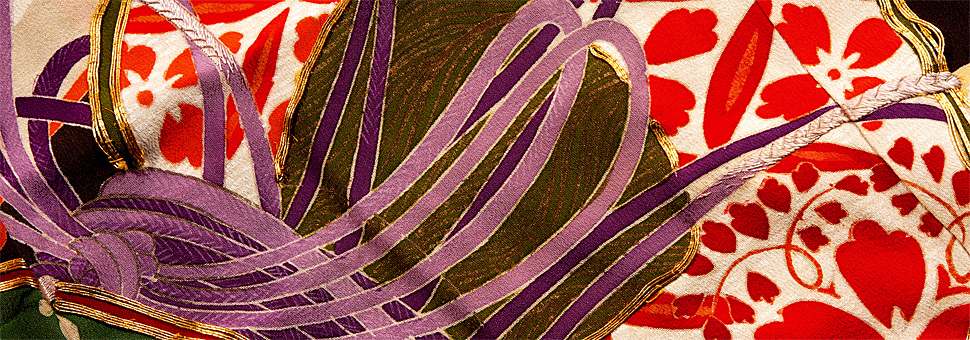


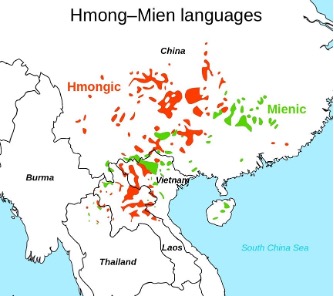
 Fig. 1. The TRC houses a collection of more than 280 objects related to the Miao people of China. As part of a recent mini exhibition at the TRC, a selection of these objects was brought together to explore Miao dress traditions. The following blog article introduces both the exhibition objects and additional Miao-related objects from the TRC collection, together with an overview of Miao’s textile traditions.
Introduction of Miao People and Miao sartorial traditions
The Miao are one of the largest ethnic minority groups in China and are also distributed across Southeast Asia, including Vietnam, Laos, and Thailand (Fig. 1). Repeated migrations in history have caused numerous Miao communities living in different regions. As a result, many local styles of dress developed. Although the exact number of Miao clothing styles remains uncertain, previous studies have recorded at least 173 distinct styles of Miao clothing in China, reflecting the diversity of regional Miao communities (Wu et al., 2000; Zhang, 2004).
Due to the lack of a widely used written tradition, textiles and embroidery became important ways to pass on stories, traditions, and memories. Many patterns show animals, plants, myths, and ideas about the Miao past. Because of this, the Miao are often called “the people who wear their history.” Although clothing styles are different between different Miao communities, several features are well known in many Miao communities:
- Pleated Skirts: Miao women often wear layered skirts. The length, color, and shape can be different depending on the region.
- Indigo Dyeing: a traditional dyeing technique that creates the deep blue textiles characteristic of many Miao communities.
- Embroidery: Many clothes are decorated with colorful embroidery. Common motifs include butterflies, birds, flowers, dragons, and geometric patterns, which are linked to cultural memory and local traditions.
- Silver Ornaments: elaborate headdresses, necklaces, earrings are important parts of Miao dress. They are often worn during festivals and celebrations.
The following objects from the TRC collection illustrate some of these shared traditions, including pleated skirts, embroidered textiles, and indigo-dyed fabrics (Figs. 2–4).
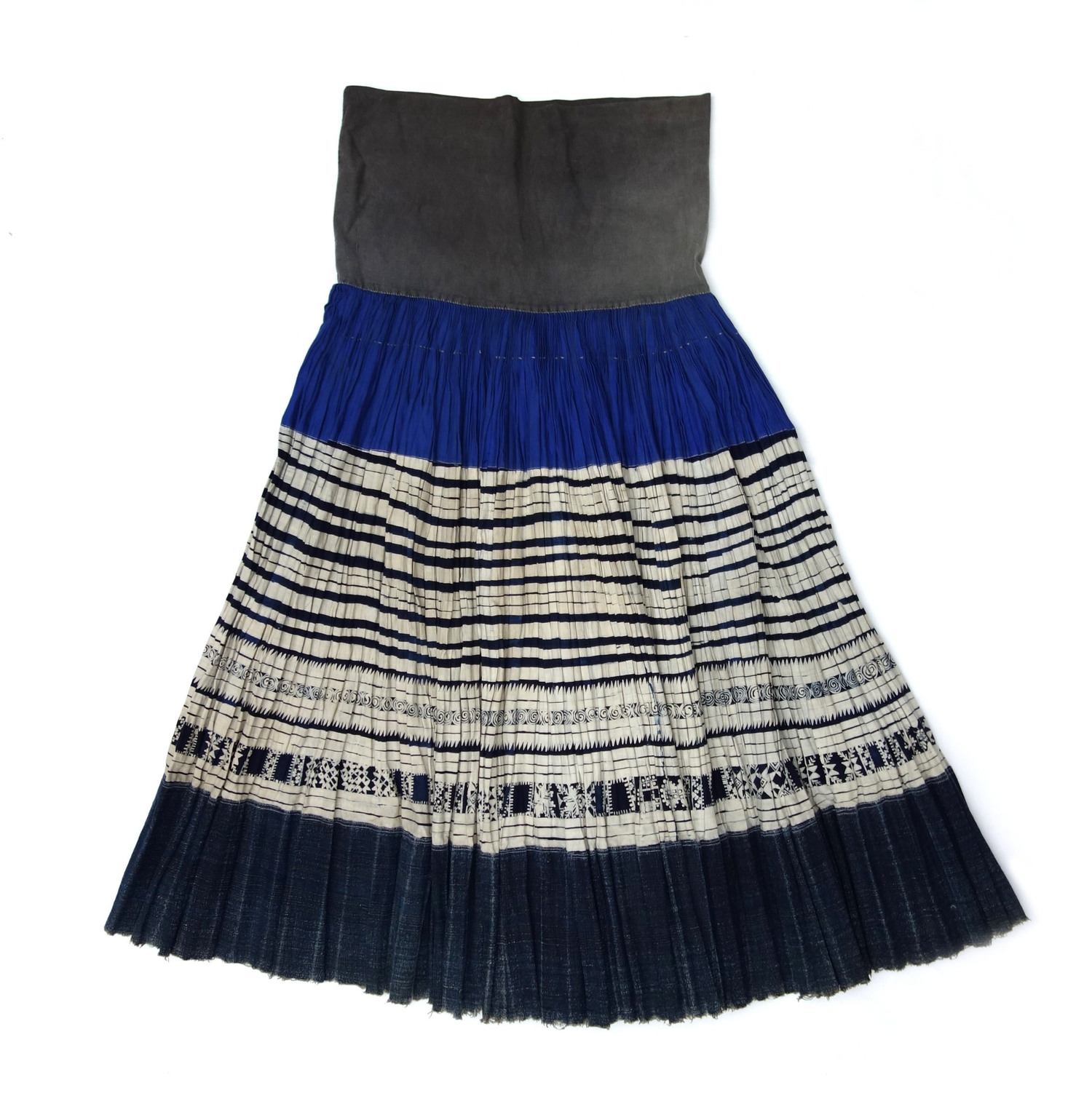 Fig. 2. Pleated skirt, cotton and silk with batik-dyed decoration. Guizhou, Ertang Miao, China, 20th century (TRC 2024.2742).
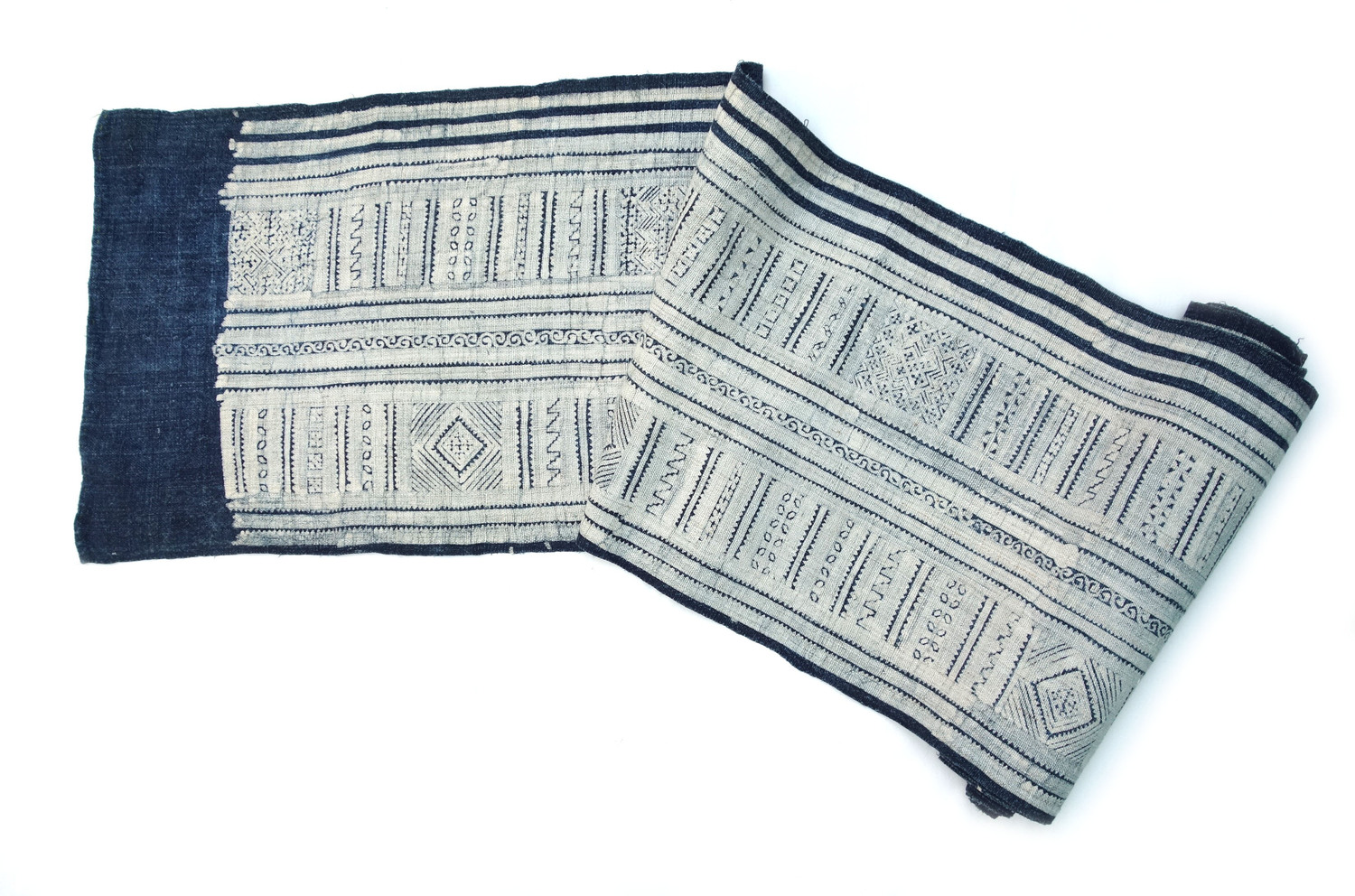 Fig. 3. Dyed skirt length, bast fibre with hand-woven batik decoration. Miao, China, 20th century (TRC 2024.2719).
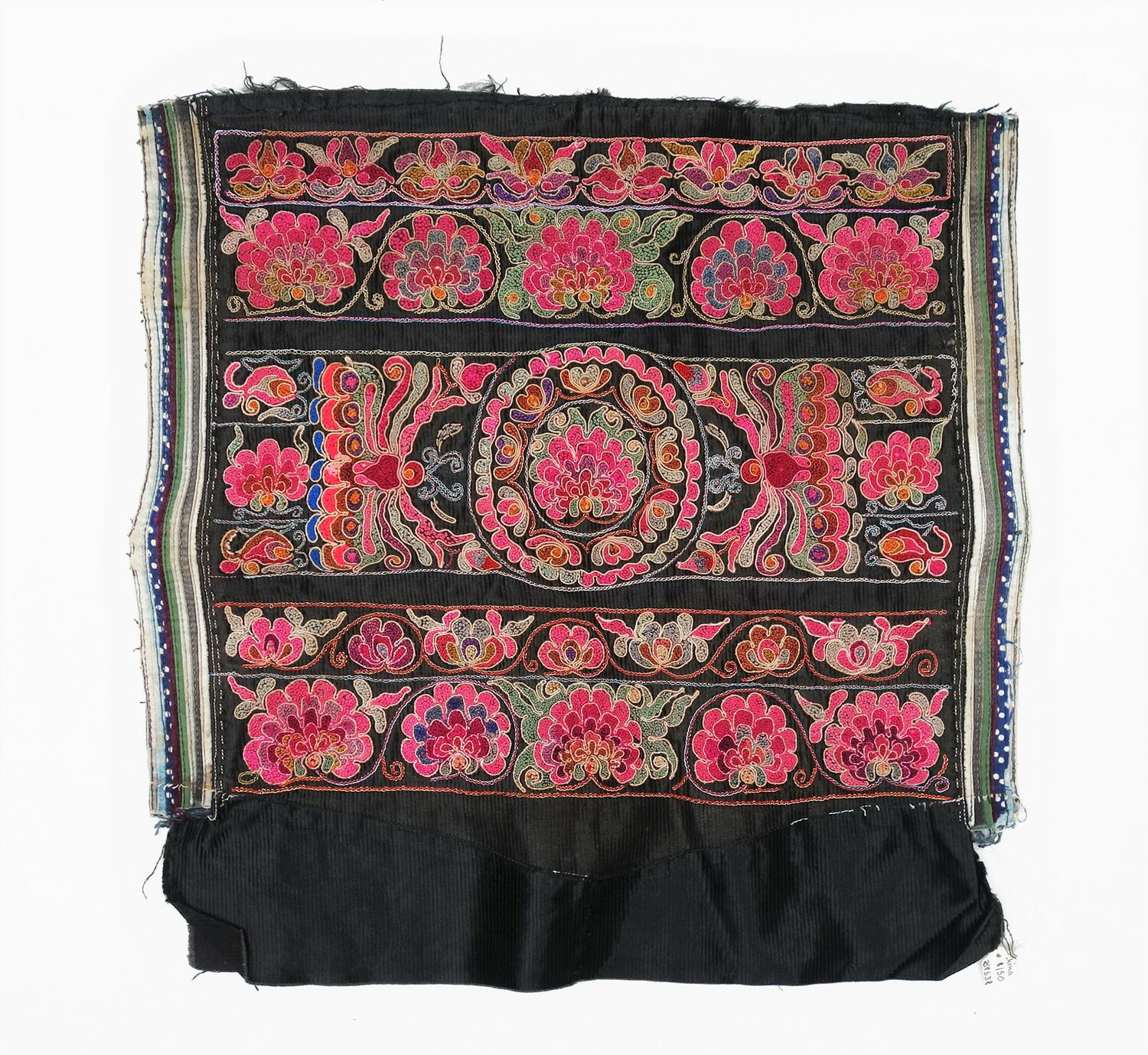 Fig. 4. Embroidered panel, cotton, silk and metal, Miao (Dong), China, 20th century (TRC 2021.0717).
As mentioned earlier, silver ornaments are also important symbols of identity in many Miao communities. During festivals and other special occasions, some Miao women wear elaborate silver jewellery that can weigh more than 10 kilograms (Wu et al., 2000, p.10). Although the collection at TRC is made of aluminium rather than silver, it reflects the characteristic design of traditional Miao ceremonial headwear, including floral and bird motifs commonly found in Miao metal ornaments (Fig. 5).
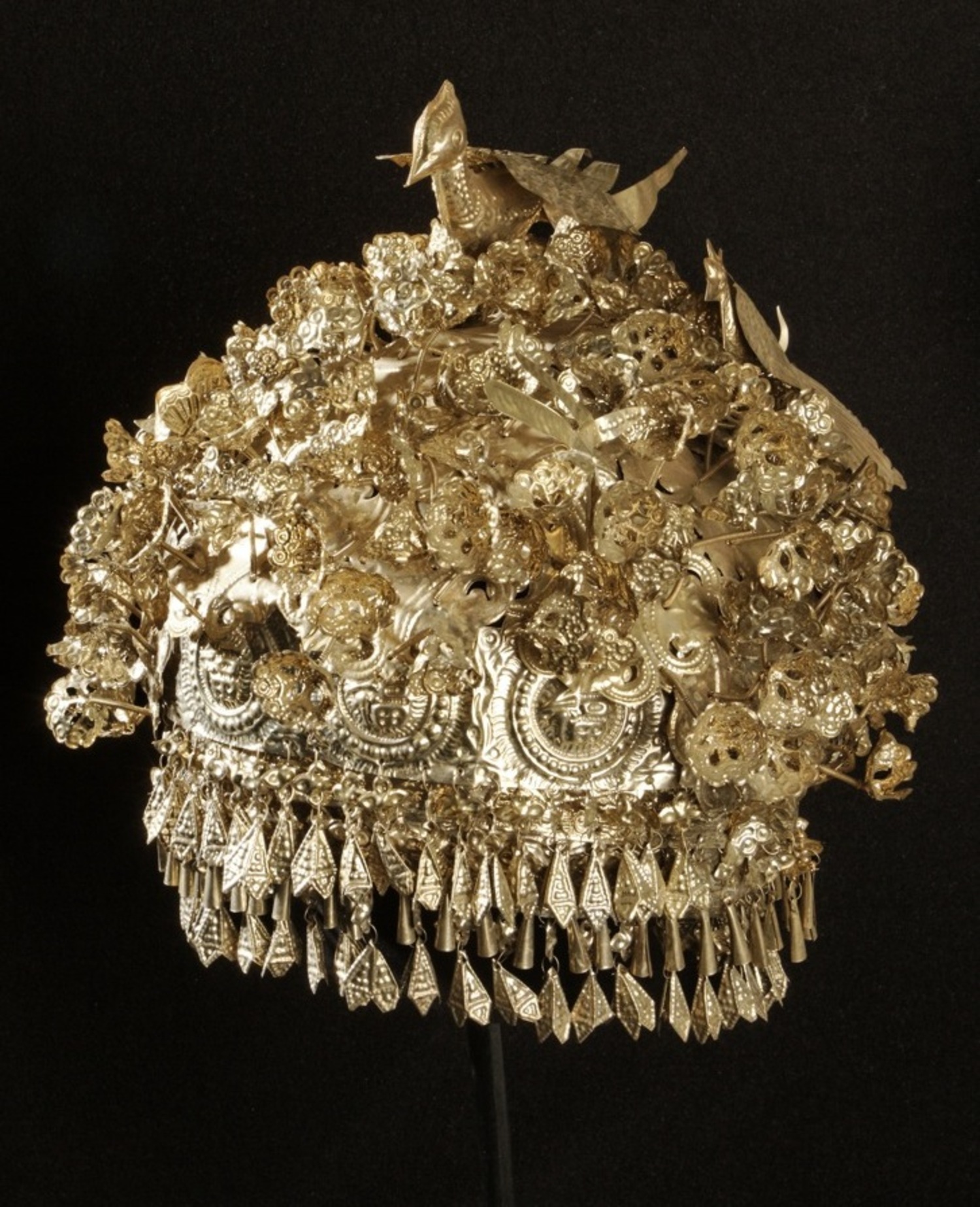 Fig. 5. Ceremonial headwear, aluminium and wire. Miao, China, mid-20th century (TRC 2011.0344).
In addition to finished garments and accessories, the TRC collection also preserves materials that reveal the process of making Miao textiles. For example, Figure 6 shows a paper embroidery template. It demonstrates how patterns were first designed on paper before being transferred onto textile surface for embroidery. The template also includes several motifs found in Miao dress, such as spirals, mother dragons, and butterflies.
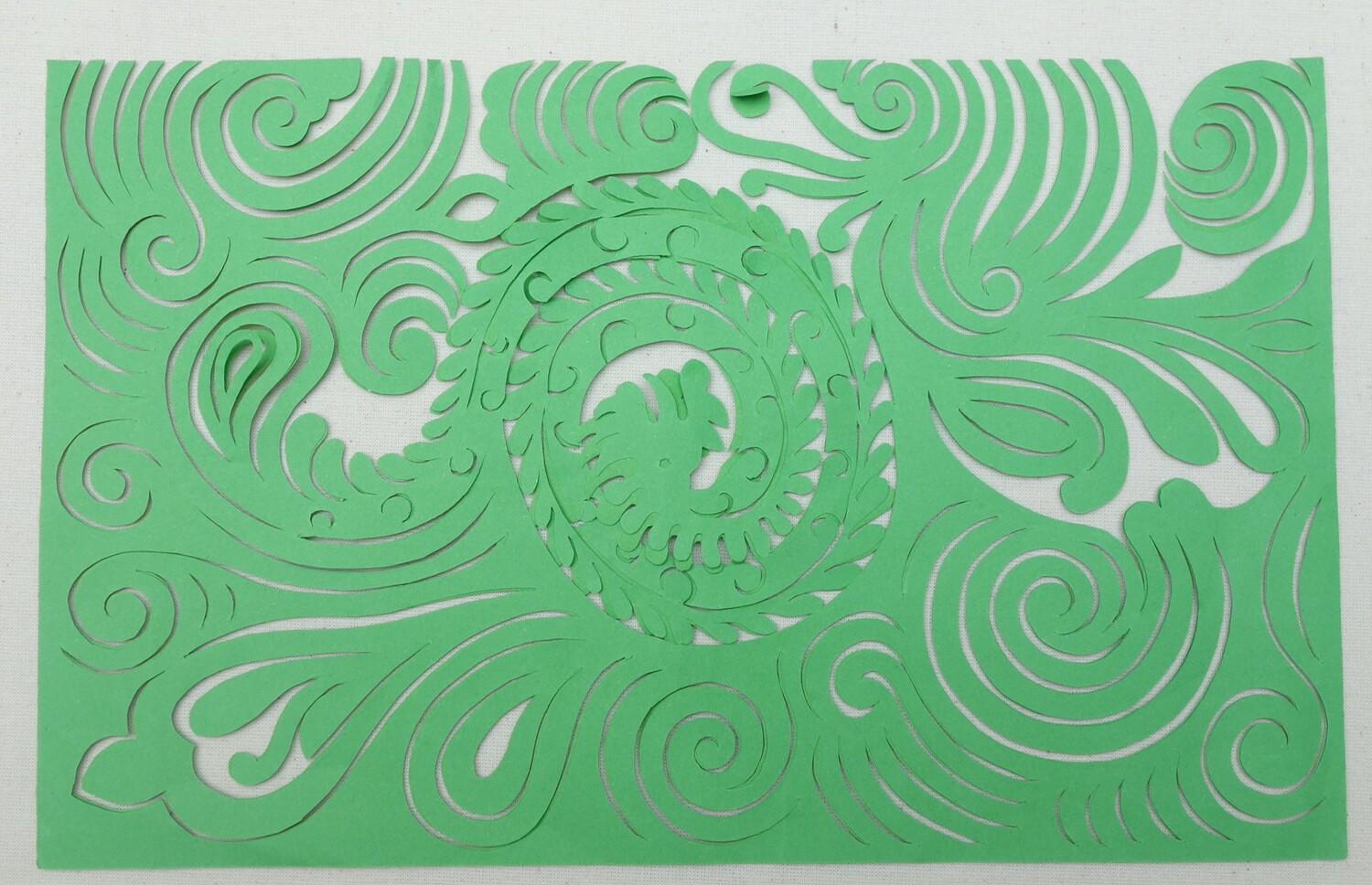 Fig. 6. Embroidery templates with a mother dragon motif, hand-cut paper. Miao, China, c. 2018 (TRC 2020.3206a–b).
Many Miao textile motifs are inspired by nature, mythology, and ancestral beliefs. Butterflies, birds, spirals, dragons, flowers, and geometric patterns are among the most common designs. Beyond their decorative function, these motifs often express the cultural identity.
Diversity of Miao clothes
As mentioned earlier, although these people are collectively known as the Miao, their dress traditions vary considerably between different communities. The TRC collection also reflects this remarkable diversity through garments representing different Miao subgroups.
One example is the Baibei Miao costume, known as the Hundred-Birds Costume (百鳥衣, Bǎiniǎoyī) from Guizhou Province (See Figure 7-8). The costume is worn during the Guzang Festival (鼓藏節, Gǔzàng Jié), an important ceremony involving ancestor worship and dancing. The name of the Hundred-Birds Costume comes from the feather-like decorations attached to the lower part of the garment. When people dance, these decorations move like a hundred birds flying together.
Figure 7. Baibei Hundred-Birds Costume, cotton with indigo resist-dyeing (batik) and feather decoration. Guizhou Province, China, 20th century (TRC 2024.3404).
Figure 8. Detail of the Baibei Hundred-Birds Costume showing the feathered hem and decorative batik motifs. Guizhou Province, China, 20th century (TRC 2024.3404).
The costume is richly decorated with symbolic motifs that reflect Miao beliefs and traditions. Many of the patterns on the garment have special meanings. At the center of the costume is a spiral-shaped Mother Dragon motif, which represents protection, continuity, and the happiness (National Museum of Prehistory, 2012).
Bird and butterfly motifs can also be found throughout the costume. In Miao mythology, the butterfly is especially important. According to one creation story, Butterfly Mother laid twelve eggs, from which all living things were born (Wu et al., 2000, p.11). Because of their importance in Miao culture, the butterfly and dragon motifs can also be seen in other objects (See Figure 6).
In contrast to the Baibei Hundred-Birds Costume, Figure 9-10 represent the dress traditions of the Douqing Miao, another Miao subgroup from Guizhou Province. While they share characteristic features such as indigo dyeing and embroider, the overall design, color palette, and garment construction differ considerably from those of the Baibei costume. Figure 9. Jacket, cotton and silk. Douqing Miao, China, 20th century (TRC 2024.2599). Figure 10. Women wearing traditional Douqing Miao dress in Douqing Village, Shuicheng County, Guizhou Province, China. Source: https://travelsichuanguide.com/shuicheng/douqing-style-miao.html
Modern Miao Clothing
TRC also houses several contemporary Miao dresses, showing how Miao clothing has adapted to outside influences while maintaining traditional elements. For instance, the modern Douqing Miao jacket in Figure 11-12 shows a combination of traditional embroidery, batik decoration with new materials and styles. Floral and insect motifs remain visible on the sleeves and lower part of the garment, while the upper section features black damask fabric decorated with Chinese characters. Figure 11. Jacket, cotton, synthetic, and metal. East Guizhou Douguing, Yandongkou Miao, China, 20th century (TRC 2024.2867). Figure 12. Detail of the jacket showing the black damask fabric with woven Chinese characters, together with batik motifs and decorative woven bands. Douqing Miao, East Guizhou, China, 20th century (TRC 2024.2867).
The Figure 13 also reflects the interaction between Miao and Han Chinese cultures. While traditional Miao dress usually uses motifs rather than writing, this plastron includes the Chinese characters for “Beautiful Flowers” together with a butterfly, tassels, floral rosettes, insects, and plant motifs. Figure 13. Plastron, cotton. Huangping Miao, East Guizhou, China, 20th century (TRC 2024.2869b).
The Figure 14 demonstrates another example of cultural exchange, where traditional Miao embroidery is combined with Western-style lace decorated with white floral patterns. Figure 14. Skirt, cotton, acrylic, synthetic, and metal. Yunnan Miao, China, 20th century (TRC 2024.2694).
References
- National Museum of Prehistory. (2012). 苗龍‧妙龍 [Miao dragon, wondrous dragon]. https://beta.nmp.gov.tw/enews/no220/page_01.html
- Wu, S. (Ed.). (2000). 中國苗族服飾圖志 [A picture album of China's Miao costumes and ornaments]. Guizhou People's Publishing House.
- Zhang, Y. (Ed.). (2004). 中國苗族服飾研究 [Studies on Chinese Miao costume]. Nationalities Publishing House. Travel Sichuan Guide. (n.d.). 斗箐式苗族 [Douqing Style Miao]. https://travelsichuanguide.com/shuicheng/douqing-style-miao.html
Frieda is a Master’s student in Asian Studies at Leiden University and an intern at the Textile Research Centre (TRC). With a background in archaeology in Taiwan, she is interested in how materials connect to human behavior. Through working with textiles and indigo dyeing, she is still exploring whether she is a weaver, a dyer, or simply a researcher.