

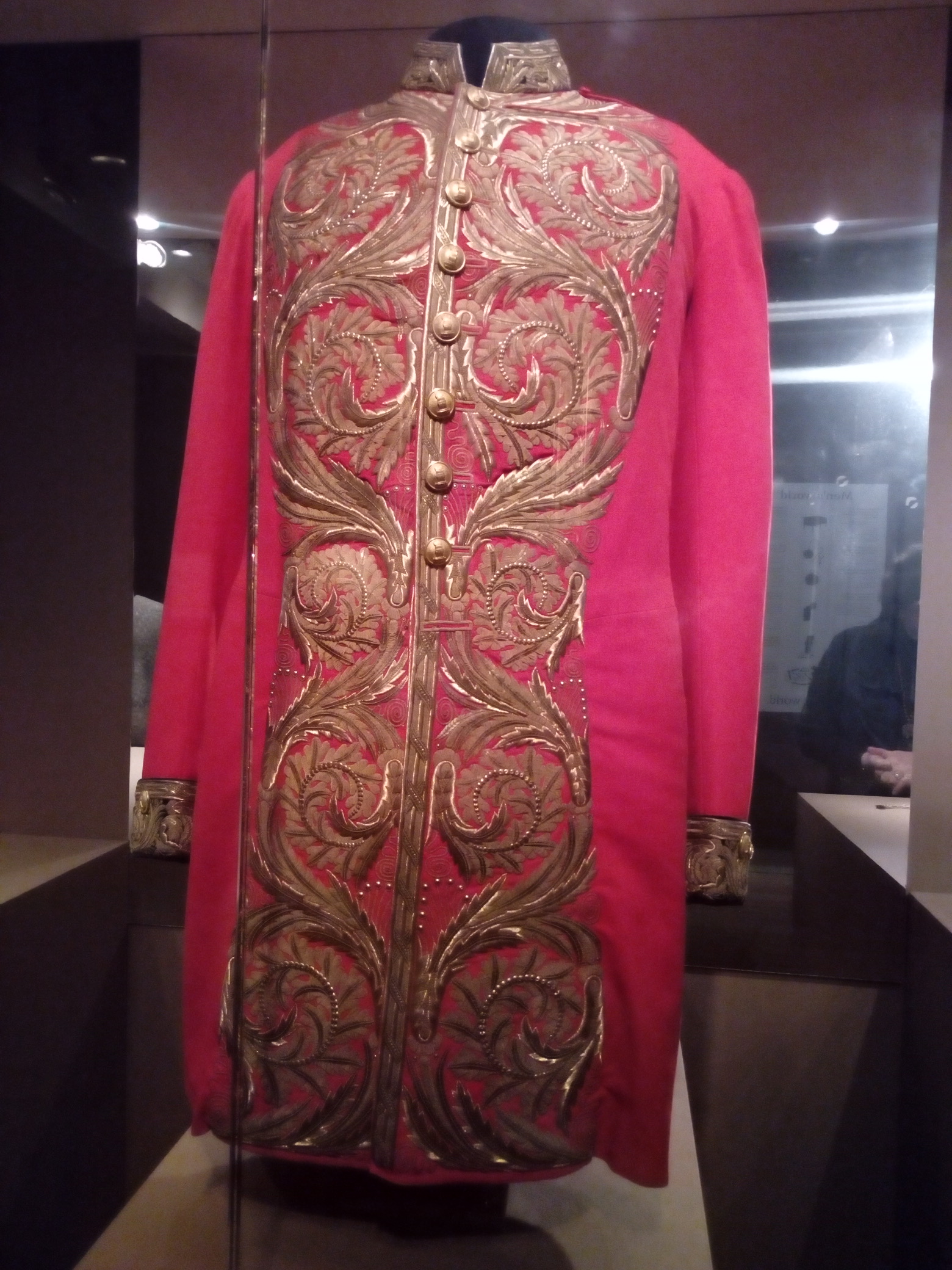
 Parade uniform of a Russian senator, velvet and silk. The gold thread embroidery and buttons were considered a sign that the Emperor respected the senator's status. Late 19th-early 20th century.On Sunday, 9th February 2020, TRC colleague Shelley Anderson wrote:
The exhibition “Jewels: Glittering at the Russian Court” may be its most popular exhibition ever, according to the Hermitage in Amsterdam. It is easy to understand why. On display are over three hundred pieces of jewellery and dozens of court ball gowns, many complete ensemble of gowns, shoes, fans and jewellery. Also on display are some hundred portraits that show how the Russian aristocracy used dress to project wealth and power.
The exhibition is stunning. It showcases over two hundred years of royal fashion (mostly women’s fashion, although there are some beautiful examples of children’s clothes, and of men’s. The emphasis is on three important trend setters: Anna Ioannovna (who ruled 1730-1740), Empress Elizabeth (who ruled from 1741 to 1761), and Catherine the Great, ruler from 1762 to 1796.
One of the most stunning pieces was commissioned by Elizabeth. It is a delicate flower bouquet, made of almost one thousand diamonds of different cuts, plus yellow and blue sapphires, rubies and emeralds. Made by the court jeweler Jeremie Pauzie, it was worn as a brooch, and kept in a vase when it was not being worn. Elizabeth loved brightly coloured jewels. She made several decrees about dress: the wearing of glass or tinsel ornaments at court was outlawed, and only she could wear the latest imported fashions. She also reserved the right to wear jewellery, hairpins and flowers anywhere in her hair. All other court ladies were only allowed to wear these items on the left side of their heads.
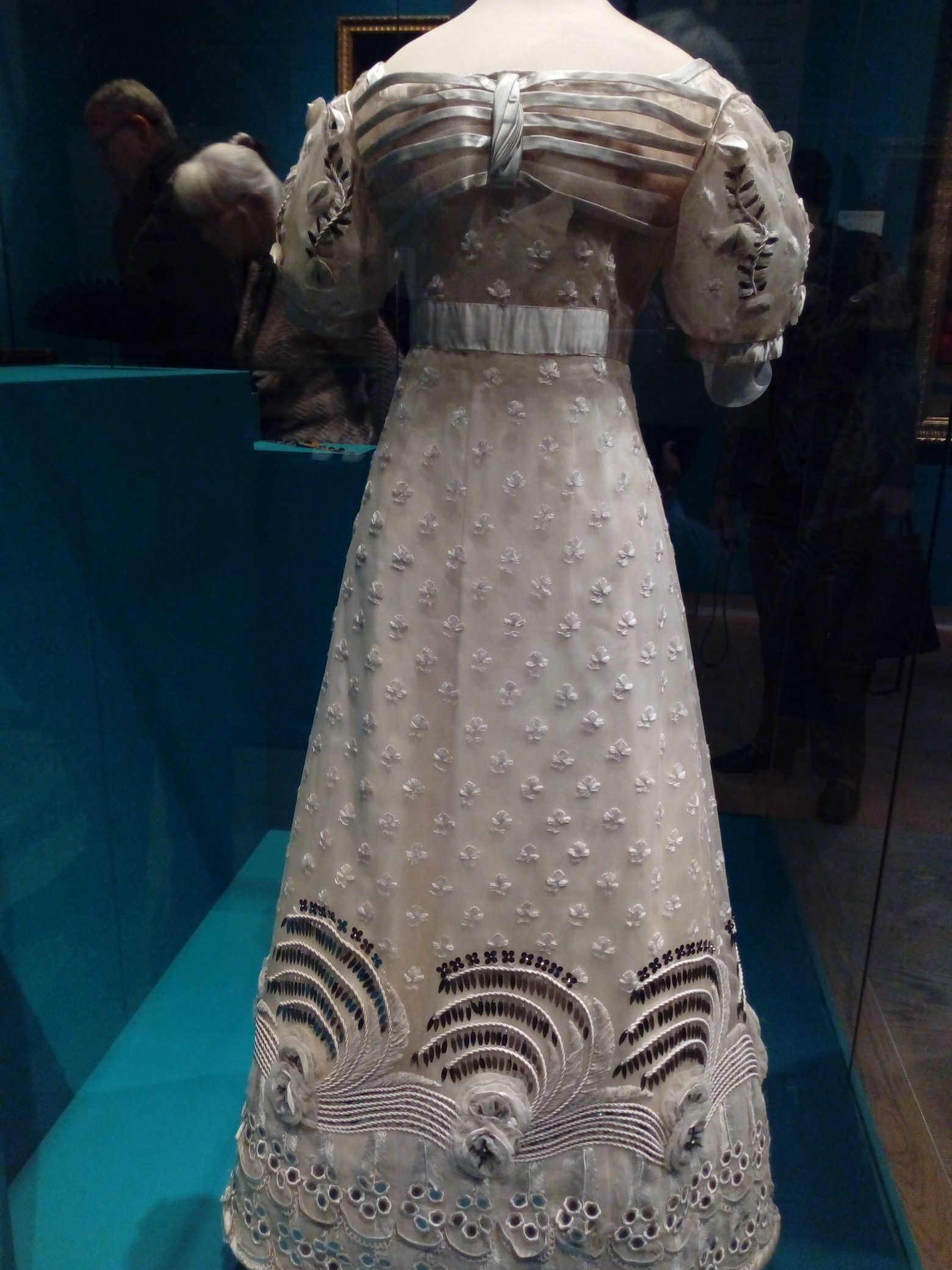 Ball gown: 1826-27, St. Petersburg. Silver gauze, silk, satin, steel sequins.The ball gowns on display are mostly from the mid-19th to the early 20th century. Light weight fabrics such as silk, tulle, and lace were favoured, often embroidered in gold or silver. There is a dress from 1910, designed by The House of Worth and worn by the widow of Czar Alexander III, which combines these fabrics with lilac velvet to gorgeous effect.
The gowns were designed both by Russian and French designers, with dressmakers and jewellers working together to create ensembles. Three contemporary Dutch designers were invited to create pieces for the exhibit. With all respect to Bibi van der Velden (1980), Edwin Oudshoorn (1980) and Jan Taminiau (1975), their creations pale in comparison. The glitter and sense of luxury is just not there.
“Jewels: Glittering at the Russian Court” is on now until 3 May at the Hermitage in Amsterdam.