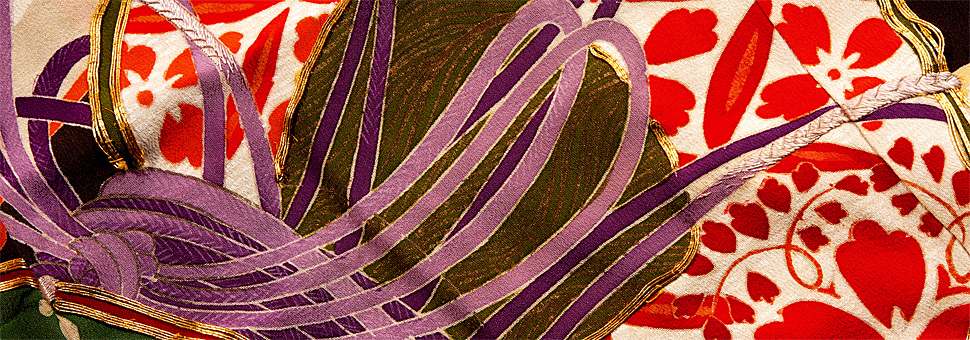


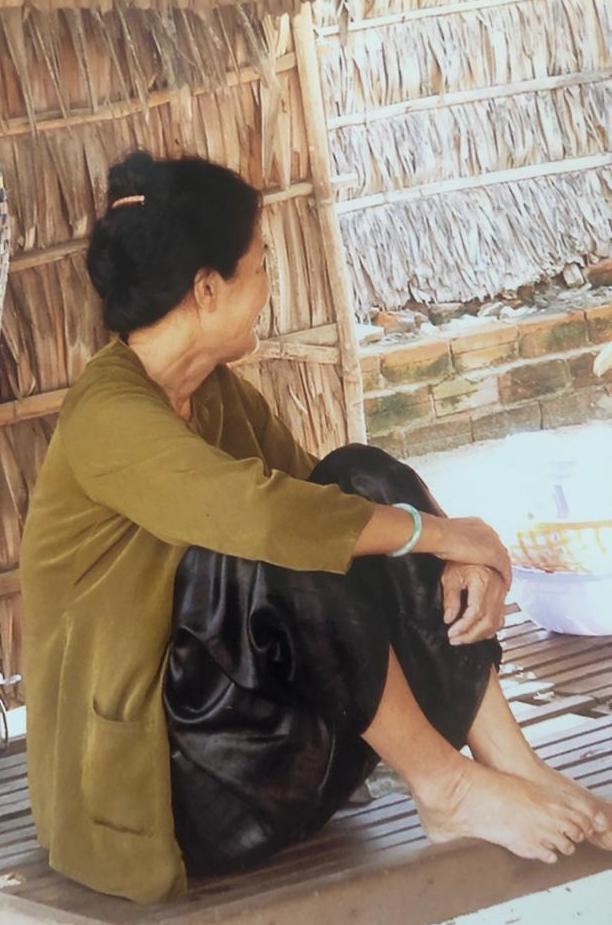
 Vietnamese woman wearing a garment made of lacquer silk. Photograph Augusta de Gunzbourg.Textiles have stories to tell. They bring people together when they talk about the way the textiles are made and when they discuss the history behind them. Nothing is more true than that in my own family.
Growing up in Vietnam, I recall my mother (Rose Morant) working with local artisans and craftsmen, bringing me along with her to remote areas to discover local knowledge and treasures of craftsmanship of textile manufacturing and special materials, such as lacquer.
I remember the strong smell of dye baths, the sounds of silk-weaving frames and the dye-darkened arms of the people working the fabric. One such material she worked on was a textile she named the “Lacquer Silk”. A bag recently added to the TRC collection in Leiden (TRC 2020.4236) is made out of this beautiful material. This material is also sometimes referred to as “Leather Silk” in English and as Vai den or Vai Lanh My A in Vietnamese.
The way my mother came to work with it begins like a fairy tale: “ One day in the 1990’s, I was in Ben Thanh Market in Ho Chi Minh City and saw this woman walking away wearing a pair of trousers that shined like a black mirror in the sunlight. I simply had to know what they were made of. I ran after her to ask about it and that is when I started on the road to find out about the Lacquer Silk”.
The name of the material alludes to the specific characteristics that make it so unique and that are reminiscent of lacquer or leather: made of silk, with a deep black colour, a satin weave (usually) and a shiny surface that only becomes more and more shiny and reflective when exposed to sun or washed.
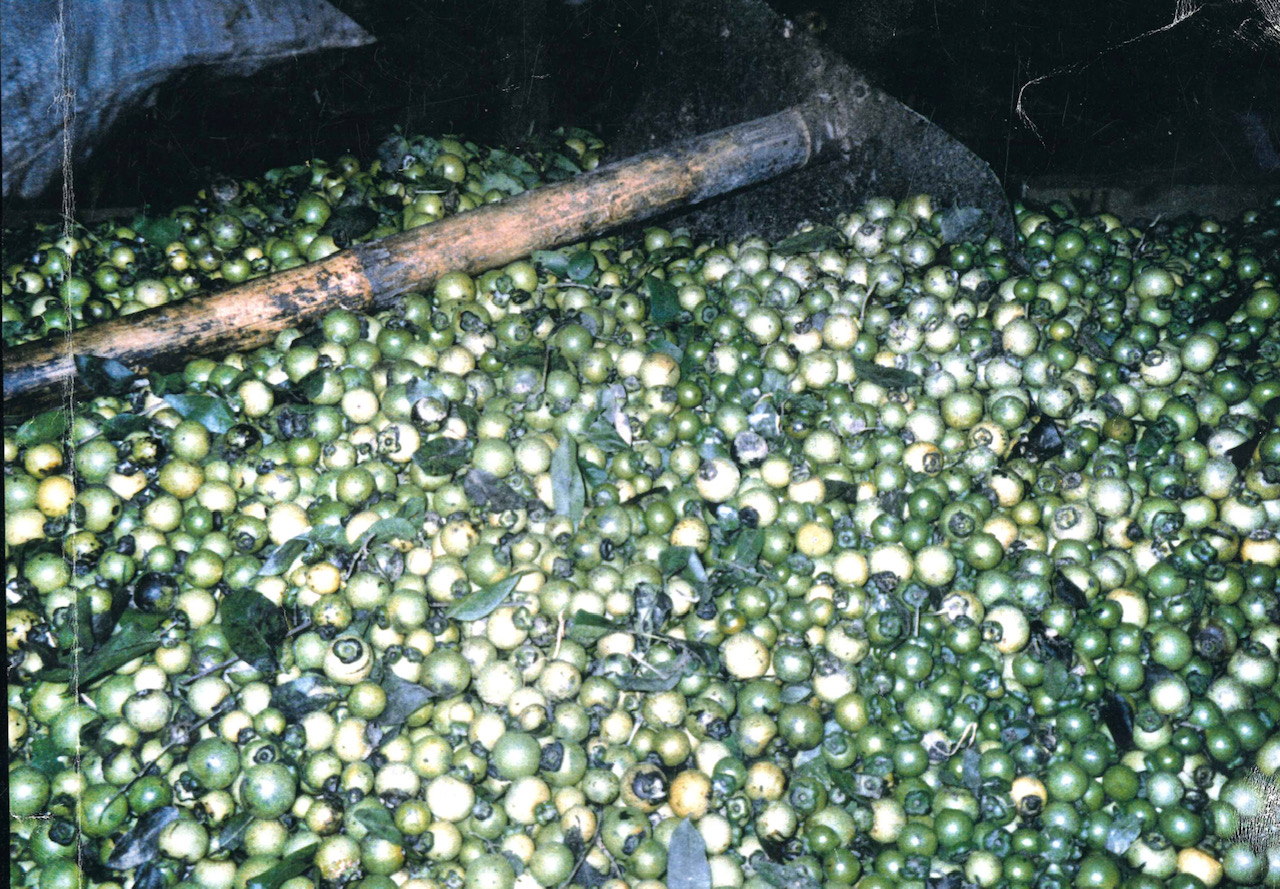 Mac nura berries made into a dye bath. Photograph Augusta de Gunzbourg.My mother followed the trail of this textile to the southern district of Tân Châu, adjacent to Cambodia, near the Mekong river. The fertile riverbanks offer an ideal home for the tree fruits that produce the dye.
Historically, this region specialised in the production of this textile: from the raising of the silk moth, the spinning of silk threads and the dyeing of the fabric out of the Mac ura tree fruit (Diospyros Mollis) giving off that special black colour. In imperial times, the fabric is said to have been produced and worn only by highest-ranking mandarins of Vietnam and exported to China for the Chinese emperor to wear.
In the 1990’s however, very little of that industry remained and most workshops that still used the tree fruits to dye fabric did so on viscose, which was exported to Cambodia where it was worn as a sarong. Although silk worms were still present in the region, they were more commonly used as food and fried with whisky as a local delicacy. Older generations and people working in the fields would sometimes still wear trousers or shorts made out of the material.
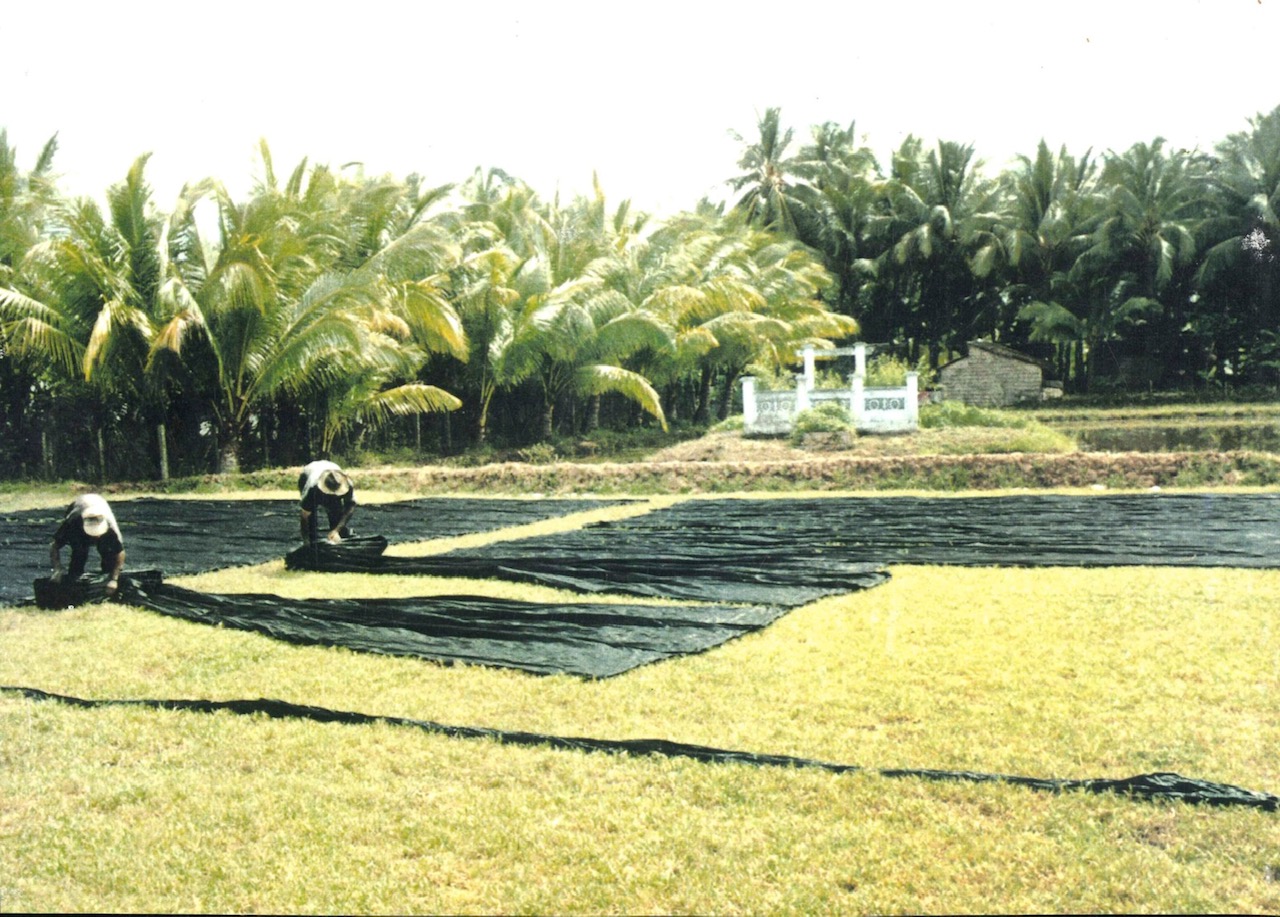 Lacquer silk cloth drying in a field. Photograph Augusta de Gunzbourg.Fortunately, after some work with local manufacturers, the use of silk was reintroduced progressively to the region and specialization in the know-how was revived.
How is the fabric made? Once the silk is woven and ready, the fabric is dyed in enormous vats containing the pressed and filtered juice of the Mac ura fruit. That fruit is picked and ready for use from June to January and the silk is spun and weaved during the the rest of the year. The textile is washed, dyed and dried several times in that order.
Afterwards, the panels of silk (usually of 20.5 metres each) have to be dried in grass fields and in the sun. Lastly, the fabric is beaten by a giant hammerhead, giving it its shiny appearance. A lot of information about the making of the material can be found on the Facebook page of the workshop that helped in restarting the local craft: Tam Lang Silk- Lanh My A.
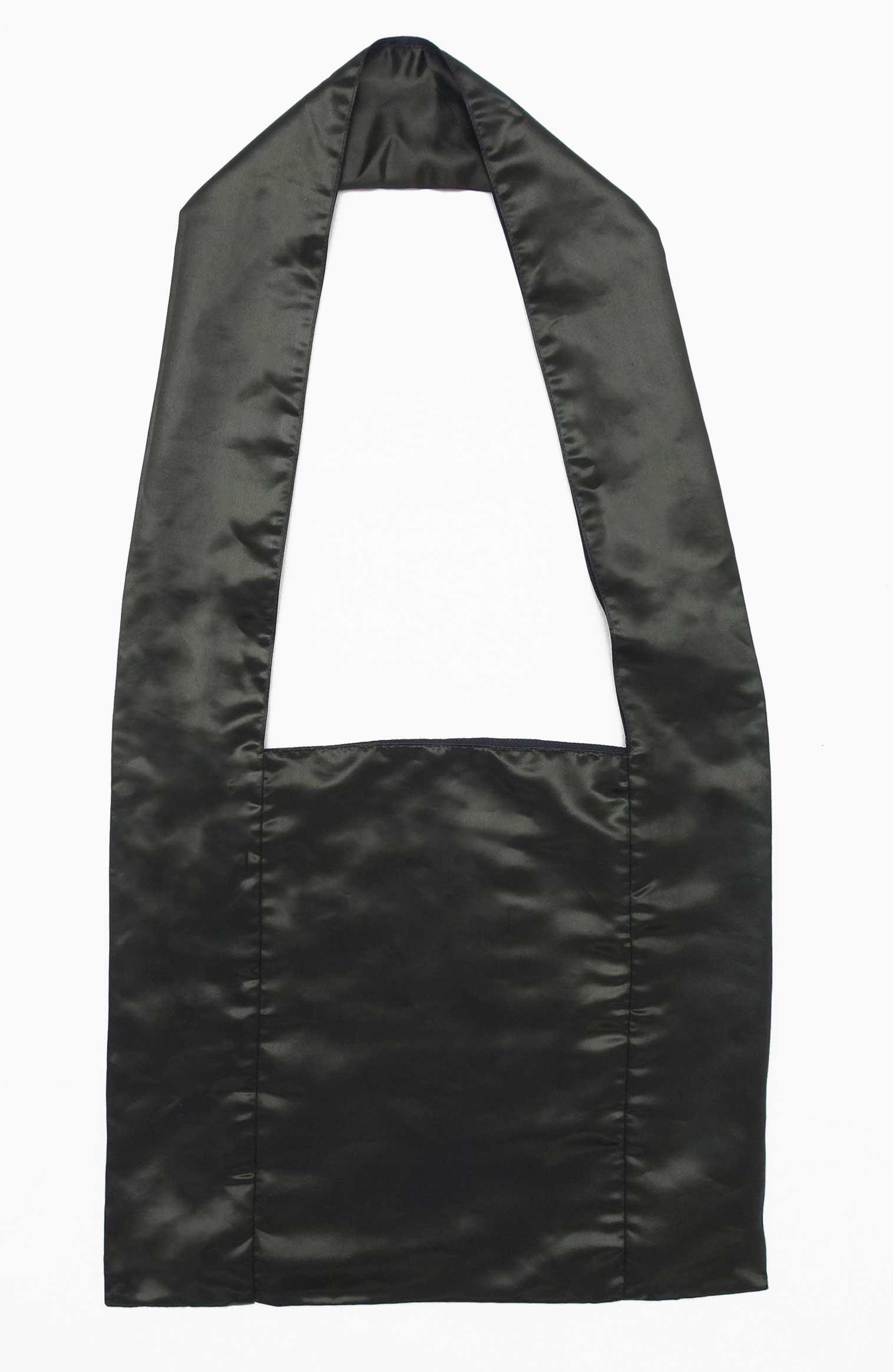 Lacquer silk bag from Vietnam, now in the collection of the TRC in Leiden (TRC 2020.4236).Since then, “Lacquer Silk” has become a recognised part of Vietnamese cultural heritage, reintroduced to the international fashion stage through brands such as Hermes, Hanoia and Blanc de Chine.
Some of Jacky Chan's or even Angelina Jolie’s outfits were made out of Lacquer Silk and a current, 35 episodes long, Vietnamese TV series takes place in the lacquer silk workshops!
Augusta de Gunzbourg, 21 October 2020