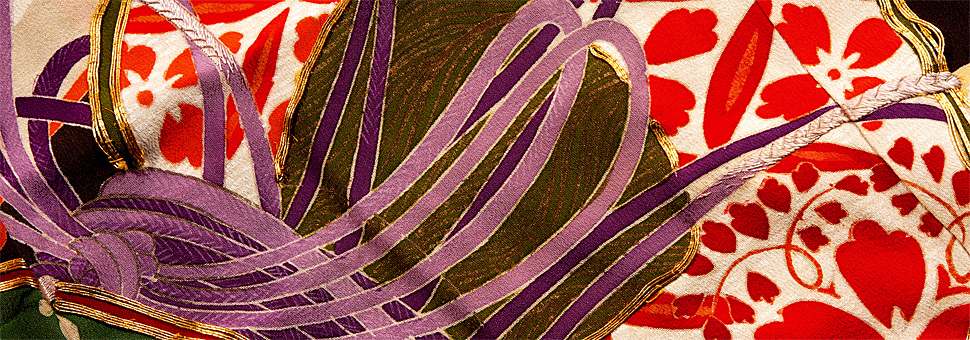
While increasingly well-known for innovative fashion design, Africa is usually not the first place that comes to mind for embroidery. In fact, some researchers talk about an African “embroidery belt”—a narrow area in the approximate middle of the continent, running from the west coast to the east, where embroidery is practiced.
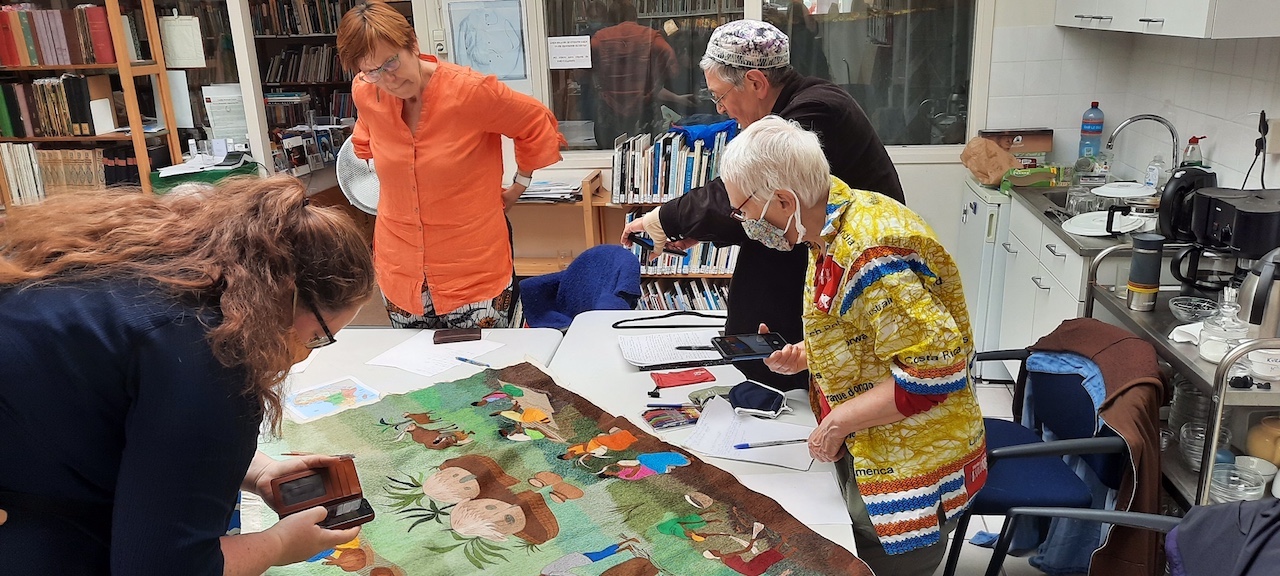 Participants of the study day on sub-Saharan embroidery look at a pictorial panel produced by the Sabane Kabuye workshop in Rwanda (TRC 2021.0500a). Photograph by Augusta de Gunzbourg.
The participants in the TRC’s first study day on sub-Saharan embroidery now know differently. Many styles of embroidery can be found throughout the continent, with some 93 different stitches and stitch combinations identified—including some 15 stitches that have not been seen outside of the continent.
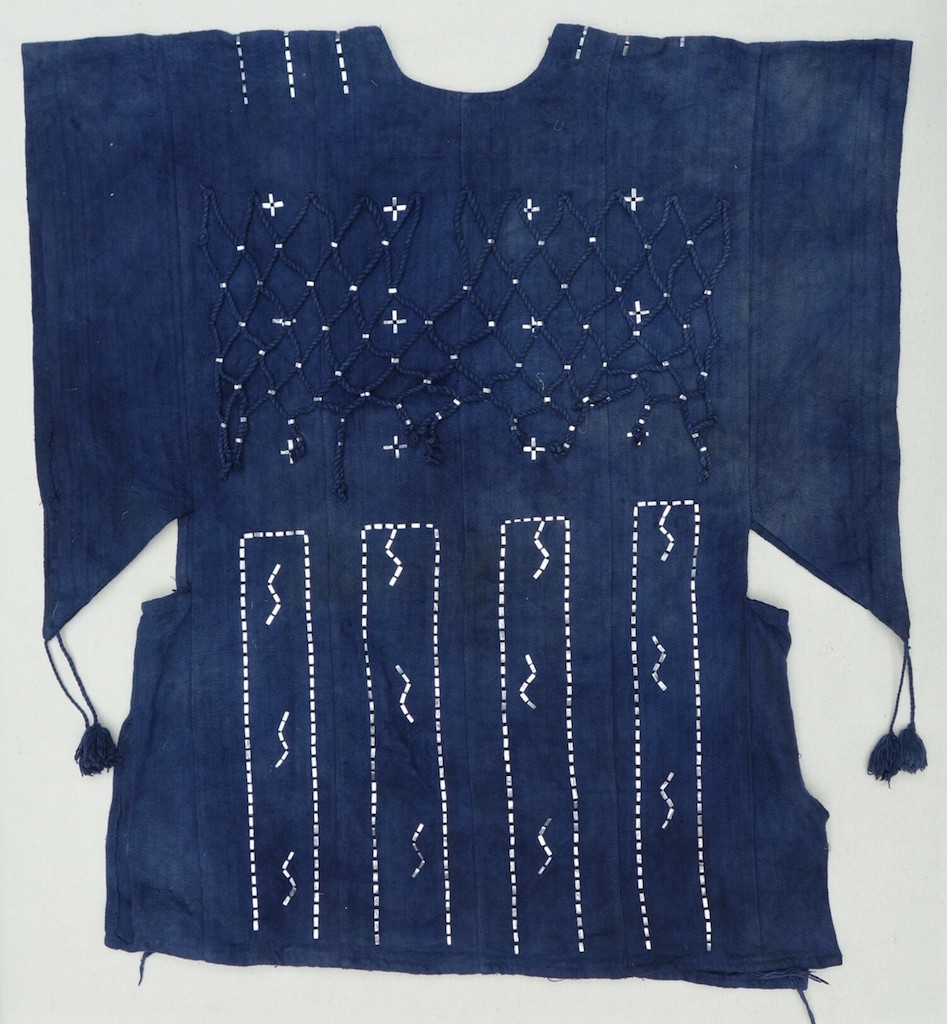 Back of a tunic decorated with metal thread embroidery. Dogon, Mali, late 20th century (TRC 2021.2163).A wide variety of materials were also used, including silk, cotton, wool, tree bark, palm raffia and pineapple fibre. A well-illustrated, introductory presentation by TRC Director Dr. Gillian Vogelsang-Eastwood began with the asymmetrical, geometrical decorations on Wodaabe men’s hip wraps (compare TRC 2014.0812), and led to the heavily quilted armour for soldiers and horses in the Sahel. This armour was embroidered for high status individuals, and was first mentioned in medieval Arabic travelogues.
One absolute delight of the day was the chance to see and touch actual garments. These included several elaborately embroidered women’s trousers from Ethiopia; a striking dark blue indigo Dogon shirt (compare TRC 2021.2163), with triangular sleeves and a tassel, decorated with silver plate embroidery; beautiful white work from Mali; and several examples of Kuba ‘velvet’, made from raffia, from the Democratic Republic of Congo (compare TRC 2021.2201), among many others. The babban riga garments from Nigeria (compare TRC 2018.3097), where the embroidery on one garment can take between three to six months to complete, almost took your breath away.
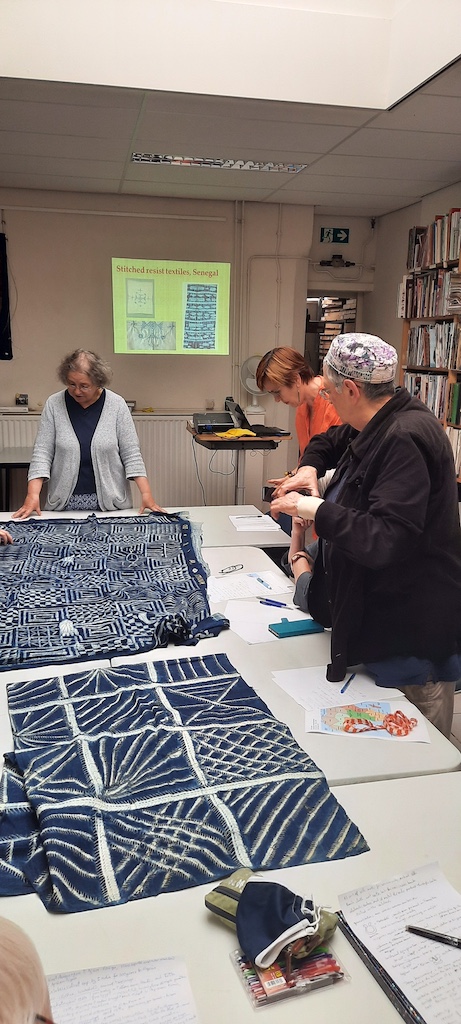 Participants of the TRC study day on sub-Saharan embroidery look at stitch-resist textiles from Nigeria. Photograph by Augusta de Gunzbourg.What was also striking were the many stories about cultural exchange. Indian and Arab trade, Ottoman conquests and European colonisation brought new influences. Another story that stuck in my mind was about the "Ghana boys" of Mali. In the 1960s many young men left Mali for jobs in neighbouring Ghana, where they were impressed by the affordability of Ghanian cloth. When they returned to Mali, the “Ghana boys” developed a unique style of embroidery for their own tunics.
It was an exciting day. Seeing so much beauty left me with a sense of great satisfaction—and an urge to pick up a needle and try my own hand with embroidery. And I am definitely looking forward to the publication of volume 3 in the Bloomsbury World Encyclopedia of Embroidery, on Embroidery from Sub-Saharan Africa, by Gillian Vogelsang-Eastwood and Willem Vogelsang.
Shelley Anderson, 2 August 2021