

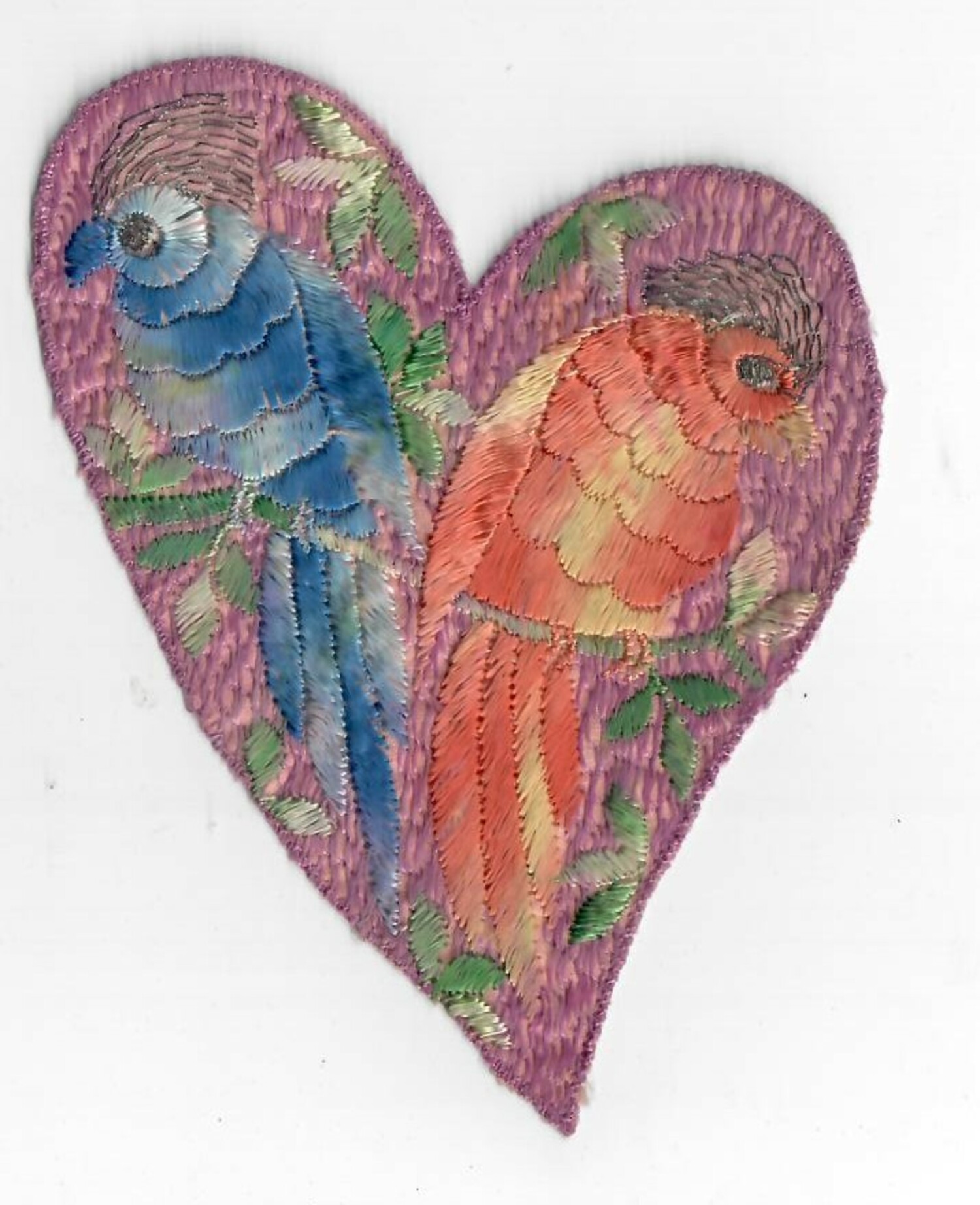
 Machine embroidered cigarette silk with a pair of birds, set within a heart, 1920s-1930s (TRC 2021.2473h).A few weeks ago the TRC in Leiden was given a wide range of textiles and garments that came from the collection of Joop and May Hobijn-Roth (for a blog on the donation, click here). We have been slowly putting all these items online.
As part of the donation we were given a plastic bag with hundreds of textile patches, of various cloth types and made with different production techniques. Some of them I could place, but the majority were ‘just’ patches, but why so many and so diverse?
A little research has revealed that they are all cigarette silks, also known as premiums or inserts. Cigarette cards made from paper date from the 1870s and were produced by various cigarette companies to encourage people to buy specific tobacco products. The textile silks, however, are later and date from the 1910s onwards. The examples we have been given are actually Dutch in origin and were locally called zijdjes (lit. ‘little silks’). They were all probably produced for Turmac, the Turkish Macedonian Tobacco Company based in Zevenaar, Gelderland, in the east of the Netherlands.
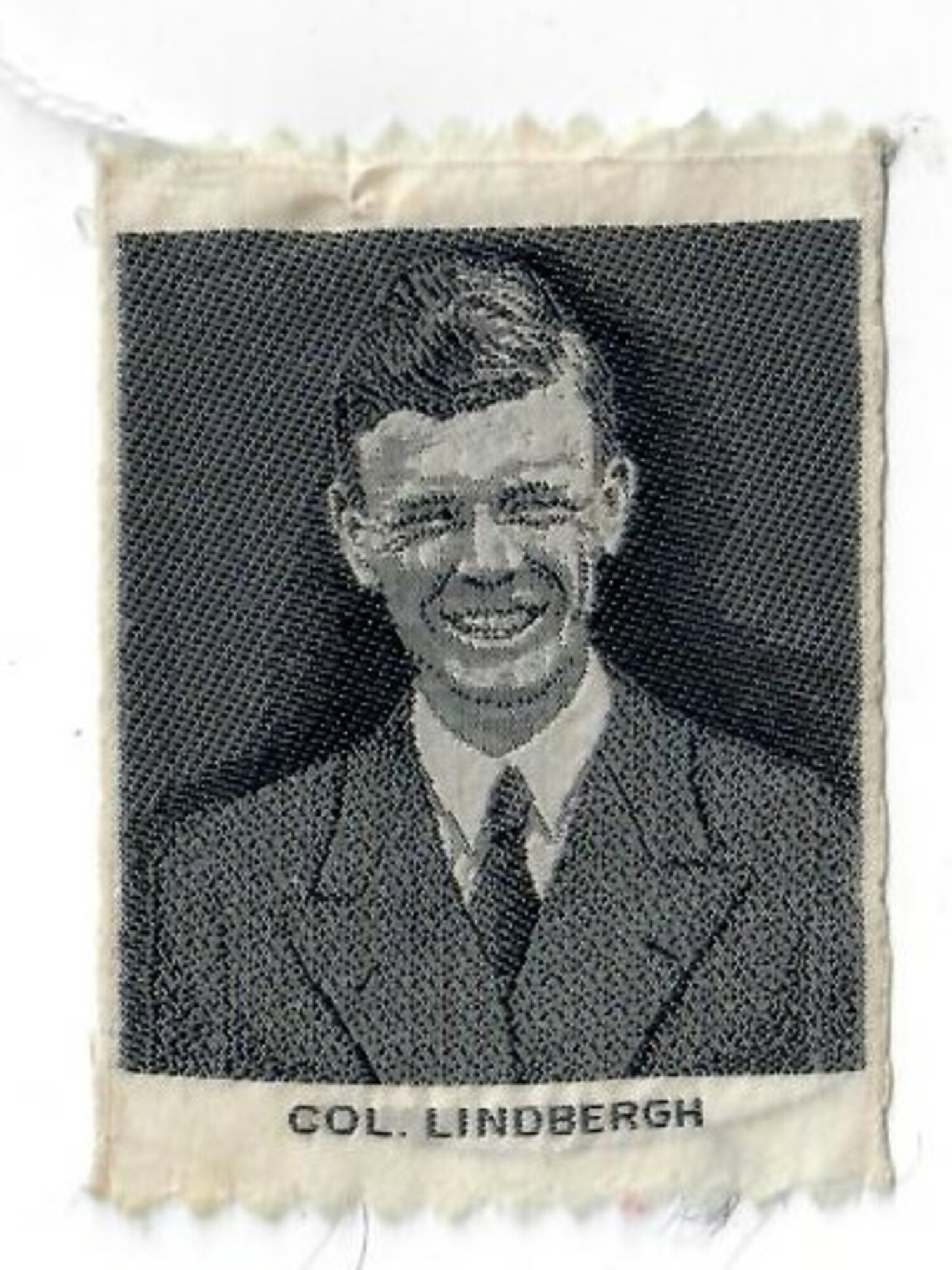 Stevengraph cigarette silk with the image of the American aviator, Charles Lindbergh, 1920s-1930s (TRC 2021.2470b).The company was active from 1919 to 2008. The Turmac silks were produced between c.1920 to 1934, so making these items nearly 100 years old. They were literally inserted into packets of cigarettes and boxes of cigars. They stopped producing the zijdjes (silks) in the Netherlands in 1934 when the existing Dutch tobacco laws were altered to forbid advertising material, such as cards and silks, being added to tobacco products. So, the cigarette silks we have been given appear to date to only a fourteen year period, and yet during the time hundreds of thousands of these silks were produced.
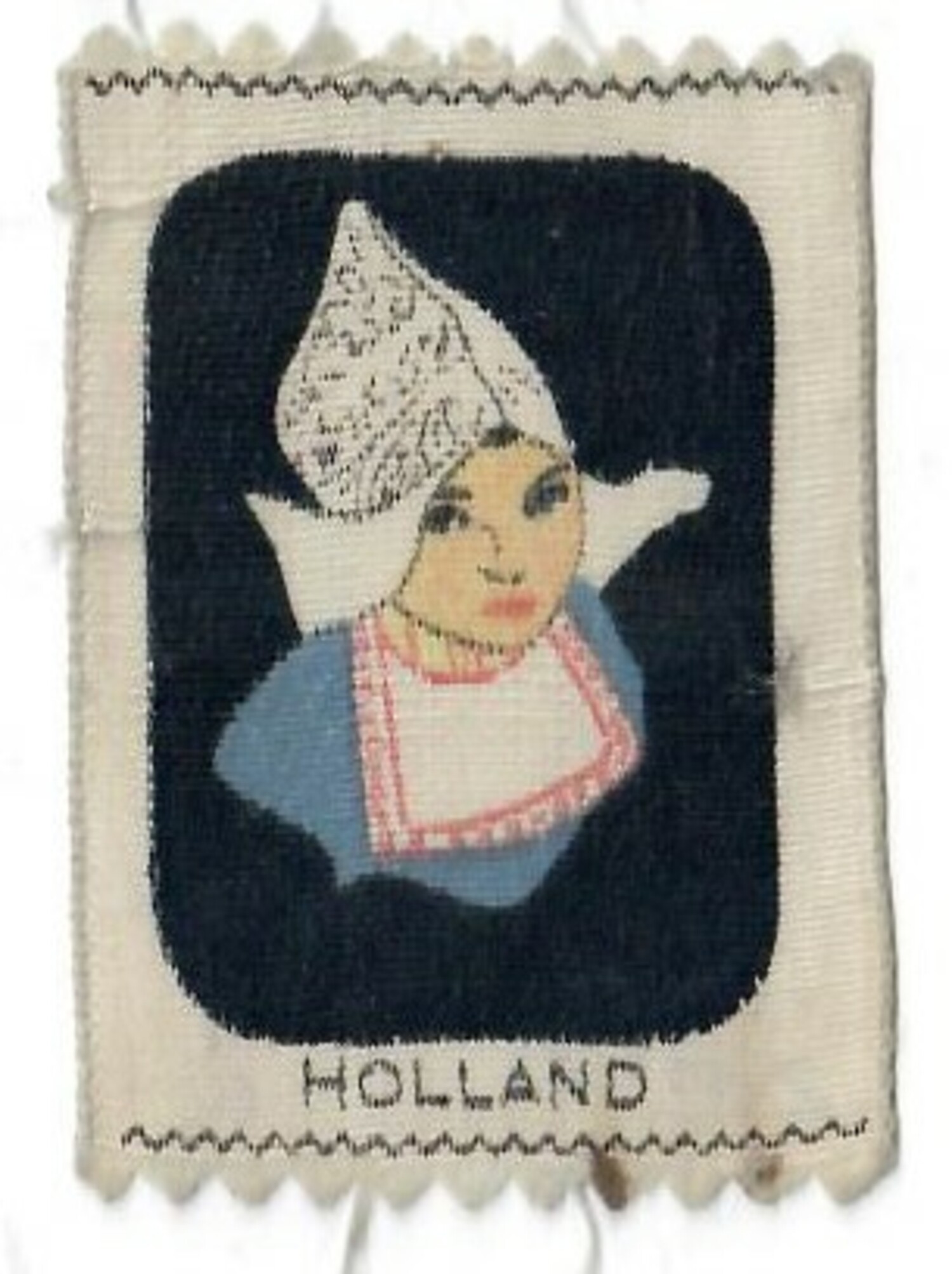 Printed cigarette silk with the image of a Volendam girl, 1920a-1930a (TRC 2021.2471i).The vast majority of the zijdjes given to the TRC depict flags and are currently being processed. Other examples now online in the TRC Collection online catalogue include a variety of techniques, including stevengraphs, a woven form that is known for its very fine details. The stevengraph silks reflect two different series, namely historical figures and modern heroes. The first includes the Dutch painter Karel Dujardin (1622-1678; TRC 2021.2470a) and the American aviator, Charles Lindbergh (1902-1974; TRC 2021.2470b) who became famous in 1927 for flying the Atlantic Ocean.
There are also several series of woven forms with supplementary wefts floating on the back – these were less complicated to weave than the stevengraphs. This second group includes birds of the world and, more interestingly for the TRC Leiden, regional dress from various countries, such as Albania (TRC 2021.2472a) and Java, Indonesia (TRC 2021.2472h).
Another textile group was made from woven silk moiré. They also bear images of regional dress, but this time they were printed onto the textile, a cheaper form of production. The outfits include examples of Asian, European and American outfits. Some of the forms are reasonably recognisable (Volendam, the Netherlands, TRC 2021.2471i), others appear to have been made up (Afghanistan, TRC 2021.2471a).
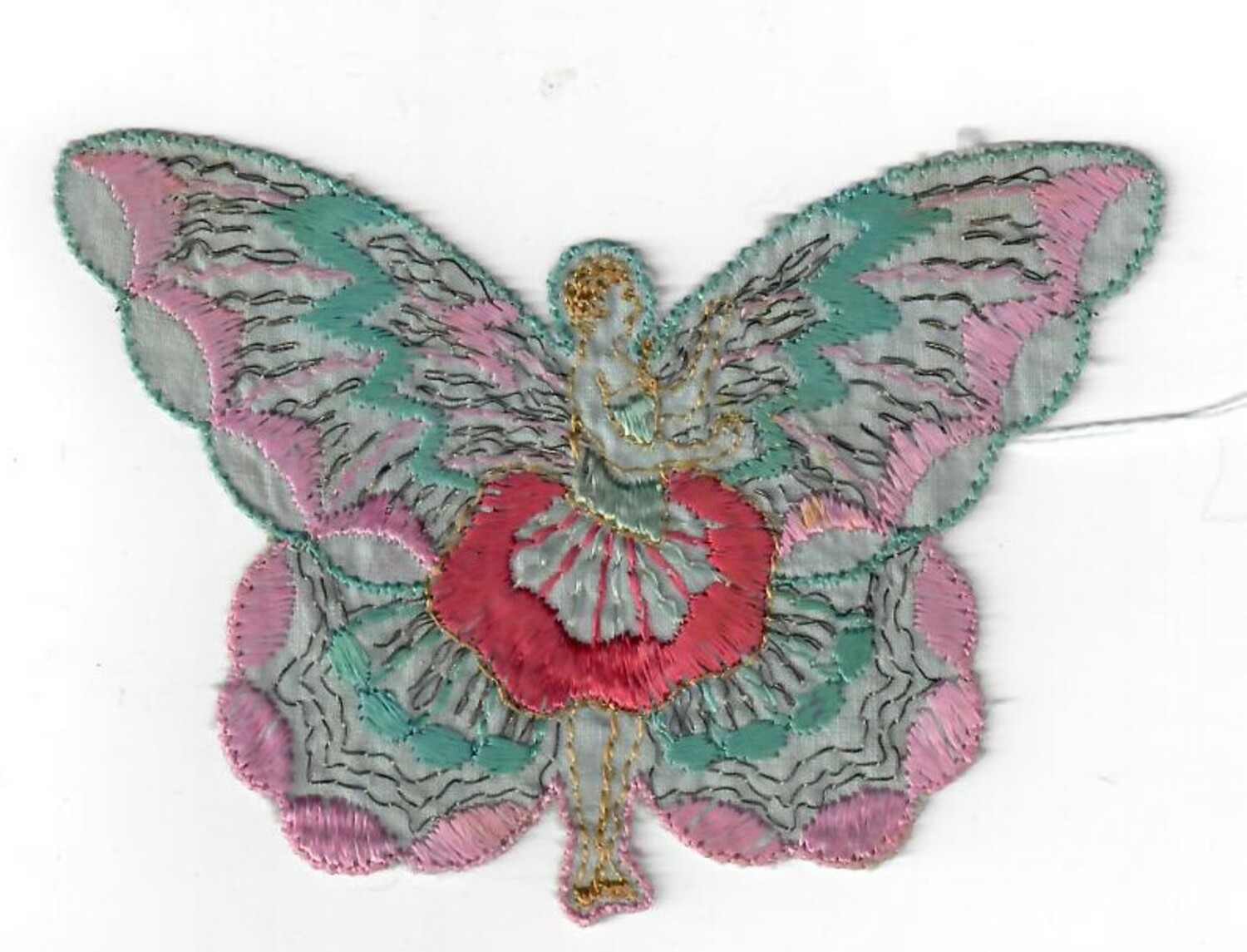 Machine embroidered cigarette silk showing a fairy with butterfly wings (TRC 2021.2476a).In addition, there are over one hundred examples of embroidered ‘inserts’. They can be divided into birds, butterflies, flowers, fairies, and novelties (such as TRC 2021.2473b and TRC 2021.2476a). They all have a cotton cloth ground and are machine embroidered with floss silks (whether it is real or artificial still needs to be determined). The silks were embroidered in long, narrow lengths and then cut into individual motifs. The birds, butterflies and flowers, for example, come in a variety of sizes, shapes and colours, some of which were embroidered with silver and gold coloured metal threads (passings). The fairies (elfjes) are late 1920s in appearance and have brilliant, huge wings in various colours.
One of the novelty silks caught my attention, namely an early version of Mickey Mouse (TRC 2021.2474d), the cartoon character created by Walt Disney company that was first screened in Steamboat Willie in 1928. Apparently because it was so difficult to draw his hands satisfactorily they had to come up with an alternative solution, namely Mickey started to wear gloves! The Mickey Mouse in the TRC Collection has gloves, so dating it to about 1929-1930.
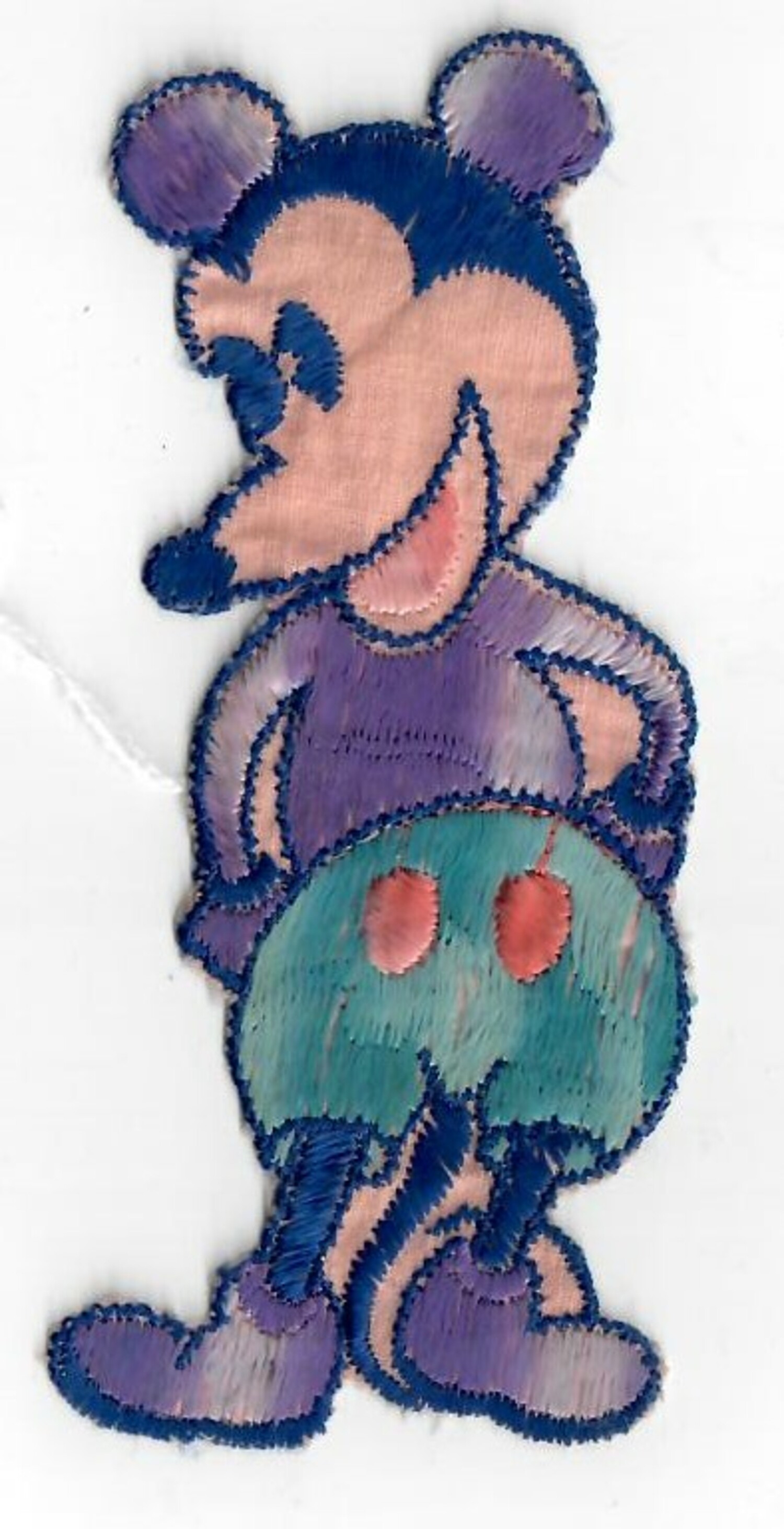 Machine embroidered cigarette silk showing an early version of Mickey Mouse, ca. 1930 (TRC 2021.2474d).Although it is very likely these silks were ordered and used by Turmac, there remain other questions, including who actually made them, where and under what circumstances? It is likely that the woven, printed and embroidered examples were commissioned by Turmac from different companies, but who were they? How much did it cost to produce them (from designer to end product) and were they actually efficient in attracting customers? And how actually did people 'use' them? We know that albums were being produced to display them; others were being used for making quilt tops or stitched onto clothing. Their use may have been suggested by the size and shape of the silks.
While doing the research for this blog it became clear that some people think the embroidered examples are hand stitched. This is incorrect, as they were machine embroidered, probably on Schiffli machines. A similar problem, hand or machine embroidered, came up with the identification associated with the First World War postcards that are featured in a TRC online exhibition, which by the way were all machine embroidered, on a hand embroidery machine (which copies hand embroidery). Life can be a little complicated sometimes.....
Gillian Vogelsang, 15 August 2021