
(Naoko Kikuchi, 29 October 2023). Last summer I visited the city of Hirosaki, in the Tsukaru district, in northern Japan. This place is the home of kogin zashi, or simply called kogin, one of the major sashiko forms of quilting. The word kogin means 'small cloth' and zashi means 'stitches'. Kogin stitches are worked horizontally, mostly by counting the odd number of warp threads, while sashiko stitches could run in any direction. In Hirosaki, I learned how local people are trying hard to preserve this tradition.
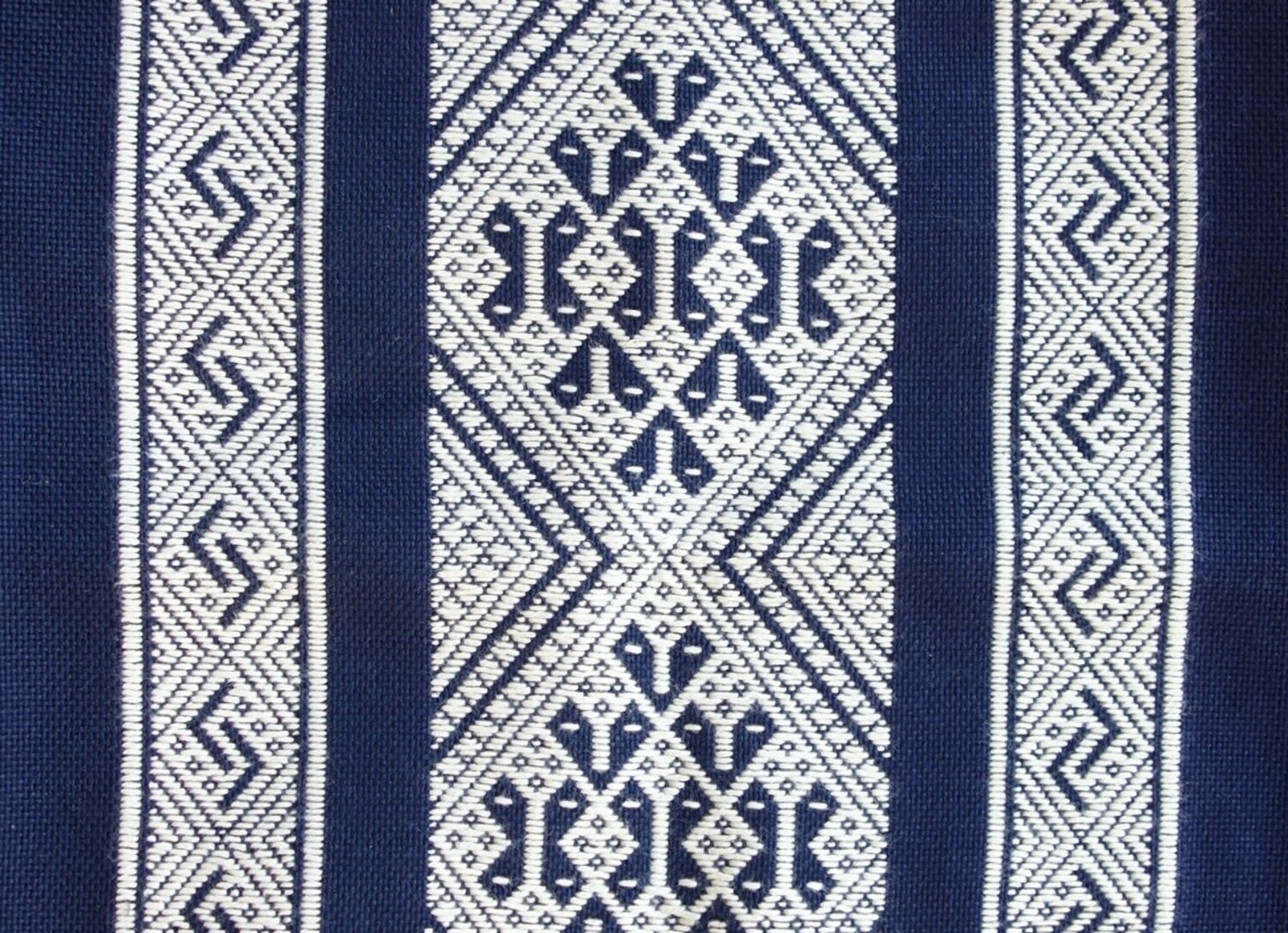 Cotton cushion cover, kogin-zashi, made by Misao Kimura, late 20th century, Japan (TRC 2021.1274).
In the Edo period (early 17th - late 19th century) maritime trade spread the tradition of sashiko all over Japan, and it is now popular among quilters worldwide, but the kogin zashi technique has long remained confined to this particular district due to its isolated location and the complexity of the technique.
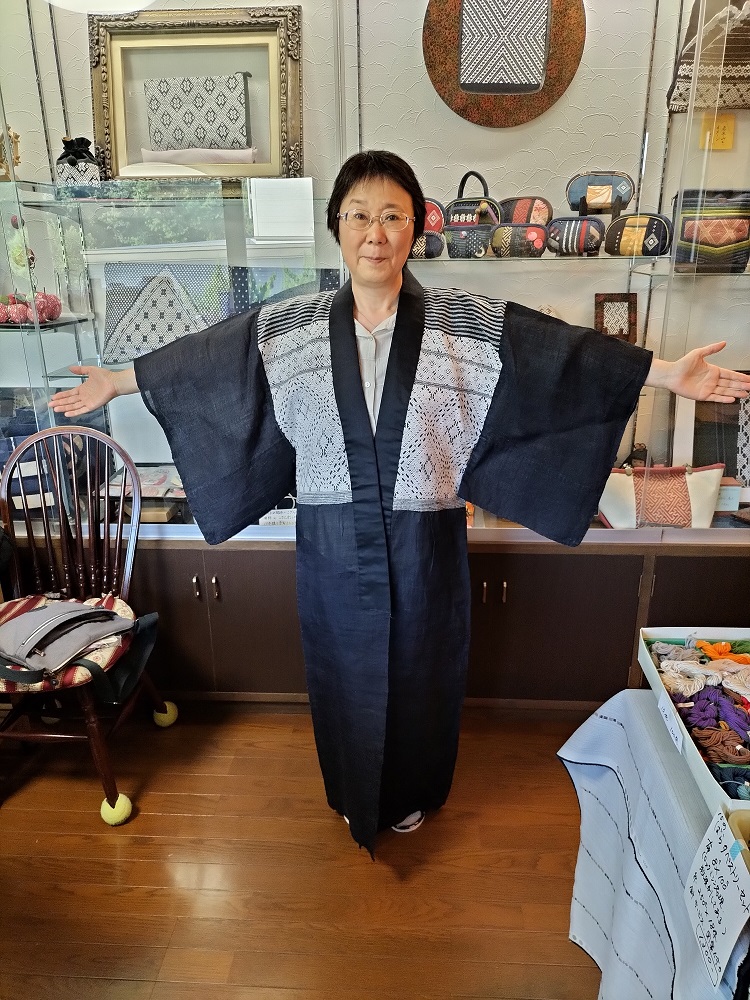 Author wearing an antique kogin garment, the legacy of Chuzaburo Tanaka, at the Sato Yoko Kogin Tenjikan.In the Tsugaru district, farmers in the past were not allowed to wear anything but hemp clothes, even during the harsh winters. They stitched cloth with white ramie threads for their warmth and strength, in a much more dense way than other sashiko forms. When cotton threads became available in the late 19th century, many complex patterns were developed.
The pattern arrangement and its density of kogin-zashi vary depending upon the region. Nishi-kogin has finer and more complex patterns than others because of the fine hemp fabric they use, while higashi-kogin has simple, bold patterns as hemp was coarsely woven. Mishima-kogin has three stripes, and patterns are sometimes irregular, probably because of poor working circumstances and repeated periods of famine.
There were originally about forty basic patterns called modoko, and these were taken from nature such as cat’s eyes, cows, flowers and walnuts. For the border, various continuous stitches were applied.
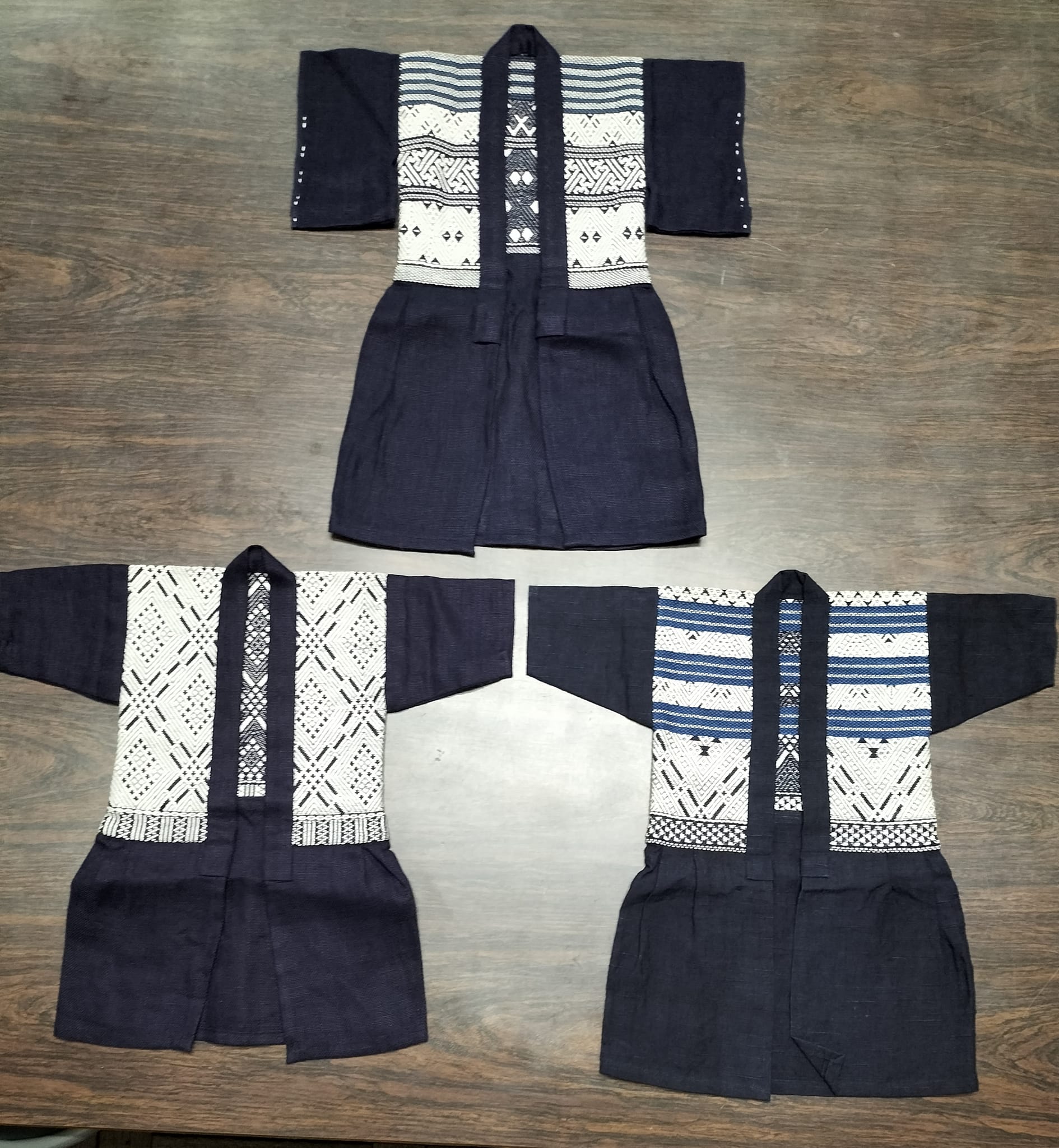 Three kogin samples made at the Hirosaki Kogin Institute. Photograph by author.The shape of sleeves reflects the age of the clothes. Large square sleeves were new, and were used for the special occasions. Sleeves were smaller for daily use, and then clipped for working circumstances. Sometimes stitches were worked and mended twice or three times, so that original stitches are scarcely seen. When the clothes were old, they were dyed with indigo, which resulted in aba (grandma) - kogin, also described as hana-ga-saita ('flower blossomed').
In the mid-Meiji period (1890s), when cotton clothes were more available, the production of labour intensive kogin zashi almost disappeared. But in the late 1940s, Soetsu Yanagi (1889-1961), the founder of the Mingei (folk craft) movement in the late 1920s, and Chuzaburo Tanaka (1933-2013), an antique fabric collector who published books on textile traditions in northern Japan, encouraged people to preserve the kogin zashi tradition.
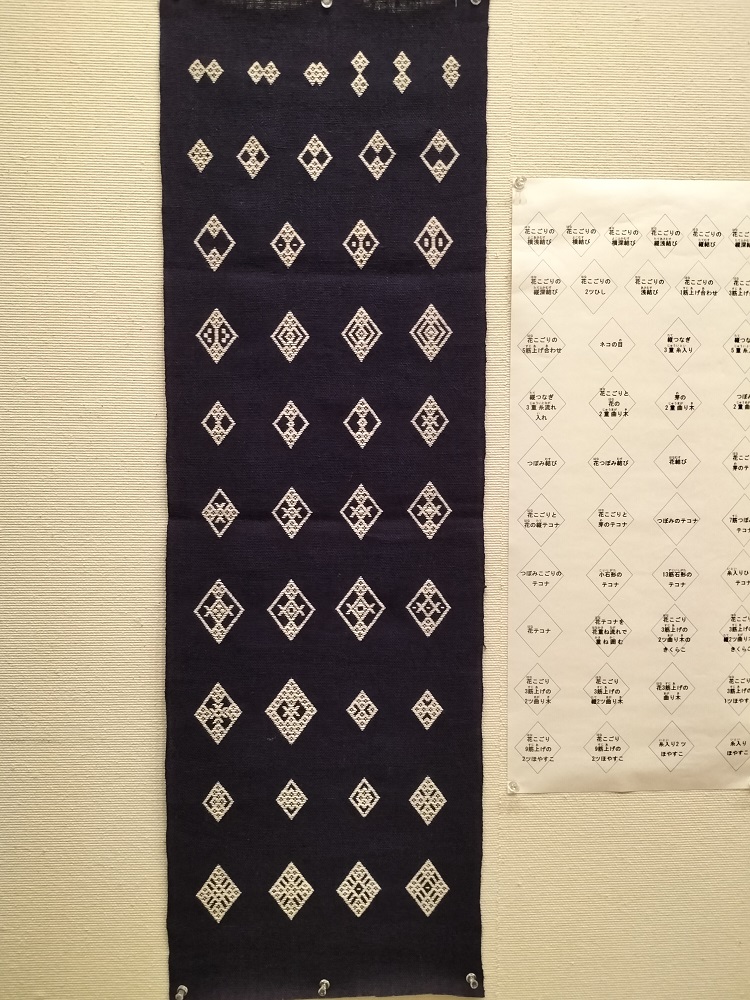 Modoko samples made by Hiroko Takahashi, courtesy of the Hirosaki City Museum.Naomichi Yokoshima, the president of the Hirosaki Homespun LLC, and Kazutomo Takahashi, a potter associated with the Mingei movement started to collect kogin zashi clothes from villages and documented the patterns by drawing them on graphic paper. Their wives stitched samples for the institute. Together, they recorded over 600 patterns. The works of Mr and Mrs Takahashi are preserved at the Hirosaki City Museum, and some of them were exhibited at the museum when I visited the place.
In the late 20th century, people such as Setsu Maeda and Misao Kimura exhibited their kogin works overseas and published about them. One of Kimura’s creations is now in the collection of the TRC (TRC 2021.1274).
Naomichi Yokoshima transformed his company into the Hirosaki Kogin Institute Co., Ltd. in 1962 to focus on kogin study and the production of kogin items for urban consumers. He published the book Tsugaru Kogin (1974).
The third president of the Institute, Sadaharu Narita, expanded its business and held many workshops and exhibitions domestically and overseas. He also created new products in collaboration with other businesses such as department stores and fashion designers. In 1996 kogin-zashi was nationally designated as one of Japan's traditional crafts. He also published a book about kogin in 2013.
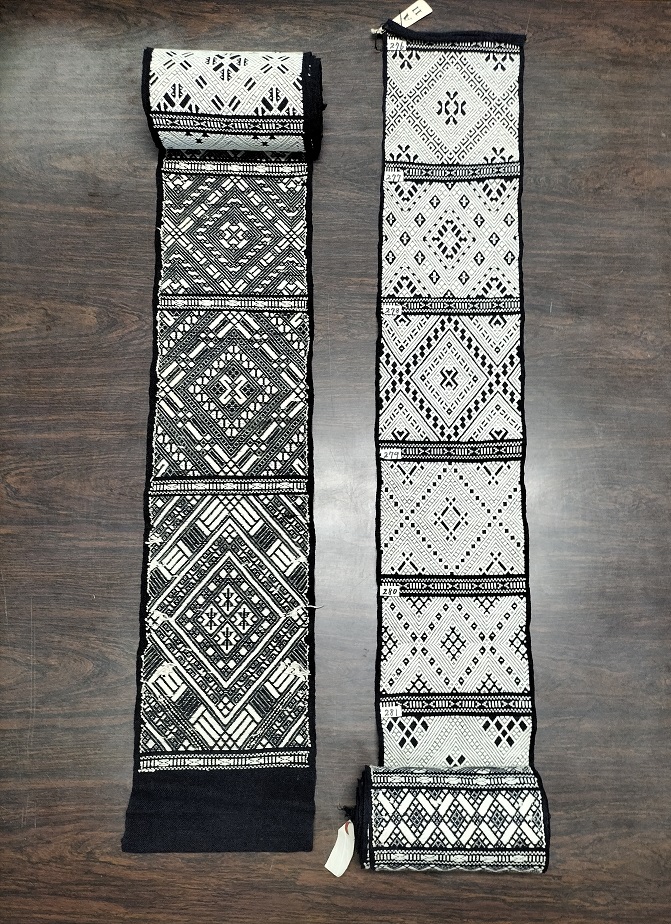 Kogin samples at the Hirosaki Kogin Institute. Photograph by author.At the Institue, the linen fabric is still woven by old looms to be made into bags, purse, buttons, card cases and obis, etc. Currently they have about 120 kogin stitchers working from home. I was pleased to see Mr. Narita again, whom I met nine years ago (then president), and learn that his daughter Hiromi Chiba succeeded him as President in 2023.
Yoko Sato, who learned kogin from Setsu Maeda and Hiroko Takahasi, founded the Sato Yoko Kogin Tenjikan (display room) in 2010, where people can see and feel old and new kogin and learn the pertinent stitches. Among her collection was a nishi kogin passed down from Chuzaburo Tanaka, which I had a privilege to try on. It was much lighter than I had imagined, but warm.
The younger generation is also active in promoting kogin through internet and magazines. They provide information on the history of kogin, about workshops, products, and patterns to be downloaded. A graphic designer called Iemasa Yamahata created many products with kogin patterns, including the interior of an upscale local hotel ‘the Kai Tsugaru’. Thanks to many people’s efforts, kogin has now received craft lovers’ attention in Japan and also overseas. I am glad to see that the kogin tradition is surviving well and is even spreading around the world!
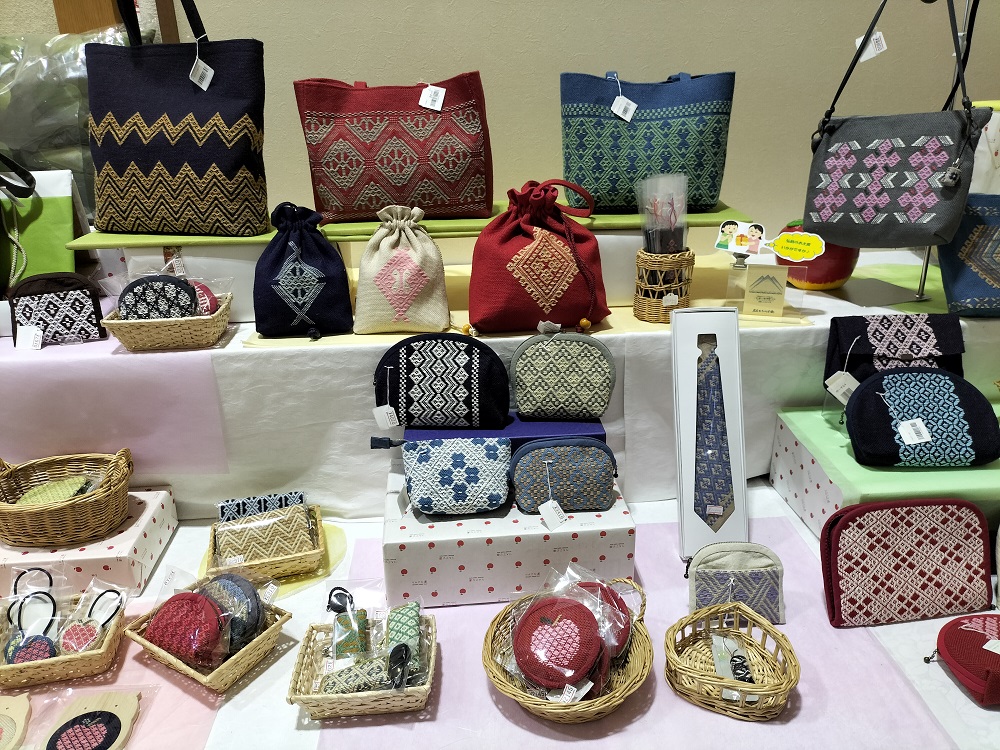 Various kogin products produced by local kogin group, at the souvenir shop of the Hirosaki Apple Farm. Photograph by author.