• F2
  • F4
  • F1
  • F3

Dr Monica Klasing Chen is assistant-professor in Chinese art history at Heidelberg University, Germany. She attended the 5-day TRC Intensive Textile Course in April. She wrote a blog about her experiences and how the course has affected her work and her interests in textiles. A second blog that she wrote about the course, and which will focus on her personal highlights during the week, will be published shortly.

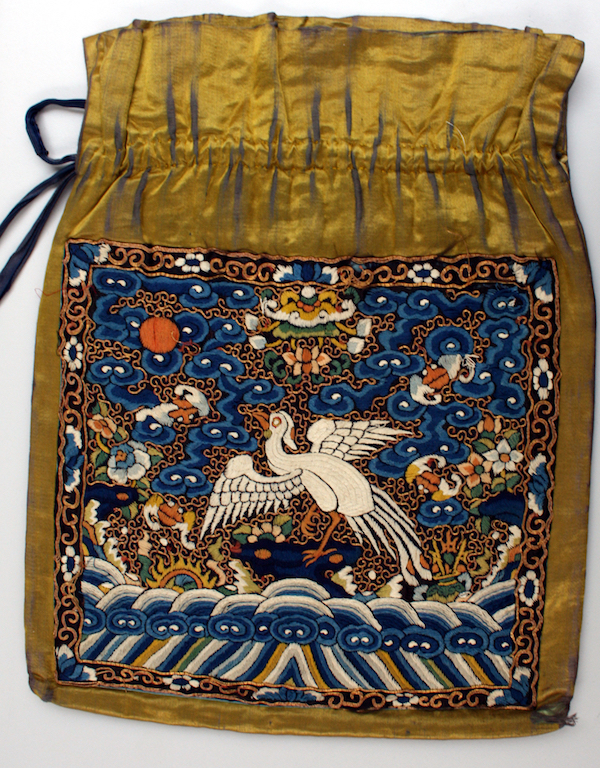
Satin bag, China, late 19th century (TRC 2010.0138).Satin bag, China, late 19th century (TRC 2010.0138).

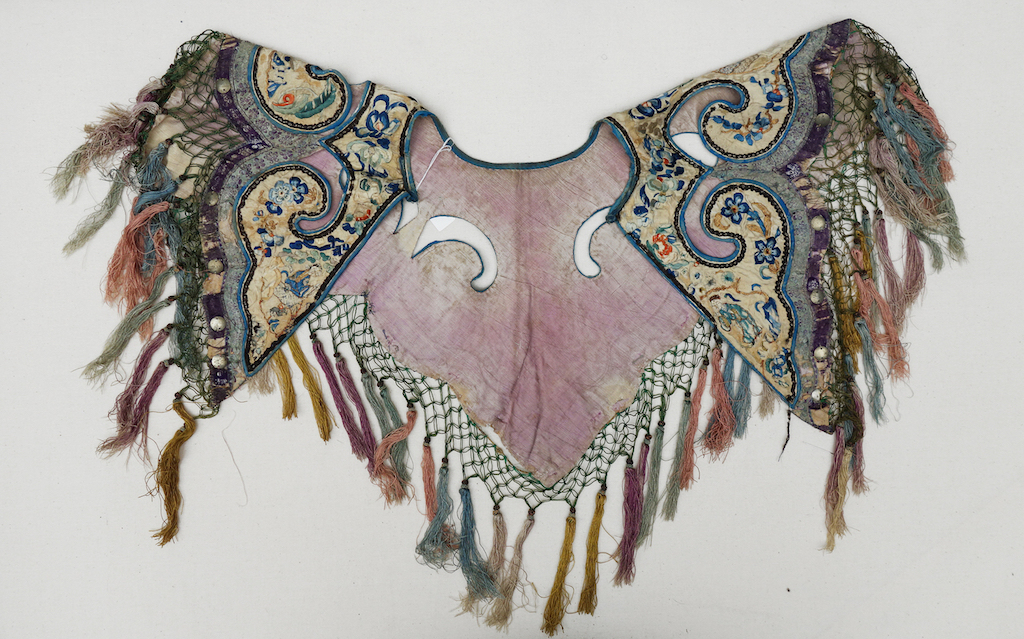
Large silk 'cloud' collar for a woman, with embroidered panels and open areas, China, early 20th century (TRC 2004.0108).Large silk 'cloud' collar for a woman, with embroidered panels and open areas, China, early 20th century (TRC 2004.0108).

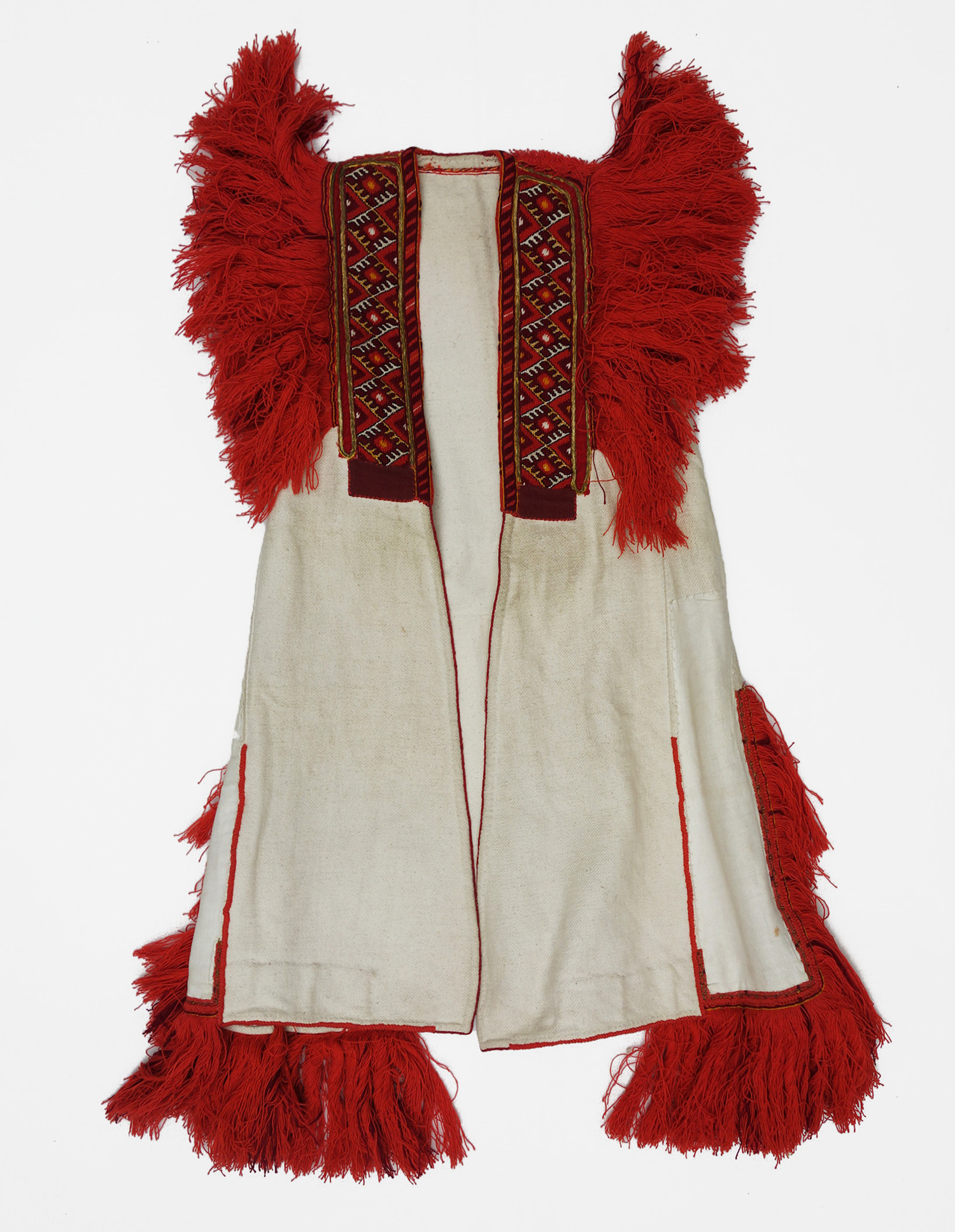
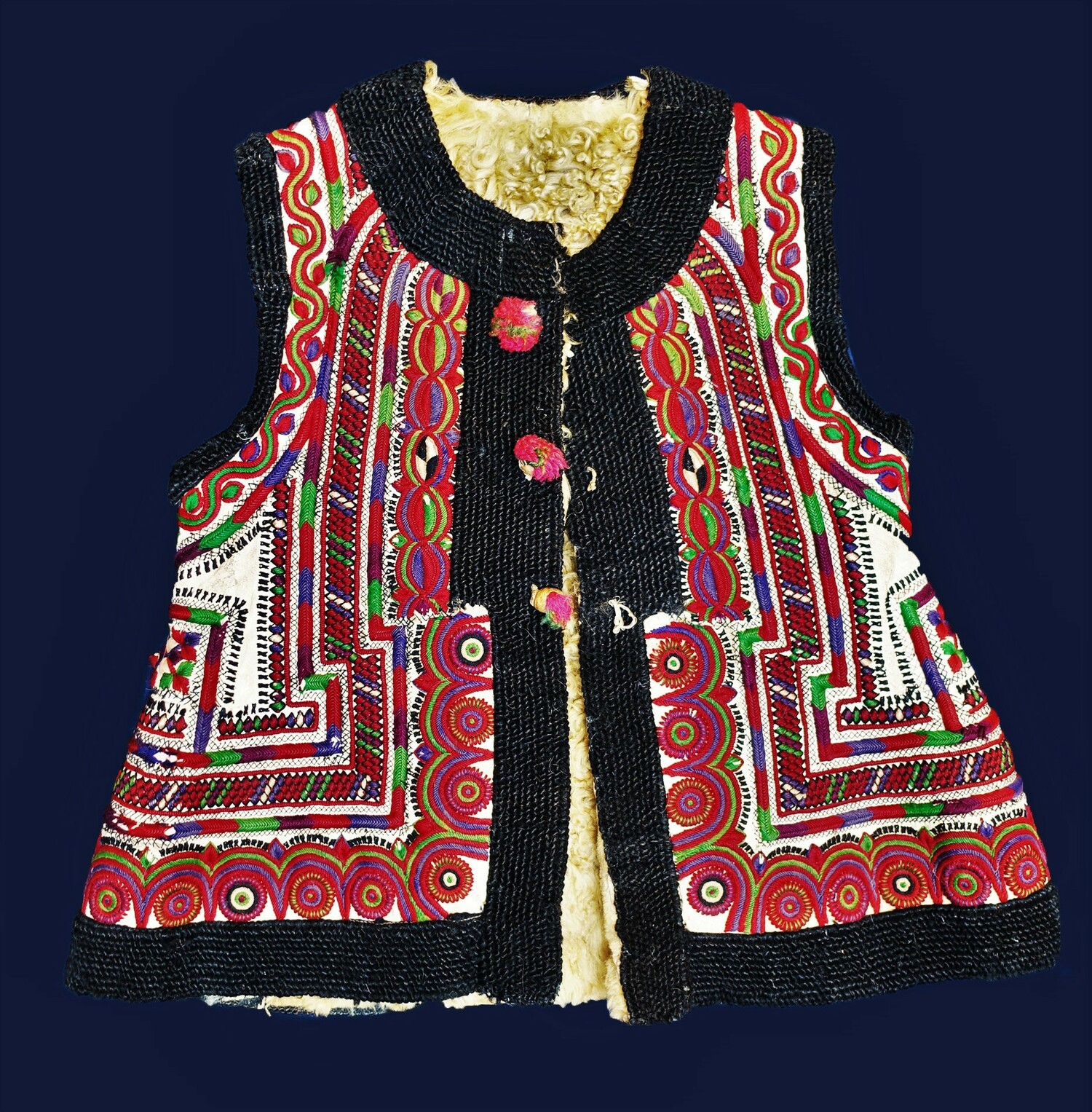
The 9th May is Europe Day within the Leiden City of Science 2022 programme. Se we decided to illustrate various waistcoats, from different parts of Europe. Some of them are for men, others for women, and others we are not really sure of.

The TRC is happy to welcome everyone tomorrow 9th May between 10.00 and 16.00.

Woman's waistcoat from North Macedonia, c. 1920 (TRC 2021.3007d).Woman's waistcoat from North Macedonia, c. 1920 (TRC 2021.3007d).

Hand embroidered waistcoat from Romania/Ukraine, 20th century (TRC 2022.0390).Hand embroidered waistcoat from Romania/Ukraine, 20th century (TRC 2022.0390).


The last few days have been busy and exciting at the TRC and beyond! So what is new? We have been working hard on the Arizona collection and nearly 400 items are now online. Then via the post came five garments from Socotra, an island just south of Yemen, thanks to Julian Jansen van Rensburg from the Royal Botanic Garden Edinburgh.

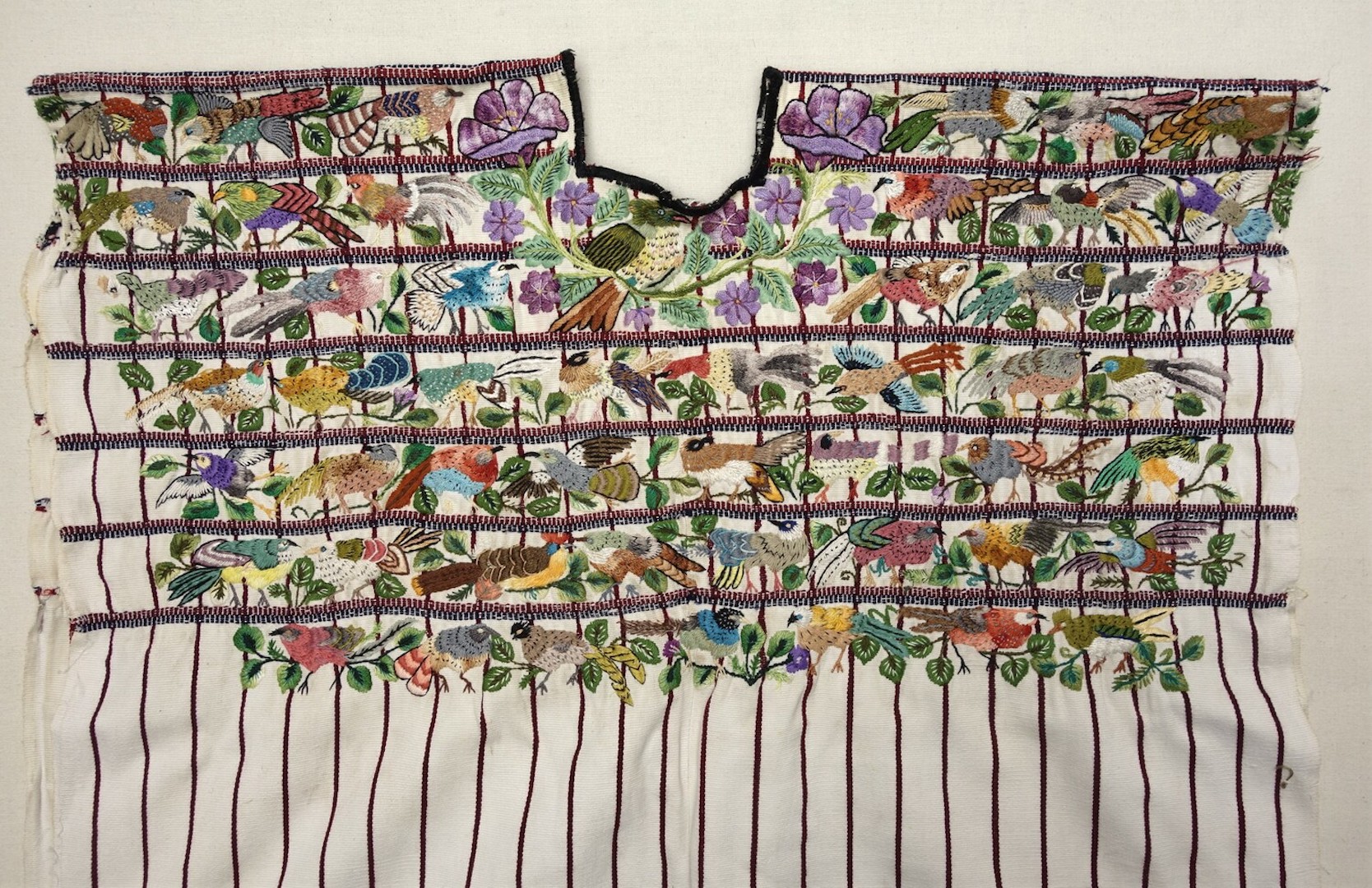
Embroidered woman's blouse (huipil) from Guatemala, 1930s ? (TRC 2022.1243).Embroidered woman's blouse (huipil) from Guatemala, 1930s ? (TRC 2022.1243).

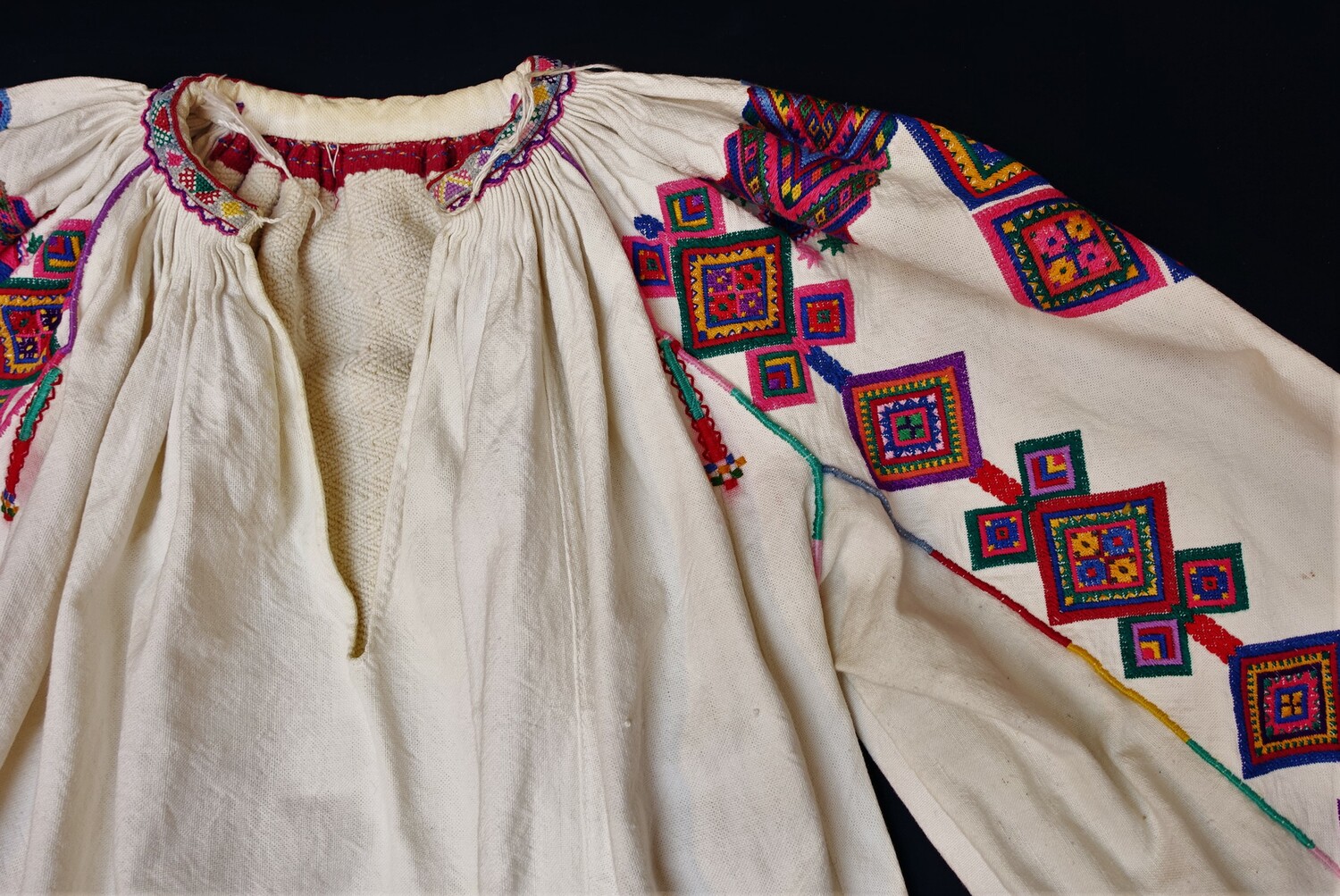
It is estimated that traditional Ukrainian embroidery utilises at least 200 different stitches. While there is wide regional variety as to stitches, thread colours and motifs, one motif is found across the entire country: a red geometric star (sometimes called a rose), done in a running stitch.

Detail of Romanian/Ukrainian Hutsul shirt, late 20th century (TRC 2022.0366).Detail of Romanian/Ukrainian Hutsul shirt, late 20th century (TRC 2022.0366).

YouTube film, Open Day at the TRC, 24 April 2022YouTube film, Open Day at the TRC, 24 April 2022Thanks to Kelly Wong, a new TRC intern from Amsterdam University (Amsterdam School for Heritage, Memory and Material Culture), we present a short film about the open afternoon on Sunday 24th April 2022.

More specifically the film is about a pop-up exhibition that she and other TRC colleagues made to celebrate the arrival of two large donations of central and southeastern European textiles and dress.

Most of the garments derive from Albania, Hungary and Romania, as well as from Georgia in the Caucausus, and numerous other countries and cultures.

The film can be viewed by pressing here.

The exhibition will be on display until the end of May 2022. More short films about people, items, exhibitions and projects at the TRC will soon be coming online on the TRC YouTube channel.

Gillian Vogelsang-Eastwood, Director, 30 April 2022

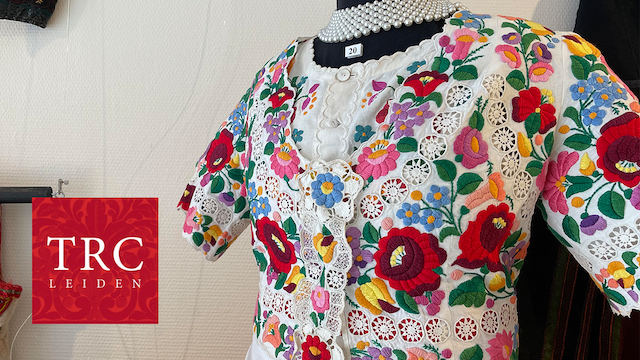
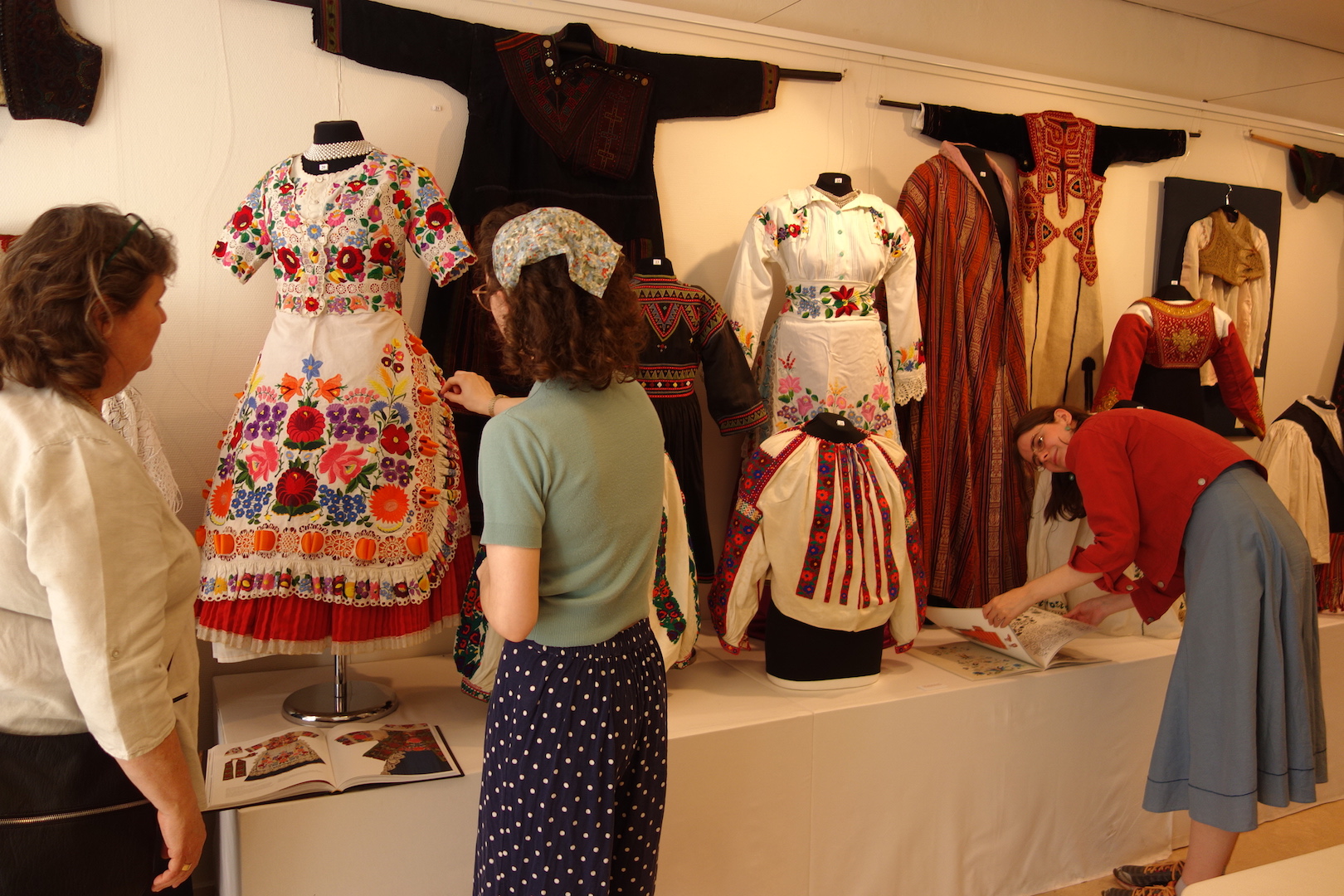
Woman's outfit from the Kalocsa region, Hungary, mid-20th century, TRC pop-up exhibition, from 24 April until the end of May 2022.Woman's outfit from the Kalocsa region, Hungary, mid-20th century, TRC pop-up exhibition, from 24 April until the end of May 2022.After the successful opening of the TRC pop-up exhibition on Sunday, April 24th, it was clear that one particular outfit was catching a lot of attention, due to its brilliant colours and floral patterns. This was one of the women’s outfits from the Kalocsa region in Hungary, which greeted visitors to the TRC as they came in. Several of the items from the Amsel Collection, which arrived at the TRC earlier this year, build up this outfit, which was so incredibly popular both in-person and online.

Both men and women from Kalocsa wear clothing adorned with a characteristic floral pattern, which can be seen both in the outfit on display as well as in several other pieces in the collection (e.g. the man's shirt, TRC 2022.0798). For the women it is most common that a white blouse with short sleeves was worn underneath a waistcoat with significantly more embroidery. The heavily pleated skirts, such as the red one pictured, could be layered over up to a dozen underskirts for added volume and flair, which would look incredible while dancing.

The aprons also often include a lace cutwork known as Richelieu and would have coloured ribbons woven throughout the lace. Most often the ribbon would be blue, although I have found that examples of other colours do exist. It was even common for ribbons to be woven through cutwork in the blouses and caps as well!

What makes the floral pattern of Kalocsa, just south of Budapest, so iconic is not only its use for clothing, but also for many other aspects of daily life. Florals can be found on everything, from dinnerware, to wallpaper, bedding, tablecloths, as well as decorated eggshells! Designs are also known to include the famous Kalocsa paprika that I look forward to spotting on a garment some day. It’s no wonder this outfit was catching everyone’s eye. This is part of what makes exhibitions at the TRC so unique, namely that visitors are able to view the embroidery very closely in order to fully appreciate the detailed patterns (see detail of TRC 2022.0450).

Zondagmiddag 24 april, tussen 13.00 en 16.30 uur, opent het TRC zijn deuren voor een ​​pop-up tentoonstelling met kledingstukken uit twee recent verworven collecties, respectievelijk uit Parijs en Arizona. De meeste stukken uit Arizona komen oorspronkelijk uit Albanië. Die uit Parijs komen uit Hongarije en Roemenië. De toegang is gratis en er wordt gezorgd voor koffie/thee/koekjes.

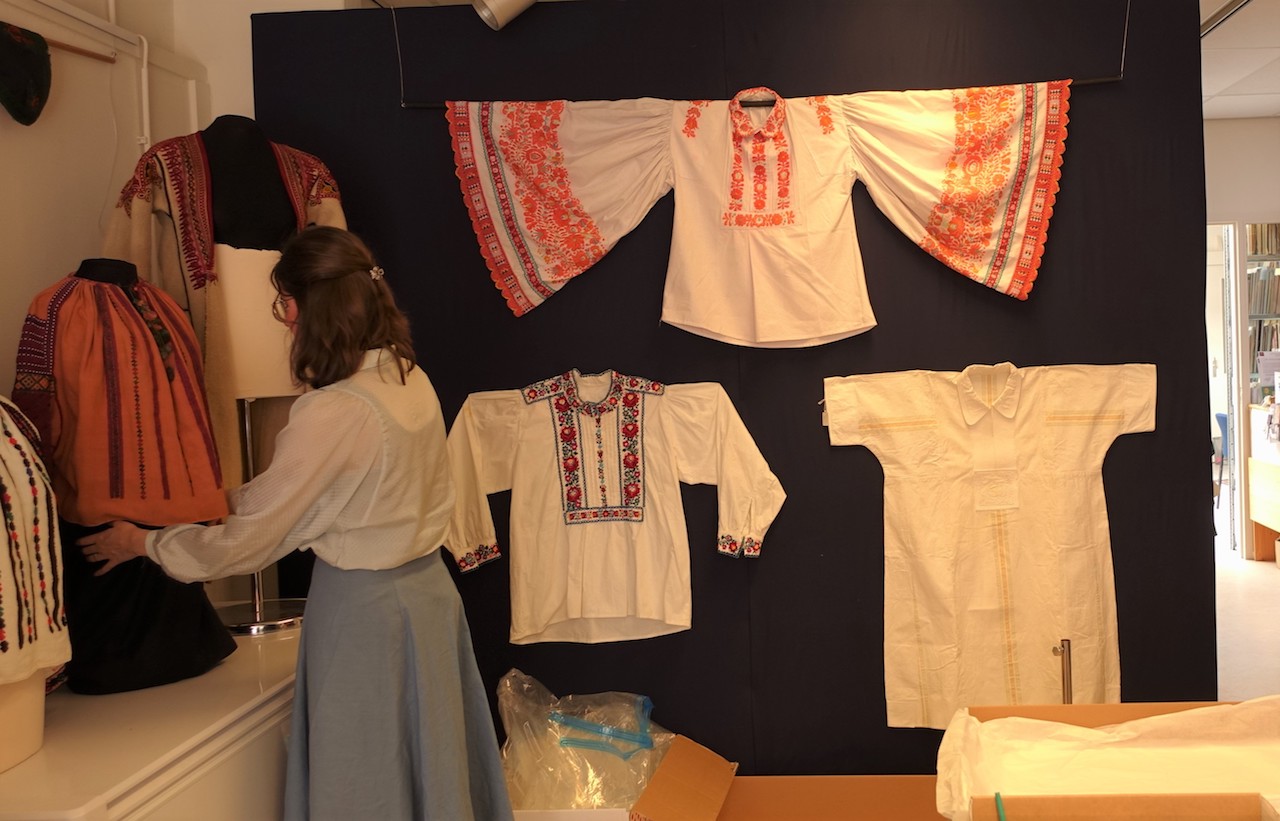
Een van de TRC vrijwilligers bij het opzetten van de pop-up tentoonstelling voor zondagmiddag 24 april.Een van de TRC vrijwilligers bij het opzetten van de pop-up tentoonstelling voor zondagmiddag 24 april.

Veel van de kledingstukken zijn al te zien in de TRC-catalogus, die online beschikbaar is. De rest wordt de komende maand toegevoegd door een geweldig team van vrijwilligers onder leiding van AJ Salter, MA-student aan de Universiteit Leiden.

Alsof dat nog niet genoeg is, hebben we onlangs een ​​collectie verworven uit België van zo'n 130 textiel en kledingstukken, waarvan de meeste afkomstig zijn uit voormalig Joegoslavië. Over een paar weken gaan we deze textilia ophalen.

De TRC had al een redelijk uitgebeide Duitse en Nederlandse regionale kledingcollectie, samen met kleding uit vele andere Europese landen, maar met de nieuw verworven stukken worden we een van de grotere  (sommigen zouden zeggen de grootste….) centra voor Europese regionale kleding.

Om deze items meer bekendheid te geven, hebben de vrijwilligers vorige week afgesproken om deze pop-up tentoonstelling te maken. De afgelopen dagen is er dan ook hard gewerkt aan het kiezen van traditionele kledingstukken voor mannen en vrouwen uit Albanië, Hongarije en Roemenië.
Een van de TRC vrijwilligers bij het opzetten van de pop-up tentoonstelling voor zondagmiddag 24 april.Een van de TRC vrijwilligers bij het opzetten van de pop-up tentoonstelling voor zondagmiddag 24 april.

Aanstaande zondag hebben we een open middag voor iedereen om binnen te lopen, met vrijwilligers te praten, te zien wat we doen bij het TRC en natuurlijk om een ​​kleine selectie te zien van de vele items die we zojuist hebben gekregen. De kleine tentoonstelling is daarna nog tot eind mei te zien.

En dan wat? Een goede vraag. Zoals veel mensen zullen weten, zijn we actief op zoek naar meer ruimte en financiering om het TRC uit te breiden tot een van de belangrijkste textiel- en kledingcollecties in Europa. Een collectie- en kenniscentrum dat de hele wereld bestrijkt en openstaat voor iedereen die van textiel houdt.

Te ambitieus? Ik denk het niet - we hebben het personeel, de onderwijs- en administratieve ervaring en een unieke collectie. We zijn op zoek naar iemand of een bedrijf of instituut die de drive en het inzicht heeft om onze passie met de wereld te delen.

Gillian Vogelsang-Eastwood, directeur
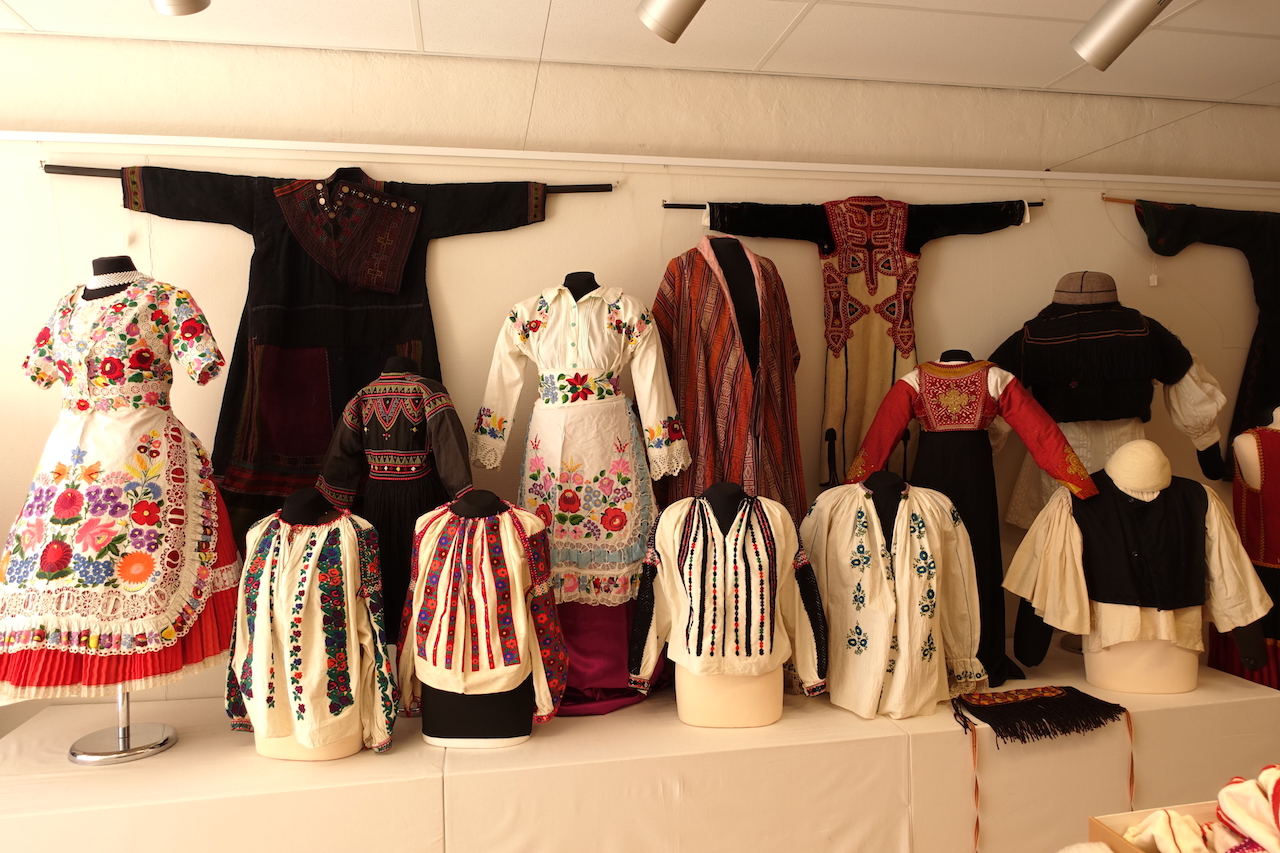
Deel van de pop-up tentoonstelling van Oost-Europese regionale kleding, voor zondagmiddag 24 april.Deel van de pop-up tentoonstelling van Oost-Europese regionale kleding, voor zondagmiddag 24 april.

Zoek in TRC website

Contact

Boerhaavelaan 6
2334 EN Leiden.
Tel. +31 (0)71 5134144 (kantooruren)  
office@trcleiden.org

Het TRC is elke dag geopend tussen 10.00 en 15.00 uur.

facebook 2015 logo detail


instagram vernieuwt uiterlijk en logo


Bankrekening

NL39 INGB 0002 9823 59, t.a.v. Stichting Textile Research Centre.

Financiële giften

Het TRC is afhankelijk van project-financiering en privé-donaties. Al ons werk wordt verricht door vrijwilligers. Ter ondersteuning van de vele activiteiten van het TRC vragen wij U daarom om financiële steun:

Giften kunt U overmaken op bankrekeningnummer (IBAN) NL39 INGB 000 298 2359, t.n.v. Stichting Textile Research Centre. BIC code is: INGBNL2A

U kunt ook, heel simpel, indien u een iDEAL app heeft, de iDEAL-knop hieronder gebruiken en door een bepaald bedrag in te vullen: 


Omdat het TRC officieel is erkend als een Algemeen Nut Beogende Instelling (ANBI), en daarbij ook nog als een Culturele Instelling, zijn particuliere giften voor 125% aftrekbaar van de belasting, en voor bedrijven zelfs voor 150%. Voor meer informatie, klik hier