• F3
  • F4
  • F1
  • F2

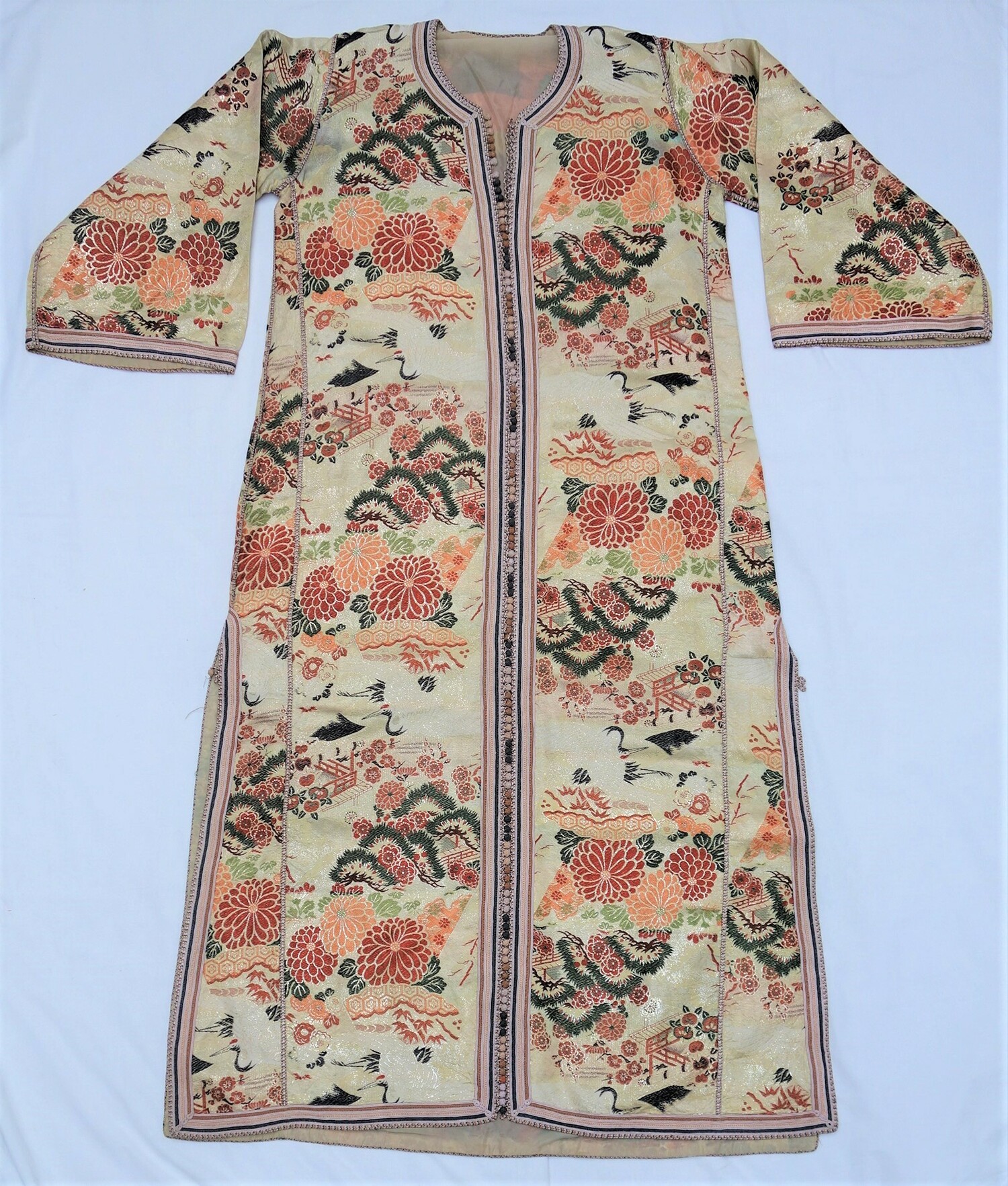
Moroccan woman's kaftan made from a Japanese obi, 1950s (TRC 2001.0074).Moroccan woman's kaftan made from a Japanese obi, 1950s (TRC 2001.0074).Contemplating the some 34,000 textiles in the TRC collection, Gillian Vogelsang, the TRC director, writes about the close relationship between historical and modern textile designs and production methods, and the ages-old, continuous and global process of adoption and adaption of forms, motifs and techniques.

***

I am currently busy working on the Cuvelier collection of 20th century textiles – as mentioned in an earlier blog, this is a very large donation to the TRC of twentieth century, printed, woven and machine embroidered textiles that were collected by Prof. Yves Cuvilier (1913-2005). He was closely involved with the Parisian fashion industry in the decades after the Second World War. The textiles eventually came to the TRC Leiden via Pepin van Rooijen, the Amsterdam publishers.
I am just working on the Icelandic chapters of the Encyclopedia of World Embroidery, vol. 4: Scandinavia and Western Europe (Bloomsbury, London) and I thought people might enjoy trying out some Icelandic counted thread patterns. These are based on some patterns given in two manuscript pattern books (sjónabók) from the latter half of the eighteenth century, from southeastern Iceland.

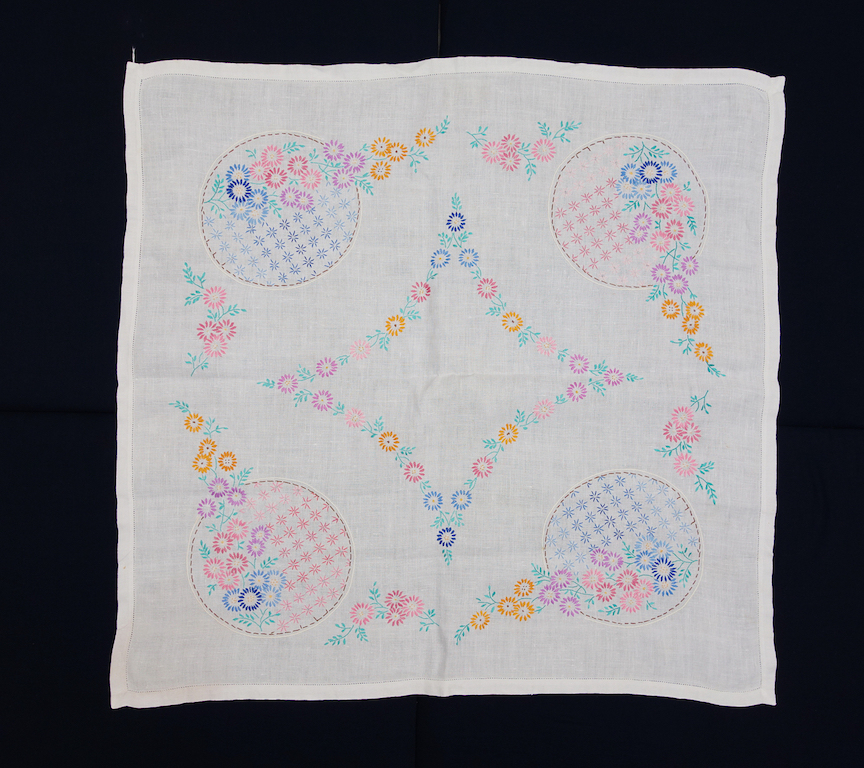
Afternoon table cloth embroidered at Scapa Flow, Orkney Islands, Scotland, early 1940s (TRC 2021.1331).Afternoon table cloth embroidered at Scapa Flow, Orkney Islands, Scotland, early 1940s (TRC 2021.1331).Today is the 5th May, Liberation Day in the Netherlands, so I was thinking what would be a suitable blog, and immediately thought about a recent donation to the TRC Collection. The gift, which arrived in the post a few weeks ago, consists of four embroidered afternoon table cloths, made from linen and cotton and embroidered with simple patterns of stylised flowers. The cloths were donated by Sharon Bruce from California, who happens to be the sister-in-law of Dale Gluckman from Los Angeles, who has been working with the TRC for many years.

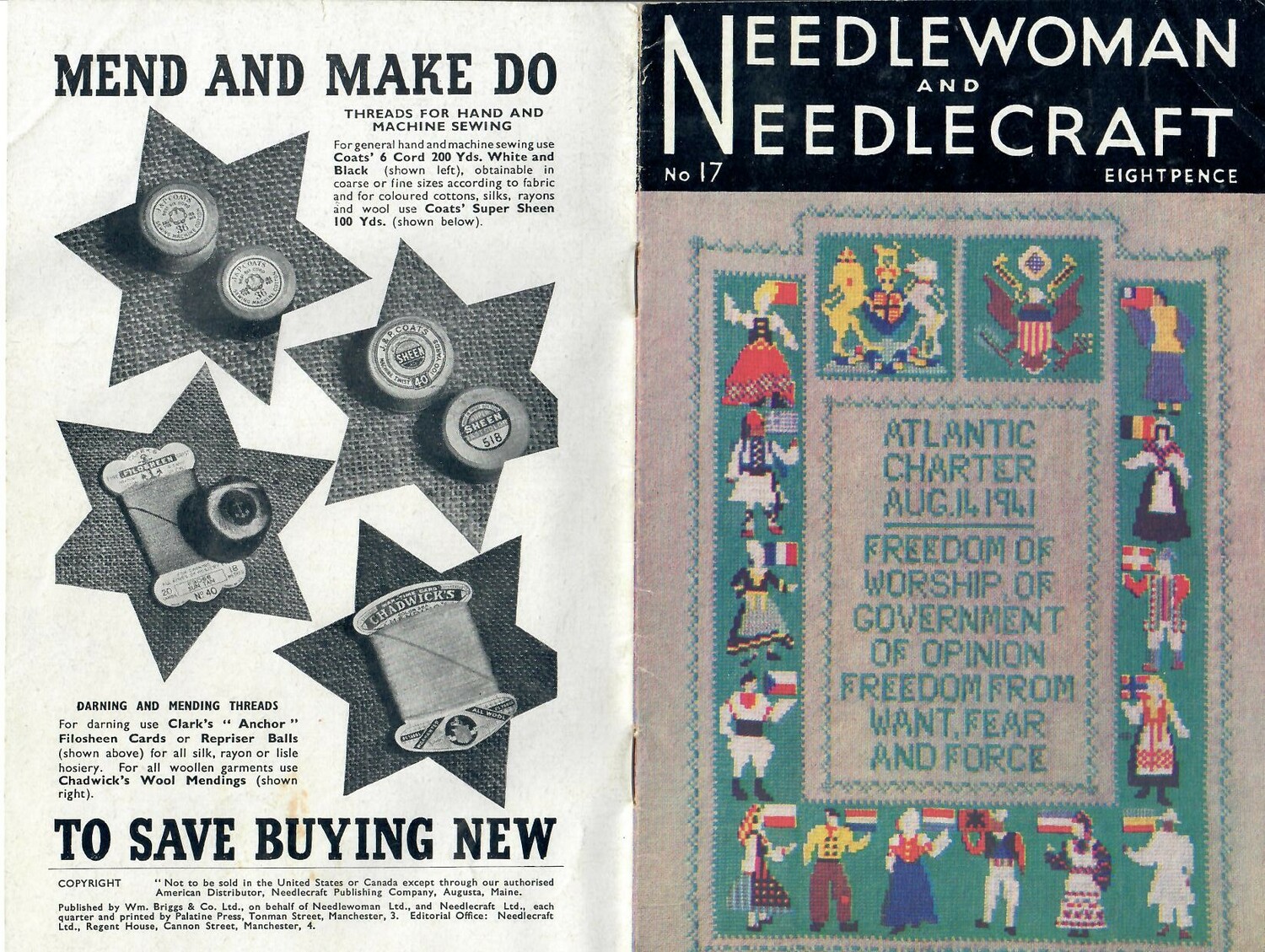
Issue of the wartime journal Needle Woman and Needlecraft, No. 17, 1941 (TRC 2019.2155).Issue of the wartime journal Needle Woman and Needlecraft, No. 17, 1941 (TRC 2019.2155).

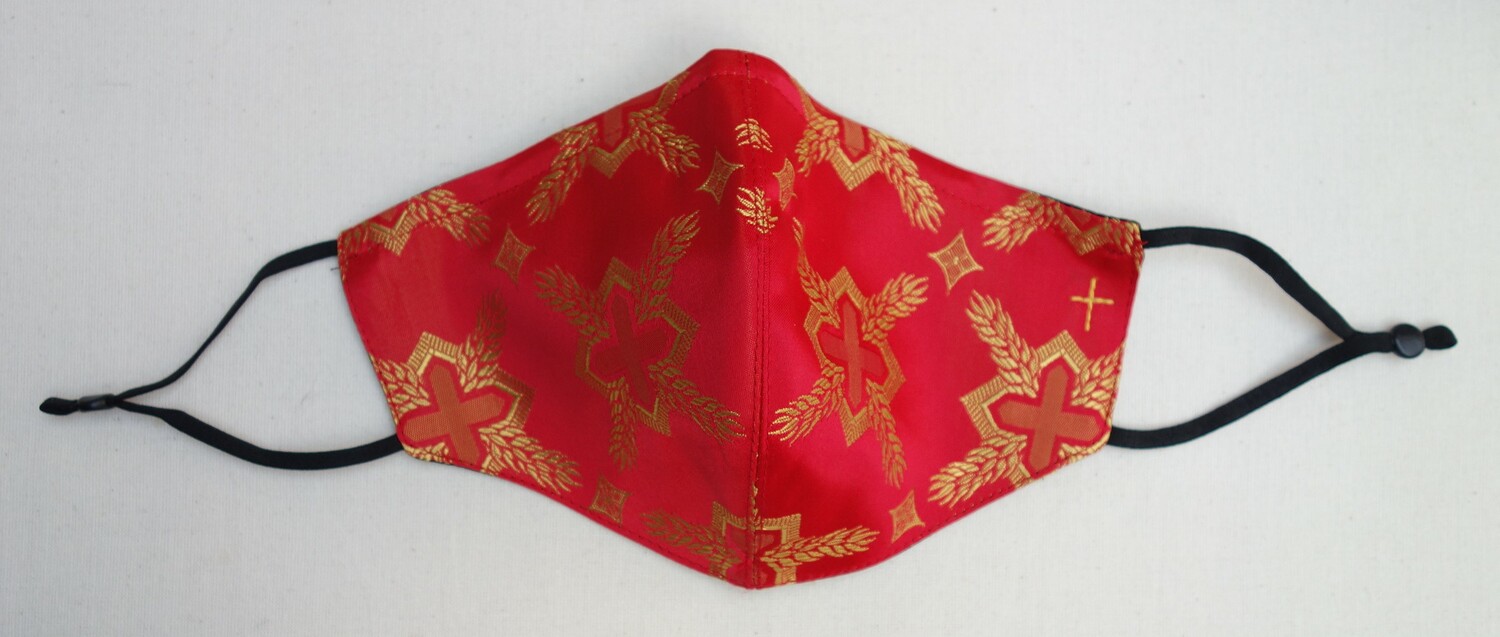
Some six months ago we published a blog about various types of face masks recently added to the TRC Collection as a reflection of dress and identity in the era of the covid-19 pandemic. Over the last few months we have been given more face masks of three very different types, with very different backgrounds.

Face mask with Christian symbols, used in one of the Eastern Orthodox Churches, early 2021 (TRC 2021.0621).Face mask with Christian symbols, used in one of the Eastern Orthodox Churches, early 2021 (TRC 2021.0621).

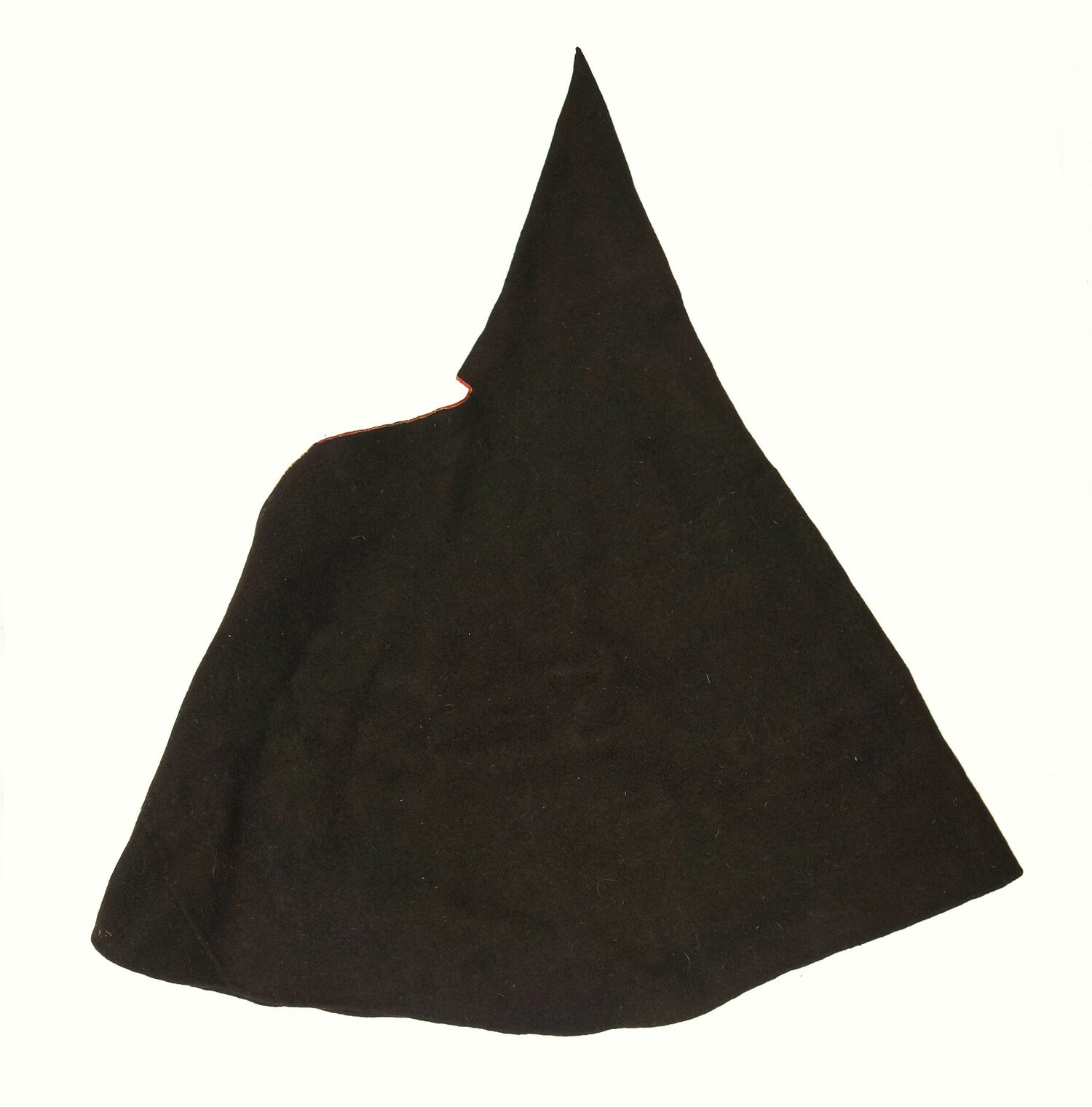
A woollen bernos from Debre Berh, central Ethiopia (TRC 2021.0814).A woollen bernos from Debre Berh, central Ethiopia (TRC 2021.0814).On the 16th March 2021, I noted in a blog that: "...last Tuesday someone from Leiden came with an Ethiopian cape with, to my eyes, an unusual shape that could accommodate a rifle. A very practical garment!"

We have been doing some more research about this garment and this led to some interesting pieces of information. The garment is called a bernos, which is the same word as the Moroccan burnous, a large woollen cloak with a hood. It is worn by men from the highlands of Ethiopia and Eritrea.

The Ethiopian example now in the TRC collection (TRC 2021.0814) was bought by Mr. Polderman (Leiden) in the 1970’s, in Debre Berh, in the Shewa Province of central Ethiopia. It is made from a thick, woollen felt and has a red leather edging on the inside of the front and neck opening. There is also a line of embroidery just below the neck opening that is used to strengthen this area of the garment.

Man in market at Sololá, Guatemala (2007). Photograph by Caroline Stone.Man in market at Sololá, Guatemala (2007). Photograph by Caroline Stone.Guatemala is famous for its splendid textiles and for the traditional dress still worn by large numbers of indigenous women. Men adopted a version of Spanish regional costume shortly after the Conquest for a variety of reasons. More recently, they have tended to move on to modern Western dress, except in a few remote areas and for ceremonial occasions.

There are exceptions: for example, in Sololá some men wear jackets, essentially western in cut (TRC 2020.4573), and matching trousers of dark and richly coloured ikat (see the photograph of stall-holder in Sololá market). It is not clear how old this fashion is. Women’s clothing, on the other hand, still has close parallels with pre-Hispanic dress, as seen in paintings and statuettes, especially that worn for rituals connected with the cofradias or religious brotherhoods.

Women’s dress is generally untailored, based on rectangles, often woven by the woman herself on a back-strap loom and richly decorated with a number of techniques, including various types of brocading, soumak, ikat, as well as embroidery and appliqué, especially at the neck.

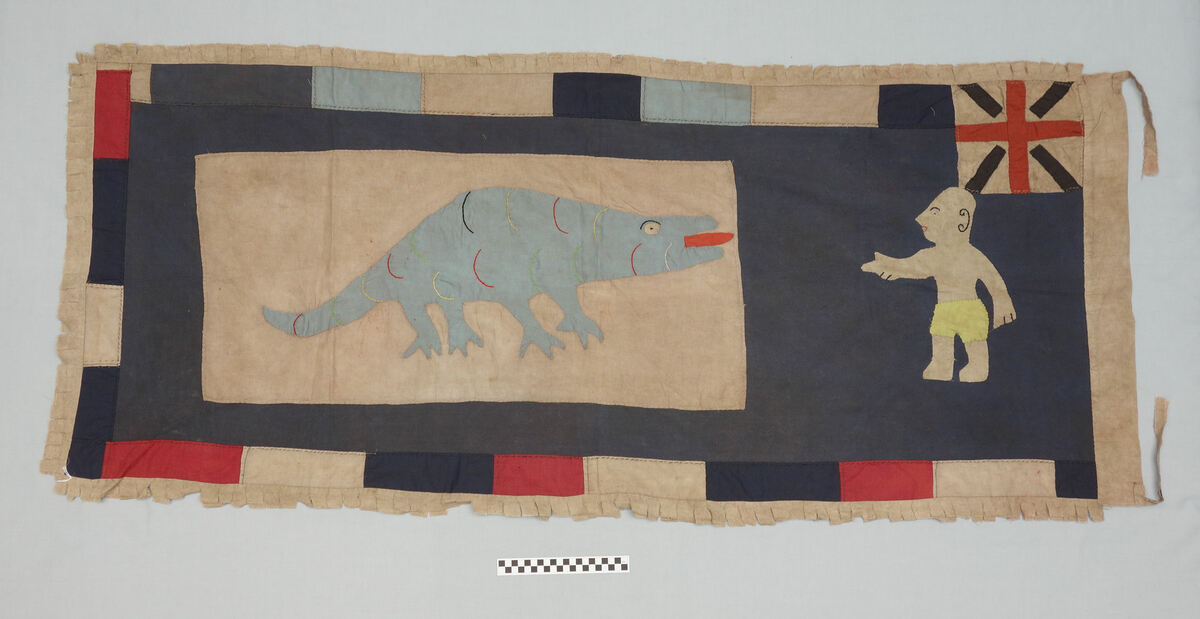
The world of textiles is sometimes mistakenly thought of as an all female realm. This is simply not the case. The TRC has many examples of textiles and accessories made and decorated by men. One such example is a small collection of Asafo flags from Ghana. The word Asafo comes from the words ‘sa’ (‘war’) and ‘fo’ (‘people’). Asafo flags represent different village male military companies. The Akan language of the Fante is rich in proverbs, and the images appliqued on Asafo flags often reflect this. Asafo refers to the military unit, while the flag itself is called ‘frank’ or ‘frankaa’.

Asafo flag from Ghana, mid-20th century (TRC 2015.0220).Asafo flag from Ghana, mid-20th century (TRC 2015.0220).

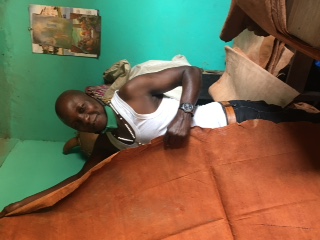
Large sheet of bark cloth, for sale in Kampala, early 2021 (photograph Caroline Stone).Large sheet of bark cloth, for sale in Kampala, early 2021 (photograph Caroline Stone).It has been suggested that bark cloth may be the oldest textile in the world, pre-dating the invention of weaving. A number of cultures have made bark cloth, especially in Austronesia, and the earliest example is from South China, c. 6000 B.C. Others made use of bark in related ways. The Ainu, for example, split the bark of the Manchurian elm to make a thread that could be woven and in Russia birch bark has been used for centuries as a writing material, for shoes, bags and all kinds of containers - but not as a textile.

In Uganda, bark cloth - olubugo - seems to have originated around the 14th c. with the Baganda people of the kingdom of Buganda in the south of the country and according to oral tradition was originally reserved for royalty and for certain ritual purposes. Indeed, the mallets used for beating the cloth formed part of the royal regalia. Important examples of olubugo at the Kasubi Royal Tombs, a World Heritage site, were largely destroyed by fire in 2010.

Zoek in TRC website

Contact

Boerhaavelaan 6
2334 EN Leiden.
Tel. +31 (0)71 5134144 (kantooruren)  
office@trcleiden.org

Het TRC is elke dag geopend tussen 10.00 en 15.00 uur.

facebook 2015 logo detail


instagram vernieuwt uiterlijk en logo


Bankrekening

NL39 INGB 0002 9823 59, t.a.v. Stichting Textile Research Centre.

Financiële giften

Het TRC is afhankelijk van project-financiering en privé-donaties. Al ons werk wordt verricht door vrijwilligers. Ter ondersteuning van de vele activiteiten van het TRC vragen wij U daarom om financiële steun:

Giften kunt U overmaken op bankrekeningnummer (IBAN) NL39 INGB 000 298 2359, t.n.v. Stichting Textile Research Centre. BIC code is: INGBNL2A

U kunt ook, heel simpel, indien u een iDEAL app heeft, de iDEAL-knop hieronder gebruiken en door een bepaald bedrag in te vullen: 


Omdat het TRC officieel is erkend als een Algemeen Nut Beogende Instelling (ANBI), en daarbij ook nog als een Culturele Instelling, zijn particuliere giften voor 125% aftrekbaar van de belasting, en voor bedrijven zelfs voor 150%. Voor meer informatie, klik hier