

Ode to Woad
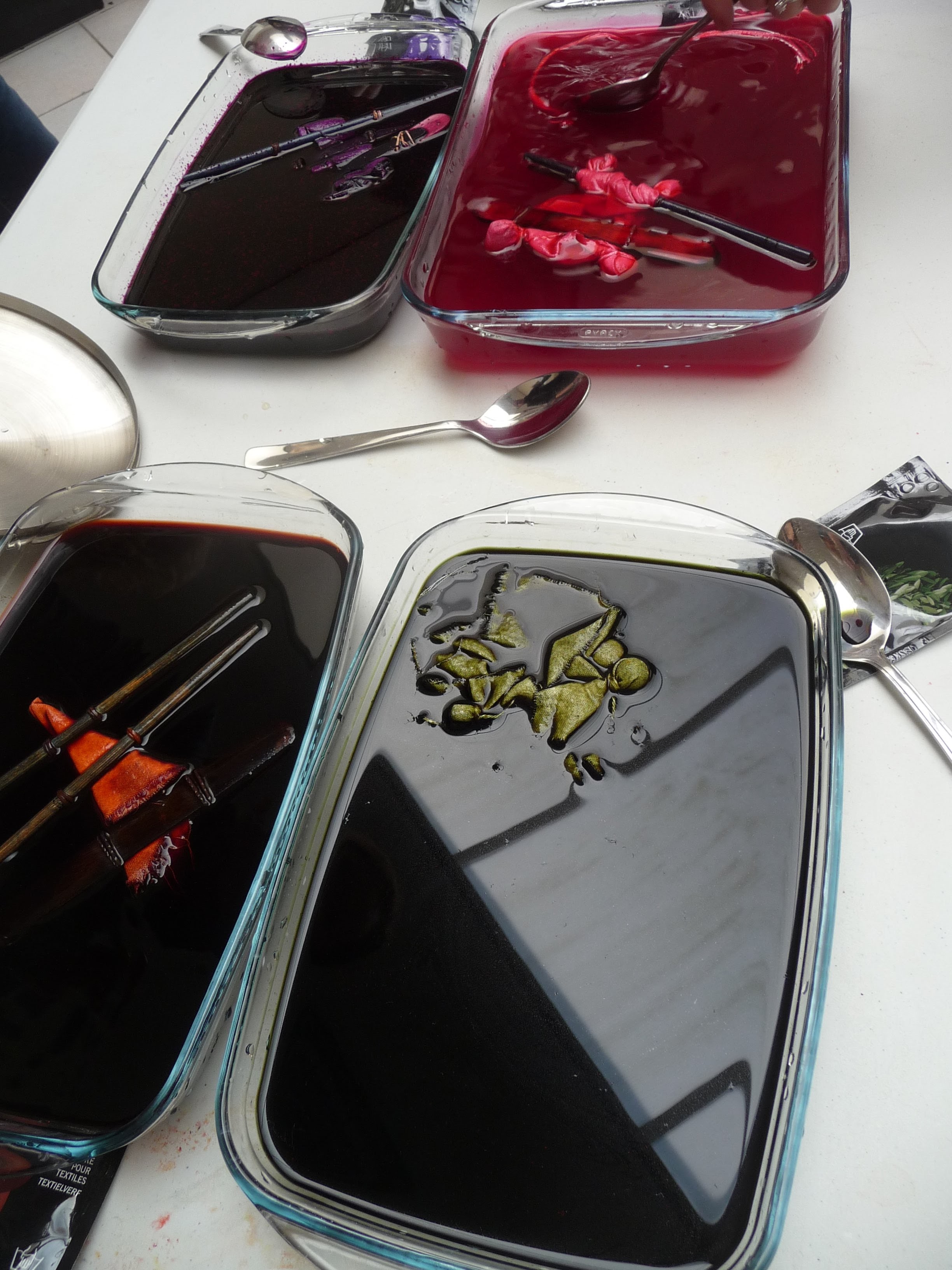 Dyeing with woad. Photograph by Shelley Anderson.On Friday, 24 April 2020, Shelley Anderson wrote:
I have been lucky as a TRC volunteer to have been involved in several Intensive Textile Courses. One of the course’s highlights for me (other than being able to get up close and handling some beautiful textiles), is the section on dyes and dying. It is fascinating to see the incredible range of colours, and the sometimes subtle (and often not so subtle) differences that temperature, mordants or materials can make.
I became curious to explore more and bought some small packets of dye seeds in the TRC shop. My madder (used to make a red dye), alas, didn’t grow well, but the weld (also called dyer’s weed, a plant that has been used to make yellow dye since Roman times) did. What really flourished, and is still flourishing after three years, is the woad. (I learned later that woad is considered a weed in parts of the USA, and millions of dollars are spent in eradicating it). In Europe, the leaves of woad (Isatis tinctoria) have been used to make a blue dye for thousands of years. Woad dyed textiles have been discovered in Iron Age burial sites in Hallstatt (Austria), while seeds have been found in a Neolithic cave in France. Centuries later, woad was also used to make blue pigment in illuminated manuscripts.