

Collecting face masks for the TRC COVID-19 collection at the TRC in Leiden has opened up a fascinating world for me. The variety in face masks is astonishing—almost as astonishing as the stories behind the masks. Here are just a few of those stories.
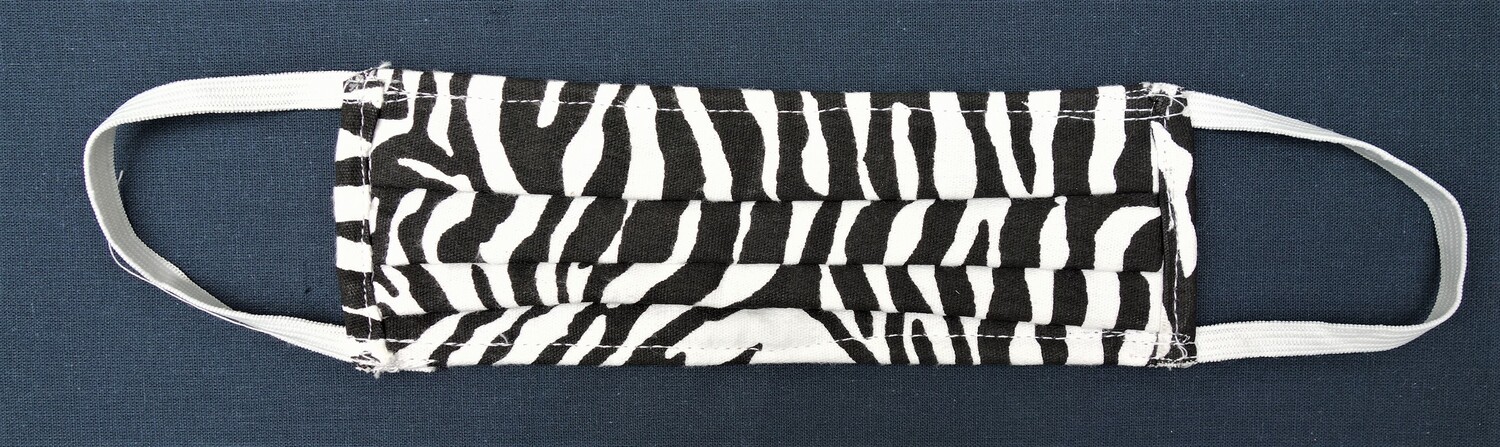 Corona face mask from Kenya, with Zebra design, 2020 (TRC 2020.3759).
One of my favourite masks (TRC 2020.3759) is made from a zebra-striped, triple ply cotton. It comes from Kenya and there is a reason it is zebra striped and has a good filter. This mask is a product of a women’s project called Nkirreten. The women have been trained to make reusable sanitary pads for women and girls in their communities. Many girls throughout the world drop out of school, or miss valuable school days, because they lack affordable sanitary pads. Nkirreten tackles this problem by supplying twenty schools in the Samburu region with the pads, while providing the sewers with an income. “The Nkirreten project has changed my life from a victim to a solution maker,” says Sintiwan Lekilia, “by enabling me to learn a skill and a living from it by making the Nkirreten pads.”
The project is organized by the Grevy’s Zebra Trust. The Trust also trains local women and girls to monitor and protect this endangered zebra, thus linking conservation with peoples’ livelihood. The sewers immediately responded to the pandemic by producing face masks to distribute in their communities. By the end of June the team had made and distributed 3,000 masks, while also demonstrating how to use and care for them.
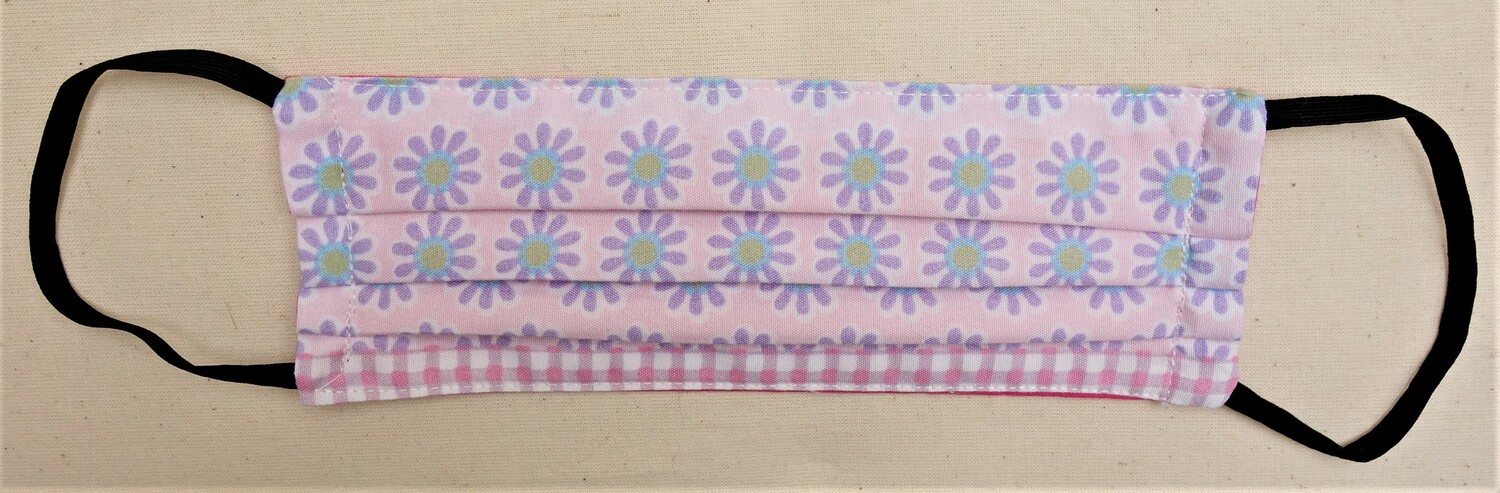 Corona face mask, pink, from the USA, 2020 (TRC 2020.3775).
A similar project on the other side of the world is organised by church and community groups in Independence, Missouri (USA). Here local women also mobilised to produce cotton face masks (TRC 2020.3775), and distributed them for free on street corners, at dental offices, church centres and food banks. The demand was high; fabric centres ran out of material, so the women began buying bed sheets and producing masks from that.
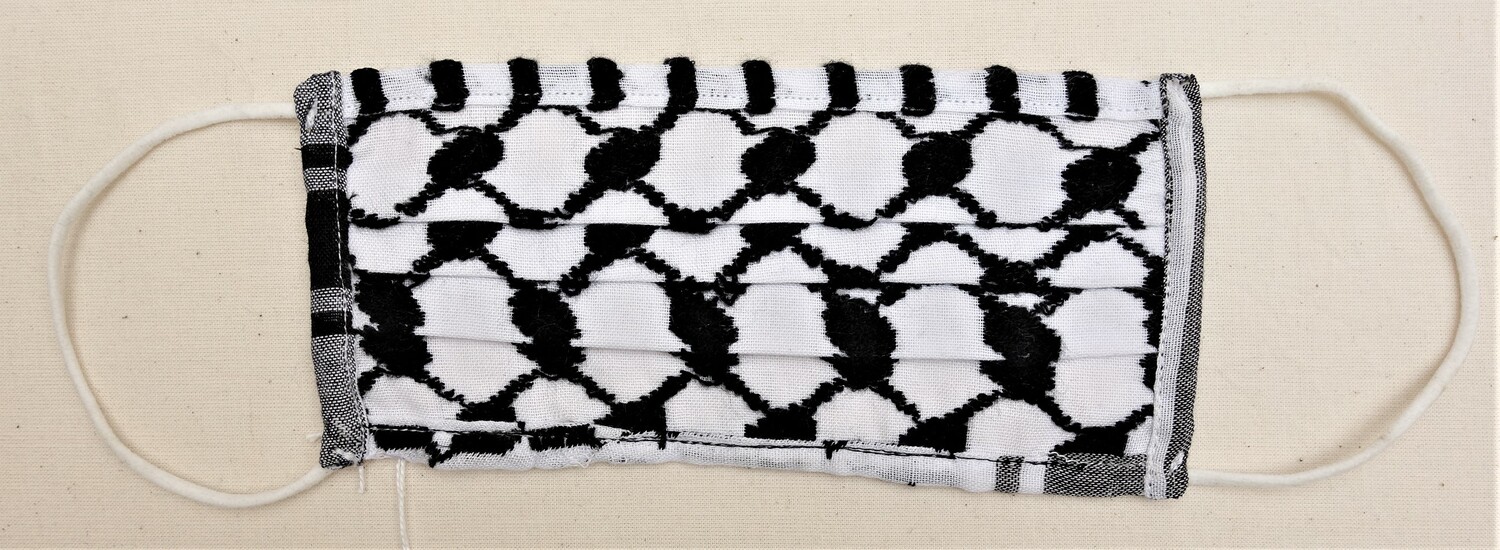 Corona face mask from Palestine, 2020 (TRC 2020.3772).
Last but not least is a face mask (TRC 2020.3772) from Palestine made from the same material as the traditional keffiyeh. First designed by artist Mohammed Musallam in 2015, these face masks were used in hospitals under siege in Gaza. The masks are now produced, under Musallam’s supervision, by the tailor Abu Alaa Ghaben in Gaza. A limited edition of 150 of the masks were produced for sale by the Disarming Design from Palestine cooperative (a short video can be seen of the tailor making the masks on their website).
Shelley Anderson, 22 September 2020