


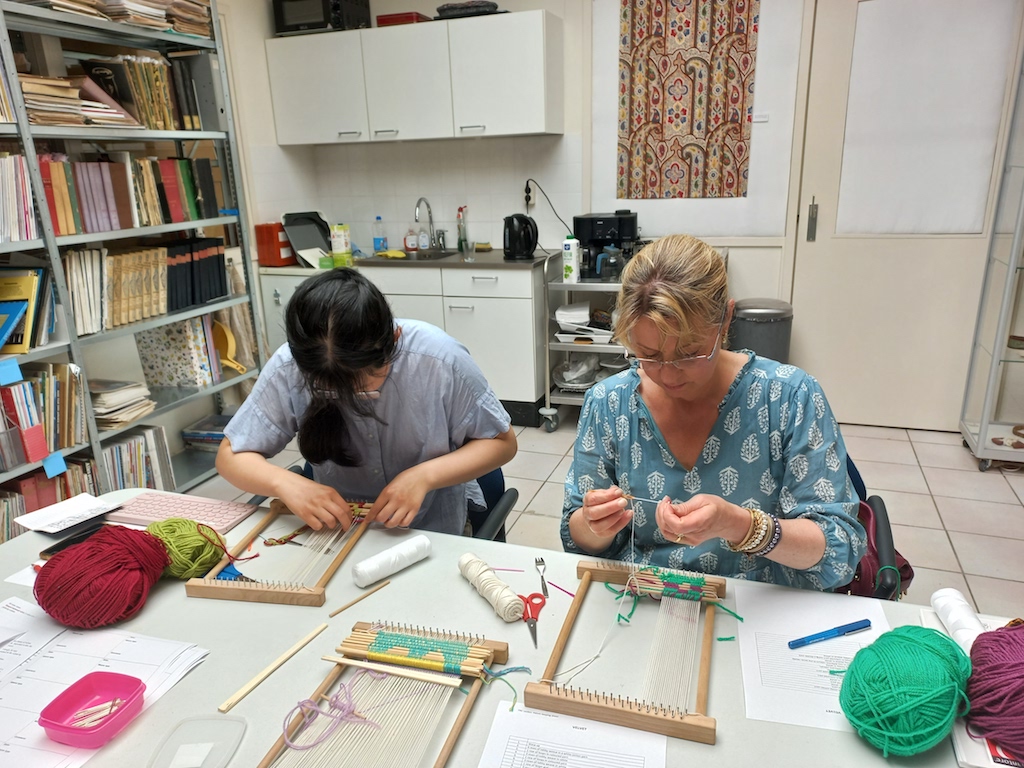
Where else in Europe can you go from bobbin lace making, velvet identification, to hand knitted lace, card weaving and Tutankhamun’s Wardrobe in just over a week? Those are a few of the subjects that have been or will be taught or discussed at the TRC within a week, with groups of various sizes, all of whom have especially come to Leiden and the TRC.
 Two participants of the TRC velvet identification study-day, on 11 June 2022
One thing we learnt yesterday from one such group was how much a national textile and dress centre is needed and appreciated here in the Netherlands. Somewhere where people can go, see, talk and study textiles and dress in their glorious diversity. I should add that the group was on a travelling course (by boat!) about hand knitted laces, Where else but the TRC can you see an historic, Hungarian knitted sampler, Dutch knitted lace caps from Friesland, as well as Balkan, Iranian and Afghan socks, all within an hour? Let alone the potential hinted at by all the other techniques and subjects housed in the TRC collection?
We want to increase the number of workshops and courses so that the TRC’s amazing collection can be appreciated and studied by far more people. So over the next few weeks we will be working hard on the Autumn/Winter timetable. All I can say at the moment is that there are going to be some interesting subjects on offer! We are also looking for teachers who can give one-off workshops as well as short courses.
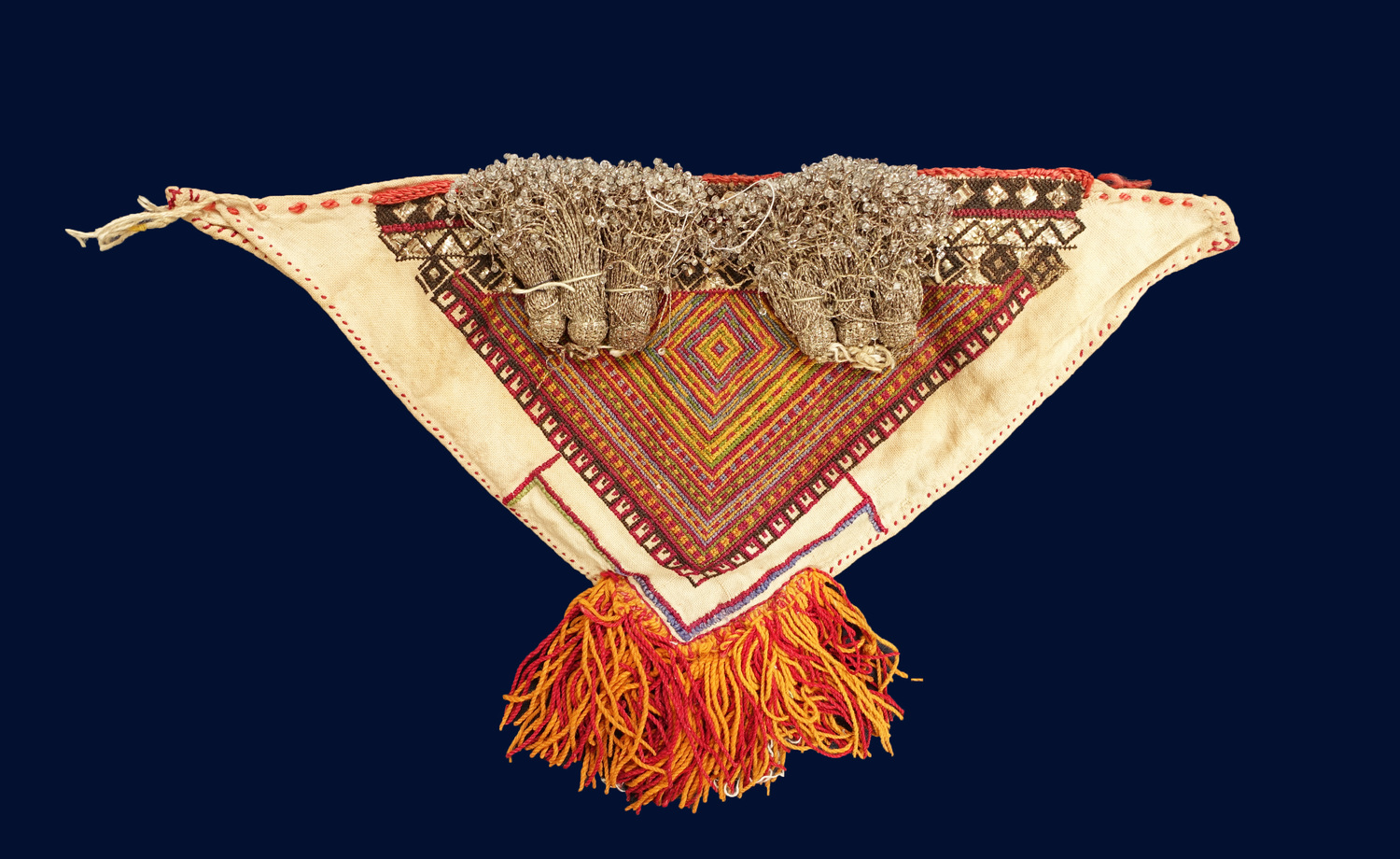 Albanian head covering, mid-20th century, from the Arizona donation recently added to the TRC collection (TRC 2022.1567).
In this respect we have a bit of good news. The TRC has just been given a grant to expand our inclusivity across Europe, to learn more from other textile groups about their approaches to teaching textiles, and how to adapt our own practices accordingly. We would like to thank the Erasmus+ adult education programme NL for their generosity in this matter.
What else has been happening at the TRC? Well, we have nearly finished the cataloguing of the Arizona collection of textiles from Eastern Europe and the Caucasus! By the end of the month everything should be online, and there are some lovely items, that are both technically and visually interesting and inspiring. We are now in contact with various groups in Hungary, Romania, Serbia, as well as Georgia, who have offered help to put these pieces into their material heritage context.
In the meantime, we have also been approached about working, in a European context, on an international project on dress and authority, with an emphasis on uniforms of various types, their history and their variety of uses within society. An interesting subject that can go in so many directions – literally from a general to a car park attendant!
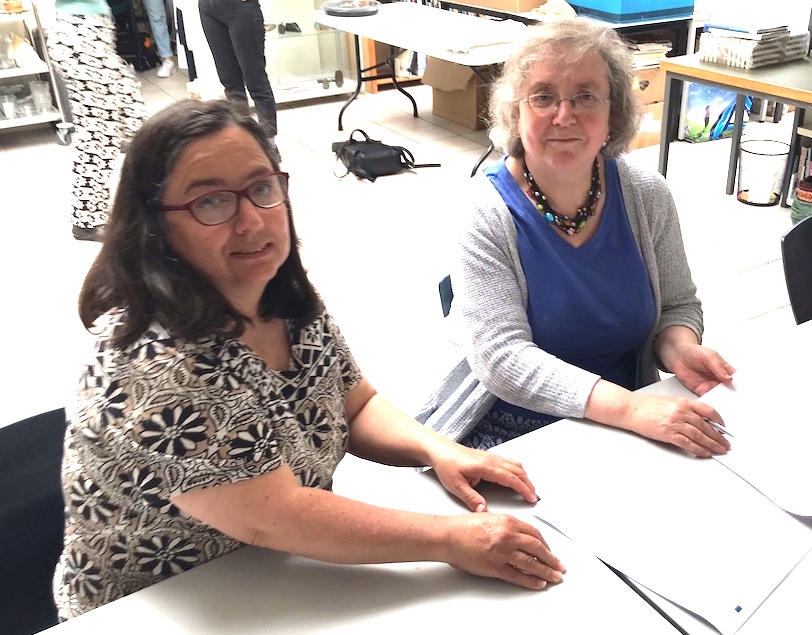 Maria Linkogle and Gillian Vogelsang-Eastwood signing EU Erasmus+ agreement papers, 8 June 2022.
We are also wondering about creating an embroidery stitch glossary in various languages, but in order to do that we would need the help of embroiderers from around the world. The aim would be to have a drawing of the stitch (front, back, etc) and then the name in English, and perhaps six or so other languages. We are currently looking for funding to start this work, but it would be so useful to have such a publication.
I am speaking from my own experience writing the Bloomsbury World Encyclopedia of Embroidery series. Speaking of which, the Sub-Saharan African volume (vol. 3) is now in the proof stage, and the first draft of Vol.4, Scandinavian and Western European Embroidery, has been finished. Caroline Stone (who helped with the other volumes) and Polly Leonard of Selvedge, the London based textile journal, have very kindly volunteered to read through the draft before it is sent to Bloomsbury. We hope to have it finished by Christmas.
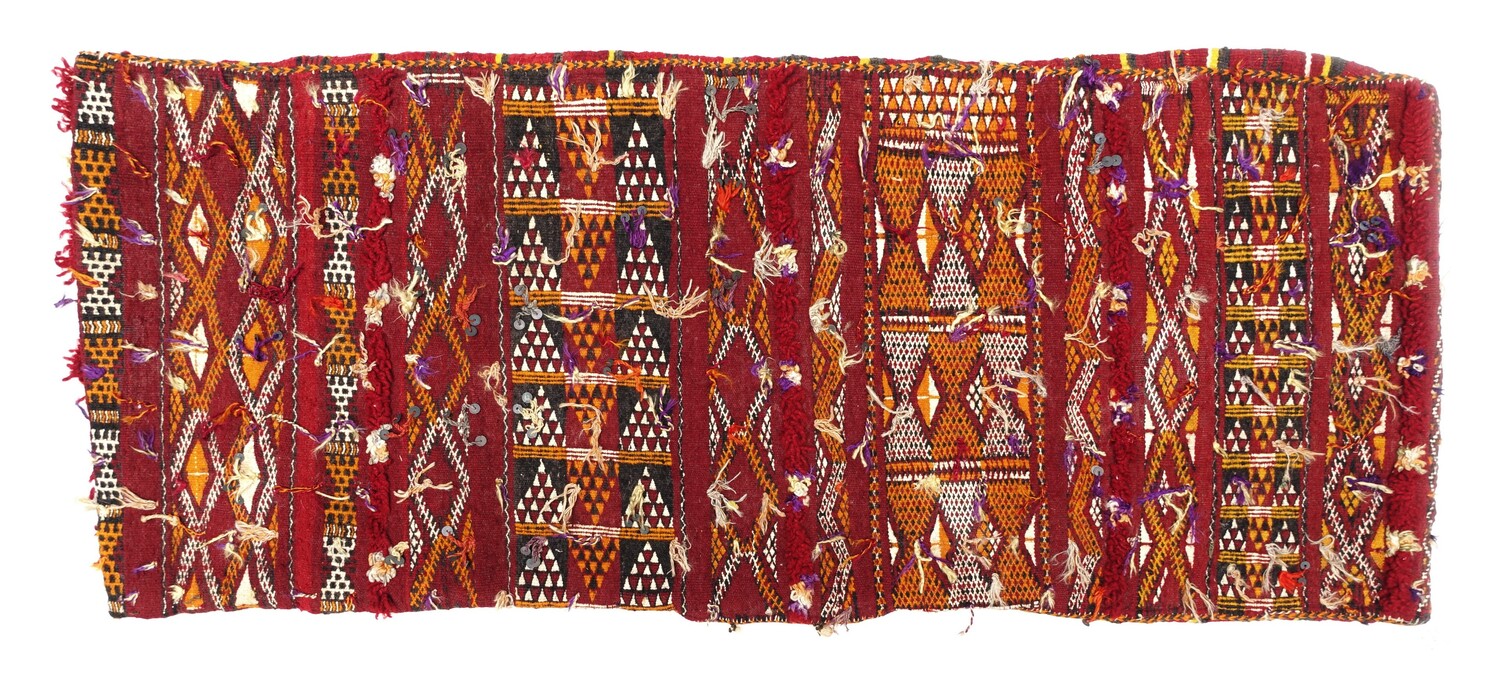 A piece of cotton and woollen cloth, with metal tassels and sequins. Moroccan, mid-20th century, from the Arizona donation recently added to the TRC collection recently donated to the TRC (TRC 2022.1627).
And we should not forget the TRC’s sushi lunch held a few days ago to say “Thank You” to all the volunteers who have been working so hard over the last year. This was the first time in over two years we have had a party at the TRC and it felt good! It meant that everyone could finally put names to faces. We have a maximum number of five volunteers per day, mainly because of our growing lack of working space! As a result some of the volunteers have never met each other.
Everyone brought extra food and drink with them so the main table and the dessert table were both groaning with home made cakes, biscuits, as well as fruit, etc. Fortunately the students (and others) were provided with ‘doggy’ bags so nothing was wasted and people went home happy.
Please note the TRC Leiden will be shut for the month of July – a well earned rest for everyone. We will be open again for the general public on Monday, 1st August.
Gillian Vogelsang-Eastwood, Director, 15 June 2022