

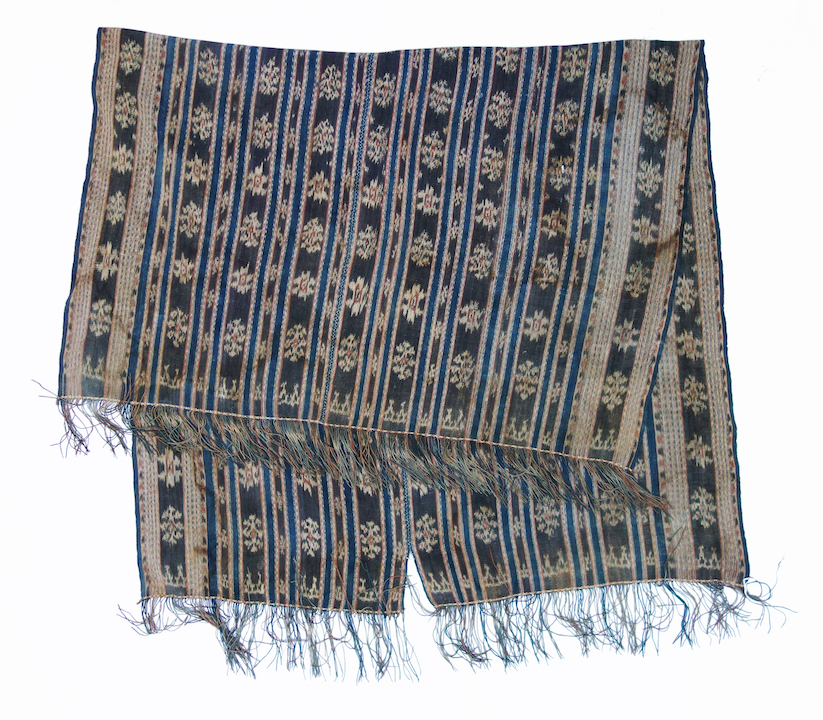
 Cotton, hand-resist dyed blanket from Flores, Indonesia (TRC 2007.0636).A blanket can seem a mundane article, designed solely to keep us warm. The TRC has numerous blankets in its collection, including a patterned Baluchi blanket (TRC 2001.0061) from Iran, a red felted blanket from the Netherlands (TRC 2007.0384) and an ikat blanket from Indonesia (TRC 2007.0636). These examples don’t include the dozens of Americans quilts, whose functional purpose is often overlooked today.
But blankets also have a symbolic function. “In the Coast Salish tradition, blankets are gifted to uplift the spirit, to honour the strong or to protect the vulnerable,” Canadian artist Cary Newman explained. The Coast Salish are a diverse group of indigenous people who live in Pacific Northwest of Canada and the US.
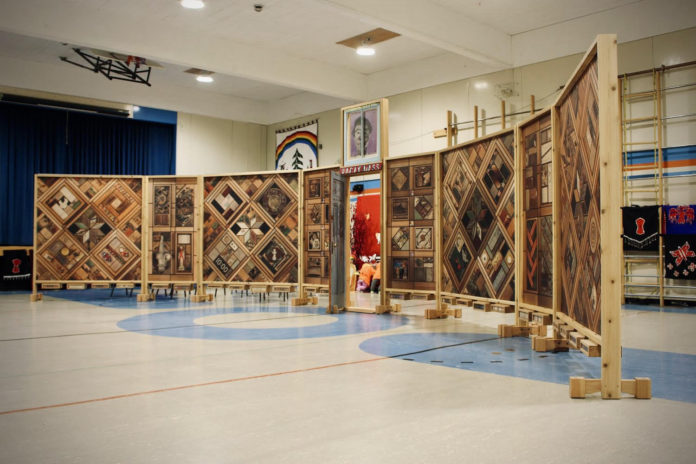 Witness Blanket exhibit on show at Laichwiltach Family Life Society - 4th Ave., Campbell River (Photo: Ethan Morneau, staff)
Across North America blankets and quilts, frequently decorated with a single large, eight-pointed star, are given by Native communities to military veterans returning from overseas missions, to high school graduates and basketball stars, or to retired public officials, in honour of their achievements and service to their communities. Such blankets are worn like shawls at baptisms, weddings, or other ceremonies, and sometimes they are used to bury people in.
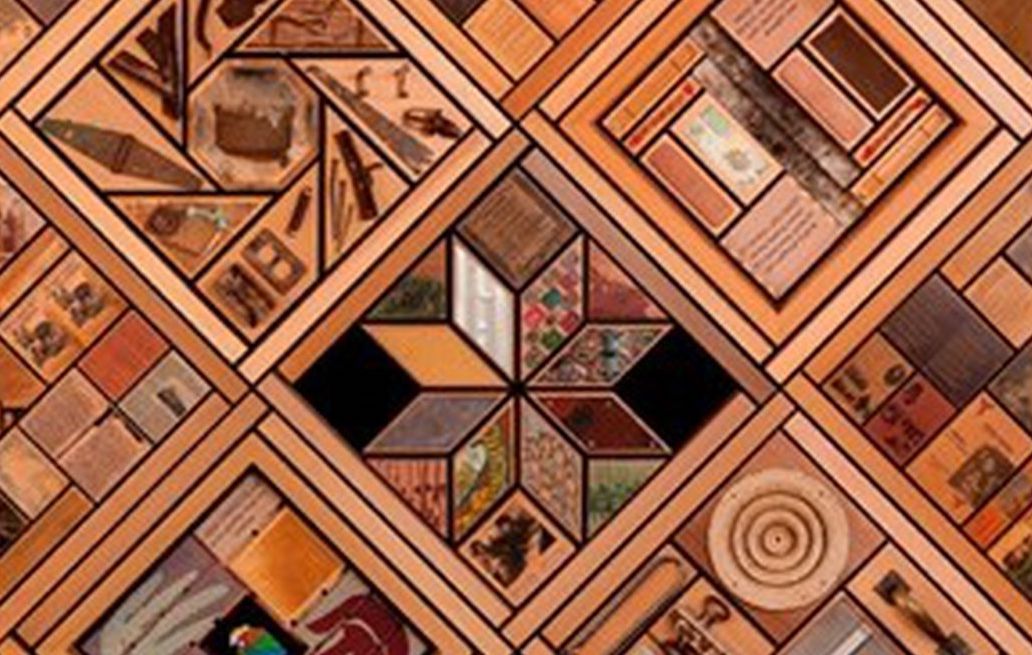 Detail from 'The Witness Blanket'.This is why Cary Newman chose the image of a woven blanket for his award-winning art installation called The Witness Blanket. Though built of a base of cedar wood (a sacred tree in Salish culture), this large-scale rectangular-shaped installation is designed to look like a blanket.
It contains some 880 objects, including bricks, glass, graduation papers, braids of hair, shoes, clothes, ribbons, skates and more, which were gathered from the ruins of many of the 130 Indian residential schools across Canada. From 1870 to 1996 these schools separated an estimated 150,000 Native children from their families and communities in order to assimilate them into white culture.
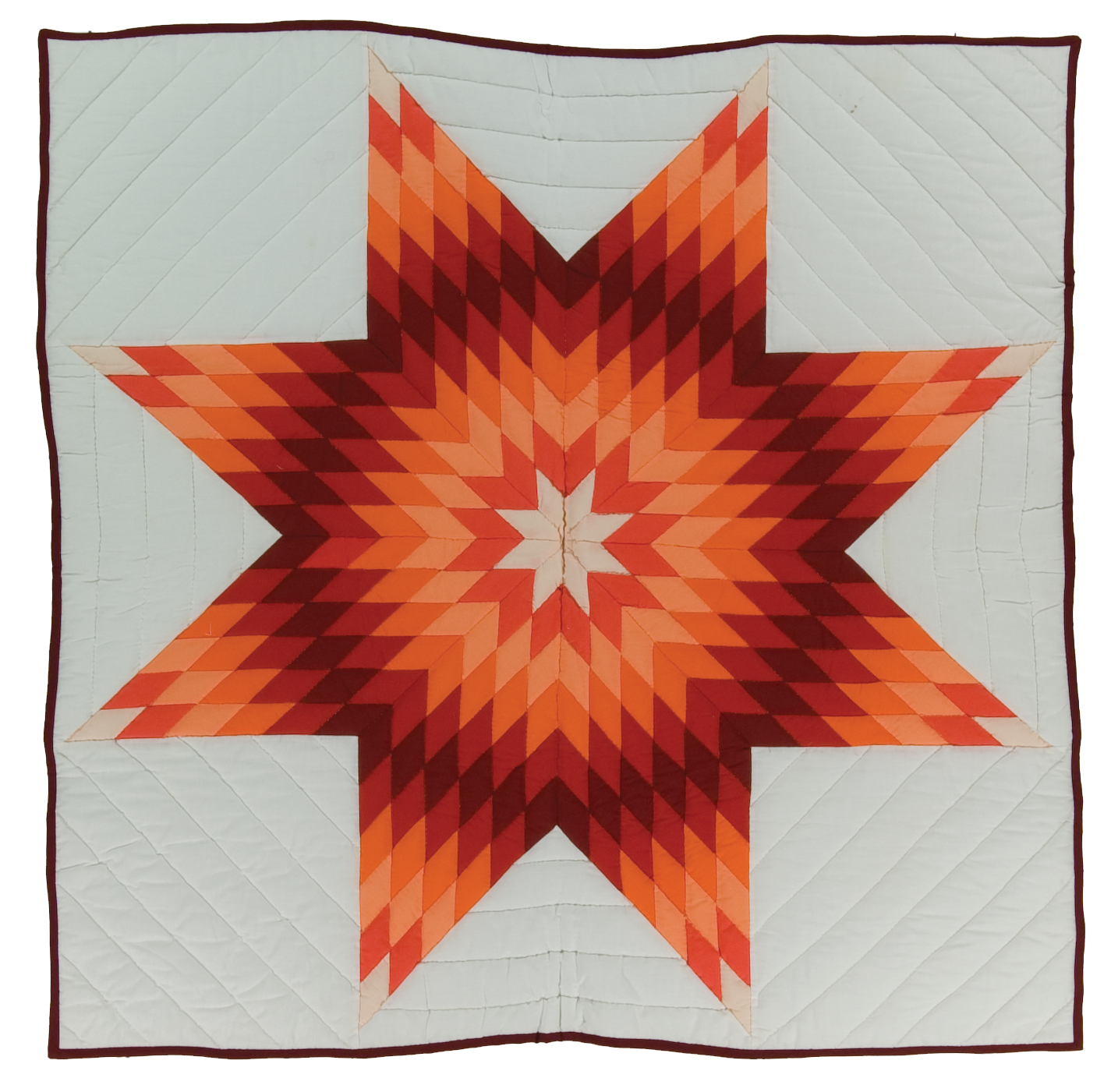 Star Quilt, Lakota, Cheyenne River Reservation, made by a member of “Missouri Breaks Industries, c. 1990, Courtesy International Quilt Museum, 2008.012.0012,The Witness Blanket was commissioned by Canada’s Truth and Reconciliation Commission and the Canadian Museum of Human Rights to portray the stories of residential school survivors. It has travelled throughout Canada to raise awareness of this often overlooked history. Newman sees his art installation as a way for survivors, and all Canadians, to heal.
This is why he chose to make one large, stain-glass eight-pointed star in the middle of the Witness Blanket. The star reflects the image of the Morning Star found in Native-made quilts. Such quilts are called Star quilts, and are made as gifts to honour and remember people. The Morning Star is seen as a symbol of wisdom and understanding.
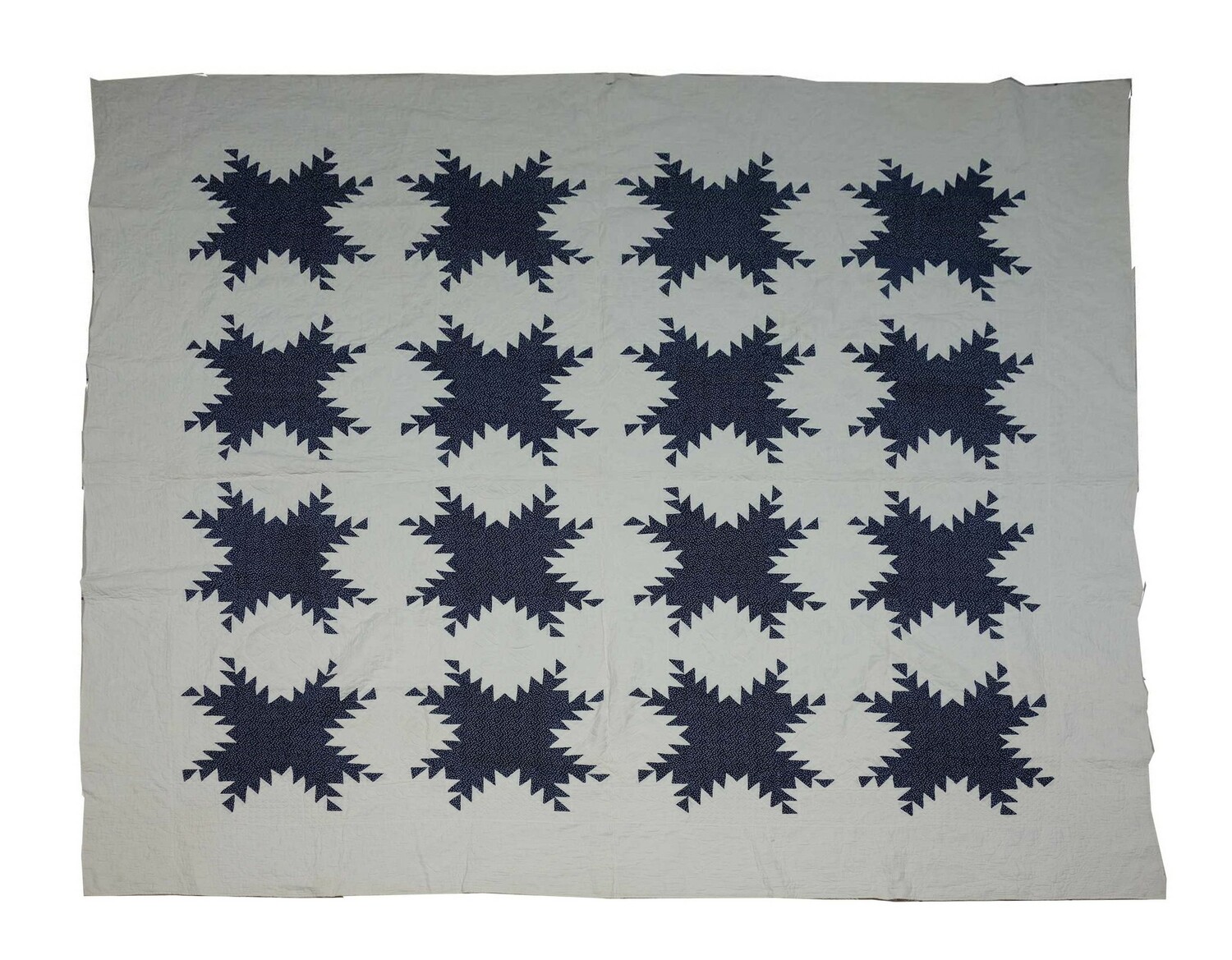 Indigo feathered star quilt, USA, c. 1830 (TRC 2018.2630).The TRC does have some beautiful quilts with appliquéd stars, including an indigo quilt from circa 1830 which features several feathered stars (TRC 2018.2630). We would be honoured if someone would like to donate a Star quilt to our growing collection.
For more information on The Witness Blanket, click here. See also The Witness Blanket: Truth, Art and Reconciliation, by Carey Newman and Kirstie Hudson, 2022, Orca Books, Victoria.
by Shelley Anderson, 2 November 2022