
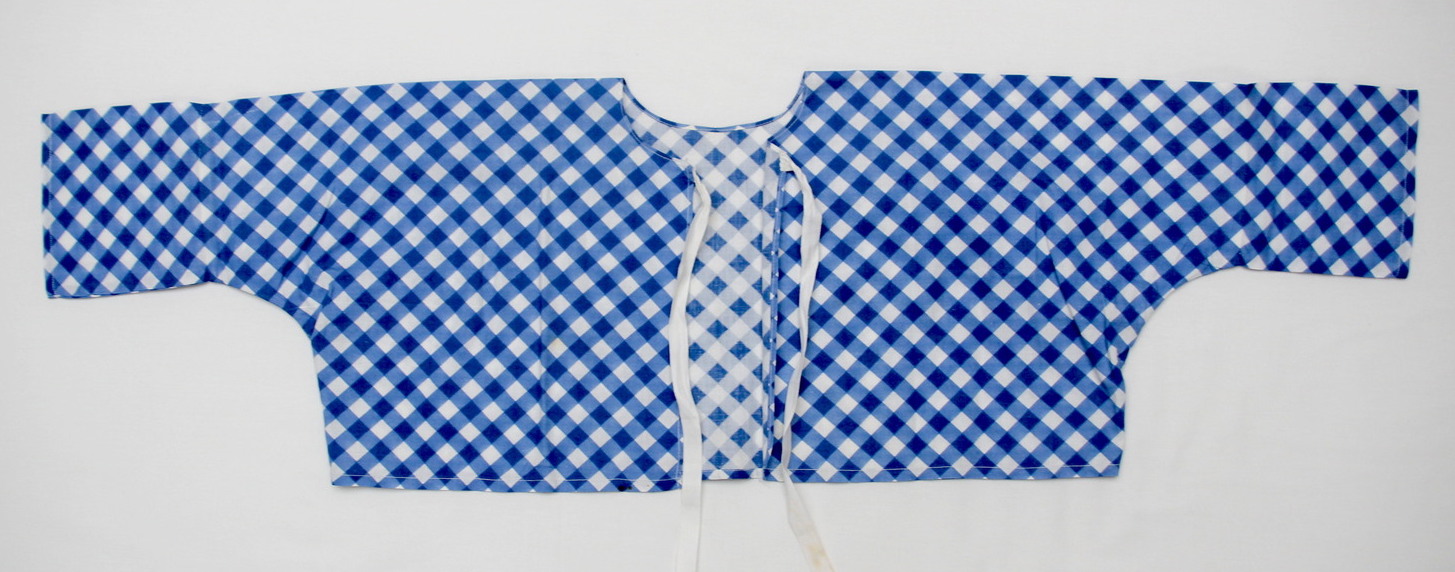
 Kotomisi jacket from Suriname, 1930s (TRC 2006.0259c).
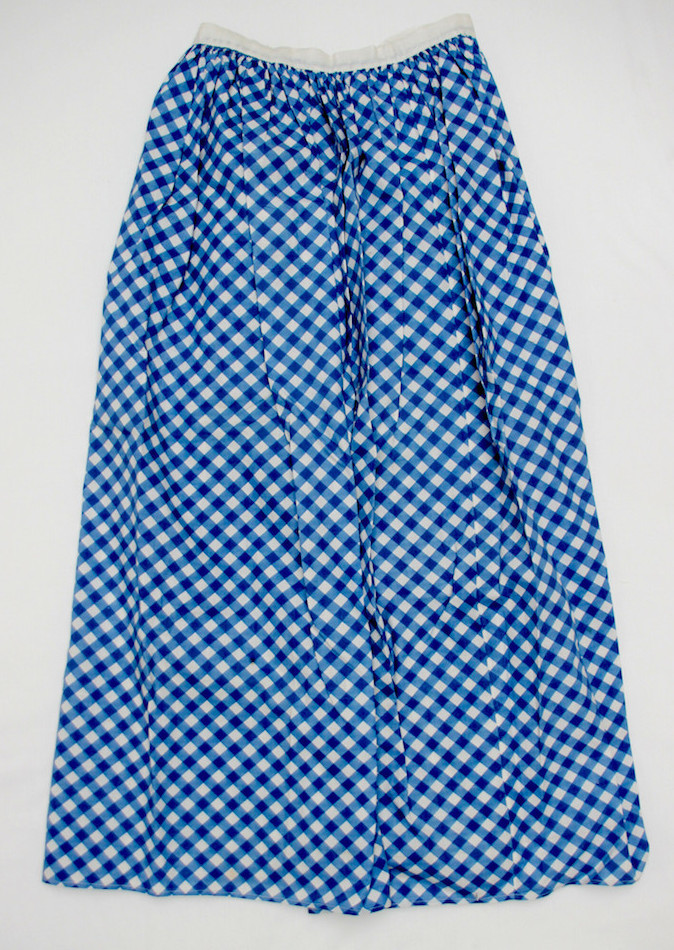 Kotomisi skirt, Suriname, 1930s (TRC 2006.0259d).The celebration of Keti Koti seems a good time to review the TRC’s collection of textiles from the South American country of Suriname. But first, what is Keti Koti? Keti Koti, celebrated on 1 July, marks the day the Dutch abolished slavery in 1863. The words mean “Broken Chains” in Sranan Tongo, a language from Suriname, where the day is also called Dag der Vrijheden ('Emancipation Day'). It’s celebrated in Suriname, a former Dutch colony, and in the Netherlands with concerts, commemorations, and, of course, by dressing in festive clothing.
Such festive clothing includes a traditional women’s ensemble called kotomisi, from the word ‘koto’ (skirt) and ‘misi’ (woman). While the word originally referred to the woman who wore the garment, over the years it has come to refer to the garment itself. The garment is mentioned in colonial accounts from the 18th and 19th century.
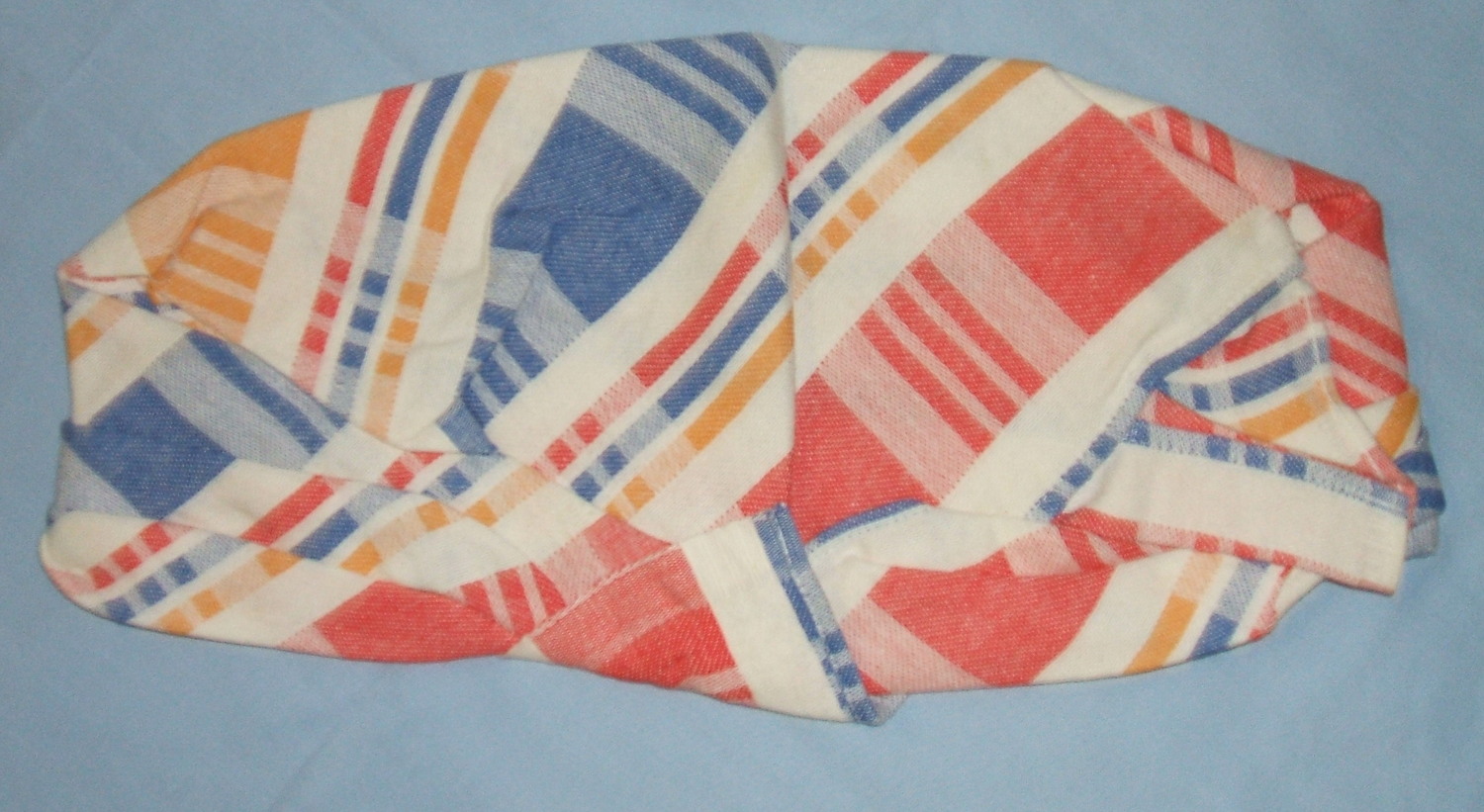 Kotomisi headscarf, Suriname, 1930s (TRC 2006.0259e).By the end of the latter century it was daily wear for an Afro-Surinamese woman. The garment is marked by a voluminous skirt, a protruding jacket (called yaki) and an elaborately folded headscarf (called angisa). Each item can be made with the same print, or from a different one. What’s important is the silhouette. The wider the silhouette, and the more fabric used, the more prestigious the garment. Width is achieved either by stiffening the fabric or by wearing, in the case of the koto, several skirts at the same time.
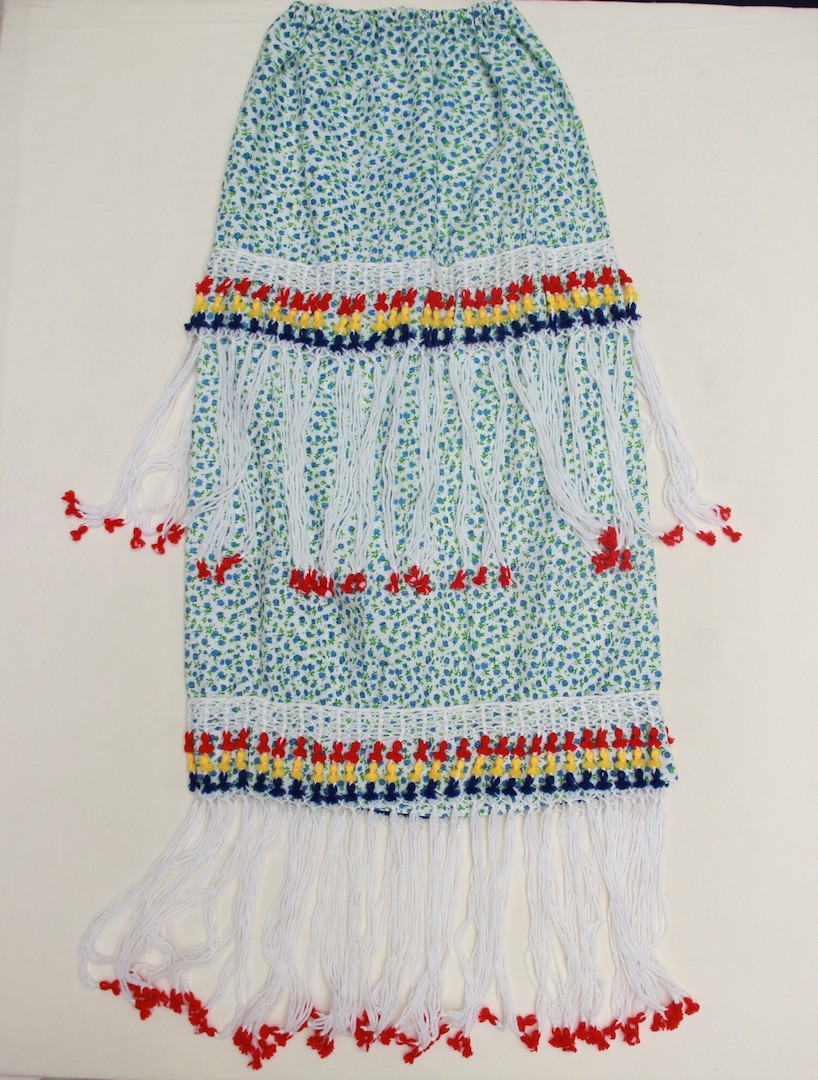 Indian skirt from Suriname, 1968 (TRC 2010.0359a)The TRC has a kotomisi from the 1930s. It includes a lovely cotton blue and white checkered blouse (TRC 2006.0259c), an accompanying long skirt (TRC 2006.2059d) in the same print, two white cotton underskirts (TRC 2006.0259a & TRC 2006.0259b), and long, hand-strung necklace of brown beads (TRC 2006.0259f).
This ensemble was crowned with a cotton headscarf in a design of white, blue, red and orange checks (TRC 2006.0259e), complete with three locks of dark synthetic hair (TRC 2006.0259g). The Afro-Surinamese or Creole woman who wore this kotomisi must surely have felt elegant.
Suriname is a multicultural society, and among the 25 items from Suriname in the TRC collection is a Muslim woman’s headscarf (TRC 2004.0271a) and an Indian woman’s fringed skirt and shawl (TRC 2010.0359a & TRC 2010.0359b).
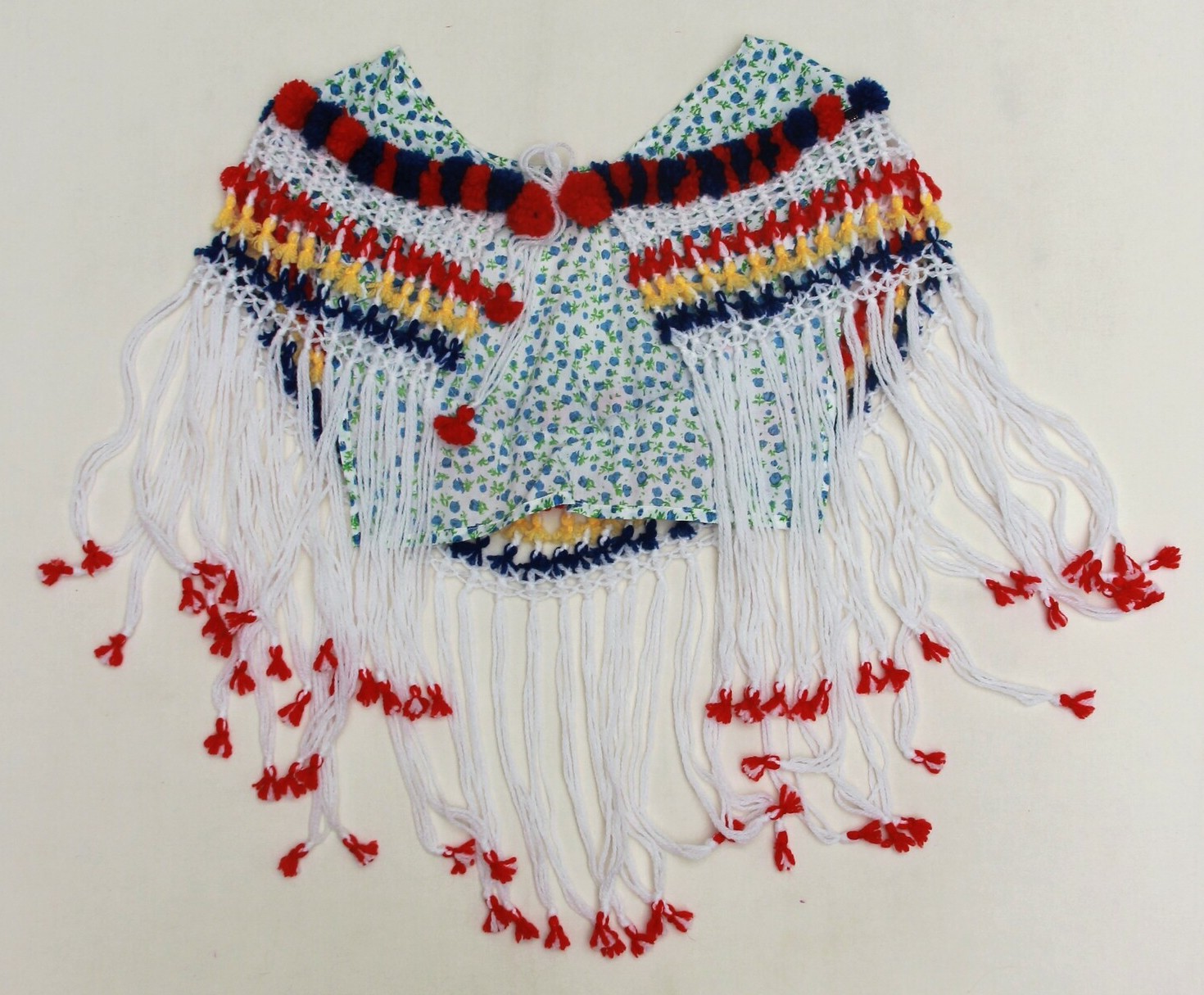 Shawl for Indian woman, Suriname, 1968 (TRC 2010.0359b).
Of all these textiles, my personal favorite is a sampler. It’s made of factory woven cloth and hand embroidered in cross stitch with red yarn (TRC 2020.1585). There are some repeating geometric motifs, an alphabet and numbers. It’s signed “1920 Paramaribo W Benjamins” and looks like the kind of sampler a school girl would make.
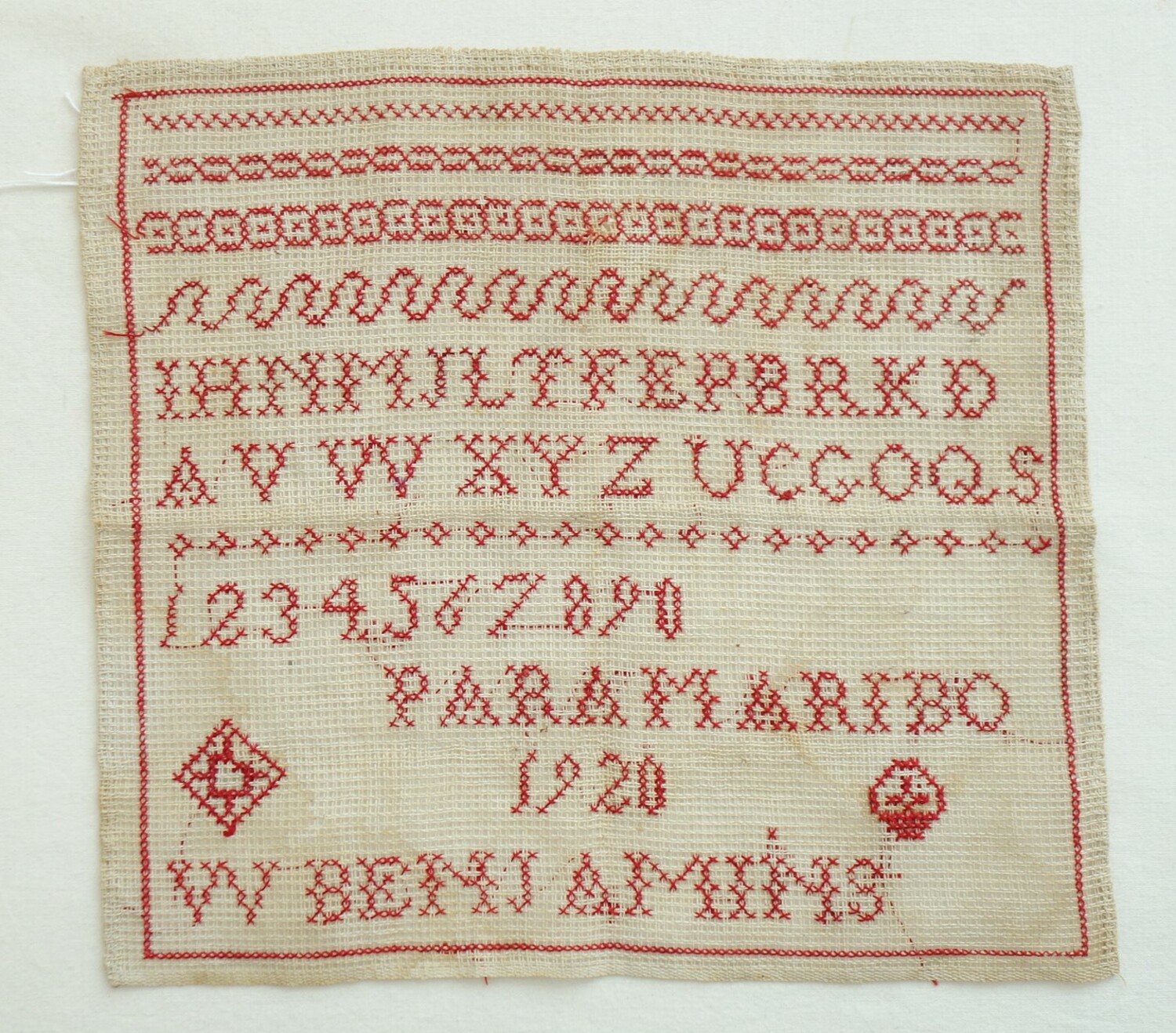 Sampler from Paramaribo, Suriname, 1920 (TRC 2020.1585).
Was W Benjamins her name, or perhaps the name of a friend or relative she made the sampler for? Did she enjoy stitching it or was she bored to tears? If the latter, I wish there was some way I could tell her that her work was now in a collection of textiles from around the world. I like to think she, or maybe he, would have been pleased.
Shelley Anderson, 28 June 2023