

The last few days have been very busy in Leiden with respect to textiles. There were two major events, and several smaller ones. The two large events included the Textiel Festival Leiden: Ambacht en experiment (Leiden Textile Festival: craft and experiment) that lasted from the 13th - 16th May. The event was organised by STIDOC (Stichting Textiel Informatie en Documentatie Centrum) with the help of various other textile groups. There were over forty official venues in Leiden displaying, discussing and encouraging people to try different textile techniques. There were also shops and stalls selling everything you need and did not know you needed to make textiles of all different types. There were varous workshops about blackwork embroidery (Lien van den Hoogen), about spinning and weaving with newspaper (Renée Campagne) and about bobbin lace making (Ephrem Muskee).
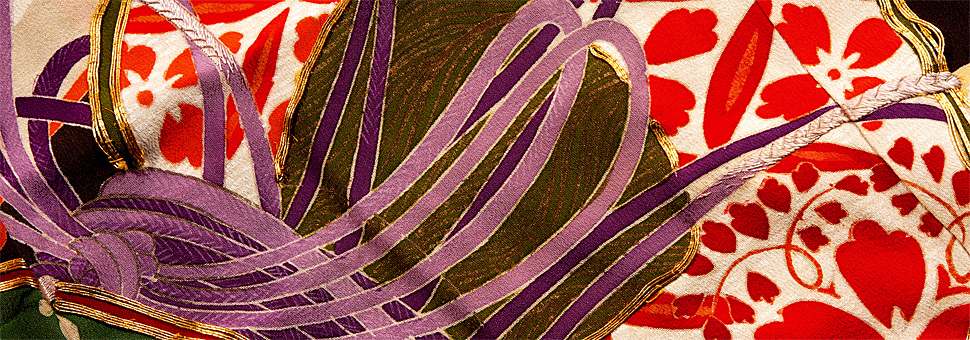
The textile events and exhibitions in Leiden included plants and plant dyes, and dyeing with natural dyes, at the Hortus Botanicus. The SieboldHuis showed its exhibition of Itchiku Kubota kimonos. There were ikats at the Volkenkunde Museum. The Weever's Huis displayed a collection of modern double weave textiles, while the TRC displayed its exhibition about the Street of the Tentmakers, Cairo.
At the same time the ETN (European Textile Network, http://www.etn-net.org/etn/211e.htm) organised its 17th annual meeting in Leiden, with numerous lectures and workshops on different textile themes - there were complaints that people were forced to choose between really interesting lectures and seeing the festival itself - it made for some hard descisions.
The festival ended on Saturday 16th May, but there was a mini-symposium on Sunday 17th at the SieboldHuis about Itchiku Kubota and his kimonos with three speakers: Linda Hanson the curator of the current exhibition, talking about kimonos in general; Dale Gluckmann, a freelance textile curator talking about the background to Itchiku Kubota and his kimonos and finally, Jacqueline Atkins who talked in detail about the master dyer himself and what he wanted to achieve by trying out different materials, dyeing techniques, designs, and so forth. She discussed his great concern with the function and future of the kimono and his artistic vision that led him to fashion ideas that some traditional kimono lovers found abhorrent , including the cloth used, the designs on the kinomos and how a kimono could be worn in a 21st century manner with Western style high heelded shoes!
Gillian Vogelsang-Eastwood, 17 May 2015