
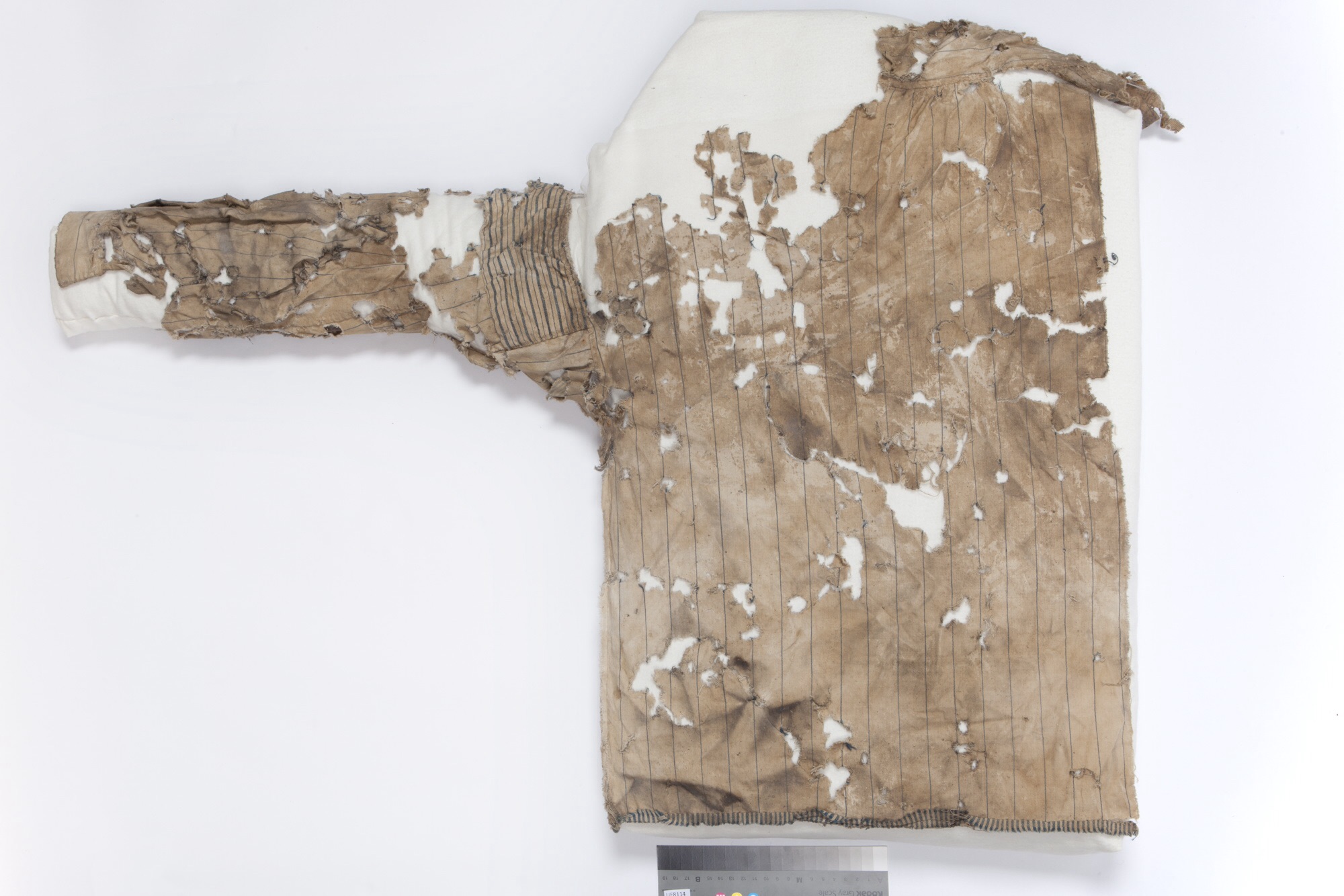
 Slopshirt or convict shirt, Australia, c. 1840. Photograph Jamie NorthSpending a few days in Adelaide, I visited this afternoon a really marvellous exhibition in the Art Gallery of Southern Australia, called Treasure Ships: Art in the Age of the Spices. On display are beautiful examples of textiles from India and Indonesia, plus many other precious objects, including paintings, drawings, weapons, etc., all relating to the extensive trade networks in the Indian Ocean and beyond, from between the fifteenth and nineteenth centuries. I must admit, it still 'touches' me to see objects so closely linked to my Dutch ancestors who played such a prominent role in these networks, although, politically correct as I am supposed to be (a position not lost in some of the texts that accompany the exhibition), I also realise that many things they did were not always particularly very nice. But then, no one is perfect.
An object that stirred my imagination (and which was a bit of an anomaly among the other objects) was a so-called slop shirt, a type of garment worn by the British convicts that were sent to Australia in the early days of European settlement over there. This example was accidentally found in 1980 during restoration works at the Hyde Park barracks, now a World Heritage site in Sydney. The shirt dates to c. 1840. Two of such shirts were issued to the convicts each year, I learnt from the catalogue. The same catalogue tells me that the textiles for the shirts came from India, but the sewing of the shirts was done by female convicts in Australia.
Most of the shirts, including the illustrated example, were 'decorated' with stripes, to clearly indicate the status of the wearer. The striped pyjamas worn by the prisoners in the German concentration camps have their direct precedents !
Willem Vogelsang, 8 July 2015