


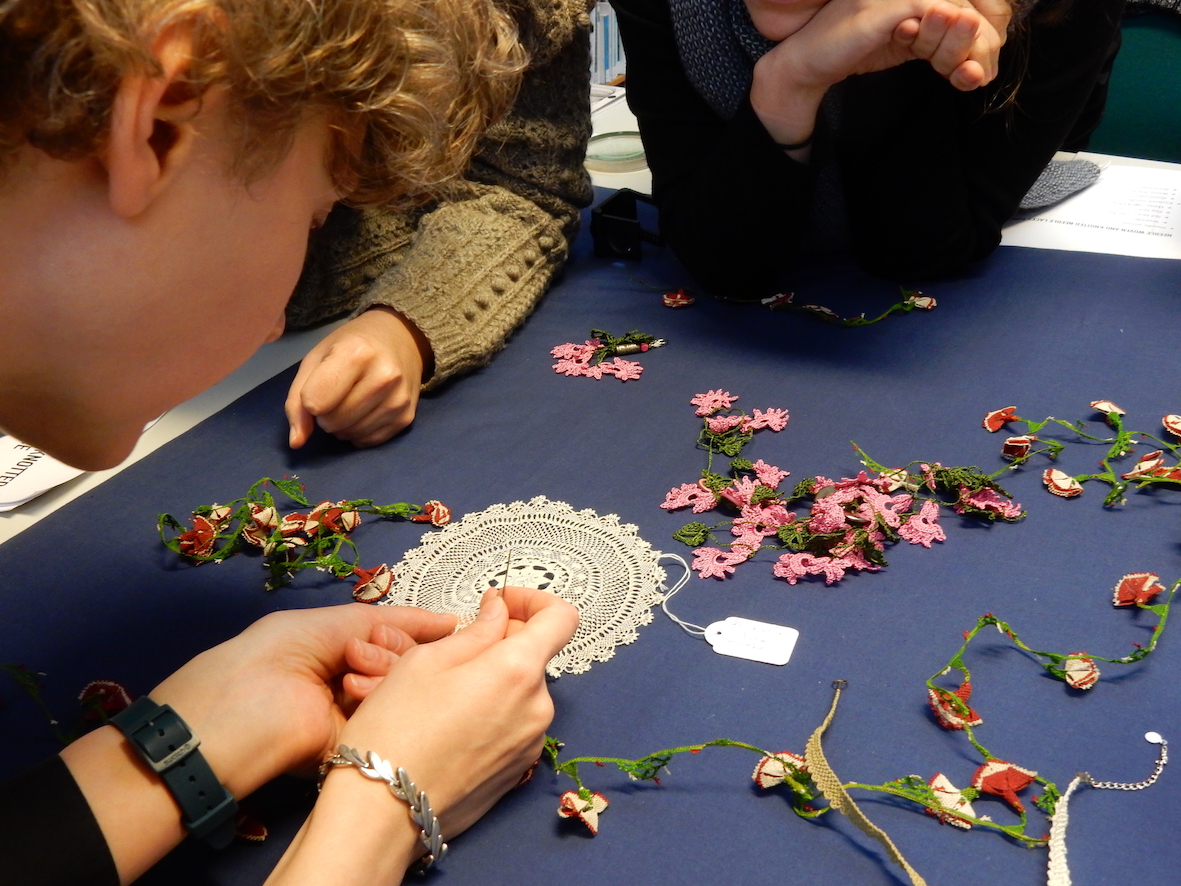
 TRC weekend lace workshop, 4-5 November 2017There were eight participants (from four different countries) at the TRC’s recent weekend workshop on “Identification of Lace”. The workshop was expertly led by Olga Ieromina, a TRC volunteer and an enthusiastic lace maker herself. Olga began by giving a working definition of lace as a decorative openwork fabric, in which the pattern, and any ground that links the pattern parts, are gradually built up by the interworking of free threads.
She explained four different markers that can be used to identify lace: how is it made (for example, handmade or machine made, the type of stitches used in construction, etc); what type of lace (needle lace, bobbin lace, hairpin lace, etc.); what kind of thread is used (examples included linen, silk, cotton, synthetic, wool or metal); and the lace’s country of origin and date.
A brief history of lace followed, from its 15th century origins in southern European embroidery and cut work, through the 17th century’s stunning needle lace (much of which originated in Venice), to the rise of Flemish bobbin lace in the 18th century and on to the 19th century’s machine lace.
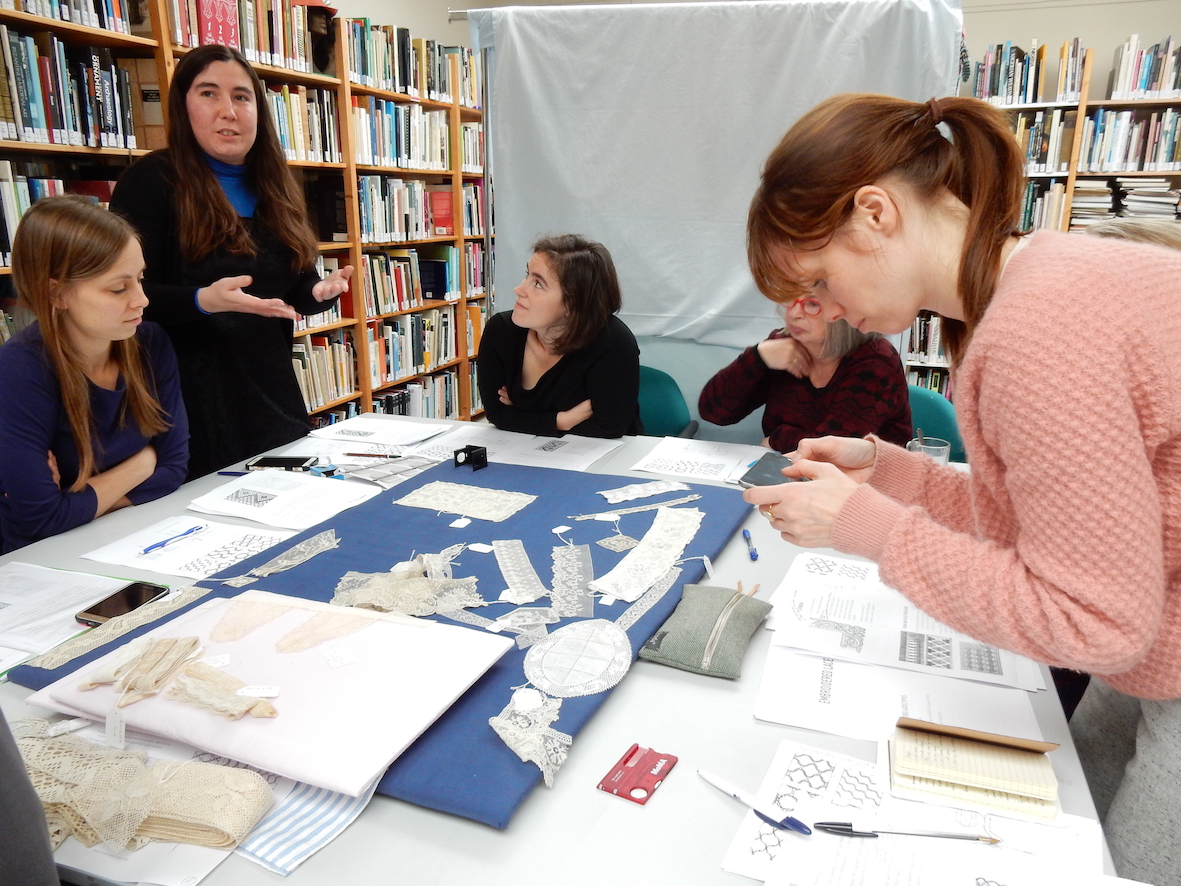 TRC weekend lace workshop, 4-5 November 2017We then began the most enjoyable part of a very enjoyable weekend—identifying, examining and handling many different and beautiful examples of lace in the TRC collection, from continuous to guipure, looped or appliqued; made by hand and by a variety of machines (including Puschers, Barmen and chemical). Our learning was enhanced by a series of short video clips, which showed how different laces were made and by the experiences of the participants themselves, whether we were curators, collectors, craftswomen, conservators or in the vintage business. Olga also produced a very useful handout on lace identification for each participant. I came away from the workshop with more knowledge and even more admiration for the creators of such complex and beautiful textiles.
Shelley Anderson.
Friday, 10th November 2017