

It is noted in various popular and academic books and articles about Dutch regional embroidery that the letter A with the bar above the apex of the triangle is a typically Frisian (Fries) form from the north of the Netherlands (Friesland), and that any embroidered item with that type of letter could be classed as Frisian.
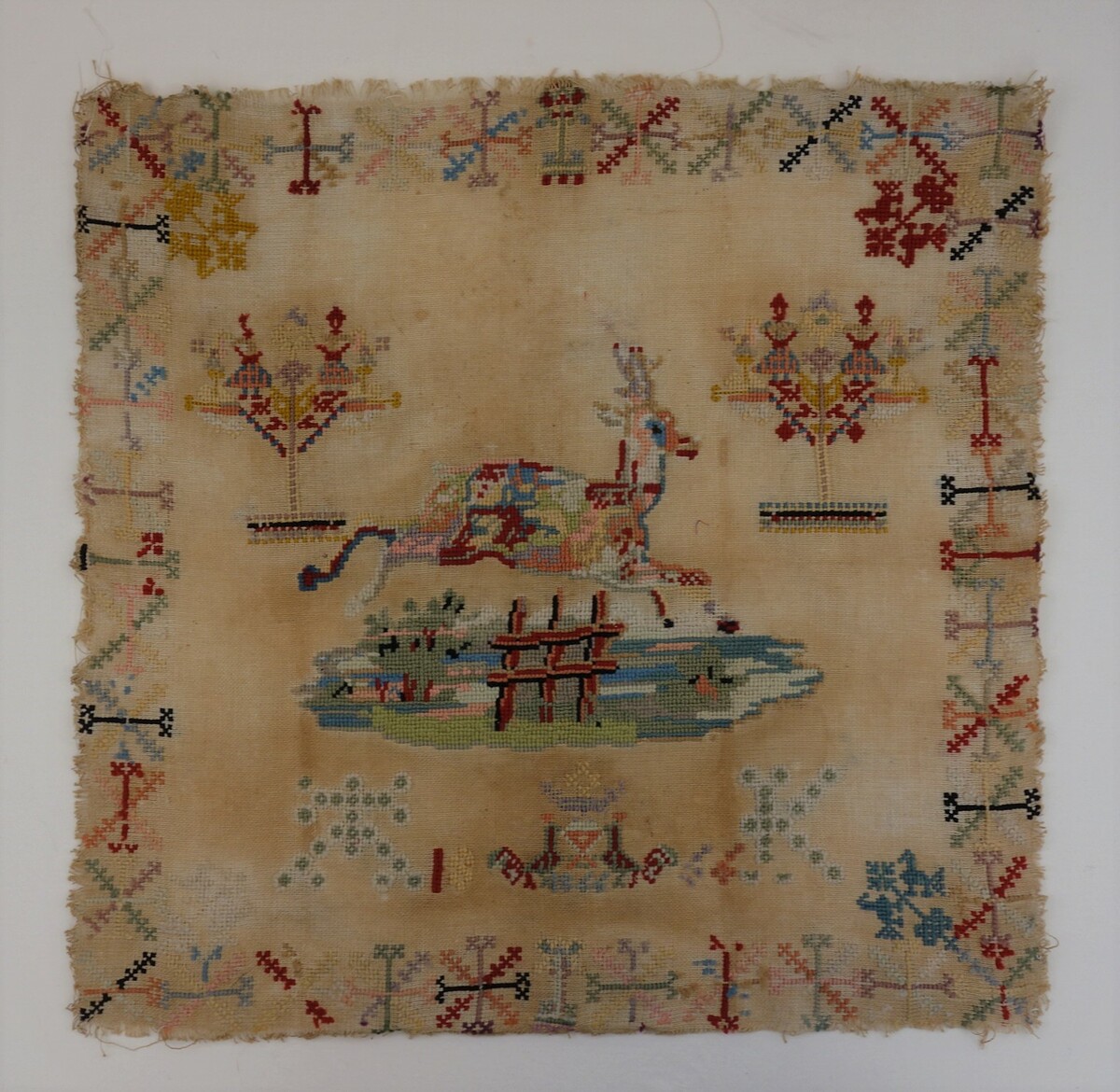 A 'Frisian?" sampler with the initials A.K. (left hand corner), 1860s. TRC Collection (TRC 2017.4287).
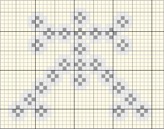 Chart of an ornate ‘A’, worked on a ‘Frisian?’ sampler (TRC 2017.4287) with the initials A.K.
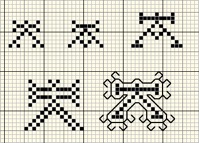 A selection of different forms of the so-called 'Frisian' A, from various Dutch sources (chart by Gillian Vogelsang-Eastwood).However, the exclusive attribution of the A can be questioned, for the same type of A can be found on items from other, northern and western parts of the country, such as the island of Marken.
In addition, the 'Frisian' A was apparently also used far away from Friesland. In the Metropolitan Museum of Art, New York, there is a sampler made by Barbara Landis (1816-1884; see illustration). She was a member of the Mennonite sect, an originally Frisian community, many of whom migrated to Pennsylvania (eastern USA). The letter A in the alphabet line of this sampler is very similar in shape to the so-called Frisian ‘A’. It could be argued that she was following a Fries tradition. But there is more.
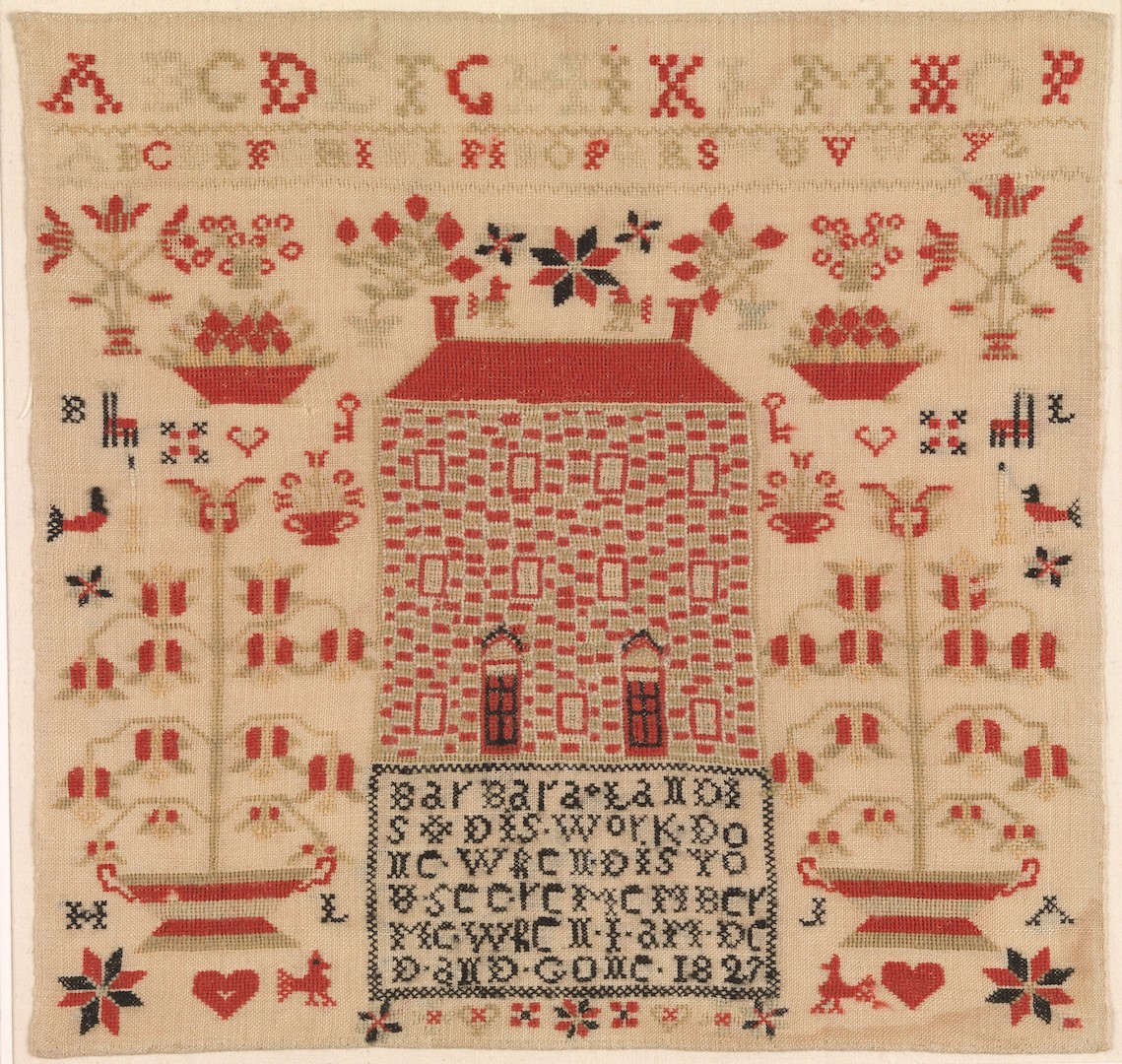 An American/German sampler from 1827, worked by Barbara Landis (USA; Gift of Mrs. Robert W. de Forest, 1933, courtesy of the Metropolitan Museum of Art, MMA 34.100.209).There is a sampler in the York Castle Museum, England (TDP235), which was made by an English girl called Matilda Abbot in the early nineteenth century. It includes the shape of the letter A that so often is classed as typically Frisian.
There is also a sampler in the Metropolitan Museum of Art, New York (MMA 57.122.275) that comes from Spain and is dated to 1867 (see illustration). Once again it has the 'typical' A.
So perhaps the origins of this letter and its use as automatic ‘proof’ that something comes from The Netherlands, and more specifically from Friesland, should be treated with some caution.
See also 'More on the Frisian A'
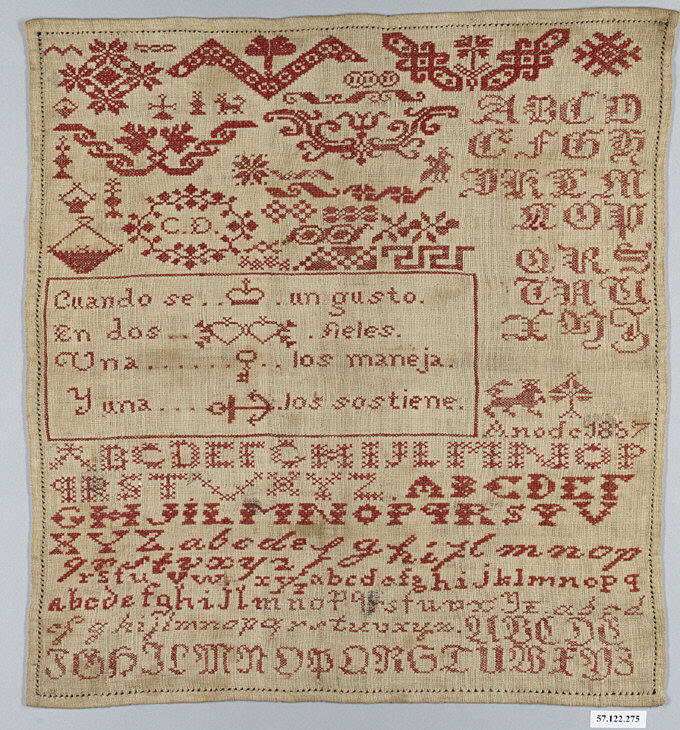 Sampler in the Metropolitan Museum of Art, New York (MMA 57.122.275) that comes from Spain and is dated to 1867.
Gillian Vogelsang, Wednesday, 25 December 2019