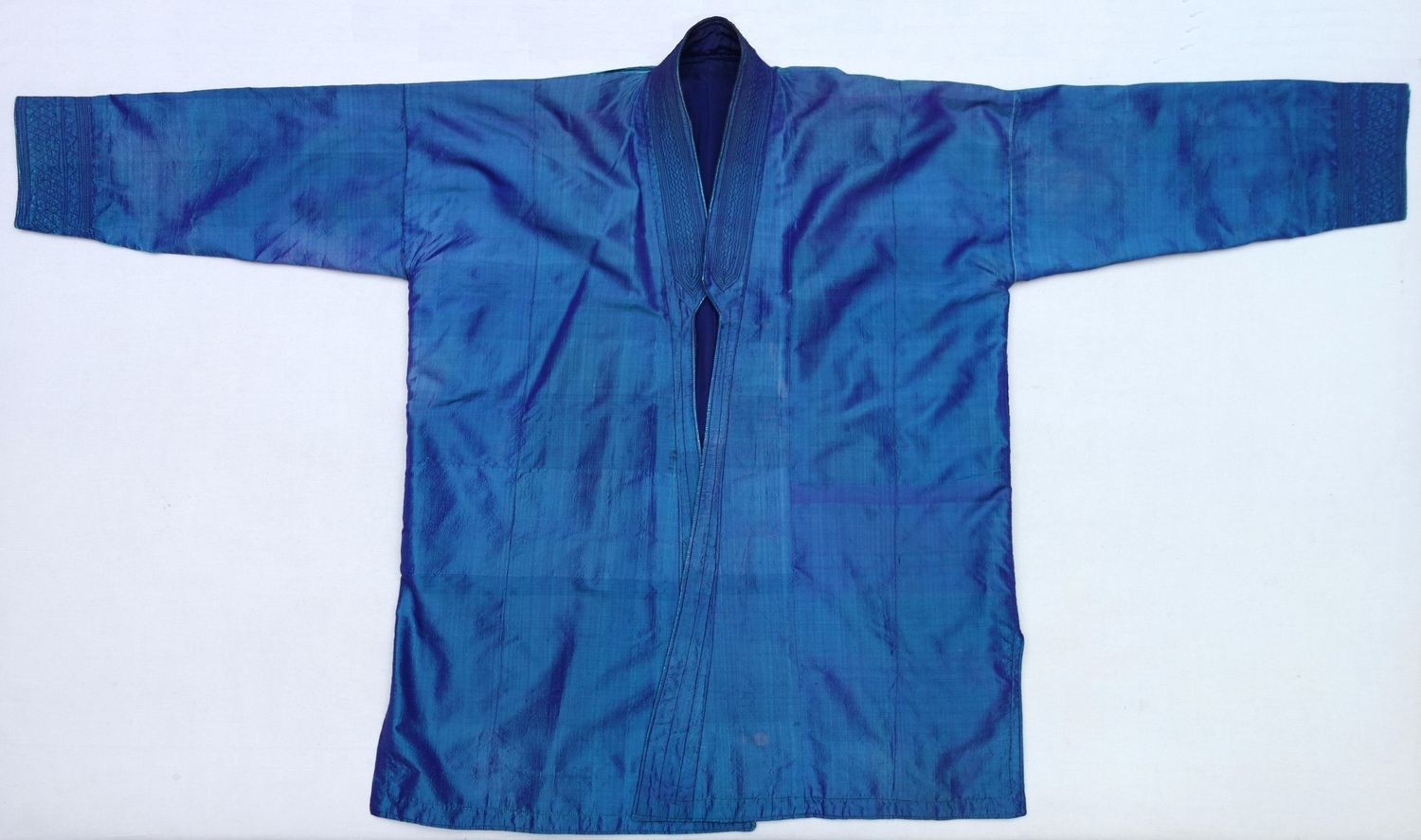
• F1
  • F4
  • F3
  • F2

We have just had the opening (Thursday 28th March) to the TRC’s latest exhibition called ‘From Dragon Robes to Mao suits. Chinese clothing in the 20th century,' which is about the difference between late 19th century courtly and urban Chinese garments, and those influenced by Western fashions from the 1910s onwards, as well as the complete contrast with a Mao-period Communist outfit from the 1970s. The exhibition helps to explore some of the dramatic changes in Chinese dress in the 20th century.
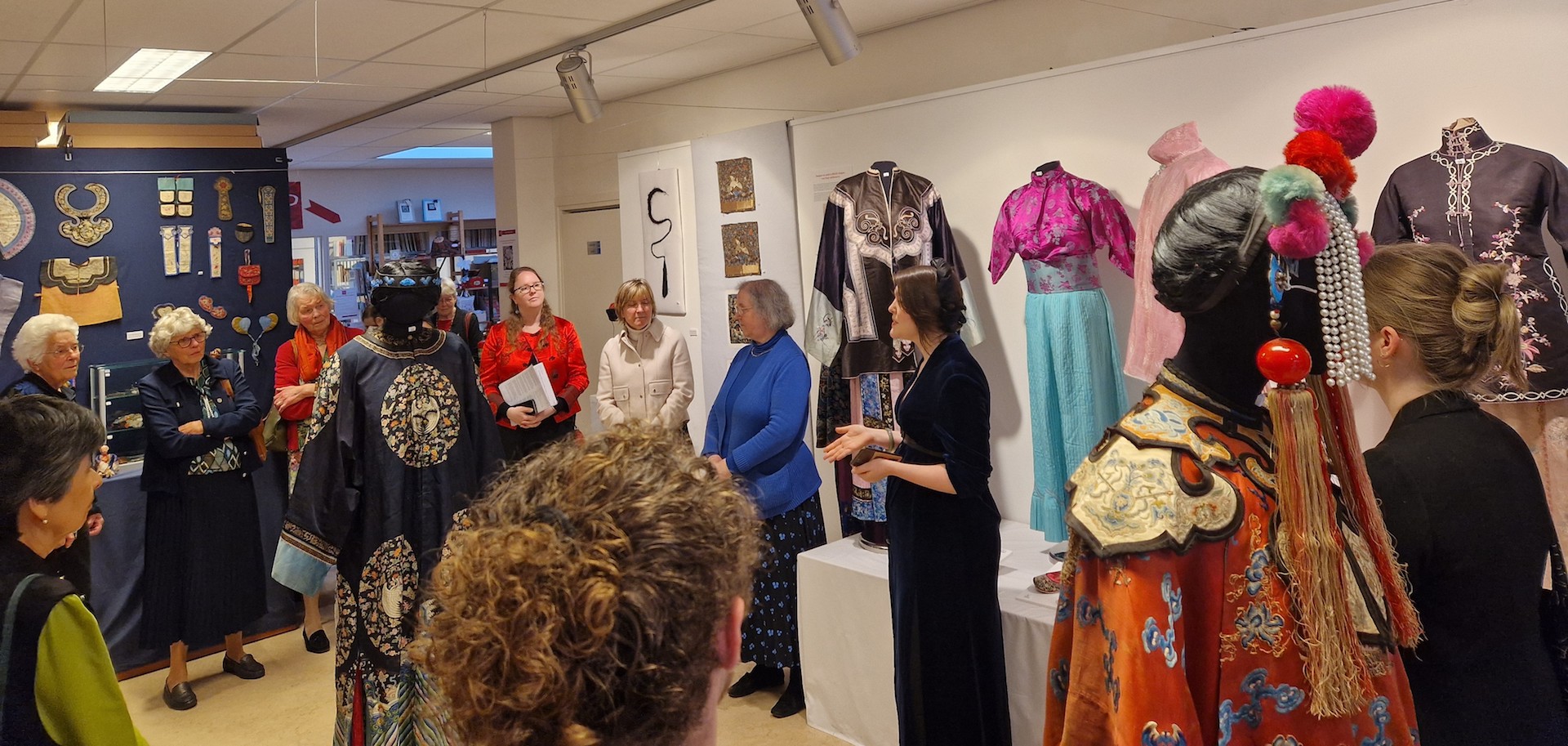
Opening of the TRC exhibition: 'From Dragon Robes to Mao suits. Chinese clothing in the 20th century', Thursday, 28 March 2024. Photograph by TRC volunteers.Opening of the TRC exhibition: 'From Dragon Robes to Mao suits. Chinese clothing in the 20th century', Thursday, 28 March 2024. Photograph by TRC volunteers.

It was a lovely opening! I spoke about the TRC and what we want to achieve, and had the opportunity to personally thank Quirina van Vreeburg, who has recently donated a large and varied collection of Chinese gowns, jackets, shoes, hair ornaments, including items made from kingfisher feathers, as well as collars and tiger hats for boys.  
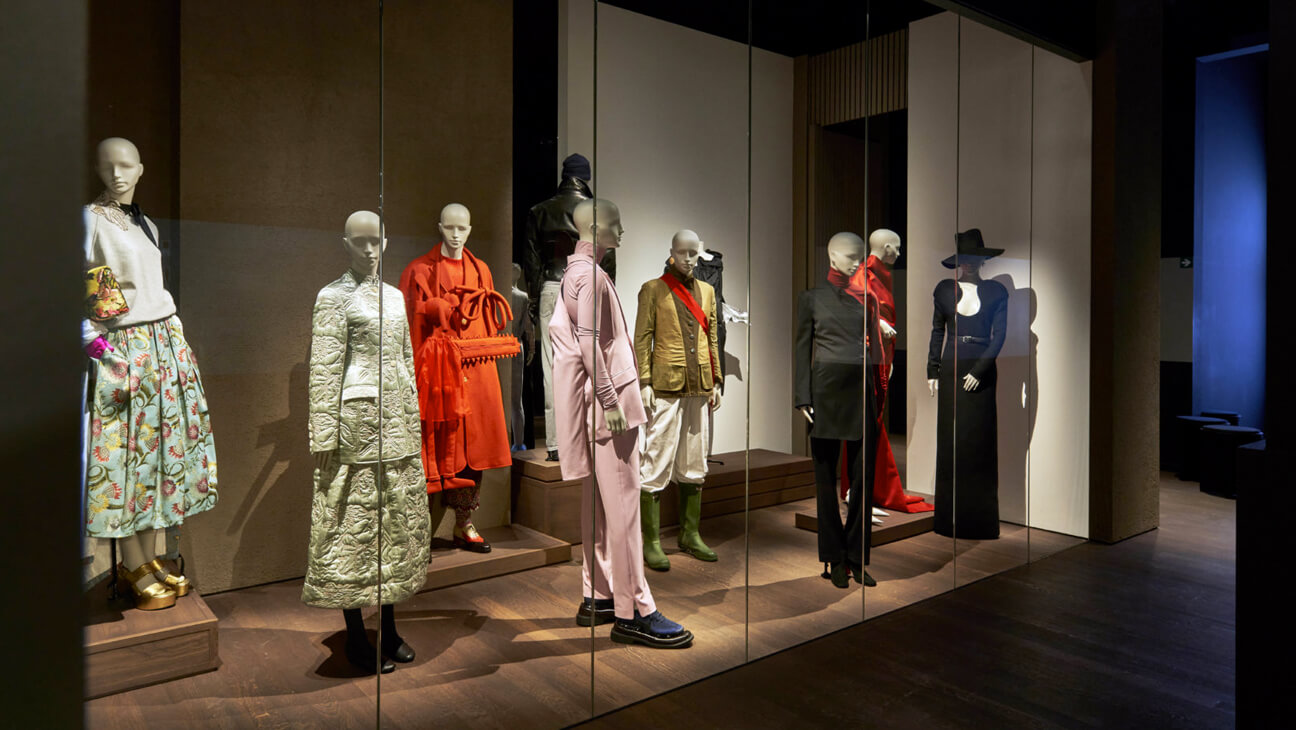
At the end of November 2023, Dieter Suls of the ModeMuseum (MoMu), Antwerp, Belgium, came to the TRC in Leiden to see what we are doing and how. His visit included a discussion about the role of textiles, dress and fashion in society. He was amazed about what can be done, at the TRC, by a group of dedicated (obsessed?) people with limited resources.

Exhibition at the MoMu, AntwerpExhibition at the MoMu, Antwerp

by Emilie Lambert, archaeology intern at the TRC; 20 March 2024

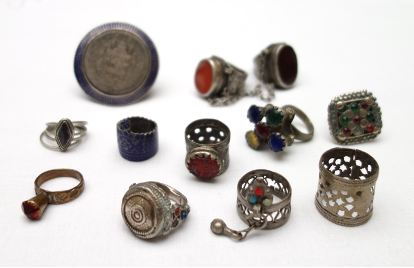
The TRC is working hard at cataloguing the Afghan jewellery from the Schinasi donation. The current blog focuses on the vast array of finger rings. Many of the pieces are already accessible in the TRC online collection catalogue.  As someone who does not wear jewellery herself, I was amazed at the number and variety of styles within this group of objects, although they all derive from a relatively small part of the world and date to a specific period of time.

Group of rings from Afghanistan and beyond, 20th century.Group of rings from Afghanistan and beyond, 20th century.

As a student in archaeology, we are often taught that each period and each region has its own particular style. Going through the finger rings from Afghanistan at the TRC I realise that that is not the case.

Gillian Vogelsang-Eastwood, 10 March 2024

A gentle day (9th March) in London visiting some very different venues! As part of looking at exhibitions and other displays, Willem and I went to three venues today. The first was St. Paul’s Cathedral, the second Apsley House, the stately home of the Duke of Wellington who defeated Napoleon in 1815, and the third was the King's Gallery (the former Queen’s Gallery), Buckingham Palace.

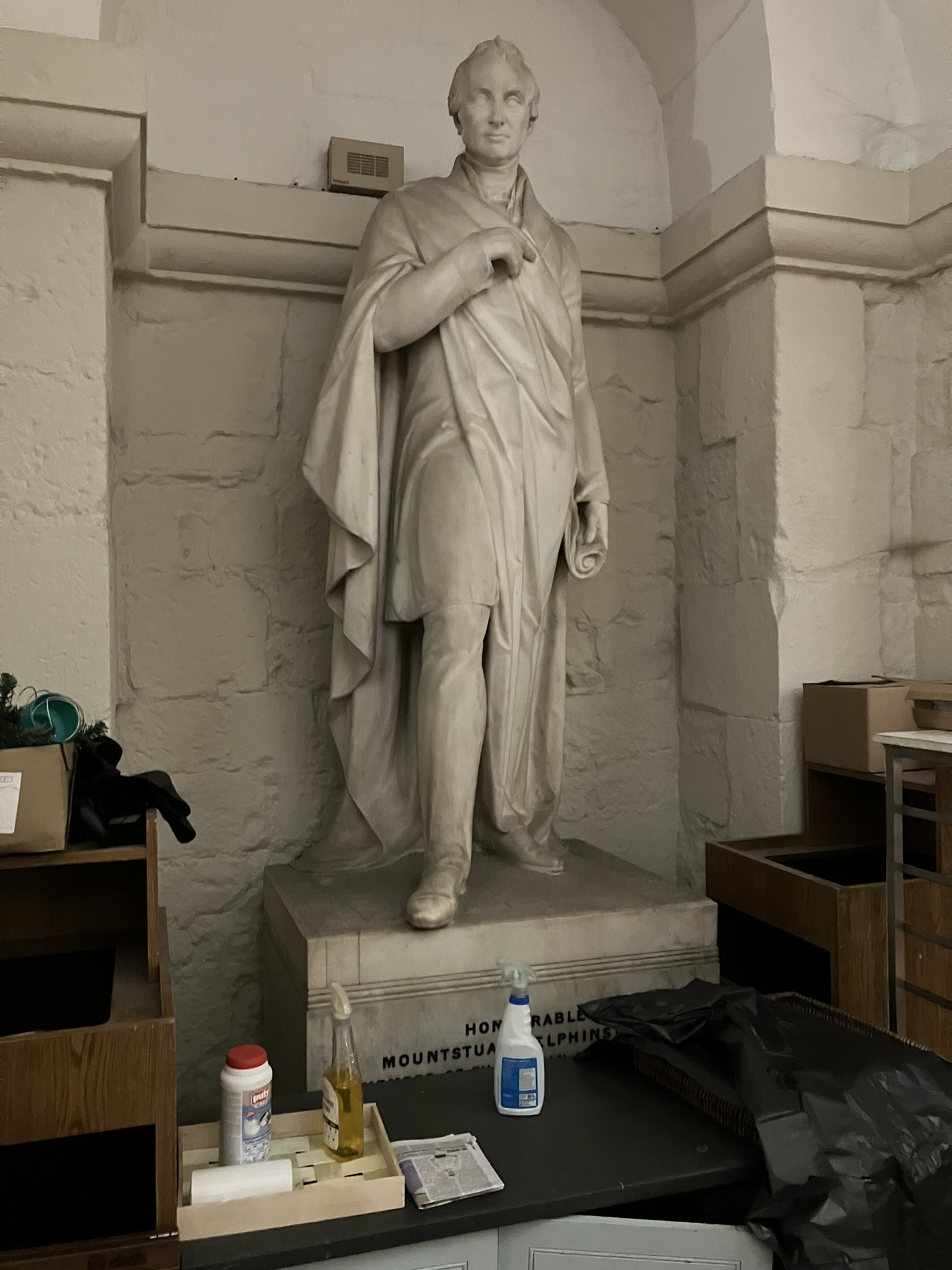
Statue of Mountstuart Elphinstone, in the crypt of St. Paul's, London. Photograph Willem Vogelsang.Statue of Mountstuart Elphinstone, in the crypt of St. Paul's, London. Photograph Willem Vogelsang.On the ground floor, the grand cathedral of St. Paul’s has become a commercial institute with a couple of small chapels for those who want to pray, but visitors have to pay for the honour of being there, and it feels like it. But there are some interesting items, such as the very grand and elaborate memorial to the Duke of Wellington!

However, going down into the Crypt is stepping into British history, as there are the graves and memorials to Sir Christopher Wren, Sir Isaac Newton, Florence Nightingale, Montgomery of El Alamein as well as many artists and poets including Blake, Millais and Turner. The 18th century memorials are subdued, the 19th century ones are not.

Gillian Vogelsang-Eastwood, 9 March 2024

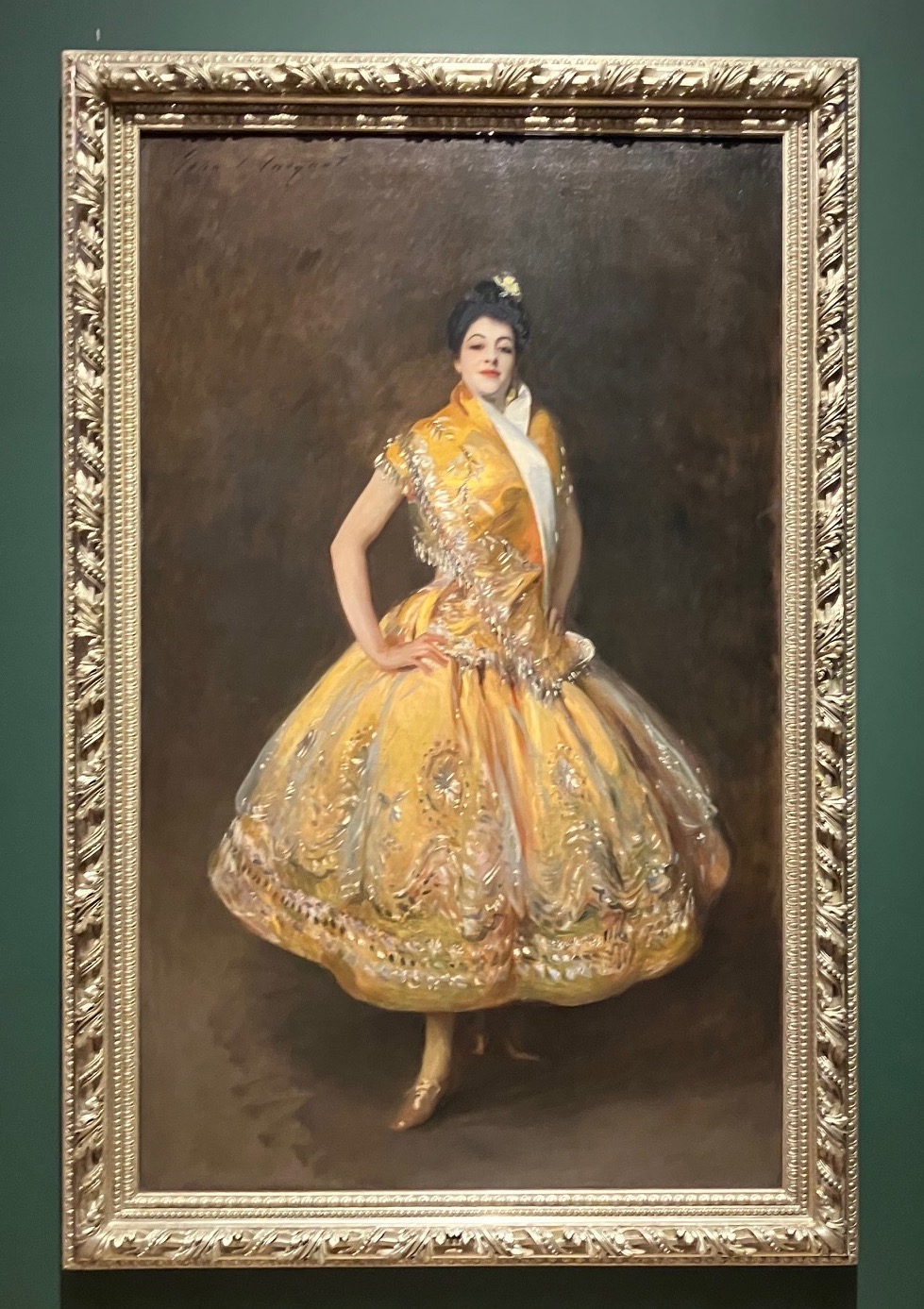
La Carmencita, by John Singer Sargent (1890), Musée d'Orsay, Paris.La Carmencita, by John Singer Sargent (1890), Musée d'Orsay, Paris.Willem and I are in London at the moment to pick up TRC items lent to the Museum of Fashion from their exhibition called “The Fabric of Democracy”, which was curated by Amber Butchart. We decided also to visit several exhibitions in different venues in London, to see various specific items and get new ideas and inspiration.

Over the years we have seen good exhibitions, bad exhibitions, and some that reminded us of the ‘Emperor’s new clothes’ (i.e. there was nothing there, literally). So on Friday afternoon we went with great curiosity to Tate Britain to see their new exhibition Sargent and Fashion (with paintings by the American artist John Singer Sargent, 1856-1925).

The exhibition was slated in a review in the Guardian (20 February) by Jonathan Jones as being “A horrible exhibition” (in his first sentence). “Sargent’s gloriously rich and subtle paintings can’t be reduced to dreary facts about hats, dresses and opera gowns. Sadly, that’s just what’s happened” Jones seems to have disliked the paintings being displayed together with the garments actually worn by the people being portrayed. It appears to have distracted him from Art.

Augusta de Gunzbourg, TRC, 2 March 2024

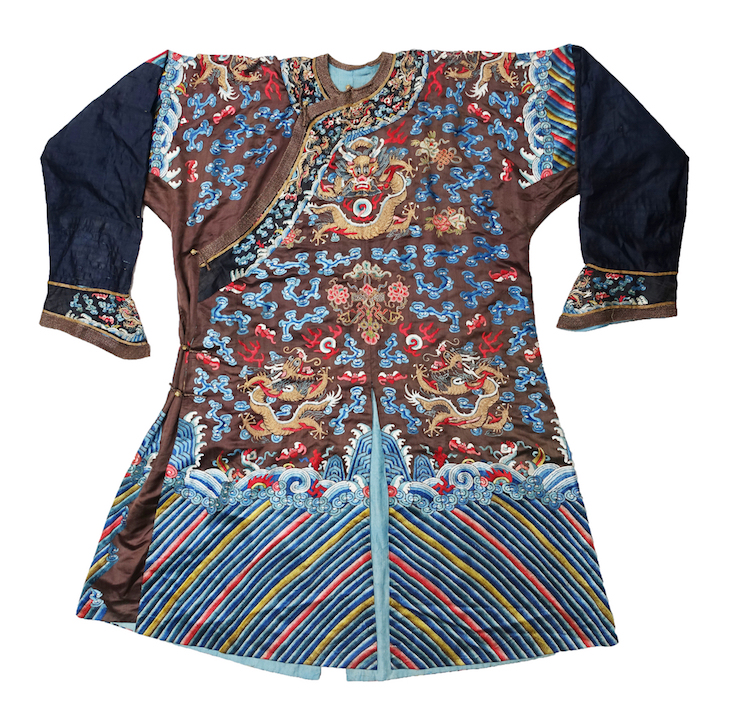
What did Chinese emperors, empresses and their court wear at the turn of the 20th century, and what did other people wear at that time? The TRC will soon (28 March !) be opening an exhibition on the theme of clothing that was worn during the last imperial dynasty of China, namely the Qing dynasty (1644–1911).

Early 20th century Manchu Chinese embroidered gown (TRC 2023.2130).Early 20th century Manchu Chinese embroidered gown (TRC 2023.2130).

Afghan jacket, made by a local tailor for May Schinasi, a Western woman living in Kabul, Afghanistan, 1960s-1970s (TRC 2024.0246).Afghan jacket, made by a local tailor for May Schinasi, a Western woman living in Kabul, Afghanistan, 1960s-1970s (TRC 2024.0246).Gillian Vogelsang-Eastwood, 23 February 2024

The three A’s (adopt, adapt, acknowledge) are an important aspect of the TRC, namely how people see, adopt and adapt clothing forms, techniques, patterns and so on, from other cultures and societies.

I have written on this subject before in a separate blog.

Adopting and adapting textile and garment aspects is a process that has been going on for thousands of years throughout the world, going north, south, east and west!

Ann Cable, 6 February 2024.

I was recently helping a friend downsize and this involved sorting many textiles which she would donate to the TRC. One of these was a smocked child’s dress, made in Indonesia for her daughter in around 1973 (TRC 2023.1894). Smocking is a technique whereby a series of pleats are made that are fastened together with embroidery stitches. This was a popular way to create a slightly stretchy garment, before the invention of elastic.

Copy of Weldon's Practical Smocking magazine (no. 19, vol. 2; July 1887) with a wide range of patterns, stitches and ideas (TRC 2024.0356).Copy of Weldon's Practical Smocking magazine (no. 19, vol. 2; July 1887) with a wide range of patterns, stitches and ideas (TRC 2024.0356).

Search in the TRC website

Contact

Boerhaavelaan 6
2334 EN Leiden.
Tel. +31 (0)6 28830428  
office@trcleiden.org 

facebook 2015 logo detail 

instagram vernieuwt uiterlijk en logo


Bank account number

NL39 INGB 0002 9823 59, in the name of the Stichting Textile Research Centre.

TRC closed until 4 May 2026

The TRC is closed to the public until Monday, 4 May 2026, due to our move to the Boerhaavelaan. The TRC remains in contact via the web, telephone and email. For direct contact and personal visits, please contact the TRC at office@trcleiden.org, or by mobile, 06-28830428.

Donations

The TRC is dependent on project support and individual donations. All of our work is being carried out by volunteers. To support the TRC activities, we therefore welcome your financial assistance: donations can be transferred to bank account number (IBAN) NL39 INGB 000 298 2359, in the name of the Stichting Textile Research Centre. BIC code is: INGBNL2A.

 You can also, very simply, if you have an iDEAL app, use the iDEAL button and fill in the amount of support you want to donate: 


Since the TRC is officially recognised as a non-profit making cultural institution (ANBI), donations are tax deductible for 125% for individuals, and 150% for commercial companies. For more information, click here