The TRC depot in Leiden houses many treasures. The treasures I am most in awe of are the archaeological textiles. Sometimes they do not look like much, being scraps rather than a complete garment, but they can have an incredible history and often point to milestones in human technology. And stories of lost cities and cultures.
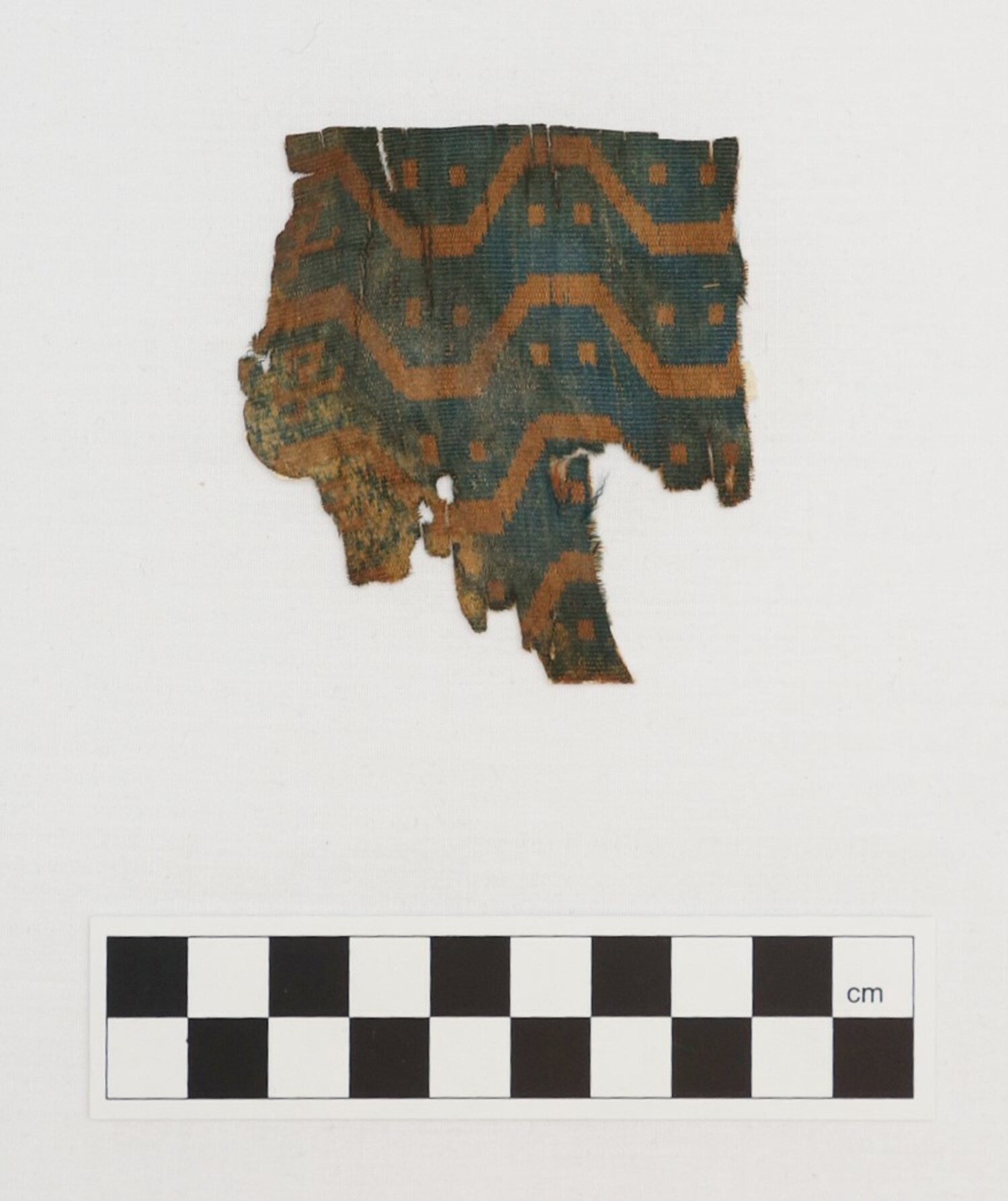 Silk cloth fragment from Xinjiang, probably Niya, dug up by Aurel Stein. The sample may date to the 2nd century AD (TRC 2000.0009).
I am thinking especially of a cluster of small silk fragments excavated in the early 20th century by the famous archaeologist and geographer Sir Marc Aurel Stein (1862-1943), and around 1945 given by Sir Mortimer Wheeler, the then director of the Indian Archaeological Service, to Robert Charleston, who was an officer in the British army in India, but in later life the curator of glass in the Victoria & Albert Museum in London. Charleston gave them to Gillian Vogelsang, now director of the TRC, in 1985.
The fragments (TRC 2000.0009, 2000.0010, 2000.0011 and 2000.0012) are all warp-faced compound weaves, with designs that include zig-zags, paired dots and what may be dragons; TRC 2000.0009 also includes some traces of woven Chinese characters. The fragments are all dated to the second century CE, and are believed to have been excavated from the lost city of Loulan.
Loulan was an oasis settlement along the southern desert route of the Silk Road. It was part of the Kroraina Kingdom, which flourished from circa 200 CE to 400 CE. In 1897, when Stein asked the British Government of India for funding for his first expedition, the area was called Chinese Turkestan. Today it’s known as Xinjiang ("New Frontier'), the westernmost part of China.


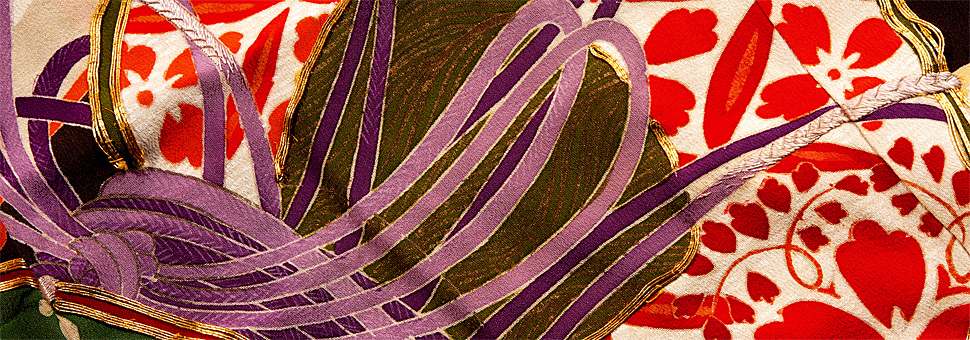
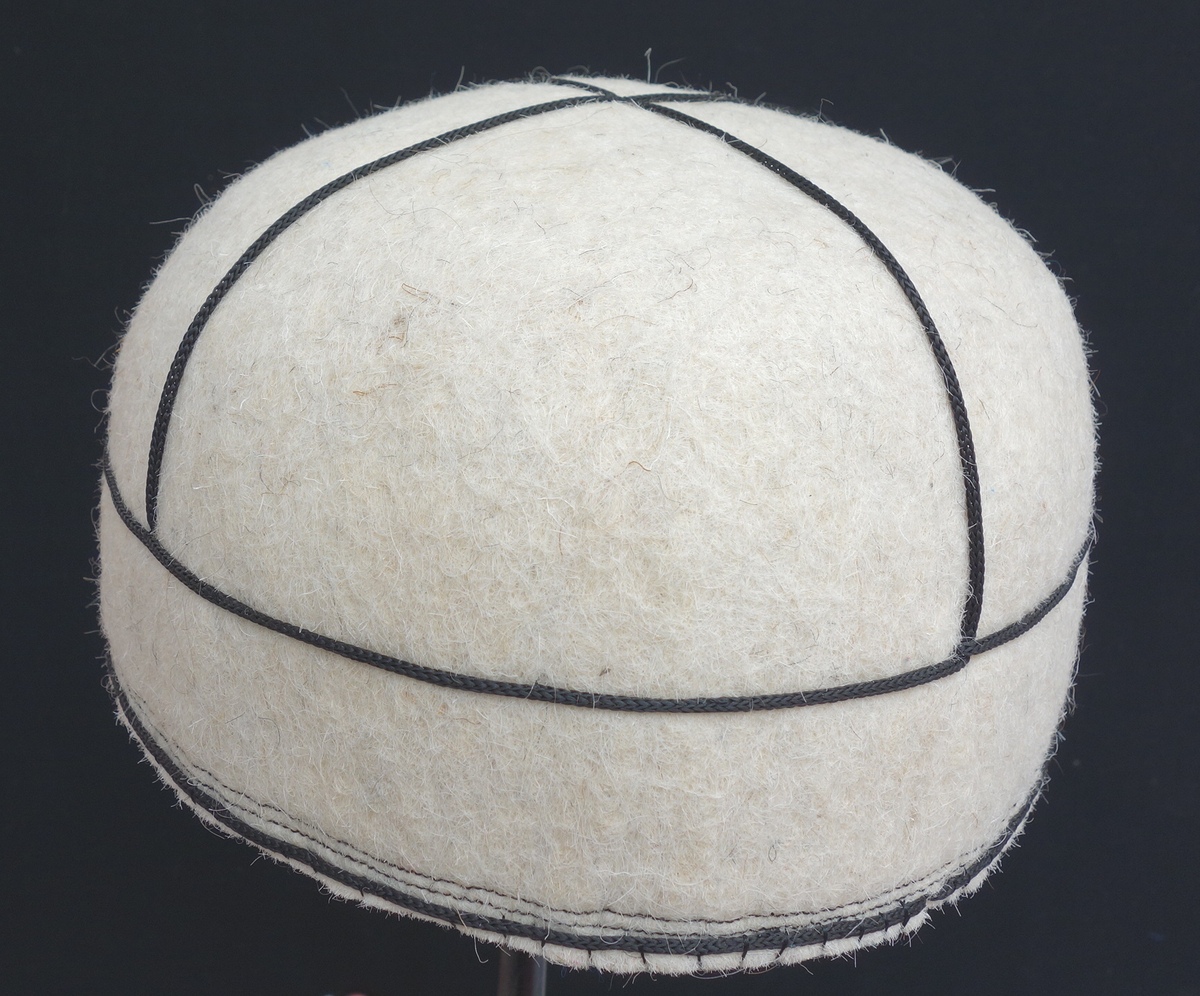
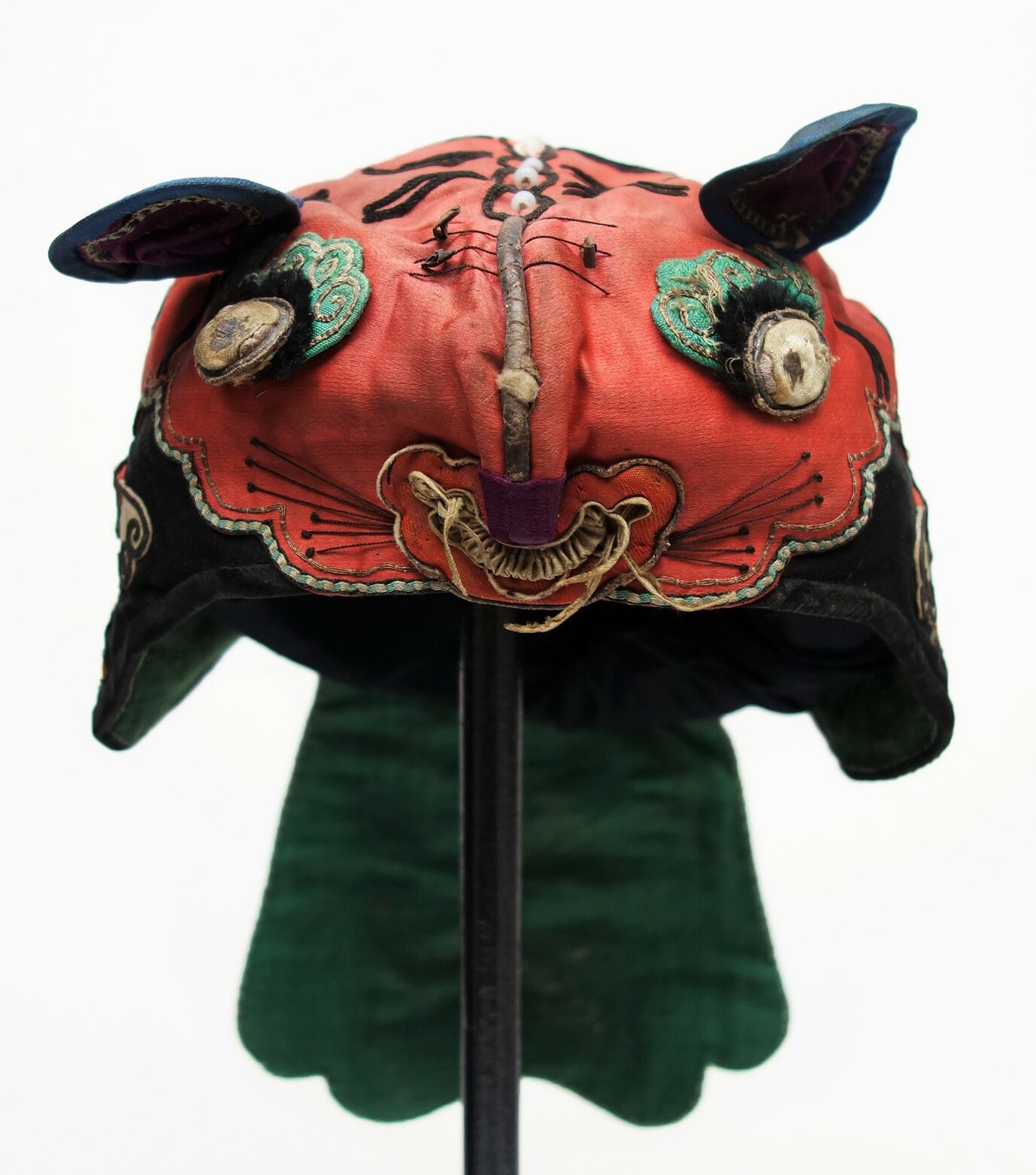 Chinese tiger hat (TRC 2021.2029).February 1st 2022 marks the Chinese New Year under the Zodiac sign of the Tiger. On this occasion, we thought we would share with you our collection of Chinese tiger hats (虎头帽 - Hu Tou Mao), as they are both representative of this year’s lucky animal, the tiger, and are commonly worn for New Year festivities.