• F1
  • F3
  • F2
  • F4

On Tuesday, 21 April, Beverley Bennett and Susan Cave wrote in connection with the current TRC exhibition on American Quilts about the introduction of the so-called Crazy Quilts in the late nineteenth century:

By the last decade of the 19th century, cosmopolitan women began abandoning their familiar quilt patterns. The simplicity and order of the Log Cabin quilt gave way to the disorder and complexity of the Crazy Quilt. It was all about adorning their Victorian parlours in a new aesthetic era where design became the major focus rather than the traditional utility. Oriental rugs, exotic jardinières, bric-a-brac, stuffed animals and talking budgerigars cluttered up their interiors along with heavily carved dark furniture.

American crazy quilt, late 19th century (TRC 2019.2925).American crazy quilt, late 19th century (TRC 2019.2925).

The 1876 Centennial Exhibition in Philadelphia welcomed exhibits from all over the world (including embroidery from Holland!), but many of the ten million visitors were most fascinated with the exotic of the Orient, namely the Japanese Pavilion. Fans, paper lanterns, ceramics, painted birds on velvet textiles were embraced by quilters, artists and designers alike who found the asymmetrical designs fresh and exciting. Within a few years, those designs were embroidered all over Crazy Quilts.
On Friday, 16 April 2020, Beverley Bennett and Susan Cave wrote:

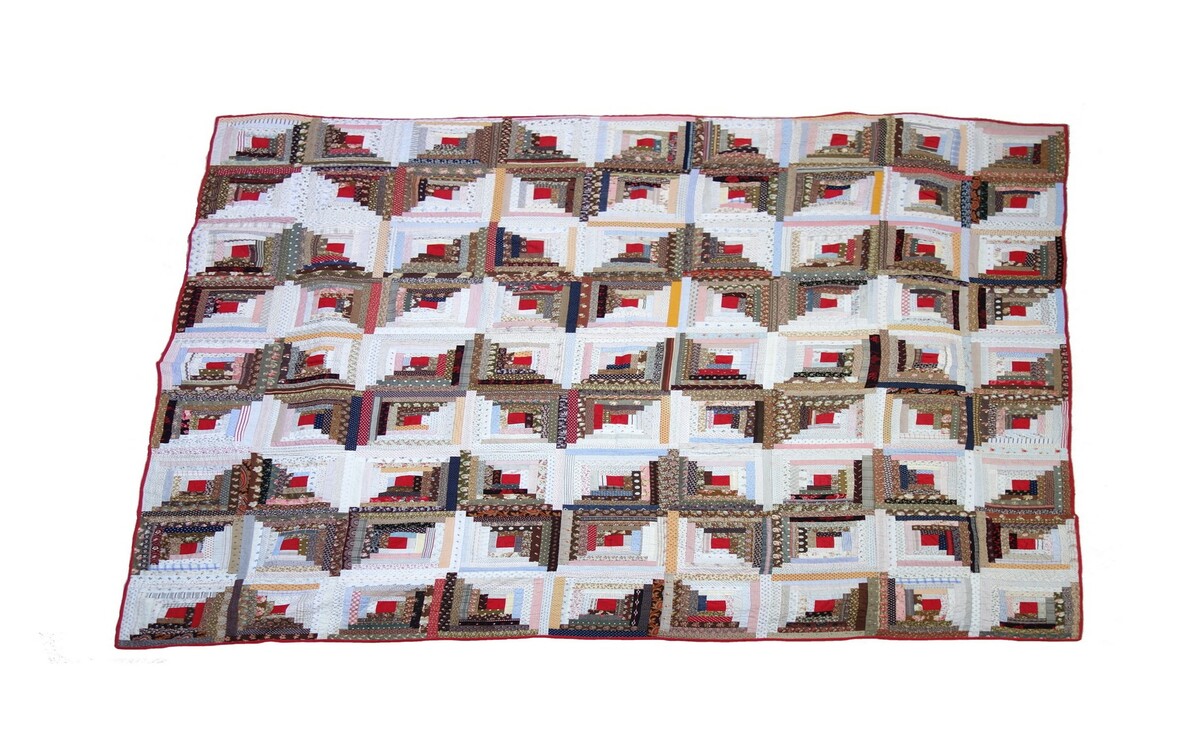
The Log Cabin pattern is one of the two most popular patchwork designs of the nineteenth century. The other is the Crazy Quilt which we will deal with next week. The Log Cabin is a family of patterns rather than one single design. It is simple to construct and there are an infinite number of variations. The TRC has several examples of this quintessential American design, but only one from the 1880’s era (TRC 2019.2404). The more recent TRC examples show a continuum from this early time, always reflecting when they were made by the fabric used.

Log cabin coverlet, USA, 1880's (TRC 2019.2404).Log cabin coverlet, USA, 1880's (TRC 2019.2404).

The actual design evokes the spirit of Abraham Lincoln, who promoted the pioneering values of the American frontier. The logs, stacked around the central fire of the household, signify a land built from hard work, humility and freedom. Millions were made in the late 19th century as the blocks were easy to construct. Women who could neither read nor write could easily work out patterns based on the light and dark of their fabric. Some women dyed fabric with leaves, berries or vegetables to get tone. The fabric scraps might have come from pyjamas, dressing gowns, or old shirts and dresses.

Among the embroidery samplers kindly given to the TRC in Leiden by Betteke Boele-Vogelesang on the 8th April, were a few that were made in the Berlin wool work style (for more information on this gift click here). Since then, we have had several requests for more information about these pieces.

School sampler by Minke Siemen (c. 1870, The Netherlands; TRC 2020.1630)School sampler by Minke Siemen (c. 1870, The Netherlands; TRC 2020.1630)

Berlin wool work, or briefly Berlin work, is a style of embroidery that is normally associated with the use of woollen yarn (tapestry yarn) on canvas or on an even weave cloth (generally in either linen or cotton). The same charts for this type of embroidery were used for beading and knitted forms. This type of work was traditionally carried out in many colours to produce intricate, almost three-dimensional effects.

On Monday, 13 April  2020, TRC volunteer and TRC Facebook guardian, Shelley Anderson wrote:

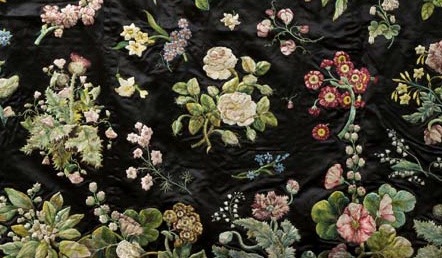
The lovely poppies printed on cotton published on 12 April on the TRC homepage, reminded me of a time when embroidered flowers were considered as much a science as a craft. In the eighteenth century there was a fashion for needle painting. Skilled embroiderers would meticulously reproduce an oil painting using embroidery and shaded silk threads. And one of the most skillful and celebrated needle painters was a woman named Mary Delany (1700-1788), famous for her botanical needlework.

Example of needlework by Mary Delany.Example of needlework by Mary Delany.

On Monday, 13 April 2020, the two co-curators of the TRC American Quilts exhibition, Beverley Bennett and Susan Cave, wrote:

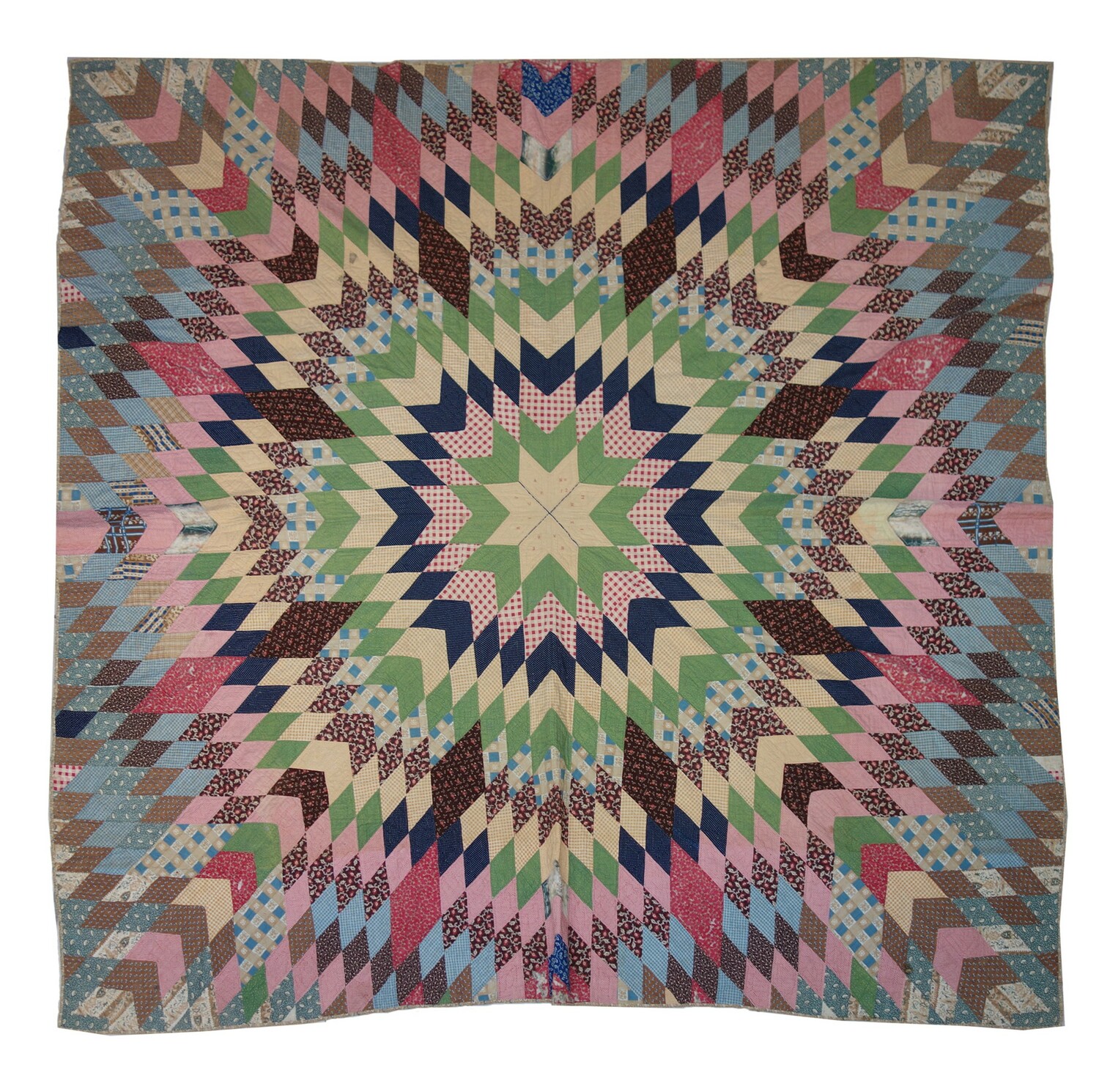
When a quilt arrives at the TRC it usually comes with some provenance. The Starburst quilt (TRC 2018.3119) arrived labelled “pre-Civil War”. When we examined it we could see the brown calicoes from the 1840’s and the soft early pinks of the 1850’s. From a distance it looked amazing, but on closer inspection it told a different tale!

Starburst quilt, USA , c. 1860's (TRC 2018.3119).Starburst quilt, USA , c. 1860's (TRC 2018.3119).

Yes, the bulk of the quilt was early, the pattern was a common one of the time, but one of the brown fabrics was too bright, too uniform and too ‘new’. Serendipitously, we even had a blue version of the exact fabric in our reference section, dated 1988! Someone had found the old quilt, then mended it with a fabric that vaguely looked like the original.

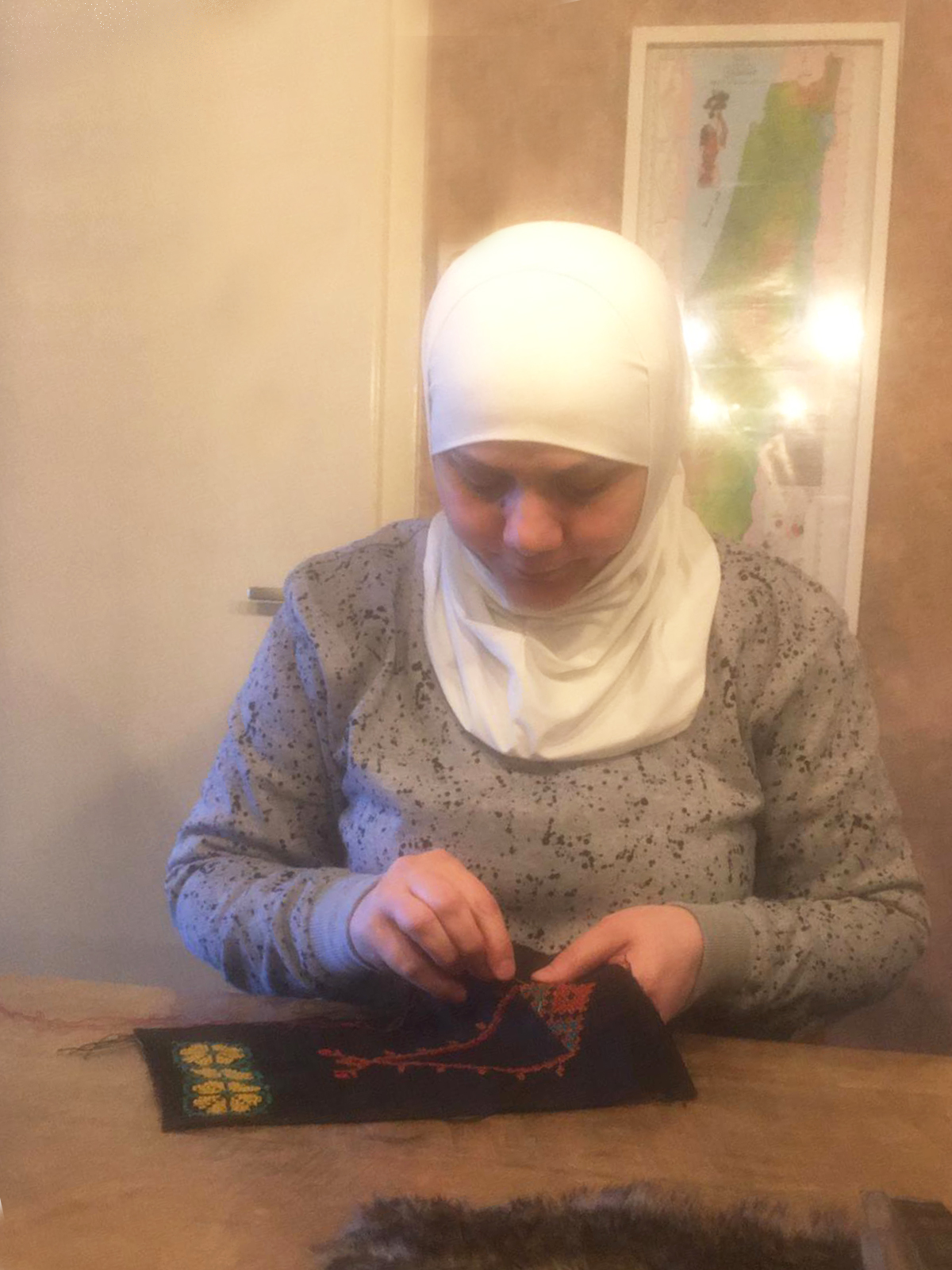
Ms Fatima Abbadi is an enthusiastic user and follower of the TRC. She is teaching Middle Eastern embroidery to Arab women in Capelle a/d IJssel, near Rotterdam (see the TRC blog). She wrote on 12 April 2020:

On the 16th of March the Dutch government announced a total lockdown of all public activities, schools and social gatherings due to the Coronavirus outbreak. People were confined in their homes with no possibility of going out, except for essential necessities in order to keep people safe and away from any possible contagion.

This strange feeling of isolation and exclusion from the surrounding environment made me focus more on my various artistic projects, such as embroidery and photography and on how I could help the surrounding communities.

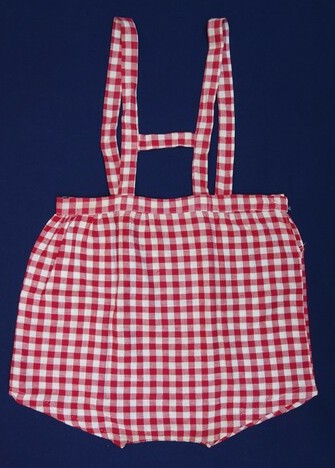
The TRC collection includes a small number of cloths and garments made of gingham cloth. When talking about gingham, some people conjure up images of Dorothy in The Wizard of Oz or perhaps typical ‘country’ style cloth associated with both Europeans and Americans. There are others who talk about the gingham kit of Manchester United (2012-2013). By the way, not all United fans were impressed: "Is it a table cloth?" In Holland it is often called Brabants Bont and often associated with table cloths and tea towels. Personally I think of English school uniforms and, in particular, summer dress versions from my youth.

Young child's shorts made of gingham cloth, The Netherlands, 1940's (TRC 2010.0576).Young child's shorts made of gingham cloth, The Netherlands, 1940's (TRC 2010.0576).

But what exactly is gingham?

Classic 20th century gingham is generally defined as being an even, tabby-weave material in cotton with woven checks that are of an equal size. These checks are normally produced using dyed yarns in only two colours, white with red, blue, green, yellow, purple, black, etc. Some writers also insist that the cloth has to be identical on both sides.

But the story of gingham is more complicated than the above definition indicates. It would appear, for example, that the originally gingham was not necessarily made of cotton, nor was it checked. This quintessential American and European cloth was not even Western in origin.

The word gingham derives from the Malay word genggang, meaning a striped or checked material, probably in either silk or cotton. Via European companies such as the Dutch Vereenigde Oostindische Compagnie and the British East India Company, this type of cloth was brought to Europe and adapted to local traditions. Many early versions of European gingham were striped, but made of linen.

Search in the TRC website

Contact

Boerhaavelaan 6
2334 EN Leiden.
Tel. +31 (0)6 28830428  
office@trcleiden.org 

facebook 2015 logo detail 

instagram vernieuwt uiterlijk en logo


Bank account number

NL39 INGB 0002 9823 59, in the name of the Stichting Textile Research Centre.

TRC closed until 4 May 2026

The TRC is closed to the public until Monday, 4 May 2026, due to our move to the Boerhaavelaan. The TRC remains in contact via the web, telephone and email. For direct contact and personal visits, please contact the TRC at office@trcleiden.org, or by mobile, 06-28830428.

Donations

The TRC is dependent on project support and individual donations. All of our work is being carried out by volunteers. To support the TRC activities, we therefore welcome your financial assistance: donations can be transferred to bank account number (IBAN) NL39 INGB 000 298 2359, in the name of the Stichting Textile Research Centre. BIC code is: INGBNL2A.

 You can also, very simply, if you have an iDEAL app, use the iDEAL button and fill in the amount of support you want to donate: 


Since the TRC is officially recognised as a non-profit making cultural institution (ANBI), donations are tax deductible for 125% for individuals, and 150% for commercial companies. For more information, click here