

(Gillian Vogelsang, 1 July 2026) Two years ago, I wrote a blog called The Three A’s and Afghanistan, which was about how ideas, patterns and objects, move across the world and always have done so. In that context I mentioned the importance of the three A’s for the TRC’s approach to textiles, namely Adoption, Adaptation, and Acknowledgement.
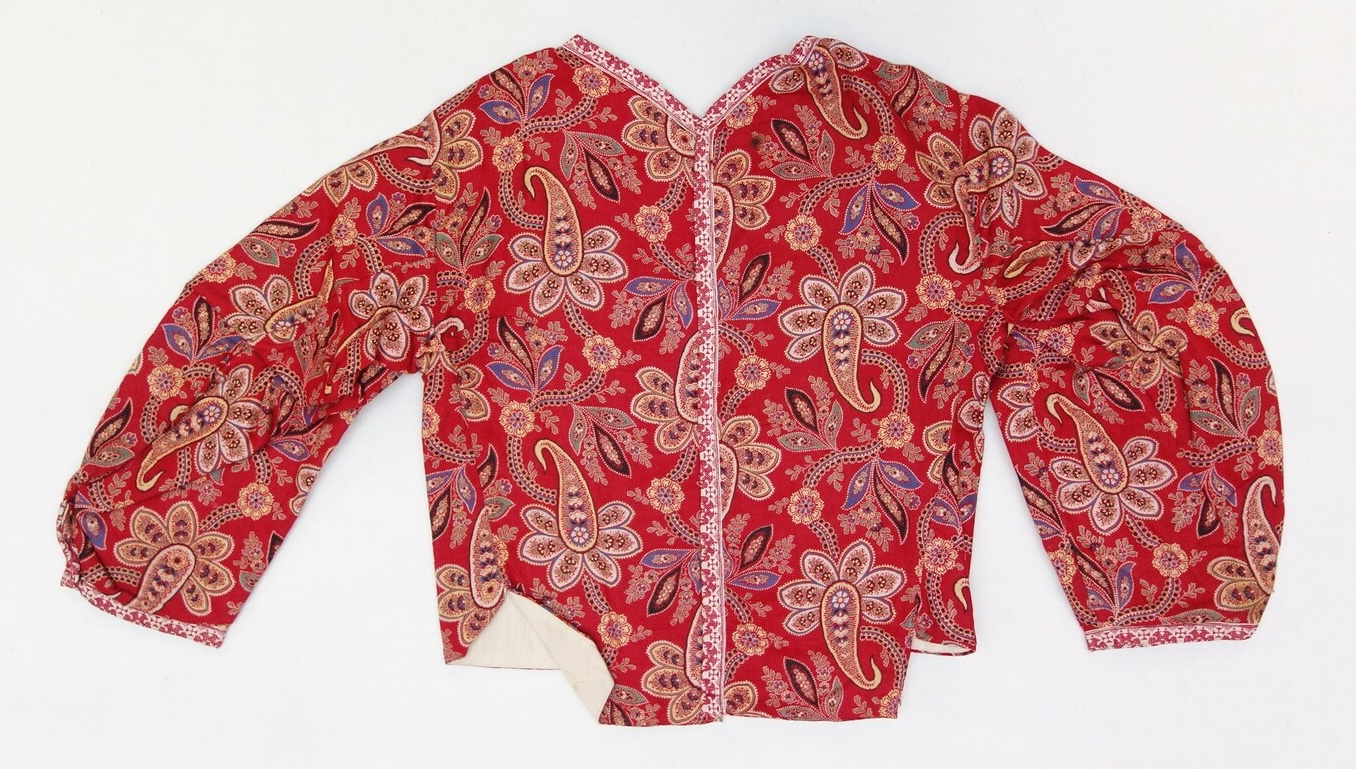 A jacket made from a red cotton cloth decorated with a multi-coloured floral and paisley pattern. From the island of Marken, The Netherlands, 1937 (TRC 2007.0525c).
Basically, the TRC wants to study how, for thousands of years, people have adopted and adapted textiles, clothing forms, techniques, patterns and so on. Adoption and adaptation are two natural and very human processes. A fantastic example of adoption and adaptation is the Paisly motif (buteh), which has a long history in the Middle East and Southwest Asia before being adopted and adapted by the Kashmiri weavers in India and then being exported to Europe, Africa and indeed the rest of the world (including the small island of Marken in The Netherlands.
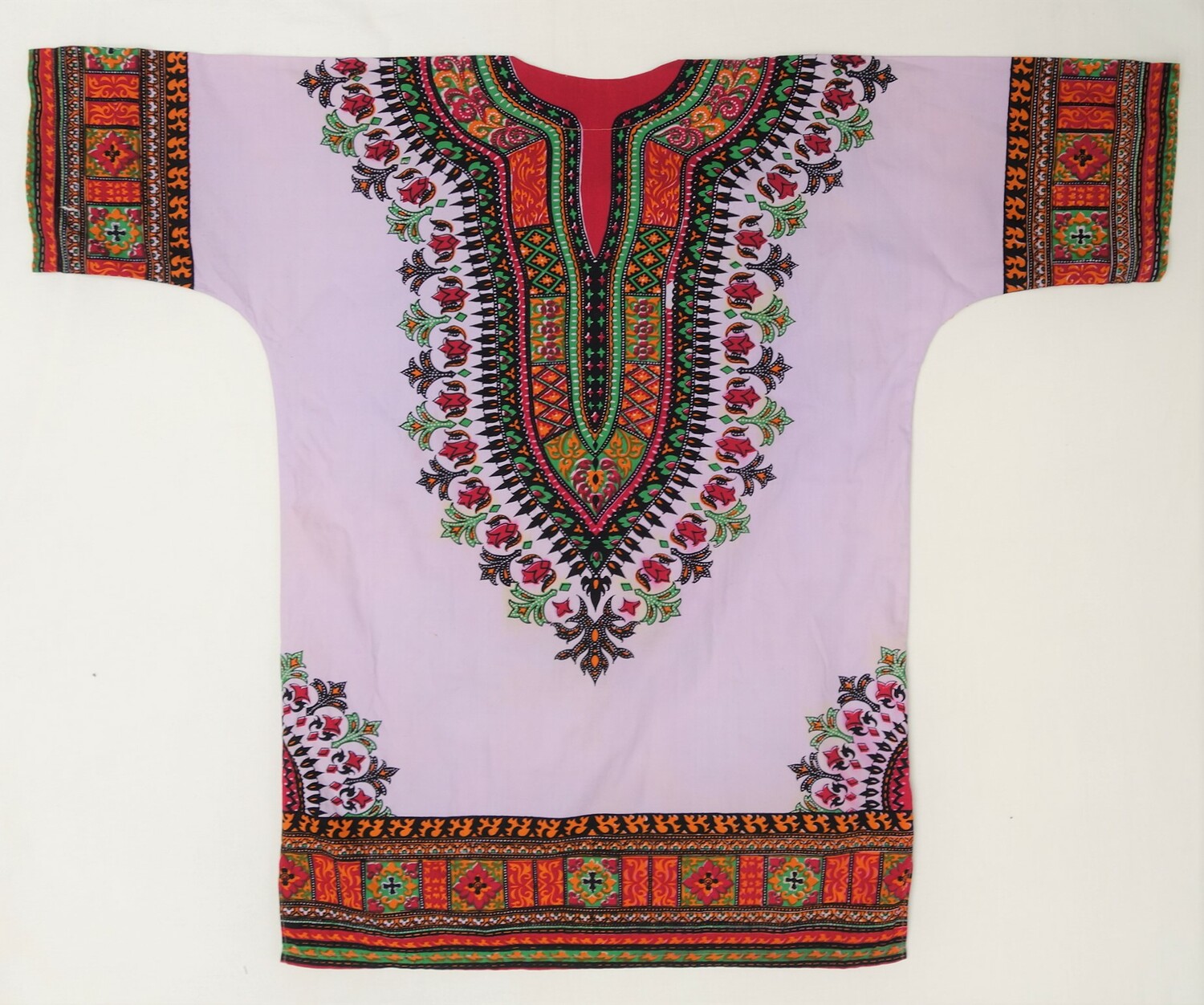 West African shirt (dashiki). The decorative pattern originates from Ethiopia in East Africa. 1960s (TRC 2021.2516).The third A stands for Acknowledgement. We want to identify and acknowledge, as much as possible, the origins of textile and garment techniques, forms, designs and indeed uses. Not doing so, as often occurs in our commercialised, globalised world, can be classed as a form of cultural appropriation.
Well, I have just been talking with fashion designer, Clare Waight Keller, who is also a member of the TRC Board, and with Ray Raymakers, a TRC consultant. We were discussing how commercial groups could make use of the TRC Collection as a source of inspiration. We agreed that we should always bear in mind and emphasise the third A of the TRC approach, namely Acknowledgement. People should always acknowledge the origins of what they are producing.
And there is more: We have a fantastic and diverse collection at the TRC. Almost all of the textiles and garments in our Collection can be seen, touched and handled. Apparently, someone recently alluded to that particular aspect by describing the Collection as a ‘Textile Petting Zoo’, a fantastic image! Yes, we like to touch, feel, and sometimes even to listen to our textiles!
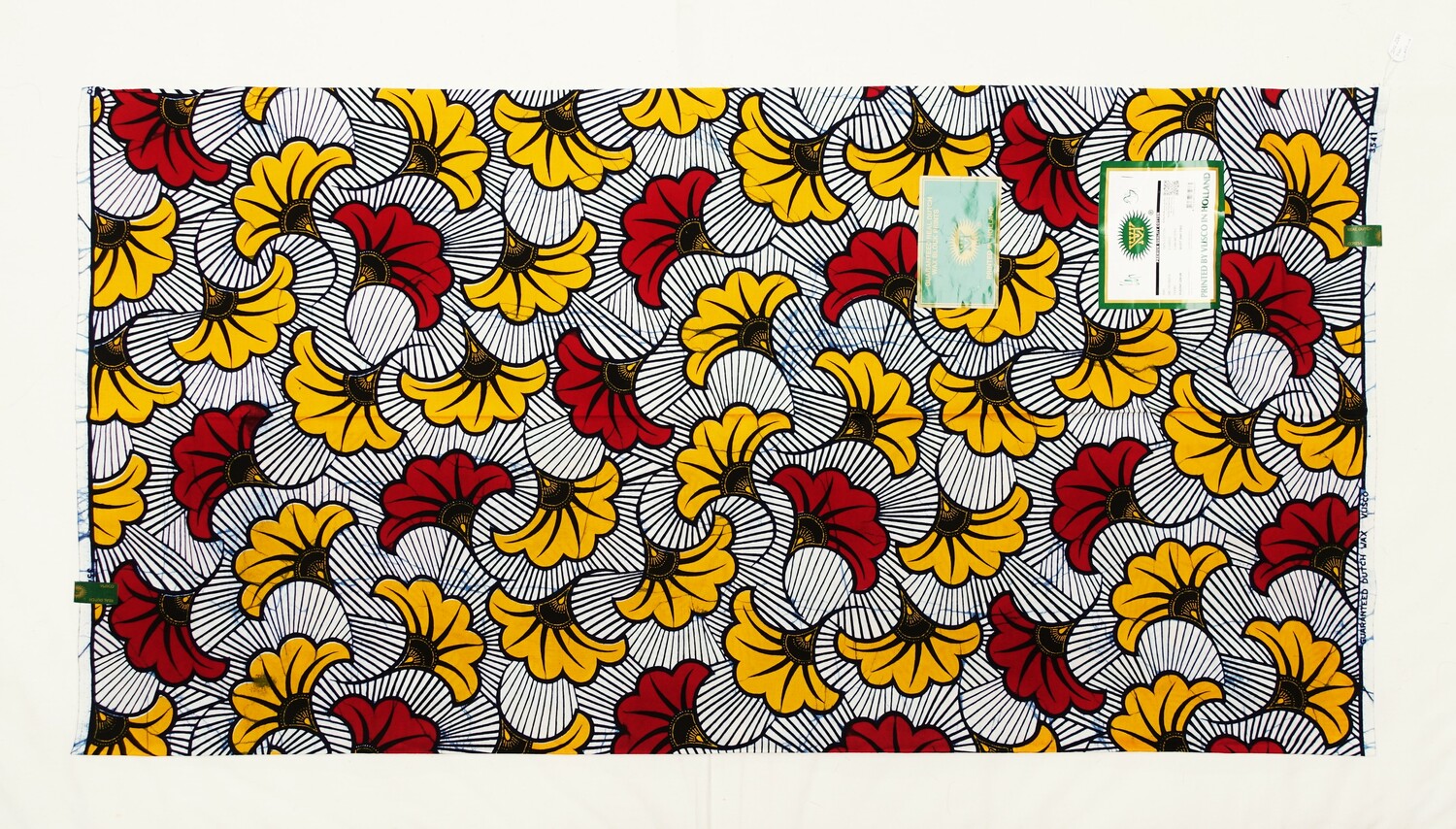 Japanese style ginkgo leaves on cloth produced for West Africa by Vlisco in the Netherlands (2022 (TRC 2022.2261).Clare stressed that Accessibility, yet another A, is one of the key features of the TRC Collection, in comparison to some more traditional museum collections where you sometimes must make an appointment months in advance, in order to see a small number of textiles for a limited period of time. We don’t have to stress how important it is for textile people to feel the objects, to look at them in close-up, to see the inside of a garment to see how it is made, and so forth. Hence her addition of a fourth A for the TRC’s approach: Accessibility.
 Moroccan woman's kaftan made from Japanese obi (woman's sash), 1950s (TRC 2001.0074).And for all those who cannot come to Leiden, due to time, distance or finances, making every item in the collection accessible online in an open access format is also important. This is something we have been working on since the internet became increasingly available. Making as many items available to as many people as possible, not just a few, remains a challenge, but one the TRC is actively meeting! We recently arranged a photographic studio in our new home. We are also continually looking at ways in which we can improve our data base, for example, by having better photographs, more Dinolite microscope (detail) images, using 360o photographs, as well as cross-refering of information.
But, let’s be clear, nothing beats touching and handling the textiles directly, but to do so people will have to come to Leiden! We want the world to know and use the TRC Collection, and we are especially addressing teaching and cultural groups and institutes, but we also want the vast world of textile and garment companies to know what we are doing. Here at the TRC Leiden, is a fantastic and accessible source of inspiration! Please use it!