• F1
  • F4
  • F2
  • F3

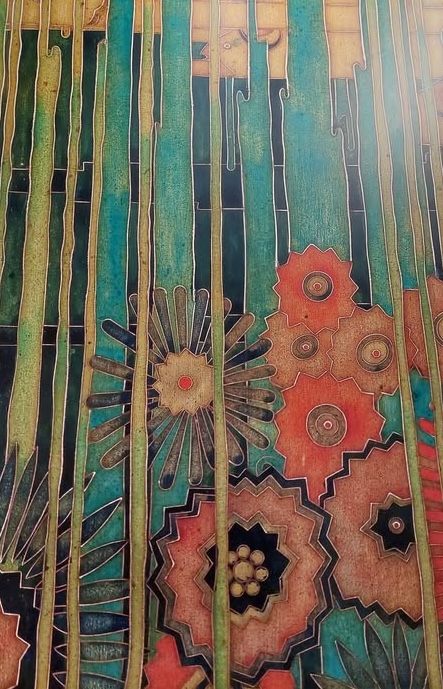
Fig. 1. Copper and enamel Amsterdam School-style panel, by Marie Kuyken. Photograph: S. Anderson.Fig. 1. Copper and enamel Amsterdam School-style panel, by Marie Kuyken. Photograph: S. Anderson.A recent visit to the Museum Het Schip in Amsterdam sent me scurrying to the TRC ‘s on-line catalogue. Het Schip, in the Amsterdam-West neighbourhood, is a historic, architectural gem in glowing red brickwork. Designed in 1919 by Michel de Klerk, this social housing complex included 102 flats, a post office and a school—made expressly for impoverished, working-class families. It pioneered a new expressionist style of architecture called the Amsterdamse School.

The Amsterdam School’s attention to detail encompassed not just buildings, but also the furniture and lighting inside the buildings—including textile components, from the curtains and rugs, to wall paper and upholstery. Some of the textile designers of this style are the subject of Het Schip’s latest exhibition: “Unseen Talent: Women of the Amsterdam School.”

The Dutch designer Marie Kuyken (1898-1988) was one of the Amsterdam School pioneers. Her father set up an engraving and art studio in Haarlem, where he developed his own style of cloisonné, based on much older Byzantine enamelling techniques.

Marie started working as a designer in his studio as soon as she graduated. Her expressionist style won high praise from critics. One critic wrote in 1918 that in her enamel and copper decorative panels “glows the precious inlay in a beautiful, enchanting splendour of colours” (Fig. 1).

In 1926 she and her husband established the Hollandsche Behangselpapierfabriek Haarlem (the Dutch Wallpaper Factory Haarlem), where she again garnered praise for her colourful, energetic abstract designs. The company closed in 1929, but she was immediately offered a job by the prestigious wallpaper company of Rath & Doodeheefver, which had previously bought her designs. She became the company’s only permanent designer.
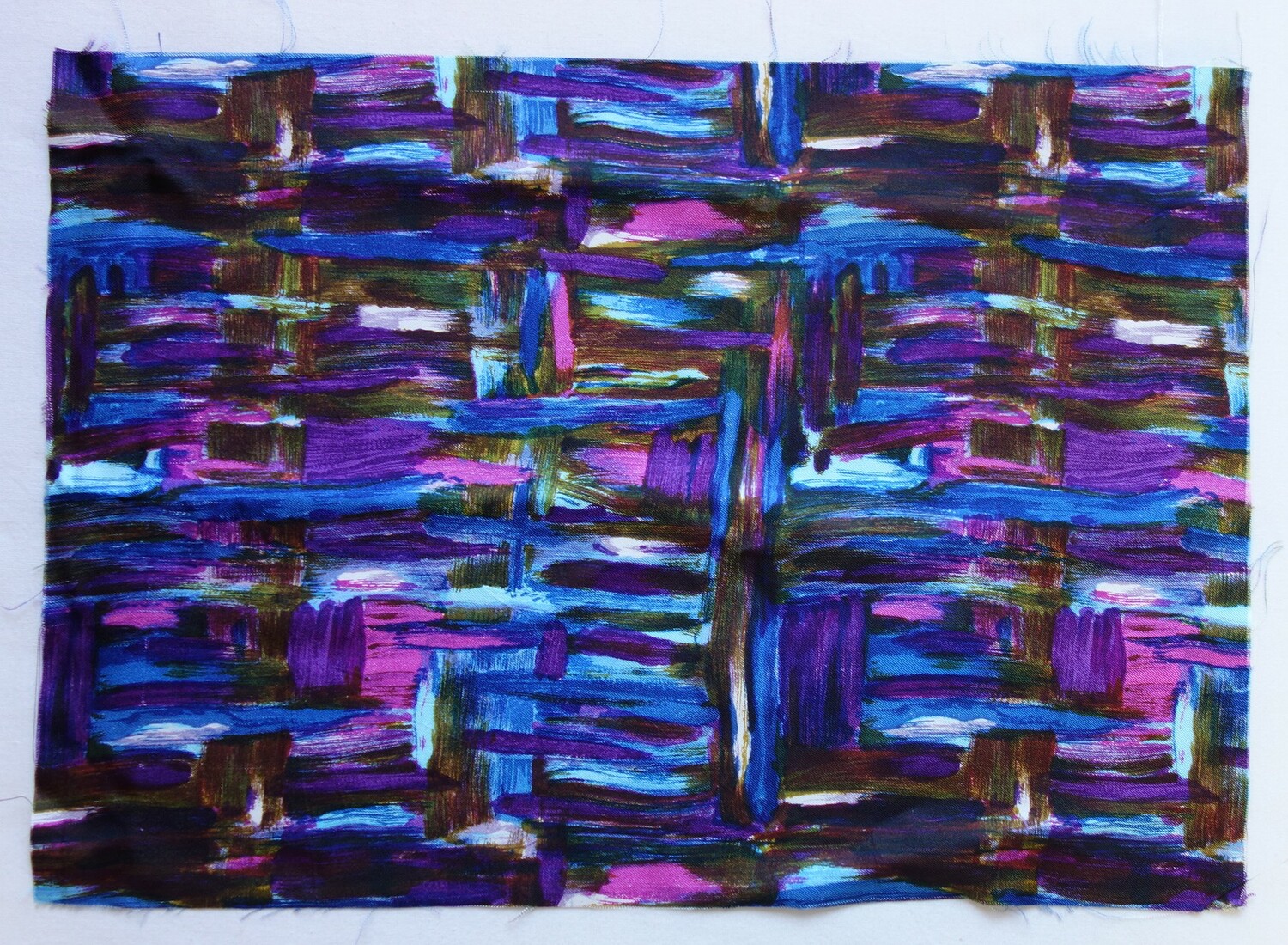
Fig. 2. Cloth sample with an abstract 'painted' design of blobs and thick lines in dark purple, pink, dark blue, mid-blue and light blue, brown and white. Europe, 1950s (TRC 2020.1190Fig. 2. Cloth sample with an abstract 'painted' design of blobs and thick lines in dark purple, pink, dark blue, mid-blue and light blue, brown and white. Europe, 1950s (TRC 2020.1190

Her abstract designs reminded me so much of textile designs from the TRC’s Pepin van Rooijen-Yves Cuvelier collection, such as TRC 2020.1190 (Fig. 2). Donated in 2017, this collection includes garments ranging from cowgirl skirts to Lebanese fashion. It also includes over 7,500 printed, woven and embroidered textile samples collected by artist and fashion designer Yves Cuvelier (1913-2005), who had a passion for 20th century textile designs. Prof.
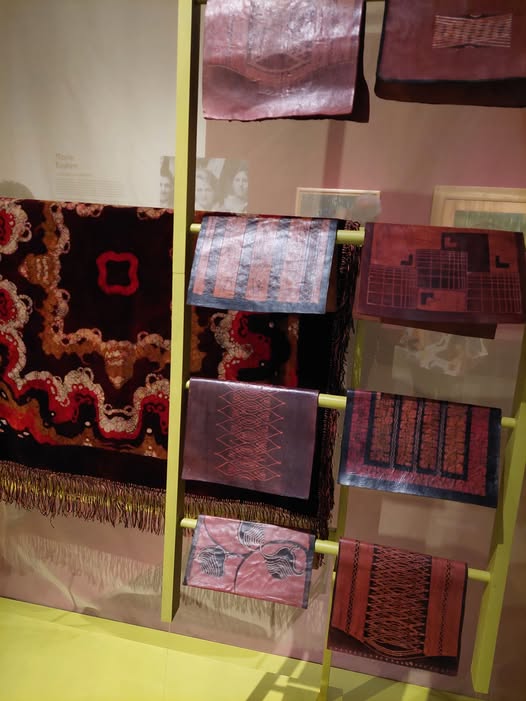
Fig. 3. Leather samples with batik designs. Photograph by S. Anderson.Fig. 3. Leather samples with batik designs. Photograph by S. Anderson.Cuvelier was also involved in Tachism, a French abstract art movement popular in the 1950s that is considered a part of Expressionism, like the Amsterdamse School. Like Kuyken, these textile designs were often made for furnishings, and were inspired both by nature and by abstract or geometric motifs.

There are more women fashion designers in the Unseen Talent exhibition. Several handbags designed by Cathrien Bogtman (1898-1973) are on display. Bogtman made a name for herself especially as a silversmith and jewellry designer, but her handbags were also popular.

Batik was very popular in The Netherlands beginning in the 1900s, and Cathrien Boigtman introduced this resist dye technique to the arts and crafts studio that her brother, Louis Bogtman, set up in Hilversum. She helped develop techniques which used the style, developed for textiles, on velvet and silk, but also on wood and celluloid. The studio became famous for its batik art objects in the Amsterdam School style. In 1925, she and her husband began managing a second studio, where she created designs for lampshades and other objects, and where the entire production of lamps was carried out by women.

Agathe Wegerif-Gravestein (1867-1944) was another Amsterdam School artist. She was also involved in batik, and managed her own batik studio in Apeldoorn. But it was an orange-yellowish banner in the exhibition that most impressed me. She designed this banner for the Apeldoorn branch of the Women’s Suffrage Association.
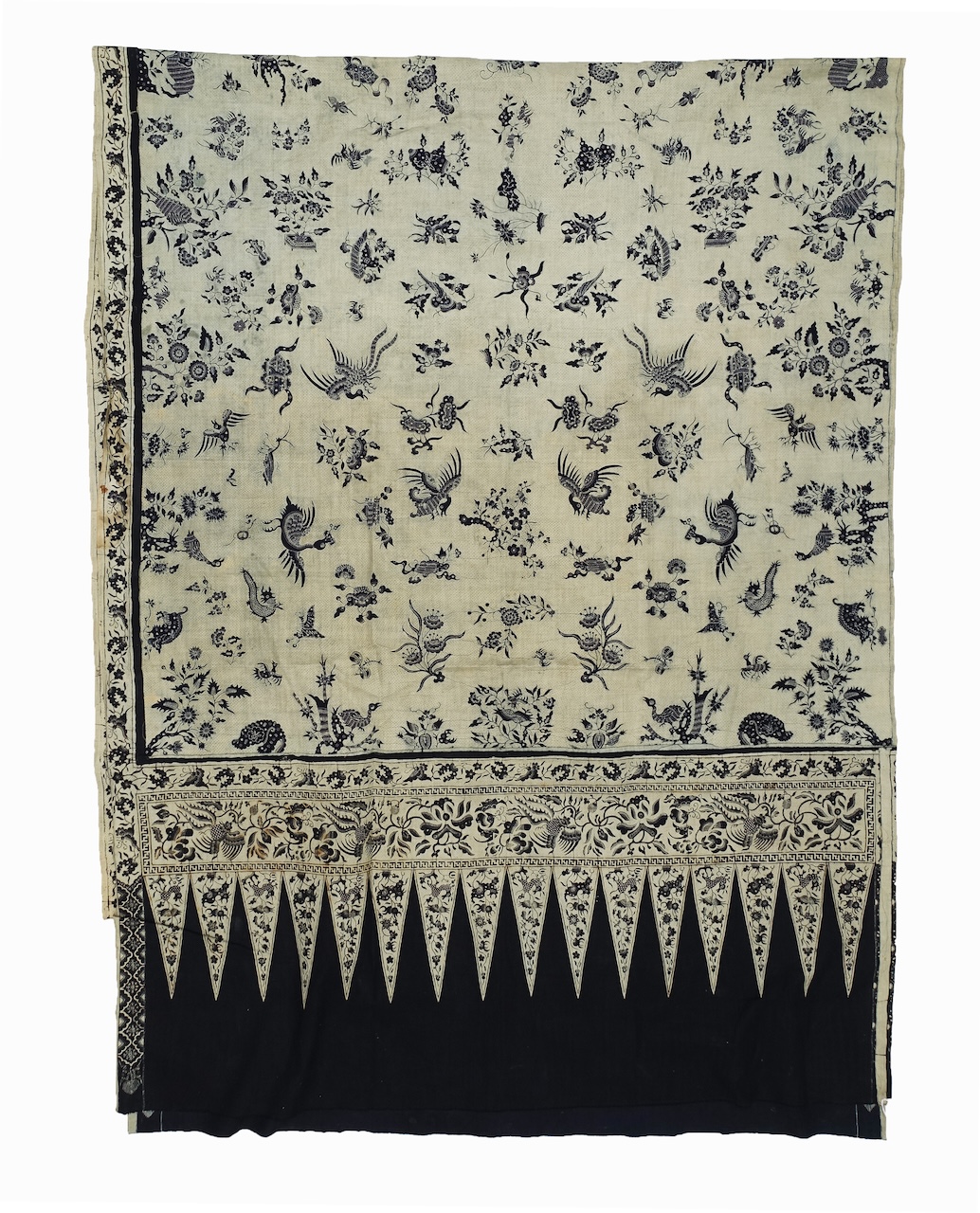
Fig. 4. Long length of batik  cloth with a main field decorated with individual stylised flowers and trees, animals, birds, insects, etc., Java, Indonesia, pre-1930 (TRC 2007.0877).Fig. 4. Long length of batik cloth with a main field decorated with individual stylised flowers and trees, animals, birds, insects, etc., Java, Indonesia, pre-1930 (TRC 2007.0877).It was this banner that was shown in a key demonstration for Dutch women’s right to vote, held on 18 June 1916, on Amsterdam’s Museumplein. The demonstration proved that women’s suffrage was not just popular in elite, urban circles, but throughout the country, among women and men from all walks of life.

I am still exploring the TRC’s large batik collection, which includes over 800 objects, from tools to sarongs, scarves and head coverings. My favourite so far is a beautiful, pre-1930s cotton cloth (270 X 102 cm), from Java (TRC 2007.0877; Fig. 4). It is covered in delicate, stylised birds, flowers and trees, some of them highlighted with applied gold sheet. I think Marie, Cathrien and Agathe would have approved.

Unseen Talent: Women of the Amsterdam School is on until 28 June  2026. For more exhibition details see Het Schip’s website, www.hetschip.nl,  in Dutch and English.

By Shelley Anderson, 20 April 2026
The TRC’s agenda is gradually expanding with a wide range of workshops, study days and courses. Here is the current Agenda.

In the meantime, we would like to draw your attention to some new items: 21-22 May: Lefkara whitework workshops; 13 June: Book market; 12-13 September: Open Monuments Days. For more information and registration: This email address is being protected from spambots. You need JavaScript enabled to view it..

The Textile Research Centre, Leiden.The Textile Research Centre, Leiden.From early 2026, the Textile Research Centre, Leiden, the Netherlands, is offering a total of seven junior and four senior fellowships for up to six months each. The first junior fellow has started her work in Leiden in April.

The fellowships are being sponsored by the Gieskes-Strijbis Foundation, Amsterdam. Fellows are invited to carry out research based on the TRC’s extensive textiles and dress collection of some 53,000 objects (click here for the catalogue). The junior fellows are supervised and assisted by TRC staff; senior fellows carry out independent research.

We are now opening the second round of the fellowships that covers:

  • Two junior positions
  • One senior position

These will be starting in October 2026 (with a degree of flexibility), for a duration of up to 6 months. Applications for these positions should be submitted by email to the TRC by 20 June 2026 (This email address is being protected from spambots. You need JavaScript enabled to view it.)  with the reference: ‘Fellowship programme Junior/ Senior' (depending on the position applied for).

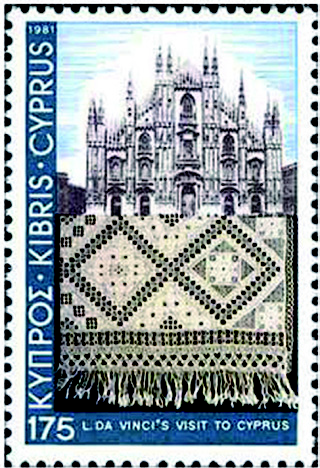
Fig. 1. Postage stamp issued in Cyprus in 1981 to commemorate the 500th anniversary of the visit of Leonardo da Vinci to Cyprus. Above: The Duomo in Milan. Below: A piece of Lefkara lace.Fig. 1. Postage stamp issued in Cyprus in 1981 to commemorate the 500th anniversary of the visit of Leonardo da Vinci to Cyprus. Above: The Duomo in Milan. Below: A piece of Lefkara lace.The TRC Leiden is very pleased to announce a special workshop on Lefkara or Lefkarika lace, scheduled for 21 May, and repeated on 22 May. The workshops are given by Eleni Anemomilou, who is coming especially to The Netherlands to give these and other workshops. Her trip is organised by the Cyprus Handicraft Service. 

Lefkara lace or whitework is one of the embroidery techniques that were traditionally practised in Cyprus. It is a form of cutwork with satin stitch details. It is often classed as a form of embroidered lace. Nelleke Ganzevoort wrote a detailed blog about this fascinating technique five years ago, which the TRC published on 21 December 2021. In 2009, the Lefkara lace technique was included in the UNESCO Representative List of the Intangible Cultural Heritage of Humanity.

Lefkara lace is said to originate from the village of (Pano or Kato) Lefkara, Cyprus, and is locally called tayiadha (compare the Italian term punto tagliato, for cutwork ). Lefkara lace is said to have been developed in the time of the Venetian occupation of Cyprus (1489-1571), when reticella work was introduced to the island and local women copied the whitework's appearance, but using a different technique.

The move to Boerhaavelaan 6 is nearly finished, just a few more weeks and all the rebuilding, painting, furnishing, packing and putting away of boxes will be over! A great relief to all.
I would just like to extend a big ‘Thank You’ to everyone who has made a donation to the TRC moving fund. It made such a difference to have your support, best wishes and interest in what we are doing and plan to do. Please feel free to come and see what you have helped to create - the new and improved TRC is an elegant, early 20th century town villa!

Inevitably, we continue looking for help with different projects, and any further financial assistance will be greatly appreciated.

The TRC will open again to the public on Monday 11th May, but in the meantime, workshops, study days and lectures are already being presented. And I can assure you, there is lots more to come!.

Gillian Vogelsang-Eastwood, Director TRC, 4 April 2026.

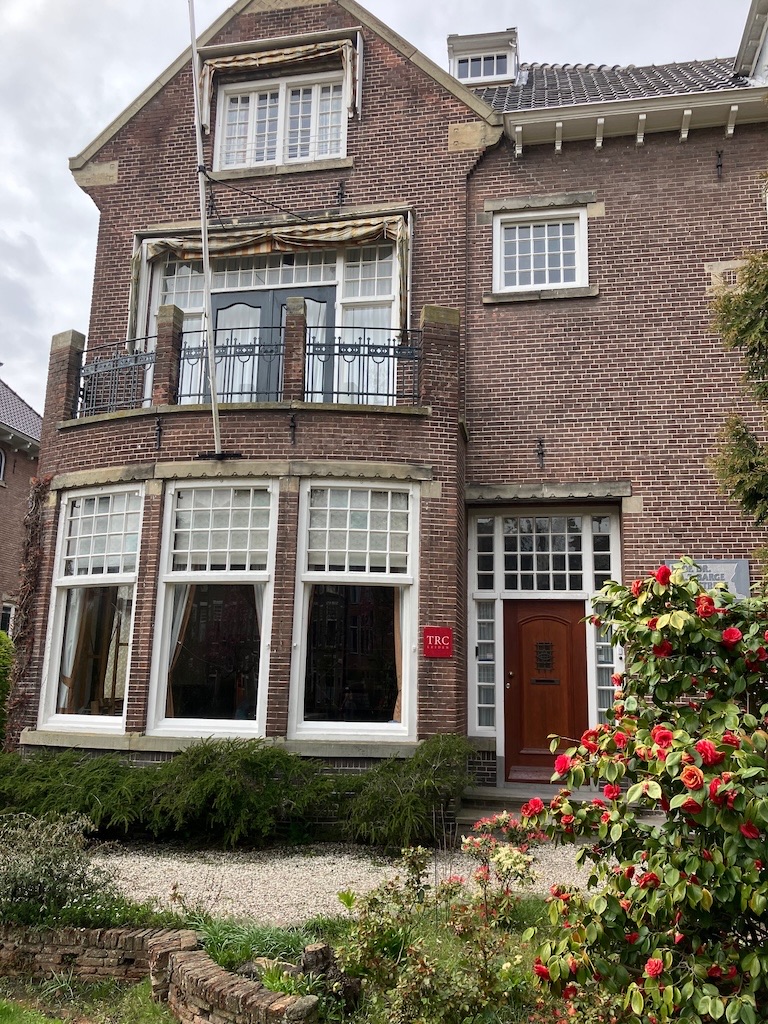
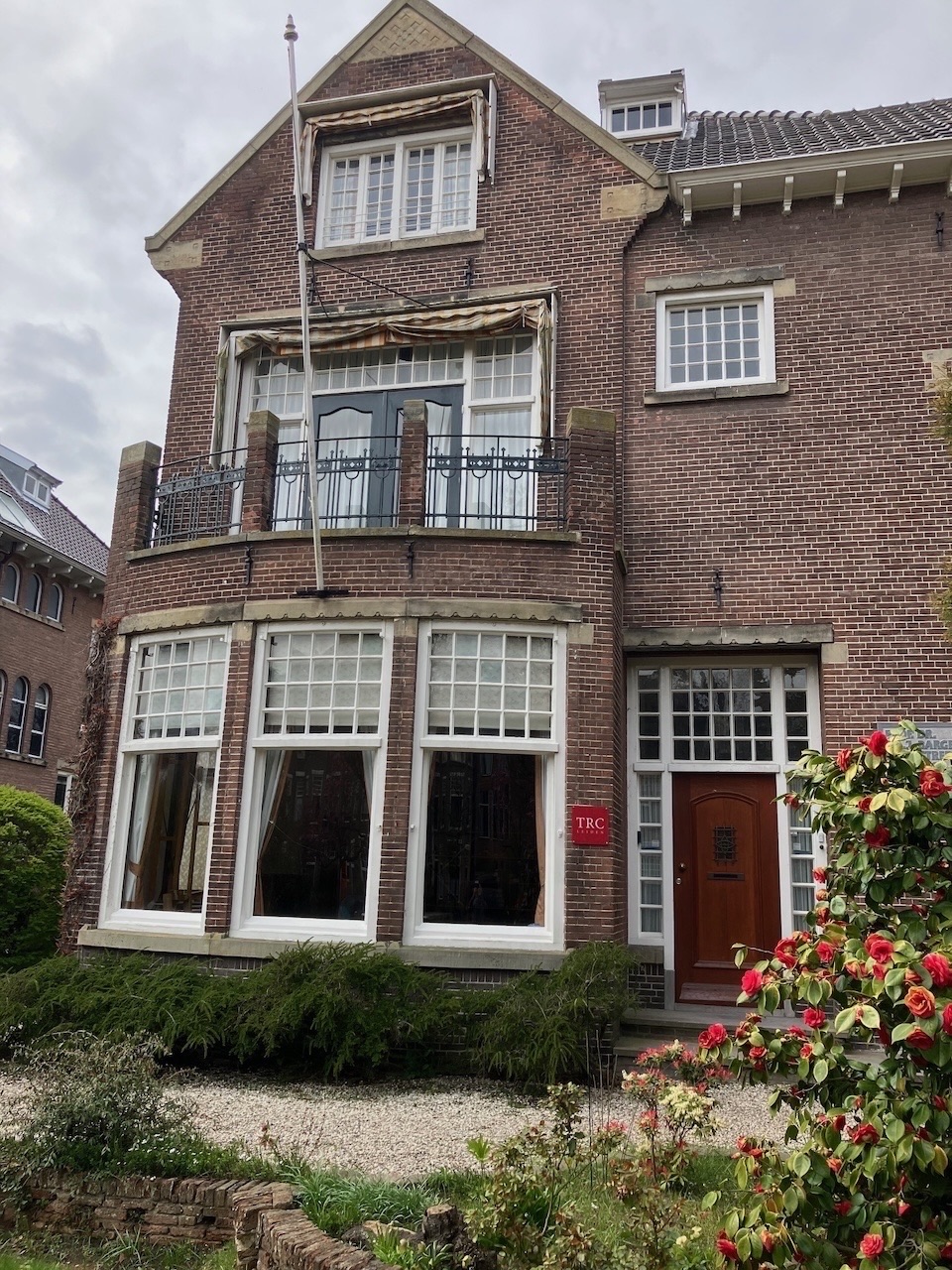
The new home of the TRC, from the garden. Photograph: Willem Vogelsang.The new home of the TRC, from the garden. Photograph: Willem Vogelsang.From April 1st, we are officially the proud tenants of the urban villa Boerhaavelaan 6, Leiden. The house is located some 200 metres from the Central Leiden Railway Station, Oegstgeest exit.

Please have a look at the list of activities below (you can find the provisional list of activities for 2026 here), and let us know which ones you would like to attend. Please register in advance at This email address is being protected from spambots. You need JavaScript enabled to view it..

1 April. Workshop Irish crochet lace

3 April. Study day: Khayamiya appliqué panels from Cairo, Egypt

8 April. Beginners course: Bobbin lace (3)

15 April. Workshop: Basics of band weaving

19 April. Sunday lecture: The history of the paisley motif

20-24 April. TRC Five-Day Intensive Textile Course

29 April. Advanced course: Bobbin lace (4) 

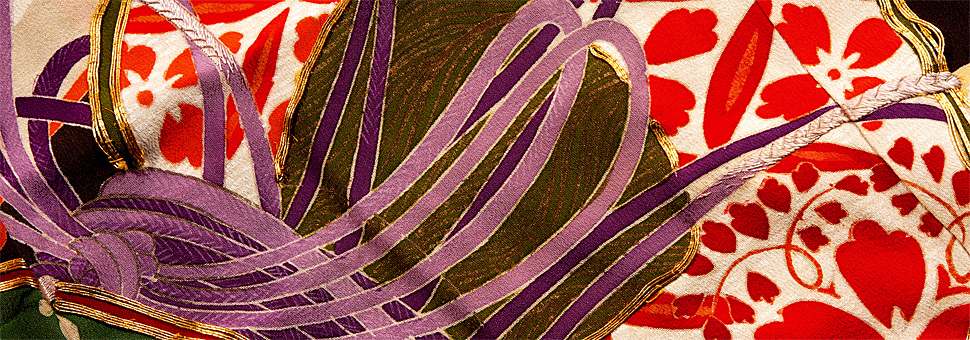
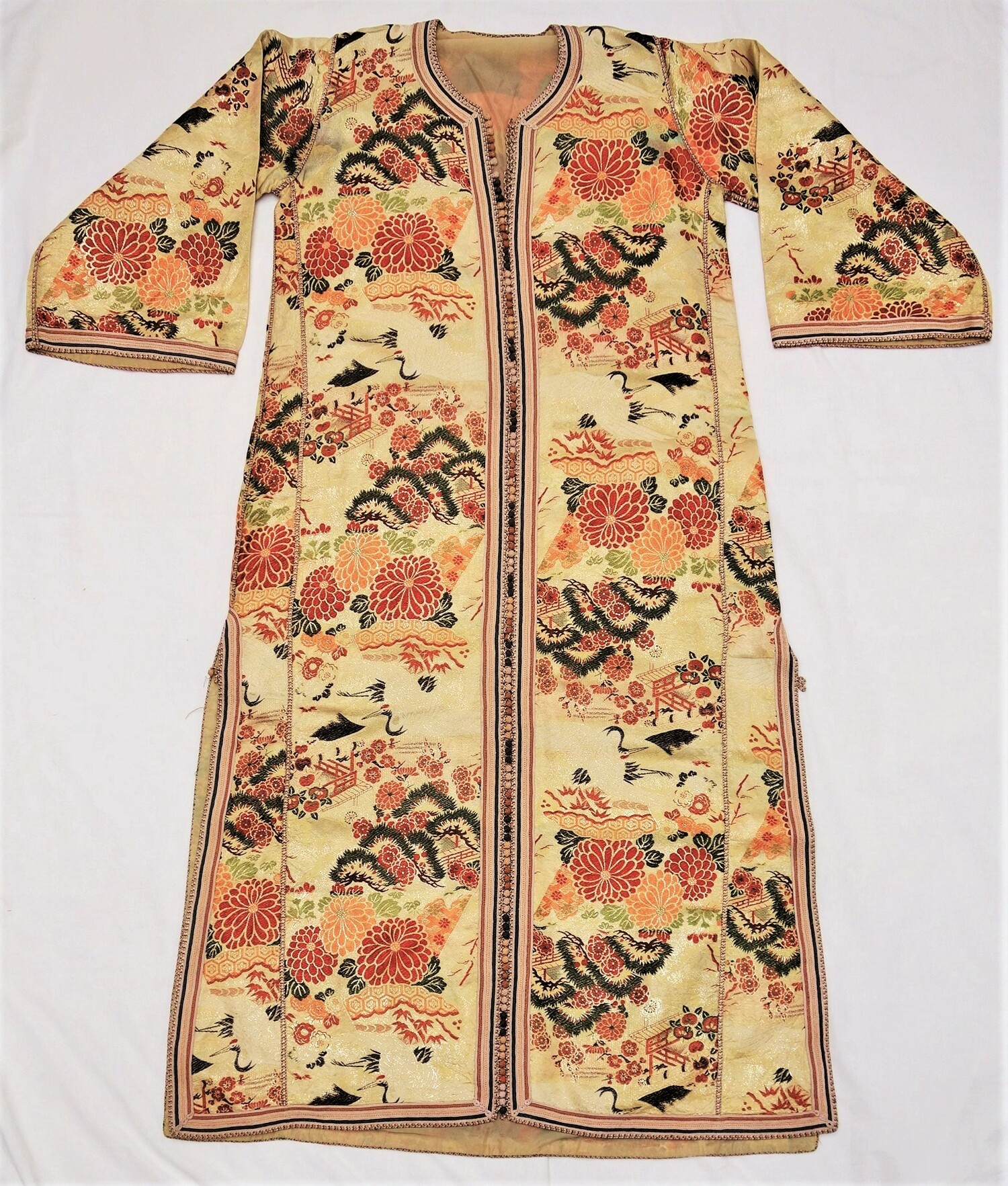
Moroccan kaftan for a woman, made from a Japanese kimono sash (obi), 1950s (TRC 2001.0074).Moroccan kaftan for a woman, made from a Japanese kimono sash (obi), 1950s (TRC 2001.0074).

3 May. Sunday lecture: Sustainability and WWII textiles

6 May. Workshop: Basics of felt making

8 May. Study day: What is embroidery?

13 May. Workshop: Historical handsewing techniques

13 May. Advanced course: Bobbin lace (5)

20 May. Workshop: Palestinian embroidery

27 May. Advanced course: Bobbin lace (6)

31 May. Sunday lecture: Tutankhamun's wardrobe

Yesterday, Friday 20th March, the rental contract for Boerhaavelaan 6 was signed between the owners, the Stichting Monumentenbezit, and the TRC! This may be one small step for mankind, but it is one large step for TRC’s plans for becoming the international hub for textile and dress studies and for making Leiden into the ‘City of Textile Knowledge’ a reality! 

Photograph, from left to right: Mark van den Bos, Director Monumentenbezit, Dr. Gillian Vogelsang-Eastwood, Director TRC and Prof. Bas ter Haar Romeny, Chair of the TRC Board.Photograph, from left to right: Mark van den Bos, Director Monumentenbezit, Dr. Gillian Vogelsang-Eastwood, Director TRC and Prof. Bas ter Haar Romeny, Chair of the TRC Board.

An extensive programme of research, events, and textile outreach is being organised for this year and indeed for the years to come. And the signing of the contract is a very significant moment for us all.

The new premises of the TRC, from the back garden.The new premises of the TRC, from the back garden.Robert Spiegelman is an American friend of the TRC who has been visiting Leiden and the TRC for some years, and has been supporting our work in many ways.  Here is his personal appeal:

I am a huge, and hugely unlikely supporter of the TRC.

Let me explain. I am an American who loves Leiden and spends more than a tenth of my time there every year. A few years back, my curiosity was peaked. I had read about the TRC and while cycling by I met Gillian. It was truly inspirational. She gave me a tour, told me about their work, explained the plan/intention to go from an “academic volunteer run knowledge center” in a nondescript street front location to become everything it could be, a fully professionally run organization and an internationally recognized expert and leader. The dedicated group has done an amazing job.

I was impressed and immediately began making contributions to keep the lights on.

Why do I say “unlikely?” While I love Leiden, it is not my home. I have no interest in fashion and while I suppose textiles and textile history are important, neither was an interest of mine. What impressed me was the importance of the work that was being done, the idea that textiles, fashion, and the textile trade could be used to trace changes in civilization worldwide for several centuries. The parallels are fascinating.

Search in the TRC website

Contact

Boerhaavelaan 6
2334 EN Leiden.
Tel. +31 (0)6 28830428  
office@trcleiden.org 

facebook 2015 logo detail 

instagram vernieuwt uiterlijk en logo


Bank account number

NL39 INGB 0002 9823 59, in the name of the Stichting Textile Research Centre.

TRC closed until 4 May 2026

The TRC is closed to the public until Monday, 4 May 2026, due to our move to the Boerhaavelaan. The TRC remains in contact via the web, telephone and email. For direct contact and personal visits, please contact the TRC at office@trcleiden.org, or by mobile, 06-28830428.

Donations

The TRC is dependent on project support and individual donations. All of our work is being carried out by volunteers. To support the TRC activities, we therefore welcome your financial assistance: donations can be transferred to bank account number (IBAN) NL39 INGB 000 298 2359, in the name of the Stichting Textile Research Centre. BIC code is: INGBNL2A.

 You can also, very simply, if you have an iDEAL app, use the iDEAL button and fill in the amount of support you want to donate: 


Since the TRC is officially recognised as a non-profit making cultural institution (ANBI), donations are tax deductible for 125% for individuals, and 150% for commercial companies. For more information, click here