
Another interesting, busy and intriguing day at the TRC! We have just had the opening of the TRC’s first exhibition in our new building on the Boerhaavelaan, here in Leiden. The exhibition is about khayamiya, a form of appliqué from Egypt.
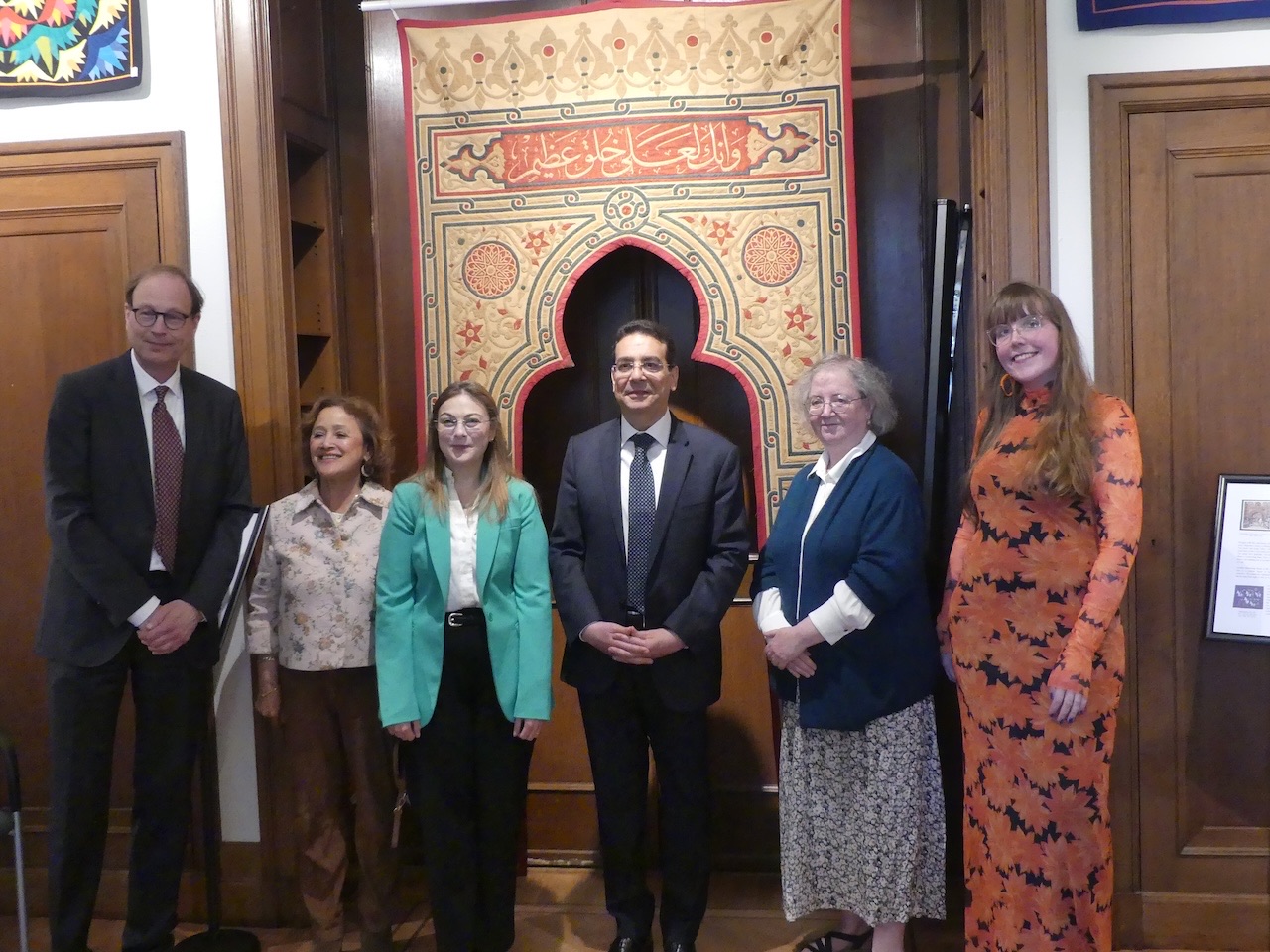 From left to right: Prof. B. ter Haar - Romeny, Chairman TRC; Mrs Nanda Jagusiak, guest; Mrs Mariham Youssef, Deputy Head of Mission, Egyptian Embassy;; H.E. Mr. Emad Magdy Hanna Kamel, Egyptian Ambassador to the Netherlands; Dr Gillian Vogelsang-Eastwood, Director TRC; Ms. Christina de Korte, co-curator exhibition. Photograph: Mrs Flora Kovacs Wester, TRC Fellow.
Some months ago, we discussed what the first exhibition should be about. It was important that it would represent the activities and collection of the TRC, and add something new to the subject, as well as being colourful! We wanted to start the new exhibition cycle with a warm glow that would leave people feeling intrigued and inspired. It also had to be something that would tell us about how to use our new building and exhibition spaces, not so easy as it sounds as we cannot fix anything to the walls because of the nature of the wall coverings (see a previous blog about a technique that in Dutch is called betengeling).
What could be better than an exhibition about khayamiya from Egypt, especially as one of our interns, Christina de Korte, had just spent several months learning how to make this form of appliqué in the historic Street of the Tentmakers in Cairo? So Augusta de Gunzbourg, our curator and exhibition maker, and Christina joined forces to curate the exhibition.
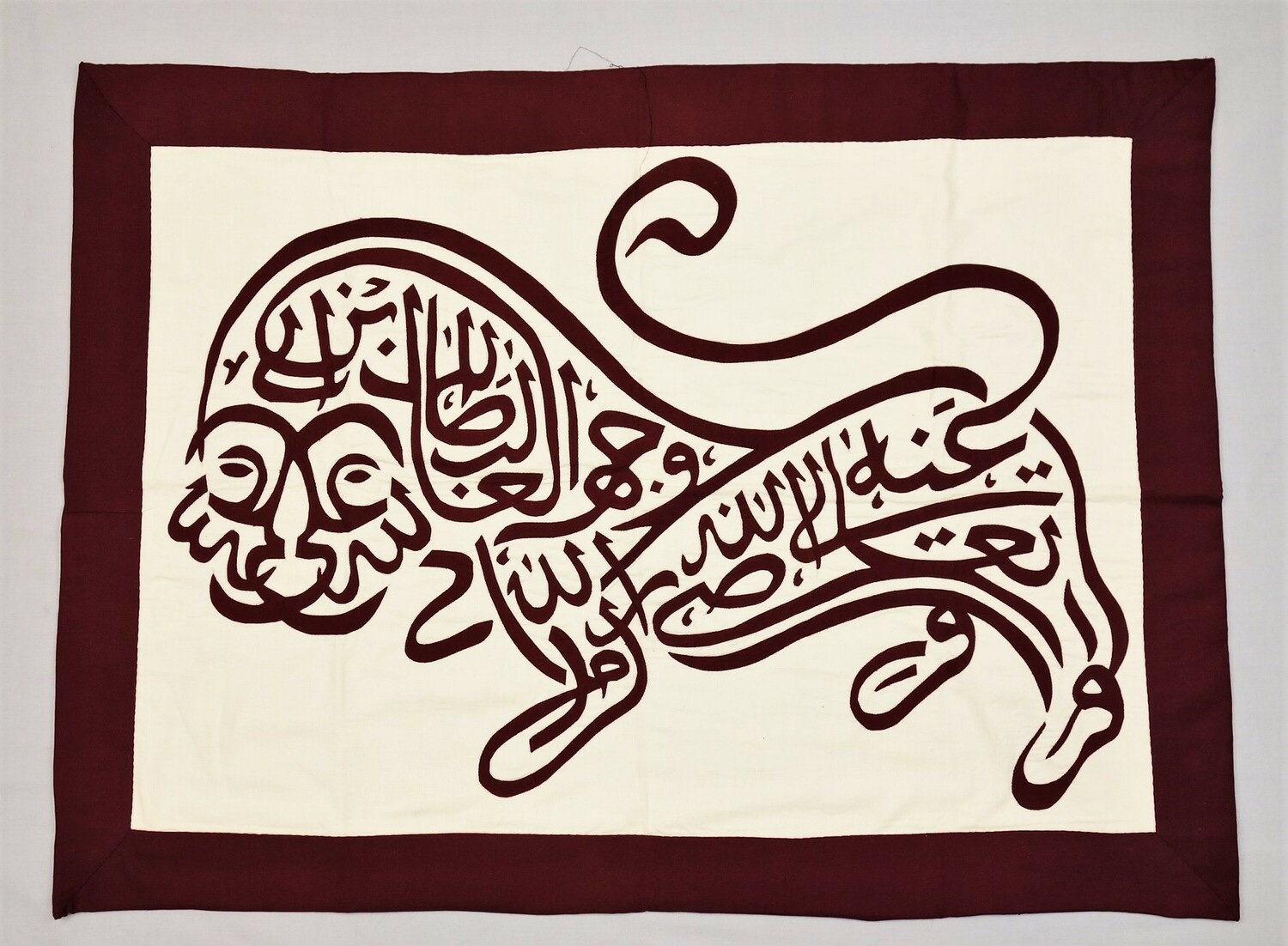 Calligraphic khayamiya in the form of a lion, Cairo, 2013 (TRC 2013.0615).
As part of preparations, we asked if the Egyptian Ambassador to the Netherlands, H.E. Mr. Emad Magdy Hanna Kamel, would be willing to open the exhibition and to our great pleasure he said yes! So, once the date of the opening was fixed, Augusta and Christina spent a busy few weeks getting the objects in order, finishing text boards and object lists, as well as making posters, invitations, etc.
Then there was the shopping list for the tea/coffee (and biscuits) for the start of the afternoon’s event, and for refreshments and snacks afterwards. Lots of planning and activities.
Invitations were sent out and almost 40 people registered for the opening, including old and new friends, as well as people who were simply curious about the textiles and the new TRC building.
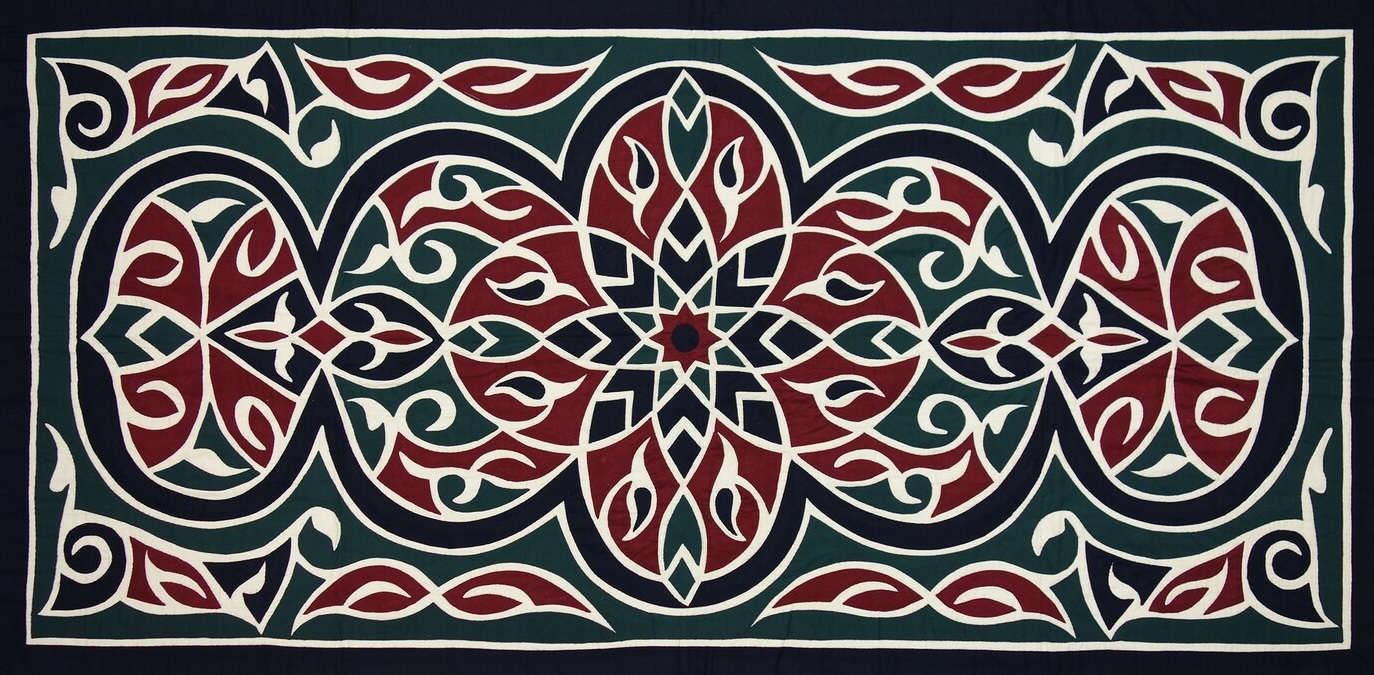 Classic khayamiya panel with Arabesque decoration. Cairo, 2013 (TRC 2013.0436). Once people were seated I welcomed, in my role of director, all our guests to the TRC and spent a little while reminiscing about my first trip to Egypt in 1983 when I bought a single piece of khayamiya (no. 13 in the exhibition), my love of khayamiya and its importance to Egypt. I also mentioned its significance as the subject for the opening exhibition, and finally I talked about the promising future of the TRC.
Then Christina gave a talk about the history of khayamiya, its different types, as well as details about the techniques to produce them. Many of the items on display in her PowerPoint were to be seen in the exhibition.
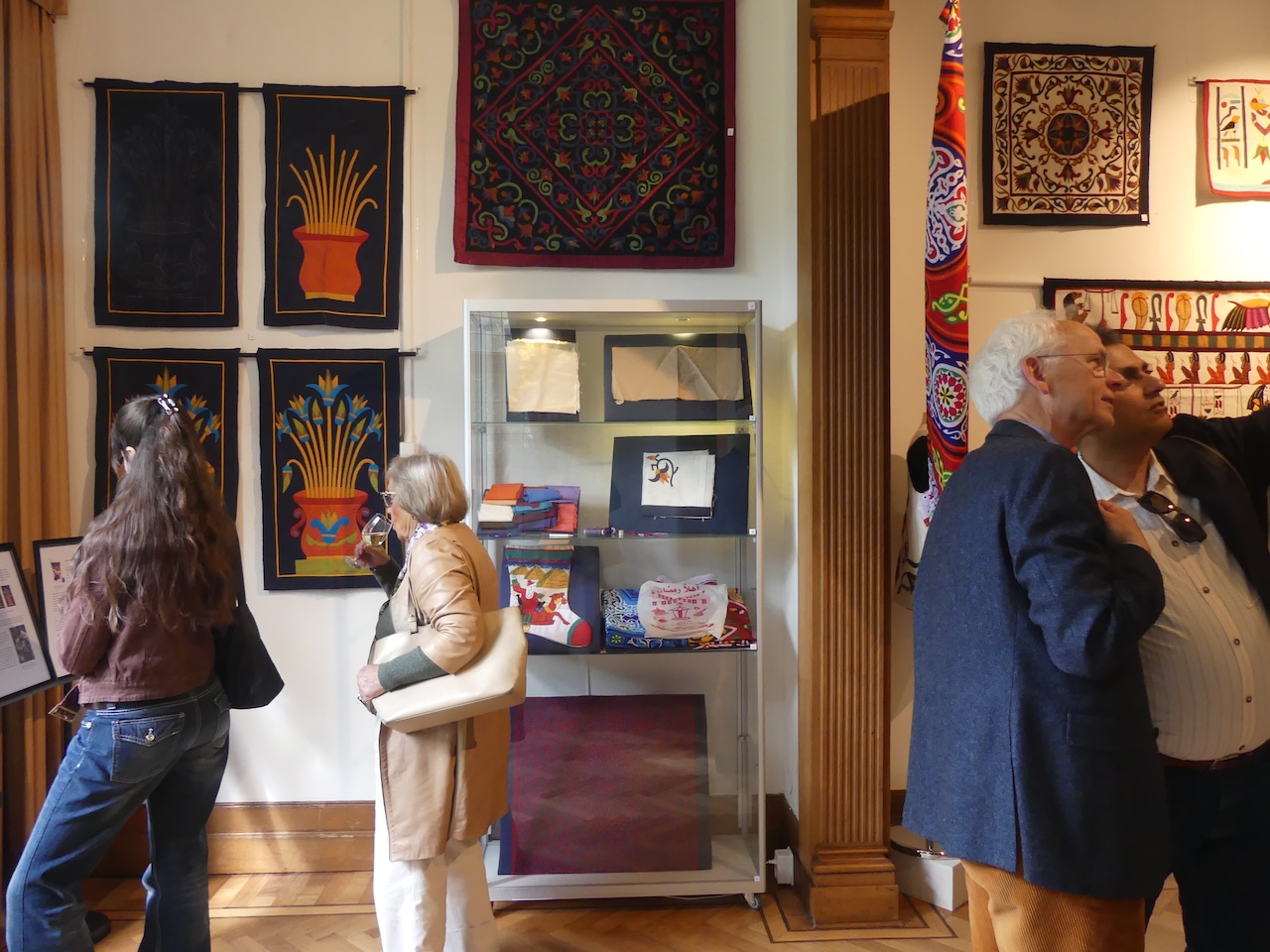 Guests looking at the exhibition. Photograph by Flora Kovacs Wester, TRC Fellow.
One of the questions asked at the end of the talk was did the production of khayamiya have a future? Were there young 'tentmakers' learning the necessary skills and techniques? The answer was a cautious yes. But more needs to be done to help preserve this ancient, constantly developing form of Egyptian material culture and heritage.
The afternoon was completed by the Ambassador officially opening the exhibition and reminiscing about khayamiya, and indeed Egypt as an ancient home for textiles (and, it is rumoured, other monuments such as the pyramids, mosques and churches).
Also present with the Ambassador was Mariham Youssef, the Deputy Head of Mission, and we have agreed that we will shortly have a meeting to discuss how the Embassy and the TRC can work together on khayamiya, Egyptian regional textiles and dress, and various other subjects. Once again, lots to think about.
The exhibition can be admired until the beginning of September. The exhibition will then be made available for other museums and comparable institutes. Please contact the TRC if you are interested.
All in all, a very satisfactory start to the ‘new and improved’ TRC, furthering its role as an international centre for textile knowledge!
Gillian Vogelsang, 12 May 2026.