

 Fig. 1. Boerhaavelaan 6, Leiden, the new home of the TRC.A feature of the TRC’s new home at the Boerhaavelaan 6 (Fig. 1) is a form of batten work (called betengeling in Dutch), namely the use of a wooden framework that is covered with tensioned cloth and paper. These cloth-covered interior walls in B6 date to about 1909 when the house was built.
This technique has been used for hundreds of years to cover both timber and brick-built, internal walls and to protect expensive wall paper or other materials. This technique is also known in other parts of Europe and indeed the world.
Basically it consists of a frame of wooden slats or battens (de tengels in Dutch) which is fastened against the bare wall, which is then covered with linen or jute (the betengeling in Dutch). On top of this there comes a layer of wet paper, which when dried tensions the layer of luxurious wallpaper or cloth placed on top.
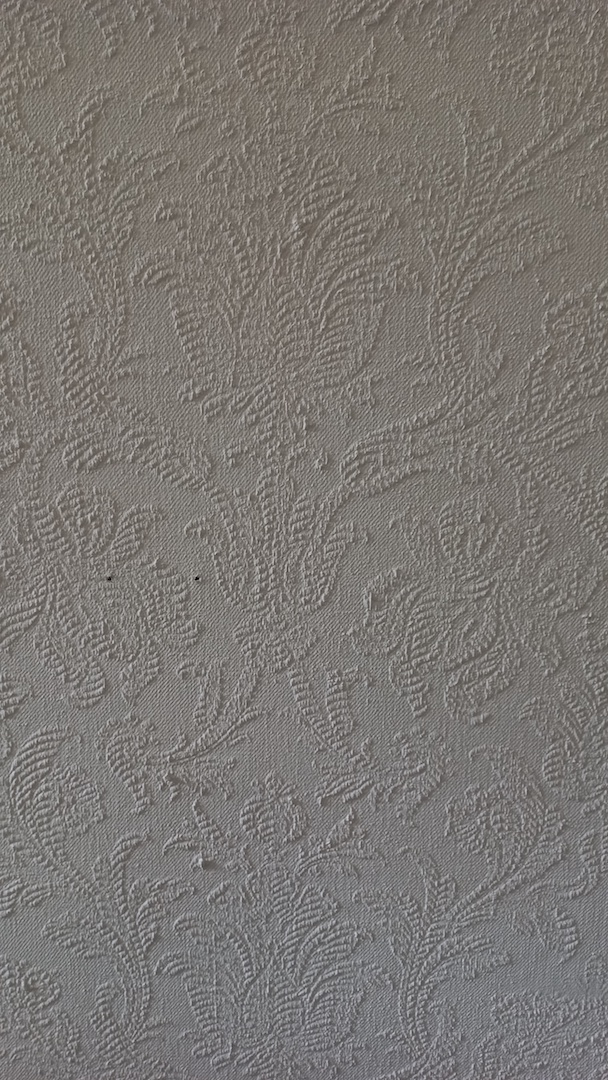 Fig. 2. Detail of the textured cloth covering of one of the walls in the main hall of Boerhaavelaan 6.The origins of this technique are not clear, but it may be noted that in earlier centuries the same system was used, but instead of a cloth top layer, use was made of painted, stained or gilded leather, or, in the 18th century, very expensive, decoratively woven silk.
In ‘ordinary’ houses the under cloth, fastened to the wooden framework, was generally made from linen or jute, sometimes known as hessian cloth, and woven in a tabby (plain) weave with a close structure. The walls clad with cloth in B6 include both textured and/or decorative forms. Whether this is the cloth ground, or the (more luxurious) cloth layer on top of a paper layer, remains to be studied. We hope to tell you soon.
The walls of the main hallway have large, woven isolated sprigs of flowers (Fig. 2). This was an expensive form of wall covering! In contrast, the betengeling in the downstairs nursery (which will eventually become a shop) is a textured form (Fig. 3) later covered with wallpaper (with teddy bears, and we know from the former owners that the room was used as a day nursery, Fig. 4).
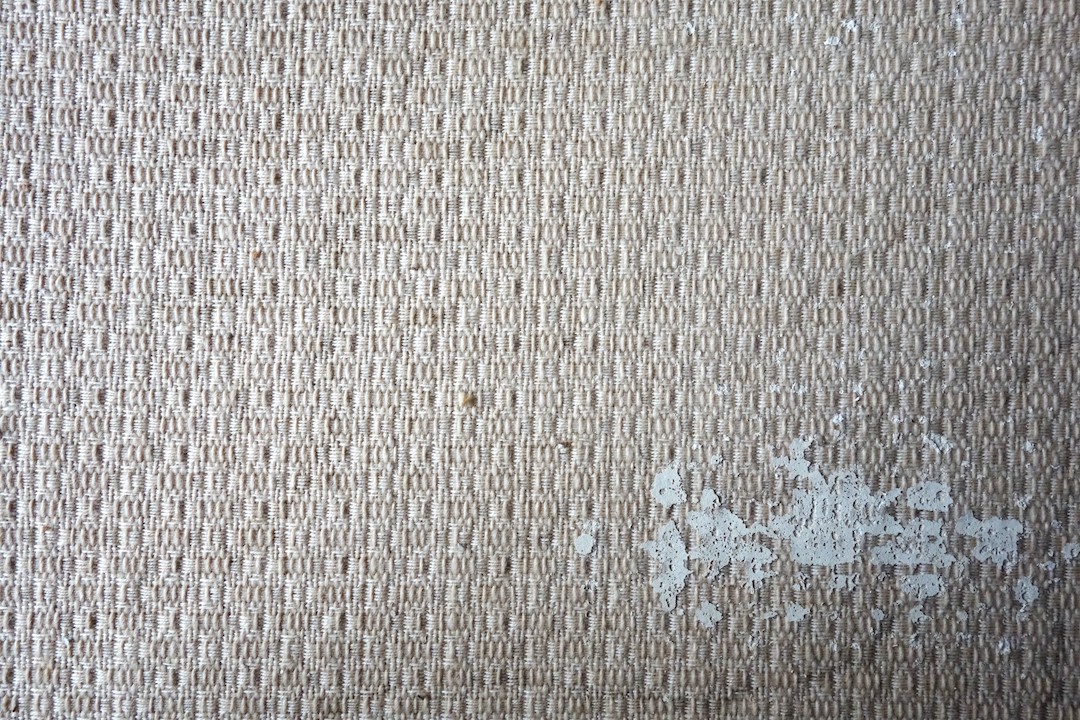 Fig. 3. Jute wall covering underneath the wall paper with the teddy bears. Day nursery, Boerhaavelaan 6.Teaching the textile craft of betengeling
I became even more interested in these walls, since we decided together with Monumentenbezit (the owners of the building) and the company of Schildersbedrijf Drielinden VOF (Avenhorn, Noord-Holland), which carries out the painting of the interior, that one of the rooms in B6 can be used for studying the technique and teaching their apprentices how to make these cloth-covered walls.
It is a dying art and there are not many master craftsmen in The Netherlands left who can carry out the work or indeed pass the skills down to the next generation. So the other day, when Leo van der Linden of the painting company rang me to ask permission to use one of the B6 rooms to teach this technique, I immediately said yes. After all it is a textile technique, just one I was not very familiar with. Leo also sent me the web address of a brief film about the technique (via Google, see below).
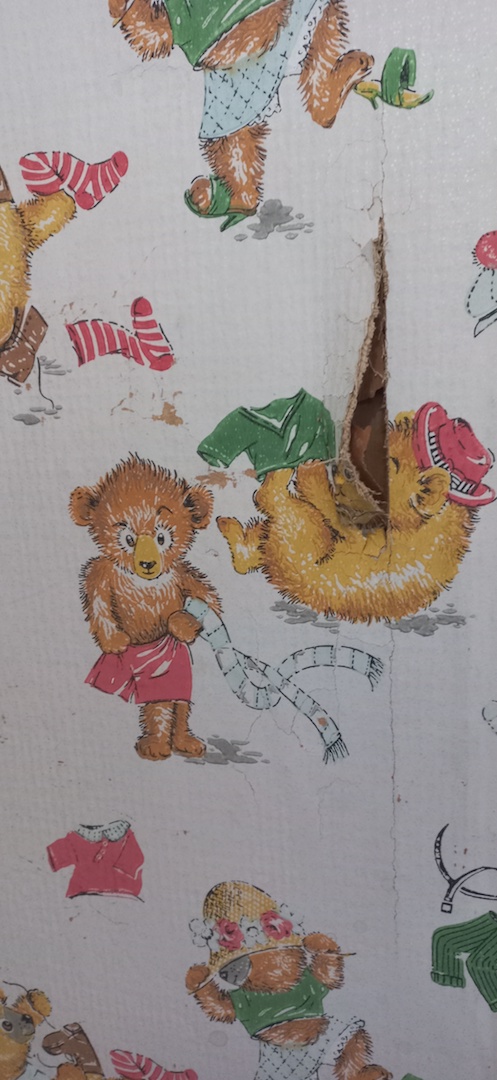 Fig. 4. Wall paper on a cloth background in the former day nursery at Boerhaavelaan 6.Leo has now ordered the jute cloth from France. And yes, I have samples of the wallpaper, painted jute cloth, etc., from the room, and asked for a sample of the French jute cloth, all for the TRC Collection.
It was also decided that a film will be made of the process, so that other groups can share in this knowledge. More details will be posted over the next few weeks, but we are enormously pleased that even the renovation process of Boerhaave 6 has a textile crafts education element. Perhaps the various techniques of wall covering can be the subject of a future TRC workshop?
More information about the technique can be found here:
- https://betengeling.nl/techniek.html
- https://www.joostdevree.nl/w/wandbespanning
- https://share.google/txH1RFSaQm1Moyo4z
Gillian Vogelsang-Eastwood, Director TRC, 3 February 2026